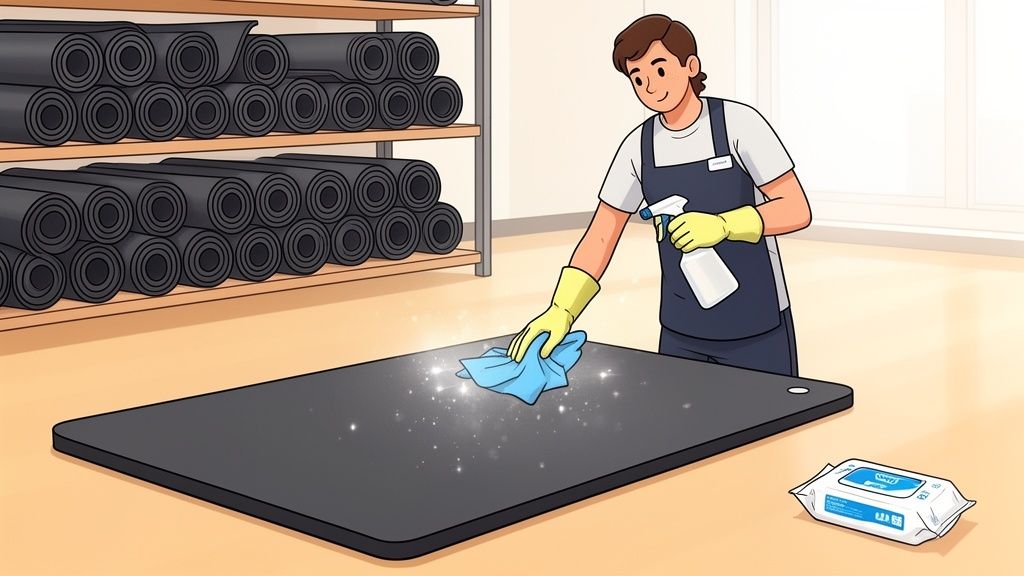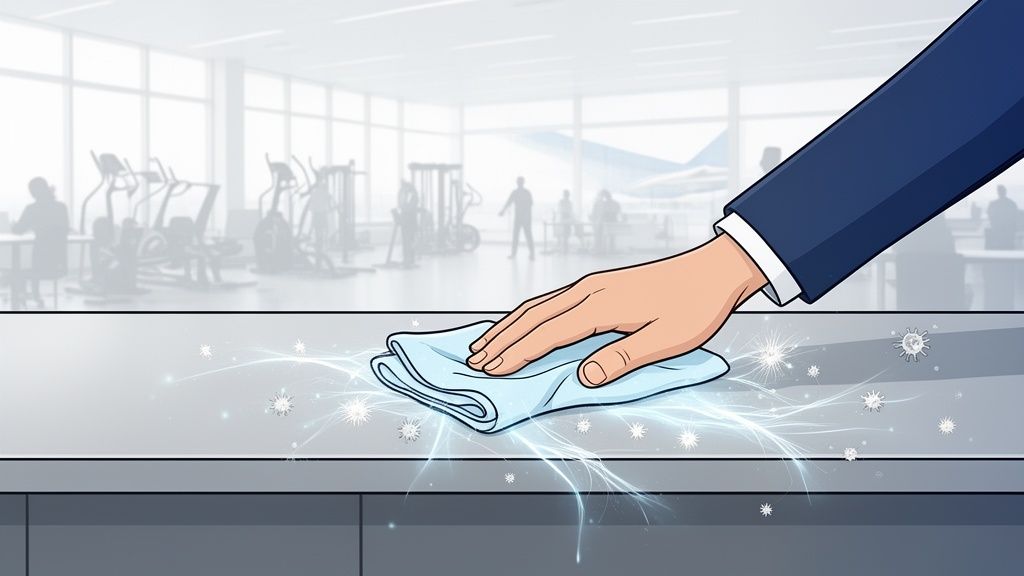
In today's commercial and public facilities, cleanliness is more than just an aesthetic—it's a critical component of customer trust and public health. A visibly clean environment signals a commitment to safety and well-being, but true hygiene goes beyond what the eye can see. This is where modern cleaning technology, specifically electrostatic cleaning wipes combined with powerful disinfectants, offers a superior solution. They provide a practical, efficient way to not only clean but also sanitize high-touch surfaces, ensuring your space is as safe as it is welcoming.
The Magnetic Power of Modern Cleanliness
In any public space—whether it’s a bustling office, a high-traffic retail store, or a packed gym—cleanliness is a direct reflection of your brand. It tells customers, employees, and guests that you prioritize their health. From the front door handle to the conference room table, people expect and deserve a pristine environment.
But simply wiping down a surface often isn't enough. Achieving a truly hygienic space requires a smarter approach that tackles the microscopic threats you can't see. This is where electrostatic technology, paired with effective disinfection, completely changes the game for facility maintenance.

Why Traditional Cleaning Falls Short
Let's be honest: traditional cleaning often just moves the mess around. A damp cloth might smear germs across a tabletop, giving you a false sense of clean while leaving harmful pathogens right where they were. This risk of cross-contamination is a massive headache in high-traffic places like gyms, schools, and restaurants.
Electrostatic cleaning wipes work on a totally different principle. By harnessing a natural static charge, they act just like a magnet for dust and germs.
- Superior Particle Capture: The fibers in these wipes are engineered to grab and hold onto fine particles, ensuring they're lifted off the surface for good.
- Reduced Cross-Contamination: Since contaminants cling tightly to the wipe, there's far less risk of accidentally transferring them to other surfaces as you clean.
- Chemical-Free Dusting: For removing dry debris, the cleaning power comes from static electricity, reducing the reliance on harsh chemicals for the initial pickup.
The Modern Challenge of Hygiene
Today’s customers are more health-conscious than ever before. A visibly clean facility builds immediate trust and can be the deciding factor that brings people back. For business owners and facility managers, this means cleaning is no longer just a chore—it’s a critical part of the customer experience and your brand's reputation.
For facilities aiming to deliver a superior standard of cleanliness, integrating advanced tools is essential. Electrostatic cleaning wipes provide a practical and highly effective solution for elevating hygiene protocols beyond the surface level.
By bringing electrostatic cleaning wipes into your routine, you can elevate your hygiene standards, ensuring every surface isn't just visibly clean but truly prepared for disinfection. It’s a modern approach that gives peace of mind to everyone who walks through your doors, setting the stage for a safer, more welcoming environment.
How Electrostatic Wipes Actually Work
Ever rub a balloon on your hair and watch it magically stick to a wall? That simple trick is a perfect example of static electricity—the same force that gives electrostatic cleaning wipes their almost magnetic power. These aren’t just ordinary cloths; they’re engineered to actively pull in and trap the microscopic particles that regular wipes just push around.

Unlike a standard wet wipe that relies mostly on moisture and friction, an electrostatic wipe is made with special fibers that hold a natural positive charge. It just so happens that most of the stuff we want to get rid of—dust, dirt, allergens, and even microbes—carries a negative charge. When you sweep the wipe across a surface, this difference in charge creates an invisible force.
It's this force that’s strong enough to lift tiny particles off surfaces and lock them into the wipe’s fibers. The gunk gets removed completely instead of being smeared from one spot to another.
The Science of Particle Attraction
The real edge with electrostatic cleaning is its ‘pulling’ action versus the ‘pushing’ motion of traditional cleaning. A damp rag might just spread germs around, but an electrostatic wipe traps them the moment it makes contact.
This is a game-changer for preventing cross-contamination, a huge concern in any shared space from office breakrooms to fitness center locker rooms. The wipe essentially becomes a particle trap, holding contaminants securely.
Think of it like using a lint roller on a sweater versus just brushing it off with your hand. Your hand might knock some lint away, but the sticky roller grabs it for good. Electrostatic wipes do the same thing for microscopic debris.
This is a massive benefit in places where air quality and allergen control are top priorities. The wipes effectively snatch common triggers like pollen, pet dander, and dust mites from hard surfaces without kicking them up into the air. If you want to dig deeper into the tools that use this tech, check out our guide on electrostatic cleaning equipment.
Chemical-Free Cleaning Power
One of the biggest wins here is the ability to clean effectively without immediately reaching for liquid chemicals. For dry particle removal, the static charge does all the heavy lifting.
This makes electrostatic cleaning wipes the perfect first step in a two-part cleaning and disinfecting routine.
- Step One (Clean): Use a dry electrostatic wipe to thoroughly remove all the dust, dirt, and physical grime. This preps the surface by getting rid of the gunk that germs love to hide in.
- Step Two (Disinfect): Follow up with a disinfectant wipe to kill pathogens on the now-clean surface. Disinfectants work far better when they can make direct contact with germs, not a layer of dirt.
This two-step method delivers a much deeper level of clean. That first pass with the electrostatic wipe removes the physical barriers, clearing the way for the disinfectant to do its job properly.
The demand for this kind of precision is blowing up. Market analyses show the dry electrostatic wipes market was valued at USD 2,610.23 million in 2024 and is projected to hit USD 5,487.98 million by 2031. This explosive growth shows just how critical they’ve become in sectors like healthcare, electronics, and facilities management, where stopping contamination is everything.
By bringing this technology into your routine, you can achieve a higher standard of clean that’s both visible and microscopic. It’s a practical, efficient, and science-backed way to make sure your environment is as safe and welcoming as it can be.
Putting Electrostatic Wipes to Work in Your Facility
Knowing the science is one thing, but putting it into practice on the ground is what really matters. A solid hygiene strategy isn't just about having the latest and greatest tools; it’s about using them where they can make the biggest difference. For any public space, that means a laser focus on high-touch zones.
The goal here is to shift from just reacting to messes to proactively building a system that keeps people safe. Electrostatic cleaning wipes are a serious upgrade in the world of janitorial equipment and supplies, giving you the power to get ahead of germs. When you pair their magnetic-like particle attraction with a quality disinfectant, you create a powerful one-two punch that leaves surfaces truly clean.

The Two-Step Protocol for a Deeper Clean
To get the most out of this technology, a two-step approach is key. Don't skip this.
First, go over the surface with a dry electrostatic wipe. This initial pass grabs and physically removes all the loose stuff—dust, dirt, allergens, and microbes. Think of it like sweeping the floor before you mop. It clears the way for the disinfectant to do its real job.
Once the surface is clear, follow up with a disinfectant wipe to eliminate any lingering pathogens. For this critical second step, we recommend Wipes.com Disinfectant Wipes. They’re specifically designed to sanitize pre-cleaned surfaces, delivering a comprehensive clean. It's a simple system, but it elevates hygiene standards dramatically.
High-Touch Hotspots in the Office
The modern office is a minefield of shared surfaces, each one a potential superhighway for germs. Keeping these areas consistently clean isn't just about appearances; it's about cutting down on sick days and keeping your team healthy.
Key Office Hotspots to Hit Daily:
- Keyboards and Mice: Used for hours every day but almost always overlooked in cleaning routines.
- Doorknobs and Light Switches: The first and last things people touch when coming and going.
- Elevator Buttons and Handrails: Touched by countless hands, all day long.
- Shared Kitchen Appliances: Coffee pot handles, microwave buttons, and fridge doors are notorious germ magnets.
- Conference Room Gear: Shared phones, remote controls, and tabletops need daily attention.
A daily wipe-down protocol at the end of each day is the best practice for these zones. Using the electrostatic wipe first guarantees all the loose debris is gone before you disinfect.
A clean workspace is directly tied to productivity and team morale. When you visibly and effectively maintain these key areas, you're sending a clear message that you care about your team's well-being.
Gym and Fitness Center Game Plan
Gyms are a unique challenge. You’ve got sweat, heavy breathing, and a ton of shared equipment, creating the perfect environment for bacteria and viruses to thrive. Members are hyper-aware of cleanliness, and a visibly spotless facility is a huge reason they'll stick around.
Gym Focus Areas:
- Cardio Machine Touchscreens and Handles: Treadmills, bikes, and ellipticals see back-to-back use all day.
- Free Weights and Dumbbells: The handles are gripped by dozens, if not hundreds, of people daily.
- Weight Machine Pins, Seats, and Pads: These surfaces are in constant contact with members' skin and hands.
- Locker Room Benches and Door Handles: High-moisture areas where germs love to hang out.
To stay on top of it, your staff should be making cleaning rounds multiple times a day, especially during peak hours. Placing disinfectant wipe dispensers around the gym also empowers members to wipe down equipment before and after they use it, creating a culture of shared responsibility.
High-Touch Zone Cleaning Checklist for Various Facilities
To make this practical, we've broken down the most critical high-touch zones for different types of facilities. Use this checklist as a starting point for your own cleaning protocols, adjusting frequencies based on your specific traffic patterns.
| Facility Type | High-Touch Zone Examples | Recommended Cleaning Frequency |
|---|---|---|
| Offices | Doorknobs, light switches, keyboards, mice, coffee makers, elevator buttons, conference tables | Daily wipe-down at the end of each workday. |
| Gyms & Fitness | Cardio machine handles/screens, free weights, weight machine pins, locker room benches, water fountains | Multiple times per day, especially during peak hours (e.g., morning, lunch, evening rushes). |
| Schools & Daycares | Desks, chairs, cafeteria tables, doorknobs, playground equipment, shared toys, water fountains | Daily deep cleaning, with spot-cleaning of high-touch surfaces throughout the school day. |
| Retail Stores | Shopping cart/basket handles, checkout counters, payment keypads, fitting room doors, display cases | Hourly wipe-downs for the most touched areas; full cleanings at the start or end of the day. |
This checklist isn't exhaustive, but it highlights the non-negotiable areas in each environment. A consistent, visible cleaning routine in these zones shows customers, employees, and visitors that you take their health seriously.
Strategies for Schools and Retail
Schools and stores are all about high volume and high traffic, making them ground zero for germ transmission. In schools, the priority is protecting vulnerable students and staff. In retail, a clean environment is a direct reflection of your brand and seriously impacts the customer experience.
- In Schools: Focus on desks, chairs, cafeteria tables, and playground equipment. These need attention every single day.
- In Retail: The critical zones are shopping cart handles, checkout counters, payment keypads, and fitting room doorknobs.
The growing public concern over hygiene is driving huge demand for better cleaning solutions. The dry electrostatic wipes market, valued at USD 1.2 billion in 2024, is expected to skyrocket to USD 2.3 billion by 2033. This growth is fueled by the technology's proven ability to trap tiny particles and slash cross-contamination by up to 99% compared to old-school cleaning methods.
By building a cleaning plan around these high-touch points, you can dramatically improve the safety and appeal of your facility. The one-two punch of electrostatic cleaning wipes for grabbing particles and quality disinfectant wipes for sanitizing is a smart, powerful strategy for any modern space.
Sell the Result, Not Just the Product
In the world of facility management and cleaning supply sales, cleanliness is a silent salesperson. It speaks volumes about a brand long before a customer ever talks to a representative. Every gleaming surface, from a gym’s dumbbell rack to an office’s conference table, is building a foundation of trust. This is where you can shift the conversation from cleaning as a line-item cost to hygiene as a strategic investment with a clear, measurable return.
Superior hygiene isn’t an expense—it’s an asset. When people walk into a space that is visibly and consistently pristine, they feel safer, more comfortable, and more confident in their decision to be there. That feeling directly impacts customer loyalty, how long they stick around, and even how much they’re willing to spend. The goal is to help your clients see that a small investment in the right tools, like disinfectant wipes, pays for itself by protecting their reputation and enhancing the customer experience.
Framing Hygiene as a Tangible ROI
Let's be honest, most facility managers and business owners see cleaning supplies as a necessary evil. Your job is to completely reframe that perspective. Don't just sell wipes; sell the outcome. You're not providing a product; you're offering a way to protect their most valuable asset: their brand.
A powerful way to do this is to talk about "Hygiene ROI" (Return on Investment). While it’s not a perfect formula, the concept is simple and hits on what they truly care about.
- Better Customer Retention: A clean facility makes customers feel valued and safe, which is a huge driver of repeat business. Even a tiny bump in retention can have a massive impact on the bottom line.
- Fewer Employee Sick Days: In an office, fewer germs floating around means fewer people calling out sick. This translates to real, measurable productivity gains that easily outweigh the cost of better cleaning supplies.
- Stronger Online Reviews: In the age of Yelp and Google, "cleanliness" is one of the first things people comment on. Glowing reviews that specifically mention your facility's impeccable state are free, high-impact marketing.
When you focus on these tangible business benefits, cleaning supplies stop being a commodity and become an essential tool for growth and risk management.
Sales Strategies That Actually Work
To sell the value of superior hygiene, you need clear, persuasive talking points. Get away from listing product features and start talking about the problems you are solving for your client.
A Better Pitch: "Look, we're not just here to sell you cleaning supplies. We’re offering a system to protect your brand's reputation. A visibly clean facility tells every single person who walks through that door that you prioritize their well-being, which is one of the strongest messages you can possibly send."
Here are a few practical strategies to build into your sales process:
- Bundle and Build Value: Stop selling individual products and start creating solutions. Offer a "Premium Hygiene Package" that includes electrostatic cleaning wipes for deep particle removal and top-tier disinfectant wipes for sanitization. This frames it as a complete, professional system, not just a box of wipes.
- Educate on the "Danger Zones": Most clients have no idea how quickly germs spread. Walk them through the high-touch hotspots in their specific facility—think payment keypads in a retail shop or the screens on cardio machines in a gym. This shows off your expertise and immediately highlights the need for a better protocol.
- Frame It as a Modern Upgrade: Position electrostatic cleaning wipes and quality disinfectant wipes as the smart, efficient upgrade from old-school, ineffective methods. Explain how this two-step process slashes cross-contamination risks and delivers a deeper clean—a huge selling point for any health-conscious business today.
Ultimately, your goal is to make cleanliness a core part of their business strategy, not just an operational task. When you encourage clients to integrate advanced tools like disinfectant wipes into their daily routines, they aren't just creating a safer environment. They're building a stronger, more trusted brand that will win in any market.
Comparing Electrostatic Wipes to Other Cleaning Methods
Choosing the right cleaning tools can feel overwhelming, especially when every product promises to be the best. To make the right call for your facility, it’s crucial to put electrostatic cleaning wipes up against the other common methods you’re already using. Understanding where each one shines—and where they fall short—will show you exactly where they fit in your hygiene arsenal.
A clean facility isn't just about appearances; it's a direct path to better business outcomes.

As the flowchart shows, a commitment to cleanliness builds customer trust, which is the fuel for sales growth and a healthier bottom line.
Wipes vs. Sprayers
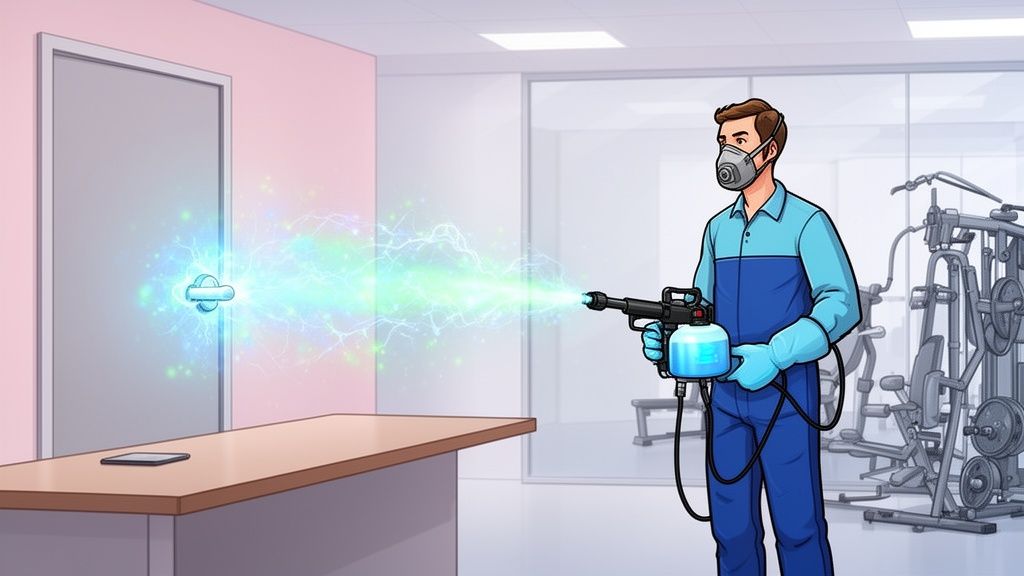
Electrostatic sprayers have gotten a lot of buzz for their ability to coat large, complex surfaces with disinfectant in a hurry. They work by atomizing a disinfecting solution, giving the droplets an electric charge, and letting physics do the rest—the mist wraps around and evenly coats just about anything.
But there’s a catch. Sprayers come with a steeper learning curve and require your staff to use proper personal protective equipment (PPE). They’re fantastic for fogging an entire room after hours but are overkill for the quick, targeted clean-ups needed on high-touch surfaces throughout the day.
This is where electrostatic wipes and disinfectant wipes come in. They’re ready to go instantly with zero setup, making them perfect for on-the-spot cleaning by any staff member, anytime.
A Head-to-Head Comparison
To really simplify the choice, let’s break down how these methods stack up across the metrics that matter most to your operations. Each tool has its place, but their true value depends entirely on the job at hand. This table offers a clear, side-by-side look to help guide your decisions.
Comparison of Surface Cleaning Technologies
| Feature | Electrostatic Wipes | Regular Disinfectant Wipes | Electrostatic Sprayers |
|---|---|---|---|
| Primary Function | Physically removes fine particles (dust, allergens) using a static charge. | Kills germs and pathogens on pre-cleaned surfaces. | Disinfects large and hard-to-reach areas with a charged mist. |
| Ease of Use | Excellent. Grab-and-go with zero training required. | Excellent. Intuitive and familiar for all staff members. | Moderate. Requires training, PPE, and careful handling. |
| Particle Removal | Superior. Captures up to 95% of microscopic particles. | Fair. Primarily pushes debris; doesn't effectively trap fine particles. | Poor. Not designed for particle removal; can aerosolize dust. |
| Setup Time | None. Ready for immediate use straight from the package. | None. Instantly accessible for quick clean-ups. | Moderate. Involves filling, setup, and post-use cleaning. |
As you can see, each option serves a very different purpose. Electrostatic wipes excel at the foundational step of cleaning—physically removing tiny particles—while the others are geared more toward chemical disinfection.
The Power of Innovation in Cleaning
The market for smarter cleaning solutions is growing fast. Projections show the dry electrostatic wipes sector is expected to jump from USD 3.0 billion in 2025 to USD 9.3 billion by 2035. This boom is driven by their unmatched ability to capture 95% of fine particles like pollen and bacteria, outperforming standard cloths threefold.
The proof is in the results. Airports and sports facilities that have switched to them have reported 25-35% reductions in cleaning staff hours—a huge testament to their efficiency.
It's always helpful to see how specialized technologies are solving problems in other areas of facility maintenance. For example, techniques like pure water window cleaning show how applying a bit of science can deliver far superior results with less effort.
Ultimately, electrostatic wipes fill a specific and critical role. They aren't meant to replace your disinfectants. Instead, they perform the essential first step that makes all your disinfection efforts more effective. By integrating them into your routine, you’re not just cleaning; you’re setting a higher standard for your entire facility.
Raising the Bar for "Clean"
In any commercial space, the definition of "clean" has been completely rewritten. It’s no longer enough for a surface to just look clean. Your customers, employees, and guests now expect a deeper, more hygienic standard—one that actively protects their health. This means moving past outdated cleaning methods that just push dirt around and adopting smarter, more effective tools.
Real cleanliness is a one-two punch: diligent particle removal followed by thorough disinfection. You can't have one without the other.
Think of it this way: a surface has to be physically clean before a disinfectant can even do its job properly. This is exactly where electrostatic cleaning wipes make their mark. They act like a powerful magnet, lifting and trapping the microscopic particles—dust, allergens, and microbes—that traditional cloths almost always leave behind.
Setting the New Benchmark for Facility Hygiene
To hit this higher standard, you need the right tools integrated into a consistent daily routine. The first step is always removing physical debris. This clears the way for disinfectants to make direct contact with germs and kill them effectively.
- For Offices and Retail: A daily wipe-down of high-touch zones like keyboards, payment terminals, and doorknobs with an electrostatic wipe is a must. Follow it up with a disinfectant to stop germ transmission in its tracks.
- For Gyms and Schools: Frequent cleaning of shared equipment, desks, and cafeteria tables is non-negotiable. Electrostatic wipes make this initial, crucial cleaning step both fast and incredibly efficient.
This systematic approach does more than just improve safety; it sharpens your brand's reputation. A visibly and hygienically clean environment sends a powerful message that you take health and safety seriously.
Integrating advanced hygiene tools is no longer a luxury—it's a core business strategy. The facilities that adopt smarter cleaning protocols will build greater trust, foster customer loyalty, and set themselves apart from the competition.
For a complete clean-and-disinfect system, we recommend pairing these wipes with a powerful sanitizer like Wipes.com Disinfectant Wipes to finish the job after debris has been removed.
Ultimately, the goal is to weave advanced hygiene into the very fabric of your daily operations. By prioritizing cleanliness and integrating powerful tools like electrostatic cleaning wipes and proven disinfectant wipes into your daily routine or product offerings, you protect everyone who walks through your doors, elevate your brand, and create a genuinely safer environment. Don’t just clean—set a new standard.
Frequently Asked Questions
Got questions about electrostatic wipes? You're not alone. When a new cleaning tool comes along, it's smart to dig into the details. Here are some of the most common questions we hear from facility managers.
Are Electrostatic Wipes a Replacement for Disinfectant Wipes?
Nope, they're not a replacement. Think of them as the perfect setup crew for your disinfectant. The best approach is a two-step process: clean first, then disinfect.
Electrostatic cleaning wipes are masters of physical removal. Their static charge acts like a magnet for all the fine particles—dust, allergens, and microbes—that coat a surface. They lift the grime away, leaving a clean slate.
Once the surface is physically clean, that's when your disinfectant wipe comes in. It can now do its job killing germs, viruses, and bacteria without having to fight through a layer of dirt first. Using an electrostatic wipe first makes your disinfectant far more effective.
Can Electrostatic Wipes Be Used on Any Surface?
Pretty much. Electrostatic wipes are safe to use on almost any hard, non-porous surface you can think of. That covers common materials like finished wood, laminate, glass, stainless steel, and even delicate electronics screens where you'd never want to use a liquid.
Because they're dry and chemical-free, they're a fantastic choice for equipment that could be damaged by moisture. Where do they fall short? Porous surfaces like unfinished wood or fabric. They need smooth contact to get that static cling working at its best.
How Do I Maximize the Effectiveness of Electrostatic Wipes?
To get the most magnetic power out of these wipes, always start with a dry surface. Unfold the wipe completely to expose as much of the static-charged fibers as possible.
Best Practices for Use:
- Wipe in one direction or use a clean ‘S’ pattern. This keeps you from just smearing dirt around.
- For really grimy spots, don't be afraid to grab a second wipe to finish the job.
- Never, ever wet the wipe. Adding moisture kills the static charge, which is the whole point!
As soon as a wipe looks dirty, toss it. Grabbing a fresh one is the only way to avoid cross-contamination between surfaces. It's a simple habit that makes a huge difference in hygiene standards.
Following these simple steps ensures your electrostatic cleaning wipes do their job perfectly, setting the stage for a truly effective disinfection. This one-two punch is how you elevate the standard of clean in any facility.