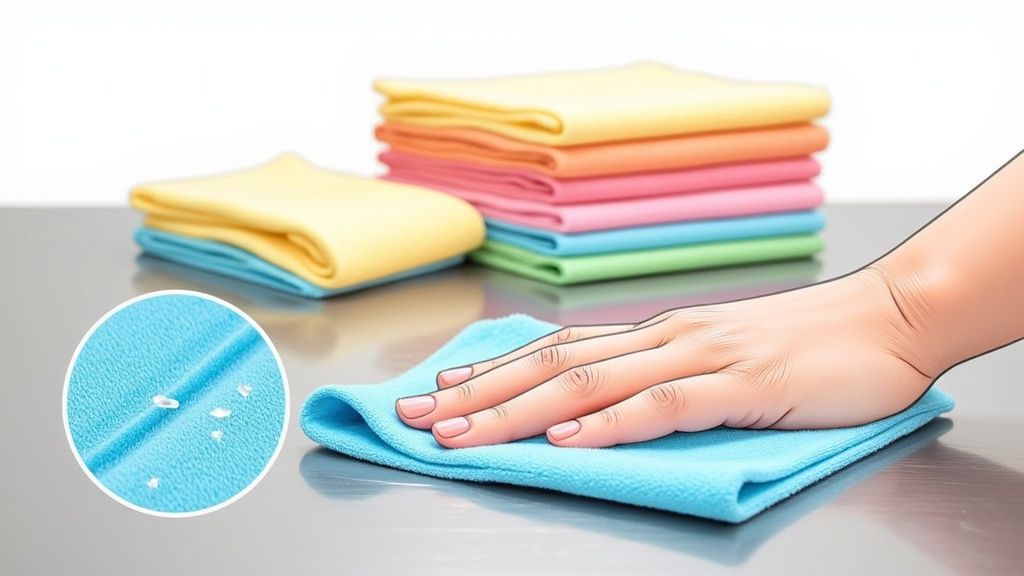
In any commercial space, looking tidy and being truly clean are two different standards. True cleanliness—the kind that protects health and builds trust—isn't just a goal; it's a non-negotiable part of your brand. The difference often comes down to the tools you use. For any facility serious about hygiene, disinfectant wipes aren't just a convenient option—they're the foundation of a modern, effective sanitation program.
Why a Truly Clean Facility Is Non-Negotiable
In a competitive market, perception is reality. A sticky tabletop, a smudged door handle, or a dusty counter can instantly undermine a customer's confidence in your facility's standards. It’s a small detail, but it sends a powerful message: if the surfaces people can see aren't properly maintained, what about the areas they can't?
This is a classic problem with outdated cleaning methods. A simple wet rag can spread germs from one surface to another, and relying on spray-and-towel methods can lead to inconsistent results. True commercial cleanliness requires tools designed for efficacy and efficiency.
The Professional Standard for Cleanliness and Disinfection
Achieving a microscopic level of clean means moving beyond simply wiping away dirt. The shift to ready-to-use solutions like disinfectant wipes isn't just a trend; it's a direct response to rising expectations for public health and safety. For context, the global microfiber cleaning cloth market, a related category, was valued at around USD 979.2 million in 2025 and is expected to hit USD 1.52 billion by 2035. This growth reflects a broader industry move toward higher-performing cleaning tools.
That growth is all about performance. The right tools can remove up to 99% of bacteria from surfaces. It’s no surprise that a majority of institutional cleaning contracts now specify modern hygiene solutions. Discover more insights about the microfiber market's growth and impact on cleaning standards.
The difference between a good facility and a great one often comes down to visible details. A commitment to disinfecting high-touch surfaces is more than an operational task; it’s a clear signal of professional care and a commitment to guest well-being.
Setting a New Benchmark for Hygiene
Integrating disinfectant wipes into your cleaning protocol is about more than just convenience. It’s about setting a new, higher benchmark for what "clean" means in your facility. This commitment delivers tangible results:
- Enhanced Guest and Staff Confidence: A visibly clean and regularly disinfected environment makes everyone who walks through your doors feel safer and more valued.
- Improved Health and Safety: Consistent disinfection of high-touch areas helps reduce the spread of germs, leading to fewer sick days for staff and a healthier environment for customers.
- Operational Efficiency: Pre-moistened wipes eliminate the need to mix chemicals and carry around spray bottles and cloths, allowing staff to clean and disinfect high-touch points quickly and effectively.
Ultimately, investing in the right tools is a direct investment in your brand’s reputation. It demonstrates a commitment to excellence that resonates with every customer, employee, and visitor, turning basic sanitation into a powerful business asset.
Cleaning Tips: Maximizing the Power of Disinfectant Wipes
What makes a disinfectant wipe so effective? It’s not just the cleaning solution; it’s the combination of the right chemical formula with a durable, non-shedding cloth designed for single-use application. This ensures a consistent, hygienic result every time. For sales professionals and facility managers alike, understanding how to use them correctly is key to unlocking their full potential.
Cleaning Tip 1: Focus on High-Touch Hotspots
The 80/20 rule applies to cleaning: 80% of germs are spread through 20% of surfaces. Prioritize these high-touch hotspots for frequent disinfection:
- Offices: Door handles, light switches, elevator buttons, conference tables, shared keyboards, and coffee machines.
- Gyms: Cardio machine touchscreens, dumbbell and barbell handles, weight machine adjustment pins, and locker room benches.
- Restaurants & Retail: POS screens, payment terminals, service counters, shopping cart handles, and restroom fixtures.
Frequency Recommendation: Disinfect these areas multiple times throughout the day, especially during peak hours. A quick wipe-down can take less than 30 seconds but has a major impact on hygiene.
Cleaning Tip 2: Respect the Dwell Time
This is the most critical and often-overlooked step. Dwell time is the amount of time a surface must remain visibly wet with the disinfectant to effectively kill the germs listed on the product label. It can range from 30 seconds to 10 minutes.
Efficiency Hack: Clean a small group of surfaces at once. For example, wipe down a series of door handles or a row of treadmill screens, then circle back to the first one after the required dwell time has passed to dry if necessary. Always check the product label for specific instructions.
The right tools, combined with professional standards and hygienic practices, are what ultimately lead to a facility that doesn't just look clean, but is clean.
As this shows, a consistent disinfecting approach is a critical pillar of professional-grade hygiene.
Cleaning Tip 3: One Wipe, One Surface
To prevent cross-contamination, use a fresh wipe for each distinct area. Don't use the same wipe on a tabletop that you just used on a door handle. This "one-and-done" approach is a core benefit of disinfectant wipes and a key practice for maintaining high hygiene standards. For larger surfaces like a conference table, you may need to use multiple wipes to ensure it stays wet for the full dwell time.
Sales Tips: Promoting Hygiene as a Value-Add
For sales professionals in the janitorial and cleaning supply industry, disinfectant wipes aren't just another product—they're a solution to a critical business need. The conversation shouldn't be about cost per wipe, but about the return on investment (ROI) of a healthier, safer facility.
Sales Tip 1: Frame It as Brand Protection
Every business owner understands the cost of a negative review or a reputation for being unclean. Position disinfectant wipes as an investment in brand protection.
- Educate on the ROI of Hygiene: Explain how a visibly clean facility leads to higher customer satisfaction, repeat business, and positive word-of-mouth. For gyms, it means member retention; for restaurants, it means better health scores and more diners.
- Provide Facility-Specific Solutions: Don’t just sell a canister of wipes. Offer a tailored plan. Suggest placing dispensers in key areas—entrances for gyms, reception desks for offices, and checkout counters for retail—to make cleaning visible and convenient.
Sales Pitch Angle: "We're not just selling you cleaning supplies; we're providing a complete system to enhance your facility's hygiene, protect your brand, and show your customers you care about their well-being."
Sales Tip 2: Bundle Wipes into a Complete Hygiene Package
Incorporate disinfectant wipes into a larger cleaning supply offering. Present them as an essential component of a modern sanitation program, alongside other critical items.
- Create Tiered Packages: Offer a "basic" package with bulk chemicals and a "premium" package that includes strategically placed wipe dispensers and a recommended usage protocol.
- Highlight Efficiency: Emphasize the labor savings. Time spent mixing chemicals, laundering cloths, and walking back and forth to supply closets is time that could be spent on more detailed cleaning tasks. Wipes streamline the process for quick, effective disinfection.
The market is already signaling this shift. The global demand for effective cleaning solutions is on a steep upward curve, with the market for lint-free cloths (a related hygiene tool) estimated at USD 1.32 billion in 2024 and projected to hit USD 2.10 billion by 2033. This growth is driven by industries that can't compromise on a perfect, residue-free clean. You can explore more data on the lint-free cloth market to see how rapidly the demand for high-performance cleaning is expanding.
At the end of the day, professionals are choosing modern solutions because the math is simple. They clean better, save time, and demonstrate a commitment to health that today's customers expect.
Matching the Right Cloth to Your Facility
While disinfectant wipes are ideal for high-touch points, reusable lint free microfiber cloths remain essential for larger surfaces and specific tasks. In professional cleaning, there's no "one-size-fits-all" solution. Matching the right tool to the job is about delivering a targeted, effective clean that protects assets and impresses guests.
Think of it like a chef's knife set—each blade has a specific purpose. This guide breaks down the ideal cloth for different commercial environments.

For the Modern Office Space
In an office, cleanliness directly impacts productivity and employee well-being. The main enemies are dust, fingerprints, and smudges on sensitive electronic surfaces.
- Surfaces: Computer monitors, glass partitions, conference room tables, and stainless-steel appliances.
- Ideal Cloth Type: A low-GSM (200-250), flat-weave microfiber cloth is perfect for grabbing dust and polishing smooth surfaces without leaving a single streak or fiber behind.
For the High-Energy Fitness Center
Gyms require a balance of heavy-duty sanitation and equipment protection. Sweat, oils, and disinfectant residue are constant battles.
- Surfaces: Cardio machine bodies, weight equipment, yoga mats, and locker room mirrors.
- Ideal Cloth Type: A durable, medium-GSM (300-400) terry-style cloth is the workhorse for gym equipment. It scrubs away residue but is soft enough not to scratch surfaces. For mirrors and glass, a dedicated low-GSM glass cloth is non-negotiable.
For the Impeccable Restaurant and Bar
Presentation is everything in hospitality. A single fingerprint on a wine glass or a smudge on a counter can undermine the dining experience.
In a restaurant, your cleaning tools are as critical as your ingredients. A lint-free finish on glassware is a non-negotiable part of the service, directly influencing a patron's perception of your cleanliness.
- Surfaces: Glassware, flatware, stainless-steel prep tables, bar tops.
- Ideal Cloth Type: To polish glassware and cutlery to a brilliant shine, nothing beats a waffle-weave microfiber cloth. For stainless steel, a low-GSM cloth delivers a smear-free result. In environments with heavy cleaning demands, disposable microfiber cloths can be a game-changer for preventing cross-contamination. Find out more at https://wipesblog.com/2025/09/23/disposable-microfiber-cloths/.
For the Pristine Retail Store or Showroom
In retail and automotive showrooms, the products are the stars. Dust or a stray fiber can instantly cheapen the perceived value of merchandise. Matching the right cloth to your needs is crucial; it’s worth checking guides on the best microfiber towels for detailing.
- Surfaces: Glass display counters, shelving, fitting room mirrors, and vehicle interiors.
- Ideal Cloth Type: Use plush, high-GSM (400+) cloths for gentle dusting of delicate products. For all glass and polished surfaces, stick with the proven performance of a low-GSM, lint-free glass cloth to maintain an inviting shine.
Getting the Most from Your Microfiber Investment
High-performance tools demand proper maintenance. Investing in premium lint free microfiber cloths is the first step, but how you care for them determines their lifespan and effectiveness. Proper laundering isn’t just about getting cloths clean—it's about preserving the microscopic technology that makes them powerful.
High heat can melt the delicate split fibers, fabric softener will clog them into uselessness, and washing them with cotton towels contaminates them with the very lint you’re trying to eliminate. A simple care routine is a critical operational practice.
The Essential Laundering Protocol
To keep your microfiber in peak condition, treat it like specialized equipment. It never gets thrown in with general laundry.
- Wash Separately: Always wash microfiber only with other microfiber. If you mix them with cotton towels, lint will transfer and defeat their purpose.
- Use a Mild Detergent: A small amount of a gentle, liquid detergent is all you need. Never use bleach or powdered detergents. For more on this, check out our guide on professional cleaning chemicals.
- Wash in Warm Water: Warm water is effective enough to release dirt and grime without the risk of heat damage.
The Two Biggest Enemies of Microfiber
Beyond basic washing, there are two absolute "don'ts" in microfiber care. Breaking these rules is the fastest way to destroy your cloths.
Never use fabric softener or dryer sheets. These products coat fibers with a waxy film that clogs the microscopic hooks, completely neutralizing the cloth's ability to grab and hold dust and dirt.
The second enemy? High heat. It's an instant killer.
- Dry on Low Heat or Air Dry: High temperatures in a dryer will melt the polyester and polyamide fibers, fusing them together. Tumble dry on a low or no-heat setting, or better yet, hang them to air dry.
Stick to these rules, and a single professional-grade microfiber cloth can be washed and reused 300 to 500 times. This reusability is the cornerstone of their cost-effectiveness. The global microfiber cloth market, valued at USD 2.1 billion in 2024, is projected to hit USD 4.8 billion by 2033, driven by this blend of performance and value. Learn more about the market forces driving microfiber adoption. This sustainable approach prevents waste and delivers a consistently superior clean.
How to Build a Visible Hygiene Program
Effective cleaning is more than just getting rid of germs—it's also a powerful marketing tool. When customers and staff can see your commitment to sanitation, it builds trust. By integrating disinfectant wipes and a solid protocol into a visible program, you turn cleaning into a competitive advantage. It’s about showing, not just telling, that you put their well-being first.

This visual proof reinforces that your facility is maintained to the highest standards, making people feel safe and valued.
The Power of Color-Coding
One of the simplest yet most effective ways to showcase professionalism is with a color-coding system for your reusable cleaning cloths. This is a critical best practice that prevents dangerous cross-contamination.
Adopting a clear system demonstrates a sophisticated approach to hygiene that both staff and observant customers will notice.
- Blue for General Areas: Use blue cloths for low-risk surfaces like windows, mirrors, and dusting desktops.
- Green for Food Service: Reserve green exclusively for kitchen and food preparation areas.
- Red for High-Risk Zones: Designate red for high-contamination areas like restrooms—toilets, urinals, and floors.
- Yellow for Specialty Cleaning: Use yellow for specific tasks like cleaning gym equipment or lab surfaces.
By implementing a strict color-coding protocol, you are not only safeguarding health but also creating a visual language of cleanliness. This system instantly communicates that you have a deliberate, professional process in place.
Turning Hygiene into a Sales Advantage
For sales professionals, this concept is a powerful selling point. Don't just sell products; sell a complete, visible hygiene system. Position a program that includes both disinfectant wipes for high-touch points and color-coded microfiber for larger areas as a premium offering. Explain how these standards translate into a tangible ROI through increased customer loyalty.
To build a truly comprehensive sanitation strategy, it's crucial to understand the full range of tools available. For instance, knowing the essential cleaning supplies for restaurants provides a broader context for creating a robust hygiene program from the ground up.
Ultimately, a visible hygiene program transforms cleaning from a background chore into a front-facing asset. When you make tools like disinfectant wipes and color-coded cloths part of your daily routine, you're not just wiping down surfaces—you're actively building a brand known for its unwavering commitment to safety and care. Prioritize cleanliness, make it visible, and integrate powerful tools like disinfectant wipes to make it part of your success story.
Leave a Reply