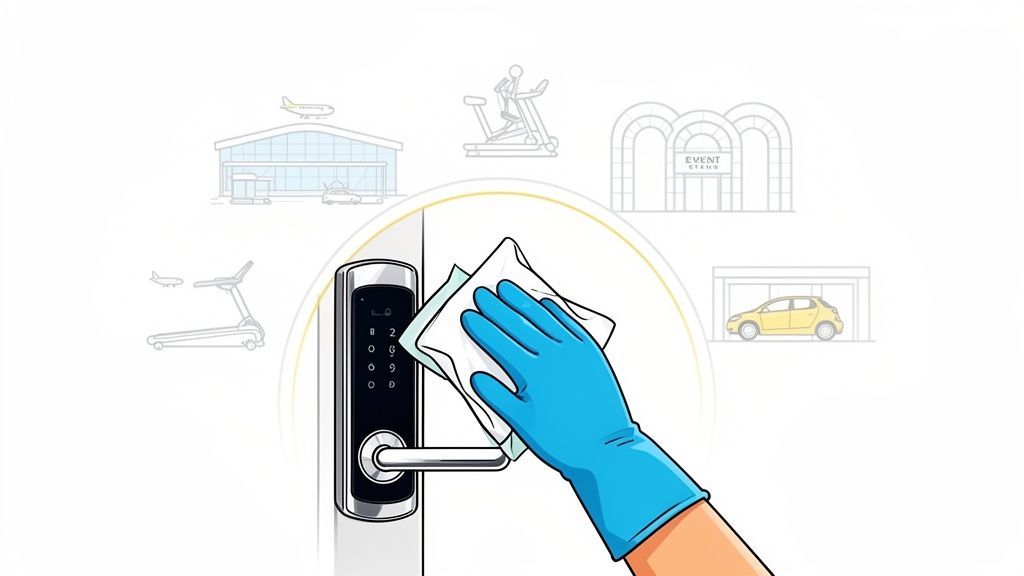
Disinfecting high-touch surfaces isn't just another cleaning chore to check off a list—it's a critical business strategy for any commercial or public facility. This guide is about moving beyond simple cleaning and actively using effective tools like disinfectant wipes to eliminate the invisible pathogens lurking on everything people touch most: doorknobs, elevator buttons, gym equipment, and coffee pot handles.
For business owners, janitorial staff, and sales professionals in the cleaning industry, adopting a proactive approach is essential. It protects the health of everyone in your facility, builds immense customer confidence, and acts as a powerful shield for your brand's reputation.
Beyond Cleanliness: The Strategic Value of Disinfection

A visibly clean facility is the baseline expectation, but what looks clean and what is genuinely disinfected are two different things. The biggest health risks in any commercial space—from offices to gyms—hide in plain sight on surfaces that seem spotless but are actually teeming with germs.
Think of high-touch surfaces as superhighways for bacteria and viruses. From the handle on the office coffee pot to the dumbbells at the gym, these common points of contact become reservoirs for germs. Every touch can either deposit or pick up microorganisms, allowing them to spread rapidly throughout a building. This is why smart businesses are shifting from a reactive "clean-it-when-it's-dirty" mindset to a proactive, daily disinfection strategy using reliable tools like disinfectant wipes.
Understanding the Hygiene ROI
Investing in a proper disinfection protocol isn't an expense; it's an investment with a measurable return—what we call the "hygiene ROI." A small, consistent effort in disinfecting high-touch surfaces can prevent massive disruptions. Think about the domino effect of a widespread illness tearing through your workplace or customer base.
The direct benefits are hard to ignore:
- Fewer Sick Days: A healthier environment means fewer illnesses spreading among your team, leading directly to better productivity and reduced absenteeism.
- Stronger Customer Confidence: When customers see you making an effort—like placing disinfectant wipe stations in convenient spots—it builds a huge amount of trust. They feel safer, and that feeling is a massive competitive advantage.
- Brand Reputation Armor: A single outbreak traced back to your facility can cause irreparable damage. Proactive disinfection is your first line of defense.
Sales Tip: Frame the conversation around the value of keeping a business healthy, trusted, and fully operational. It's not about the cost of supplies; it's about preventing the much higher cost of lost business.
From Chore to Strategy with Disinfectant Wipes
Integrating disinfectant wipes into a daily routine is one of the simplest and most powerful ways to elevate hygiene standards. Unlike spray bottles and reusable cloths—which can easily lead to cross-contamination if not used perfectly every time—a fresh disinfectant wipe for each surface guarantees an effective and consistent application. This simple tool empowers staff to maintain a higher standard of cleanliness more efficiently.
For those in the cleaning supply industry, this is a clear opportunity. When you educate clients on the strategic importance of disinfecting high-touch surfaces and provide an easy-to-use solution like disinfectant wipes, you become a valuable partner in their success. Ultimately, prioritizing disinfection is just smart business—it protects people, strengthens brands, and contributes directly to a healthier bottom line. For reliable, EPA-registered products that can handle these demands, we recommend Wipes.com Disinfectant Wipes.
Mapping Your Facility's High Touch Hotspots
The first step to a smarter disinfection plan isn't grabbing a spray bottle—it's understanding your facility's unique flow. Every space, whether a bustling office, a high-energy gym, or a retail store, has a distinct rhythm. To get ahead of germs, you must map out the pathways they travel.
This is an audit of human behavior. Watch how people move through your space. Where do they instinctively put their hands? What surfaces do they lean on? Answering these questions is how you shift from simply cleaning to strategically defending your environment.
The Logic of High Touch Zones
A surface becomes a high-risk “hotspot” based on two factors: contact frequency and user traffic. An elevator button pushed by a hundred different people every hour is a far greater threat than a desk drawer handle touched by one person. Your goal is to create a priority map that directs your team to the areas with the highest potential for transmission.
Trace a visitor's journey. They pull open the front door, sign in on a tablet, press an elevator button, and grab a coffee pot handle. In minutes, they’ve hit multiple major hotspots.
Cleaning Tip: Your disinfection strategy shouldn't be random. It should be a targeted campaign. When you map hotspots, you ensure every wipe is concentrated where it matters most for health and safety.
High Touch Surface Priority Checklist by Facility Type
While every facility is unique, common patterns exist. Use this table as a starting point for your audit, but always customize it based on how people actually use your space.
| Facility Type | Primary Hotspots (Highest Priority) | Secondary Hotspots (Frequent Checks) | Often-Missed Surfaces |
|---|---|---|---|
| Corporate Office | Main entrance handles, elevator buttons, reception desks, shared touchscreens | Conference room tables, shared keyboards/mice, coffee pot/microwave handles | Light switches, cabinet pulls, printer/copier control panels |
| Fitness Center / Gym | Cardio machine screens/handles, free weights, weight machine grips, locker handles | Water fountains, front desk counters, yoga mats, vending machine buttons | Studio/sauna door handles, cubbyhole surfaces, stereo controls |
| Retail Store / Restaurant | Shopping cart/basket handles, POS keypads, front door push plates, kiosk screens | Checkout counters, restroom door handles/faucets, chair backs | Freezer/cooler door handles, product display cases, condiment dispensers |
Remember, this is your foundation. The real magic happens when you observe your own facility's traffic and add the unique touchpoints that this list might not cover.
Facility-Specific Hotspot Examples
Let’s dig deeper into what this looks like in the real world.
For the Modern Office:
Your biggest battlegrounds are common areas where departments and visitors cross paths.
- Highest Priority: Main entrance door handles, elevator buttons, reception countertops, and shared check-in touchscreens.
- Frequent Checks: Conference room tables, shared keyboards, coffee pot handles, microwave and refrigerator doors, and water cooler buttons.
- Often-Missed: Light switches, kitchen cabinet pulls, and control panels on printers and copiers are touched all day but rarely cleaned.
For the Fitness Center or Gym:
Gyms are a perfect storm of high traffic, sweat, and shared equipment. Sports facilities are known breeding grounds for pathogens on surfaces. One 2022 study of 400 such surfaces found over 12,000 bacterial colonies from 60 different pathogen types, even after routine cleaning. You can read more about the study on contamination in high-touch environments.
- Highest Priority: Treadmill and elliptical screens/handles, free weights and dumbbells, weight machine grips, and locker room benches and handles.
- Frequent Checks: Water fountains, front desk counters, common-use yoga mats, and vending machine buttons.
- Often-Missed: Door handles to studios or saunas, the inside of cubbyholes, and stereo system controls.
For the Retail Store or Restaurant:
The customer journey dictates your cleaning map from the moment they enter.
- Highest Priority: Shopping cart and basket handles, POS keypads, front door handles, and self-service kiosk screens.
- Frequent Checks: Checkout counters, restroom door handles and faucets, and the backs of chairs in dining or waiting areas.
- Often-Missed: Freezer and cooler door handles, glass on product display cases, and shared condiment dispensers.
Turning Your Map into Action
Once you’ve identified these critical zones, put that knowledge to work. Create simple, visual checklists for staff that highlight top-tier hotspots. Even better, empower everyone to help. A well-placed dispenser of disinfectant wipes near a hotspot—like next to gym equipment or shopping carts—turns a passive space into an active defense zone. Prioritize cleanliness by integrating effective tools like disinfectant wipes into your daily routine.
Mastering Your Disinfection Technique
Having the right products is a great start, but technique separates a quick wipe-down from a true, germ-killing clean. The effectiveness of your efforts comes down to how you use your disinfectants.
One of the most critical—and frequently ignored—parts of the process is dwell time. This is the non-negotiable amount of time a disinfectant must stay visibly wet on a surface to kill the germs listed on its label. If you spray and wipe it dry instantly, you’ve mostly just moved germs around.
Why Dwell Time Isn't a Suggestion
Think of dwell time as a chemical reaction; it's a scientific requirement. For most disinfectant wipes, that time can be anywhere from 30 seconds to several minutes.
Here's why you can't skip it:
- It's How Disinfectants Work: The active ingredients need time to break down the cell walls of bacteria and viruses.
- It's an EPA Mandate: The Environmental Protection Agency (EPA) sets these times based on rigorous lab testing. Ignoring them means the product isn't performing as approved.
- It Avoids a False Sense of Security: Wiping a surface dry immediately might make it look clean, but it leaves active pathogens behind.
Cleaning Tip: Always check the product label for the specific dwell time and ensure the surface stays wet for the entire duration.
This infographic breaks the whole process down into a simple, repeatable workflow for mapping out and disinfecting your facility's hotspots.

Following this Identify-Prioritize-Disinfect model keeps your team focused on the areas that pose the highest risk for germ transmission.
Efficiency Hacks for a Superior Clean
Beyond dwell time, a few small tweaks to your technique can make a huge difference in results and efficiency.
Adopt the 'S-Wipe' Pattern
Stop scrubbing in circles. That method just redeposits germs. Instead, use a methodical 'S' pattern. Start at one end of a surface and wipe in a continuous serpentine shape to the other end without lifting the wipe. This traps contaminants and prevents re-wiping a clean area.
Use the Right Number of Wipes
A single wipe can only hold so much dirt and disinfectant.
- Small Surfaces: For doorknobs or light switches, one wipe is usually fine.
- Larger Surfaces: A conference table or gym bench will need multiple wipes to ensure the entire surface gets wet enough to meet the critical dwell time.
Common Mistakes to Avoid
Perfecting your technique also means knowing what not to do.
- Reusing Wipes: A wipe used on a restroom faucet should never touch a countertop. Always grab a fresh wipe for each new surface to stop cross-contamination.
- Skipping the Pre-Clean: Disinfectants kill germs, not cut through grime. If a surface is visibly dirty, clean it first with a separate cloth or wipe, then disinfect.
- Failing to Air Dry: Once the dwell time is up, let the surface air dry. Wiping it with a towel can reintroduce germs.
In facilities like restaurants, the stakes are even higher. Teams must master the 3 compartment sink rules for washing, rinsing, and sanitizing. By focusing on these fundamentals, you elevate your cleaning from a simple chore to a legitimate health and safety strategy.
Building a Practical Disinfection Schedule
Consistency is the cornerstone of any effective hygiene program. Without a clear, sustainable schedule, even the best products and techniques will fall short. Building a practical schedule isn’t about creating more work; it’s about working smarter by focusing your efforts where they have the biggest impact.
A well-designed schedule moves disinfection from a reactive chore to a proactive, ingrained habit that becomes part of the daily flow.
Tailoring Frequency to Your Facility's Rhythm
Not all high-touch surfaces are created equal. The smart move is to categorize your hotspots based on foot traffic and create a tiered schedule.
- High-Frequency Zones (Hourly/Peak Times): These are the germ superhighways. Think dumbbell racks in a gym during the evening rush or the main entrance door handle of a busy store. These spots need constant attention.
- Medium-Frequency Zones (2-4 Times Daily): This tier includes surfaces with steady traffic, like an office conference table, shared kitchen appliance handles, or restroom faucets.
- Low-Frequency Zones (Daily): These are surfaces touched less often but still important, like light switches in private offices or storage room cabinet handles.
Cleaning Tip: A gym should schedule hourly wipe-downs of cardio equipment between 4 PM and 8 PM, but locker room benches might only need disinfection twice a day. This targeted approach saves labor and supplies.
Creating Actionable Checklists for Staff
The best schedule is useless if it’s too complicated. Simplicity is key. Create clear, visual checklists that are easy to understand.
A great checklist doesn't just list tasks; it empowers staff by providing clarity and structure. It transforms a vague directive like "keep it clean" into a set of specific, measurable actions.
A restaurant’s checklist, for instance, needs to be direct. A consistent routine is non-negotiable, and a commercial kitchen cleaning checklist can be a huge help in structuring your disinfection schedule effectively. For fast-paced environments like airports, where a single security tray can be handled by 500 travelers an hour, prioritizing wipes in these zones is just common sense.
Adapting to Seasonal and Situational Demands
Your disinfection schedule should be a living document.
During peak flu season (typically October to May), increase the frequency of disinfection across all zones. A conference table that was cleaned twice daily might now need a wipe-down after every meeting.
Sales Tip: Educate your clients on creating "surge" protocols for these situations. Offer solutions that make it easy to scale up their efforts, like providing bulk disinfectant wipes ahead of winter. This positions you as a strategic partner invested in keeping their business running smoothly.
A practical disinfection schedule provides structure while allowing for flexibility. By prioritizing high-traffic areas, creating simple tools for your team, and adjusting to seasonal risks, you can build a sustainable program that truly protects your facility.
Communicating Your Commitment to Cleanliness

When selling cleaning supplies, it’s easy to get lost in product specs. But your clients aren’t just buying a box of disinfectant wipes; they're investing in trust, safety, and their brand’s reputation.
The real game-changer is shifting the conversation from cost to the tangible return on investment (ROI) of cleanliness. That’s how you become an indispensable partner. Visible cleaning efforts send a powerful message that a business prioritizes well-being, a strategic move that hits the bottom line.
Shifting the Conversation to Hygiene ROI
Frame the cost of your products as an investment in business continuity. Every dollar spent on an effective disinfection program helps prevent bigger financial headaches.
Use these conversation starters to show clients what’s at stake:
- Reduced Absenteeism: A cleaner facility means fewer germs and fewer sick days, which keeps productivity high.
- Enhanced Customer Loyalty: When people see you’re serious about cleaning, it builds immediate confidence. A customer who feels safe is a customer who returns.
- Strengthened Brand Image: A reputation for cleanliness is a massive differentiator that communicates care and professionalism.
Sales Tip: Educate clients on why EPA registration and proper dwell times matter. An EPA number is a guarantee that the product is legally proven to kill the pathogens it claims to, making it a reliable tool in their hygiene arsenal.
Creating Comprehensive Hygiene Solutions
Facility managers are looking for solutions that are both effective and simple to implement. Instead of selling individual products, bundle them into a complete hygiene package.
Take event venues or car dealerships. They live and die on first impressions. A detailed review showed that strategically placed wipe stations can slash the bioburden on high-touch surfaces by 76-99%. Even better, that visible commitment to clean can boost positive customer reviews by 15-25%. That’s a clear link between hygiene and business success. You can find more details on how high-touch surfaces impact public health on PMC.
Facility-Specific Sales Angles
Tailor your pitch to show you understand their unique challenges.
- For Gyms: Frame disinfectant wipes as a member amenity. Providing wipes for equipment is a premium service that elevates the member experience.
- For Car Dealerships: Focus on the test drive. Wiping down the steering wheel and door handles in front of a customer is a powerful trust-building moment.
- For Offices: Position hygiene as a tool for talent retention. A clean, healthy workplace is a huge part of employee wellness programs and shows the company is invested in its people.
Help your clients see disinfecting high touch surfaces not as a cost, but as a strategic advantage. Prioritizing cleanliness and making effective tools like disinfectant wipes a part of their daily routine isn't just about cleaning—it's about building a safer, more trusted, and more successful business.
Got Questions About Disinfecting? We’ve Got Answers.
Even with a solid cleaning plan, questions arise. Here are some of the most common questions we hear from facility managers.
What’s the Real Difference Between Cleaning, Sanitizing, and Disinfecting?
These terms are often used interchangeably, but they mean very different things.
- Cleaning is the physical act of removing visible dirt and grime. It removes some germs but does not kill them.
- Sanitizing reduces the number of bacteria on a surface to a safe level, but it doesn't eliminate everything, especially viruses.
- Disinfecting uses chemicals to actively kill pathogens—both bacteria and viruses. For any high-touch, high-risk area, disinfection is the only acceptable final step.
Getting this hierarchy right is the foundation of any solid protocol. To go a little deeper, check out our guide on the difference between sanitizing and cleaning.
How Do I Know if a Wipe Actually Kills a Specific Virus?
Look for the EPA registration number on the product label. This number is your guarantee that the Environmental Protection Agency has tested and verified the product's claims.
The label is your instruction manual. It will tell you exactly which pathogens it’s proven to kill and the required dwell time—the amount of time the surface must stay visibly wet for the disinfectant to work. Ignoring dwell time means you're not truly disinfecting.
Can I Just Reuse a Wipe on a Few Different Surfaces?
Absolutely not. Reusing a disinfectant wipe is one of the fastest ways to cause cross-contamination, smearing germs from one spot to another.
Imagine wiping a contaminated doorknob and then using that same wipe on a clean countertop. You haven’t cleaned anything; you’ve just given germs a free ride to a new home.
Always use a fresh wipe for each distinct surface. This is a non-negotiable rule for any effective disinfection program.
For reliable, single-use performance, our go-to is Wipes.com Disinfectant Wipes, which are designed specifically to prevent this kind of mistake.
Are "Natural" Disinfectants as Good as Commercial Ones?
While substances like vinegar or tea tree oil have mild antimicrobial properties, they are not EPA-registered disinfectants. There is no scientific proof they can kill dangerous pathogens like norovirus, influenza, or MRSA.
In a commercial setting, public health is the top priority. Relying on unverified, "natural" alternatives creates a false sense of security and a potential liability. Using EPA-registered products is the only way to be certain you're eliminating the harmful germs that pose a real threat to your staff and customers.
Prioritize the health and safety of your facility. By integrating proven tools like disinfectant wipes into your daily routine or product offerings, you are not just cleaning—you are building a foundation of trust and well-being.
Leave a Reply