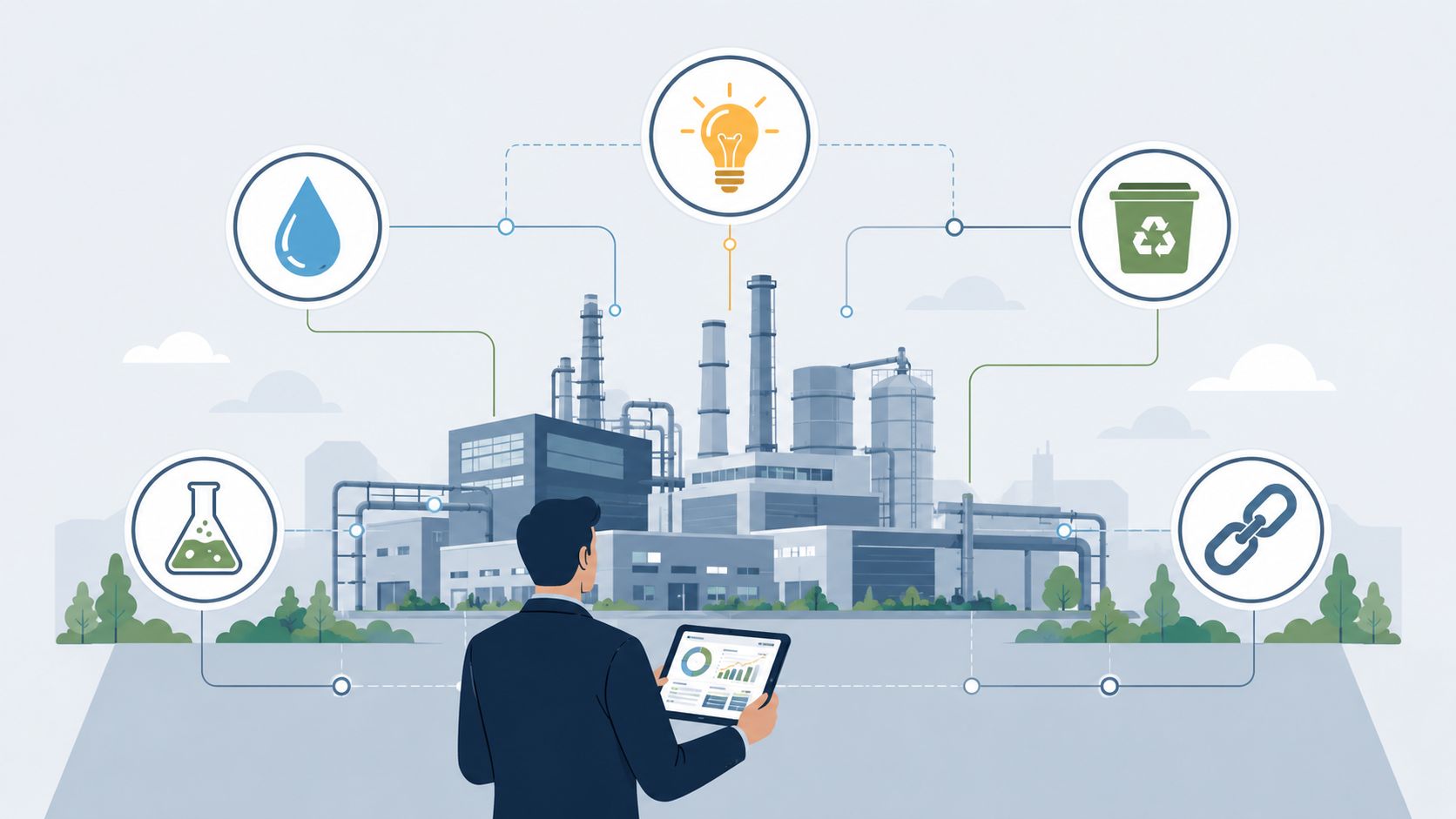
You're halfway through a normal shift, the cleaning crew is restocking supplies, the gym floor is getting wiped down, and someone from corporate suddenly asks for a sustainability figure tied to the building's electricity use. That's the moment most facility teams realize sustainability reporting standards aren't just a headquarters problem. They're built from the same daily records you already handle, utility bills, waste manifests, chemical logs, contractor invoices, and cleaning schedules.
For facility operators, the shift is simple. Reporting is no longer about writing a polished narrative after the fact, it's about collecting operational evidence in a way that can stand up to review. The same discipline that keeps an office lobby, school hallway, gym floor, or restaurant dining room clean also supports credible disclosures, especially when hygiene practices use disinfectant wipes, commercial disinfecting wipes, or gym wipe dispenser setups to keep high-touch surfaces under control.
Why Facility Operators Should Care About Sustainability Reporting
A facility director usually feels sustainability reporting first as a request for numbers, not as a policy memo. One day it's a utility bill, the next it's a question about Scope 2 emissions, water use, waste handling, or chemical purchases. If your team manages floors, restrooms, locker rooms, loading docks, and contractor oversight, you already sit on the data trail that reporting teams need.
That matters because sustainability disclosure has moved into the mainstream. GRI says companies accounting for 62% of global market capitalization and 40% of all large listed companies reference its standards, and listed companies headquartered in 107 jurisdictions report with them GRI global trends report. GRI also says 87% of listed companies now produce sustainability reports and disclosures, while 40% report using GRI, which shows how far this has moved beyond a niche exercise.
What that means on the ground
If you run a building, the numbers are already there. Electricity consumption, water bills, waste hauler reports, SDS files, janitorial chemical logs, and service contractor records all feed the same reporting chain. A gym owner tracking fitness wipes, a school custodian logging restroom supplies, or a restaurant manager reviewing cleaning frequency is already doing part of the work that auditors and sustainability leads will later review.
Practical rule: treat every recurring operational record as a future evidence file. If a number matters to energy, waste, or hygiene performance, it probably matters to a disclosure too.
That same logic applies when a headquarters team asks for support with assurance and materiality resources. The request may sound abstract, but the evidence usually lives in ordinary facility records. A utility meter log, a waste pickup invoice, or a contractor checklist can help show that reported claims match day-to-day operations.
That's also why cleanliness and reporting belong in the same conversation. Guests, staff, students, and members judge a facility by what they can see, smell, and touch. A strong sanitation program, including visible use of antibacterial wipes, sanitizing wipes, and clearly placed workout wipes, supports both safety culture and the kind of operational consistency reporting frameworks reward.
The Major Standards at a Glance
A facility director usually meets sustainability standards through ordinary work, not through a policy memo. One framework may ask how building energy use affects investors, another may focus on broader impacts on workers, tenants, or communities, and another may pull both views together. The same utility bill, waste ticket, or contractor record can end up supporting more than one disclosure stream.
The names that come up most often are GRI, ISSB standards, ESRS under CSRD, and CDP. TCFD and SASB still matter as reference points, especially where organizations are translating older climate or sector-specific disclosures into newer systems. The practical question is not which one is better. It is who is asking, which materiality lens they use, and what kind of evidence they expect to see.
| Standard | Primary Audience | Materiality Approach | Mandatory Status | Operational Scope |
|---|---|---|---|---|
| GRI | Broad stakeholders, including impacts-focused readers | Impact materiality | Voluntary, but widely used | Environmental, social, governance, and value chain impacts |
| ISSB IFRS S1 | Investors and capital providers | Financial materiality | Adopted through local rules in some markets | Sustainability risks and opportunities that could affect cash flow, financing, or cost of capital |
| ESRS | Investors, regulators, and broader stakeholders | Double materiality | Mandatory for in-scope EU companies | Environmental, social, and governance impacts, risks, and opportunities |
| CDP | Investors, customers, and supply chain counterparties | Disclosure-driven, climate and environmental focus | Voluntary request-based reporting | Climate, water, forests, and related operational data |
| TCFD | Investors and lenders | Financial risk lens | Often used as a baseline or legacy reference | Governance, strategy, risk management, metrics, and targets |
A useful way to read the table is to match each standard to the decision it is trying to inform. GRI is built to show how an organization affects people and the environment. ISSB is aimed at how sustainability issues may affect enterprise value. ESRS pulls both directions into one system. CDP often acts like a recurring questionnaire from customers or investors who want consistent operational evidence, while TCFD still shows up as a familiar structure for climate disclosures.
That overlap matters because facility data rarely lives in one neat folder. Energy meters, water bills, cleaning chemical logs, waste manifests, and contractor records can all serve different standards at once, as long as the team knows which question each framework is asking. This is also why assurance and materiality resources are useful. They show how organizations connect evidence, material topics, and reporting expectations without rebuilding the process every time a new disclosure request arrives.
The market is already moving in that direction. The OECD says 71% of jurisdictions now use ESRS, IFRS Sustainability Standards, or other internationally recognized standards, up from 12% at the end of 2022, and 46% had adopted ESRS by the end of 2024 OECD Corporate Governance Factbook 2025. For facility teams, that means framework choice is not just a reporting detail. It shapes what records get collected, how they are organized, and how much of the same evidence can be reused across disclosures.
What Facility Managers Actually Have to Track
The list feels abstract until it is translated into facility terms. A sustainability team may ask for environmental metrics, but the underlying evidence usually comes from the same places your building staff already work with, energy use, water withdrawal, waste generation, cleaning chemical consumption, and workforce safety records.
The operational data behind the labels
An electricity invoice feeds the Scope 2 picture. Water bills, meter reads, and submeter data support water disclosures, and how submetering cuts water use shows why tighter measurement matters in daily operations. Waste hauler manifests and pickup tickets become evidence instead of clutter. Cleaning chemical purchase logs and inventory sheets show what products are used, how often they appear, and where the higher risk sits. Worker training records and incident logs connect to labor and safety topics under GRI and ESRS.

The same pattern shows up across settings. In an office, the starting point is often HVAC, lighting, waste, and janitorial service logs. In a gym, it includes gym equipment wipes, cleaning frequency, and locker-room sanitation records. In a school, the records may be chemical storage, custodial procedures, and safety training. In a restaurant, they may be food-area cleaning, grease waste, and supplier records. The category changes, but the evidence trail stays familiar.
A record that helps you control cost, safety, or cleanliness usually helps with sustainability reporting too.
KPMG's 2024 survey, as noted earlier in the OECD material, shows that sustainability reporting has become normal practice for large companies, with carbon targets and sustainability leadership also widely reported. That does not turn every facility manager into a sustainability specialist. It means the numbers already collected by the operations team are now part of broader governance and disclosure work.
For water-heavy sites, the operational lesson is straightforward. Better measurement makes reduction easier. That is why submeter data matters, especially when teams are trying to separate a whole-building bill into the rooms, processes, or fixtures that are driving use.
Supply Chain and Contractor Practices Under Scrutiny
A facility's reporting boundary used to stop at the front door in many people's minds. That's no longer enough. Cleaning vendors, sanitation contractors, waste haulers, and other outsourced service providers can all affect the data that ends up in a sustainability report.
What to ask vendors for
If you rely on janitorial partners, ask for the paperwork that proves what they use and how they handle it. That usually means chemical inventories, safety data sheets, worker training records, and waste handling procedures. If your team buys disinfectant wipes in bulk for high-touch cleaning, the purchase trail can also help show product usage patterns and chemical management practices.
For many facilities, the reporting burden gets messy. Contractor data is often less complete than direct operations data, and suppliers don't always track the same way your team does. Start with the biggest spend categories and the highest-risk services first, then widen the scope as the process stabilizes.
A practical sequence works better than a perfect one:
- High-spend vendors first: Focus on the janitorial and sanitation partners that touch the most floor space, restrooms, and equipment.
- High-risk chemicals next: Track products used in disinfection, degreasing, restroom care, and specialty cleaning.
- Waste handling after that: Confirm who collects it, where it goes, and what documentation comes back.
- Training evidence last: Keep records of who was trained, when they were trained, and what procedures they were trained on.
The reason this matters is simple. Standards increasingly care about value-chain impacts, not just in-house activity. That makes contractor oversight part of reporting quality, not just procurement hygiene.

Preparing Your Operations for Reporting
The cleanest way to prepare is to build from what already exists. Utility billing systems, building management systems, waste reports, cleaning logs, and chemical records usually cover a large share of the needed data. The job is to organize that information so it can be trusted later.
A simple prep sequence
Start with a baseline inventory. List every place where energy, water, waste, chemical, and worker-safety data currently lives. Then assign ownership. Energy might sit with engineering, waste with operations, chemical data with procurement or housekeeping, and contractor records with facilities administration. If nobody owns the file, nobody can explain it when questions come back.
Next, document the source for each data point. Write down whether it comes from a bill, a meter, a vendor report, or a manual log. Then define how you normalize it. A facility can report total usage, but it often needs context such as floor area, occupancy, or operating hours to make the numbers useful across sites.
Good reporting is a control process, not a spreadsheet exercise. If the source, owner, and method aren't clear, the number may look precise but still be weak.
A short internal review helps too. Before any report goes upward, have the facility lead, finance contact, and whoever owns contractor oversight compare notes. That catches mismatched units, missing periods, and odd shifts caused by vendor changes. For a useful reference on how clean documentation supports operational work, see green-clean janitorial.
The overall goal is steadier than it sounds. Keep the data trail small enough to manage, but strong enough to defend. That means fewer ad hoc requests, fewer last-minute reconciliations, and far less confusion when the corporate team asks where a number came from.
Integrating Reporting Into Sanitation and Hygiene Operations
A facility can spend a lot of time talking about sustainability reporting in meeting rooms, while the most useful evidence sits on carts, in supply closets, and in the logs cleaners already use. Sanitation belongs in the reporting process because it creates a record of what happened, where it happened, and which products or routines made it happen.
Why hygiene data belongs in the reporting stack
A gym that places gym wipe dispensers at equipment stations is already creating a traceable workflow. The same is true when a facility uses EPA registered disinfecting wipes for shared surfaces, because the purchase trail, refill pattern, and staff instructions all leave a paper trail that can be checked later. When cleaning teams record how often they sanitize handles, counters, and touchpoints, those logs can support health-and-safety disclosures and internal audits at the same time.
Facility leaders do not need a separate system for this. Keep the supplies where the work happens, record use the same way each time, and make sure the buying records stay organized. For operators sourcing bulk gym wipes or commercial disinfecting wipes, a resource like wipes.com can help when comparing sanitation products that fit an operational cleaning program.
The revised ESRS reduce the amount of required reporting, which changes the job for hygiene teams. It is better to keep a smaller set of records that are accurate, consistent, and easy to trace than to gather a wide mix of notes that no one can defend later. In practice, that means focusing on the data streams that connect sanitation, safety, and vendor oversight.

Practical rule: if a cleaning habit is visible to staff and guests, it should also be visible in your records.
The EBRD ESG guidelines stress that data gaps, missing values, estimates, and method changes should be disclosed clearly, and that collection should define owners, sources, timeframes, and normalization methods before anyone starts compiling numbers. That fits sanitation work well. If wipe consumption is estimated in one building because dispensers are not metered, record the method and keep it consistent until the process improves.
What Changed With the Revised ESRS and Why It Matters
A lot of managers hear that the standards were revised and assume they can ease up. The better reading is different. The revised ESRS reduce the amount of data that has to be reported, but they also make the remaining records more important, easier to audit, and more closely tied to business decisions.
For facility leaders, that shift matters because reporting now rewards discipline over volume. Instead of chasing every possible datapoint, the stronger approach is to keep a smaller set of records that are accurate, consistent, and easy to trace back to the source. That usually means tightening the same operational inputs you already use to manage energy, water, waste, contractor activity, and sanitation.
What to do with that change
Keep the data that already supports operations, then make it cleaner. Energy, water, waste, contractor records, and sanitation logs still form the right base because they already help with cost control and compliance. The change is less about what belongs in the file and more about how those records are captured, checked, and tagged so they can stand up to review.
ESRS still asks for material information about impacts, risks, and opportunities. It also keeps the link between environmental and social issues and financial position, performance, and cash flows, so facility data cannot sit off to the side. Finance, operations, and leadership all need to be able to read the same numbers and understand what they mean.

The practical lesson is straightforward. Pick the few datapoints that matter most, collect them well, and make sure every site uses the same method. That is much easier to defend than gathering everything loosely and hoping it lines up later.
If your team needs a reference for keeping records organized, the same habits described in this compliance documentation guide apply here too. Clear ownership, consistent source files, and a method that stays the same from month to month make the reporting load easier to manage.
Reporting With Imperfect Data and Practical Next Steps
No facility gets perfect data every month. Meters fail, vendors lag, and contractor records sometimes arrive incomplete. The right response is not to hide the gaps. It's to describe them clearly and keep the method consistent.
The CSRD requires sustainability information to be included in the management report, prepared in an electronic reporting format, and supported by external assurance and digital tagging, which gives the regime concrete compliance mechanics beyond narrative disclosure academic analysis of CSRD mechanics. That matters because it rewards traceable records, not polished guesses.
A workable checklist
- Assign owners: Put one person in charge of energy, one for water, one for waste, and one for chemical or hygiene records.
- Capture sources: Keep the bill, meter read, vendor report, or log sheet that produced the number.
- Normalize consistently: Use the same floor area, occupancy, or operating period across sites when comparing results.
- Review before submission: Check for missing months, unit mismatches, and unusual spikes.
- Document methodology changes: If a vendor changes, a meter is replaced, or a calculation method shifts, note it immediately.
If you need a practical reference point for documentation habits, compliance documentation is a good companion read. It reinforces the same habit facility teams need here, keep the paperwork tied to the process, not buried after the fact.
Prioritize cleanliness, keep your disinfectant wipes and commercial disinfecting wipes where people touch surfaces, and make hygiene logging part of the normal routine. If you manage a facility, or sell to one, start treating sanitation records as strategic business data, then explore how WipesBlog.com can help you keep your cleaning program practical, visible, and ready for the next reporting request.
Leave a Reply