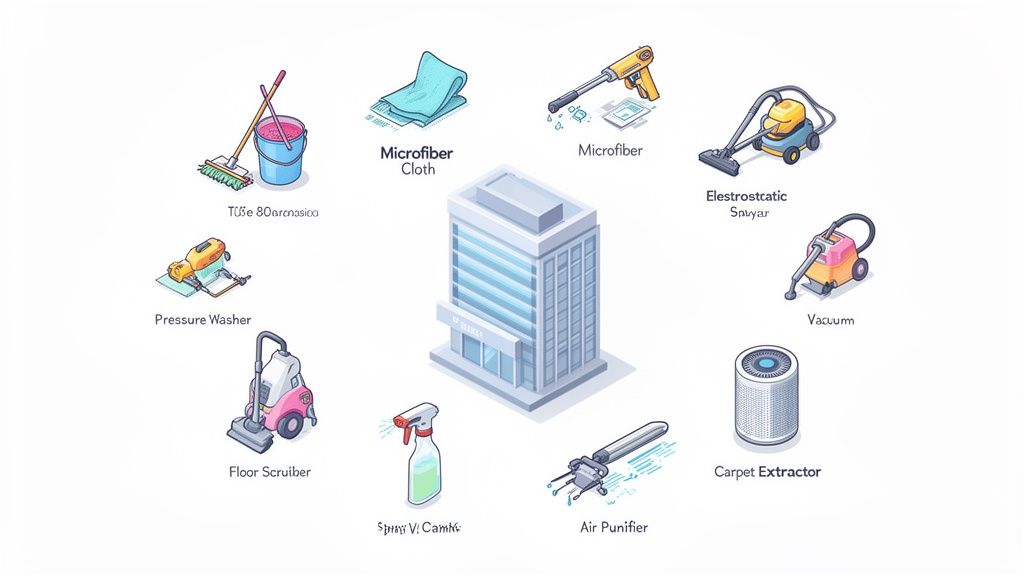
In today's competitive landscape, 'clean' is no longer just about appearances—it is a critical business asset. For facility managers, business owners, and sales professionals, understanding the different types of cleaning and disinfection is key to protecting public health, building customer trust, and enhancing brand reputation. A sparkling floor is one thing, but a verifiably sanitized environment is the new gold standard. This guide breaks down the most effective cleaning methodologies for commercial and public facilities.
This article will move beyond basic janitorial duties to explore high-tech electrostatic spraying, the strategic implementation of high-touch sanitization programs, and the psychological power of visible sanitation protocols. We'll explore how integrating these advanced techniques, especially with reliable tools like disinfectant wipes, can provide a significant return on investment. This is achieved by boosting guest confidence and improving operational efficiency across the board.
For those in sales, understanding these modern cleaning systems opens new doors for promoting value-added solutions. A key sales tip is to educate clients on the hygiene ROI; a clean facility isn't just an expense, it's an investment in customer loyalty and staff well-being. By incorporating powerful tools like disinfectant wipes into a larger supply offering, you can provide a complete, convenient hygiene solution.
Whether you manage a bustling gym, a high-traffic office, a school, or a retail space, mastering these distinct types of cleaning will provide actionable strategies to set your facility apart. This comprehensive list offers the specific insights needed to elevate your cleaning standards from a necessary expense to a powerful operational advantage.
1. Electrostatic Disinfection Spraying
Electrostatic disinfection is a cutting-edge cleaning technology designed for comprehensive surface coverage. This method works by charging liquid disinfectant particles as they pass through a specialized sprayer nozzle. These electrostatically charged droplets are then attracted to surfaces, much like magnets, allowing them to wrap around and evenly coat all sides of an object, including hard-to-reach areas that manual cleaning might miss. This "wrap-around" effect makes it one of the most effective types of cleaning for achieving total disinfection.

This technology provides a more uniform and complete application of disinfectants compared to traditional trigger sprayers or foggers, reducing chemical waste while improving pathogen elimination. The process ensures that even the undersides of desks, chair legs, and complex equipment are fully sanitized.
When to Use Electrostatic Spraying
This method is ideal for facilities requiring rapid, high-level disinfection across large or complex areas. It's particularly valuable for:
- High-Traffic Venues: Offices, schools, and transit hubs use it to sanitize common areas and restrooms efficiently.
- Rapid Turnovers: Gyms and event venues rely on it to quickly prepare for the next class or crowd.
- Complex Interiors: Restaurants and retail stores use it to thoroughly sanitize dining areas, changing rooms, and showrooms without missing spots.
Key Insight: The primary advantage of electrostatic spraying is its ability to deliver touchless, 360-degree disinfection, ensuring that every exposed surface receives a consistent layer of disinfectant with minimal human error.
Implementation Protocol for Managers
To effectively integrate this advanced cleaning method, operations managers should establish a clear protocol:
- Pre-Clean First: Remove visible dirt and grime from high-touch surfaces before spraying. Disinfectants work best on pre-cleaned surfaces. A quick wipe-down of desks or countertops is an effective first step.
- Schedule Strategically: Deploy electrostatic spray teams during off-peak or overnight hours to avoid disrupting guests or staff.
- Ensure Proper Dwell Time: Adhere to the disinfectant manufacturer's recommended dwell time, typically 5-10 minutes, before allowing re-entry.
- Document Everything: Maintain meticulous logs of treatment times, areas covered, and chemicals used for compliance and liability protection.
- Prioritize Safety: Train staff on proper PPE usage, including respirators and eye protection, as well as safe handling of the electrostatic equipment.
2. High-Touch Surface Sanitization Programs
A high-touch surface sanitization program is a systematic, data-driven approach to cleaning that focuses on identifying, prioritizing, and frequently disinfecting the surfaces most likely to transmit pathogens. Rather than cleaning an entire space with equal intensity, this method allocates resources to critical contact points like doorknobs, elevator buttons, payment terminals, and handrails. This targeted strategy is one of the most efficient types of cleaning for reducing germ transmission in public facilities.

The core principle, popularized by healthcare facilities and widely adopted following CDC guidance, is to interrupt the chain of infection where it happens most often. By concentrating efforts on these few critical square inches of a facility, managers can achieve a significant public health impact with a focused team. It shifts cleaning from a general task to a precise, tactical operation.
When to Use High-Touch Sanitization Programs
This approach is essential for any facility with a constant flow of people, where the risk of cross-contamination is high. It is particularly effective for:
- Offices & Schools: Implement hourly protocols for conference room tables, shared equipment, and classroom desks.
- Fitness Centers: Gyms must sanitize weight equipment, treadmill controls, and locker handles every 30-60 minutes.
- Restaurants & Retail: Sanitize POS systems, door handles, and service counters between customer interactions.
Key Insight: High-touch sanitization creates visible and verifiable cleanliness. Scheduling this activity during operational hours not only reduces pathogen spread but also reassures guests and customers, building trust in the safety of your environment.
Implementation Protocol for Managers
To launch a successful high-touch program, operations managers should implement a structured and accountable system:
- Map Your Zones: Create a laminated "high-touch zone map" for each area, clearly marking all critical surfaces (light switches, keyboards, shared phones) and their required cleaning intervals.
- Use the Right Tools: For speed and accuracy, pre-saturated disinfectant wipes are ideal. They eliminate the guesswork of chemical mixing and ensure proper dwell times without drips or overspray.
- Establish Accountability: Implement a digital checklist system using QR codes or mobile apps that staff can scan and update after cleaning each zone.
- Prioritize Tasks: Train staff to understand that high-touch sanitization is a priority task that must be completed on schedule, even before general cleaning duties.
- Conduct Audits: Perform weekly spot-checks of high-touch zones to verify compliance and provide feedback to the cleaning team.
3. Microfiber Wipe Technology and Cleaning Systems
Microfiber technology represents a significant advancement in manual cleaning, leveraging specially engineered synthetic fibers to trap and remove pathogens with remarkable efficiency. Unlike traditional cotton cloths that push dirt around, microfiber cloths feature split fibers that create a positive charge, actively attracting and capturing negatively charged dust, debris, and microbes. This structure allows them to remove up to 99.9% of bacteria from surfaces with just water, making this one of the most effective types of cleaning for reducing both contaminants and chemical reliance.

This method ensures a deeper, more effective clean by physically lifting away microscopic particles instead of just smearing them. The system's effectiveness is further enhanced by using specific protocols, such as color-coding and proper laundering, to prevent cross-contamination and maximize the lifespan of the materials.
When to Use Microfiber Systems
This methodology is perfect for facilities aiming to enhance cleaning efficacy, reduce chemical usage, and prevent cross-contamination through systematic protocols. It is highly adaptable for:
- Preventing Cross-Contamination: Offices and schools implement strict color-coded systems, using red microfiber for restrooms and blue for general areas.
- Protecting Delicate Surfaces: Tech companies and high-end retailers rely on quality microfiber to clean screens and displays without causing scratches.
- High-Turnover Sanitization: For maximum efficiency, pre-saturated disinfectant wipes combine the power of microfiber with a pre-measured chemical solution for rapid, effective cleaning of high-touch surfaces between meetings or classes.
Key Insight: Microfiber's primary advantage is its ability to physically remove a high percentage of pathogens from a surface, drastically improving sanitation with less dependence on harsh chemical disinfectants.
Implementation Protocol for Managers
To deploy a microfiber cleaning system effectively, operations managers should establish a structured program:
- Invest in Quality: Purchase premium-grade microfiber with an 80/20 polyester-polyamide blend for maximum absorbency and particle trapping.
- Implement a Color-Coding System: Assign colors to specific zones to prevent cross-contamination (e.g., red for high-risk restrooms, green for kitchen/food prep areas, blue for general office spaces).
- Train Staff on Folding: Teach staff to fold each cloth into 8 or 16 clean sections. This maximizes the usable surface area of each cloth before it needs laundering.
- Establish a Laundering Process: Wash microfiber cloths separately from other linens in hot water (130°F+) without fabric softener, which clogs the fibers.
- Use Pre-Saturated Wipes for Key Areas: For visible sanitation assurance in guest-facing areas, use pre-saturated disposable microfiber wipes. We recommend Wipes.com Disinfectant Wipes for their convenience and powerful cleaning action.
4. Enzymatic Deep Cleaning
Enzymatic deep cleaning is a biological process that leverages naturally derived enzymes to dismantle stubborn organic matter at a molecular level. Instead of using harsh chemicals or abrasive scrubbing, this method uses specific enzymes like protease (for proteins like blood or sweat), amylase (for starches), and lipase (for fats and oils) to break down complex messes into smaller, water-soluble particles that can be easily washed away. This targeted approach dissolves organic residues that traditional cleaners often leave behind.
This type of cleaning is exceptionally effective at eliminating odors at their source rather than just masking them. By breaking down the organic material causing the smell, enzymatic cleaners provide a permanent solution. This is especially useful in settings like gyms or restaurants where organic build-up is common.
When to Use Enzymatic Cleaning
This method is best suited for tackling deep-seated organic soils, persistent odors, and biofilms that are resistant to standard surfactants and disinfectants. It is a go-to solution for:
- Restoring Grout and Tile: Restaurants use enzymatic treatments in high-traffic kitchens and lavatories to break down grease and organic biofilms in grout lines.
- Eliminating Odors: Offices and schools rely on enzymatic cleaners to completely remove food spill odors and other biological residues from carpets and upholstery.
- Managing Biological Spills: Sports facilities apply them to locker rooms and equipment to break down sweat, body oils, and bloodstains.
Key Insight: Enzymatic cleaners work like a biological lock-and-key, targeting and breaking down specific organic molecules. This makes them highly effective for odor elimination and deep cleaning without damaging the underlying surface.
Implementation Protocol for Managers
To deploy enzymatic cleaners effectively, facility managers should integrate them into a multi-step cleaning process:
- Activate with Warmth: Pre-wet heavily soiled areas with warm water (around 80-110°F) to accelerate enzyme activation and performance.
- Allow Proper Dwell Time: Apply the enzymatic solution and let it sit for the manufacturer-recommended dwell time, typically 15-30 minutes. The enzymes need this time to work.
- Follow with Disinfection: Since enzymes break down soil but do not kill pathogens, follow the enzymatic treatment with a disinfectant. A quick wipe-down with a disinfectant wipe on hard surfaces after treatment ensures a complete clean.
- Test on Sensitive Surfaces: Always test the product on an inconspicuous area first, especially when working with delicate materials like leather or natural stone.
- Store Correctly: Keep enzymatic products in a cool, dry environment to maintain the stability and potency of the enzymes.
5. Touchless/Automated Sanitization Systems
Touchless and automated sanitization systems represent a major leap forward in facility hygiene, leveraging technology to disinfect surfaces and air with minimal to no human intervention. These systems work using various mechanisms, from motion sensors that activate dispensers to UV-C light that neutralizes pathogens on surfaces and in the air. Other examples include automated fogging systems that deploy disinfectants during off-hours, creating a safer environment by reducing cross-contamination from manual contact.
This evolution in cleaning technology not only enhances safety but also demonstrates a visible commitment to health, boosting guest and staff confidence. The core benefit of these types of cleaning is their ability to operate consistently and reliably, reducing the potential for human error.
When to Use Automated Sanitization
This approach is ideal for high-traffic, public-facing facilities where continuous hygiene is critical and reducing shared touchpoints is a priority. It's particularly effective for:
- High-Volume Restrooms: Offices install touchless faucets, soap dispensers, and automatic door openers to minimize germ spread.
- Entryways & Common Areas: Schools and retail stores use motion-activated sanitizer dispensers at entry points and near elevators to encourage frequent use.
- Fitness & Wellness Centers: Facilities deploy these systems to reduce contact with shared items like water coolers and towel dispensers.
Key Insight: Automated systems provide consistent, round-the-clock sanitization for high-risk areas, acting as a powerful supplement to manual cleaning protocols by targeting pathogens at their source without requiring constant staff oversight.
Implementation Protocol for Managers
To successfully deploy automated systems, facility managers should integrate them thoughtfully into existing operations:
- Combine with Manual Cleaning: Use automated systems to maintain a baseline of hygiene, but continue manual cleaning for deep sanitation. Disinfectant wipes are perfect for targeting high-touch surfaces that automated systems may miss, like door handles and payment keypads.
- Strategic Placement: Install UV-C units and dispensers in high-traffic zones like lobbies, restrooms, and service counters for maximum impact.
- Establish Clear Signage: Inform guests how to use the touchless systems, especially if the technology is new to them.
- Perform Regular Checks: Test motion sensors and calibrate systems weekly to ensure proper function and prevent coverage gaps.
- Monitor System Performance: Integrate system alerts into facility management dashboards for real-time monitoring of consumables and operational status.
6. Seasonal and Post-Event Deep Cleaning Protocols
Seasonal and post-event deep cleaning refers to comprehensive, intensive cleaning procedures that go far beyond routine daily maintenance. Scheduled during low-traffic periods, these protocols are designed to address accumulated dirt, grime, and pathogens in hard-to-reach areas, restoring a facility to its optimal state of cleanliness and safety. Unlike daily upkeep, this is a top-to-bottom reset that tackles everything from HVAC systems to deep-seated carpet stains.
This process involves a systematic approach to cleaning areas that are often overlooked during standard operations. It addresses the cumulative wear and tear that high-traffic venues experience, ensuring that buildup is removed before it becomes a permanent or hazardous issue. These protocols are essential for maintaining a facility's long-term value, appearance, and hygiene standards, making it one of the most critical scheduled types of cleaning for large venues.
When to Use Seasonal and Post-Event Deep Cleaning
This method is essential for facilities that experience significant fluctuations in traffic or undergo intense use over short periods. It's a proactive strategy for asset preservation and public health.
- Post-Event Recovery: Event venues and offices implement these protocols after major conferences or holiday parties to restore the space.
- Seasonal Resets: Schools schedule deep cleans during winter or summer breaks to handle immense foot traffic and prepare for the next term.
- Periodic Maintenance: Restaurants conduct monthly or quarterly deep cleans of kitchens and dining areas during historically slow periods to maintain a pristine brand image.
Key Insight: Seasonal and post-event deep cleaning is a strategic, project-based approach that focuses on restoration rather than just maintenance. It revitalizes the environment, extends the life of assets, and prepares a facility for its next peak operational period.
Implementation Protocol for Managers
To execute a successful deep clean, operations managers need a detailed and organized plan:
- Create Detailed Checklists: Develop checklists tailored to your specific facility layout, covering everything from pressure washing entryways to sanitizing upholstery.
- Schedule Far in Advance: Establish a seasonal deep-cleaning calendar 6-12 months ahead to secure specialized vendors and allocate resources without disrupting operations.
- Conduct a Pre-Clean Assessment: Perform a walkthrough to identify problem areas like stained grout, dusty high fixtures, or worn-out sealants that need prioritization.
- Address the Unseen: Prioritize HVAC systems during this time. Schedule professional duct cleaning and filter replacements to improve air quality and system efficiency.
- Document for Liability: Use before-and-after photos to document the completion and thoroughness of the deep clean, providing a clear record for compliance and quality control.
7. Antimicrobial Surface Treatments and Coatings
Antimicrobial surface treatments are protective chemical or nano-technology coatings applied to surfaces to create a long-lasting barrier that actively inhibits microbial growth. Unlike traditional disinfectants that kill microbes upon application, these coatings work continuously to prevent bacteria, mold, and mildew from surviving and multiplying between cleaning cycles. This innovative type of cleaning provides an enduring layer of protection on high-touch surfaces.
These advanced treatments often use technologies like silver-ion or copper-ion, which disrupt microbial cell functions on contact. The coating forms a durable, invisible shield that remains effective for months or even years, depending on the product and surface wear. Beyond traditional methods, innovative surface treatments are emerging. For instance, applying a specialized "Ceramic Coating for Shower Glass" can significantly reduce the build-up of soap scum and hard water spots, illustrating how advanced coatings can simplify cleaning and maintenance in commercial environments.
When to Use Antimicrobial Coatings
This method is best suited for high-touch, non-porous surfaces in public facilities to enhance hygiene and reduce the risk of cross-contamination between cleanings. It is particularly effective for:
- Persistent Protection: Offices apply these coatings to shared desks, conference room tables, and railings to extend disinfection intervals.
- High-Contact Equipment: Gyms use copper-ion coatings on equipment handles, weights, and locker hardware.
- Public-Facing Surfaces: Retail stores and restaurants treat light switches, POS screens, and bathroom fixtures to provide continuous guest protection.
Key Insight: Antimicrobial coatings do not replace cleaning; they supplement it by creating an active, self-sanitizing surface that works 24/7, providing a crucial layer of defense in high-traffic environments.
Implementation Protocol for Managers
To deploy antimicrobial coatings for maximum return on investment, managers should follow a structured approach:
- Surface Preparation is Key: Thoroughly clean and disinfect the surface before application to ensure the coating bonds properly. Remove all residues and allow the surface to dry completely.
- Target High-Touch Points: Focus applications on the highest-traffic surfaces like door handles, elevator buttons, and handrails for the greatest impact.
- Verify Product Claims: Choose products with EPA registration and published efficacy data. Test on an inconspicuous area first, especially on sensitive materials.
- Respect Curing Time: Adhere to the manufacturer’s specified curing time, typically 24-48 hours, before the surface returns to service.
- Establish a Re-application Schedule: Document the application date and product details. Plan for re-application based on the product’s durability and facility-specific wear patterns.
- Train Your Team: Ensure staff understands that coated surfaces still require regular cleaning to remove dirt and grime, even if disinfection intervals can be extended.
8. Visible Sanitation Programs and Guest-Facing Cleaning Demonstrations
Visible sanitation is a strategic approach that turns standard cleaning protocols into a powerful marketing and trust-building tool. Rather than cleaning behind the scenes, this method involves deliberately performing sanitation activities in full view of guests and customers. This transparency reassures observers that the facility prioritizes their health and safety, directly improving their confidence and overall experience. The goal is to make hygiene efforts not just an operational task, but a visible, tangible part of the brand’s commitment to guest well-being.
This technique transforms cleaning from a backstage chore into a front-facing demonstration of care. By making these activities prominent, facilities can showcase their high standards and preemptively address guest concerns about cleanliness. It's a behavioral science-backed method that leverages the power of observation to build brand loyalty and create a perception of a safer, more professional environment.
When to Use Visible Sanitation
This approach is highly effective for any business where customer perception of cleanliness is directly tied to revenue and reputation. It is particularly impactful for:
- Restaurants & Retail: A host visibly wiping down menus and tables or a cashier sanitizing the checkout counter builds immediate trust.
- Offices & Co-working Spaces: Having janitorial staff perform high-touch sanitization during business hours reassures employees and visitors.
- Gyms & Fitness Centers: Staff wiping down equipment between uses or classes demonstrates a strong commitment to member health.
Key Insight: Visible sanitation is less about the physical act of cleaning and more about psychological reassurance. It demonstrates a commitment to safety that guests can see and believe, which is often more powerful than a simple "we are clean" statement.
Implementation Protocol for Managers
To launch a successful visible sanitation program, operations managers should integrate it seamlessly into daily operations:
- Schedule for Peak Visibility: Perform cleaning tasks like wiping down tables or sanitizing restrooms during times of moderate to high guest traffic, not just during off-hours.
- Train Staff for Interaction: Equip cleaning teams with communication skills to briefly explain their process if a guest asks. For example, "We are disinfecting all high-touch surfaces with an EPA-approved product."
- Brand Your Cleaning Team: Use professional, branded uniforms to make your sanitation staff easily identifiable and reinforce their expertise.
- Use Clear Signage: Complement visible cleaning with signs like "Sanitized for Your Protection at [Time]" to document the effort.
- Choose Guest-Friendly Products: Opt for disinfectants with low odor and no harsh fumes to ensure the guest experience remains positive. We recommend Wipes.com Disinfectant Wipes for their effectiveness and user-friendly application in public spaces.
9. Ventilation and Air Quality Optimization for Pathogen Control
While not a direct surface cleaning method, optimizing a facility's ventilation and air quality is a critical component of a comprehensive pathogen control strategy. This approach focuses on diluting, filtering, and exhausting airborne contaminants, including viruses and bacteria. It involves upgrading HVAC systems, enhancing air filtration with higher-rated filters like MERV-13 or HEPA, controlling humidity levels, and ensuring proper air circulation throughout a building. By improving the quality of the air that guests and staff breathe, this method significantly reduces the risk of airborne transmission.
This type of cleaning is a proactive, background measure that works continuously to create a healthier indoor environment. Rather than reacting to contamination, it actively prevents pathogen buildup in the air. For commercial facilities, ensuring optimal ventilation and air quality also includes regular maintenance of air conditioning systems, an essential part of pathogen control. Properly maintained systems are key to effective air filtration and circulation.
When to Use Air Quality Optimization
This strategy is essential for any indoor facility where people gather, especially in enclosed spaces with limited natural airflow. It's particularly vital for:
- High-Occupancy Venues: Large offices, schools, and event centers use advanced HVAC systems to cycle fresh air and filter contaminants.
- Sensitive Environments: Fitness centers and gyms, where heavy breathing increases aerosol production, rely on superior ventilation to mitigate transmission risk.
- Enclosed Spaces: Conference rooms, break rooms, and smaller retail shops benefit greatly from enhanced filtration to protect occupants.
Key Insight: Optimizing air quality is a foundational layer of defense. It complements surface disinfection by addressing the airborne transmission route, creating a more resilient and holistically safe environment.
Implementation Protocol for Managers
To effectively enhance air quality as a cleaning and safety measure, facility managers should develop a clear protocol:
- Consult HVAC Professionals: Work with certified technicians to assess your current system's capacity and identify opportunities for upgrades, such as installing higher-efficiency filters.
- Increase Outdoor Air Intake: Adjust HVAC settings to maximize the circulation of fresh, outdoor air, diluting the concentration of any indoor airborne pathogens.
- Deploy Portable Air Purifiers: Place HEPA-filter air purifiers in high-traffic or poorly ventilated areas like waiting rooms, break rooms, and conference rooms as a supplementary measure.
- Maintain Filters Regularly: Adhere to a strict filter replacement schedule. Clogged filters are ineffective and can harm your HVAC system.
- Monitor and Communicate: Use CO2 monitors as an indicator of ventilation effectiveness and communicate your air quality improvement efforts to staff and guests to build trust.
10. Integrated Cleaning Management and Training Programs
Integrated Cleaning Management is not a physical cleaning method but a strategic, system-wide approach that combines technology, training, and quality control. This management model centralizes cleaning operations, using digital tools like mobile apps and software platforms to schedule tasks, track progress with digital checklists, and conduct quality audits. It ensures that every cleaning and disinfection protocol is executed consistently and verifiably across one or multiple facilities.
This system-based approach moves beyond just performing tasks to creating a documented, accountable, and transparent cleaning ecosystem. It provides operations managers with a high-level view of compliance, staff performance, and overall facility hygiene. This is particularly crucial for businesses with multiple locations, ensuring brand standards for cleanliness are met everywhere.
When to Use Integrated Management
This strategic approach is essential for organizations managing large, complex, or multiple facilities where consistency and compliance are non-negotiable. It's particularly effective for:
- Multi-Site Businesses: Restaurant chains, retail brands, and property management firms use it to enforce uniform cleaning standards and protect brand reputation across all locations.
- High-Stakes Environments: Schools and large corporate campuses rely on these systems to manage and document sanitization schedules, ensuring regulatory compliance.
- Event-Based Operations: Gyms and event venues use integrated checklists and photo verification to manage rapid, high-quality turnovers between classes or events.
Key Insight: The core value of an integrated program is that it transforms cleaning from a series of disconnected tasks into a measurable, manageable, and continuously improving business operation.
Implementation Protocol for Managers
To successfully deploy an integrated cleaning management system, managers should follow a structured rollout plan:
- Pilot Program First: Test the system, software, and training protocols at a single site to identify and resolve any issues before a portfolio-wide implementation.
- Utilize QR Codes: Place QR codes on maps, in specific rooms, or on equipment. When scanned, these codes can link staff directly to task-specific video tutorials or digital checklists.
- Integrate Training and Accountability: Connect training module completion to shift scheduling or payroll systems to ensure all team members are up-to-date on protocols before they can clock in.
- Conduct Monthly Data Reviews: Analyze audit data, task completion times, and quality scores each month to identify trends, refine cleaning frequencies, and optimize staffing levels.
- Standardize Supplies: Ensure all teams have consistent access to effective supplies. For quick and reliable surface disinfection within these programs, we recommend Wipes.com Disinfectant Wipes for their ease of use and powerful formula.
Top 10 Cleaning Methods Comparison
| Method | 🔄 Implementation Complexity | ⚡ Resource Requirements | ⭐ Expected Effectiveness | 📊 Expected Outcomes / Impact | 💡 Ideal Use Cases & Key Advantages |
|---|---|---|---|---|---|
| Electrostatic Disinfection Spraying | 🔄 High — specialized equipment, certification, supplier support | ⚡ Medium-High — equipment $3k–$10k+, EPA disinfectants, trained operators; 1,500–3,000 sq ft/hr | ⭐⭐⭐⭐⭐ — EPA-grade kills ~99.99% of targeted pathogens | 📊 Uniform full-surface coverage; rapid large-area turnovers; reduced staff contact | 💡 Best for offices, schools, gyms, large venues; uniform coverage, fast large-scale disinfection |
| High-Touch Surface Sanitization Programs | 🔄 Medium — protocol creation, ongoing staff discipline | ⚡ Low-Medium — consumables (wipes/sprays), staffing, training (2–4 hr) | ⭐⭐⭐⭐ — targets transmission hotspots; studies show ~70% reduction in controlled settings | 📊 Direct reduction of fomite transmission; visible assurance to guests; scalable frequency | 💡 All facilities; priority for restrooms, fitness equipment, POS systems; highly visible, flexible frequency |
| Microfiber Wipe Technology & Systems | 🔄 Low-Medium — training on technique & laundering processes | ⚡ Low-Medium — cloth inventory (reusable or pre-saturated wipes), laundry infrastructure | ⭐⭐⭐⭐ — traps ~99.9% of particles; reduces chemical reliance | 📊 Lower chemical use (50–70%); improved removal of soils; long-term cost savings | 💡 Universal use; ideal for high-touch and guest-facing areas; gentle on surfaces, color-coded cross-contamination control |
| Enzymatic Deep Cleaning | 🔄 Medium — requires temperature, dwell time control and procedure knowledge | ⚡ Medium — enzyme products, warm water, longer dwell times (15–30 min) | ⭐⭐⭐ — excellent for organic soils and odors; less standalone antiviral efficacy | 📊 Breaks down organic residues and odors; eco-friendly; slower process, may need follow-up disinfection | 💡 Gyms, restaurants, schools with bio-soils or odors; safe for fabrics, reduces chemical residues |
| Touchless / Automated Sanitization Systems | 🔄 High — integration, calibration, safety protocols, IT/maintenance | ⚡ High — capital $2k–$20k+ per unit, power, consumables, maintenance | ⭐⭐⭐⭐ — UV-C 99.9% in line-of-sight; automation reduces human error | 📊 24/7 consistent application, labor savings, audit trails; may miss crevices or shaded areas | 💡 Offices, restaurants, high-traffic venues; reduces contact points, strong marketing signal |
| Seasonal & Post-Event Deep Cleaning Protocols | 🔄 Medium-High — advanced planning, downtime coordination | ⚡ Medium-High — labor, specialized equipment rentals, $2k–$15k+ per session | ⭐⭐⭐⭐ — restores baseline cleanliness; prevents buildup and improves IAQ | 📊 Extends asset life; addresses hidden soils; improves indoor air quality and readiness between peaks | 💡 All facilities; essential post-event, seasonal resets, HVAC and carpet-focused deep maintenance |
| Antimicrobial Surface Treatments & Coatings | 🔄 Medium — professional application, curing, surface testing | ⚡ Medium-High — $5–$25+/sq ft initial; reapplication and monitoring | ⭐⭐⭐⭐ — continuous passive reduction (claimed 99.9%); effectiveness varies with wear | 📊 Reduces manual disinfection frequency; long-lasting barrier; requires touch-ups in high-friction areas | 💡 High-traffic touchpoints (railings, handles, desks); cost-effective long-term for busy sites; supplementary, not replacement |
| Visible Sanitation Programs & Guest-Facing Demonstrations | 🔄 Low — scheduling and staff guest-interaction training | ⚡ Low — uniforms, signage, timing; modest staffing adjustments | ⭐⭐⭐ — increases perceived cleanliness (40–60% uplift in confidence); actual impact depends on technique | 📊 Improves guest satisfaction and reviews; marketing content; requires consistency to be credible | 💡 Retail, restaurants, gyms; builds guest confidence and review uplift with low capital outlay |
| Ventilation & Air Quality Optimization | 🔄 High — HVAC upgrades, balancing, monitoring, compliance | ⚡ High — HEPA/MERV upgrades, UV-C in ducts, humidification, monitoring equipment | ⭐⭐⭐⭐ — addresses airborne transmission; documented 40–70% reduction in illnesses when optimized | 📊 Major reduction in airborne risk; improved IAQ, productivity, and long-term health outcomes | 💡 Indoor high-occupancy spaces (offices, gyms, schools); preventive strategy complementing surface cleaning |
| Integrated Cleaning Management & Training Programs | 🔄 Medium — change management, pilot-to-rollout, policy standardization | ⚡ Medium — software, training time, device access, ongoing updates | ⭐⭐⭐⭐ — improves compliance, consistency and measurable ROI | 📊 Data-driven task optimization; auditable records; reduced variability across sites | 💡 Multi-site businesses, schools, large facilities; centralizes schedules, audits, and training for consistent execution |
Turn Your Cleaning Strategy into a Competitive Advantage
Moving beyond the fundamentals of basic janitorial service is no longer optional; it's a strategic imperative. As we've explored, the various types of cleaning are not isolated tasks but interconnected components of a comprehensive hygiene ecosystem. From the microscopic precision of Enzymatic Deep Cleaning to the broad-reaching effectiveness of Electrostatic Disinfection, each method offers a unique tool to protect your facility, reassure your patrons, and elevate your brand's reputation. The true power lies not in mastering one technique, but in skillfully integrating several to create a layered, resilient cleaning protocol tailored to your specific environment.
For operations managers across diverse facilities, from bustling gyms to high-end retail stores, the message is clear: your approach to cleanliness directly impacts your bottom line. A well-executed strategy is a visible testament to your commitment to health and safety, building a deep, unspoken trust with every person who walks through your doors.
From Cost Center to Value Driver: Your Actionable Next Steps
Translating this knowledge into action is the critical next step. Don't let the complexity of these advanced methods intimidate you. Instead, view them as a roadmap to operational excellence. Here is how you can begin transforming your facility’s cleaning program today:
Conduct a Hygiene Gap Analysis: Review your current protocols against the ten cleaning types discussed in this article. Where are you excelling? Where are the critical gaps? Identify your top three high-risk areas or operational weaknesses to address first. For example, a gym might realize its high-touch equipment sanitization is inconsistent, pointing to a need for a more robust program.
Pilot a New Method: You don’t need to overhaul everything at once. Choose one or two promising strategies to pilot in a specific area. An office could test a Visible Sanitation Program in its main lobby, while a restaurant could implement a more frequent high-touch sanitization schedule for its POS systems to measure feedback and operational impact.
Empower Your Team with Targeted Training: An Integrated Cleaning Management Program is only as strong as the people executing it. Invest in training that goes beyond procedural checklists. Explain the "why" behind each technique, from the science of microfiber technology to the public health importance of ventilation optimization. Empower your staff to be hygiene ambassadors, not just cleaners.
Integrate Efficient, High-Impact Tools: For daily maintenance and high-traffic periods, simple, effective tools are essential. Integrating disinfectant wipes into your workflow for high-touch surface sanitization provides an immediate, visible, and effective solution. They are perfect for quick wipe-downs of desks, gym equipment, and retail counters.
The ROI of a Superior Clean
For sales professionals in the cleaning industry, the conversation must shift from cost to value. Frame your offerings not as an expense, but as an investment with a clear return.
Key Selling Point: A strategic cleaning program reduces absenteeism, minimizes liability risks, boosts customer loyalty, and generates positive online reviews. This is the tangible hygiene ROI that resonates with decision-makers.
Show your clients how a combination of deep cleaning protocols and daily upkeep with tools like disinfectant wipes creates a consistently safe and welcoming environment. This layered approach is far more compelling than a simple bid for basic janitorial services. Educating them on the long-term benefits of investing in hygiene—like improved employee morale and customer retention—can close larger deals.
Ultimately, mastering the different types of cleaning transforms your facility from a space that is simply "not dirty" into one that is actively promoting health and well-being. This distinction is what separates the industry leaders from the rest. By adopting a proactive, strategic, and visible approach to hygiene—and integrating powerful tools like disinfectant wipes into your daily routine or product offerings—you are not just cleaning surfaces; you are building a foundation of trust, safety, and excellence that will become your most powerful competitive advantage.
Leave a Reply