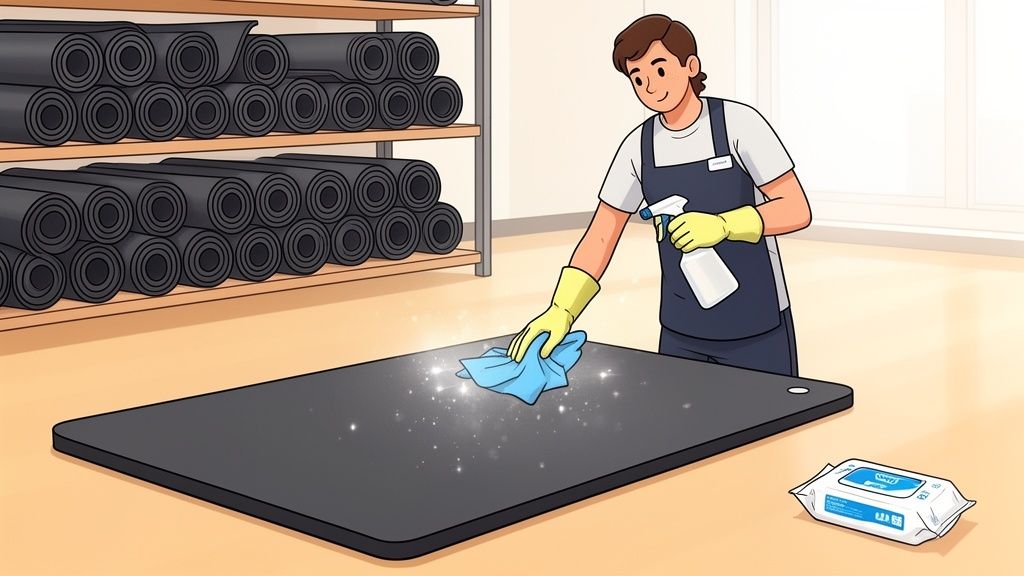
To keep your gym mats in top shape, it's a two-part rhythm: a quick daily wipe-down with a solid disinfectant and a more thorough deep clean once a week using a pH-neutral cleaner. The process is simple but non-negotiable for any commercial facility. First, get rid of any loose debris. Then, apply your cleaning agent—don't soak it. Finally, and this is critical, let the mat dry completely before you store it. Cutting corners here is an open invitation for microbial growth and damages your investment.
This isn't just about hygiene; it’s about protecting your assets and keeping your members happy.
Why Spotless Gym Mats Are Your Best Member Retention Tool
In the competitive fitness industry, it’s the little things that separate the good facilities from the great ones. You can have the best equipment and the most charismatic trainers, but if a member's first impression is a sticky, grimy mat, you've already lost them. That perceived lack of cleanliness can be the silent killer of your retention rates and your facility's reputation.
Think about it: for many exercises, the mat is the primary point of physical contact. A stained or smelly mat sends an immediate, powerful message—one of carelessness. It’s not just about aesthetics; it’s about trust. When a member walks into a space that feels, looks, and smells clean, they feel safer. They feel valued. They feel confident that they chose the right place to invest in their health. Using high-quality disinfectant wipes is a visible signal of that commitment.
The Unspoken Link Between Hygiene and Loyalty
Every business owner knows that acquiring a new customer costs far more than keeping a current one. This is where your cleaning protocol stops being a janitorial task and starts becoming a powerful business strategy. A visibly clean facility directly impacts how your clients feel about their health and safety, which is a top priority in any shared public space, from gyms to offices.
And this isn't just a hunch. The data backs it up, revealing a direct line between how clean a gym is and whether members stick around. In fact, some studies show that a gym's cleanliness can influence a member's decision to renew by as much as 90%. Facilities that let hygiene slip see their renewal rates plummet. It’s a huge financial risk to overlook something so simple. You can explore the full research on how cleanliness impacts gym membership renewals yourself.
Cleanliness is no longer just a maintenance task; it’s a core part of the customer experience. A spotless mat tells your clients you respect their health, turning a simple wipe-down with a quality disinfectant wipe into a tangible sign of your brand's commitment.
Turning Cleaning into a Competitive Advantage
For facility managers and sales professionals, this presents a golden opportunity. In a crowded market, you can make your commitment to hygiene a real differentiator. Highlighting your use of professional-grade disinfectant wipes, for example, isn't just about sanitation—it's about showing you invest in premium care and deliver a superior customer experience.
Here’s how to frame it for everyone on your team:
- For Facility Owners: A rock-solid cleaning schedule isn’t an expense; it’s an investment in customer retention and your business's reputation.
- For Sales Professionals: Make hygiene part of your sales pitch. Point out the cleaning stations. Talk about how often you deep-clean high-touch areas. It demonstrates a commitment to quality and justifies premium pricing.
- For Janitorial Staff: You are on the front lines of customer satisfaction. Your consistent, high-quality work is what keeps people coming back.
At the end of the day, a pristine mat is more than a clean surface. It’s a symbol of your dedication to excellence, a silent promise of safety, and one of your most effective—and most overlooked—tools for building a loyal customer base. By integrating quality disinfectant wipes and a consistent cleaning routine, you’re not just cleaning mats. You’re building your brand and securing its future.
Your Actionable Protocol for Cleaning Every Type of Gym Mat
Theory is great, but putting it into practice is what separates a clean facility from a grimy one. A one-size-fits-all approach to cleaning gym mats just doesn’t work. Different materials react completely differently to chemicals, tools, and even scrubbing pressure. What works wonders on a rugged rubber floor could absolutely shred a delicate foam mat.
Getting this right isn't about creating more work for your team; it's about making their work smarter and more effective. By tailoring your cleaning process to each specific surface, you protect your investment, create a consistently safe environment, and show your clients that you genuinely care about the details.
The connection between clean mats and a healthy business is direct and powerful. Think of it like this:

As the flow shows, a clean mat makes a member feel safe and valued. That feeling of confidence leads directly to renewals, creating a stable, loyal customer base.
To help you standardize your approach, here’s a quick-glance table breaking down the core protocols for the most common mat types you’ll encounter.
Gym Mat Cleaning Protocols by Material Type
| Mat Material | Daily Cleaning Method | Deep Cleaning Frequency | Key Precaution |
|---|---|---|---|
| Foam | Disinfectant wipe-down after each use. | Weekly | Avoid over-saturating; moisture can lead to mildew. Never use bleach. |
| Vinyl | Member wipe-down and staff spot-cleaning with pH-neutral spray. | Weekly | Must rinse thoroughly after deep cleaning to prevent slippery residue. |
| Rubber | Sweep/vacuum to remove debris and chalk. | Weekly to Bi-Weekly | Avoid oil-based cleaners; they will degrade and crack the rubber over time. |
This table serves as a solid starting point, but the real magic is in the details. Let’s dive into the specifics for each material.
Cleaning Porous and Semi-Porous Foam Mats
You’ll find foam mats everywhere—yoga studios, school gyms, and martial arts dojos. They’re prized for their comfort, but their soft, porous nature makes them a potential sponge for sweat and bacteria if you're not careful. The trick is to be gentle but thorough; aggressive chemicals or harsh scrubbing will tear the foam right up.
For the daily grind, especially when you need a quick turnover between classes, disinfectant wipes are your best friend. They deliver the perfect amount of cleaning solution without oversaturating the mat, which is a fast track to mildew. A quick wipe-down neutralizes germs from sweat and skin contact in seconds, making them an efficiency hack for any busy facility.
When it's time for a deeper weekly clean:
- Prep the Surface: First, get all the loose stuff off. A quick sweep or a vacuum with a soft brush attachment will pick up hair, dust, and other debris.
- Mix Your Solution: A simple mix of one part white vinegar to four parts warm water does the trick. Want a little more cleaning power? A few drops of mild dish soap will help. Just stay far away from bleach or ammonia-based cleaners.
- Apply and Wipe: Grab a soft microfiber cloth, dip it in your solution, and wring it out until it’s just damp. Gently wipe down the entire mat, giving a little extra attention to any visible spots or stains.
- Dry Thoroughly: This step is crucial. Use a separate, dry microfiber cloth to soak up any excess moisture. Then, prop the mat up or hang it so air can circulate on all sides until it's completely dry. Never, ever roll up or store a damp foam mat. For facilities with tons of mats, like wrestling rooms, this guide on how to clean wrestling mats offers more specialized tips.
Maintaining Durable Non-Porous Vinyl Mats
Vinyl mats are the workhorses of commercial gyms, used for everything from general fitness to gymnastics. Their non-porous surface is great at resisting moisture, making them pretty easy to clean. The biggest risks here are using abrasive tools that scratch the surface or harsh solvents that strip its protective layer. Your goal is simple: disinfect effectively without leaving behind a slippery or sticky film.
Daily cleaning is a team effort. By placing disinfectant wipe dispensers in convenient, high-touch areas, you empower members to clean their own mats after use. This creates a culture of shared responsibility and keeps the mats cleaner throughout the day. Your staff can then do a quick sweep during off-peak hours to catch anything that was missed.
For the weekly deep clean:
- Prep the Surface: Start with a quick sweep or vacuum to remove any surface grit. You don't want to be grinding dirt into the vinyl while you're trying to clean it.
- Choose the Right Cleaner: A pH-neutral cleaner is your best bet for vinyl. Dilute it exactly as the manufacturer recommends. This type of cleaner is strong enough to cut through grime but gentle enough to protect the mat's finish.
- Apply and Scrub: Use a mop or a soft-bristle brush to apply the solution. For those textured vinyl mats, a brush really helps get into the crevices and lift out trapped dirt.
- Rinse, Rinse, Rinse: Don't skip this step! Go back over the entire mat with a clean mop and fresh water to remove any leftover cleaning solution. Lingering residue is a magnet for new dirt and can become dangerously slippery.
- Air It Out: Let the mat air dry completely before anyone walks on it. A few large fans can speed this process up dramatically.
Disinfecting High-Impact Rubber Flooring
Rubber flooring is the standard for weight rooms and high-impact zones for a reason—it's tough. But that durability doesn't make it immune to grime. It can trap chalk, sweat, and body oils, leading to nasty odors and a slick surface if it isn't maintained. The big challenge with rubber is getting it truly clean without using oil-based products, which will cause the material to degrade and crack.
Pro Tip: That dull, chalky look on older rubber mats isn't always from wear and tear. More often than not, it's a film left behind by improper cleaning. A solid deep clean with the right pH-neutral solution can often restore that rich, black color and texture.
Your deep cleaning game for rubber needs to be strong:
- Prep the Area: A thorough vacuum is a must, especially along the edges and in the corners where debris loves to hide.
- Stick with pH-Neutral: Just like with vinyl, a pH-neutral cleaner is your go-to. Harsh degreasers or solvent-based chemicals will make the rubber brittle over time.
- Agitate to Liberate: For big areas, an auto-scrubber with a soft-bristle brush is a lifesaver. For smaller zones, a deck brush and mop will do. Agitation is the key here; you need to scrub to lift that embedded grime from the textured surface.
- Rinse and Dry: A complete rinse is non-negotiable to get rid of all the residue. A wet-vac is the most efficient way to suck up the dirty water, followed by air drying with fans to get it ready for action.
Building a Facility Culture That Prioritizes Cleanliness
A detailed cleaning protocol is a great start, but its real power is unlocked when both your staff and customers live it out every day. A pristine facility—be it a gym, office, or school—isn't just the result of a janitor's schedule; it’s the product of a shared culture where everyone understands their role in keeping the space healthy. The goal is to kill the "someone else will clean it" mindset and replace it with "we all keep it clean."
This cultural shift completely changes how customers see your brand. When they notice clean surfaces, fully stocked disinfectant wipe dispensers, and staff actively sanitizing high-touch areas, it sends a powerful message: you genuinely care about their well-being. That visible effort is what builds trust and makes them feel good about their investment in your services.

Make Cleanliness Effortless and Obvious
Want to encourage the right behavior? Make it ridiculously easy to do the right thing.
Placing disinfectant wipe stations in high-traffic, impossible-to-miss locations is more than a convenience—it’s a powerful psychological nudge. When cleaning supplies are right there, people are exponentially more likely to wipe down their mats, desks, or equipment.
But access alone isn't always enough. The power of a simple, direct prompt is massive. One study that measured post-workout cleaning found that, left to their own devices, people cleaned equipment at a shockingly low rate of just 8%. However, when researchers added simple sign prompts and made cleaning materials more accessible, the rate of full cleaning skyrocketed to an average of 53%.
Your facility's environment should constantly whisper, "We clean up here." From the wipe dispenser right next to the yoga mats to a friendly sign in the office kitchen, every detail should guide users toward maintaining a hygienic space.
Train Your Team on the ‘Why,’ Not Just the ‘How’
Your staff are the champions of your facility's culture. If they get the "why" behind your cleaning protocols, they'll perform their duties with more conviction and, in turn, inspire customers to do the same. Training shouldn't just be a checklist of tasks; it needs to connect their actions to crucial outcomes like client safety, retention, and your brand's reputation.
Here are a few practical tips to get this rolling:
- Make Hygiene Part of Onboarding: During new member orientations or employee inductions, take 30 seconds to point out the disinfectant wipe stations. Explain the "wipe down after use" policy not as a rule, but as a community standard.
- Lead by Example: When staff members are seen wiping down equipment or shared surfaces, it normalizes the behavior. It reinforces its importance without anyone having to say a word.
- Use Positive Framing: Ditch the demanding rulebook. Frame cleaning as an act of respect for the next person. A sign that says, "Leave it clean for the next person" works far better than a list of commands.
Just like restaurants must follow strict UK food hygiene regulations, public facilities need clear, documented hygiene standards. It’s fundamental to your operational integrity and key to fostering that culture of cleanliness.
Sell the Vision of a Cleaner Facility
If you're a sales professional in the cleaning supply industry, this cultural angle is your secret weapon. Stop selling disinfectant wipes and start selling the vision of what a cleaner facility means for the business.
Frame the conversation around the tangible ROI that comes from earning customer trust and loyalty. When you're talking to a business owner or facility manager, hit these points hard:
- Reduced Liability: A well-documented and highly visible cleaning program is a powerful defense against risks associated with germ transmission.
- A True Marketing Differentiator: In a crowded market, a demonstrably clean facility becomes a key selling point. It’s something you can—and should—feature in marketing materials and on facility tours to educate clients on hygiene ROI.
- Boosted Customer Confidence: Post-pandemic, consumers are hyper-aware of hygiene. Visible cleaning efforts make them feel safer and more comfortable, which often leads to them visiting more often and staying longer.
Ultimately, building a culture of cleanliness is about creating a system of shared responsibility. By making cleaning easy, educating everyone on its importance, and leading from the front, you can transform your facility from a space people just use into a community they're proud to maintain.
How to Market Your Commitment to Hygiene
Your rigorous cleaning protocol is more than just a maintenance task; it’s one of your most powerful marketing assets. In a crowded market, showing customers you’re serious about hygiene can be the one thing that makes them choose you over the competition. It's time to stop hiding your sanitation efforts and start showcasing them as a premium feature of your business.
This isn’t about bragging—it’s about building trust. When potential clients walk through your doors, they’re subconsciously looking for signs of safety and comfort. By actively pointing out your hygiene protocols, you answer their unspoken questions and frame your facility as a top-tier, health-conscious establishment.
Turning Cleanliness into a Key Selling Point
Weaving hygiene into your sales pitch is easier than you think. It's all about adding small but powerful details to the customer experience from their very first visit. Don't just show off your amenities; show off how you care for them.
When giving a tour of your gym, office, or school, make it a point to stop at a disinfectant wipe station. Explain that you invest in high-quality supplies to make it easy for everyone to keep their shared spaces clean. That simple, tangible action says more than any generic promise ever could.
When a potential customer sees clean surfaces, fully stocked disinfectant wipe dispensers, and staff actively sanitizing high-touch areas, it sends a clear message: "We invest in your health and safety." This visible proof is one of the most effective ways to justify pricing and build immediate brand loyalty.
Crafting Your Hygiene Narrative
Make sure your message is consistent everywhere a potential customer might see it. Use your social media channels to give people a peek behind the curtain. A quick video of your team deep-cleaning yoga mats or a post highlighting the quality of your cleaning supplies can be incredibly effective.
Here are a few talking points your sales team can use right away:
- During Tours: "We have disinfectant wipe stations located throughout the facility. We encourage everyone to wipe down shared surfaces after use—it's part of our community commitment to a clean space."
- On Social Media: "Did you know? Our team deep cleans all high-contact surfaces on a strict weekly schedule to ensure a safer environment for everyone."
- In Sales Pitches: "Part of our value includes access to a facility that prioritizes professional-grade sanitation, so you can focus on your goals with total peace of mind."
Sales Strategies for Cleaning Supply Distributors
If you're selling cleaning supplies, the conversation with facility owners needs to be about the return on investment (ROI) of hygiene. Don't position your products as a cost. Frame them as an essential tool for customer retention and brand building. Explain how offering premium, easy-to-use disinfectant wipes improves the client experience, lightens the load on staff, and can be incorporated into a larger cleaning supply offering.
The sale is an investment in the business's reputation. A facility known for its cleanliness will attract and keep more customers, which directly impacts the bottom line. For more ideas on how these products fit into a gym's overall strategy, you can learn more about the best practices for using disinfectant wipes for gyms in our detailed guide.
Ultimately, whether you own a facility or supply them, the goal is the same. Elevate the conversation from simple cleaning to a full-blown hygiene program. When you do, you transform a basic necessity into a compelling story of care, safety, and quality that wins customers every time. We recommend Wipes.com Disinfectant Wipes to ensure your facility meets the highest standards of cleanliness.
Troubleshooting Common Gym Mat Problems
Even with the most disciplined cleaning routine, gym mats take a beating. They’re ground zero for sweat, chalk, body oils, and constant foot traffic. Sooner or later, you'll run into issues that a standard wipe-down just can't fix.
This is where you shift from just cleaning to smart maintenance. Catching problems like funky odors or tiny tears early on isn’t just about looking professional—it’s about protecting your investment. A small rip can become a big hazard overnight, and a persistent smell can get a mat permanently blacklisted by your members. Learning to tackle these issues head-on will save you a ton of money on replacements and keep your members happy.

Conquering Persistent Odors
You know the smell. That stubborn, funky odor that clings to certain mats, especially in hot yoga studios or HIIT zones where the sweat really flows. It’s the result of bacteria feasting on trapped sweat and oils. Your regular disinfectant might kill surface germs, but it won’t get rid of the organic gunk causing the smell.
The secret weapon here is an enzymatic cleaner. Instead of just masking odors, its enzymes literally break down and digest the organic proteins that stink. It's the only way to truly eliminate the source.
For a deep odor reset:
- Mix the enzymatic cleaner following the label's instructions.
- Apply it generously, focusing on seams and textured spots where grime loves to hide.
- Let it sit for the recommended time—don’t rush it. The enzymes need time to work their magic. Then, just wipe it clean and let it air dry completely.
Eliminating Stubborn Stains
Chalk, dirt, and scuff marks are just part of life on a busy gym floor. The trick is getting them off without wrecking the mat itself. Going in with harsh chemicals or aggressive scrubbing can permanently damage foam or vinyl surfaces.
The golden rule of stain removal is to act fast and start gentle. A simple mix of mild dish soap and warm water with a microfiber cloth can handle most fresh stains before they set in.
For tougher marks, like chalk ground into a rubber mat, your best bet is a pH-neutral cleaner and a soft-bristle brush. Apply the cleaner, let it dwell for a minute, and then gently scrub in circles. This motion lifts the particles out of the mat’s texture without scratching it up. Always finish with a thorough rinse to get rid of any soap residue.
Managing Wear and Tear
Daily use means eventual wear and tear. The usual suspects are small rips in foam or vinyl, and those annoying curled edges on thinner mats. A quick daily scan can help you spot these problems before they become real safety issues.
- Small Tears and Rips: For minor damage on vinyl or foam, grab a specialized vinyl repair kit. It’ll seal the tear and stop it from spreading. This is way cheaper than tossing an entire mat because of one little flaw.
- Warping and Curling: This is almost always a storage problem. The best solution is storing mats vertically on a proper rack. If you have to stack them, make sure they lie perfectly flat and never, ever put heavy equipment on top of the pile. Rolling mats too tightly will also cause the edges to curl over time.
- Preventing Future Damage: A little education goes a long way. Remind members and staff not to drop dumbbells or other sharp, heavy objects directly onto the mats. A few well-placed signs can help reinforce that mats are for bodyweight exercises, not for propping up heavy equipment.
The Financial Case for Professional Cleaning Solutions
In a competitive market, cleanliness isn't just an operational chore—it's a massive competitive advantage. It's easy for facility owners to look at professional-grade cleaning supplies, like disinfectant wipes and solutions, and see a recurring line item on the budget. But the smart money is on reframing that expense as a strategic investment. An investment in your brand, in customer loyalty, and in long-term risk management.
A strong, visible cleaning program is a direct answer to the rising hygiene expectations of your clients. When someone sees fully stocked wipe stations and staff actively maintaining equipment, it reinforces their decision to choose your business. That visible commitment to safety builds trust, and trust is the absolute bedrock of customer retention.
Justifying the Investment in Hygiene
Putting real money into professional sanitation delivers a clear return. The global market for cleaning chemicals in fitness facilities is already on the rise, with projections showing it will swell to $1.7 billion by 2036. That trend sends a powerful message: the industry as a whole is recognizing just how much hygiene is worth. You can learn more about the growing fitness cleaning market and what it means for your business.
Prioritizing a budget for high-quality cleaning supplies is one of the most effective financial decisions a modern fitness facility can make. It protects your customers, enhances your brand, and ultimately secures your market position.
As you weigh the best approach for gym mat hygiene, it's also worth exploring the benefits of bringing in professional cleaning services. Whether you handle it in-house with top-tier supplies or outsource it, the takeaway is the same: a clean facility is a profitable facility.
This shift in perspective is crucial. By weaving disinfectant wipes and a robust cleaning protocol into your daily operations, you’re not just cleaning mats—you're making a direct investment in the future of your business. Protect your customers and your bottom line by putting cleanliness first.
Common Questions About Gym Mat Cleaning
Even with a solid plan, you're going to run into specific questions. Getting clear, straightforward answers helps everyone from the facility manager to the janitorial staff stay on top of their hygiene game, ensuring every single mat is safe and ready for action.
How Often Should We Deep Clean Commercial Gym Mats?
For most commercial gyms, a weekly deep clean is the gold standard. This isn't just a quick wipe-down; we're talking about thoroughly cleaning both sides of the mat and the floor beneath it with a pH-neutral cleaner.
Now, if you're dealing with high-traffic zones or specialty areas like hot yoga studios, you'll want to bump that up. Those spaces might need a deep clean twice a week to really get a handle on the bacteria and odor buildup from all that intense sweat.
Is It Safe to Use Bleach or Harsh Chemicals on Gym Mats?
Absolutely not. You should never use bleach, ammonia, or other harsh chemicals on your gym mats. It might feel like you're "nuking the germs," but you're actually destroying the mat material itself.
These aggressive substances make the material brittle, cause it to crack, and strip away its color. Even worse, they often leave behind a slippery residue, creating a serious safety hazard for your members. Always, always stick to gentle, pH-neutral cleaners specifically designed for fitness equipment.
The fastest way to ruin a significant investment is to use the wrong chemicals. A pH-neutral solution protects the mat's integrity, while harsh cleaners accelerate its breakdown, leading to premature replacement costs.
What Is the Best Way to Sanitize Mats Between Classes?
When time is short and you have another class walking in the door, professional disinfectant wipes are unbeatable. They are the workhorse of quick-turnaround sanitation.
Wipes offer a simple, one-step solution that both cleans and disinfects, saving critical time between back-to-back classes or individual users. This efficiency ensures every member gets a properly sanitized surface without the mess and hassle of mixing sprays and dealing with soggy paper towels. A well-stocked wipe station is your most effective tool for maintaining hygiene in real-time.
Prioritize cleanliness in your facility—your customers will notice. Consider integrating high-quality disinfectant wipes into your daily cleaning routine or your product offerings to build trust and promote a healthier environment for everyone.
Leave a Reply