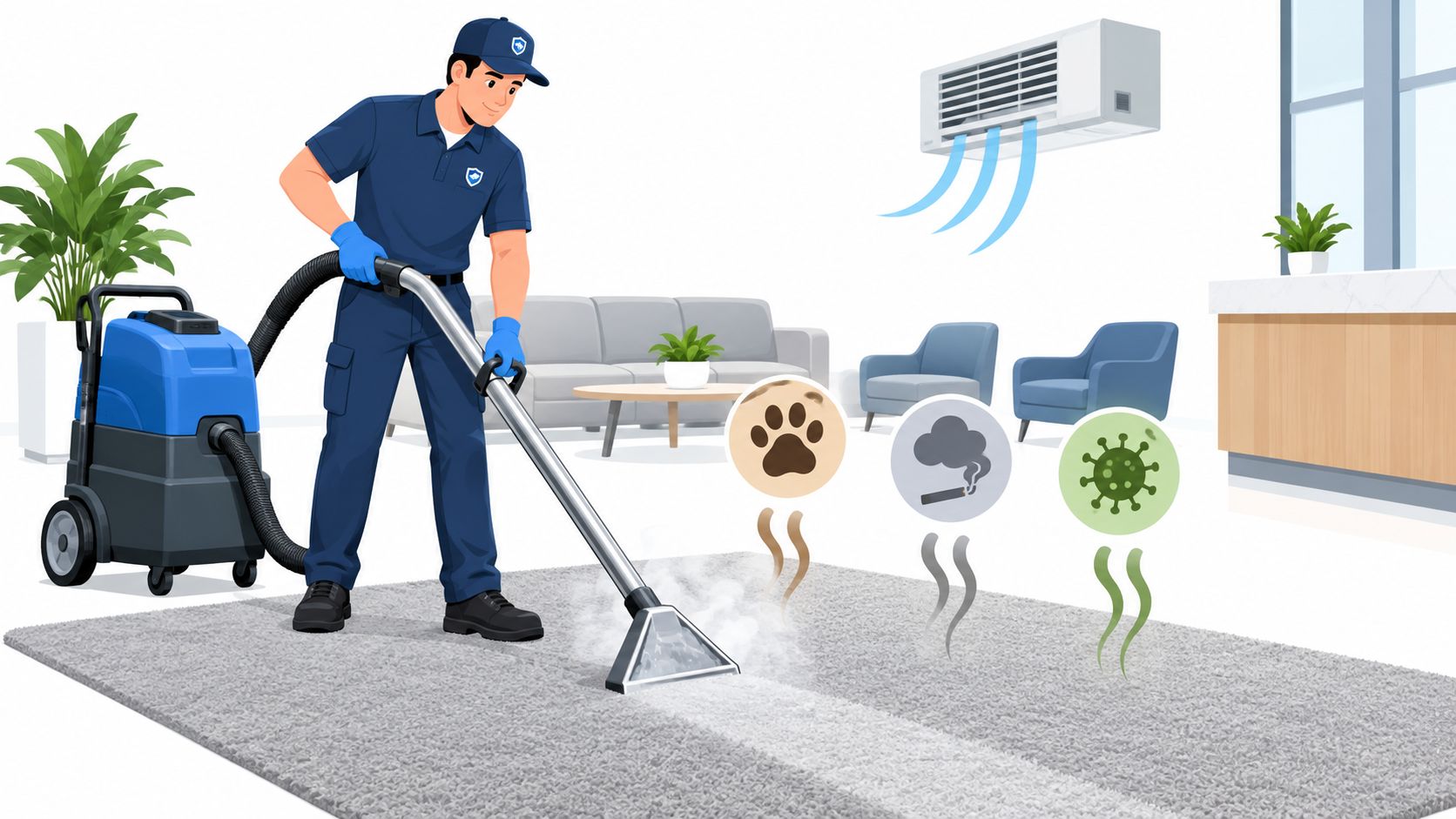
The most popular advice for carpet odor is often the least useful: spray a stronger fragrance, run a quick shampoo, and judge the result by how the room smells afterward. That approach can make a complaint disappear for an afternoon while leaving the actual source in the pad, backing, subfloor, air, or nearby hard surfaces.
Commercial carpet odor treatment works better when cleanliness is treated as an operational system. Carpet needs inspection, source removal, controlled moisture, extraction, and drying. Hard surfaces need regular cleaning and properly used disinfectant wipes, especially where guests, employees, and patrons repeatedly touch equipment and fixtures. The result is more than a fresher room. It's a facility that generates fewer repeat complaints and gives cleaning staff a defensible process.
Why Fragrances Fail in Commercial Spaces
A carpet smell isn't necessarily a surface-cleaning problem. Carpet can emit, absorb, and later release volatile organic compounds, semi-volatile organic compounds, and microbial VOCs. A 2022 review of VOC emissions and carpet materials identifies 4-phenylcyclohexene, or 4-PCH, as a characteristic contributor to new-carpet odor. Benzene, styrene, toluene, xylenes, carbonyl compounds, 1-octen-3-ol, and 2-ethyl-1-hexanol may also influence indoor odor profiles.
That matters in offices, hotels, gyms, vehicles, short-term rentals, and event facilities because carpet behaves like a reservoir. Fibers, backing, and padding can hold material that later re-enters the room air when temperature, humidity, or foot traffic changes. A fragrance changes what people notice. It doesn't necessarily change what the carpet is releasing.
The short-term improvement trap
Facility teams often reach for a deodorizer because it provides an immediate sensory signal. Guests walk in, smell something floral or citrus-like, and the complaint appears resolved. Then the odor returns after the fragrance fades, after the room is closed overnight, or after humidity rises.
The trade-off is straightforward. Fragrance is quick and visible, but it can delay diagnosis. Extraction, inspection, and drying require more labor, yet they address the material where the odor lives. A scented product can have a role after cleaning, but it shouldn't be the first response to a persistent commercial complaint.
Operational rule: A room that smells better isn't necessarily a room that has been cleaned better.
Emission rates also vary by carpet material. In one comparison cited by the review, formaldehyde emissions from triexta and polyester samples ranged from 3 to 16 micrograms per square meter per hour, a difference of more than fivefold according to the same carpet-emissions review. The point isn't to make a purchasing decision from one measurement. It's to recognize that carpet types don't behave identically, so a universal deodorizing recipe is unreliable.
A manager should therefore ask three questions before approving another treatment:
- Where does the odor begin? Is it concentrated near an entrance, locker room, restroom, spill location, drain, or piece of equipment?
- What material could be holding it? The carpet face may look acceptable while the pad, backing, or subfloor remains affected.
- What changed before the complaint? Consider wet cleaning, a leak, seasonal humidity, new flooring, food service, body oils, or repeated organic transfer.
The durable response is source removal, not stronger masking. That shift protects indoor air quality, reduces repeat labor, and gives staff a better explanation when a guest asks why a room still smells after cleaning.
Diagnosing the Root Causes of Carpet Odors
Start with location and odor character, not the product shelf. A sharp new-carpet smell, a damp mustiness, a sour biological odor, and a localized urine-like smell point to different inspection paths. Treating them all with the same deodorizer wastes time and can spread moisture into unaffected areas.

Read the room before cleaning
Humidity and dust can change the odor profile substantially. Research on dust-containing carpet measured total VOC emissions of approximately 1,750 to 2,000 micrograms per hour per gram of carpet under 65% to 80% equilibrium relative humidity, while comparable carpet without dust emitted approximately 750 to 1,500 micrograms per hour per gram in the laboratory study published in 2021. Depending on the comparison point, the dust-containing samples reached roughly 1.3 to 2.7 times the emissions of clean-carpet samples.
Vacuuming still matters, but ordinary surface passes won't remove every reservoir. Dust can sit in the pile, at carpet edges, beneath furniture, and around transitions. Microbial growth and microbial VOC production can occur in carpet and floor dust at lower relative humidity than in drywall. Non-microbial VOCs generally dominated total emissions in the study, but microbial VOCs could have a disproportionate influence on what occupants perceive as odor.
Inspect the carpet system in the order below:
- Map the complaint. Mark the strongest locations and note whether the smell changes after the room is closed, occupied, or cleaned.
- Check moisture history. Look for leaks, wet shoes, mopping runoff, extraction residue, condensation, and recurring humidity.
- Inspect below the face fibers. Lift an edge where appropriate and examine the pad, backing, tack strip area, seams, and subfloor.
- Identify organic transfer. Look for food, drink, sweat, body oils, urine, vomit, pet contamination, and residues tracked from adjacent areas.
- Separate off-gassing from contamination. A new installation may have a material-related odor, while a localized, damp, or recurring smell usually demands a deeper inspection.
Why standard vacuuming has limits
Vacuuming removes loose particulate matter. It doesn't correct a wet pad, neutralize contamination that has reached the subfloor, or extract dissolved residue from backing. It also won't solve odor generated on hard surfaces that occupants and equipment transfer into the surrounding floor area.
When the smell follows a specific traffic lane, inspect nearby equipment, trash containers, locker-room thresholds, and food-service areas. Carpet odor treatment should account for the whole pathway, not just the square foot where someone first notices the odor.
Targeted Treatment Protocols for Facility Managers
Facility teams get better results when they treat odor work like a building diagnosis, not a carpet freshening job. Start with containment, choose a treatment that matches the source, keep water under control, and verify dryness before reopening the area. In commercial settings, the fix often reaches beyond the carpet face into the pad, subfloor, thresholds, and nearby hard surfaces that keep reintroducing organic residue.

Water-related odor
Musty odor is a moisture problem until inspection proves otherwise. EPA guidance recommends drying affected materials within 24 to 48 hours, keeping indoor relative humidity below 60%, ideally between 30% and 50%, and recognizing that if porous carpet or padding stays wet beyond about 48 hours, cleaning and odor recovery become less reliable and replacement may be necessary in its mold and moisture guidance.
Use this sequence:
- Stop the water source. Repair the leak, correct the wet-cleaning error, or fix the humidity condition.
- Extract standing water. Use wet extraction or other suitable recovery equipment. Extraction alone does not finish the job.
- Open the system. Where installation allows, inspect carpet, pad, backing, seams, and the affected subfloor.
- Dry the full assembly. Apply air movement and dehumidification to the carpet and exposed substrate, not just the surface.
- Verify before reopening. Take moisture readings in the carpet system and subfloor before reinstalling or covering the area.
A practical closeout standard matters here. If the carpet surface feels acceptable but the pad or substrate still reads wet, the odor complaint usually comes back. If wildlife intrusion has contaminated an edge, crawlspace transition, or wall line, address that source first with wildlife control for commercial properties before sending a carpet crew back over the same area.
Organic contamination
Urine, vomit, food residue, and other biological soils rarely stay where the visible spot ends. Check the carpet face, backing, pad, seams, tack-strip edge, and subfloor. In a lot of repeat complaints, the odor reservoir sits below the fibers, while adjacent hard surfaces keep spreading residue back into traffic lanes through shoes, carts, and cleaning tools.
Use chemistry that matches the contamination. Apply an enzymatic or oxidizing product exactly as labeled, allow the full dwell time, then extract or wipe away residue and dry the area completely before reassessment. Do not mix oxidizers, acids, ammonia, or chlorine products. Test dyes and backing in an inconspicuous area first.
A controlled Iowa State University study found that common cleaning products masked several potent odors on the first day but, in most cases, did not eliminate the odor detected on day 15 in urine-contaminated carpet and subflooring, and the same research reported microbial growth beginning around 75% to 80% equilibrium relative humidity in its controlled VOC study.
For facilities choosing a low-water method, document the expected limits in the work order. A low-moisture carpet cleaning process helps when quick return to service matters, but it does not replace pad removal, subfloor cleaning, or source correction when contamination has penetrated deeper.
Heavy soil and repeated transfer
General soil responds best to a controlled sequence. Remove dry particulate first, spot-test the chemistry, then use extraction that fits the carpet construction and occupancy demands. Overwetting an occupied building is one of the fastest ways to turn a soil complaint into a moisture complaint.
Record the source, product used, dwell time, extraction method, air movement, humidity conditions, moisture readings, and follow-up date. Include any wipe-down or hard-surface cleanup completed around trash stations, food areas, equipment zones, and thresholds, because carpet odor complaints often persist when the surrounding transfer points were never cleaned. A closeout form should show what was dry, what was removed, and what still needs replacement.
Preventing Organic Transfer from Equipment to Floors
Carpet complaints in gyms rarely originate from carpet alone. Patrons bring sweat, skin oils, dust, and outdoor material from equipment zones into walkways, locker rooms, and adjacent carpet. Staff then inherit the result as a floor-care problem.

Put cleaning at the point of use
CDC guidance for gyms and fitness centers recommends cleaning and disinfecting exercise equipment and tools between patrons. It also recommends providing disinfecting wipes or paper towels with disinfectant for patrons to use before and after exercising at each location, station, or piece of equipment in its fitness-facility guidance.
That makes gym equipment wipes more than a convenience item. They create a barrier between the body oils and residue left on a machine and the material later carried to the floor. Place a dispenser where the user finishes the activity, not across the room near a staff closet.
For a gym, the priority sequence usually includes:
- Exercise machines: Handles, touchscreens, adjustment pins, seats, and control panels.
- Free-weight areas: Dumbbells, bars, benches, racks, and shared mats.
- Locker rooms: Locker handles, benches, sink handles, shower controls, and restroom fixtures.
- Transition zones: Door hardware, water-fountain controls, and the flooring immediately outside wet areas.
Choose products that match the surface and the label. Some equipment materials can discolor, crack, or become slippery under unsuitable chemistry. Wipes for gym equipment should be compatible with the manufacturer's care instructions, and staff should keep a separate process for visibly dirty areas because cleaning with detergent or soap and water may need to occur before disinfection.
Make the floor part of the hygiene map
Place entry mats where they can trap grit and moisture, inspect them during rounds, and keep them from becoming saturated. Use carpet runners or mats at transitions between locker rooms and carpeted corridors where practical. These controls won't remove the need for extraction, but they reduce the amount of material reaching the pile.
For yoga studios, a dedicated station with yoga mat wipes can help keep patrons from carrying sweat and residue from shared surfaces into the surrounding room. The same principle applies to sports venues, studios, and school activity areas. The cleaner the contact surface before people walk away, the less organic matter reaches the floor.
Optimizing Hard Surface Hygiene and Wipe Dispenser Placement
A wipe program succeeds or fails at the dispenser. If the product is hidden, empty, incompatible, or used for only a few seconds, the facility gets the appearance of a hygiene program without the process needed to support it.
The EPA defines disinfectant contact time as the period the product must remain on a surface to work. The surface should stay visibly wet for the full label period. If it dries early, staff must reapply the product as explained in the EPA disinfectant label guidance.
Prioritize repeated contact
CDC examples of high-touch surfaces include pens, counters, shopping carts, door handles, stair rails, elevator buttons, touchpads, restroom fixtures, and desks. Healthcare guidance adds sink handles, call bells, wheelchair handles, bedrails, bedside tables, doorknobs, keyboards, and control panels in the CDC cleaning procedures.
| Facility Zone | High-Touch Targets | Recommended Wipe Type |
|---|---|---|
| Office | Shared pens, desks, keyboards, door handles, elevator buttons | EPA registered disinfecting wipes compatible with electronics and hard surfaces |
| Gym | Machine handles, touchscreens, benches, adjustment pins, locker handles | Gym equipment cleaning wipes approved for the equipment materials |
| School | Desks, door hardware, shared devices, restroom fixtures | Commercial disinfecting wipes selected for routine staff use |
| Restaurant | Service counters, payment terminals, refrigerator handles, restroom fixtures | Disinfectant wipes suitable for the surface and food-contact requirements on the label |
| Retail store | Shopping carts, checkout screens, baskets, door handles | Sanitizing wipes or disinfectant wipes selected for the applicable surface |
Use a route that moves from cleaner to dirtier and from high surfaces to low surfaces. Refold or change the wiping material so an unused area contacts the next surface. If a counter is visibly dirty, clean it first. Organic matter and soil can interfere with disinfection.
Turn placement into a sales advantage
For sales professionals, don't sell only a case of wipes. Sell a visible operating system that includes bulk gym wipes, a gym wipe dispenser, replenishment expectations, signage, and a simple cleaning log. Ask where patrons finish each activity, where complaints occur, and who checks the dispensers during a shift.
A customer may compare unit price, but the stronger conversation concerns labor, compliance, visible cleanliness, and guest confidence. Explain that using enough product to maintain the label's wet contact time is part of the value. A wipe that dries immediately may not deliver the labeled disinfection process.
Facilities with technical work areas can also compare material compatibility and workflow design against examples of best laboratory work surfaces. The lesson is transferable: surface selection, cleaning chemistry, and user behavior need to work together.
Building a Sustainable Daily Maintenance Routine
A sustainable program fits the rhythm of the building. At opening, staff should find full dispensers, dry floors, clear entrances, and no unresolved odor notes from the previous shift. During the day, the team should respond to spills and high-touch use as they happen instead of saving every problem for closing.

Use three practical rounds
Opening round: Vacuum high-traffic lanes, inspect mats and carpet edges, check for dampness, and restock sanitizing wipes at every station. Staff should note unusual odors before occupancy changes the room.
Midday round: Check entrance hardware, shared equipment, restrooms, counters, and dispensers. Clean visible soil before disinfection, maintain the required wet contact time, and respond to spills immediately. In a gym, CDC guidance supports cleaning and disinfecting equipment between patrons in its fitness-center recommendations.
Closing round: Empty waste bins, complete the high-touch route, inspect carpeted transition zones, and record any area that needs extraction or moisture investigation. Keep air movement and dehumidification running where a wet-cleaning job requires controlled drying.
Use a log with five fields: location, observed condition, action taken, staff initials, and follow-up date. For water events, add drying time, room humidity, and moisture readings. A manager can then distinguish a one-time spill from a recurring building issue.
Property teams can adapt the same logic to turnovers by using a documented vacation rental cleaning schedule. The exact checklist will vary, but accountability should remain consistent across rooms, shifts, and contractors.
Weekly, review repeat odor locations, empty or misplaced dispensers, supply consumption, and delayed work orders. Schedule deeper carpet work based on traffic and condition rather than waiting for guest complaints. Pair that program with documented carpet maintenance tips so floor care remains part of routine facility management instead of an emergency purchase.
A clean commercial facility isn't defined by fragrance. It's defined by source control, dry materials, clean high-touch surfaces, trained staff, and records that show the process happened. Start with diagnosis, use compatible commercial disinfecting wipes at the point of use, and make cleaning and sanitizing part of every shift. Facility owners, gym managers, and cleaning suppliers can review their current routes today, identify the highest-risk touchpoints, and integrate products from wipes.com into a replenished, documented daily routine.
Leave a Reply