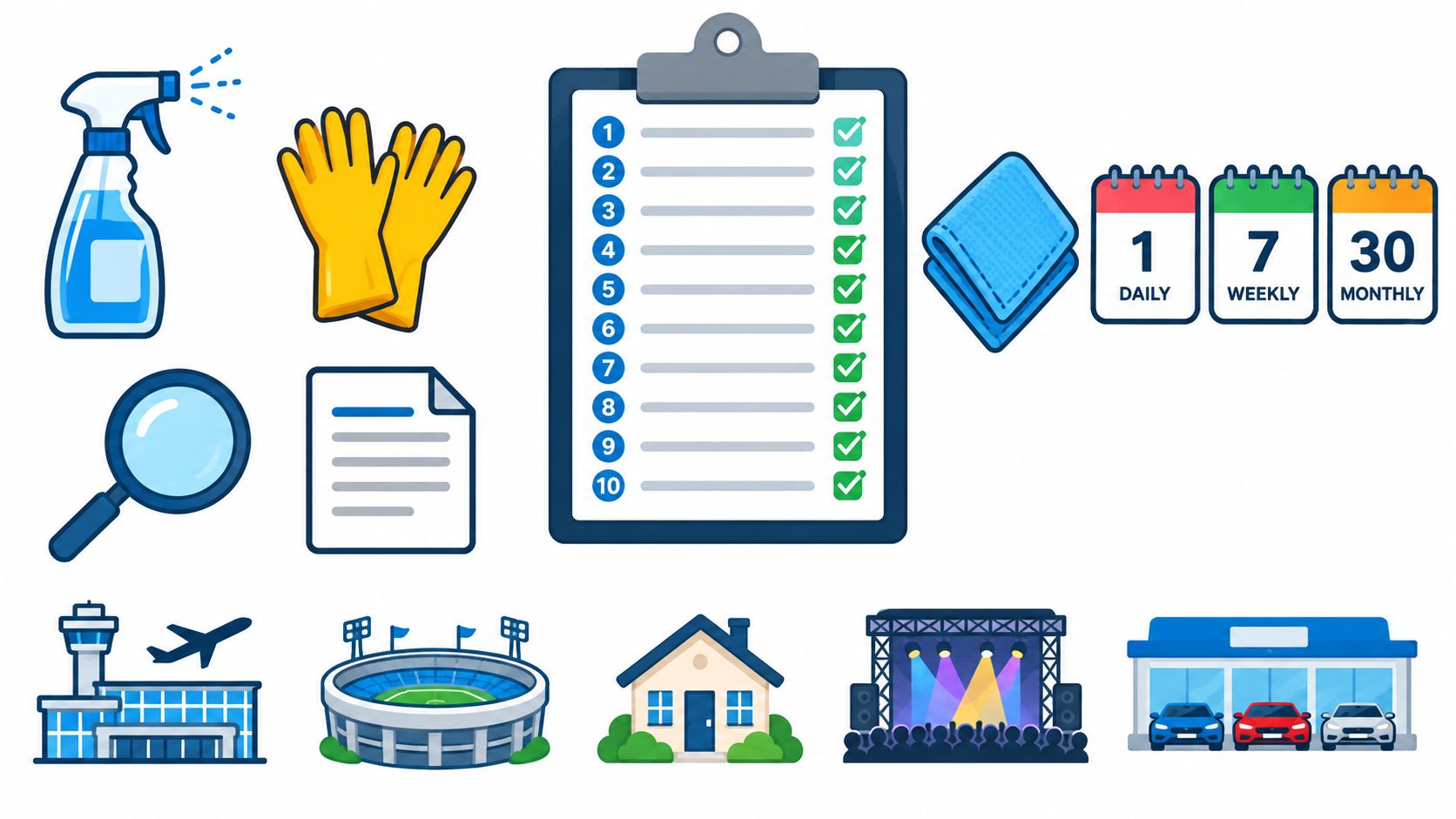
Cleanliness is one of the first things guests notice and one of the easiest ways to lose trust when it slips. In a commercial facility, a good cleaning maintenance checklist does more than keep surfaces looking tidy, it gives staff a repeatable system for removing soil, treating high-touch points with disinfectant wipes where the product label calls for it, and confirming the work was completed. That distinction matters in places where people move fast, touch shared surfaces constantly, and judge the whole operation by what they can see at the door, on the counter, and in the restroom.
The best checklists separate routine cleaning from targeted disinfection, then assign frequency by risk, not habit. They also make room for supplies, PPE, verification logs, and escalation when something is visibly dirty, damaged, or contaminated. That's useful whether you manage an airport, gym, rental property, dealership, restaurant, or event venue. It's just as relevant for janitorial teams and sales professionals who need to explain why commercial disinfecting wipes, gym equipment wipes, and wipe stations are part of a real hygiene system, not an afterthought. For a practical reference point on products and placement, WipesBlog.com is built around facility sanitation workflows, and a supply source like wipes.com fits naturally into that conversation.
1. Daily High-Touch Surface Disinfection Protocol
High-touch surfaces shape a guest's first judgment of the facility. Door handles, stair rails, elevator buttons, touchpads, restroom fixtures, counters, desks, pens, and shopping carts quickly show whether the operation is controlled or neglected. CDC guidance identifies these frequently touched points for regular cleaning and disinfection when appropriate CDC facility cleaning guidance.
A daily protocol should identify the surface, task, frequency, assigned employee, product, and completion time. “Clean area” is not a useful record because it does not show what staff treated or when. Give each zone a defined route, then require staff to initial or time-stamp the task after completing it.
For disinfectant wipes, the product label controls the process. Staff must apply enough product to keep the surface visibly wet for the stated contact time, then allow it to air-dry. Heavy soil should be removed first with another wipe when needed, as specified in the EPA wipe label directions. Staff can learn more about what contact time means for disinfectants before the routine is rolled out.
Keep the cadence tied to traffic
Peak windows often matter more than a fixed clock schedule. Morning arrivals, lunch periods, evening departures, and class turnovers can quickly increase contact at airports, fitness centers, offices, and retail sites. Set checks around those periods, not only at opening and closing.
A laminated checklist at each station keeps the sequence consistent. A visible wipe dispenser near an entry or reception point also removes a common barrier, staff do not need to leave the area to retrieve supplies.
Practical rule: if the surface dries before the label's wet time ends, it was cleaned, not disinfected.
In gyms, place gym wipe dispensers near cardio decks, benches, and free weights. Confirm that members and staff know where to collect fitness wipes before and after use. In offices and retail sites, a few visible stations may work better than a large, hidden supply. Keep the record short, rotate assignments, and mark when each area was last treated. Supervisors can verify selected stations during routine walkthroughs, giving the team a documented check and a clear point to discuss in hygiene-focused service conversations.
2. Gym Equipment and Fitness Machine Sanitization Routine
Gym equipment creates repeated contact in a concentrated space. Members grip handles, lean on pads, touch consoles, and share surfaces after perspiring. The routine must follow that use pattern. Wipes for gym equipment should remain visible, easy to reach, and clearly assigned to the surfaces members and staff are expected to clean.
Start with an equipment map. Cardio consoles, treadmill rails, benches, free weights, cable handles, resistance machine seats, and touchscreens have different materials and contact points. CDC environmental services guidance recommends setting cleaning methods, thoroughness, frequency, and products through facility policy, with risk assessment identifying high-touch surfaces and coordinating the schedule CDC environmental services guidance. A single wipe pass at closing leaves gaps during busy classes, shift changes, and rush periods.
Build the routine around visible ownership
Assign each zone to a staff member or shift. The checklist should state which equipment receives attention, when the sweep occurs, and which product is approved for its surface. Vinyl seats, metal frames, plastic housings, and console screens require different pressure and moisture control. Use gym equipment cleaning wipes on exposed touchpoints, then schedule slower-period work for bases, rails, seams, hinges, and other areas that are easy to miss.
Place dispensers where the routine happens. Wipes for gym equipment work best when staff and members can see them, reach them, and understand the expected sequence. Use a clear guide to gym equipment wipes placement and use when deciding where stations belong.
A short station prompt can keep the handoff clear:
- Before use: wipe handles, benches, pads, and touchscreens contacted by the previous user.
- During peak hours: resweep equipment between classes or heavy traffic blocks.
- At close: inspect bases, rails, seams, and other hard-to-reach areas.
- At class areas: keep yoga mat wipes nearby for shared mats exposed to heavy perspiration.
Supervisors should verify selected stations during floor walks, record the time and initials, and note missed supplies or equipment needing extra attention. That record supports staff coaching and gives operators a concrete way to discuss hygiene-focused service needs with facility managers.
For fitness sales, bulk gym wipes and a visible gym wipe dispenser can support the workflow. The practical priority is consistent placement, replenishment, and member-facing instructions. A station that takes seconds to find is more useful than a larger supply kept across the room.
3. Restroom and Lavatory Deep Cleaning and Disinfection
A restroom can change how guests judge the entire facility. They may overlook a dusty shelf edge, but they notice a rushed appearance, covered odors, empty dispensers, or a room with no visible service rhythm. The checklist should make restroom care easy to see, verify, and repeat.
Start with the condition of the surface, not the product. Remove visible soil with soap or detergent and water before disinfecting, and give extra attention to areas affected by illness. The CDC facility cleaning guidance supports this sequence. Apply it to toilets, sinks, faucets, soap dispensers, flush controls, stall latches, and the floor perimeter.
Odor needs its own diagnosis. A fragrance may cover a smell temporarily, while trapped moisture, soiled grout, a drain issue, or an unclean waste container can remain. Staff should record the source or suspected source instead of marking the room complete after a quick spray.
Make the log prove the work
A visible log should include the service time, staff initials, and tasks completed. Use named checks such as fixtures, floors, supplies, and touchpoints rather than a single “restroom inspected” box. A manager can then compare complaints with actual service times and coach the missed step.
The routine can follow this order:
- Quick checks: handles, faucet knobs, soap dispensers, stall locks, and flush controls.
- Soil removal: sinks, toilet surfaces, splash zones, grout, and floor edges.
- Supply check: paper towels, soap, toilet tissue, and hand-sanitizer stations at the exit.
- Low-touch fixtures: inspect automatic faucets, dispensers, and flush hardware for function and residue.
- Closeout: confirm the room is dry, odor sources are addressed, waste is removed, and the log is signed.
Use wipes on suitable high-touch points, while following the disinfectant label for wet contact time and disposal. The EPA wipe label directions define the product-specific requirements. Staff verification should include a quick visual check, not just an initial.
Place supplies where the restroom routine happens. Consistent service, a current log, and stocked stations reduce complaint risk and give facility managers concrete evidence for hygiene-focused service discussions. The room should look managed without turning cleaning into a performance.
4. Common Area Seating and Upholstery Sanitization
Shared seating gets overlooked because it looks calm. In reality, benches, chairs, couches, and lounge seating collect skin oils, crumbs, moisture, and hand contact all day long. In airports, event venues, waiting areas, and fitness clubs, the seating zone often tells guests more about the facility than the lobby does.
Material matters here. Vinyl and leather can usually handle a different wipe routine than fabric, so the checklist should name the surface type and the approved method. For hard surfaces, a wipe can do the job if it's used correctly and the product label is followed. For upholstery, spot testing is smart because a careless pass can discolor trim or leave residue that looks worse than the original mark.
Clean the seating zone like a customer-facing asset
Treat benches and waiting chairs as part of the front-of-house experience, not a side task. If the lounge feels sticky, dusty, or neglected, guests assume the rest of the operation is the same way. That's why a few facilities mark seating zones on a rotating schedule and assign them to specific staff instead of leaving them as “when there's time” work.
If the seating area looks clean but smells stale, the checklist missed something upstream.
Visual verification helps. A short note showing when a zone was treated makes it easier to track repeat touchpoints and spot problem areas. In short-term rentals, that can support the handoff between departures. In event spaces, it speeds reset because the next crew doesn't have to guess what was already handled. In fitness clubs, commercial disinfecting wipes are often the simplest tool for the hard surfaces around lounge seating, while fabric components may need a different cleaner and more time.
The trade-off is obvious. Fast wipe-downs keep turnover moving, but they do not replace material-appropriate cleaning. The checklist should say which parts get wiped, which parts get vacuumed or spot-treated, and which parts get inspected for damage or wear.
5. Doorway, Entryway, and Vestibule Hygiene Management
The doorway sets the cleanliness standard before guests reach the main facility. Shoes, bags, wheels, hands, moisture, pollen, and outdoor debris all pass through this zone. They leave visible soil on mats and floors, fingerprints on glass, and contamination on handles and push bars. The checklist should therefore treat the entrance as an actively managed work area.
Place a hand-wipe or sanitizer station just inside the entrance, where arriving guests and staff can use it without blocking traffic. Keep supplies filled, the dispenser clean, and the location easy to see. In fitness centers, this gives people coming from a commute or shared transit a practical way to clean their hands before using equipment. In retail, restaurants, and other customer-facing facilities, staff can point out the station during hygiene-focused conversations instead of making a vague cleanliness claim.
Build the routine around traffic and verification
Use traffic and weather to set the schedule. Clean both sides of entry glass daily, increasing attention on the exterior when rain, mud, or heavy foot traffic makes soil more visible. Check door hardware during busy periods, then record the time and initials of the staff member who completed the task. A supervisor's spot check during a shift helps confirm that the work happened and that streaks, residue, or missed contact points were corrected.
- Door hardware: Wipe handles, push bars, and latch points at defined intervals.
- Glass: Clean both sides and finish without streaks or visible smears.
- Mats: Shake out or vacuum them, and replace them when they stay saturated or heavily soiled.
- Floor edges: Remove mud and debris as soon as they appear, especially near thresholds.
The checklist should identify where wipes are stored, who verifies the zone, and where completion is logged. A non-slip mat controls tracked-in moisture, while a covered station keeps supplies presentable. These small controls help prevent entry traffic from carrying visible dirt farther into the facility and give guests a clear sign that hygiene is being managed rather than assumed.
6. Vehicle Interior and Contact Surface Sanitization for Car Dealerships
Dealership cleaning has a sales angle built right into it. Buyers judge the condition of the steering wheel, dash, touchscreen, shifter, and door pulls before they ever judge the price sheet. If those surfaces feel neglected, the vehicle feels older, even when the mileage says otherwise.
That's why the checklist for a showroom and test-drive fleet should name each contact surface inside the cabin and assign a quick turnaround process between customers. Steering wheels, A/C controls, infotainment screens, cupholder edges, armrests, and door handles are the obvious points. Sales desks, pens, and tablet kiosks matter too, because the transaction zone shapes the same impression as the car.
Make the sanitation visible to the buyer
A visible “Sanitized for Your Safety” card on the dashboard can help, but it only works if the process behind it is consistent. Staff should know what gets wiped before a test drive, what gets wiped after, and what gets pulled for a deeper evening clean. For fabric seats and trim, choose the cleaning method carefully so you don't leave residue or create a damp smell that undercuts the presentation.
If the dealership uses EPA registered disinfecting wipes, the label still controls the process, including wet time and compatible surfaces. For electronics and touchscreens, manufacturer guidance matters too, because harsh products can shorten the life of the finish or the device. A quick wipe is not a substitute for the right wipe in the right place.
This is also a selling conversation. Customers don't just buy a car, they buy confidence in the dealership process. When a sales team explains that the vehicle has been cleaned between drives, the handoff feels more professional and the lot feels better run. For inventory prep, a nightly cycle keeps the next day from starting with avoidable reset work.
7. Event Venue and Gathering Space Rapid Turnaround Sanitization
Event spaces live and die by turnover speed. A venue might host a conference in the morning, a banquet later, and a wedding after that, so the checklist has to keep pace with moving rooms, not fixed schedules. Tables, chairs, microphones, railings, podiums, and registration counters all need a repeatable reset sequence.
The best event crews work zone by zone. That keeps one group from duplicating another group's work or missing a handoff point. It also makes it easier to spot where bottlenecks happen, which is useful when a room has to be flipped quickly and cleanly.
Speed only works when the sequence is tight
A rapid-turnaround checklist should start with trash removal, then move to high-touch surfaces, then finish with floor and visual detail. If you reverse that order, the crew wastes time reworking spots that get touched again while the room is still active. Wipes should already be staged where the reset begins, not stored across the building.
Crew speed comes from setup, not from rushing at the end.
For trade show halls, conference centers, and wedding venues, pre-positioned supplies are often the biggest efficiency gain. A staffed cart with wipes, gloves, and log sheets can cover a room change without sending people back and forth. The checklist should also note completion times and initials, because the next crew and the client both need proof that the space was reset, not just cleared.
Sales and operations overlap here. A venue that can show a disciplined hygiene process can support premium bookings and shorter room-change stress. When clients ask what makes the space dependable, the answer is usually a repeatable system, not a single product, although bulk gym wipes and other high-volume supply formats can absolutely belong in that system where shared touchpoints are dense.
8. Payment Terminal, Card Reader, and Transaction Point Sanitization
Payment hardware gets touched by almost everyone, yet it's easy to leave it out of the checklist because it sits beside the “real” work. That's a mistake. Card readers, touchscreens, checkout pads, kiosks, and handheld payment devices are high-frequency contact points in retail, hospitality, fitness, and event settings.
The process should be short, consistent, and safe for the device. Staff need to check which agents the manufacturer approves, because some electronics and covers can't handle excess moisture. A wipe that leaves liquid pooling around buttons or seams creates a different problem than the one you started with.
Make payment hygiene part of the sale
The best routine is simple. Wipe the device at the right time, avoid over-wetting, and keep the station stocked so staff don't skip the step during a rush. If the terminal sits in a public-facing lane, place the wipes where the cashier can reach them without stepping away from the transaction flow.
A few operators post a short note near the terminal so customers can see that the device is treated regularly. That signal matters because the transaction point shapes comfort, especially in gyms, retail counters, and ticketing stations. When the customer sees care at the point of payment, the entire checkout feels more controlled.
For sales teams, this is an easy way to explain hygiene ROI. A customer who feels safe at the terminal is less likely to hesitate, fewer staff have to answer hygiene questions, and the space presents as actively managed. Disinfecting wipes for electronics should be part of a larger program, not a one-off add-on, because the device is just one stop in the customer path.
9. Locker Room, Shower, and Personal Item Storage Area Sanitization
Locker rooms expose weak cleaning routines quickly. Moisture, heavy foot traffic, skin contact, and personal belongings all meet in one space. Benches, locker handles, shower stalls, floor drains, storage cubbies, and changing-area surfaces need separate attention, especially in gyms, sports facilities, schools, and recreation centers.
Start with a room check before wiping anything. Look for standing water, blocked drains, poor airflow, leaks, damaged flooring, visible mold, or mildew. A damp room can develop recurring odor and buildup even when its surfaces appear clean, so ventilation and drying belong on the checklist alongside disinfection.
Surface choice should determine the product and method. Treat benches and locker hardware differently from shower walls, floors, and drains. Keep yoga mat wipes or similar station wipes near shared mats and changing-area pads, where users can reach them before and after contact. Place supplies at the room entrance without obstructing access, then check the station during each service round.
A workable routine follows the facility's traffic pattern:
- Wipe bench surfaces, locker handles, latches, and cubby touch points on a set schedule.
- Clean shower stalls with attention to wet, high-contact areas.
- Clear and clean floor drains, then address pooling points before buildup develops.
- Dry wet sections and confirm that ventilation is operating.
- Schedule heavier floor, grout, and shower work during off-peak hours.
The storage area deserves its own inspection. Damp bags, towels, and clothing can transfer moisture to cubbies, while damaged laminate or rusted hardware can make effective cleaning harder. Record defects as soon as they appear and send maintenance requests through the same process used for sanitation issues.
Supervisors should verify completed rounds rather than relying on memory. A quick sign-off can confirm the time, staff member, problem areas, and corrective action. That record helps managers spot repeat leaks, missed zones, or schedules that do not match peak use.
A visible sanitizer station near the entrance supports the routine, but it cannot replace scheduled cleaning. Guests trust a locker room more when staff respond to moisture, restock supplies, and document repairs promptly. Hygiene practices also give membership and facility teams a concrete way to explain how the space is managed.
10. Sanitization Program Management, Training, and Compliance
Sanitation performance depends on a system staff can follow, verify, and improve. Short SOPs, role-based checklists, product controls, training, supply checks, and review turn cleaning from a memory task into a managed operation. That consistency affects how guests judge safety, care, and business reliability.
CDC guidance describes checklists as interactive aids that help staff complete each SOP step. The same CDC program guidance identifies policies, procedures, staffing, training, infrastructure, supplies, monitoring, feedback, and auditing as parts of an effective environmental-cleaning program. Use that structure to build a process that can be checked across public and commercial facilities.
Train for the actual shift
A front-desk associate, porter, and night crew lead face different tasks. Give each role concise instructions covering the surface or area to clean, the approved product, required contact time, prohibited mixtures, and escalation points. Where cleaning overlaps with maintenance, include spill response, blocked exits, faulty equipment, and PPE requirements.
Training should also account for the facility's operating rhythm. A checklist that works for a daytime office may fail in a busy gym, dealership, or event venue if it ignores handoffs, peak traffic, or limited storage. Place wipes and gloves where the assigned worker can reach them without leaving a service area unattended.
Managers need evidence that the process works. Review audit findings, recurring missed zones, product shortages, and complaints together rather than treating each issue separately. The CDC recommends thorough program audits annually or every two years, performed by auditors independent of daily implementation, with results retained for benchmarking and corrective action. The same approach can serve airports, sports venues, rentals, event facilities, and dealerships.
Build the operating routine around four controls:
- Supply thresholds: Set reorder points for wipes, gloves, and other approved materials before shortages interrupt service.
- Spot checks: Supervisors inspect selected high-risk areas during each shift and correct gaps promptly.
- Refreshers: Brief, recurring coaching keeps product use and escalation steps familiar.
- Documentation: Logs show coverage, exceptions, corrective work, and patterns that require schedule changes.
Product conversations should reflect that system. If you sell commercial disinfecting wipes, a gym wipe dispenser, or bulk packs for shared spaces, connect the recommendation to placement, staff verification, throughput, and guest trust, not only unit price. compliance for shift-based teams supports teams coordinating handoffs across workers and schedules.
10-Point Cleaning & Sanitization Checklist Comparison
| Task | Implementation Complexity 🔄 | Resources & Frequency ⚡ | Expected Outcomes ⭐ / 📊 | Ideal Use Cases | Key Advantages / Quick Tip 💡 |
|---|---|---|---|---|---|
| Daily High-Touch Surface Disinfection Protocol | Medium, systematic checklists & staff training 🔄 | Moderate staff time + EPA-registered wipes; every 2–4 hrs (hourly peak) ⚡ | ⭐⭐⭐⭐, significant pathogen reduction; measurable drop in transmission risk 📊 | Airports, retail, hotels, fitness centers | Reduces illness transmission; boosts guest confidence. Tip: laminated checklists & enforce 10s contact time 💡 |
| Gym Equipment and Fitness Machine Sanitization Routine | High, material-specific techniques and member workflows 🔄 | High labor + continuous wipe stations; staff deep clean every 4 hrs; wipes available continuously ⚡ | ⭐⭐⭐⭐, lowers skin infection risk; improves member satisfaction & retention 📊 | Gyms, studios, CrossFit boxes | Protects equipment & member health. Tip: place dispensers at machines and train on material-specific wipes 💡 |
| Restroom and Lavatory Deep Cleaning and Disinfection | High, moisture, odor control, regulatory requirements 🔄 | Significant labor, specialty cleaners; high-touch 1–2 hrs, floor 4 hrs, deep clean twice daily ⚡ | ⭐⭐⭐⭐⭐, major impact on customer perception and GI illness prevention 📊 | All public/commercial facilities | Directly improves overall cleanliness perception & compliance. Tip: visible cleaning logs and low-touch fixtures 💡 |
| Common Area Seating and Upholstery Sanitization | Medium–High, varied upholstery materials & stain management 🔄 | Specialized agents & testing; touch-ups every 4 hrs; deep weekly/monthly ⚡ | ⭐⭐⭐⭐, improves comfort perception; reduces skin-pathogen transmission 📊 | Airports, hotels, event venues, lounges | Extends furniture life and boosts guest comfort. Tip: test wipes on hidden area first; use odor-neutralizers 💡 |
| Doorway, Entryway, and Vestibule Hygiene Management | Medium, continuous traffic & weather challenges 🔄 | Ongoing monitoring; door handles 2–3 hrs, floors 4 hrs, glass daily; mats & dispensers ⚡ | ⭐⭐⭐⭐, immediate first-impression impact; reduces tracked contaminants 📊 | Retail, medical facilities, fitness centers, venues | Creates strong first-impression and reduces spread. Tip: install antimicrobial mats and entry dispensers 💡 |
| Vehicle Interior and Contact Surface Sanitization (Dealerships) | Medium, multiple vehicle materials & rapid turnover 🔄 | Moderate staff time; post-test-drive immediate; showroom every 4 hrs; vehicle-safe wipes ⚡ | ⭐⭐⭐⭐, increases buyer confidence and conversion rates 📊 | Car dealerships, rental agencies, showrooms | Influences purchase decisions; signals professionalism. Tip: display “Sanitized” certificate and use vehicle checklists 💡 |
| Event Venue and Gathering Space Rapid Turnaround Sanitization | Very High, tight timelines & coordinated crews 🔄 | Large crews, bulk dispensing systems; 60–90 min between events; high wipe consumption ⚡ | ⭐⭐⭐⭐⭐, enables back-to-back events; preserves reputation & bookings 📊 | Convention centers, hotels, banquet halls | Enables multiple revenue events with confidence. Tip: master zone checklists & pre-position supplies 💡 |
| Payment Terminal, Card Reader, and Transaction Point Sanitization | Medium, device-care requirements & workflow impact 🔄 | Frequent, quick wipes; post-transaction or every 2–4 hrs; use electronics-safe wipes ⚡ | ⭐⭐⭐⭐, builds customer trust; reduces transaction-point transmission 📊 | Retail, QSR, kiosks, ticketing | Addresses high-touch transaction concerns. Tip: follow manufacturer cleaning specs and use moisture-resistant wipes 💡 |
| Locker Room, Shower, and Personal Item Storage Area Sanitization | Very High, moisture-prone, antifungal protocols required 🔄 | Specialized antifungal agents; high-touch 2–4 hrs; floors every 4 hrs; deep weekly ⚡ | ⭐⭐⭐⭐⭐, significantly reduces fungal/bacterial infections; protects users 📊 | Gyms, pools, schools, athletic facilities | Critical for infection control and member retention. Tip: use antifungal formulations and improve ventilation 💡 |
| Sanitization Program Management, Training, and Compliance | High, program governance, audits, multi-site standardization 🔄 | Administrative resources, training modules, digital logs; ongoing (quarterly audits, monthly refreshers) ⚡ | ⭐⭐⭐⭐⭐, ensures consistency, dokumented compliance & KPIs 📊 | Multi-site chains, franchise operations, convention centers | Standardizes SOPs, reduces liability. Tip: use time-stamped digital logs and automated reorder points 💡 |
Make Cleanliness Visible, Repeatable, and Accountable
A strong operating rhythm is simple to describe and hard to fake. Daily work should cover high-touch surfaces, payment points, entry zones, restrooms, and equipment touchpoints. Weekly work should push deeper into seating, locker rooms, and fixture details. Monthly reviews should check supplies, logs, missed zones, wear points, and whether the schedule still fits traffic, moisture, and turnover. That's the value of a cleaning maintenance checklist, it keeps the building from drifting into reactive cleaning.
The important distinction is still the same one at the start, cleaning removes visible soil, while disinfection only happens when the product, surface, and wet contact time all line up. Follow the label, respect PPE requirements, and match the method to the material. CDC guidance and EPA label directions both make it clear that a wipe is not magic by itself, the process matters CDC facility cleaning guidance EPA wipe label directions.
Keep supply thresholds high enough that staff never have to improvise. Keep logs simple enough that they're filled out consistently. Use supervisor spot checks to catch drift before guests do. Give crews short refreshers on wet time, surface compatibility, and when to escalate a hazard instead of pushing through it. Those small disciplines are what make the building feel controlled day after day.
For sales teams, the message is straightforward. Don't sell wipes as a loose consumable. Sell them as part of a hygiene system that supports trust, guest experience, and operational consistency. Depending on the facility, that might mean bulk gym wipes, a visible gym wipe dispenser, or commercial disinfecting wipes staged at every key touchpoint. If you're ready to tighten your routine or build a better offer, review your current checklist, then explore practical wipe solutions at wipes.com and make cleanliness part of the daily standard.
Leave a Reply