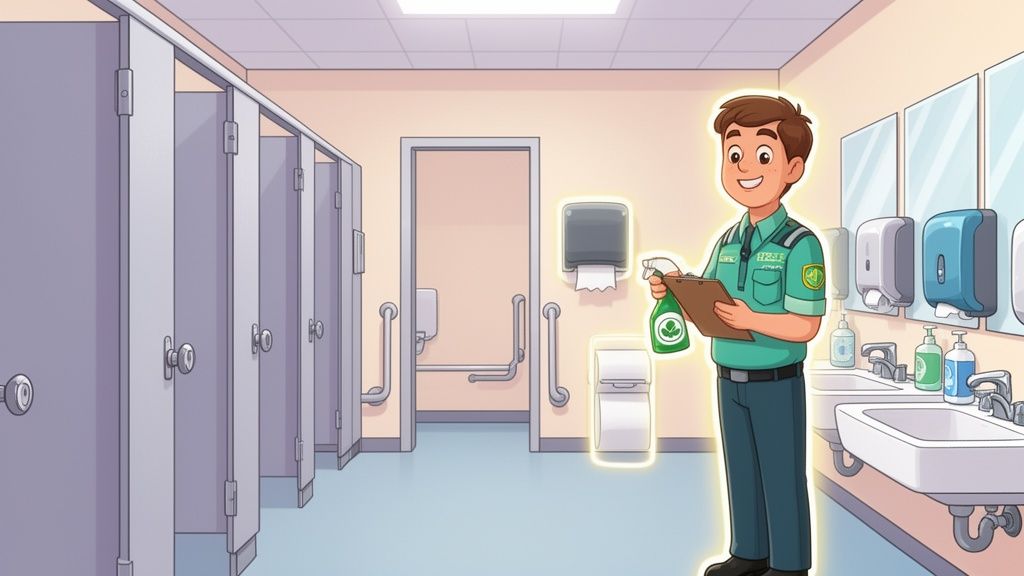
The state of your school’s toilets says more about your commitment to student well-being than any mission statement. It’s a gut check for parents, a daily stressor for students, and a direct influence on health, attendance, and even test scores.
This isn't about appearances; it's a critical operational challenge. This guide is a playbook for facility managers, janitorial staff, and school administrators ready to turn their school’s restrooms from a liability into a point of pride. The cleanliness of public and commercial facilities is a direct reflection of an organization's values, and using effective tools like disinfectant wipes is key to achieving true hygiene.
Why School Restrooms Are a Silent Crisis
A poorly maintained school restroom is more than just unpleasant—it's a very real barrier to education. For students, dirty, broken, or unstocked facilities lead to "toilet avoidance," a conscious decision to "hold it" all day long.
This isn't just uncomfortable. It can cause urinary tract infections, chronic constipation, and a level of anxiety that makes focusing in class nearly impossible. The problem goes far beyond what you can see or smell.
The issue has ballooned into a global crisis, not just of inconvenience, but of staggering economic and social loss. Experts have a term for it: 'toilet loss.' This is what happens when toilets are built but become completely unusable due to poor maintenance, neglect, and a lack of planning. It's silent infrastructure decay with a very loud impact.
The Scale of Toilet Loss
The research paints a grim picture. Globally, nearly 540 million children go to schools that lack any usable toilet facilities. But here's the kicker: almost half of them—about 270 million—are victims of toilet loss, where the restrooms exist but have fallen into such disrepair they might as well not be there.
The financial bleed is just as shocking. An Economist Impact study supported by Unilever found the combined infrastructure loss from 1.2 million deteriorated toilets in just four countries hit US$1.9 billion. The broader societal cost? A jaw-dropping US$10 billion.
The data is crystal clear: building a restroom is only step one. Without a rock-solid plan for operation and maintenance, that initial investment vanishes, and it’s the students who pay the price.
A non-functional toilet is a broken promise to students. It signals that their basic needs for health, dignity, and safety are not a priority, creating an environment where learning takes a backseat to discomfort and anxiety.
This guide moves past the problem and into the solutions. We’re getting practical with actionable steps for daily disinfection, smart supply management, and long-term upkeep. We will cover:
- Daily and Weekly Protocols: How to establish unbreakable routines for cleaning and disinfecting the high-touch zones that matter most, with tips for using disinfectant wipes effectively.
- Supply and Vandalism: Strategies to keep essentials stocked and design spaces that naturally deter damage.
- Long-Term Maintenance: Creating schedules that prevent costly emergency repairs and extend the life of your facilities.
- Community Engagement & Sales Tips: How to train staff, communicate with the community, and promote the value of hygiene to customers or clients.
By putting these strategies to work, you can guarantee your school's restrooms are a safe, functional, and supportive part of a positive learning environment.
Setting Up Your Daily and Weekly Cleaning Playbook
A truly effective school toilet management program isn't about just ticking boxes. It’s built on a rock-solid, consistent cleaning routine that your whole team understands and follows. The real goal is to get beyond what just looks clean and create a space that’s verifiably hygienic and protects student health.
This starts with a crucial distinction every custodial pro knows: cleaning and disinfecting are two different jobs. First, you clean—using a detergent to physically scrub away dirt, grime, and all the visible gunk. Only then can you disinfect—using a proper germ-killing agent on the now-prepped surface. If you try to disinfect a dirty surface, you’re just wasting time and product.
Without this two-step process and consistent upkeep, you fall victim to what we call 'toilet loss'. The initial investment in building the facilities literally goes down the drain as they break down from neglect.

This cycle is a massive drain on school resources. A smart cleaning protocol is your best defense against it.
The Pro Secret: Top-Down Cleaning
One of the first things you learn in this business is the top-to-bottom cleaning method. It’s a simple efficiency hack that saves time and prevents you from cleaning the same surface twice. Always start with the highest surfaces—think mirrors, the tops of stall partitions—and work your way down to counters, sinks, and finally, the toilets and floors.
It's just common sense. If you wipe a counter and then clean the mirror above it, you’re just showering that clean counter with spray and dust. Work with gravity, not against it. By moving systematically downward, you ensure all debris ends up on the floor, the very last thing you clean.
High-Touch Zones: Your Disinfection Hotspots
In a bustling school, germs don’t walk, they fly—mostly on people's hands. The single most impactful thing you can do to stop germs from spreading is to relentlessly disinfect the high-touch zones. These are the surfaces that dozens, if not hundreds, of hands touch every single day.
A once-daily wipe isn’t going to cut it for these areas. They need constant attention. To make this manageable, I've put together a checklist that pinpoints the key hotspots, a recommended disinfection frequency, and the right tools for the job. This isn't just about cleaning; it's about targeted, strategic sanitation.
School Restroom High-Touch Zone Disinfection Checklist
| High-Touch Zone | Recommended Daily Frequency | Recommended Tool |
|---|---|---|
| Stall Door Handles & Locks | 3-5 times (during peak hours) | Disinfectant Wipe |
| Faucet Handles | 3-5 times (during peak hours) | Disinfectant Wipe |
| Soap & Towel Dispensers | 3-5 times (during peak hours) | Disinfectant Wipe |
| Toilet Flush Handles/Buttons | 2-3 times | Disinfectant Spray & Cloth or Wipe |
| Sink Countertops | 2-3 times | Disinfectant Spray & Cloth |
| Entry/Exit Door Handles | 2-3 times | Disinfectant Wipe |
This checklist gives your team a clear, actionable plan. With targeted tools like disinfectant wipes, they can quickly hit these hotspots between classes without needing to haul out a full cleaning cart, keeping your restrooms safer throughout the day.
The Unsung Hero: The Disinfectant Wipe
Deep cleaning with sprays and buckets is a must, but what about the mess that happens at 10:15 AM on a Tuesday? This is where a good disinfectant wipe proves its worth. For spot-cleaning and maintaining hygiene during the school day, nothing is more practical.
A study on school toilets revealed that students often feel "embarrassed or intimidated" to use facilities due to crowding and uncleanliness. Regular, visible cleaning not only improves hygiene but also helps build student confidence in the space.
Empower your staff. Putting dispensers of quality disinfectant wipes in custodial closets gives them the power to act fast. A spill on the counter or a grimy faucet can be sanitized in seconds, stopping a small problem from becoming a bigger one. This is proactive hygiene. It drastically cuts down the germ load and, just as importantly, shows students and staff that you’re on top of it. For their versatility and power, we recommend Wipes.com Disinfectant Wipes. They offer a quick and effective way to tackle high-touch surfaces between deep cleans. You can learn more at Wipes.com.
For a deeper dive into these techniques, our guide on cleaning the restroom effectively offers more advanced strategies.
This approach isn't just about cleaning—it's about creating a healthier environment. When you talk to facility managers, frame it as an investment. Accessible disinfectant wipes mean fewer germs, which can lead to less student sickness and a better perception of the school overall. It’s not an extra cost; it's a tool for a healthier school.
Keeping Supplies Stocked and Vandalism Locked Down
An empty toilet paper dispenser isn't just an inconvenience. For a student, it’s a clear signal that their basic needs aren't a priority. Nothing torpedoes a school hygiene program faster than a soap pump that only dispenses air, creating a frustration that often leads to misuse and disrespect.
Smart supply management is your first line of defense. It’s about being proactive, not just reacting to complaints.

This means you need a system. Stop waiting for dispensers to run dry. Instead, establish clear reorder points for every essential: toilet paper, hand soap, paper towels, and disinfectant wipes. This isn’t complicated—it’s a simple inventory check that prevents you from ever hitting zero.
Stockouts don't just compromise hygiene; they send a powerful negative message. When students consistently find restrooms unequipped, it breeds a sense of neglect that can quickly turn into disrespect for the facilities themselves.
Choosing the Right Tools for the Job
The dispensers you install are just as critical as the supplies inside them. Your choice directly impacts hygiene, long-term costs, and even how well your restrooms stand up to vandalism. Every option has its trade-offs in a busy school.
- Touchless Dispensers: These are the gold standard for hygiene. By eliminating a major touchpoint, they dramatically cut down on cross-contamination. While the upfront cost is higher, the modern look and controlled dispensing—which reduces waste—often pay for themselves.
- Manual Dispensers: You see these everywhere because they're durable and cheaper to install. But let's be honest, manual pumps and levers are also major germ hubs and are often the first things to break from rough use.
- Cartridge vs. Bulk-Fill Systems: For soap, cartridge systems are far more hygienic. The soap is sealed until it's loaded, preventing contamination. Bulk-fill reservoirs might seem cheaper to refill, but they’re a breeding ground for bacteria if not cleaned meticulously and regularly.
The right choice really boils down to your school's traffic and budget. For high-traffic middle and high school restrooms, the hygiene boost from touchless systems can be a massive long-term win.
Taking a Proactive Stance Against Vandalism
Vandalism in school toilets is a maddening and expensive problem, but it almost never happens in a vacuum. It thrives in environments that already feel uncared for. It's a perfect example of the "broken windows theory"—one broken stall door or a bit of graffiti that isn’t fixed immediately just invites more destruction.
The most powerful deterrent to vandalism is a consistently clean, well-stocked, and well-maintained environment. When a space is clearly cared for, students are more likely to treat it with respect.
Immediate repairs are non-negotiable. A broken lock, a clogged toilet, or a flickering light needs to be treated with urgency. This rapid response accomplishes two things: it keeps the restroom functional, and it sends a clear message that destructive behavior won't be ignored. Investing in durable, heavy-duty fixtures made from materials like stainless steel is also a smart move.
Another surprisingly effective tactic? Put trash cans in the right spots. A huge number of toilet clogs are intentional, caused by students flushing paper towels or other trash. Placing large, easy-to-use trash cans between sinks and near the exit gives students a convenient alternative and removes the temptation to use the toilet as a garbage can. You can learn more about what's safe for plumbing in our guide to septic-safe toilet paper.
In the end, it’s a positive feedback loop. A clean, functional space discourages vandalism, which makes it easier and cheaper to maintain. And it all starts with making sure a student never has to face an empty dispenser again.
Putting a Long-Term Maintenance Plan in Place
Daily cleaning is a critical, non-negotiable part of keeping school toilets in working order, but let's be honest—it's only half the battle. To really protect your school's investment and stop the costly cycle of "toilet loss," you need a solid long-term maintenance strategy that goes way beyond surface-level cleaning.
This is about shifting from a reactive, "fix-it-when-it-breaks" mindset to a proactive schedule for your plumbing, fixtures, and ventilation.
Think of it like owning a car. You don't wait for the engine to seize before changing the oil. The same logic applies here. A small, slow leak from a toilet base can go unnoticed for weeks, silently rotting the subfloor and creating a perfect breeding ground for mold. A clogged floor drain seems like a minor annoyance until a major spill creates a flood that shuts down the restroom for days.
A preventative plan is your best defense against these expensive, disruptive emergencies.
Building Your Preventative Maintenance Schedule
A long-term plan doesn’t need to be complicated, but it absolutely has to be consistent. It’s all about regularly inspecting the unseen parts of your restrooms to catch small issues before they become catastrophic failures. This schedule is the backbone of your facility's health.
To head off severe blockages and spot problems early, your long-term maintenance should include regular drain cleaning and camera inspection services.
Here’s a practical framework to get you started on monthly and quarterly checks:
Monthly Plumbing Checks:
- Slow Leaks: Get on your hands and knees. Check every toilet base, sink connection, and urinal for any sign of water.
- Flush Mechanisms: Make sure every toilet flushes completely and refills properly without running constantly. A running toilet is a budget killer.
- Faucet Pressure: Test all sinks for good, consistent water pressure and check for annoying drips.
Quarterly Fixture & Surface Inspections:
- Grout and Caulk: Look for any cracked, crumbling, or discolored grout and caulk. This is a classic sign of water intrusion and a favorite hiding spot for mold.
- Ventilation Systems: Confirm that all exhaust fans are actually working and are free of dust buildup. Proper airflow is your number one weapon against bad odors and moisture.
- Floor Drains: Pour a bucket of water down all floor drains. This ensures they're clear and keeps the p-trap full, which is what stops sewer gases from stinking up the room.
The Overwhelming ROI of Maintenance
The business case for this is undeniable. Neglecting the infrastructure of toilets in schools isn't just a hygiene issue; it's a massive financial black hole. The cost to replace a worn-out toilet flange washer is a few dollars. The cost to repair the water-damaged floor, subfloor, and the ceiling below it after a total failure can easily run into the thousands.
The global numbers are even more staggering. Between 2015 and 2023, the world lost US$18.5 billion just by neglecting school toilet infrastructure. That represents 10% of the total global investment in school sanitation during that period. Even better, research shows that every dollar invested in maintenance and operations generates US$2.30 in returns—a stark contrast to the US$0.40 return for construction alone. You can read the full research on tackling toilet loss to grasp the full scale of this problem.
By focusing on proactive maintenance, you're not just fixing pipes and fixtures. You are actively safeguarding your school's budget and ensuring facilities stay open, safe, and available for students.
Prioritizing Repairs and Budgeting for the Future
Even with the best plan, things will break. The key is to have a system for prioritizing what gets fixed first and budgeting for what’s coming down the line. Create a simple, tiered system for your work orders:
- Urgent (Safety/Hygiene Risk): A non-functional toilet, a major leak, or a broken dispenser. These need immediate, same-day attention.
- High-Priority (Prevents Major Damage): A slow leak, a wobbly toilet, or a struggling exhaust fan. These should be tackled within a few days.
- Standard (Aesthetic/Minor Function): A cracked tile, graffiti, or a partition door that doesn't latch perfectly. Schedule these for your routine maintenance cycles.
This framework lets you allocate your resources where they matter most. As a sales professional, you can educate clients on this "hygiene ROI." Show them how a smart preventative maintenance plan, supported by the right products, is one of the most powerful cost-saving strategies they can adopt.
Ultimately, a long-term plan transforms facility management from a constant fire-fight into a strategic, cost-effective operation. By prioritizing cleanliness and integrating these maintenance checks, you protect your investment and—most importantly—provide a safe and dignified environment for every student.
Engaging Your Staff and School Community
You can have the best cleaning playbook in the world, but it’s just a piece of paper without the right people bringing it to life. Your custodial staff members are the ones on the ground, turning plans into reality. They are the MVPs of your school's health.
Getting them—and the rest of your school community—on board is the final, crucial step. This isn't just about handing someone a mop. It’s about building a system where everyone, from the custodian to the principal and the student to the parent, understands their role in keeping restrooms safe and respected. That takes smart training, clear communication, and visible proof that hygiene is a top priority.

Give Your Custodial Team the Right Training
Your team doesn’t just need supplies; they need skills. The right training ensures they can work safely and efficiently, which not only protects them but also maximizes the impact of every minute they spend cleaning. Think of it as an investment in their professional growth and your school's health.
Here’s what your training absolutely must cover:
- Handling Chemicals Safely: This is non-negotiable. Staff must know how to dilute concentrates, why ventilation is critical, and which chemicals create toxic gas when mixed (like bleach and ammonia). Safety first, always.
- The Magic of Dwell Times: This is the secret to real disinfection. So many people think you just spray and wipe. Your team needs to know that a disinfectant needs to sit on a surface for a specific amount of time—often 3 to 10 minutes—to actually kill germs. Wiping it off too soon makes it useless.
- Using Personal Protective Equipment (PPE): Training has to be clear about when to use gloves, eye protection, and masks. This protects your staff from both chemical exposure and biohazards.
Go beyond the basics and empower your team with a few pro tips. Teach them the top-to-bottom cleaning method to prevent re-doing work. Show them how to use disinfectant wipes for quick, targeted hits on high-touch spots between deep cleans. It makes their job easier and more effective.
Build Trust Through Visibility and Communication
In the minds of parents and students, a clean restroom that no one sees being cleaned might as well be dirty. To build confidence and change perceptions, your hard work has to be visible.
Research shows that students often feel "embarrassed or intimidated" to use school toilets due to crowding and a lack of cleanliness. When they see staff actively maintaining the space, it not only improves hygiene but also reassures them that the area is safe and cared for.
You don't need a huge budget for this. A few simple tactics can completely change the way people see your restrooms.
- Post Cleaning Schedules: Put a simple, laminated checklist inside or just outside the restroom. When a team member cleans or spot-checks the room, they initial the sheet. It’s a powerful, silent signal that the space is actively managed.
- Use "Sanitized For You" Signage: After a deep clean, a small, professional-looking sign placed on a mirror or counter sends a strong message. It says, "We care about this space, and we care about you."
- Communicate with Parents and Students: A short blurb in the school newsletter or a post on the parent portal goes a long way. Briefly mention your commitment to restroom hygiene and any enhanced protocols you're using, like frequent disinfection of doorknobs and faucets. It shows you’re being proactive.
These moves aren't just for show. They demonstrate that student well-being is a real priority, and that’s how you build trust with the whole community.
Create a Culture of Shared Ownership
The ultimate goal is to move away from the "it's the janitor's job" mindset and toward a shared responsibility. When students consistently walk into a clean, stocked, and respected restroom, they are far more likely to treat it with respect.
If you’re a sales professional or business owner selling to schools, this is your key message. Frame the conversation around the ROI of hygiene. A small investment in visible cleaning protocols and effective supplies pays off in better student health, less vandalism, and a happier school community. You’re not just selling products; you’re providing a solution that builds a healthier environment.
When you train your staff well and make your efforts known, you create a positive cycle. A well-cared-for environment encourages respectful behavior, which in turn makes it easier for your staff to keep things clean. That’s how you win the long game.
Answering Your Top School Restroom Questions
No matter how solid your playbook is, school restrooms always manage to throw a curveball. We hear the same questions from facility managers, principals, and even our own sales teams time and time again.
Let’s get straight to it. Here are direct, no-nonsense answers to the challenges that come up most often in the world of school toilet maintenance.
How Often Should School Toilets Really Be Disinfected?
In a busy school, high-touch surfaces are germ magnets. Think flush handles, stall locks, and sink faucets. These spots need to be hit with a disinfectant wipe multiple times throughout the day, especially between busy class changes.
A full, deep clean and disinfection should happen at least once every day, usually after the final bell rings. And always remember the golden rule of sanitation: clean first, then disinfect. You have to get rid of the visible grime before your disinfectant can do its job. Let it sit for the required dwell time—that’s non-negotiable for killing germs effectively.
Spot-cleaning those key surfaces all day long is the secret weapon to keeping hygiene levels high between the deeper daily cleans.
What Are the Best Ways to Control Persistent Odors?
If you're just masking odors with air fresheners, you're losing the battle. Persistent smells are a giant red flag that bacteria are thriving somewhere you can't see.
Lingering odors are a clear signal of an underlying hygiene issue. Instead of covering them with air fresheners—which can worsen air quality—focus on eradicating the bacterial source for a truly clean and healthy environment.
Get to the root of the problem by deep cleaning with enzymatic cleaners. These products are absolute lifesavers, designed specifically to break down the organic gunk that causes those awful smells in floor drains, grout, and under fixtures. Also, check your ventilation. A clean, functional fan that’s actually running makes a world of difference in airflow and odor control.
How Can We Get Students to Help Keep Restrooms Clean?
Getting students on board starts with setting a high standard. It's human nature: people are far more likely to respect a space that is already clean and well-stocked.
When students see that the restrooms are consistently maintained—maybe even with a cleaning log posted and initialed—it sends a powerful message. It shows you care, so they should too.
Positive messaging is key. Frame it as a shared community value, not a list of rules. Get the student council or other groups involved in an awareness campaign. And when something breaks, fix it fast. Prompt repairs show the administration is invested, which goes a long way in encouraging students to be, too.
Are There Water-Saving Options for School Toilets?
Absolutely. Water conservation is a huge deal for school budgets and for the environment. When it's time to upgrade, looking into options like dual flush toilets is a smart move.
These systems give you two flush options—one for liquid waste and a different one for solid waste—slashing your water consumption over time. Upgrading to modern, efficient fixtures isn't just about saving money. It’s also a powerful way to demonstrate your school's commitment to sustainability, a message that really connects with today's students and the community.
At the end of the day, making your restrooms a priority sends a clear message. It tells every student, staff member, and visitor that you value their health and well-being. By building smart routines, using the right tools, and fostering a culture of respect, you can turn your school’s toilets from a constant headache into a source of pride. Prioritize cleanliness, integrate disinfectant wipes into your daily routine, and watch the positive impact it has on your entire facility.
Leave a Reply