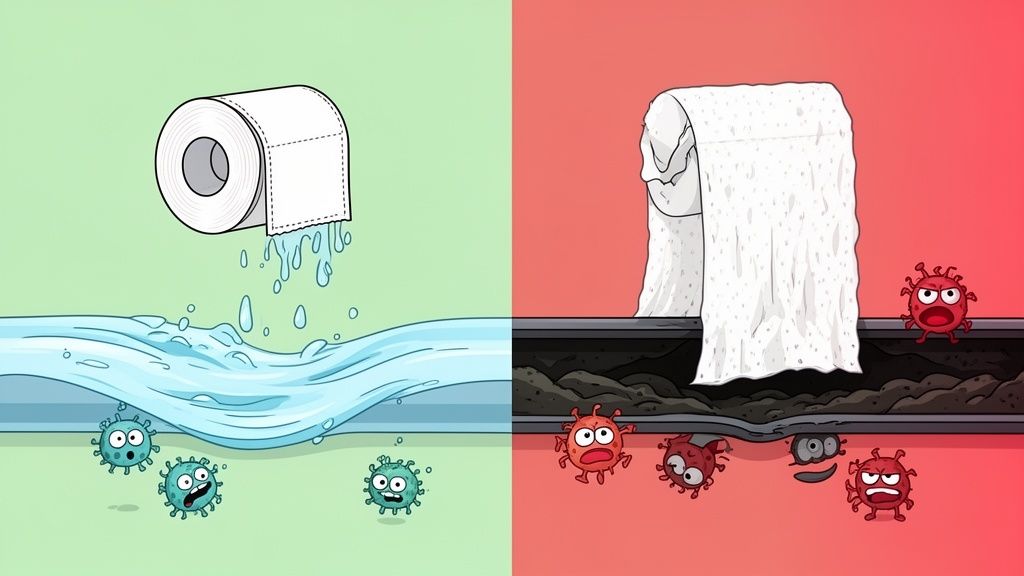
When your business relies on a septic system, the toilet paper you stock isn't just a minor supply detail—it's a critical piece of infrastructure maintenance. Septic-safe toilet paper is made specifically to break down fast in water, which is a lifesaver for sensitive plumbing. Unlike the plush, thick stuff that’s designed to stay strong, this kind of paper dissolves almost the second it hits the water. For any facility with a septic tank, from a remote event venue to a national park lodge, this simple choice can be the difference between a smooth-running operation and a plumbing nightmare.
Why Septic Safe Toilet Paper is a Non-Negotiable for Your Facility
Think of your facility's septic system like a mini, self-contained water treatment plant. It's a delicate ecosystem that depends on good bacteria to break down solid waste. When you flush materials that don't dissolve quickly, you’re basically throwing a monkey wrench into the whole process.
Standard, cushy toilet paper, often picked for its "premium" feel, is one of the biggest offenders when it comes to septic problems. Its strong fibers and chemical binders are great for strength but terrible for your tank. Instead of breaking down, this paper clumps together and settles into a dense layer of sludge at the bottom.
This buildup not only takes up precious space in your tank, reducing its capacity, but it can also get pushed out into the drain field. Once that happens, you’re looking at irreversible damage and total system failure.
The Financial and Reputational Impact
Using the wrong toilet paper can hit you where it hurts: your bottom line and your reputation. There's a reason the global market for septic-safe products is booming, valued at $2,388 million. More and more businesses are catching on to the steep costs of septic failure. In fact, switching to septic-safe options can slash maintenance calls by up to 30%, saving you money and protecting your brand. With a single emergency repair costing anywhere from $500 to $5,000, the right toilet paper stops being an expense and starts being an investment. You can find more details on the septic-safe paper market and its growth here.
For businesses off the main sewer line—like campgrounds, rural B&Bs, or construction sites—a septic backup is a full-blown catastrophe. It can lead to:
- Forced closures during your busiest season.
- Angry guests and a flood of terrible online reviews.
- Sky-high emergency repair bills and hazardous waste cleanup costs.
By simply stocking the right supplies, you're not just buying toilet paper. You're proactively protecting your infrastructure, keeping your guests happy, and sidestepping a financial disaster just waiting to happen.

To make it even clearer, here's a quick rundown of how these two types of paper stack up.
Septic Safe vs. Standard Toilet Paper At a Glance
| Feature | Septic Safe Toilet Paper | Standard Toilet Paper |
|---|---|---|
| Dissolution Speed | Breaks down very quickly (often in minutes) | Dissolves slowly, can remain intact for hours |
| Fiber Length | Shorter, recycled, or virgin fibers designed to separate | Longer, stronger fibers with chemical binders for durability |
| Plumbing Impact | Moves freely through pipes, minimal risk of clogs | High risk of clogs, sludge buildup in septic tank |
| Biodegradability | High; designed to be easily consumed by septic bacteria | Low; binders and strength additives slow down decomposition |
As you can see, the choice has a direct impact on your system's health. While standard toilet paper feels luxurious, that luxury comes at a high operational risk for any facility running on a septic system.
How Rapid-Dissolving Toilet Paper Protects Your Plumbing
So, what’s the secret behind septic-safe toilet paper? It’s not magic, it’s just smart engineering. Unlike the ultra-plush rolls you see in commercials, this paper is made with shorter, less-processed fibers, often from recycled or sustainable sources. The real game-changer, though, is what it doesn't have: the strong binding glues that give conventional toilet paper its durability but make it a total nightmare for your plumbing.
Think of it like dropping a sugar cube into your tea versus dunking a dense cookie. The sugar cube dissolves almost instantly, spreading out and disappearing. The cookie, on the other hand, holds its shape and sinks to the bottom like a rock. Septic-safe paper acts just like that sugar cube, breaking apart fast so it can flow freely through your pipes without causing a backup.
This quick-dissolve action is the first line of defense for your entire plumbing network, from the toilet bowl all the way to the septic tank.
The Science of Breaking Down
To make sure a product lives up to its claims, the industry uses a surprisingly simple method called the dissolution test. It’s a low-tech way to get a high-stakes answer: how quickly does the paper disintegrate in water? You just drop a few sheets into a jar of water and shake it for about 10-15 seconds.
- Successful Test: The paper breaks apart into tiny, almost unrecognizable fibers.
- Failed Test: The paper stays mostly in one piece, clumping into a soggy, stubborn mass.
This test perfectly mimics the turbulent journey from your toilet to the septic tank. Paper that passes can easily navigate your pipes without snagging or clumping up, stopping clogs before they even start. Getting this part right is fundamental, just like how choosing the right materials is critical for other sensitive home plumbing systems.
True Biodegradability in the Septic Tank
Once the paper makes it to the septic tank, a whole different process kicks in: true biodegradability. This isn't just about breaking into smaller pieces; it’s about being completely consumed by the good bacteria living inside the tank. These microorganisms are the unsung heroes of your septic system, working 24/7 to break down solid waste.
When you use genuine septic safe toilet paper, you are feeding this ecosystem a material it can easily digest. The paper fibers are consumed, converted into liquid, and safely dispersed into the drain field, preventing the dangerous buildup of solid sludge.
In stark contrast, regular toilet paper loaded with strong chemical binders, dyes, or lotions can act like poison to these essential bacteria. It slows decomposition to a crawl, causing sludge to pile up way too fast. Before you know it, you're facing more frequent pump-outs and, eventually, the risk of a complete system failure. Choosing the right paper isn't just a friendly suggestion—it's a core requirement for a healthy, long-lasting septic system.
How to Choose the Right Septic Safe Products
For facility managers, choosing toilet paper is about more than just stocking the stalls. It’s a crucial decision that directly protects your plumbing and prevents some seriously expensive headaches down the line. The packaging aisle is full of confusing marketing claims, but if you focus on a few key factors, you can make a smart, cost-effective choice every time.
First things first: you have to cut through the marketing noise. You’ll see terms like “biodegradable” thrown around a lot, but not all biodegradable paper is safe for a septic system. True septic-safe toilet paper is engineered to dissolve rapidly, ensuring it doesn't build up and wreck the delicate bacterial ecosystem inside your tank.
Decoding Certifications and Labels
Always look for products explicitly labeled "septic safe." While there isn't a single, universal certification body that stamps every roll, some products might mention compliance with standards from organizations like the National Sanitation Foundation (NSF), which adds a layer of credibility. The most critical distinction, however, is between "septic safe" and "flushable."
The term 'flushable' is dangerously misleading for facilities with septic systems. It often just means the product will clear the toilet bowl, not that it will break down properly in your pipes or tank. Many so-called flushable wipes are notorious for causing massive blockages.
This simple decision tree can help guide your purchasing process.

As you can see, the game changes the moment a septic system is involved. That single factor should immediately point you toward rapid-dissolve options to prevent clogs, backups, and eventual system failure.
Key Product Characteristics to Check
When you're evaluating toilet paper for your facility, keep an eye on these practical attributes:
- Ply Count: Single-ply toilet paper is almost always the safest bet. It dissolves much, much faster than its multi-ply cousins, which dramatically lowers the risk of clogs and solid buildup in the tank.
- Recycled Materials: Paper made from recycled content is a great choice. These products have shorter fibers, which helps them break down much quicker once flushed. It’s an easy indicator of a septic-friendly product.
- No Additives: Steer clear of any toilet paper loaded with perfumes, dyes, or lotions. These chemicals can kill the good bacteria working hard in your septic tank, slowing down the entire waste decomposition process.
At the end of the day, making the right choice empowers managers at gyms, campgrounds, and office parks to protect their infrastructure and avoid costly procurement mistakes. For the long-term health of your septic system, a simple, rapid-dissolving paper will always be the winning choice.
The Hidden Costs of Using the Wrong Toilet Paper
Choosing the wrong toilet paper for a commercial facility isn't some minor oversight—it's a decision that can set off a costly chain reaction of operational failures. This seemingly small supply choice goes way beyond product features and becomes a major factor in your business's financial health and day-to-day stability. It all starts quietly, maybe with a few slow drains, but it escalates fast.
The thick, plush, non-dissolving fibers you find in standard toilet paper are the main culprits behind those stubborn clogs in high-traffic restrooms. Unlike its septic-safe cousins, this paper just doesn't break down. Instead, it piles up in your pipes, creating dense blockages that eventually lead to full-blown septic backups, awful odors, and restroom closures.

The Real-World Consequences of a Bad Choice
Just imagine the operational chaos that kicks off when a restroom goes out of commission. At a packed sports stadium, a single clogged toilet during a game can create ridiculously long lines, angry fans, and a logistical nightmare for your staff. For a remote rental property, a septic failure means a lot more than just an expensive emergency plumbing bill—it guarantees scathing online reviews that can cripple your future bookings.
These scenarios all point to one critical fact: stocking the right toilet paper isn't just another line-item expense. It's a fundamental investment in risk management and protecting your brand.
The financial fallout from a single septic backup can easily soar past $5,000 in repairs, cleanup, and lost revenue. And that figure doesn't even touch the long-term damage to your business's reputation when customers start associating your brand with poorly maintained facilities.
Beyond Clogs: The Impact on System Health
The damage runs much deeper than the immediate clog. When you use non-septic-safe toilet paper, it can lead to frustrating issues like false readings from your tank sensors. Learning about proper waste management helps; for example, this guide on RV black tank sensor cleaning explains similar problems in mobile systems. The exact same principles apply to commercial septic tanks, where a buildup of non-dissolved solids can throw the entire system's balance out of whack.
This accumulation speeds up the formation of a dense sludge layer, forcing you to schedule septic pumping far more often than the standard three-to-five-year interval. Each one of those extra pump-outs is an avoidable operational cost directly tied to the supplies you stock. To learn more about this, check out our guide on how to handle a clogged toilet in hotel environments. By understanding what is septic safe toilet paper, you are giving yourself the power to prevent these cascading failures.
The ultimate cost of using the wrong product is the threat of complete system failure—a catastrophic event that can shut down your operations for days or even weeks. It means excavation, eye-watering repair bills, and significant business interruption. Proactively choosing septic-safe products is the most effective strategy you have to ensure your plumbing infrastructure remains a reliable asset, not a recurring liability that bleeds your resources and damages your brand.
Putting a Septic-Friendly Restroom Policy into Action
Switching to septic-safe products isn't just a line item on a purchase order; it's a full-blown operational strategy. For any facility manager, making this change stick comes down to a smart mix of inventory control, consistent staff training, and crystal-clear communication with everyone who uses your restrooms. The real goal is to build a management policy that actively defends your plumbing from expensive problems down the road.
Simply stocking septic-safe toilet paper is a good start, but it won’t solve the core issue if other harmful items are still getting flushed. The true culprits behind most septic emergencies are things that never belonged in the pipes in the first place—think disinfectant wipes, paper towels, and feminine hygiene products. A successful policy tackles these threats head-on by making proper disposal the easiest and most obvious choice for everyone.

Building Your Action Plan
Creating a septic-friendly environment means more than just swapping out one product for another. It’s about building a system that nudges people toward the right behavior, day in and day out. Your action plan should have a few key components to make sure the rollout is smooth and effective across your entire facility.
Here are the essential steps to get things moving:
- Hold a Staff Training Session: Your janitorial and maintenance teams are your first line of defense. Get them in a room and explain the "why" behind the change. Show them the difference between septic-safe and standard products and clarify that only the approved toilet paper can be flushed.
- Update Your Inventory Protocols: Make sure your procurement process is locked in to order only septic-safe toilet paper. Just as important, remove all the old, non-compliant rolls from storage closets to prevent someone from accidentally restocking a stall with the wrong stuff.
- Put Up Clear and Simple Signage: A small, easy-to-read sign inside each stall works wonders. This simple visual cue educates guests on the spot, reinforces your facility’s commitment to maintenance, and guides them to do the right thing without causing alarm.
Effective Signage and Disposal Policies
The best signs are friendly, direct, and genuinely helpful. They guide behavior without sounding overly technical or scolding. This is especially important in places like gyms, campgrounds, or pool clubs where disinfectant wipes are everywhere. If you're looking for tips on optimizing the user experience, our guide on designing effective public restroom stalls has some great insights.
A great sign might say something simple like this:
"To protect our sensitive plumbing, please only flush toilet paper. All other items, including wipes and paper towels, belong in the trash receptacles provided. Thanks for your help!"
This proactive approach is a game-changer in high-traffic commercial settings. For event planners and sports facility operators, using the right paper isn't just a suggestion; it’s a proven strategy. In fact, studies show that septic-safe options can slash blockages by a whopping 25-35% in busy commercial restrooms. That’s a massive win, preventing clogs during peak hours when your reputation and guest experience are on the line.
Different facilities have unique challenges when it comes to restroom management. The checklist below offers targeted action items to help you implement a successful policy, no matter your environment.
Facility-Specific Implementation Checklist
| Facility Type | Key Action Item 1 | Key Action Item 2 | Signage Recommendation |
|---|---|---|---|
| Campgrounds & Parks | Install larger, more visible waste bins near restroom entrances for non-flushable waste. | Train park rangers and seasonal staff on septic system basics during orientation. | Use durable, weatherproof signs with simple graphics (e.g., toilet icon with a checkmark, wipe icon with an X). |
| Restaurants & Cafes | Conduct brief, regular reminders during staff meetings about the "flush only TP" rule. | Place small, discreet disposal bins for sanitary products inside every stall. | A gentle, branded sign: "Help Us Stay Clog-Free! Only toilet paper, please." |
| Fitness Centers & Gyms | Position large, clearly labeled bins for disinfectant wipes throughout the locker rooms and workout areas. | Add a "septic-safe" note to the supply order list for all janitorial staff. | Clear and direct: "Wipes Clog Pipes! Please use the trash cans provided for all wipes." |
| Office Buildings | Send a company-wide email explaining the switch and the environmental benefits. | Ensure cleaning crews are checking for and removing non-flushable items left near toilets. | Professional and informative: "Our building uses a septic system. Please flush only toilet paper." |
By taking these tailored steps, you can ensure your policy is not just understood but actively followed. It’s about creating an environment where doing the right thing for your septic system is easy and automatic for everyone.
Your Top Questions About Septic Safe Toilet Paper, Answered
Even after getting the basics down, facility managers and business owners usually have a few more specific questions. Let's tackle the most common ones head-on to clear up any lingering confusion and help you manage your plumbing with confidence.
Is “Flushable” the Same as “Septic Safe”?
Absolutely not. Confusing these two terms is one of the quickest ways to create a plumbing nightmare, and it's a mistake that can cost you dearly.
The term “flushable” is mostly a marketing gimmick. All it really means is that a product will disappear down the toilet when you flush. It says nothing about what happens next. Many products, especially "flushable" wipes, are packed with synthetic fibers that refuse to break down, eventually clumping together into massive blockages in septic tanks and city sewer lines.
On the other hand, “septic safe” is a technical claim. It means the product was designed from the ground up to dissolve quickly in water and be easily digested by the bacteria living in your septic tank. To protect your system, always—and I mean always—look for products that are explicitly labeled septic safe.
How Can I Tell If My Current Toilet Paper Is Harming My Septic System?
Your septic system is pretty good at sending out an S.O.S. when it's in trouble. The trick is knowing how to read the signals before a small problem becomes a full-blown, budget-wrecking disaster.
Keep an eye out for these red flags:
- Toilets that clog for no apparent reason, again and again.
- Sinks, showers, or tubs across your facility that drain painfully slowly.
- Weird gurgling noises coming from the pipes long after a flush.
- Foul odors wafting up from drains or hanging around the septic tank area.
If you're having to pump your septic tank more often than the usual 3-5 year schedule, that’s a huge indicator that solids—like the wrong kind of toilet paper—are building up way too fast.
You can also do a quick check yourself. Grab a few squares of your current toilet paper and drop them in a jar half-full of water. Screw the lid on tight and give it a good, hard shake for about 15 seconds. Real septic-safe paper will start to fall apart into tiny fibers. If you're left with big, soggy clumps, you've found your problem.
What Other Products Should Be Kept Out of a Septic System?
A septic system is basically a living, breathing ecosystem. The right toilet paper is a big part of keeping it healthy, but it's just as important to keep the wrong things out entirely.
Make sure your staff, tenants, and customers know to never, ever flush these items:
- Disinfectant wipes, baby wipes, or makeup wipes
- Paper towels and facial tissues
- Feminine hygiene products
- Dental floss and cotton swabs
- Cigarette butts
- Condoms
These things just don't break down. They'll fill your tank with solid waste and clog your pipes in no time. Also, keep fats, oils, and grease out of the drains, as they harden into solid blockages. Harsh chemical cleaners and too much bleach can also wipe out the good bacteria your system needs to function, grinding the whole process to a halt.
Is Septic Safe Toilet Paper More Expensive For Bulk Purchasing?
It’s true that some specialty septic safe toilet papers might cost a little more per roll than the rock-bottom-priced standard stuff. But looking at the per-roll price is the wrong way to think about it. For a business, this is a decision you have to make based on the total cost of ownership.
When you weigh the small upfront cost against the money you save by avoiding a single emergency plumbing bill—which can easily run into the thousands—the choice becomes obvious. Factor in the reduced need for septic pumping and avoiding the lost revenue and reputation damage from closed restrooms, and the initial price difference feels like pocket change.
Think of it as a cheap insurance policy for your building's plumbing. Plus, many commercial suppliers offer great pricing on bulk orders of septic-safe products, making the switch even easier on your budget. At the end of the day, buying the right toilet paper isn't an expense; it's a smart, proactive investment that protects your bottom line.
Leave a Reply