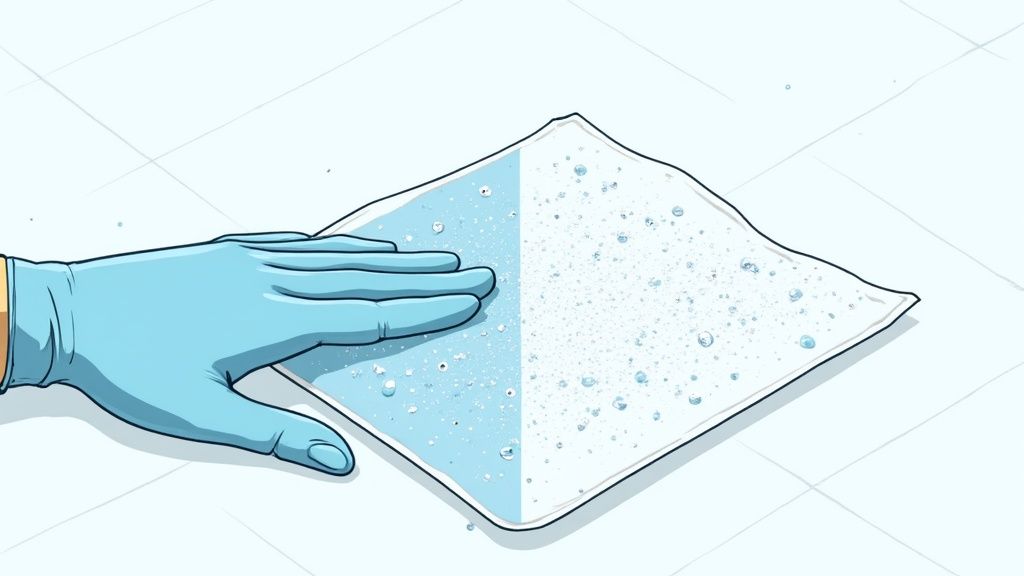
In any commercial or public facility, cleanliness is more than just an aesthetic—it's a critical component of health, safety, and customer confidence. Disinfectant wipes are not just glorified paper towels; they are powerful tools in the daily fight against germs, designed to clean and sanitize high-touch surfaces efficiently. From bustling offices and high-traffic retail stores to schools and fitness centers, these wipes are an essential first line of defense.
These wipes are purpose-built to do two jobs at once: remove visible grime and eliminate harmful bacteria and viruses. Their convenience and effectiveness make them indispensable for maintaining a hygienic environment that protects staff, customers, and your business's reputation.
The Importance of a Proactive Cleaning Strategy

Let's get one thing straight: "clean" to the eye and "sanitized" at a microscopic level are two different things. Wiping up a coffee spill on a desk is about appearances. In a public facility, the real enemies are invisible—germs, bacteria, and viruses that linger on surfaces and are easily transferred from person to person.
Think about the difference between a quick tidying up and a deliberate disinfection routine. For a homeowner, a missed spot is no big deal. For a gym owner, a single contaminated dumbbell could lead to an outbreak among members. For an office manager, a germ-laden doorknob can contribute to increased employee sick days, impacting productivity and morale. This is the high-stakes world where disinfectant wipes prove their value.
Why Every High-Touch Surface is a Priority
In facilities like offices, gyms, schools, and restaurants, there's zero room for complacency. A stray cough or sneeze can deposit germs on a tabletop, where they can be picked up by the next person who touches it. This is why focusing on high-touch surfaces—doorknobs, light switches, keyboards, elevator buttons, and shared equipment—is so critical.
These environments demand a proactive approach to hygiene. The goal is relentless: reduce the chain of transmission. This obsession with cleanliness is seen in many industries, from food service to healthcare, as detailed in resources like 7 Important Industries That Use Ultrapure Water. It all comes down to control.
A clean facility isn’t just a visually appealing space; it's a controlled environment where the risk of germ transmission is actively managed to protect the health and well-being of everyone who enters.
This is exactly why disinfectant wipes are more than just cloths. They're indispensable tools, engineered to trap and kill pathogens. Everything from their material to the disinfecting solution they're saturated with is designed to provide a quick, effective, and convenient way to maintain hygiene. They are the cornerstone of any serious daily cleaning and sanitation strategy.
Effective Cleaning Tips: Making Every Wipe Count
Not all cleaning methods are created equal. To get the full benefit of a disinfectant wipe, you need to use it correctly. The goal is to clean and disinfect, which requires a methodical approach.
Choosing the right wipe is just the first step. You’re not just cleaning; you’re actively reducing the microbial load on a surface. The global market for cleaning wipes is massive, with the dust-free segment alone hitting USD 1.2 billion in 2023 and projected to reach USD 2.5 billion by 2033, according to this detailed industry report. This growth is driven by facilities of all types demanding effective, easy-to-use cleaning solutions.
Cleaning and Disinfecting Best Practices
Let's unpack the most effective ways to use disinfectant wipes to ensure a truly clean and safe environment.
- One Wipe, One Direction: Avoid scrubbing back and forth or in circles. This can just spread germs around. Instead, wipe in a single, consistent direction. For a desk or countertop, start at one end and wipe to the other, slightly overlapping each pass.
- Focus on High-Touch Hotspots: Create a checklist of all the high-touch surfaces in your facility. This includes doorknobs, light switches, faucet handles, keyboards, telephones, conference tables, and shared equipment like printers or gym machines.
- Let It Dwell: Disinfectants need time to work. After wiping a surface, check the product label for the recommended "dwell time"—the amount of time the surface needs to remain visibly wet to kill germs effectively. Don't immediately dry it with a cloth.
- Start with the Cleanest Areas First: To avoid cross-contamination, always work from the cleanest areas to the dirtiest. For example, wipe down a desk before you clean the messier breakroom counter.
- Frequency is Key: For high-traffic areas, disinfection should be a daily—or even more frequent—task. In an office, wipe down shared surfaces at least once a day. In a gym, equipment should be wiped down after every use.
The core principle is simple: Consistency and proper technique are what turn a simple wipe into a powerful tool for public health. A quick, haphazard wipe is better than nothing, but a methodical approach delivers real results.
Facility-Specific Suggestions
Tailor your cleaning strategy to your environment for maximum impact.
| Facility Type | High-Priority Areas | Frequency Recommendation |
|---|---|---|
| Offices | Desks, keyboards, phones, doorknobs, meeting tables | Daily for shared surfaces; weekly for personal desks |
| Gyms/Fitness | Equipment handles, weights, benches, locker room surfaces | After each use (by members); thorough disinfection daily (by staff) |
| Schools | Desks, chairs, doorknobs, shared learning tools, cafeteria tables | Daily; more frequently during cold and flu season |
| Retail Stores | Checkout counters, PIN pads, shopping cart handles, door handles | Multiple times per day, especially during peak hours |
This comparison highlights how cleaning needs vary. A gym has a much higher need for constant disinfection than a low-traffic office. For more on advanced cleaning materials, see our guide on the benefits of lint-free microfiber cloths.
Sales Tips: Promoting the Value of Hygiene
For sales professionals in the cleaning industry or janitorial service providers, disinfectant wipes are more than a product—they're a solution to a customer's core needs for safety, productivity, and reputation management. The key is to sell the outcome, not just the wipe.
Think of it like this: a business owner isn't just buying a canister of wipes; they're investing in fewer employee sick days, higher customer satisfaction, and a visible commitment to health and safety. The global demand for specialized wipes is surging, with the market valued at USD 1,238.9 million in 2024 and expected to climb to USD 2,500 million by 2035. This growth signals a huge opportunity for those who can effectively communicate the value of hygiene.
Framing the Hygiene ROI (Return on Investment)
The conversation shouldn't be about cost per wipe, but about the return on a small investment. Here’s how to frame it for different clients.
- For Office Managers: "Investing in readily available disinfectant wipes for employees can lead to a measurable reduction in absenteeism. A healthier workforce is a more productive workforce. Think of this as a wellness initiative with a direct impact on your bottom line."
- For Gym Owners: "A visibly clean facility is your number one retention tool. When members see staff consistently wiping down equipment and see wipes available for their own use, it builds trust and makes them feel safe. That confidence is priceless."
- For Retail & Restaurant Owners: "First impressions are everything. A clean entrance, clean checkout counter, and clean restrooms tell customers you care about their well-being. This directly impacts their decision to return and recommend your business."
For more on how different industries approach cleanliness standards, see our guide on understanding clean room classification standards.
Incorporating Wipes into a Larger Offering
Disinfectant wipes can be a powerful entry point or add-on to a larger cleaning supply contract.
Don't just sell a product; sell a complete hygiene system. Position disinfectant wipes as the daily maintenance tool that complements your deeper cleaning services.

Here are some sales strategies:
- Bundle and Save: Create a "Workplace Wellness" or "Facility Safety" package that bundles disinfectant wipes with hand sanitizer, paper towels, and other daily essentials. Offer a discount for recurring orders.
- Educate and Demonstrate: Show, don't just tell. During a sales call, use a wipe to clean a surface in their own office (like their phone or desk) and explain the importance of dwell time and high-touch areas.
- Position as a Partnership: Frame your role as a hygiene consultant, not just a supplier. Offer to help them create a cleaning schedule or a checklist for their staff. This adds value beyond the product itself.
Getting this right—matching the right hygiene solution to a client's specific needs—is fundamental to building long-term, profitable relationships. It protects your clients' businesses and solidifies your role as a trusted partner.
Your Practical Selection Checklist
Alright, you understand the importance of disinfecting. Now comes the hard part: turning that knowledge into a smart purchasing decision. This isn't just about picking the cheapest wipe; it's about choosing the right tool for the job.
Think of this as your pre-flight check before you stock up. Walking through these questions will arm you with the right information, so you can have a meaningful conversation with suppliers and pick a product that actually supports your facility's hygiene goals.
1. Define Your Environment and Application
First things first: where and how will these wipes be used? The same wipe that's perfect for a front office desk might not be suitable for a food-prep area. You have to get specific.
- What type of facility is it? An office, a gym, a school, or a restaurant all have different needs and traffic levels.
- What specific surfaces are you cleaning? Consider whether you'll be cleaning electronics, stainless steel, wood, or plastic. Some wipes may not be safe for all surfaces.
- What is the primary cleaning task? Are you doing routine daily disinfection of high-touch surfaces, cleaning up spills, or performing a deep clean?
2. Assess Disinfecting and Safety Requirements
Next, think about what you need the wipe to do and who will be using it. Getting this wrong can lead to ineffective cleaning or even damage to your surfaces.
Selecting a wipe is a balancing act between disinfecting power, surface safety, and user-friendliness. Forgetting one of these pillars can compromise your entire hygiene protocol.
Answering these questions will quickly narrow your options:
- What specific germs do you need to kill? Check the product label for its "kill claims." Does it disinfect against common bacteria, viruses like the flu, or more resilient pathogens?
- Is a food-safe formula required? For restaurants, cafes, or breakrooms, you'll need wipes that are approved for use on food-contact surfaces, which often require a rinse with water after use.
- Are harsh chemicals a concern? For schools or facilities with sensitive occupants, you may want to look for wipes with plant-based or low-odor disinfecting agents.
3. Evaluate Practicality and Cost
Finally, let's get into the physical properties of the wipe and how it fits your budget. This is where you can really fine-tune your choice, getting the performance you need without overspending.
- What size and durability do you need? A small, thin wipe might be fine for a keyboard, but you'll want a larger, more durable wipe for cleaning a gym bench or a large conference table.
- What is your budget? While premium wipes may offer broader kill claims or more durable material, a standard disinfectant wipe is often more than sufficient for daily use in most facilities. Buying in bulk can significantly lower the cost per wipe.
Remember, disinfectant wipes are just one part of a bigger picture. A solid hygiene plan often involves a whole suite of specialty cleaning supplies. By working through this checklist, you can turn a complicated purchase into a clear, methodical process and make sure you get the right tool for the job, every single time.
Proper Wiping Techniques And Procedures
Let's be blunt: even the best disinfectant wipe is useless if you don't use it correctly. A high-quality wipe in untrained hands can actually do more harm than good, turning from a germ-killing tool into a contamination spreader.
Think of it like this: just wiping in circles doesn't disinfect a surface. It just rearranges the germs. To truly capture and eliminate pathogens, you need a strict, standardized procedure. This isn't just a "best practice"—it's a fundamental part of your entire hygiene strategy. Following a proven method is what makes every wipe count.

Use a Fresh Wipe for Each Area
The golden rule of disinfecting is to avoid cross-contamination. This means using a fresh wipe for each distinct area or piece of equipment. Using the same wipe to clean a doorknob, then a desk, then a phone is a recipe for spreading germs.
Here’s a practical guide:
- Start Fresh: Pull a single wipe from the container.
- Clean One Surface: Thoroughly wipe down one surface, like a tabletop or piece of gym equipment.
- Check Dwell Time: Ensure the surface remains wet for the time specified on the product label.
- Dispose and Repeat: Throw the used wipe away and grab a new one before moving to the next surface.
This technique is all about maximizing effectiveness. You're ensuring that with every new wipe, you're removing and killing germs, not just moving them to a new home.
The Unidirectional Wiping Motion: Clean, Cleaner, Cleanest
Once you have your wipe, how you move it is critical. The guiding principle here is simple: never re-contaminate an area you just cleaned. You achieve this with a specific, deliberate wiping pattern.
The cardinal rule of effective disinfecting is to always move from the cleanest area to the dirtiest. This ensures you’re systematically pulling contaminants away from surfaces, not pushing them back on.
To get this right every time, follow these rules:
- Wipe in One Direction: Always wipe in a single, straight line. No circular scrubbing, no back-and-forth motions. Ever.
- Overlap Your Strokes: Each new wipe pass should overlap the previous one by about 25-30%. This guarantees complete surface coverage, leaving no gaps where germs can hide.
- Lift, Don't Drag: Once a single pass is complete, lift the wipe completely off the surface. Never drag it back across the area you just cleaned.
For a horizontal surface like a workbench, you can start at the back and pull the wipe straight towards you. For vertical surfaces like cabinet doors, you start at the top and wipe straight down.
Handling, Storage, And Disposal
The life of a disinfectant wipe is simple, but every step matters. Proper handling from start to finish is non-negotiable for safety and effectiveness.
Storage and Handling
- Keep It Sealed: Always keep the lid on the wipe canister tightly closed. This prevents the wipes from drying out and losing their disinfecting power.
- Store Properly: Store containers in a cool, dry place away from direct sunlight, as high temperatures can degrade the disinfectant solution.
- Use Proper Dispensers: For high-traffic areas, wall-mounted dispensers make it easy for staff and customers to grab a single wipe without touching the rest of the roll.
Disposal
Proper disposal closes the hygiene loop. A used wipe is loaded with the very germs you just worked so hard to remove.
- Dispose of It Immediately: The second a wipe is used, it goes straight into a designated trash bin. Never, ever leave a used wipe sitting on a clean surface.
- Follow Safety Protocols: Most standard disinfectant wipes can be disposed of in regular trash. However, if used to clean up blood or other bodily fluids, they should be disposed of according to your facility’s biohazard protocols.
By embedding these techniques into your daily routines and reinforcing them with regular training, you turn a simple wipe into a precision instrument for protecting your facility.
Spotting and Stopping Common Cleaning Mistakes
Even with the best disinfectant wipes and detailed procedures, human error is the biggest variable in any cleaning protocol. A single lapse in technique can undo hours of work, spreading the very germs you're trying to eliminate. This can lead to health risks, negative customer perceptions, and a false sense of security.
These mistakes often look small, but in the world of microscopic threats, they have huge consequences. The good news? They're completely preventable with the right training and a commitment to consistency. Learning to spot these pitfalls is the key to making your cleaning efforts truly effective.
The Reusable Wipe Fallacy
One of the most common—and damaging—mistakes is trying to reuse a disposable disinfectant wipe. From a cost-saving angle, it might seem tempting. But this fundamentally misunderstands what the wipe is for. After cleaning a surface, a wipe is no longer a cleaning tool; it's a carrier for germs.
Using it again, even if it looks clean, is just smearing bacteria and viruses onto another surface. It's counterproductive and undermines the entire purpose of disinfecting.
- The Mistake: Using a single wipe to clean multiple, distinct surfaces (e.g., the phone, then the keyboard, then the doorknob).
- The Solution: Enforce the one-wipe, one-surface rule without exception. Train your team that once a wipe has done its job on one area, it goes straight into the trash. The cost of a new wipe is negligible compared to the cost of a sick employee or customer.
When Good Wipes Meet Bad Technique
Wiping the wrong way is another classic error. Many people instinctively use a circular or back-and-forth scrubbing motion. That might work for a stubborn food spill, but it’s a disaster for disinfecting. That kind of motion doesn't capture and kill germs; it just pushes them around, leaving you with a freshly contaminated surface.
The right technique is methodical and deliberate. It’s designed to apply the disinfectant evenly and remove pathogens.
Think of a disinfectant wipe as a precision instrument. Its effectiveness is completely tied to the operator's skill. Without proper training on unidirectional, overlapping strokes, even the most advanced wipe is useless.
Troubleshooting Ineffective Cleaning
If you feel your cleaning efforts aren't making a difference (e.g., employees are still getting sick), the first place to look is your team’s wiping technique.
- Observe the Motion: Are operators wiping in straight, parallel lines? Is each stroke overlapping the last one by about 25-30%?
- Check for Dwell Time: Are they letting the surface air dry, or are they immediately wiping it down with a dry cloth, rendering the disinfectant useless?
- Confirm the Workflow: Are they cleaning from top-to-bottom and from cleaner areas to dirtier ones to prevent re-contamination?
Mismatching Wipes with Surfaces
Choosing a wipe that damages a surface is an easy mistake to avoid, but a costly one to make. Not all materials are created equal. A wipe with alcohol or harsh chemicals might be great for a metal doorknob but could damage a wooden desk or a sensitive electronic screen. This not only looks bad but can create tiny cracks where germs can hide.
This is a growing concern as facilities invest in more high-end furniture and technology. The global market for specialized wipes is booming, with one report from this detailed report on the cleanroom wipes market highlighting the demand for wipes tailored to specific industries and applications.
- The Mistake: Grabbing any disinfectant wipe without checking if it’s safe for the surface you're about to clean.
- The Solution: Always check the manufacturer’s label for surface compatibility. Have different types of wipes for different areas if needed—for example, alcohol-free wipes for electronics and a more powerful disinfectant for restrooms. When in doubt, test the wipe on a small, inconspicuous area first.
By addressing these common mistakes, you can elevate your cleaning protocol from a simple task to a powerful strategy that genuinely protects the health and well-being of everyone in your facility. Prioritize cleanliness, integrate disinfectant wipes into your daily routine, and watch the positive impact on your environment and your business.
Leave a Reply