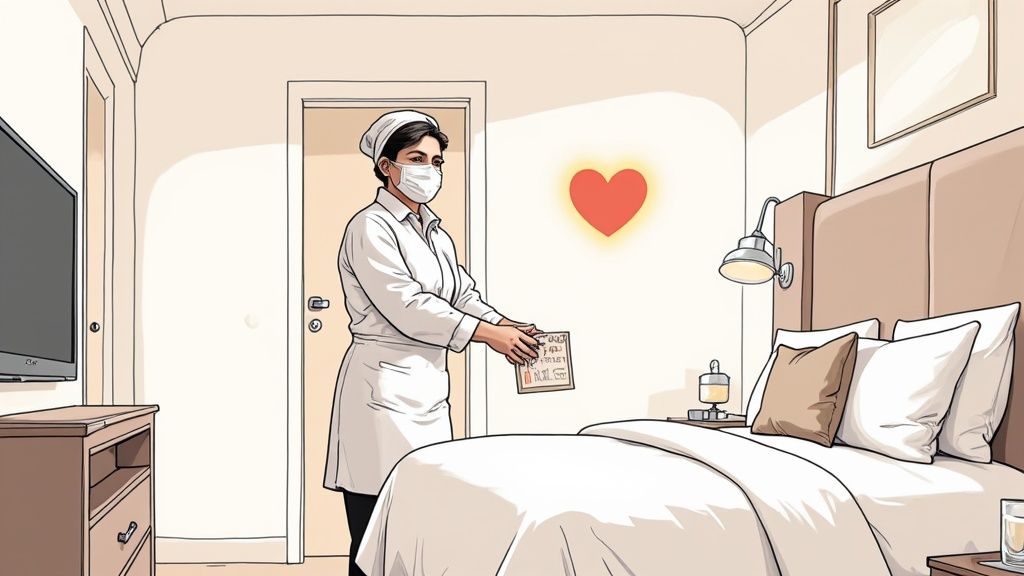
A spotless environment isn't a luxury anymore; it's the baseline expectation that directly shapes customer trust and your bottom line. Whether it's a hotel room, a gym, an office, or a retail store, meticulous cleaning is the bedrock of a positive reputation. It sends a powerful message: we care about your well-being. This guide offers practical cleaning tips and sales strategies to leverage the power of a truly clean space.
The True Value of a Spotless Reputation
In any competitive market, cleanliness is one of your most valuable assets. A sparkling facility isn't just the background for a customer's experience; it is the experience. Time and again, data shows that cleanliness is a top factor driving satisfaction, often beating out other amenities.
Think about it. One negative online review mentioning a dirty surface can scare away dozens of potential clients. On the flip side, glowing comments about a pristine environment become your most powerful (and free) marketing tool. This direct link between cleanliness and success is what we call "hygiene ROI." Every dollar invested in quality cleaning supplies—like effective disinfectant wipes—and comprehensive staff training pays for itself in reputation and revenue.
Building Trust One Wipe at a Time
This is where disinfectant wipes become so crucial. They do more than just clean; they eliminate harmful germs lurking on high-touch surfaces. That distinction is a game-changer for any public facility where the risk of germ transmission is high. Integrating quality disinfectant wipes into your standard cleaning process delivers three key wins:
- Customer Confidence: When customers see your team actively disinfecting, it reassures them that their health and safety are a top priority.
- Operational Efficiency: Wipes are a grab-and-go solution. They give your staff a quick, pre-measured way to effectively sanitize key areas, especially during busy periods.
- Brand Protection: A solid disinfection strategy is your best defense. It minimizes health risks and protects your business from the kind of complaints and liability issues that can tarnish a reputation overnight.
A customer's perception of cleanliness is their perception of your entire brand. A single slip-up can overshadow everything else you do right, making consistent, high-quality cleaning an absolute must.
Before we get into specific workflows, let's pinpoint the areas that need the most attention. These are the surfaces that countless hands touch every single day, and they're where germs love to gather.
Critical High-Touch Hotspots Across Facilities
| Facility Type | Specific High-Touch Points | Recommended Action |
|---|---|---|
| Offices | Door handles, light switches, elevator buttons, shared kitchen appliance handles, conference room phones. | Disinfect daily, especially in common areas like breakrooms and meeting rooms. |
| Gyms/Fitness | Cardio machine consoles, dumbbell grips, weight machine pins and handles, locker room benches. | Wipe down high-contact equipment multiple times per day. Provide wipes for members. |
| Retail Stores | Checkout counters, POS keypads, shopping cart/basket handles, fitting room hooks. | Disinfect frequently throughout the day, focusing on the point-of-sale and entry points. |
| Restaurants | Tables, menus, condiment dispensers, payment terminals, door handles (including restrooms). | Clean and disinfect between every customer seating. Maintain rigorous restroom hygiene. |
| Hotels | TV remotes, light switches, thermostats, faucet handles, door handles, key card slots. | Disinfect with an EPA-approved wipe after every guest check-out as part of room turnover. |
Focusing your team's efforts on these hotspots is the fastest way to make a tangible impact on facility hygiene and public safety. A checklist is your best friend here—it ensures nothing gets missed, no matter how busy the schedule gets.
Practical Tips for Maximum Impact
If you’re on the supply side selling cleaning products, framing the conversation around "hygiene ROI" is a game-changer. Don't just sell wipes; explain how a small investment in proper disinfection can prevent costly negative reviews and build a rock-solid base of loyal customers. Bundling wipes with other cleaning essentials to create a complete hygiene kit is always a smart move.
For facility managers, the name of the game is consistency. Your team needs to be hitting those high-touch zones with a quality disinfectant wipe during every single cleaning cycle. It’s a small, repeatable action that builds a powerful defense against germs and an even stronger foundation of customer trust.
Ultimately, whether you’re managing a business or selling the products that keep it clean, prioritizing hygiene is the smartest decision you can make. By making high-quality disinfectant wipes a core part of your daily routine, you aren’t just cleaning a space; you’re building a reputation for excellence that people will notice, appreciate, and reward.
The Science Behind a Spotless, Sanitized Room
Anyone can make a room look tidy. But in the commercial cleaning business, "looking clean" is just the starting point. The real differentiator between an okay experience and an exceptional one comes down to the science of disinfection. A visually clean room is the baseline expectation, but a space that is scientifically disinfected builds a deep sense of trust that brings customers back.
This starts with knowing the difference between cleaning, sanitizing, and disinfecting. People throw these terms around interchangeably, but they mean very different things. Getting this right is critical for public safety and your brand's reputation.
- Cleaning: This is square one. It's the physical act of removing dirt, dust, and grime from a surface, usually with soap and water. You have to clean first before you can do anything else effectively.
- Sanitizing: This is the next level up. Sanitizing lowers the number of bacteria on a surface to what public health standards consider a safe level. It reduces the risk of infection but doesn't necessarily kill all viruses.
- Disinfecting: This is the gold standard. Disinfecting uses specific chemicals to actively kill germs—both bacteria and viruses—on surfaces. For high-touch areas in any public facility, this is the goal. It’s how you tackle the invisible threats that matter most to public health.
Why Dwell Time Is Non-Negotiable
Here’s a detail that even experienced staff sometimes miss: dwell time. This is the single most critical—and most often overlooked—part of disinfecting.
Dwell time is simply how long a disinfectant needs to stay wet on a surface to actually kill the pathogens listed on its label. If your staff sprays a counter and immediately wipes it dry, they might as well be using water. The disinfectant didn't have time to work.
Think of it like marinating food. The chemical needs time to penetrate and break down the cell walls of germs. For most professional disinfectant wipes, this can be anywhere from 30 seconds to several minutes. Training your team to let the product sit and do its job is the difference between a cosmetic touch-up and a true health measure.
It's a small process change with a massive impact. By simply respecting the required dwell time, you elevate your cleaning protocol from a routine task to a science-backed promise of safety for your customers.
It’s also crucial to keep up with the latest products. For instance, the launch of a new cleaning range can introduce more effective or faster-acting solutions that are worth exploring.
A Workflow That Prevents Cross-Contamination
Speed is important, but a smart, systematic workflow is what truly defines professional cleaning. The goal is to clean efficiently without spreading germs from one part of a facility to another—like moving bathroom germs to a kitchen prep area. Yikes.
The industry standard method is simple, logical, and effective: "top-to-bottom, dry-to-wet."
- Start High, End Low: Always begin with the highest surfaces. Dust light fixtures, high shelving, and the tops of furniture first. Gravity is your friend here; dust and particles will fall downward, where you'll catch them as you work your way down.
- Dry Before Wet: Get all the dry tasks out of the way before you introduce any liquids. This means emptying trash cans, sweeping, and doing all the dusting.
- Wet and Disinfect Last: Once the dry debris is gone, you can move on to wiping down surfaces, cleaning restrooms, and mopping floors. This order prevents you from splashing clean surfaces or having to re-do your work.
This isn’t just about being tidy; it’s a strategic approach that makes the cleaning process faster, safer, and more intuitive for your entire team.
How a Clean Space Builds a Stronger Business
The link between a meticulously cleaned facility and your bottom line is incredibly direct. When you commit to this level of detail, you're not just cleaning—you're building a foundation for customer loyalty and increased revenue.
This flowchart says it all. A scientifically clean space isn't just an operational detail; it's one of the most powerful business strategies a facility can deploy to foster trust and drive real financial growth.
Practical Tips for Using Disinfectant Wipes the Right Way
Disinfectant wipes are fantastic tools, but only if they're used correctly. Tossing them onto a checklist isn't enough. Here are a few practical rules for your team to live by.
Hit the High-Touch Zones: Wipes should be used on all the surfaces people touch most. This includes the obvious stuff like light switches, door handles, and countertops. But don't forget the less obvious culprits: payment keypads, shared equipment, and public seating.
One Wipe, One Surface: This is huge for preventing cross-contamination. Use a fresh wipe for each distinct area. One for a desk, a new one for the phone, and a completely different one for the bathroom vanity. Reusing a wipe just moves germs around.
Check for Wetness: The wipe needs to be saturated enough to leave the surface visibly wet for the required dwell time. A dry-feeling wipe is useless. Make sure containers are always sealed tightly to keep the wipes from drying out before they can even be used.
By embedding these scientific principles into your daily cleaning routine, you move cleaning from a simple chore to a core part of your customer experience strategy. It’s a direct investment in your facility's health, reputation, and the long-term loyalty of the people who walk through your doors.
Cleaning Isn’t One-Size-Fits-All: Adapting Protocols for Different Facilities
Mastering the art of hotel rooms cleaning sets an incredibly high bar for hygiene, but those meticulous principles must be adapted for different commercial spaces. A cleaning strategy that makes a hotel room sparkle won't be a perfect match for a high-traffic gym or a busy retail store. Every type of facility throws a unique curveball, from the surfaces people touch to the way they move through the space.
This isn't just about "best practices"—it's about effectiveness. You have to adapt your cleaning protocols to protect the health of everyone who walks through the door. The core concepts don't change—you still need to hunt down high-touch zones, use quality disinfectants, and stick to a consistent schedule—but the application has to be tailored to the environment.
Fitness Centers and Gyms: The High-Contact Hotspots
Gyms are basically petri dishes for germs. Between the shared equipment, the sweat, and the constant foot traffic, the goal is simple: stop the spread of bacteria and fungi on surfaces that dozens of people might touch within a single hour. Your standard, once-a-day cleaning just isn't going to cut it here.
Your team’s focus has to be on constant, visible sanitation. This is where disinfectant wipes become absolutely essential, because they let you do quick, targeted cleaning between users without shutting down a whole section of the gym.
Key areas that demand relentless attention include:
- Cardio Machine Consoles: Touch screens, speed buttons, and heart rate grips are ground zero. Every single user touches them, so they need to be wiped down multiple times a day.
- Free Weights and Dumbbells: The handles on dumbbells, kettlebells, and weight plates are probably the most frequently handled items in the entire facility.
- Weight Machine Handles and Pins: Think about it—every adjustment pin, handlebar, and seat lever is a critical control point for germs.
- Locker Room Benches and Handles: These humid, warm spaces are a breeding ground for bacteria. Lockers, benches, and especially shower handles require rigorous, frequent disinfection.
A smart move for any facility manager is to place disinfectant wipe stations all over the gym floor. This empowers members to clean equipment before and after they use it, creating a culture of shared responsibility that supplements your staff's hard work.
Office Environments and Shared Workspaces
In a corporate setting, the challenge shifts from sweat and equipment to shared resources and communal areas. An office might look cleaner than a gym on the surface, but the density of people working so close together makes it incredibly easy for illnesses to spread like wildfire. The ROI on a clean office is undeniable: study after study has shown a direct link between workplace hygiene and fewer employee sick days.
Here, the game plan is all about daily and weekly protocols for the spots where colleagues gather and share supplies.
- Kitchen and Breakroom Surfaces: Before lunch even hits, dozens of hands have touched the microwave handle, refrigerator door, coffee pot, and countertops. These need a daily disinfection, no exceptions.
- Conference Room Tables and Chairs: Shared meeting spaces are hubs for germs. After any significant meeting, the table, chair arms, and any shared tech like conference phones or remotes need a thorough wipe-down.
- Commonly Touched Hardware: This bucket includes all the things people touch without thinking—main entry door handles, elevator buttons, and shared printer keypads.
For sales professionals, this is a huge educational opportunity. When you're talking to an office manager, don't just sell them disinfectant wipes; sell them a reduction in sick days. Frame the purchase as a direct investment in productivity and employee well-being, which has a real, tangible impact on the company's bottom line.
A proactive cleaning strategy does more than just keep up appearances—it becomes a critical piece of a company's health and wellness program, directly contributing to a more productive and resilient workforce.
Retail Stores and Customer-Facing Areas
Retail spaces come with their own unique hygiene hurdles, mostly centered around the point of sale and areas where customers interact with products. With a constant flow of people, every transaction or item tried on is a chance for germs to be passed along. Maintaining a visibly clean environment is absolutely crucial for customer confidence—it makes them feel safer, stay longer, and ultimately, spend more.
A targeted retail cleaning checklist should put these zones at the top of the list:
- Checkout Counters and POS Terminals: That credit card keypad is one of the highest-risk surfaces in any store. It needs to be wiped down frequently throughout the day.
- Shopping Cart and Basket Handles: This is the very first thing a customer touches. A clean cart handle immediately sets a positive, reassuring tone for their entire shopping trip.
- Fitting Room Hooks and Benches: These small, enclosed spaces see a high turnover of people and clothing, making regular disinfection a must.
For a more holistic approach to keeping standards high across all these different environments, it’s worth looking into broader facility management best practices. These can cover everything from improving air quality to long-term maintenance planning.
At the end of the day, the message is clear whether you're managing a hotel, selling cleaning supplies, or overseeing a local gym. Cleanliness is not a one-size-fits-all job. By thoughtfully adapting your protocols and tools—especially versatile solutions like disinfectant wipes—to the unique demands of each facility, you create safer, healthier environments for everyone.
Selling Hygiene as a Business Asset
If you're in the cleaning and janitorial supply industry, it's time to change the conversation. Too often, hygiene is stuck on the balance sheet as a line-item expense—a cost to be chipped away at. But the best sales pros understand a critical shift: selling cleanliness, especially with tools like disinfectant wipes, is about selling a tangible business asset.
You're not just moving a product. You're offering a direct investment in a company's brand reputation, customer confidence, and operational resilience. The trick is to pivot the discussion from cost to value.

Framing the Hygiene ROI Conversation
When you sit down with a potential client, get away from the price-per-case talk. Instead, get them thinking about the real-world problems that a lack of visible, consistent hygiene creates—and how your products are the solution. This simple change turns a transactional sale into a strategic partnership.
Lead with questions that hit their pain points directly:
- How much does a single negative online review about cleanliness actually cost your brand?
- What’s the financial hit from employee sick days during flu season?
- How are you showing customers that you’re committed to their safety right now?
These questions reframe hygiene as a core business function, not just a chore. For an office, a solid disinfection strategy directly lowers absenteeism. For a hotel or restaurant, visible cleaning builds the kind of trust that earns five-star reviews and repeat business.
Educate Clients on High-Impact Cleaning
Your job is more than just selling; you're an educator. Most facility managers get the need for general cleaning, but many miss the strategic importance of targeting high-touch surfaces. This is where you can provide massive value.
Give them simple, actionable intelligence. Explain that focusing disinfectant wipes on specific "danger zones" delivers the biggest bang for their buck.
- In Offices: Think elevator buttons, shared kitchen appliance handles, and conference room phones.
- At the Gym: Dumbbell grips, cardio machine touchscreens, and locker room handles are ground zero for germs.
- In Retail: Focus on POS keypads, shopping cart handles, and fitting room benches.
When you teach them how to use your products for maximum effect, you become an indispensable resource. This knowledge helps them optimize their cleaning protocols and see real benefits faster, which only strengthens their trust in you.
By shifting the conversation from 'How much does this cost?' to 'What business problem does this solve?', you transform disinfectant wipes from a disposable commodity into an essential tool for risk management and brand protection.
Bundling Solutions and Overcoming Objections
The budget objection is inevitable. The easiest way around it is to bundle disinfectant wipes with their existing orders for essentials like paper towels or cleaning chemicals. Position it as a complete hygiene package designed to protect their most important assets: their people and their customers.
Show them how wipes can make their staff's workflow more efficient. Instead of mixing bulk chemicals for small, targeted jobs, a pre-moistened wipe is a grab-and-go solution. It saves time and ensures the right disinfectant concentration every single time. That efficiency boost often covers the product cost through labor savings alone.
Ultimately, selling hygiene is selling peace of mind. A well-stocked supply of disinfectant wipes is a powerful visual cue that a business takes health seriously. It impacts everything from staff morale to customer loyalty and is directly tied to how you can improve guest satisfaction.
Urge your clients to make cleanliness a priority and weave disinfectant wipes into their daily routines. It’s one of the simplest, most effective ways to protect their business, boost their reputation, and prove to everyone who walks in that their well-being comes first.
Understanding Today's Hotel Cleaning Market
The world of hotel cleaning has fundamentally changed. It's no longer a behind-the-scenes operational detail; it's now front and center, driven by a powerful combination of renewed global travel and a massive shift in guest expectations. Cleanliness has become a primary decision-making factor for travelers.
This new reality presents a huge opportunity for hotels that can prove their commitment to hygiene. On the flip side, it’s a serious challenge for properties still operating with outdated standards. For anyone in this business, from GMs to cleaning supply reps, understanding the forces at play is mission-critical. The demand for pristine, verifiably clean spaces isn't just a fleeting trend—it’s a market driver backed by serious money.
The Booming Business of Clean
The numbers tell the story. The global hotel cleaning services market was valued at around USD 15 billion in 2023. Projections show it skyrocketing to nearly USD 25 billion by 2032. That's a steady compound annual growth rate (CAGR) of about 5.5%.
What's fueling this? It's a perfect storm of increasing global tourism, rising disposable incomes, and a heightened, post-pandemic awareness of hygiene that isn't going away. If you want to dig deeper, you can read more about these hotel cleaning market trends.
This growth isn't happening evenly, either. The Asia Pacific region, for example, is a major engine of this expansion, expected to see a remarkable CAGR of 6.5% between 2024 and 2032. This is largely thanks to a booming tourism sector and a rapidly growing middle class with sky-high standards for their accommodations.
How This Market Data Impacts Your Business
So, what does all this mean for you on the ground?
- For Hotel and Facility Managers: This data confirms that investing in top-tier cleaning protocols and supplies—like high-quality disinfectant wipes—isn't just an operational cost. It's a strategic investment in your brand. Guests are not only willing to choose but often pay more for properties that clearly demonstrate a commitment to their well-being.
- For Sales Professionals: This market forecast is your new best friend. Use these statistics to show potential clients that the demand for cleanliness is a long-term economic reality. Frame your products not as mere supplies, but as essential solutions that help them capitalize on a massive consumer priority.
The modern guest doesn't just hope a space is clean; they expect proof. This shift from assumption to expectation is the single biggest driver shaping the future of the entire commercial cleaning industry.
This market momentum creates a clear mandate for anyone in the hospitality space. To thrive, you have to align your cleaning standards with the new, higher expectations of your customers. This isn't just about cleaning effectively—it's about making those efforts visible.
Embracing this reality means integrating reliable, efficient tools like disinfectant wipes into every single turnover. They offer a fast and effective way to tackle high-touch surfaces, providing the very reassurance that today’s market demands. Prioritizing cleanliness isn't just good practice anymore; it's smart business in a rapidly growing and demanding industry.
Solving Modern Housekeeping Challenges
Let's be honest, the pressure on today's housekeeping departments is intense. Leaders in hospitality are wrestling with a tough set of operational hurdles that hit the quality of hotel rooms cleaning right where it hurts. We're talking about persistent labor shortages on one side and a growing demand for sustainable, eco-friendly practices on the other.
Navigating this new landscape requires more than just a mop and bucket; it demands smart tech, efficient workflows, and a genuine commitment to keeping both guests and the planet happy.

The biggest headache, by far, is the staffing crisis. The numbers don't lie: a staggering 68% of hotels are reporting they just can't find enough people. Housekeeping is getting hit the hardest, with vacancy rates soaring to an estimated 42%. This isn't just about rising wages; it's about stretching your existing team to its breaking point, risking burnout and inconsistent service. As detailed in a recent report, these 2025 industry shifts are shaping hospitality in ways we can't ignore.
Technology as a Solution
To get out from under these labor challenges, savvy hotel operators are leaning into technology. Housekeeping management software has quickly gone from a "nice-to-have" to a "can't-live-without" tool for getting the most out of a lean team. These platforms give managers a real-time command center, showing live room statuses so they can assign tasks on the fly and prioritize turnovers with surgical precision.
By automating schedules and tracking progress on a tablet instead of a clipboard, you cut out the manual guesswork and slash the downtime between cleanings. A smaller, well-equipped team can suddenly operate with much greater efficiency, flipping rooms for check-in faster without ever cutting corners on quality.
The trick is to use tech to empower your staff, not just to watch over their shoulder. And making that transition seamless comes down to solid training, something we cover in our guide on staff training best practices.
Meeting the Demand for Sustainability
At the same time, the modern traveler has a conscience. About 73% of consumers now say they actively prefer eco-friendly cleaning products, and you better believe that preference is influencing where they book their stay. This creates a tricky balancing act: how do you go green without compromising the hospital-grade disinfection standards that guests now demand?
The answer is finding a smart, balanced approach. Hotels are succeeding by focusing on a few key areas:
- Adopting Green-Certified Products: They're sourcing disinfectants and cleaners that are proven pathogen-killers but are also formulated with biodegradable, earth-friendly ingredients.
- Implementing Water-Saving Techniques: Staff are being trained on clever methods that drastically reduce water consumption during the cleaning process.
- Reducing Plastic Waste: This is a big one. Hotels are ditching single-use plastic amenities for refillable dispensers and switching to concentrated cleaning solutions to minimize packaging.
Embracing sustainability isn't just the right thing to do; it's a powerful marketing tool. Hotels that are transparent about their eco-friendly initiatives are winning over a loyal and growing segment of travelers who want to see that you care.
By weaving technology into your operations to boost efficiency and committing to sustainable cleaning practices, you can turn today's biggest housekeeping headaches into genuine opportunities. This dual focus allows your property to deliver the pristine, safe experience guests expect while building a more resilient, responsible, and ultimately more profitable operation.
Whether you manage a facility or sell hygiene products, now is the time to elevate your standards. Prioritize a science-backed cleaning protocol and consider integrating high-quality disinfectant wipes into your daily routine or product offerings to build a reputation for excellence that customers will reward.
Leave a Reply