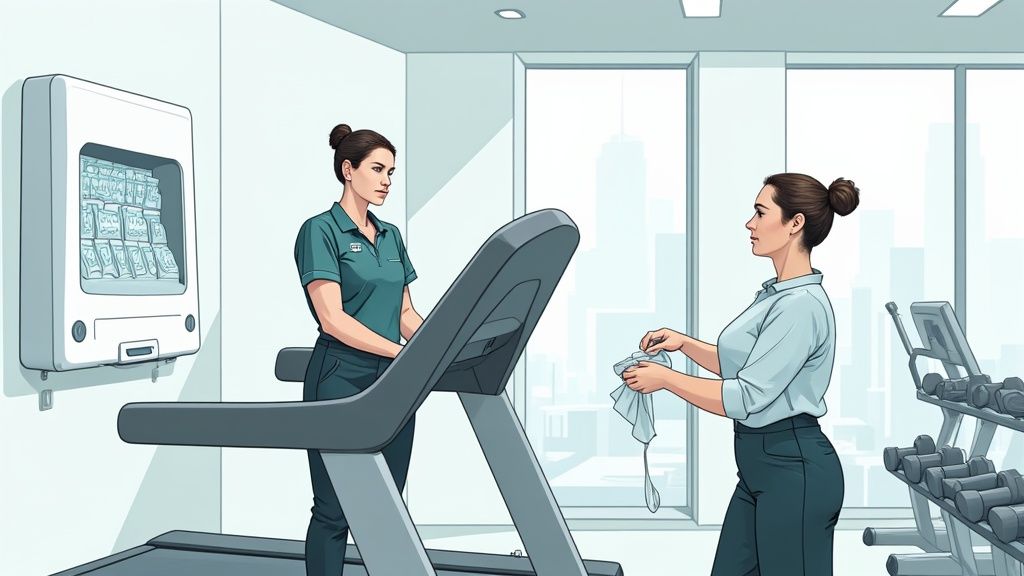
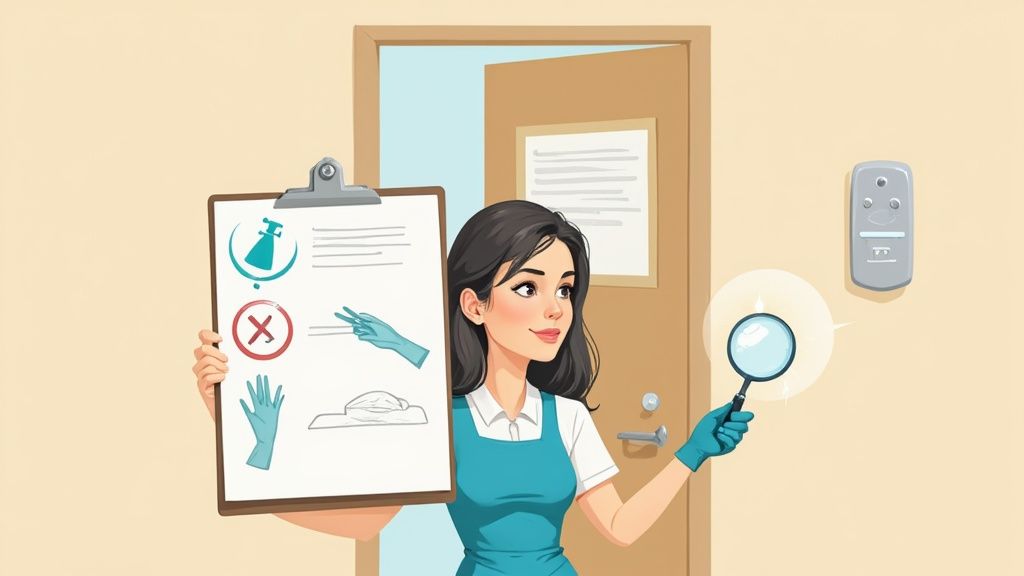
A clean facility is a good start, but in today's health-conscious world, it’s no longer enough. The new standard is a space that is both visibly clean and actively disinfected. This is where disinfectant wipes come in, transforming a standard cleaning routine into a powerful hygiene strategy. They are a simple yet highly effective tool for eliminating germs on high-touch surfaces, demonstrating a clear commitment to the health and safety of everyone who walks through your doors.
For business owners, sales professionals, and facility managers, understanding the power of a comprehensive cleaning and disinfecting program is crucial. It’s not just about wiping down counters; it's about building trust, protecting staff and customers, and creating an environment where people feel safe and confident.
The New Standard of Commercial Hygiene: Cleaning vs. Disinfecting
First, it’s essential to understand the difference between cleaning and disinfecting. Cleaning removes dirt, grime, and some germs from surfaces. Disinfecting, on the other hand, uses chemicals to kill germs and pathogens. A truly effective hygiene plan does both, and disinfectant wipes are one of the most efficient ways to achieve this.
Integrating disinfectant wipes into your daily routine sends a powerful message: "We prioritize your well-being." This visible commitment to a higher standard of cleanliness elevates your facility's reputation and meets the modern expectations of a public that is more aware of hygiene than ever before.
A Proactive Approach to Health and Trust
Think of disinfectant wipes as a proactive tool in your health and safety arsenal. By regularly disinfecting high-touch surfaces, you actively reduce the spread of germs before they can cause illness. This is a game-changer for any public-facing environment, from busy offices and retail stores to gyms and restaurants.
The benefits extend far beyond just germ control. Here’s how a robust disinfecting strategy impacts your facility.
Benefit
Impact on Facility
Impact on Customers & Staff
Enhanced Confidence
Patrons feel safer, stay longer, and are more likely to return.
Users feel cared for and can relax, knowing hygiene is a priority.
Reduced Germ Spread
Fewer contaminated surfaces lead to a healthier environment.
Lower risk of picking up or spreading illness-causing germs.
Improved Well-being
Staff feel valued, leading to better morale and fewer sick days.
Employees and visitors have the tools to maintain a clean workspace.
Strengthened Brand Image
A clear commitment to cleanliness builds a professional reputation.
Users associate the brand with safety, care, and responsibility.
The demand for effective cleaning solutions is not just a passing trend. The global market for touch-free hygiene products, like the automatic dispenser for hand sanitizer, has seen explosive growth, reflecting a permanent shift in public expectations. Disinfectant wipes are a critical part of this larger movement toward proactive, visible hygiene.
Cleaning Tips: How to Use Disinfectant Wipes Effectively
Using disinfectant wipes seems simple, but there's a right way to do it to ensure you're actually killing germs, not just spreading them around. A few simple techniques can dramatically improve their effectiveness and efficiency.
High-Touch Areas to Focus On
The key to an effective disinfecting strategy is focusing your efforts on "high-touch" hotspots. These are the surfaces that multiple people touch frequently throughout the day. Your checklist should include:
Door Handles & Push Plates: The first and last thing many people touch.
Light Switches: Often overlooked but touched daily.
Countertops & Desks: Especially in reception areas, break rooms, and shared workspaces.
Elevator Buttons & Handrails: High-traffic congregation points.
Shared Equipment: Coffee makers, printers, keyboards, phones, and gym equipment.
Restroom Fixtures: Faucet handles, stall locks, and dispenser buttons.
For a detailed look at how different components, like advanced dispenser designs and their engineering, contribute to a touchless environment, it's clear that minimizing contact is a primary goal in modern hygiene.
Frequency and Efficiency Hacks
Consistency is crucial. High-touch surfaces should be disinfected at least daily, and more often in high-traffic facilities or during cold and flu season.
"One Wipe, One Surface": Avoid cross-contamination. Use a fresh wipe for each distinct area. For a large tabletop, you might need more than one. Once the wipe is dirty, grab a new one.
Let it Dwell: The most important tip is to read the product label for the "dwell time" or "contact time." This is the amount of time the surface must remain visibly wet to effectively kill germs. Wiping a surface and then immediately drying it can render the disinfectant useless.
Wipe in One Direction: When possible, wipe in an "S" pattern from top to bottom. This prevents re-contaminating areas you've already covered.
Clean First, Then Disinfect: For heavily soiled surfaces, use a separate cloth or wipe to clean away dirt and grime first. Disinfectants work best on pre-cleaned surfaces.
Just as you'd choose the right hand sanitizer type for your needs, choosing the right disinfectant wipe and using it correctly is key to achieving your hygiene goals.
Sales Tips: Promoting the Value of Disinfectant Wipes
For sales professionals in the cleaning and janitorial industry, disinfectant wipes aren't just a product; they are a solution to a customer's need for safety and confidence. Shifting the conversation from cost to value is the key to success.
Educate Clients on Hygiene ROI
Frame the investment in disinfectant wipes as a smart business decision with a clear return on investment (ROI).
Reduce Absenteeism: A healthier environment means fewer sick days for employees, leading to improved productivity and reduced costs associated with covering shifts.
Enhance Customer Trust: Visible cleaning protocols make customers feel safer, which can lead to increased loyalty, longer visits, and positive reviews.
Protect Brand Reputation: In the age of social media, a reputation for cleanliness is invaluable. A single complaint about a dirty facility can cause significant damage.
Incorporate Wipes into a Complete Hygiene Solution
Don't sell disinfectant wipes in a vacuum. Position them as an essential component of a comprehensive hygiene program.
Bundle with Other Supplies: Offer packages that include disinfectant wipes, hand soap, paper towels, and hand sanitizer. Create a one-stop-shop solution for your clients.
Provide Training and Support: Offer to train your client's staff on best practices for using the wipes, including identifying high-touch zones and understanding dwell times. This adds value beyond the product itself.
Highlight Facility-Specific Needs: Customize your pitch. Explain why a gym needs durable, large wipes for equipment, while an office might prefer a smaller, aesthetically pleasing canister for desks.
Facility-Specific Suggestions for Optimal Hygiene
Different environments have unique challenges and priorities. Tailoring your disinfecting strategy to your specific facility will maximize its impact.
Just as you would strategically place a hand sanitizer stand, placing disinfecting wipe stations in key zones makes them accessible and encourages use.
For Offices and Corporate Settings
In an office, the focus is on shared spaces and individual workspaces.
Strategy: Provide canisters of disinfectant wipes in common areas like kitchens and meeting rooms. Encourage employees to wipe down their personal desk, phone, and keyboard at the start of each day.
For Gyms and Fitness Centers
Gyms are high-touch, high-traffic environments where disinfection is non-negotiable.
Hotspots: Dumbbell handles, cardio machine screens and grips, weight benches, yoga mats, and locker room benches.
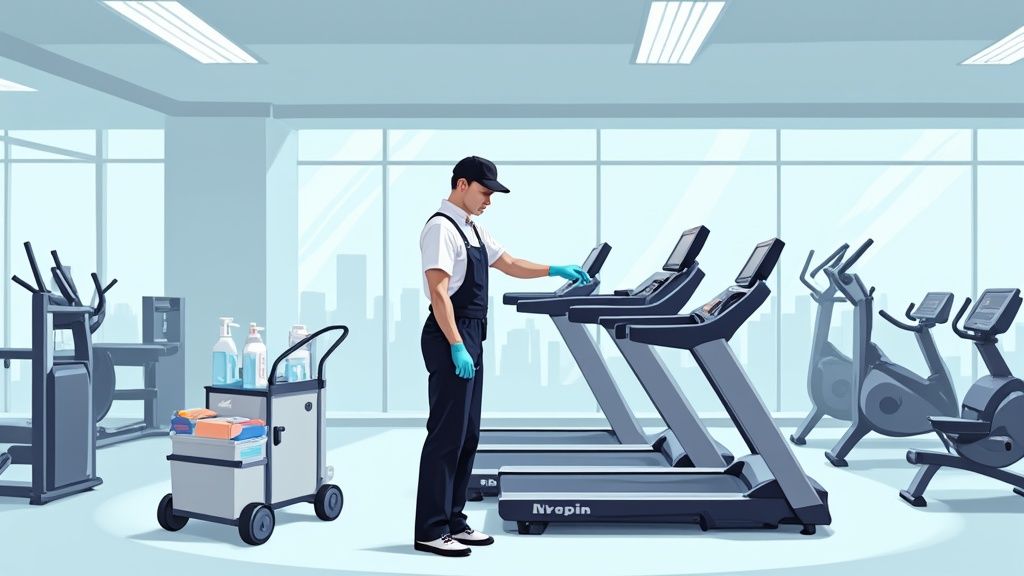
Strategy: Install wall-mounted disinfectant wipe dispensers throughout the facility. Use large, durable wipes that can stand up to cleaning rough equipment surfaces. Post signs encouraging members to wipe down equipment before and after use.
For Restaurants and Retail Stores
First impressions are everything. Visible cleanliness reassures customers from the moment they enter.
Strategy: Staff should have a set schedule for wiping down high-touch points throughout the day. Place wipe dispensers near shopping carts and at the entrance for customer use.
The market is clearly responding to this need for better hygiene. Recent trends in the hand sanitizer dispenser market on ExpertMarketResearch.com show a massive consumer preference for accessible and effective hygiene solutions. Disinfectant wipes perfectly complement these trends by addressing surface contamination.
A Commitment to a Higher Standard
Moving beyond basic cleaning to a comprehensive disinfecting strategy is no longer optional—it's essential for any commercial or public facility. Disinfectant wipes provide a practical, effective, and highly visible way to protect the health of your employees and customers. They are a cornerstone of a modern hygiene program that builds trust and fosters a safe environment.
Whether you're managing a facility, selling cleaning supplies, or running a business, we encourage you to prioritize this higher standard of cleanliness. Integrate disinfectant wipes into your daily routine or product offerings and demonstrate a clear, unwavering commitment to health and safety. The question is not just about cleanliness, but about which pathogens you are targeting, leading many to ask does hand sanitizer kill norovirus and other similar questions about wipes. An informed approach is the best approach.
In any commercial space, looking tidy and being truly clean are two different standards. True cleanliness—the kind that protects health and builds trust—isn't just a goal; it's a non-negotiable part of your brand. The difference often comes down to the tools you use. For any facility serious about hygiene, disinfectant wipes aren't just a convenient option—they're the foundation of a modern, effective sanitation program.
Why a Truly Clean Facility Is Non-Negotiable
In a competitive market, perception is reality. A sticky tabletop, a smudged door handle, or a dusty counter can instantly undermine a customer's confidence in your facility's standards. It’s a small detail, but it sends a powerful message: if the surfaces people can see aren't properly maintained, what about the areas they can't?
This is a classic problem with outdated cleaning methods. A simple wet rag can spread germs from one surface to another, and relying on spray-and-towel methods can lead to inconsistent results. True commercial cleanliness requires tools designed for efficacy and efficiency.
The Professional Standard for Cleanliness and Disinfection
Achieving a microscopic level of clean means moving beyond simply wiping away dirt. The shift to ready-to-use solutions like disinfectant wipes isn't just a trend; it's a direct response to rising expectations for public health and safety. For context, the global microfiber cleaning cloth market, a related category, was valued at around USD 979.2 million in 2025 and is expected to hit USD 1.52 billion by 2035. This growth reflects a broader industry move toward higher-performing cleaning tools.
That growth is all about performance. The right tools can remove up to 99% of bacteria from surfaces. It’s no surprise that a majority of institutional cleaning contracts now specify modern hygiene solutions. Discover more insights about the microfiber market's growth and impact on cleaning standards.
The difference between a good facility and a great one often comes down to visible details. A commitment to disinfecting high-touch surfaces is more than an operational task; it’s a clear signal of professional care and a commitment to guest well-being.
Setting a New Benchmark for Hygiene
Integrating disinfectant wipes into your cleaning protocol is about more than just convenience. It’s about setting a new, higher benchmark for what "clean" means in your facility. This commitment delivers tangible results:
Enhanced Guest and Staff Confidence: A visibly clean and regularly disinfected environment makes everyone who walks through your doors feel safer and more valued.
Improved Health and Safety: Consistent disinfection of high-touch areas helps reduce the spread of germs, leading to fewer sick days for staff and a healthier environment for customers.
Operational Efficiency: Pre-moistened wipes eliminate the need to mix chemicals and carry around spray bottles and cloths, allowing staff to clean and disinfect high-touch points quickly and effectively.
Ultimately, investing in the right tools is a direct investment in your brand’s reputation. It demonstrates a commitment to excellence that resonates with every customer, employee, and visitor, turning basic sanitation into a powerful business asset.
Cleaning Tips: Maximizing the Power of Disinfectant Wipes
What makes a disinfectant wipe so effective? It’s not just the cleaning solution; it’s the combination of the right chemical formula with a durable, non-shedding cloth designed for single-use application. This ensures a consistent, hygienic result every time. For sales professionals and facility managers alike, understanding how to use them correctly is key to unlocking their full potential.
Cleaning Tip 1: Focus on High-Touch Hotspots
The 80/20 rule applies to cleaning: 80% of germs are spread through 20% of surfaces. Prioritize these high-touch hotspots for frequent disinfection:
Offices: Door handles, light switches, elevator buttons, conference tables, shared keyboards, and coffee machines.
Gyms: Cardio machine touchscreens, dumbbell and barbell handles, weight machine adjustment pins, and locker room benches.
Restaurants & Retail: POS screens, payment terminals, service counters, shopping cart handles, and restroom fixtures.
Frequency Recommendation: Disinfect these areas multiple times throughout the day, especially during peak hours. A quick wipe-down can take less than 30 seconds but has a major impact on hygiene.
Cleaning Tip 2: Respect the Dwell Time
This is the most critical and often-overlooked step. Dwell time is the amount of time a surface must remain visibly wet with the disinfectant to effectively kill the germs listed on the product label. It can range from 30 seconds to 10 minutes.
Efficiency Hack: Clean a small group of surfaces at once. For example, wipe down a series of door handles or a row of treadmill screens, then circle back to the first one after the required dwell time has passed to dry if necessary. Always check the product label for specific instructions.
The right tools, combined with professional standards and hygienic practices, are what ultimately lead to a facility that doesn't just look clean, but is clean.
As this shows, a consistent disinfecting approach is a critical pillar of professional-grade hygiene.
Cleaning Tip 3: One Wipe, One Surface
To prevent cross-contamination, use a fresh wipe for each distinct area. Don't use the same wipe on a tabletop that you just used on a door handle. This "one-and-done" approach is a core benefit of disinfectant wipes and a key practice for maintaining high hygiene standards. For larger surfaces like a conference table, you may need to use multiple wipes to ensure it stays wet for the full dwell time.
Sales Tips: Promoting Hygiene as a Value-Add
For sales professionals in the janitorial and cleaning supply industry, disinfectant wipes aren't just another product—they're a solution to a critical business need. The conversation shouldn't be about cost per wipe, but about the return on investment (ROI) of a healthier, safer facility.
Sales Tip 1: Frame It as Brand Protection
Every business owner understands the cost of a negative review or a reputation for being unclean. Position disinfectant wipes as an investment in brand protection.
Educate on the ROI of Hygiene: Explain how a visibly clean facility leads to higher customer satisfaction, repeat business, and positive word-of-mouth. For gyms, it means member retention; for restaurants, it means better health scores and more diners.
Provide Facility-Specific Solutions: Don’t just sell a canister of wipes. Offer a tailored plan. Suggest placing dispensers in key areas—entrances for gyms, reception desks for offices, and checkout counters for retail—to make cleaning visible and convenient.
Sales Pitch Angle: "We're not just selling you cleaning supplies; we're providing a complete system to enhance your facility's hygiene, protect your brand, and show your customers you care about their well-being."
Sales Tip 2: Bundle Wipes into a Complete Hygiene Package
Incorporate disinfectant wipes into a larger cleaning supply offering. Present them as an essential component of a modern sanitation program, alongside other critical items.
Create Tiered Packages: Offer a "basic" package with bulk chemicals and a "premium" package that includes strategically placed wipe dispensers and a recommended usage protocol.
Highlight Efficiency: Emphasize the labor savings. Time spent mixing chemicals, laundering cloths, and walking back and forth to supply closets is time that could be spent on more detailed cleaning tasks. Wipes streamline the process for quick, effective disinfection.
The market is already signaling this shift. The global demand for effective cleaning solutions is on a steep upward curve, with the market for lint-free cloths (a related hygiene tool) estimated at USD 1.32 billion in 2024 and projected to hit USD 2.10 billion by 2033. This growth is driven by industries that can't compromise on a perfect, residue-free clean. You can explore more data on the lint-free cloth market to see how rapidly the demand for high-performance cleaning is expanding.
At the end of the day, professionals are choosing modern solutions because the math is simple. They clean better, save time, and demonstrate a commitment to health that today's customers expect.
Matching the Right Cloth to Your Facility
While disinfectant wipes are ideal for high-touch points, reusable lint free microfiber cloths remain essential for larger surfaces and specific tasks. In professional cleaning, there's no "one-size-fits-all" solution. Matching the right tool to the job is about delivering a targeted, effective clean that protects assets and impresses guests.
Think of it like a chef's knife set—each blade has a specific purpose. This guide breaks down the ideal cloth for different commercial environments.
For the Modern Office Space
In an office, cleanliness directly impacts productivity and employee well-being. The main enemies are dust, fingerprints, and smudges on sensitive electronic surfaces.
Ideal Cloth Type: A low-GSM (200-250), flat-weave microfiber cloth is perfect for grabbing dust and polishing smooth surfaces without leaving a single streak or fiber behind.
For the High-Energy Fitness Center
Gyms require a balance of heavy-duty sanitation and equipment protection. Sweat, oils, and disinfectant residue are constant battles.
Ideal Cloth Type: A durable, medium-GSM (300-400) terry-style cloth is the workhorse for gym equipment. It scrubs away residue but is soft enough not to scratch surfaces. For mirrors and glass, a dedicated low-GSM glass cloth is non-negotiable.
For the Impeccable Restaurant and Bar
Presentation is everything in hospitality. A single fingerprint on a wine glass or a smudge on a counter can undermine the dining experience.
In a restaurant, your cleaning tools are as critical as your ingredients. A lint-free finish on glassware is a non-negotiable part of the service, directly influencing a patron's perception of your cleanliness.
Surfaces: Glassware, flatware, stainless-steel prep tables, bar tops.
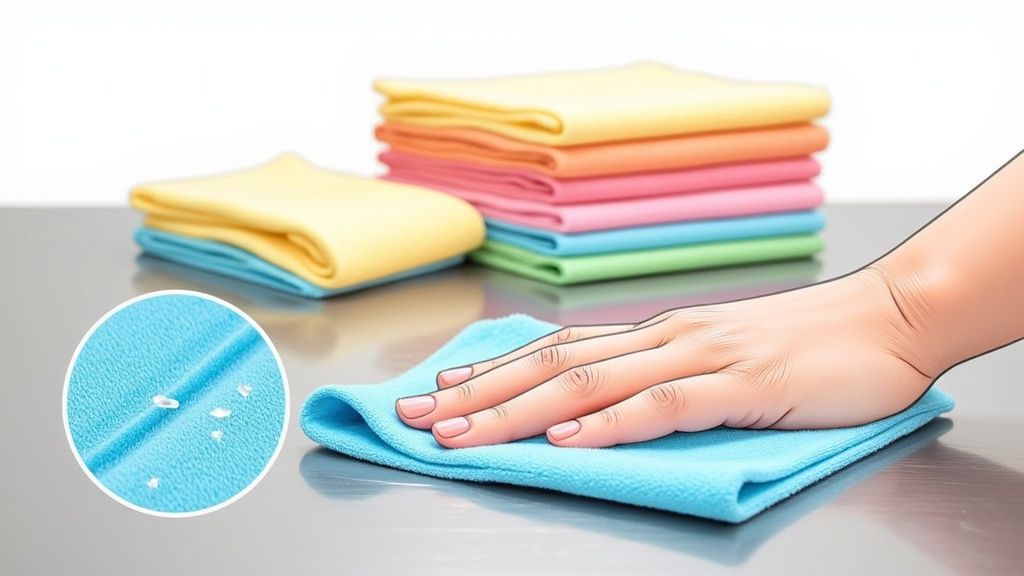
Ideal Cloth Type: To polish glassware and cutlery to a brilliant shine, nothing beats a waffle-weave microfiber cloth. For stainless steel, a low-GSM cloth delivers a smear-free result. In environments with heavy cleaning demands, disposable microfiber cloths can be a game-changer for preventing cross-contamination. Find out more at https://wipesblog.com/2025/09/23/disposable-microfiber-cloths/.
For the Pristine Retail Store or Showroom
In retail and automotive showrooms, the products are the stars. Dust or a stray fiber can instantly cheapen the perceived value of merchandise. Matching the right cloth to your needs is crucial; it’s worth checking guides on the best microfiber towels for detailing.
Ideal Cloth Type: Use plush, high-GSM (400+) cloths for gentle dusting of delicate products. For all glass and polished surfaces, stick with the proven performance of a low-GSM, lint-free glass cloth to maintain an inviting shine.
Getting the Most from Your Microfiber Investment
High-performance tools demand proper maintenance. Investing in premium lint free microfiber cloths is the first step, but how you care for them determines their lifespan and effectiveness. Proper laundering isn’t just about getting cloths clean—it's about preserving the microscopic technology that makes them powerful.
High heat can melt the delicate split fibers, fabric softener will clog them into uselessness, and washing them with cotton towels contaminates them with the very lint you’re trying to eliminate. A simple care routine is a critical operational practice.
The Essential Laundering Protocol
To keep your microfiber in peak condition, treat it like specialized equipment. It never gets thrown in with general laundry.
Wash Separately: Always wash microfiber only with other microfiber. If you mix them with cotton towels, lint will transfer and defeat their purpose.
Use a Mild Detergent: A small amount of a gentle, liquid detergent is all you need. Never use bleach or powdered detergents. For more on this, check out our guide on professional cleaning chemicals.
Wash in Warm Water: Warm water is effective enough to release dirt and grime without the risk of heat damage.
The Two Biggest Enemies of Microfiber
Beyond basic washing, there are two absolute "don'ts" in microfiber care. Breaking these rules is the fastest way to destroy your cloths.
Never use fabric softener or dryer sheets. These products coat fibers with a waxy film that clogs the microscopic hooks, completely neutralizing the cloth's ability to grab and hold dust and dirt.
The second enemy? High heat. It's an instant killer.
Dry on Low Heat or Air Dry: High temperatures in a dryer will melt the polyester and polyamide fibers, fusing them together. Tumble dry on a low or no-heat setting, or better yet, hang them to air dry.
Stick to these rules, and a single professional-grade microfiber cloth can be washed and reused 300 to 500 times. This reusability is the cornerstone of their cost-effectiveness. The global microfiber cloth market, valued at USD 2.1 billion in 2024, is projected to hit USD 4.8 billion by 2033, driven by this blend of performance and value. Learn more about the market forces driving microfiber adoption. This sustainable approach prevents waste and delivers a consistently superior clean.
How to Build a Visible Hygiene Program
Effective cleaning is more than just getting rid of germs—it's also a powerful marketing tool. When customers and staff can see your commitment to sanitation, it builds trust. By integrating disinfectant wipes and a solid protocol into a visible program, you turn cleaning into a competitive advantage. It’s about showing, not just telling, that you put their well-being first.
This visual proof reinforces that your facility is maintained to the highest standards, making people feel safe and valued.
The Power of Color-Coding
One of the simplest yet most effective ways to showcase professionalism is with a color-coding system for your reusable cleaning cloths. This is a critical best practice that prevents dangerous cross-contamination.
Adopting a clear system demonstrates a sophisticated approach to hygiene that both staff and observant customers will notice.
Blue for General Areas: Use blue cloths for low-risk surfaces like windows, mirrors, and dusting desktops.
Green for Food Service: Reserve green exclusively for kitchen and food preparation areas.
Red for High-Risk Zones: Designate red for high-contamination areas like restrooms—toilets, urinals, and floors.
Yellow for Specialty Cleaning: Use yellow for specific tasks like cleaning gym equipment or lab surfaces.
By implementing a strict color-coding protocol, you are not only safeguarding health but also creating a visual language of cleanliness. This system instantly communicates that you have a deliberate, professional process in place.
Turning Hygiene into a Sales Advantage
For sales professionals, this concept is a powerful selling point. Don't just sell products; sell a complete, visible hygiene system. Position a program that includes both disinfectant wipes for high-touch points and color-coded microfiber for larger areas as a premium offering. Explain how these standards translate into a tangible ROI through increased customer loyalty.
To build a truly comprehensive sanitation strategy, it's crucial to understand the full range of tools available. For instance, knowing the essential cleaning supplies for restaurants provides a broader context for creating a robust hygiene program from the ground up.
Ultimately, a visible hygiene program transforms cleaning from a background chore into a front-facing asset. When you make tools like disinfectant wipes and color-coded cloths part of your daily routine, you're not just wiping down surfaces—you're actively building a brand known for its unwavering commitment to safety and care. Prioritize cleanliness, make it visible, and integrate powerful tools like disinfectant wipes to make it part of your success story.
A visibly clean facility isn't just a bonus—it's a non-negotiable standard that directly impacts customer trust, employee well-being, and your bottom line. This goes far beyond a quick wipe-down. We're talking about a strategic approach to hygiene, where tools like disinfectant wipes become essential for maintaining a safe and welcoming environment.
Whether you're a business owner, a sales professional in the cleaning industry, or a facility manager, understanding the why and how of effective disinfection can transform your space and your business.
Why a Clean Facility is Your Biggest Asset
First impressions are instant and lasting. A customer walks into your gym, office, or store and immediately makes a judgment. Does it feel fresh and sanitary, or does it carry the subtle signs of neglect? That initial perception can define their entire experience.
Today's consumer expects a high standard of hygiene. They want to see that you prioritize their health and safety. This isn't just about appearances; it's about building trust. A commitment to cleanliness is a powerful, unspoken message that you care about the people who walk through your doors. This focus on a superior environment is a key part of improving overall customer experience.
The Unique Cleaning Challenges of Commercial Spaces
Every facility has its own hygiene battleground, and a one-size-fits-all approach rarely works.
Gyms & Fitness Centers: High-intensity workouts turn every surface—from cardio machine touchscreens to weight benches—into a hotspot for sweat and bacteria. Locker rooms add another layer of humidity, creating a breeding ground for mold and mildew. A professional fitness center cleaning service understands these risks.
Offices: Shared keyboards, conference room tables, and breakroom appliance handles are touched by dozens of people daily, becoming superhighways for germs.
Schools & Retail: High foot traffic and countless hands touching doorknobs, desks, and merchandise require constant attention to prevent the spread of illness.
A pristine environment is paramount for satisfaction. The perception of cleanliness directly influences how safe customers and employees feel, how long they stay, and whether they recommend your business to others.
Sales Tip: The Hygiene ROI
For sales professionals, the conversation about cleaning supplies should pivot from cost to investment. Frame disinfectant wipes not as an expense, but as a tool for risk management and brand enhancement. The return on investment (ROI) is clear:
Reduced Sick Days: A healthier workplace means more productivity.
Increased Customer Confidence: A visibly clean space encourages longer visits and repeat business.
Enhanced Brand Reputation: Being known for cleanliness is a powerful competitive advantage.
Let's be honest, you can't clean everything, all the time. An effective hygiene strategy is about precision. The goal is to clean the right things at the right frequency, and disinfectant wipes are the perfect tool for targeted, on-the-spot sanitation.
Think of high-touch spots as the superhighways for germs. They're the surfaces everyone touches, constantly, making them the primary points of transmission. By focusing on these areas, you get the biggest impact for your efforts.
This isn't just about looking clean. It's about building a proactive health protocol that transforms your cleaning routine from a simple chore into a powerful risk management tool.
A focused cleaning strategy isn't an isolated operational task—it's directly tied to core business outcomes like customer retention, brand trust, and even the longevity of your equipment.
As you can see, a truly clean facility is an ecosystem. Your hygiene efforts radiate outward, directly supporting the pillars that make a business successful.
How to Use Disinfectant Wipes Effectively
Using a disinfectant wipe seems simple, but there's a right way to do it for maximum effectiveness.
Read the Label: The most important step is checking for "dwell time"—the amount of time the surface must remain visibly wet to kill the specified germs. It can range from 30 seconds to several minutes.
One Wipe, One Surface: To avoid cross-contamination, use a fresh wipe for each distinct area. Don't clean a doorknob and then use the same wipe on a tabletop.
Wipe, Don't Scrub: Let the disinfectant do the work. Wipe the surface thoroughly so it's evenly coated, then let it air dry for the required dwell time. Wiping it dry immediately negates the disinfecting properties.
Pinpointing High-Touch Hotspots in Any Facility
Every facility has its germ hotspots. Here’s a quick guide:
Offices: Doorknobs, light switches, keyboards, mice, phone receivers, elevator buttons, and breakroom faucet handles.
Gyms/Fitness Centers: Dumbbell handles, cardio machine screens and buttons, weight bench surfaces, locker handles, and water fountain buttons. Providing stations with exercise equipment wipes is essential.
Schools: Desks, chairs, shared art supplies, water fountains, and cafeteria tables.
Retail/Restaurants: POS touchscreens, countertops, door handles, shopping cart handles, and menus.
A widely cited study found that free weights can harbor over 362 times more bacteria than the average toilet seat. That single statistic should be enough to convince anyone why a risk-based cleaning map is non-negotiable.
Facility Zone High-Touch Point Cleaning Matrix
Here’s a practical, risk-based guide to help you prioritize cleaning efforts. This matrix breaks down what to clean and how often, taking the guesswork out of your sanitation protocols.
Facility Type
High-Touch Points
Recommended Wipe Frequency
Sales Tip
Offices
Door handles, keyboards, mice, shared phones, coffee pot handles
2-3 times daily, especially in common areas
Position wipes as a tool for employee wellness and productivity.
Provide schools with cost-effective, multi-surface wipes that are safe for various materials.
Retail/Restaurants
POS systems, door handles, countertops, shopping cart handles
Every 1-2 hours during peak times
Show how visible cleaning stations build consumer trust and encourage longer shopping times.
By systematically identifying and prioritizing these surfaces, you build a cleaning and disinfection schedule that is both incredibly efficient and highly effective.
Building a Culture of Cleanliness
So, you’ve mapped out all your high-touch hotspots. Now it’s time to integrate this into a sustainable routine.
A facility that feels consistently clean is the result of a reliable rhythm. This rhythm is your cleaning schedule—a structured routine that guarantees every critical task gets done on time, every time. This organized approach is the operational backbone of a space that looks and feels genuinely clean.
A solid schedule has three core layers: frequent wipe-downs, daily tasks, and periodic deep cleans.
The Power of On-the-Spot Cleaning
This is where disinfectant wipes truly shine. They empower everyone—employees and customers alike—to contribute to facility hygiene.
Employee Responsibility: Encourage staff to wipe down their personal workspaces (desks, phones, keyboards) and shared spaces (microwaves, conference tables) daily.
Customer Empowerment: In gyms, retail stores, and cafes, strategically placed wipe dispensers allow customers to sanitize surfaces like gym equipment, shopping cart handles, or tables before use. This not only increases cleanliness but also improves customer perception of safety.
Sales Tip: Market disinfectant wipes as a "hygiene partnership" tool. When you sell them to a business, you're not just providing a product; you're offering them a way to visibly demonstrate their commitment to customer and employee safety.
The Non-Negotiable Daily Checklist
Think of your daily tasks as the front-line defense against the daily buildup of germs and grime.
Constant High-Touch Point Disinfection: This is priority one. Doorknobs, front desk counters, and other hotspots need to be wiped down multiple times throughout the day.
Restroom and Breakroom Sanitation: Clean and restock toilets, sinks, and common areas. This means wiping down faucets, emptying trash, and mopping floors.
Supply Management: Make sure disinfectant wipe stations and hand sanitizer dispensers are always full. An empty dispenser sends a powerful, negative message.
Periodic Deep Cleans
While daily wiping manages immediate risks, periodic deep cleans are essential for hitting the reset button. These are the more intensive jobs that prevent the slow accumulation of dirt and bacteria.
Thorough Floor Care: Go beyond the daily mop to scrub tile, grout, and other flooring surfaces.
Wiping Down All Surfaces: Clean the surfaces that aren't high-touch but still collect dust, like window sills, baseboards, and light fixtures.
Sanitizing Secondary Equipment: Give items like shared office supplies, yoga mats, or kitchen utensils a proper disinfection. For more expert tips for professional cleaning, professional services can offer valuable insights.
Making Cleanliness a Visible Part of Your Brand
A top-tier cleaning program does more than just kill germs; it builds trust. The problem is, most of that hard work happens behind the scenes. If your customers and employees can't see your commitment to hygiene, you're missing a massive opportunity to turn a necessary expense into a powerful marketing asset.
Don't just be clean—show it. Making your sanitation efforts visible is a strategic move that communicates value and reinforces the idea that you prioritize well-being above everything else.
This kind of visibility signals safety and professionalism. It's a key reason the global cleaning services market is booming, projected to hit USD 734.17 billion by 2032. As consumer expectations rise, the demand for specialized hygiene services that people can see and feel good about is only going up. For more context, check out these fascinating cleaning industry trends.
Turning Cleaning into Communication
Your customers won't see your team deep cleaning at 3 a.m., but they will absolutely notice the evidence of your high standards during their visit.
Strategically Placed Signage: Use small signs near high-touch areas. A message like, "This area is disinfected hourly for your safety," provides constant reassurance.
Well-Stocked Sanitation Stations: Keep those disinfectant wipe dispensers and hand sanitizer stations filled to the brim. An empty dispenser screams neglect, while a full one shows you're on top of things.
Highlight Protocols in Your Marketing: Dedicate a section of your website to your cleaning standards. Mention your use of high-quality disinfectants in newsletters and on social media.
Final Thoughts: A Call to Action
Cleanliness is no longer just a task to be checked off a list. It is a fundamental pillar of a successful, modern business. By embracing a proactive, strategic approach to hygiene—and integrating simple yet powerful tools like disinfectant wipes—you do more than just clean a facility. You build trust, protect your community, and create an environment where people feel safe and valued.
Whether you are managing a facility, selling cleaning solutions, or leading a team, make a conscious decision today to elevate your standard of clean. Prioritize hygiene, empower your people with the right tools, and make your commitment to a healthier environment visible for all to see. It’s an investment that will always pay dividends.
Here is the simple truth: most common alcohol-based hand sanitizers do not kill norovirus. While they’re incredibly convenient for general use, these products are surprisingly ineffective against this tough little stomach bug, leaving your facility wide open to an outbreak. For business owners, janitorial staff, and sales professionals, understanding this limitation is the first step toward building a truly effective hygiene strategy—one that prioritizes proven solutions like disinfectant wipes.
Your First Line of Defense Against Norovirus
To really get why hand sanitizers fail, you have to understand the enemy. Think of norovirus as a tiny invader wearing a seriously tough suit of armor—a protective protein shell called a capsid. Alcohol, the main ingredient in most sanitizers, just can’t seem to break through that armor to neutralize the virus.
Proper handwashing with soap and water, on the other hand, uses a completely different strategy. It doesn’t need to "kill" the virus on contact at all. Instead, the combination of soap, the friction from scrubbing your hands together, and the final rinse under running water physically lifts and washes the virus particles right off your skin and down the drain.
It’s this mechanical removal that’s the real secret to stopping the spread.
Why This Matters for Your Facility
This isn't just a fun science fact; it has huge implications for keeping high-traffic places like gyms, offices, and schools healthy. Relying only on hand sanitizer stations gives everyone a false sense of security and can actually help an illness spread like wildfire. For facility managers and cleaning professionals, promoting robust cleaning protocols that include both handwashing and surface disinfection is not just best practice—it's essential for business continuity.
The U.S. Centers for Disease Control and Prevention (CDC) is crystal clear on this point: hand sanitizers are not a substitute for handwashing when you’re dealing with norovirus. You can check out the official CDC's hand hygiene recommendations on their site to see for yourself.
Getting this right is the foundation of any solid hygiene plan. By making effective handwashing the top priority, you’re not just protecting your staff and customers—you’re protecting your business’s reputation from the chaos a norovirus outbreak always leaves behind.
Hand Hygiene Methods vs Norovirus Effectiveness
To make it simple, here’s a quick comparison of the most common hand hygiene methods and how they actually stack up against the formidable norovirus.
Hygiene Method
Mechanism of Action
Effectiveness Against Norovirus
Best For
Alcohol-Based Hand Sanitizer
Attempts to inactivate germs by dissolving their outer layers.
Low
Situations where soap and water are unavailable (for other germs).
Soap & Water Handwashing
Physically removes germs through friction, soap, and rinsing.
High
The primary and most effective method for norovirus prevention.
Disinfectant Wipes
Kills germs on surfaces using specific chemical agents.
High (if EPA-approved for norovirus)
Cleaning high-touch surfaces like doorknobs, counters, and equipment.
As you can see, when norovirus is the concern, nothing beats good old-fashioned soap and water for hands, and nothing replaces targeted surface disinfection with the right wipes.
Why Alcohol-Based Sanitizers Fail the Norovirus Test
To get why your facility's go-to alcohol sanitizer does next to nothing against norovirus, you have to understand how viruses are built. They aren't all the same. Viruses generally fall into two camps based on their structure, and that structure determines how easily they can be killed. The big difference-maker is something called a viral "envelope."
Many of the viruses we're used to fighting, like influenza or the common cold, are enveloped viruses. Think of them like a delicate piece of machinery wrapped in a soft, fatty bubble. The alcohol in hand sanitizer is fantastic at dissolving that greasy outer layer, which makes the whole virus fall apart and become useless. It's why hand sanitizer works so well in so many other situations.
Norovirus, however, is a whole different beast.
The Hard-Shelled Opponent
Norovirus is a non-enveloped virus. It doesn't have that fragile, fatty coating. Instead, its important genetic material is protected by an incredibly tough protein shell called a capsid. If the flu virus is a message in a flimsy paper envelope, norovirus is a message locked inside a steel box.
Alcohol just bounces right off that protein shell. It's like trying to melt a rock with water—it’s simply the wrong tool for the job. It doesn’t matter how high the alcohol percentage is. This is what makes norovirus so ridiculously hard to kill and why it can survive for so long on doorknobs, countertops, and other surfaces.
This is the single most important concept for a facility manager or cleaning sales professional to grasp. You can't just assume a standard hand sanitizer is doing its job. Knowing why it fails empowers you to make smarter choices and, more importantly, to train your staff and educate clients on what actually works.
This isn't just theory; the science has backed this up for years. One landmark study looked at how a 62% alcohol-based sanitizer stood up to a norovirus surrogate. The result? It only reduced the virus by less than 70%. For comparison, the simple act of washing hands with plain water achieved a 96% reduction, purely from the mechanical friction of rubbing and rinsing. You can see the data yourself in this in-depth study on hand hygiene efficacy.
Ultimately, relying on alcohol-based sanitizers in a facility setting creates a huge, dangerous gap in your hygiene plan. It provides a false sense of security while leaving the door wide open for an outbreak. Recognizing this crucial limitation is the first real step toward building a defense that works.
Handwashing: The Undisputed Champion of Norovirus Prevention
Now that we’ve seen why hand sanitizers just don’t cut it against norovirus, it's time to talk about the gold standard. When you’re trying to stop an outbreak in its tracks, simple soap and water aren’t just an option—they are your single most powerful weapon.
Unlike alcohol-based sanitizers that try (and fail) to chemically destroy the virus, handwashing is all about pure mechanical force. The soap makes your skin slippery, and the friction from scrubbing for at least 20 seconds physically pries those tough little virus particles loose. Then, the final rinse under running water washes them away for good.
It's a surprisingly low-tech solution with incredibly high-impact results. No contest.
Making Handwashing a Core Operational Strategy
For anyone managing an office, gym, or school, promoting proper handwashing should be priority number one. It’s not enough to just have sinks and soap available; you have to actively build a culture around the correct technique.
A simple but ridiculously effective tactic is to place clear, visual handwashing guides in all restrooms, kitchens, and break areas. These guides serve as constant, silent reminders, turning a mindless habit into a conscious act of hygiene. They reinforce every key step—lather, scrub, rinse, and dry—to ensure every wash is actually doing its job.
For janitorial sales professionals, this is a massive educational opportunity. Stop just selling cleaning supplies and start positioning yourself as a hygiene consultant. Educate your clients on the clear return on investment (ROI) that comes from a rock-solid handwashing and surface disinfection culture.
A well-implemented hygiene program is one of the most cost-effective health interventions a business can make. The benefits extend far beyond just preventing illness.
By championing fundamental practices like handwashing and proper use of disinfectant wipes, you can help your clients see real, tangible business outcomes.
Reduced Employee Absenteeism: Fewer sick days mean better productivity and less operational chaos, which hits the bottom line directly.
Increased Customer Trust: Visible cleanliness and clear hygiene protocols make customers feel safer, which boosts their perception of your client's brand.
A Safer Overall Environment: Preventing the spread of norovirus protects everyone—staff, customers, and visitors—and crushes the risk of a reputation-killing outbreak.
When you reframe hygiene from a basic chore into a critical operational strategy, you demonstrate immense value. Encourage clients to invest in well-stocked, clean, and accessible handwashing stations and strategically placed disinfectant wipe dispensers as a cornerstone of their health and safety plan.
Winning the Battle on High-Touch Surfaces
While proper handwashing is the undisputed champion, it's only half the story. The hard truth is that norovirus is incredibly resilient. It can survive on surfaces for days, or even weeks, turning everyday objects into silent transmission hotspots.
This is why a proactive surface disinfection strategy isn't just important—it's essential. Since hand sanitizers don't kill norovirus, any virus particles that land on a doorknob, countertop, or dumbbell are just waiting for the next person. Integrating disinfectant wipes into your daily routine is your second, and equally critical, line of defense.
Identifying the Danger Zones
To win this battle, you have to know where to fight it. High-touch surfaces are the common ground where germs are most frequently exchanged, and every facility has its own unique set of "danger zones" that demand relentless attention.
For business owners and facility managers, creating a targeted cleaning checklist is a powerful first step. While every space is different, here are some universal hotspots:
Office Buildings: Doorknobs, elevator buttons, light switches, shared keyboards, coffee pot handles, and conference room tables.
Gyms & Fitness Centers: Free weights, treadmill and elliptical handles, locker room benches, water fountain buttons, and front desk counters.
Restaurants & Cafes: Menus, chair backs, salt and pepper shakers, payment terminals, and condiment dispensers.
A proactive approach means cleaning these surfaces multiple times throughout the day, especially during peak hours. Waiting until the end of the day to disinfect is often too little, too late. Efficiency hack: Keep disinfectant wipe dispensers in these zones to empower staff and clients to clean as they go.
High-Touch Surface Checklist for Different Facilities
This checklist is a guide to the critical high-touch surfaces that require frequent disinfection in various commercial settings to prevent norovirus spread. Use it as a starting point to build a custom protocol for your own space.
Facility Type
Key Surfaces to Disinfect
Recommended Frequency
Office Buildings
Elevator buttons, door handles, light switches, shared keyboards, conference tables, coffee machine handles, refrigerator doors.
At least daily for desks; multiple times a day for toys and faucets.
Retail Stores
Shopping cart handles, checkout counters, payment keypads, door handles, fitting room hooks and benches.
Hourly for high-traffic areas like carts and checkout.
Healthcare Facilities
Waiting room chairs, reception counters, doorknobs, elevator buttons, bed rails, medical equipment controls.
Multiple times per hour for critical areas; hourly for general areas.
Remember, consistency is key. A visible and reliable cleaning schedule not only reduces the risk of an outbreak but also builds trust with your staff and customers, showing them you take their health seriously.
Choosing the Right Weapon: Disinfectant Wipes
Here’s a critical point that many facilities miss: not all disinfectant wipes are created equal. Grabbing any generic wipe off the shelf is a gamble. To effectively combat norovirus, you need a product specifically proven to kill it.
Look for disinfectant wipes registered with the Environmental Protection Agency (EPA) that explicitly list norovirus (or a surrogate like feline calicivirus) on their kill claims. These products typically contain active ingredients like hydrogen peroxide, sodium hypochlorite (bleach), or specific quaternary ammonium compounds formulated for tough, non-enveloped viruses.
For sales professionals, this is a perfect opportunity to add value. Don't just sell wipes; sell a solution. Educate your clients on how to read labels and why choosing an EPA-registered, norovirus-effective product is a non-negotiable part of their hygiene protocol. This positions your disinfectant wipes as an essential tool in their defense plan, not just another commodity.
By integrating the right disinfectant wipes into a frequent and targeted cleaning routine, you can drastically reduce the environmental reservoirs where norovirus thrives. This two-pronged approach—impeccable hand hygiene paired with aggressive surface disinfection—is the only way to truly protect your staff, customers, and reputation.
How to Build a Norovirus-Resilient Cleaning Protocol
Once you accept that hand sanitizers don't kill norovirus, your entire strategy has to shift. A truly resilient defense isn't about having the right supplies on the shelf; it’s about building a facility-wide protocol that assumes the virus could show up at any moment.
This means focusing your efforts on two critical areas that sanitizer can't touch: proactive staff policies and a rapid, coordinated response plan for when someone gets sick. It’s a combination of prevention and preparedness, where everyone from the front desk to the back office knows their role.
Core Components of Your Hygiene Strategy
A solid plan has multiple layers of defense. Think of it as a living document—something you train on, test, and update regularly. Don’t just write it and file it away.
Start with these non-negotiables:
Comprehensive Staff Training: Go way beyond just telling people to wash their hands. Train your team on why soap and water are essential and how to correctly use EPA-registered disinfectant wipes. A huge piece of this is dwell time—the crucial period a surface must stay visibly wet to actually kill the virus.
A Clear Sick-Leave Policy: An infected person is the fastest way for norovirus to tear through a facility. You need a strict, no-fault sick-leave policy that encourages employees to stay home when they feel ill and for at least 48-72 hours after their symptoms disappear. They're still contagious even after they feel better.
A Rapid-Response Outbreak Plan: Don't try to figure this out in the middle of a crisis. Your plan must detail the immediate actions to take: how to isolate the affected area, who deploys the trained cleaning team (with proper PPE), and how you'll communicate transparently with staff and customers.
Tailoring Your Protocol for Specific Facilities
The right disinfectant is a powerful tool, but where you use it matters most. This visual shows how a single product can be applied across different high-risk environments, each with its own unique hotspots.
This underscores the need to customize your cleaning checklists. A gym's protocol must prioritize wiping down equipment after every use, while a restaurant needs to be obsessive about menus, payment terminals, and door handles. For sales professionals, offering facility-specific suggestions shows expertise and builds client trust.
This level of detail extends right down to the products you use. For instance, recent 2022 research dug into the limitations of alcohol-based sanitizers against human norovirus. The researchers found that the overall formulation—not just the alcohol percentage—was the deciding factor in its (in)effectiveness. It's a stark reminder of why relying on the right surface disinfectants is so critical. You can dive into the full findings on sanitizer formulations to see just how nuanced this science is.
For sales professionals, this is where you can become a true partner. Stop just selling a box of wipes. Help your clients build a complete hygiene package around a customized, resilient protocol. When you do that, you're no longer just a vendor—you're an expert advisor adding real value.
Your Action Plan for a Healthier Facility
Let's pull all this together. The science is crystal clear: trying to stop norovirus with your everyday alcohol-based hand sanitizer is a losing battle. If you're a business owner, a facility manager, or a cleaning professional, understanding this is the first step toward building a hygiene plan that actually protects people—and your bottom line.
A solid defense against norovirus isn't built on one thing, but three: strict handwashing with good old soap and water, smart surface disinfection using EPA-approved products like disinfectant wipes, and a culture that makes hygiene a priority. When these three work together, you create a genuinely safer space.
Auditing Your Current Protocols
It's time to stop guessing and start implementing a plan that's backed by science. This means taking a hard look at what you're doing right now and asking some tough questions. Do your employees actually know how to wash their hands correctly? Are you using disinfectant wipes that are proven to kill norovirus on your door handles, countertops, and other high-touch spots?
Getting honest answers here is how you move forward. When you make real cleanliness a priority and educate your team, hygiene stops being a reactive chore and becomes a strategic advantage.
The biggest return on your hygiene investment doesn't come from just cleaning, but from cleaning correctly. A smart strategy cuts down on employee sick days, protects your brand's reputation, and shows your customers you genuinely care about their well-being.
As you rethink your game plan, walk through your facility's layout. Where you put your reminders and supplies makes a huge difference. For example, a well-placed hand sanitizer stand can be a great backup for fighting off other germs, but it's only effective when it's paired with clear signs that point people toward the sinks for proper norovirus prevention.
Ultimately, protecting your facility from an outbreak requires a real shift in mindset. It’s about embracing the power of soap and water, being meticulous about the disinfectant wipes you use, and building a true culture of clean. This proactive approach isn't just your best defense against norovirus—it's a powerful investment in the long-term health of your business. Prioritize cleanliness today and consider making disinfectant wipes a core part of your daily routine or product offering.
Got Questions About Norovirus? We Have Answers.
Even with a solid game plan, you're bound to run into specific situations. Here are some quick, straightforward answers to the questions we hear most from facility managers trying to get ahead of norovirus.
Can I Just Use More Alcohol-Based Hand Sanitizer?
Unfortunately, no. When it comes to norovirus, the problem isn't the amount of sanitizer you use—it's the sanitizer itself. Hand sanitizers don't kill norovirus because the virus wears a tough, armor-like outer shell that alcohol simply can't penetrate.
Piling on more sanitizer won’t make a difference. The only reliable way to get norovirus off of hands is good old-fashioned handwashing with soap and water, which physically lifts and removes the virus particles.
What Should We Do If Someone Gets Sick at Our Facility?
Move fast. Containment is everything.
Isolate the Area: Immediately block off the entire area where the person was sick. You need to stop foot traffic from spreading contaminants all over your building.
Gear Up with PPE: Whoever is cleaning must wear disposable gloves and a mask. Norovirus particles can become airborne during cleanup, and you don't want anyone inhaling them.
Clean, Then Disinfect: First, use absorbent materials to clean up all visible matter. Once that's done, disinfect the entire area using an EPA-registered disinfectant approved for norovirus. Pay close attention to the required dwell time on the label—this is non-negotiable.
How Long Does Norovirus Survive on Surfaces?
This is where norovirus gets really scary. It’s incredibly tough and can survive on surfaces like doorknobs, keyboards, and countertops for days or even weeks.
This long survival window is precisely why frequent, targeted disinfection of high-touch surfaces with effective disinfectant wipes is the cornerstone of any prevention strategy.
A common mistake is thinking a surface is safe after just a day or two. The virus’s ability to linger is what makes it so contagious in shared spaces like offices, gyms, and schools.
Are There Any Hand Sanitizers That Work Against Norovirus?
While the standard alcohol-based products are out, some newer, non-alcohol sanitizers (often using benzalkonium chloride) claim to have some limited effect. However, these are absolutely not a substitute for proper handwashing.
The CDC continues to recommend soap and water as the primary, most effective defense. For your facility, making handwashing the default strategy is the safest and most reliable path forward. Don't gamble on a sanitizer that might not work.
When you’re tasked with cleaning a facility, you need a product that gets the job done without creating new problems. That’s where a neutral pH cleaner becomes your go-to tool. Think of it as the ultimate utility player—strong enough to cut through everyday dirt and grime, but gentle enough that it won’t damage sensitive surfaces.
It strikes a perfect balance, sitting right around a pH of 7, similar to pure water. This means you can use it daily without worrying about harsh residues, faded finishes, or long-term damage.
The Secret Sauce of Cleaning: Understanding pH Balance
So, what does "pH" even mean? It's simply a way to measure how acidic or alkaline a solution is. The scale runs from 0 (highly acidic) to 14 (highly alkaline), with 7 being the neutral sweet spot. A neutral pH cleaner lives in that middle ground, making it the dependable workhorse for nearly any cleaning program.
This balance is its superpower. While you’ll still need aggressive, high-alkaline degreasers for cutting through thick kitchen grease or acidic cleaners for tackling hard water stains, a neutral cleaner safely handles the vast majority of your day-to-day cleaning tasks. Its gentle formula won't strip protective waxes, dull a glossy floor, or cause discoloration over time.
Why This Balance is a Game-Changer for Your Facility
For facility managers, choosing the right cleaner is about more than just making things look good; it's about asset protection. Using the wrong chemical—like an acidic cleaner on marble—can lead to irreversible and costly damage. A neutral pH cleaner is your insurance policy against these mistakes.
A cleaner’s true value lies not just in what it removes, but also in what it preserves. Neutral pH cleaners excel at removing daily soil while protecting the integrity and finish of your surfaces, extending their lifespan and maintaining their aesthetic appeal.
This makes them perfect for all kinds of environments, from a high-end car dealership trying to protect a polished showroom floor to a fitness center that needs to clean specialized rubber flooring without causing it to degrade. Different tasks require different tools, which is why a full arsenal includes things like the essential chemicals for window cleaners, but for general surface care, neutral is king.
To make it easier to see where each type of cleaner fits, here’s a quick breakdown of their strengths and uses.
Cleaner Types at a Glance: pH Levels and Primary Uses
This table provides a quick comparison of the three main types of cleaners based on their pH level, typical ingredients, and best-suited cleaning tasks.
Cleaner Type
pH Range
Effective Against
Common Surfaces
Acidic
0 – 5.9
Mineral deposits, rust, soap scum
Toilets, shower tile, glass, brick
Neutral
6.0 – 9.0
Light oils, dust, general grime
Sealed wood, marble, stone, VCT, glass
Alkaline
9.1 – 14
Grease, heavy oils, fats, proteins
Ovens, drains, concrete, stainless steel
As you can see, while acidic and alkaline cleaners are specialists for tough, specific jobs, neutral cleaners cover the widest range of common surfaces, making them the most versatile and frequently used product in a professional's toolkit.
Key Characteristics of Neutral pH Cleaners
So what really sets these cleaners apart? It comes down to a few core traits that make them a staple in any commercial cleaning closet.
Surface Safety: They are safe for almost any water-washable surface, including sealed hardwood, marble, granite, vinyl composite tile (VCT), and ceramic. No guesswork needed.
User Friendliness: Compared to highly acidic or alkaline products, they are generally safer for your cleaning staff, producing fewer harsh fumes and carrying a lower risk of skin irritation.
No Residue: When you dilute them correctly, they clean beautifully without leaving behind that sticky, dirt-attracting film that some other cleaners do.
Ultimately, the goal is to find a well-formulated product with a pH between 6.0 and 9.0. This ensures it has just enough power to lift dirt without being aggressive enough to cause damage, making it the reliable choice for maintaining your facility day in and day out.
Getting into the Science: What the pH Scale Really Means
To get why a neutral pH cleaner is the go-to for daily maintenance, you have to understand the science behind it. Don’t worry, you don’t need a chemistry degree—just a quick look at the pH scale. Think of this scale as the playbook that tells you which cleaner to send in for which type of mess.
The pH scale is a simple spectrum running from 0 to 14. Right in the middle is 7, which is pure neutral—think distilled water. Anything below 7 is acidic, and anything above 7 is alkaline (also called basic). The further you get from that sweet spot in the middle, the more aggressive and specialized the cleaner becomes.
The Power of Acids: Tackling Jobs Below pH 7
Acidic cleaners, which usually have a pH between 0 and 6, are absolute champs at dissolving mineral-based gunk. We see this in everyday life: lemon juice (pH 2) and vinegar (pH 2.5) are fantastic at cutting through hard water stains on a faucet or wiping out rust spots.
That’s because acids create a chemical reaction that dissolves minerals on contact. This makes them the perfect heavy-hitters for very specific, tough jobs, especially in restrooms and kitchens.
Toilet Bowl Cleaners: Use powerful acids to obliterate mineral scale and uric acid buildup.
Descalers: Are formulated to remove the calcium and magnesium deposits that clog up coffee makers and showerheads.
Grout Cleaners: Help dissolve that chalky, mineral-heavy haze and soap scum that builds up on tile.
But that same power is also a liability. Using an acidic cleaner on the wrong surface—like natural stone, polished concrete, or sealed wood—can cause permanent etching and damage. It's a specialized tool, not an everyday solution.
The Strength of Alkalines: Cleaning Up Above pH 7
On the other end of the spectrum, alkaline cleaners have a pH from 8 to 14. These are your go-to solutions for breaking down organic soils—we’re talking fats, oils, greases, and proteins. Common examples include baking soda (pH 9) and ammonia (pH 11).
Alkaline cleaners work their magic through a process called saponification. In simple terms, they turn greasy, oily messes into a soap-like substance that you can easily rinse away. This is why they’re unbeatable for heavy-duty degreasing tasks.
Oven Cleaners: Rely on highly alkaline formulas to dissolve stubborn, baked-on grease and food.
Floor Strippers: Use a high pH to break down and lift old, caked-on layers of floor finish and wax.
Heavy-Duty Degreasers: Are non-negotiable in commercial kitchens and industrial shops for cutting through thick oil and grime.
And just like acids, their strength is also their weakness. Highly alkaline cleaners can be harsh, stripping protective finishes, dulling surfaces, and posing a safety risk to your team if they aren’t handled with care.
It all boils down to a simple rule: match the cleaner to the soil. Acids are for minerals, and alkalines are for grease. The neutral cleaner is for everything in between, making it the safest default choice for keeping things maintained day-to-day.
The Sweet Spot: Why Neutral pH Cleaners Are So Versatile
This brings us back to that balanced, reliable middle ground. A neutral pH cleaner sits comfortably between a pH of 6 and 9. These cleaners are engineered to lift and suspend general, everyday soils—dust, light dirt, footprints, and daily grime—without the harsh chemical reactions of their acidic or alkaline cousins.
This gentle-but-effective action is exactly what makes them so incredibly versatile and safe. They clean without messing with the surface chemistry of your floors, countertops, or furniture. Once you understand where acids and alkalines shine, it becomes crystal clear why a neutral pH cleaner is the foundational tool for protecting your facility's assets while delivering a consistent, high-quality clean every single day.
Why Neutral Cleaners Are Your Safest Choice
Choosing the right cleaner is about more than just fighting dirt; it's about protecting valuable assets and the well-being of everyone in your facility. This is where neutral pH cleaners really shine. Think of them as the reliable, everyday workhorse in any professional cleaning arsenal. Their balanced chemistry makes them the safest bet for both sensitive surfaces and the people who use them.
Aggressive acidic or alkaline cleaners are more like specialized, heavy-duty tools you only pull out for extreme situations. Sure, they're effective for specific jobs, but they come with big risks. An acidic cleaner can permanently etch a marble countertop in seconds, while a high-alkaline degreaser can strip the protective finish right off a luxury vinyl floor. That kind of damage is costly and often irreversible.
Unmatched Compatibility with High-Value Surfaces
Neutral cleaners give you peace of mind with their incredible surface compatibility. Their gentle nature preserves the look and integrity of the expensive materials common in modern commercial spaces, preventing the slow, cumulative damage that harsh chemicals inflict over time. They're the go-to solution for daily maintenance.
This broad compatibility is a game-changer for facilities with diverse flooring and furnishings. A single, well-formulated neutral cleaner can handle multiple jobs, which dramatically simplifies inventory and makes training your janitorial staff a whole lot easier.
Natural Stone: Marble, granite, and travertine are extremely vulnerable to etching from acids. A neutral cleaner lifts away soil without dulling their natural shine or messing with their sealant.
Sealed Hardwood and Laminate: These floors need a cleaner that won't strip their protective polyurethane or acrylic finishes. Neutral solutions get the job done without leaving behind a sticky residue that just attracts more dirt.
Luxury Vinyl Tile (LVT) and VCT: Harsh degreasers and alkaline strippers can cause fading and wear down the floor's protective layer. Neutral cleaners keep the color and finish looking great, extending the floor's lifespan.
Finished Metals: From the stainless steel fixtures in the restroom to the aluminum trim in the lobby, a neutral cleaner prevents the corrosion and spotting that more aggressive chemicals can cause.
Protecting Your People: The Human Element
Beyond protecting physical assets, the safety of your staff and guests is non-negotiable. Neutral cleaners are significantly safer for human contact and contribute to better indoor air quality than their more extreme counterparts—a critical factor in any high-traffic environment.
Harsh acidic and alkaline products can release potent fumes, leading to respiratory irritation for both cleaning crews and building occupants. They also carry a much higher risk of causing skin burns and irritation if they're handled improperly.
The best cleaning programs are built on a foundation of prevention. By making neutral pH cleaners the standard for 90% of your daily tasks, you drastically reduce chemical exposure risks for your team and create a healthier indoor environment for everyone.
Opting for a neutral cleaner is a responsible choice that minimizes liability and shows a real commitment to workplace safety. This is especially vital in places like schools, healthcare centers, and offices where the health of everyone inside is the top priority.
The Financial Case for Going Neutral
The price tag on a bottle of cleaner is just one tiny part of the story. The true cost has to include the potential for surface damage, repair bills, and staff safety incidents. Using the wrong, aggressive cleaner just once can lead to a repair bill that completely dwarfs any money you thought you saved on the chemical itself.
Just think about the long-term financial wins:
Reduced Repair Costs: You're actively preventing the etching, fading, and stripping of expensive flooring and countertops.
Extended Asset Lifespan: By preserving protective finishes, you make your big investments last much longer.
Lower Staff Training Burden: Your protocols get simpler when you use one primary cleaner for most jobs.
Minimized Liability: You're cutting down the risk of chemical-related injuries and improving indoor air quality.
When you standardize with a neutral pH cleaner for daily maintenance, you aren't just cleaning; you're running a proactive asset protection strategy. It’s an approach that ensures your facility not only looks pristine but is also maintained in a way that's safe, sustainable, and financially sound.
Putting Neutral Cleaners to Work in Your Facility
Understanding the science behind a neutral pH cleaner is one thing. Actually putting it to work in a bustling commercial facility? That’s where the real value shows up. A neutral cleaner’s balanced formula makes it the perfect daily driver for keeping all sorts of environments looking sharp. Let's move from theory to practice and build a targeted playbook for some of the most common commercial settings.
This isn’t just about mopping floors. It’s about creating a smart, systematic cleaning process that protects your assets, makes a great impression on guests, and ensures your space is consistently clean and safe. The goal is to turn that chemistry lesson into a real-world operational game plan.
The Modern Office Environment
In a corporate office, cleanliness sends a powerful message about professionalism and morale. Daily maintenance with a neutral pH cleaner is the secret to preserving that polished aesthetic in high-traffic zones and workspaces without causing hidden damage over time.
Your main targets here are the floors, which take a beating from foot traffic, and all the surfaces that collect dust and fingerprints. A neutral cleaner is the perfect fit because it won’t strip the finish on laminate desks, dull sealed wood conference tables, or harm the mix of flooring common in most offices, from LVT to commercial carpet.
Actionable Cleaning Tips for Offices:
Daily Floor Care: Grab a microfiber mop or fire up an automatic scrubber with a properly diluted neutral cleaner for lobby floors, hallways, and breakrooms. This simple daily step stops dirt from building up into a bigger, more stubborn problem.
Surface Wiping: A spray bottle filled with a neutral cleaner solution is your best friend for wiping down desks, countertops, and reception areas. It cleans effectively without leaving behind annoying streaks or sticky residue.
High-Touch Hotspots: Give daily attention to door handles, light switches, and elevator buttons. Remember, a neutral cleaner is fantastic for removing soil and grime—the critical first step before you come back with a disinfectant.
The High-Energy Fitness Center
Gyms and fitness centers are a unique battleground against sweat, chalk, and germs. The flooring and equipment in these facilities are a massive investment, and using the wrong chemicals can lead to cracked rubber, voided warranties, and a shabby look that screams "neglected."
Neutral pH cleaners are non-negotiable here. They're essential for specialized surfaces like rubber gym flooring, which can turn brittle or get discolored when hit with harsh alkaline or acidic products. They're also perfect for wiping down machine frames, vinyl upholstery on benches, and locker room surfaces without causing any damage.
In a fitness environment, visible cleanliness is a powerful marketing tool. A member who sees staff consistently cleaning with the right products feels safer and more confident in their choice of gym, directly impacting retention and referrals.
Actionable Cleaning Tips for Gyms:
Rubber Flooring Protocol: Use an auto-scrubber with a neutral cleaner for large floor areas every day. For smaller zones, a classic mop and bucket system works just fine. This routine removes sweat and dirt without drying out the expensive rubber.
Equipment Wipe-Downs: During off-peak hours, have your staff wipe down the frames and non-porous parts of cardio and strength machines. A neutral cleaner lifts the grime and preps the surface perfectly for disinfection.
Locker Room Maintenance: Mop tile floors daily with a neutral solution to keep them clean and, most importantly, not slippery. It’s also completely safe for cleaning benches and locker doors.
The Welcoming Restaurant and Retail Space
For restaurants and retail stores, the front-of-house experience is everything. A sticky floor, a grimy countertop, or a dusty display case can send a customer right back out the door. The mission is to maintain a spotless impression from the moment a guest walks in.
Neutral cleaners are fantastic for maintaining the shine on all kinds of floors, from polished concrete to decorative tile. They won't dull the finish or leave a hazy film. If you're dealing with a particularly tricky surface like terrazzo, we have specialized guidance—for example, our guide on how to clean terrazzo floors breaks it down step-by-step. In a restaurant, this ensures the dining area always looks pristine; in retail, it keeps the focus on your merchandise, not the dirt on the floor.
Actionable Cleaning Tips for Restaurants and Retail:
Pre-Opening Floor Routine: Before the doors open each day, mop all customer-facing floors with a neutral pH cleaner. This gives you a fresh start and gets rid of any grime left over from the day before.
Spot Cleaning Spills: Keep a ready-to-use spray bottle of neutral cleaner handy. It’s perfect for quickly and safely tackling spills on floors or countertops during business hours without damaging the surface.
Display and Fixture Care: Use a microfiber cloth and a spritz of neutral cleaner to wipe down glass display cases, shelving, and checkout counters. They'll be left sparkling and free of fingerprints.
By tailoring your cleaning protocols to your specific facility, a neutral pH cleaner becomes more than just a chemical—it becomes a strategic tool for protecting your investments and building your brand.
Mastering Your Cleaning Process and Protocols
Having the right neutral pH cleaner is a great start, but true mastery comes from how you use it. This is where your team turns a good product into consistently great results, separating an average clean from a professional one that protects your assets and creates a genuinely welcoming space.
The two biggest keys to getting it right are proper dilution and understanding the sequence of cleaning. Nail these, and you’ll standardize your process, prevent common mistakes, and get the most out of every drop of cleaner and every minute of labor.
This simple flow shows how a daily cleaning routine looks across different facilities. The locations change—gyms, offices, restaurants—but the core principles don't.
As you can see, the environment might be different, but the fundamentals of preparation, cleaning, and final checks always stay the same.
The Critical Role of Proper Dilution
Improper dilution is one of the most common—and costly—mistakes in professional cleaning. It’s a real Goldilocks problem: too much or too little cleaner will sabotage your efforts.
Too much cleaner: This is the classic "more is better" fallacy. Teams often add extra concentrate thinking it will clean better, but it just leaves behind a sticky, soapy residue. That film not only makes floors look dull and streaky, but it also acts like a magnet for new dirt, making them get dirty faster.
Not enough cleaner: On the flip side, skimping on the concentrate means your solution just doesn't have the muscle to break down and lift away grime. You end up just pushing dirty water around, which is a total waste of time and energy.
The fix is simple: always follow the manufacturer's instructions on the label. Better yet, use an automated dilution control system. It’s the single best way to guarantee perfect ratios every single time, taking the guesswork out of the equation for residue-free, cost-effective cleaning.
Cleaning and Disinfecting: The Inseparable Pair
It is absolutely crucial to understand that cleaning and disinfecting are two different jobs that must be done in the right order. A neutral pH cleaner is not a disinfectant. Its purpose is to remove the soil, which is the non-negotiable first step.
You cannot disinfect a dirty surface. Dirt, grime, and organic matter create a physical shield that prevents disinfectants from ever reaching and killing the germs underneath. Cleaning first with a neutral solution isn't just a good idea—it's the only way to make sure your disinfectant can actually do its job.
Think of it as a one-two punch:
Clean First: Use your neutral pH cleaner with a microfiber cloth or mop to physically lift all visible dirt and grime off the surface. This clears the battlefield.
Disinfect Second: After the surface is clean, apply your EPA-registered disinfectant. Pay close attention to the required dwell time—that’s how long the surface must stay wet for the product to be effective.
This sequence is the absolute foundation of any legitimate sanitation program. For a complete rundown of the chemicals every robust cleaning program needs, check out our guide on professional cleaning chemicals. If you're in the food service industry, a detailed checklist like these 12 essential cleaning supplies for restaurants can be a huge help.
By mastering these protocols, you ensure every surface isn't just visibly clean, but is also properly prepared for true disinfection.
Sample Standard Operating Procedure (SOP) for Floor Cleaning
To put this all into practice, here’s a straightforward SOP checklist. This is the kind of tool you can give your janitorial staff to ensure everyone follows the same effective process for daily floor maintenance, day in and day out.
Step
Action
Key Consideration
1. Preparation
Place "Wet Floor" signs at all entry points to the area.
Safety first. Prevent slips and falls before you even start.
2. Dry Debris Removal
Sweep or dust mop the entire floor to remove loose dirt, dust, and debris.
Don't turn dry dirt into mud. This step is essential for a streak-free finish.
3. Prepare Cleaning Solution
Accurately dilute the neutral pH cleaner with cool water in a clean mop bucket, following the manufacturer’s ratio exactly (e.g., 2 oz per gallon).
Use a dilution control system if available. Do not "eyeball" the measurement.
4. Application
Submerge a clean microfiber mop head in the solution and wring it out until damp, not soaking wet.
An overly wet mop will leave excess water, prolong drying time, and can leave residue.
5. Mopping Technique
Mop the floor in a figure-eight motion, starting at the farthest point from the exit and working your way back.
This technique ensures you don't walk over cleaned areas and traps dirt effectively.
6. Change Solution
Change the mop water when it becomes visibly dirty.
Using dirty water just redistributes grime. A good rule of thumb is to change it every 250-300 sq. ft.
7. Final Steps
Allow the floor to air dry completely before removing the "Wet Floor" signs.
Do not use fans, as they can blow dirt back onto the clean, damp surface.
8. Equipment Cleaning
Rinse the mop bucket and launder the mop head after use.
Proper equipment care prevents cross-contamination and prolongs the life of your tools.
Following a clear, documented procedure like this takes the guesswork out of daily cleaning. It empowers your team, ensures consistency, and delivers the professional results you’re looking for every time.
Your Questions About Neutral pH Cleaners, Answered
When you're managing a facility, the world of cleaning chemicals can feel unnecessarily complicated. As a business owner or operations manager, you just want to know what works, what's safe, and what won't damage your expensive assets. Let's cut through the noise and tackle the most common questions we hear about neutral pH cleaners.
Can I Use a Neutral pH Cleaner to Disinfect Surfaces?
This is probably the biggest point of confusion out there, and the answer is a hard no. A neutral pH cleaner is not a disinfectant, and it's critical to understand the difference.
A neutral cleaner’s job is purely mechanical: it lifts and removes physical soils like dirt, dust, and grime. Disinfection is a completely separate chemical process designed to kill microscopic pathogens—the bacteria and viruses you can't see. For that, you need an EPA-registered disinfectant.
Think of it like this: you can't sanitize a dirty countertop. The layer of grime acts like a shield, protecting germs from the disinfectant and making your efforts totally useless. Cleaning with a neutral solution is the essential first step that clears the battlefield, allowing your disinfectant to actually reach and kill the enemy. This two-step process—clean first, then disinfect—is the non-negotiable foundation of any serious sanitation program.
Is a Neutral pH Cleaner Safe for All Types of Flooring?
For the overwhelming majority of modern flooring, a neutral pH cleaner isn't just a safe option—it's the best option for daily maintenance. Its balanced chemistry won't dull finishes, etch surfaces, or strip sealants. It's the go-to workhorse for:
Sealed hardwood and laminate
Luxury Vinyl Tile (LVT) and Vinyl Composite Tile (VCT)
Ceramic and porcelain tile
Natural stone like marble, granite, and travertine
Polished concrete
The main exceptions are old-school, traditionally waxed floors or completely unsealed natural surfaces. In those rare cases, any water-based cleaner should be used with extreme caution. If you're ever in doubt, the golden rule always applies: test the cleaner on a small, hidden spot first.
What Happens if I Mix a Neutral Cleaner with Other Chemicals?
Let me be direct: Never mix cleaning chemicals. This is a cardinal rule of safety in our industry.
At best, you'll just neutralize both products, turning them into expensive, useless water and wasting your team's time. At worst, you could create a dangerous chemical reaction that releases toxic gases, putting your staff and anyone else in the building at risk.
For example, mixing any cleaner with a bleach-based product can generate chlorine gas, which is incredibly hazardous to inhale. The same goes for mixing acidic cleaners with ammonia. Always use one product at a time, exactly as the label directs. If you absolutely have to switch from one chemical to another, make sure you rinse the surface thoroughly with plain water in between.
How Do I Choose the Right Neutral pH Cleaner for My Business?
With a sea of options out there, picking the right one can feel like a chore. The best way to cut through the marketing fluff is to focus on what your facility actually needs.
Key Factors to Consider:
Concentration Level: For large facilities, highly concentrated formulas are king. They’re far more cost-effective because you get more cleaning power per container. The catch? You need a reliable dilution system to make sure you're not wasting product or leaving behind a sticky residue. For smaller spaces or quick spot-cleaning, a ready-to-use (RTU) formula offers unbeatable convenience.
Specialty Features: If your team relies on an automatic floor scrubber, you absolutely need a low-foaming neutral cleaner. High-foam products can destroy the machine's vacuum motor, leading to costly repairs. Other products might contain optical brighteners, which can help enhance the shine on polished floors.
Third-Party Certifications: Does your company have sustainability goals? Look for cleaners with certifications from respected organizations like Green Seal or EcoLogo. These seals are proof that a product meets tough environmental and health standards, so you know you're not just buying a green-colored liquid.
Supplier Support: A good janitorial supplier is a partner, not just a vendor. Don't be afraid to ask them for a product demo or a sample. The only way to truly know if a cleaner works for you is to see it perform on your own floors, with your own equipment.
By digging into these questions, you can confidently select a neutral pH cleaner that fits your workflow, your budget, and the high standards your facility deserves.
In any commercial facility, from a bustling corporate office to a high-traffic gym, the appearance of your floors speaks volumes. Clean, well-maintained porcelain tile does more than just look good—it projects professionalism, enhances safety, and shows a genuine commitment to the health of everyone who walks through your doors. A smart cleaning strategy isn't a cost; it's an investment in customer confidence and operational excellence.
This guide provides a practical framework for facility managers, janitorial staff, and cleaning industry sales professionals. We'll cover everything from daily maintenance with the right pH-neutral cleaners and the strategic use of disinfectant wipes to periodic deep cleaning that restores tile and grout to its original brilliance. Get this right, and your floors will not only look fantastic but will also contribute to a safer, healthier environment.
Why Proper Porcelain Floor Care is a Business Imperative
For business owners and facility managers, the condition of the floor is a direct reflection of the business itself. A gleaming porcelain tile floor communicates a high standard for quality and hygiene, building immediate trust with clients, customers, and employees. In today's health-conscious world, visible cleanliness is a powerful tool for customer retention and brand reputation.
Porcelain's popularity in commercial settings is due to its incredible durability. Its dense, non-porous surface resists stains, moisture, and heavy foot traffic, making it an ideal choice for demanding environments. This resilience has driven significant market growth, with the global ceramic and porcelain tile market valued at $449.86 billion in 2025 and projected to expand. You can explore more market data on Dataintelo.com. But this toughness demands a specific, structured approach to cleaning to maintain its integrity and appearance.
Developing a Multi-Level Cleaning Strategy
Exceptional porcelain floors are the result of a planned, multi-level cleaning program, not sporadic mopping. An inconsistent approach can lead to dulling residue from soap buildup or, worse, create hazardous slip-and-fall conditions.
A successful strategy is built on three pillars:
Daily Maintenance: This is your first line of defense. It involves removing daily dust, dirt, and debris before it can be ground into the floor's surface. A quick sweep and mop manages fresh spills and foot traffic, preventing larger issues from developing.
Periodic Deep Cleaning: Performed weekly or monthly depending on traffic, this is a more intensive clean designed to lift the stubborn grime and soil that daily mopping can't resolve, paying special attention to grout lines.
Restorative Care: This is the heavy-duty intervention performed as needed to tackle deep-set stains, heavy buildup, or significant grout discoloration, effectively returning the floor to a like-new state.
For facility managers and cleaning professionals, this structured approach elevates floor care from a routine chore to a critical asset management function. Proper maintenance protects the flooring investment, mitigates liability from slip-and-fall incidents, and upholds the professional image of the facility. It's an operational imperative with a clear return on investment.
Porcelain Tile Cleaning At a Glance
Here’s a quick overview to help you visualize how these cleaning tasks fit together in a typical maintenance schedule.
Cleaning Task
Recommended Frequency
Primary Goal
Dust Mopping/Sweeping
Daily
Remove loose dirt, dust, and debris.
Routine Damp Mopping
Daily or as needed
Clean up spills and light soiling.
Deep Cleaning/Scrubbing
Weekly to Monthly (traffic-dependent)
Remove accumulated grime and restore grout appearance.
Stain & Grout Treatment
As needed
Address specific spots, discoloration, and buildup.
Restorative Cleaning
Annually or as required
Return tile and grout to their original condition.
This table serves as a great starting point for building a custom cleaning schedule that fits your facility's specific needs and traffic patterns.
Choosing Your Tools and Cleaning Solutions
Keeping porcelain tile floors in top shape is less about brute force and more about having the right gear. The right tools and solutions don't just make the job faster; they protect the floor itself from damage caused by harsh chemicals or the wrong kind of scrubber. Think of it as having two distinct toolkits: one for the daily grind and another for those necessary deep cleans.
For the day-to-day stuff, your mantra should be efficiency and gentleness. This is where high-quality microfiber becomes your best friend.
Assembling Your Daily Cleaning Kit
Your daily equipment is all about getting rid of fine dust and light messes before they turn into bigger headaches. It's time to ditch the old cotton string mop—it mostly just sloshes dirty water around. Modern tools give you a much better result.
Microfiber Dust Mop: A wide, flat microfiber dust mop is an absolute must-have. Its electrostatic charge is a magnet for the fine dust, hair, and grit that can put tiny scratches in your tile's finish over time.
Two-Bucket Mop System: This is such a simple concept, but it makes a world of difference for damp mopping. One bucket is for your cleaning solution, the other for clean rinse water. This setup stops you from putting dirty water right back on the floor you just cleaned, which is the secret to a streak-free finish.
pH-Neutral Cleaner: For any routine cleaning, this is the safest and most effective choice you can make. It cleans well without leaving behind a dull film or slowly eating away at your grout.
Selecting the Right Cleaning Chemistry
The cleaning solution you pick is just as crucial as the mop you use. The chemical makeup of your cleaner has a direct effect on how your porcelain tile—and especially its grout lines—looks and lasts.
The single most important thing to look for in a daily cleaner is its pH level. The pH scale goes from 0 (very acidic) to 14 (very alkaline), with 7 being neutral. For regular mopping, you want a product that lives right in that neutral zone.
A pH-neutral cleaner is your go-to for routine porcelain tile care. It’s tough enough to lift everyday dirt but gentle enough that it won’t strip grout sealants or etch the tile surface. It preserves both the look and the life of your floors.
If you consistently use cleaners that are too acidic or alkaline for daily tasks, you'll see your grout slowly degrade. It becomes more porous and starts soaking up stains like a sponge. It’s worth taking a moment to understand the science behind why pH-neutral cleaners work so well.
Gear for Deep Cleaning and Large Areas
When it’s time for a deep clean or you're tackling a massive space like a school corridor or a retail floor, a simple mop and bucket just won't cut it. This is where you call in the cavalry.
Auto Scrubber: For any large facility, an automatic floor scrubber is a total game-changer. In one smooth pass, it lays down cleaning solution, scrubs the floor with brushes, and vacuums up the dirty water. It delivers a level of clean that’s just not possible by hand over big areas.
Rotary Floor Machine: You might know this as a "swing machine" or "buffer." It's an incredibly versatile piece of equipment for intensive scrubbing. When you fit it with the right brush, it can power through stubborn, built-up grime on both tile and grout, bringing them back to life.
Dilution Ratios and Product Selection
Getting the dilution right is the key to cleaning that is both effective and budget-friendly. A common mistake is thinking that more cleaner equals a better clean. It doesn't. Using too much just leaves behind a sticky, hazy film that actually attracts more dirt. Always, always follow the manufacturer's instructions on the label.
A good rule of thumb is to use a lighter dilution for daily mopping and a slightly stronger—but still correct—mix for heavily soiled areas. It's also worth looking into some of the excellent natural floor cleaning solutions available today. Many plant-based, biodegradable options perform just as well as traditional chemicals. When your team knows how to choose and mix products correctly, they clean more effectively, safely, and without wasting money.
Your Daily Porcelain Floor Maintenance Routine
The secret to keeping porcelain tile floors looking sharp isn't about marathon scrubbing sessions. It's all about a consistent daily routine, especially in busy commercial spaces. This preventative maintenance stops minor dirt from escalating into a major cleaning headache. Your primary enemy is the fine, abrasive grit tracked in from outside, which acts like sandpaper under foot traffic, slowly dulling the tile’s finish.
Before any liquid touches the floor, you must remove dry soil. A high-quality microfiber dust mop is indispensable here. Its electrostatic properties excel at capturing fine dust and particles that a traditional broom simply pushes around.
Mastering the Two-Bucket Mopping Technique
After clearing loose debris, it's time for a damp mop. For a professional, streak-free result, the two-bucket system is non-negotiable. One bucket holds your properly diluted pH-neutral cleaning solution, and the other holds clean rinse water. This simple separation is key to preventing cross-contamination and the common mistake of reapplying dirty water to the floor.
The process is straightforward but delivers superior results:
Dip your clean mop head into the cleaning solution.
Wring it out thoroughly until it is damp, not dripping.
Mop a manageable section of the floor using a figure-eight pattern for even coverage.
Rinse the dirty mop in the clean water bucket.
Wring it out completely before returning to the cleaning solution for the next section.
This cycle ensures dirt remains in the rinse bucket, keeping your cleaning solution effective longer. A critical pro tip: change both the solution and rinse water as soon as they appear cloudy. Pushing dirty water is the number one cause of hazy, streaky floors.
This simple workflow shows how daily tasks build the foundation for more intensive cleaning when needed.
As you can see, daily dust and damp mopping are the bedrock of any solid floor care program. The heavier machinery, like auto scrubbers, is reserved for more periodic, deep-cleaning jobs.
Integrating Disinfectant Wipes for Targeted Hygiene
While daily mopping maintains overall floor cleanliness, it often misses specific areas that require true sanitation. This is where disinfectant wipes become an invaluable tool. They are perfect for quickly sanitizing high-touch, low-level areas and responding instantly to spills, ensuring hygiene standards are met without a full mopping procedure.
In the post-pandemic era, public health awareness has skyrocketed, driving significant growth in the cleaning industry. The global floor cleaner market was valued at $5.49 billion and is expected to climb to $9.41 billion by 2033, a testament to the heightened demand for cleanliness. You can explore the data in the full Grandview Research report.
A Note for Sales Professionals: Position disinfectant wipes not as a standalone product, but as an essential component of a comprehensive hygiene system. Educate clients on the ROI of visible cleanliness—a modest investment in wipes can significantly boost customer confidence, reduce health risks, and demonstrate a commitment to safety.
Facility-specific needs dictate frequency. In a restaurant, any spill should be cleaned and disinfected immediately. In a gym, the floor around weight benches and equipment should be wiped down multiple times a day. In an office, high-touch zones like door kick plates or the floor beneath water coolers are germ hotspots that benefit from targeted disinfection.
Sales Tips and Efficiency Hacks
For cleaning supply sales professionals, bundling disinfectant wipes with standard floor cleaning packages is a smart strategy. Propose a "Daily Hygiene Starter Kit" that includes a microfiber mop, two-bucket system, neutral cleaner, and a bulk supply of disinfectant wipes. This approach provides a complete solution, positioning you as a knowledgeable partner rather than just a supplier.
For janitorial teams, here are proven efficiency hacks:
Zone Cleaning: Assign one team member to dust mop an area while another follows with damp mopping. This assembly-line approach is significantly faster than one person performing all tasks.
Spot Treatment Protocol: For small spills, using a disinfectant wipe is far more efficient than deploying a full mop and bucket, saving time, water, and solution.
Proactive Placement: In retail stores, gyms, or schools, strategically placing wipe dispensers empowers staff and even customers to handle minor cleanups instantly, maintaining a higher standard of cleanliness throughout the day.
By combining a disciplined daily mopping routine with the smart, targeted use of disinfectant wipes, you create a powerful, multi-layered approach that keeps porcelain tiles immaculate while actively promoting a healthier, safer environment.
Deep Cleaning Porcelain Tile and Reviving Grout
Daily maintenance is the backbone of any solid floor care program, but let's be honest—there comes a point where it just isn't enough. Over weeks and months, high foot traffic grinds in grime that a simple damp mop can't touch. You’ll see it first in the grout lines as they start to darken, and then the tile itself loses its original pop. That's your cue for a deep clean.
This isn't just about looks; it's about hygiene. Grout is far more porous than tile, making it a magnet for dirt, grease, and bacteria. In a restaurant kitchen, that’s a greasy buildup from cooking oils. In a gym locker room, it’s a mix of body oils and soap scum creating a perfect breeding ground for germs. A proper deep clean is what truly eradicates these stubborn soils and restores the floor.
Preparing for a Restorative Clean
Before you even think about mixing a cleaning solution, proper prep work is non-negotiable. It makes the job safer, faster, and much more effective. First things first, clear the area completely. Get all the furniture, mats, and equipment out of the way so you have total access to the floor.
Next, get rid of all the dry soil. A good-quality dust mop or a vacuum with a hard floor attachment is essential here. If you skip this, all that loose dirt just turns into mud the second you add liquid, creating a bigger mess and a lot more work for your team.
Finally, get some air moving. Open doors, set up fans—whatever it takes to ventilate the space. It’s just a smart, professional practice, even when you're using modern, safer cleaning chemicals.
The Power of Alkaline Cleaners for Grout
When you're up against tough, greasy grime embedded in grout, a pH-neutral cleaner just doesn't have the muscle. This is where an alkaline-based cleaner, typically with a pH of 9-12, becomes your best friend. Alkaline solutions are fantastic at breaking down and emulsifying organic soils like grease, oil, and caked-on dirt.
Unlike acidic cleaners, which can actually damage grout if you're not careful, alkaline cleaners are generally much safer for this kind of deep cleaning on porcelain. They go after the grime without eating away at the grout itself.
My Two Cents: For a true deep clean, an alkaline-based cleaner is your go-to. It provides the chemical muscle needed to dissolve the oily, greasy stuff that discolors grout and brings a floor back to life.
Always follow the manufacturer's dilution ratios to the letter. Apply the solution generously and let it sit on the floor for 5-10 minutes. This dwell time is critical—it’s when the chemistry does the heavy lifting, penetrating the grout and loosening the soil so you can scrub it away.
Agitation: The Key to a Perfect Finish
Once the cleaner has had time to work its magic, it’s time for some old-fashioned elbow grease—or, better yet, machine power. This mechanical scrubbing is what physically lifts the loosened grime out of the porous grout and the tile's surface texture. Your approach will depend on the size of the job and the tools you have.
Grout Brush: For tight spots or small areas, nothing beats a stiff-bristled grout brush. It gets right into the lines for focused scrubbing.
Deck Brush: When cleaning larger areas by hand, a long-handled deck brush lets you cover more ground while standing, saving your back and knees.
Rotary Floor Machine: In any large commercial space, a rotary floor machine with a grout-appropriate brush is the most efficient tool by a mile. It delivers consistent, powerful agitation that you just can't replicate manually, ensuring a uniform clean across the entire floor.
After scrubbing, you've got to get that dirty slurry off the floor. Use a wet/dry vacuum to extract every bit of the liquid. This step is absolutely essential for a pristine, residue-free finish. Follow up with a thorough clean-water rinse and a second pass with the vac to ensure no chemical residue is left behind to attract new dirt.
For particularly challenging jobs, it's sometimes best to call in the experts. You might find that professional tile and grout cleaning services have the advanced equipment and experience to tackle what you can't.
Implementing Safety and Maintenance Schedules
A clean floor is only half the job. Honestly, the real goal is a safe floor. Once you’ve finished any cleaning, especially a deep clean, your entire focus needs to pivot to preventing slips and falls. This isn’t just about following safety protocols; it’s a non-negotiable part of managing a facility that protects your staff, your customers, and your business from serious liability.
The most obvious part of this is using 'Wet Floor' signs, but just dropping a sign down isn’t enough. Where and when you place them is what actually makes them work.
Mastering Wet Floor Signage and Rinsing
You need to place signs at every single entrance to the area you're cleaning. The goal is to make it impossible for someone to step onto that wet surface without seeing a clear warning first. For long hallways or big open spaces, don't be shy—place extra signs every 20-30 feet.
Those signs must stay put until the floor is completely, 100% dry to the touch. Not "mostly dry" or "almost dry." Pulling signs too soon is one of the easiest ways to create a dangerous, and totally avoidable, hazard.
Just as crucial is that final rinse. Any leftover cleaning solution, even a tiny bit, can leave a slippery, invisible film on the tile. Rinsing thoroughly with clean water and then making sure the floor is bone-dry is the only way to get back the tile’s natural slip resistance. You just can't skip this step.
I’ve seen it happen too many times: people assume a floor is safe once the visible puddles are gone. The real danger is the invisible chemical residue left behind. A final, meticulous rinse with clean water is your best defense against a slip-and-fall incident that never should have happened.
Creating a Sustainable Maintenance Schedule
When it comes to floor care, consistency is everything. Having a documented maintenance schedule takes all the guesswork out of the process, creates accountability, and ensures every task gets done right and on time. A solid plan stops that slow, gradual decline in appearance that always ends with you having to spend a ton of money on restorative cleaning.
Of course, the frequency of these tasks will change drastically depending on your facility. A low-traffic corporate office has completely different needs than a chaotic retail store or a humid gym locker room. Your goal is to build a custom plan that fits the real-world demands of your space. This is a core principle of any effective program for floor cleaning and maintenance.
Sample Porcelain Tile Maintenance Schedule by Facility Type
To get you started, here’s a guide showing how cleaning frequencies might look across different commercial settings. Use this as a starting point to build a schedule that truly works for your building.
Facility Type
Daily Tasks
Weekly Tasks
Quarterly Tasks
Corporate Office
Dust mop all tile. Spot clean spills. Damp mop the main lobby and reception.
Damp mop secondary areas like hallways and breakrooms. Check grout in high-traffic zones.
Deep clean and scrub all tile and grout. Assess if professional restoration is needed.
Retail Store
Dust mop the entire sales floor. Damp mop the entrance, checkout lanes, and main aisles.
Deep clean high-traffic aisles. Spot treat any noticeable grout discoloration.
Machine scrub the entire sales floor. Inspect and clean grout in restrooms and service areas.
School/University
Dust and damp mop all hallways, cafeterias, common areas. Disinfect restroom floors.
Scrub high-traffic corridors. Deep clean cafeteria floors to cut through food soil buildup.
Machine scrub all major tile surfaces during school breaks. Perform detailed grout cleaning.
Gym/Fitness Center
Dust/damp mop workout areas & lobby. Disinfect locker room & shower floors multiple times daily.
Deep clean locker rooms with an alkaline cleaner to break down body oils and soap scum.
Machine scrub all tile, focusing heavily on grout in wet areas like poolsides and showers.
Taking the time to set up this kind of structured approach turns floor care from a reactive chore into a proactive system. It makes sure every team member knows exactly what’s expected, which ultimately leads to a consistently safer and more welcoming facility for everyone.
Common Questions About Cleaning Porcelain Tile
Even with a perfect maintenance plan, you're bound to run into some unique challenges. It just comes with the territory of managing a facility. Over the years, I've heard the same questions pop up time and again from teams learning the ropes of porcelain tile care.
Getting these common issues sorted out from the start saves a ton of time, prevents some seriously costly mistakes, and keeps your floors looking their best. Let's tackle a few of the most frequent ones.
What Is the Best Daily Cleaner for Porcelain Tile?
For your day-to-day mopping, nothing beats a pH-neutral, no-rinse cleaner. It’s the safest and most effective choice, hands down. This type of cleaner sits right at 7 on the pH scale, which means it's gentle enough to clean the tile without causing any harm to the grout. That last part is crucial.
You see, if you consistently use a cleaner that's too acidic or too alkaline, you’re setting yourself up for trouble down the line. Acidic cleaners will literally eat away at cement-based grout, making it weak and susceptible to stains. On the flip side, highly alkaline cleaners—while great for a periodic deep scrub—can leave a sticky residue that dulls the tile's finish and attracts more dirt.
When you're looking at product labels, keep an eye out for these phrases:
"pH-neutral" or "neutral pH"
"Safe for all hard surfaces"
"No-rinse formula"
"Leaves no film or residue"
Stick with a neutral cleaner for your daily routine, and you’ll protect your grout and keep that streak-free shine without damaging the tile's glaze.
How Can I Remove Tough Stains Like Rust or Ink?
When you’re up against a stubborn stain, your daily cleaner isn't going to cut it. This is where you need a more targeted game plan. The trick is matching the right chemical to the stain, but you have to be careful. The number one rule here is to always test your spot treatment on a small, hidden area first. Think behind a door, in a closet, or under a piece of furniture that never moves.
For organic stains—things like ink, marker, or spilled dye—a solvent-based spot remover usually does the trick. Just put a small amount on a clean cloth and blot the stain gently. Always work from the outside edge of the stain inward to keep it from spreading.
Rust is a completely different animal. It requires a specially formulated, mild acidic cleaner designed to dissolve mineral deposits. Apply it right on the stain, let it sit for a few minutes (follow the label's instructions), and then give it a gentle scrub with a soft-bristled brush.
Key Takeaway: These are specialized treatments, not your everyday products. Once the stain is gone, you absolutely must rinse the area thoroughly with clean water to neutralize any leftover chemicals. Then, dry it completely.
Can I Use a Steam Cleaner on My Porcelain Tile Floors?
A steam cleaner can be a fantastic tool, especially for sanitizing unglazed porcelain and getting deep into grimy grout lines without using harsh chemicals. The high heat is great for killing germs and loosening caked-on dirt. But—and this is a big but—you need to know the risks to avoid damaging your floors.
High heat can cause a couple of major problems if you're not careful.
It can destroy grout sealants. If your grout has been sealed, the intense heat from a steam cleaner can break down that protective layer, leaving the grout exposed to moisture and future stains.
It might weaken tile adhesives. This is less common, but it’s possible. Extreme, prolonged heat could potentially soften the adhesive holding the tile to the subfloor, especially if the initial installation wasn't flawless.
So, if you're going to use steam, do it safely. Keep the machine moving constantly—never let it sit in one spot for more than a couple of seconds. Use a lower steam setting if your machine has one, and make sure the room has good ventilation. Once you're done, let the floor air dry completely. This way, you get all the sanitizing benefits of steam without putting your beautiful porcelain floors at risk.
Don't just clean—create a safe, welcoming, and professional environment. Prioritize a structured cleaning schedule and consider integrating disinfectant wipes into your daily routine or product offerings. A commitment to cleanliness is a direct investment in your business's success and reputation.
In any public facility—be it a gym, office, or retail store—exercise equipment wipes are your first line of defense in maintaining a clean and hygienic environment. They are specifically formulated to kill germs without destroying expensive machinery or sensitive surfaces—something harsh household cleaners just can't promise. On materials like vinyl, rubber, and electronic screens, the right disinfectant wipe makes all the difference.
For high-traffic commercial spaces, these wipes are what stand between your customers or members and the spread of bacteria and viruses. They’re not just a cleaning supply; they’re a critical component of a safe, welcoming, and professional-looking facility.
Beyond Clean: The Real Value of Disinfecting Your Facility
Everyone wants a clean facility, but what does that really mean for your bottom line? It’s more than just wiping away dirt. A visibly clean and disinfected space is a powerful, unspoken message about your brand’s commitment to health and safety. When clients are choosing between you and a competitor, a pristine environment can be the deciding factor.
This is where we must draw a clear line between cleaning and disinfecting. Cleaning gets rid of surface-level grime, and it's a vital first step. But disinfecting is what actually kills the harmful pathogens—the bacteria and viruses that thrive on high-touch surfaces.
The Business Case for a Disinfection Strategy
Let’s be blunt: cutting corners on disinfection is a significant business risk. A facility that feels grimy or neglected is inviting negative online reviews that can damage your reputation overnight. It sends a clear signal to potential customers that you don't prioritize their well-being.
Worse, it creates a very real risk of germ transmission, putting both your staff and your clients' health on the line. This is why high-quality exercise equipment wipes aren't just an operational cost. They are a strategic investment in your business.
By making effective, easy-to-use disinfecting wipes a core part of your environment, you can:
Boost Customer Trust: When people see wipe dispensers and staff actively cleaning, they know you’re serious about their health. That builds immediate confidence and long-term loyalty.
Increase Retention Rates: A clean, safe-feeling environment is one of the biggest drivers of customer satisfaction. People who feel comfortable in your space are far less likely to take their business elsewhere.
Strengthen Your Brand: A reputation for impeccable hygiene positions your facility as a premium, responsible choice. It becomes a key part of your brand identity.
A clean facility is no longer a perk—it's the absolute baseline. But a disinfected facility? That’s a powerful competitive advantage. It shows you’re truly invested in your clients’ health and running a top-tier operation.
Framing Hygiene as a Strategic Investment
Stop thinking of cleaning supplies as just another line item on your expense report. Start seeing them as an investment in the health of your business. The return on that investment isn't just measured in dollars; it's seen in higher customer satisfaction, fewer complaints, and a stronger reputation in your community.
When you build a culture of cleanliness—where both staff and patrons are actively involved—hygiene stops being a chore and becomes a shared value.
For sales professionals in the cleaning industry, this reframes the conversation. You're not just selling a product anymore. You're offering a complete solution that protects a business's assets, elevates the customer experience, and actively reduces business risk.
Ultimately, integrating disinfectant wipes into your facility's daily routine is a proactive move toward building a healthier, safer, and more successful business. It's about creating a space where people feel genuinely cared for—and that’s what keeps them coming back.
How to Choose the Right Wipes for Your Facility
Picking the right exercise equipment wipes isn't about grabbing the cheapest box off the shelf. That's a rookie mistake. The wrong wipe can damage equipment, fail to disinfect, and leave behind a sticky, linty mess. A smart choice comes from understanding your facility's real-world needs, from the type of upholstery on your benches to the number of people touching a door handle during peak hours.
Sorting through the options can feel overwhelming, but it really just comes down to a few key factors. The wipe's chemistry does the germ-killing, the fabric determines if it'll survive a single swipe, and the dispenser is what actually gets people to use it. Nail these three things, and you're building a hygiene program that works.
This visual decision tree makes it simple. It shows how the choice to move beyond basic cleaning and toward strategic disinfection is a direct path to growing your business.
As the infographic shows, just wiping things down is a task. Disinfecting properly is a business strategy that builds the kind of trust and safety that keeps customers loyal.
Understanding the Chemistry Behind the Wipe
The active ingredient in a disinfectant wipe is what does all the heavy lifting. Each chemical has its pros and cons, which is why matching the formula to your facility's surfaces and environment is non-negotiable.
When it comes to the different chemistries available, it helps to see them side-by-side to figure out what fits your facility best.
Comparing Disinfectant Wipe Chemistry
This table breaks down the common disinfectant types you'll find in exercise equipment wipes, highlighting their strengths and where they fit best.
Disinfectant Type
Key Advantages
Considerations
Best For Facilities Like
Quat-Based
Kills a broad spectrum of germs. Gentle on most surfaces like vinyl, rubber, and metal. Typically low-odor.
Can leave a slight residue if not formulated correctly. May require a longer contact time to be effective.
All-purpose fitness centers, offices, retail stores, and high-traffic public areas with diverse equipment.
Alcohol-Based
Kills germs quickly and evaporates fast, leaving no residue. Excellent for hard, non-porous surfaces.
Can dry out and crack upholstery over time. May damage sensitive electronic screens. Strong initial odor.
Medical facilities, physical therapy clinics, and for cleaning hard surfaces like metal, glass, or plastic.
Plant-Based
Uses natural ingredients like thymol or citric acid. Biodegradable and free of harsh chemicals.
May have a narrower spectrum of germ-killing power. Can be more expensive. Scent profiles vary.
Boutique studios, schools, wellness centers, and facilities with an eco-conscious brand identity.
Hydrogen Peroxide
Breaks down into water and oxygen, making it eco-friendly. Effective against tough-to-kill pathogens.
Can be more corrosive to certain metals or sensitive surfaces over time. May cause slight discoloration on some plastics.
Facilities that need hospital-grade disinfection without the harshness of bleach, like sports training centers or childcare facilities.
Choosing the right chemistry isn't just about killing germs; it's about protecting your equipment and creating a pleasant environment for your patrons. A quat-based wipe is often the safest bet for general use, but don't hesitate to use specialized wipes where they make sense.
Material Durability and Surface Compatibility
A wipe that shreds the second it touches a textured dumbbell handle is completely useless. The fabric of the wipe is just as important as what it's soaked in. You need something made from a durable, non-abrasive material that can handle a serious scrub without leaving linty fuzzballs all over your surfaces.
Always check your equipment manufacturer’s cleaning guide. Using an incompatible wipe can void your warranty and turn a simple supply cost into a massive repair bill. It happens more often than you think.
Think about all the different surfaces in your facility. The touchscreen on a $10,000 treadmill needs a gentle, streak-free formula. The upholstery on your office chairs needs a disinfectant that won't make it crack and peel. While a good multi-surface wipe can cover most of your bases, it’s smart to invest in a specialized product for your most expensive or sensitive gear.
Choosing the Right Dispensing System
The best wipes on the planet are worthless if nobody can find them or be bothered to use them. Your dispensing strategy is what drives compliance. It’s all about placement, capacity, and even aesthetics.
High-Capacity Buckets: Perfect for busy gyms or back-of-house cleaning carts in a restaurant. They reduce refill frequency and their visible presence encourages use.
Sleek Wall-Mounted Dispensers: For a boutique studio, a corporate office, or near a retail checkout counter, a stylish dispenser fits the professional vibe. They look clean and are great for high-traffic hallways.
Refillable Canisters: This is a sustainable option that cuts down on plastic waste. They're great for staff to carry on cleaning carts or for placing in smaller, dedicated spaces like a conference room or yoga studio.
When you think through the chemistry, the material, and the dispensers, you're not just buying wipes anymore. You're building a system that protects your patrons, your equipment, and your brand's reputation for quality. It's a small detail that makes a huge operational difference.
Putting Your Wipes to Work Effectively
Having the perfect disinfectant wipes is only half the battle. If they're tucked away in a closet or used incorrectly, your investment in hygiene goes right down the drain. An effective rollout is all about building a system—a smart approach that makes cleaning easy, visible, and part of your facility's daily rhythm.
This is about more than just sticking a dispenser on a counter and hoping for the best. A truly great strategy starts with a clear map of your facility’s hygiene landscape. It means zeroing in on the germ hotspots, putting your tools exactly where they're needed most, and creating simple, repeatable routines for both your staff and patrons. The real goal here is to remove friction and make proper disinfection the path of least resistance.
Mapping Your High-Touch Zones
Every facility has its own unique layout and traffic flow, which creates specific high-touch zones that become hubs for germ transmission. Simply telling your staff to "wipe everything down" isn't just inefficient; it guarantees missed spots. A much better approach is to create a visual map of your most critical areas.
Think beyond the obvious. The real culprits are often the places people touch without a second thought.
Gym Hotspots: Dumbbell handles, barbell grips, and especially the adjustment pins on cable machines.
Office & Retail Hotspots: Door handles, payment terminals, conference room remotes, and shared kitchen appliance buttons.
School & Restaurant Hotspots: Tabletops, chair backs, condiment dispensers, and bathroom fixtures.
Universal Hotspots: Light switches, elevator buttons, and water fountain controls see constant contact in any public space.
When it comes to specific items like movement mats, you also need to understand the material to ensure you're cleaning effectively without causing damage. Once you've identified these zones, you can build your entire placement and cleaning strategy around them.
Strategic Placement for Maximum Impact
Where you place your disinfectant wipes directly influences how often they get used. The guiding principle is simple: make them impossible to ignore. Wipes should be within arm's reach at the exact moment someone needs one—right when they enter a room, finish a task, or use shared equipment.
This is where a well-thought-out dispenser strategy comes into play. We dive deeper into this in our guide on choosing the right gym wipes dispenser, but the core idea is to match the dispenser to the zone. Think high-capacity floor stands in busy areas and sleek, wall-mounted units in hallways and near entryways.
The secret to effective disinfecting is understanding contact time, also known as dwell time. This is the non-negotiable period a surface must remain visibly wet to kill the pathogens listed on the product label. A quick swipe-and-dry cleans but doesn't disinfect.
Establishing Effective Cleaning Protocols
With your high-touch zones mapped and dispensers in place, the final step is creating a clear, easy-to-follow cleaning protocol. This protocol needs to cover two key things: frequency and technique.
Frequency Recommendations:
Patron Protocol: In gyms or shared offices, encourage users to wipe down equipment before and after every use with clear signage.
Staff Protocol: During peak hours, staff should perform a "hygiene loop," wiping down all high-touch zones every 60-90 minutes.
Deep Clean: Schedule a daily deep clean where all surfaces are thoroughly disinfected according to the wipe's required contact time.
Technique and Efficiency Hacks: Train your staff on proper technique. Emphasize using enough wipes to ensure the surface stays wet for the required dwell time—often 30 seconds to several minutes. For efficiency, teach them to work from top to bottom and clean to dirty, preventing cross-contamination and ensuring a systematic approach.
By creating this structured system, you transform cleaning from a reactive chore into a proactive strategy. You empower your team and your patrons to take ownership of the facility's hygiene, fostering a culture of cleanliness that protects everyone.
Selling Hygiene as a Business Solution
If you’re a sales professional or a facility supplier, it’s time to change the conversation. You’re not just moving a consumable product; you’re delivering a complete hygiene solution that protects a business’s reputation and boosts its bottom line. The most successful sales calls pivot from a product’s price to the value it creates.
Let's get past the "cost-per-wipe" mentality. Your real job is to become a strategic partner who helps clients see exercise equipment wipes and other disinfectant products as powerful tools for managing risk, elevating their brand, and keeping customers coming back.
Shifting from Commodity to Solution
The first step is to reframe the product. Don’t lead with spec sheets and pricing. Instead, open with questions about their business goals and biggest headaches. Are they getting negative online reviews about cleanliness? Are they trying to attract a more health-conscious clientele or reduce employee sick days?
Once you know what keeps them up at night, you can connect the dots between your product and their goals. This tactic instantly transforms a disposable wipe into a core part of their business strategy.
Think of it this way: a business doesn't just buy computers; they invest in tools for productivity. In the same way, they aren't just buying wipes; they're investing in a system that protects their clients' health and safeguards their reputation.
When you frame the conversation around these outcomes, premium, surface-safe disinfectant wipes stop being an expense and become a necessary investment.
Highlighting the Return on Investment (ROI)
Business owners live and die by the numbers. To make a compelling case, you must speak their language. The return on investment (ROI) for a solid hygiene program is very real, and you can prove it with metrics they care about.
Metrics That Matter to Your Clients:
Fewer Customer Complaints: A visibly clean facility means fewer complaints, freeing up staff time and creating a happier environment.
Better Online Reviews: Cleanliness is one of the first things people mention in online reviews. Proactive hygiene is a direct path to better ratings on Google and Yelp.
Higher Customer Retention: Studies show a direct link between facility cleanliness and customer loyalty. A clean space makes people feel safer and more valued.
Reduced Employee Sick Days: In an office setting, a robust cleaning protocol can directly contribute to a healthier, more productive workforce.
Stronger Brand Perception: A clear commitment to hygiene signals that an operation is professional and premium, justifying higher prices and attracting quality clients.
Help them do the math. Show a client how investing $500 a month in top-tier wipes and dispensers could stop them from losing a handful of customers, each worth $600 or more per year. The numbers are simple and incredibly powerful.
Creating Value-Driven Bundles
To truly cement your role as a solutions provider, think bigger than just selling one product at a time. Create value-driven bundles that solve a whole range of your client's cleaning and sanitation challenges.
For example, you could pair exercise equipment wipes with other must-have supplies.
The "Gym Starter" Kit: High-capacity wipe dispensers bundled with hand sanitizer stations and a starter pack of microfiber towels—a complete front-of-house solution.
The "Studio Upgrade" Package: For boutique fitness centers, offer sleek, wall-mounted dispensers along with specialized mat cleaners and eco-friendly paper products.
The "Office Wellness" Bundle: For corporate clients, combine electronics-safe disinfectant wipes with surface sprays and hand soap refills.
Bundling doesn't just increase your average order value; it simplifies the purchasing process for your client. When you make their life easier, you become an indispensable partner. When you lead conversations focused on health, safety, and brand building, you sell more than just wipes—you provide peace of mind and a clear path to a stronger business.
Facility-Specific Cleaning Playbooks
When it comes to facility hygiene, a generic, one-size-fits-all checklist is a recipe for failure. The cleaning needs of a high-traffic, 24-hour gym are worlds apart from those of a quiet corporate wellness center or a busy retail store. To protect your equipment and earn customer trust, you need a strategy tailored to your specific environment.
This means creating a practical playbook that accounts for your facility's unique high-touch zones, traffic flow, and customer expectations. The right exercise equipment wipes are a huge part of this, but they’re only as good as the plan you build around them. Many top-tier facilities develop a comprehensive playbook to outline exactly how they tackle hygiene.
The Modern Fitness Center
Gyms are on the front lines of public hygiene. Between the constant sweat, chalk dust, and heavy foot traffic, the risk of germ transmission is high. Your playbook for a fitness center needs to be aggressive, highly visible, and dead simple for both members and staff to follow.
The global gym wipes market hit USD 350 million in 2022 and is projected to reach USD 500 million by 2025. This isn't just a trend; it's a direct response to members demanding cleaner, safer workout spaces.
High-Priority Touchpoints:
Dumbbell & Kettlebell Racks: Everyone wipes the handles, but the racks themselves are often forgotten.
Cable Machine Pins: Touched by nearly every user, these small metal pins are major germ hotspots.
Cardio Machine Screens: Sweat and fingerprints can damage sensitive touchscreens if you're not using a compatible, non-damaging wipe.
Benches & Upholstery: These need wipes that can disinfect without cracking, fading, or drying out the material.
A great place to start is by building out a solid gym cleaning checklist that clearly defines daily, weekly, and monthly tasks for your entire team.
Corporate Offices and Wellness Spaces
In the corporate world, a clean environment is directly tied to employee well-being and productivity. With the rise of hot-desking and shared collaborative hubs, visible cleaning protocols have become more critical than ever.
The focus shifts from heavy sweat to preventing the spread of common colds and flu through shared surfaces. The goal is to create a healthy office where employees feel safe and respected.
Hotspots to Target:
Shared Workstations: Keyboards, mice, and desk surfaces need to be disinfected daily in hot-desking areas.
Conference Rooms: Tabletops, chair arms, and A/V remotes are handled by dozens of people every day.
Kitchenette Areas: Coffee machine buttons, microwave handles, and fridge doors are some of the highest-contact points in any office.
In-House Gyms: Treadmills and weight machines require the same diligence as a commercial gym, with a focus on equipment-safe wipes that won't harm electronics.
For office environments, the key is discretion and consistency. Sleek, professional-looking dispensers paired with low-odor, residue-free wipes maintain a clean aesthetic while effectively reducing germ spread.
Retail Stores and Restaurants
For any retailer or restaurant, cleanliness has a direct line to brand perception and customer experience. A dirty shopping cart handle or a sticky menu can be all it takes for a shopper to walk out. Your playbook must zero in on the areas customers touch most.
Speed and efficiency are everything here. Staff need quick access to wipes that work on a variety of surfaces without leaving streaks or residue. Plus, the simple act of a customer seeing an employee wipe down a counter sends a powerful message: we care about your well-being.
Priority Checklist:
Shopping Carts & Baskets: The handles are often the single most-touched item in the entire store.
Payment Terminals & Checkout Counters: These surfaces see constant hand traffic and need frequent wiping.
Door Handles & Entryways: They're the first and last thing every single customer touches.
Tables, Menus, & Condiment Dispensers: In food service, these must be disinfected between every single customer.
Ultimately, a facility-specific playbook turns cleaning into a proactive strategy. By tailoring your approach, you’re not just creating a safer space—you’re building undeniable trust with your clients, members, and employees. Prioritize cleanliness today and consider how integrating a robust disinfectant wipe strategy can elevate your business.
Cleanliness is no longer just a matter of appearance; it's a critical business driver for facility managers, business owners, and sales professionals across industries. A systematic cleaning strategy, much like a detailed room checklist hotel housekeeping, goes beyond surface shine to deliver genuine disinfection, higher customer satisfaction, and stronger brand loyalty. For offices, gyms, retail stores, and hotels, this focus on strategic sanitation is what sets you apart from the competition. The simple addition of effective disinfectant wipes can transform your cleaning routine into a powerful tool for health, safety, and business growth.
What You Will Learn
Effective ways to use disinfectant wipes on high-touch surfaces.
Cleaning tips for specific facilities like offices, gyms, and retail stores.
Frequency recommendations for high-traffic zones.
Sales tips on how to promote disinfectant wipes and educate clients on hygiene ROI.
Facility-specific suggestions for offices, gyms, schools, and retail.
How to incorporate disinfectant wipes into a larger cleaning supply offering.
A comprehensive checklist covering everything from bathroom sanitation to quality control.
Actionable advice to build a culture of cleanliness.
Why This Checklist Matters
A focused approach ensures no task is overlooked, safeguarding the health of your clients and staff. Systematically applying disinfectant wipes on doorknobs, elevator buttons, gym equipment, and POS terminals significantly reduces cross-contamination and demonstrates a visible commitment to safety. For business owners, this translates to fewer sick days and increased customer confidence. For janitorial teams, it means greater efficiency and better results. For sales professionals, it's an opportunity to educate clients on the tangible return on investment (ROI) of a robust hygiene program.
Implementing these steps helps you:
Boost Brand Reputation: A visibly clean and sanitized environment builds immediate trust.
Improve Health & Safety: Reduce the spread of germs, protecting everyone who enters your facility.
Drive Sales: Equip your sales team to promote hygiene solutions effectively, framing disinfectant wipes not as a cost, but as an investment in business continuity and customer loyalty.
Prioritize cleanliness and consider integrating disinfectant wipes into your daily routine or product offerings. This guide provides the practical tips and strategies you need to make it happen.
1. Bathroom Sanitation and Deep Cleaning
The bathroom is a direct reflection of your facility’s commitment to hygiene. For any business—be it a hotel, office, gym, or restaurant—a pristine bathroom signals meticulous care, while even minor oversights can damage your reputation. Effective sanitation goes beyond a simple wipe-down; it involves a systematic process of deep cleaning and disinfecting every surface. This is a non-negotiable part of any professional cleaning plan, equivalent to a room checklist for hotel housekeeping.
This process is critical for preventing the spread of germs. It involves scrubbing all fixtures, disinfecting high-touch surfaces, and ensuring everything is in perfect order. For sales professionals, understanding these details allows you to better advise clients. For example, recommending disinfectant wipes specifically for faucets, flush handles, and door knobs shows you understand their specific pain points. In a gym, this might extend to shower handles, while in an office, it includes the handles on paper towel dispensers.
Actionable Cleaning Strategy
To implement a successful bathroom cleaning protocol, your team needs a clear, step-by-step approach for consistency and thoroughness.
Top-to-Bottom Cleaning: Start with mirrors and high surfaces, working your way down to the sink, countertop, toilet, and finally, the floor. This prevents re-contamination of cleaned areas.
Color-Coded System: Use different colored cleaning cloths for different areas (e.g., red for toilets, blue for sinks) to prevent cross-contamination—a simple but powerful selling point for any cleaning service.
Proper Disinfectant Use: Apply an EPA-approved disinfectant and allow it to sit for the recommended "dwell time" (check the product label). This contact time is crucial for killing germs. Disinfectant wipes are perfect for quickly and effectively treating high-touch points.
Ventilation is Key: Always ensure proper air circulation to help cleaning chemicals dry effectively and prevent mold growth.
Detailed Inspection: The final step is a thorough check. Look behind the toilet, under the sink, and inspect grout lines. Ensure all supplies are fully restocked.
2. Bed Making and Linen Management
For hotels and hospitality businesses, high-quality bed presentation is paramount. It begins with systematic linen changes and precise sheet fitting. Guests spend a large portion of their stay resting, so a clean, crisp bed signals care and professionalism. However, the principles of surface sanitation extend to any facility with rest areas, such as break rooms in an office or lounge areas in a retail store.
Leading hotel brands set the standard with signature presentations.
Ritz-Carlton layers a three-piece design: fitted sheet, flat sheet and duvet.
Hyatt uses premium mattress protectors under every sheet to guard against spills and allergens.
Holiday Inn Express employs rapid-turn bed protocols that combine speed with stain-inspection.
For comprehensive linen care, exploring specialized hotel laundry services can enhance the guest experience, but the on-the-ground sanitization is just as crucial.
Actionable Cleaning Strategy
Strip and Inspect
Remove all bedding and check each item for stains or tears.
Surface Sanitation
Vacuum the mattress.
Wipe down the headboard, frame, and bedside tables with EPA-approved disinfectant wipes. Focus on high-touch zones like lamp switches, alarm clocks, and remote controls.
Layering and Corners
Lay the fitted sheet smoothly, using a hospital-corner technique for a professional finish.
Spread the flat sheet and blanket or duvet evenly.
Pillow Placement
Fluff and place pillows symmetrically.
Final Quality Check
Ensure there are no wrinkles or loose ends. This step is a key part of any room checklist hotel housekeeping audit.
Disinfectant Wipes Integration
Sales Tip: Advise clients to use disinfectant wipes daily on hard surfaces around rest areas. This is a quick win for hygiene in hotels, office break rooms, and staff lounges.
Allow the recommended dwell time for maximum effectiveness.
Train staff on proper use to avoid cross-contamination between different areas.
By mastering these steps, facilities can deliver an impeccable presentation that reinforces a commitment to cleanliness, comfort, and safety.
3. Floor Cleaning and Vacuuming
Floors are the foundation of a clean environment, making them a vital item on any facility's cleaning checklist, from hotel rooms to office lobbies. Proper floor care prevents the buildup of dirt and allergens that can undermine a customer’s perception of quality. Whether you’re managing carpets in a commercial office or tile in a restaurant, a systematic cleaning routine upholds hygiene standards and preserves your investment in flooring.
High-end properties often invest in HEPA-filter vacuums to capture microscopic particles. For expansive carpets and high-traffic hallways, it’s essential to understand commercial nuances—check out this guide on carpet cleaning for commercial spaces for deeper insights. Always identify the flooring type before selecting cleaning solutions to avoid damage.
Actionable Cleaning Strategy
Vacuum in overlapping straight lines, working from the walls inward.
Use HEPA-filter vacuums to trap fine dust and allergens—a great selling point for cleaning services targeting health-conscious clients like gyms or schools.
Sweep or dust-mop hard surfaces before mopping to remove loose debris.
Apply a neutral pH cleaner with a microfiber mop for a residue-free finish.
Place "wet floor" signs to prevent accidents.
Change mop heads frequently to avoid spreading dirt.
Efficiency Hack: Address spills immediately with absorbent pads or disinfectant wipes to prevent stains from setting. This is particularly useful in restaurants or retail stores.
Wipe baseboards and door thresholds with disinfectant wipes after vacuuming for a detailed finish.
Vacuum under furniture and in corners to capture hidden dust.
Schedule deep carpet cleaning quarterly and spot-treat stains promptly.
This routine not only boosts visual appeal but also enhances safety by removing allergens and pathogens. Integrating these steps into your room checklist hotel housekeeping or general facility maintenance plan delivers consistent, high-level results.
4. Dusting and Surface Cleaning
Dusting and surface cleaning is a systematic process of removing dust, allergens, and light debris from all surfaces. In a room checklist hotel housekeeping, this step improves air quality and guest comfort. By pairing microfiber dusting with targeted disinfectant wipes on high-touch areas, facility managers across hotels, gyms, and offices can both trap particulates and kill lingering pathogens. This is where cleanliness meets true hygiene.
When and Why to Use Disinfectant Wipes
Daily Cleaning: Perform daily dusting to prevent allergen buildup.
Weekly Deep Clean: Schedule a deeper dust-and-wipe cycle weekly to reach high fixtures and vents.
High-Touch Point Focus: Use disinfectant wipes immediately after dusting on doorknobs, light switches, remotes, elevator buttons, and desk surfaces to neutralize germs. This is a critical step for any public facility.
Facility-Specific Suggestions
Offices: Focus disinfectant wipes on shared equipment like keyboards, phones, and conference room tables.
Gyms: Provide disinfectant wipes for members to use on equipment before and after use. Sanitize dumbbell racks, locker handles, and front desk counters frequently.
Retail Stores: Regularly wipe down checkout counters, POS keypads, and shopping cart handles.
Actionable Cleaning Strategy
Top-to-Bottom Approach
Start with ceiling fans and light fixtures, progressing downward to shelves, furniture, and baseboards.
Microfiber over Feather Dusters
Microfiber traps 99% of dust particles. Feather dusters only move dust around.
Screen-Safe Solutions
Use appropriate cleaners for electronics like TVs and computer monitors.
Targeted Disinfectant Wipe Use
Sales Tip: Frame this as a "two-step" process for clients: first remove dust, then disinfect. After dusting, wipe all high-touch points with EPA-approved wipes, ensuring proper dwell time.
Rotate and Inspect
Periodically move small items to clean hidden surfaces.
Frequency and Tracking
Integrate these tasks into a digital cleaning log to ensure consistency.
By incorporating these steps, you elevate hygiene standards and demonstrate a proactive commitment to health and safety.
5. Trash Removal and Waste Management
Effective trash removal and waste management means systematically emptying all wastebaskets and disposing of waste according to facility guidelines. This step is vital for hygiene, odor control, and environmental responsibility, whether in a hotel, office, or gym. Proper segregation of waste prevents cross-contamination and supports sustainability goals. A key part of this process is sanitizing the bins themselves, a step often overlooked.
Many leading properties have raised the bar with green hospitality initiatives. Healthcare facilities follow strict protocols for biohazard disposal, while eco-certified offices separate organic waste and recyclables at the source. Facility managers across all sectors can streamline operations by integrating disinfectant wipes to sanitize bins and other high-touch surfaces. Learn more about trash removal and waste management best practices in our detailed guide: Learn more about trash removal and waste management.
Actionable Waste Management Strategy
PPE First: Always wear gloves when handling trash to protect staff.
Visual Inspection: Never reach into a bin without looking first to avoid sharp objects.
Segregate at Source: Use color-coded liners for recyclables, general waste, and organics to drive green initiatives.
Regular Emptying Schedule: Empty bins before they appear full, especially in high-traffic areas like office kitchens, gym locker rooms, and retail store entrances.
Disinfectant Wipe Routine: After emptying, wipe down bin rims, lids, and handles with an EPA-approved disinfectant wipe. This kills germs and controls odors—a simple but effective upgrade to any cleaning protocol.
Check Hidden Spots: Inspect under desks and in corners for forgotten wrappers or debris.
Chemical and Hazard Disposal: Follow local regulations for any hazardous waste.
Eco-Friendly Upgrades:Sales Tip: Offer clients compostable liners and low-odor, biodegradable trash bags as part of a premium, eco-friendly cleaning package.
By integrating these steps into your room checklist hotel housekeeping or facility cleaning routine, you’ll boost customer satisfaction, uphold safety standards, and demonstrate environmental leadership.
6. Amenities Restocking and Organization
Amenities restocking and organization involves replenishing supplies—such as toiletries, coffee, or stationery—and arranging them in an appealing, hygienic manner. A well-stocked area reflects your organization’s quality standards. Proper amenity management signals attention to detail and reinforces brand value, whether you’re a luxury hotel or a high-end gym. Integrate this step into your room checklist hotel housekeeping to ensure consistency and customer satisfaction.
This process also enhances cleanliness by combining restocking with targeted sanitization. For example, before refilling a soap dispenser, the pump should be wiped down. Before placing fresh coffee cups, the counter should be sanitized. Checking expiration dates and ensuring no damaged packaging remains will prevent complaints and potential health risks.
Actionable Restocking Strategy
Pre-Shift Inventory Audit
Verify stock levels of each amenity category.
Remove any expired or damaged items.
High-Touch Surface Sanitization
Cleaning Tip: Wipe down amenity trays, dispenser pumps, and holders with an EPA-approved disinfectant wipe before restocking.
Focus on knobs, lids, and display areas where people frequently touch.
Allow proper dwell time to maximize germ elimination.
Aesthetic Arrangement
Place items symmetrically for visual appeal.
Use branded holders or trays to reinforce your identity.
Ongoing Quality Control
Rotate stock to use older inventory first (first-in, first-out).
Conduct regular spot checks.
Train staff on presentation standards and hygiene protocols.
Facility-Specific Suggestions
Hotels: Use disinfectant wipes on coffee machines, ice buckets, and minibar handles.
Gyms and Spas: Offer single-use wipes next to lotion and shampoo dispensers for members to use.
Offices and Conference Centers: Place sanitized pens and notepads in meeting rooms and at reception desks.
Restaurants and Retail: Keep disinfectant wipes by host stands and point-of-sale terminals for quick sanitization between customers.
“Consistent restocking paired with effective disinfectant wipes delivers a measurable hygiene ROI and elevates customer trust.”
Ready to boost satisfaction and reinforce your brand’s cleanliness promise? Prioritize amenities restocking and integrate EPA-approved disinfectant wipes into every service cycle.
7. Room Inspection and Quality Control
The cleaning process is only complete once it has been verified. Room inspection and quality control is the critical final step that safeguards your brand's standards and reputation. This systematic verification ensures that every detail of the cleaning protocol has been flawlessly executed. It acts as a final checkpoint to catch any missed areas, identify potential maintenance issues, and guarantee that the space is perfect before a customer or guest enters. This step is a cornerstone of any professional room checklist for hotel housekeeping.
This final review is crucial for delivering a consistent experience and preventing negative feedback. It involves a top-to-bottom check of cleanliness, functionality, and amenity placement. World-class hospitality brands are defined by their meticulous inspection processes. For instance, Four Seasons is renowned for its multi-point inspection system. Similarly, many Marriott properties use digital checklists on mobile apps for streamlined documentation and real-time tracking.
Actionable Cleaning Strategy
Implementing an effective quality control program requires a structured approach that empowers your team to maintain the highest standards consistently.
Utilize Digital Checklists: Move beyond paper and use tablets or mobile apps for inspections. Digital checklists allow for real-time reporting, photo documentation, and tracking of common problem areas.
Establish a Visual Standard: Take photos of a "perfectly" set room or area to use as a visual reference guide. This eliminates ambiguity and ensures every space meets the same high standard.
Test All Functions: An inspection goes beyond visual checks. Test electronics, light switches, and locks to ensure everything is in working order.
Check for the "Unseen": Look at surfaces from different angles to spot streaks on mirrors or water spots on fixtures. Check inside drawers, behind doors, and under furniture.
Verify Amenities and Supplies: A crucial part of the final inspection is confirming that all supplies are correctly stocked and neatly arranged according to brand standards.
8. Room Entry Preparation and Vacating Room Protocols
Proper entry and departure procedures are essential components of any professional cleaning program, analogous to a room checklist hotel housekeeping. They safeguard privacy, maintain security, and reduce liability risks. By standardizing how team members enter, clean, and exit a space, businesses can uphold professional standards while delivering a seamless customer experience.
Actionable Entry and Departure Protocols
Knock-and-Announce: For occupied spaces like hotel rooms or private offices, always knock three times and announce your department (e.g., “Housekeeping”) before entering.
Observe “Do Not Disturb” Signs: Never enter a space with a DND sign unless authorized by management.
Use Dual-Key Accountability: For sensitive areas, consider a system where two staff members must be present, providing a verifiable audit trail.
Electronic Entry Logging: Use digital logs to track each entry time and staff ID, enhancing transparency and compliance.
High-Touch Surface Wiping: Upon entry and before exiting, use EPA-approved disinfectant wipes on doorknobs, light switches, and thermostats. This extra step boosts the hygiene ROI and reinforces a germ-free environment.
Secure Valuables Protocol: If personal belongings are found, follow a strict lost-and-found protocol to log and secure the items.
Door-Open Cleaning Visibility: When appropriate, keep the door ajar while working to signal that the area is being serviced.
Final Lock-Up: Before departure, confirm all windows are shut and the door is locked, ensuring the space is secure.
Why Use This Approach
Consistent entry and exit protocols protect both customers and staff by minimizing misunderstandings and security gaps. When these steps are woven into your facility's cleaning framework, you strengthen trust and elevate operational efficiency. Adopting industry-proven examples—such as standardized entry announcements and digital logging—ensures every service is professional, safe, and hygienic.
8-Point Hotel Room Housekeeping Checklist Comparison
Task
Implementation Complexity 🔄
Resource Requirements ⚡
Expected Outcomes ⭐📊
Ideal Use Cases 💡
Key Advantages
Bathroom Sanitation and Deep Cleaning
🔄 High — multi‑step disinfection, safety protocols
Activating Your Cleanliness Strategy: The Next Step
Moving beyond a simple list of tasks is where a good cleaning program becomes exceptional. We've explored the details of a comprehensive strategy, from initial preparations to final quality control. The core takeaway is not just about ticking boxes; it’s about building a system that delivers consistency, safety, and a superior customer experience every single time. The protocols for bathroom sanitation, high-touch surface disinfection, and amenities restocking are the building blocks of customer satisfaction and brand loyalty.
A checklist is a roadmap, but your team drives your success. Consistent execution transforms these guidelines into a powerful operational reality. By integrating these protocols, you are not just cleaning spaces; you are curating safe, welcoming, and memorable environments. This is where the distinction between "visibly clean" and "hygienically safe" becomes your most significant competitive advantage.
From Checklist to Culture: Making Cleanliness Your Brand
The strategic use of tools like high-quality disinfectant wipes on critical high-touch points—such as light switches, remote controls, door handles, and checkout counters—is a perfect example of this principle. It bridges the gap between looking clean and being truly sanitized, a difference that today's health-conscious customers not only notice but actively seek out.
This shift in consumer priorities presents a unique opportunity for business owners, janitorial staff, and sales professionals:
For Business and Facility Owners: View your cleaning protocol as a marketing asset. A visibly robust hygiene program, supported by a detailed checklist, is a major selling point for gyms, retail stores, offices, and hotels.
For Janitorial Staff: Mastering these techniques, especially the efficient use of disinfectant wipes on high-touch surfaces, adds value to your service and ensures a safer environment for everyone.
For Sales Professionals in the Cleaning Industry: Elevate the conversation with clients. Reframe the discussion from the cost of supplies to the significant ROI of a superior hygiene program. Educate clients on how a commitment to cleanliness reduces sick days, improves customer confidence, and protects their brand reputation. Incorporate disinfectant wipes into a larger cleaning supply offering as a high-value solution.
Your Actionable Next Steps
True transformation begins with implementation. The time to act is now. Use the insights from this guide to catalyze meaningful change within your operations.
Review and Customize: Adapt this comprehensive checklist to the specific needs of your facility. Whether it's a hotel suite, a gym locker room, or an office, tailor the tasks to fit your environment.
Train and Empower: Your team is your greatest asset. Conduct thorough training on the new protocols. Explain the "why" behind each step, especially the focus on high-touch sanitization, to foster ownership and accountability.
Equip for Success: Ensure your staff has the right tools. This means providing high-quality microfiber cloths, appropriate cleaning solutions, and effective, EPA-approved disinfectant wipes.
Prioritize a culture of cleanliness, and consider integrating disinfectant wipes into your daily routine or product offerings. Your commitment resonates with everyone who walks through your doors, building the trust that ensures they return. This dedication is not just an operational detail; it's a powerful statement about your commitment to excellence and care.
A sparkling clean restroom speaks volumes about your business. It's a non-verbal cue that tells customers, employees, and visitors that you care about quality, hygiene, and their well-being. But in today's world, visual cleanliness is just the beginning. The real goal is a space that is not only spotless but also thoroughly disinfected. This guide is for business owners, janitorial professionals, and sales teams who understand that a higher standard of clean is a powerful business asset.
We'll explore practical cleaning tips, effective sales strategies, and facility-specific advice to help you integrate disinfectant wipes into your hygiene protocols, transforming your restrooms from simply clean to truly sanitized.
Why a Spotless, Sanitized Restroom Defines Your Business
Long before a customer tries your product or an employee clocks in, they’ve likely formed an opinion about your business—and it probably happened in the restroom. The state of your facilities is a powerful, unspoken message about your company’s standards, directly impacting brand perception, customer loyalty, and even team morale. A pristine restroom is a competitive advantage.
First Impressions and Hygiene ROI
Think of it this way: a meticulously clean and disinfected restroom is a tangible return on investment (ROI). In a restaurant or retail shop, it can be the deciding factor that encourages repeat business. Conversely, a grimy bathroom makes customers question the hygiene of your entire operation, from the kitchen to the sales floor.
This is just as critical in a corporate office. A spotless, sanitized restroom signals professionalism and respect for employees and clients. It communicates that the company cares about its people's health and well-being, fostering pride and productivity. This is where disinfectant wipes become essential, providing a quick, effective way to manage high-touch surfaces and maintain that standard of care throughout the day.
The True Cost of Neglect
Stubborn yellow toilet stains are more than just an eyesore; they're a symptom of underlying issues like hard water buildup or inconsistent cleaning protocols. When these appear, it's a clear sign that a simple wipe-down isn't enough.
Hard Water Buildup: Minerals like calcium and magnesium accumulate over time, creating a tough, discolored layer of limescale.
Inconsistent Cleaning: If cleaning isn't frequent or thorough, urine scale and organic matter can set in, becoming harder to remove.
Tackling these issues is about hygiene, not just aesthetics. In any facility, but especially in places like gyms or schools, proper sanitation—including using the right products to eliminate stains and disinfect surfaces—dramatically lowers the risk of germ transmission. The CDC’s guidelines on environmental cleaning provide an excellent framework for this.
Implementing a real sanitation strategy delivers tangible ROI. A clean, well-maintained restroom minimizes health risks, elevates the customer experience, and safeguards your brand’s reputation.
Finding the Real Reason for Yellow Toilet Stains
Before grabbing the strongest chemical, you must play detective. Those stubborn yellow rings aren't just ugly; they're clues about your building’s water, plumbing, and usage patterns. Simply scrubbing harder without understanding the root cause is a fast track to frustration.
In busy commercial restrooms, the primary offender is almost always hard water. This water is loaded with minerals like calcium and magnesium. With every flush, a tiny, invisible layer of these minerals is left behind, building up into limescale—a tough, chalky deposit that turns yellow or brown as it traps grime.
Digging Deeper Than the Surface
Beyond the usual suspects, your local water quality is a huge piece of the puzzle. The water piped into your building has a unique chemical profile that can directly cause stains.
Tannins: Natural organic material from decaying vegetation can give water a faint, tea-like color, gradually staining a toilet bowl yellow. This is common in well water.
Chlorine Levels: Chlorine is essential for disinfection, but it can react with other minerals or organic matter in the water, contributing to a slow-developing yellow tint.
For example, a hotel running on well water might find that standard filters aren’t catching tannins, leading to a constant battle with yellow bowls. Installing a specialized water softener system can be a game-changer, often resulting in an 80% reduction in discoloration. Learn more about how water quality affects toilet cleanliness and how to fix it.
Other Culprits Lurking in the Bowl
While water quality is a huge factor, it’s not the only one. A couple of other common sources for yellow stains require a different game plan.
First is urine scale, a particularly tough problem in high-traffic public restrooms. Uric acid crystals in urine can fuse with limescale deposits, creating a rock-hard, foul-smelling buildup with a deep yellow or brown color that resists most standard cleaners.
Finally, consider the age of your plumbing. Older buildings with galvanized iron pipes are prone to corrosion. As pipes rust, they release tiny rust particles into the water, which settle in the toilet bowl and leave reddish-brown or yellow stains.
Understanding the root cause—be it hard water, tannins, urine scale, or old pipes—is the most critical step. It allows you to shift from reactive cleaning to a proactive maintenance strategy, choosing the right tools to stop yellow stains before they form.
Your Professional Guide to Stain Elimination
Tackling stubborn yellow stains in a commercial restroom isn’t about scrubbing harder—it’s about working smarter with a proven protocol. This process ensures you eliminate the stain and protect the porcelain surface for the long haul.
Before you begin cleaning, ensure the restroom is well-ventilated by opening a door or using an exhaust fan. It's also non-negotiable to wear protective gloves to shield your skin from cleaning agents, whether you're using a heavy-duty commercial descaler or a simple DIY solution.
Preparing the Bowl for Treatment
First, lower the water level in the toilet bowl. This crucial step gives you direct access to the stains without diluting your cleaning agent. The easiest way is to pour a bucket of water quickly into the bowl, forcing most of the existing water down the drain.
With the stains exposed, it's time to choose your weapon. Yellow stains are almost always the result of hard water, which is loaded with minerals that build up into ugly limescale deposits. These rings are a breeding ground for bacteria, so you need a product that can break down those mineral bonds.
This infographic breaks down the usual suspects behind the yellowing.
As you can see, hard water, urine scale, and rust from old plumbing are the top culprits we're fighting in any professional cleaning protocol.
Choosing Your Cleaning Agent for Yellow Stains
Selecting the right cleaner depends on the stain's severity and your facility's requirements. Here's a quick comparison to help you decide.
Cleaning Agent
Best For
Application Method
Pros
Cons
Commercial Descaler
Severe hard water stains, limescale rings
Apply directly to stains
Highly effective, fast-acting
Can be harsh, requires good ventilation
Hydrochloric Acid Cleaner
Stubborn, old mineral deposits
Apply with a bowl mop
Extremely powerful
Very corrosive, requires full PPE
Vinegar & Baking Soda
Light, recent hard water stains
Create a paste and apply
Non-toxic, inexpensive
Less effective on tough stains
Pumice Stone
Built-up scale rings (physical removal)
Wet stone and scrub gently
Effective on thick deposits
Can scratch porcelain if used dry or too aggressively
For most commercial settings with persistent issues, a professional-grade descaler is the most efficient tool. For routine maintenance or in facilities with environmental sensitivities, a vinegar and baking soda paste can work well.
Applying the Solution and Allowing Dwell Time
Whether you've chosen a commercial descaler or a DIY paste, apply it directly onto the stained areas. Now comes the most critical part: dwell time. Let the solution sit undisturbed for at least 15-30 minutes. For severe, set-in stains, you might need to let it sit even longer. This is when the cleaner’s properties work to break down and dissolve the mineral buildup.
Rushing this step is the most common mistake. Without enough dwell time, you're relying on elbow grease, which is less effective and can damage the porcelain finish.
Once the solution has had time to work, scrub with a non-abrasive bowl mop or a stiff-bristled toilet brush. For tough limescale rings, you can gently use a pumice stone on the wet surface.
Of course, visible stains are only part of a truly hygienic restroom. Addressing underlying plumbing issues is also crucial. For some helpful DIY tips for unblocking a toilet, this resource offers practical advice.
Finally, flush the toilet to rinse away the dissolved grime, revealing a restored, pristine bowl.
Implementing Proactive Restroom Maintenance
Successfully removing stubborn yellow stains is a great feeling, but the real victory is ensuring they never return. This requires shifting from a reactive cleaning cycle to a proactive maintenance strategy that elevates your entire restroom environment. It turns restroom care from a chore into a system that protects your facility’s reputation and guest confidence.
A proactive plan is about consistency and having the right tools for daily upkeep. This is where disinfectant wipes become your most valuable asset. While deep cleaning handles tough mineral buildup inside the bowl, wipes are perfect for managing the high-touch surfaces that shape a person's immediate perception of cleanliness. From a user's perspective, if the stall lock, flush handle, or door pull is sticky, their confidence plummets, no matter how clean the toilet bowl looks.
Building an Effective Cleaning Cadence
There's no one-size-fits-all schedule for commercial facilities. A restroom in a busy airport has different demands than one in a small office. Tailor your cleaning frequency to traffic and use patterns.
High-Touch Point Focus (All Facilities): In any setting—office, gym, or retail store—high-touch surfaces are the front line in hygiene. Use disinfectant wipes multiple times a day on stall locks, flush handles, faucet taps, soap dispensers, and door handles. This simple, visible action demonstrates a commitment to health and safety.
Daily Tasks (High-Traffic Venues): In places like restaurants, gyms, or schools, a daily checklist is the minimum. This includes wiping all high-touch surfaces with disinfectant wipes, spot-cleaning the toilet exterior, and ensuring the bowl is free of debris.
Weekly Tasks (Standard Offices): For moderate-traffic environments, a thorough weekly clean is essential. This is when you do a full bowl scrub with a quality descaling agent to prevent mineral buildup and perform a detailed wipe-down of all fixtures, partitions, and walls.
Proactive maintenance is more than a schedule; it's a philosophy. It means getting ahead of potential issues before they become permanent stains, ensuring a consistently high standard of hygiene that people notice and appreciate.
Efficiency Hacks for Janitorial Teams
Empower your cleaning staff with smarter systems. One effective method is creating pre-stocked cleaning caddies with everything needed for a standard restroom service: disinfectant wipes, bowl cleaner, glass cleaner, and paper towels. This eliminates time wasted hunting for supplies.
Another game-changer is the top-to-bottom cleaning pattern. Staff start with mirrors and countertops, then move down to fixtures, finishing with toilets and floors. This prevents cross-contamination and ensures nothing is missed. A complete maintenance plan also covers functional hardware. Knowing how to handle minor issues can prevent them from disrupting your hygiene standards. For instance, addressing common toilet malfunctions is a critical skill for any maintenance team.
Selling a Complete Hygiene Solution
When a client mentions a problem like yellow toilet stains, a sales professional should see a golden opportunity. This isn't about selling a single bottle of descaler; it's a chance to reframe the conversation and become a hygiene consultant. The discussion shifts from "what product do you need?" to "what outcome are you trying to achieve?"
A pristine restroom directly reflects a business's standards. By teaching clients how to eliminate stains and maintain a higher level of sanitation, you help them polish their brand image. This value-first approach turns a simple transaction into a strategic partnership.
Articulating the ROI of Superior Hygiene
Your clients think in terms of return on investment (ROI). It’s your job to connect superior hygiene to tangible business benefits. A clean, disinfected facility isn't an expense—it's an investment with a clear payoff.
Build a powerful case with these points:
Customer Retention: In retail and hospitality, a negative restroom experience can deter 70% of first-time customers from returning. A spotless, sanitized restroom builds trust and loyalty.
Employee Well-being & Productivity: In an office, visible cleanliness and disinfection impact morale. A clean, healthy environment shows employees they are valued, leading to less absenteeism and better focus.
Brand Perception: A stained toilet makes people wonder what else is being neglected. It casts doubt over the entire operation.
Instead of asking, "Do you need a descaler?" try asking, "How important is it for your customers and staff to feel confident in your facility's cleanliness?" This question opens the door to a more valuable conversation about their business goals.
Upselling a Holistic Maintenance Package
Once you’ve established why a clean and disinfected restroom matters, introduce a bundled solution. This is your moment to intelligently upsell high-quality disinfectant wipes. Explain that while a descaler solves the immediate stain problem, daily maintenance with wipes prevents it from returning and addresses hygiene on high-touch surfaces.
Frame it as an essential hygiene package. The descaler is the heavy lifter for deep-seated issues inside the bowl. The disinfectant wipes are for the daily routine, managing the surfaces people interact with constantly—flush handles, stall locks, and door pulls. This two-pronged approach delivers better results for your client, positioning you as a knowledgeable expert who understands their operational needs while increasing your sales volume.
Tailoring Cleaning Protocols for Your Facility
A one-size-fits-all cleaning plan is a recipe for failure. The relentless foot traffic in a 24-hour gym demands a more aggressive sanitation strategy than a quiet corporate office. Customizing your cleaning protocols is key to preventing problems like yellow stains and ensuring a safe, inviting space.
The Corporate Office Environment
In a corporate setting, the goal is a polished, professional image. While foot traffic is lighter, consistency is everything. A daily wipe-down of high-touch surfaces with disinfectant wipes is non-negotiable.
Hot Spots to Hit: Focus on stall locks, flush handles, faucet knobs, and the main restroom door.
Recommended Frequency: A full restroom check and wipe-down should happen at least once daily. Schedule a deeper bowl cleaning two to three times per week to keep mineral buildup from getting a foothold.
For sales reps, this is the perfect chance to position disinfectant wipes as a tool for maintaining a professional image and supporting employee wellness.
The High-Traffic Fitness Center
Gyms are a constant battleground against germs. High humidity, sweat, and a revolving door of members create a perfect storm for bacteria. Here, the priority is aggressive disinfection.
Key Areas: Beyond restrooms, use disinfectant wipes on locker handles, benches, water fountain buttons, and front desk counters.
Recommended Frequency: High-touch surfaces in gyms should be wiped down multiple times per hour during peak times. A visible and frequent cleaning schedule builds member confidence.
Restaurants and Retail Stores
In food service and retail, restroom cleanliness is a direct report card on the entire operation. A customer who finds a stained toilet will question the kitchen's cleanliness.
Don't Forget These Areas: Baby changing stations, purse hooks, and door push plates need constant attention with disinfectant wipes.
Recommended Frequency: Restrooms should be checked and serviced hourly during peak business hours. A daily deep clean of bowls and urinals is essential to prevent stain and odor buildup.
This is a golden opportunity for sales professionals to educate clients on the ROI of hygiene. A small investment in high-quality disinfectant wipes and descalers can prevent negative online reviews that sink a brand.
Ultimately, integrating powerful disinfectant wipes into tailored protocols is just plain smart. Prioritize cleanliness, consider integrating disinfectant wipes into your daily routine or product offerings, and create a consistently safe and welcoming environment. It always pays off.
Oil spill pads are purpose-built absorbents, designed to do one thing exceptionally well: soak up oil and other hydrocarbons while completely repelling water. Think of them as high-tech sponges engineered for industrial fluids. They're a must-have for keeping any workplace clean, safe, and compliant.
What Are Oil Spill Pads and Why Do They Matter?
An oil spill pad is so much more than a simple cleanup tool; it’s your first line of defense against accidents. In any facility where machinery, vehicles, or chemicals are used—from manufacturing plants to auto repair shops—leaks and drips aren't a matter of if, but when.
These small spills create immediate, serious hazards. The most obvious danger is the risk of slip-and-fall accidents. A small patch of oil, coolant, or grease on a concrete floor can easily send someone to the hospital. According to the National Floor Safety Institute, falls account for over 8 million hospital emergency room visits, making them the leading cause of such visits. That single accident can lead to lost work time, steep medical bills, and potential legal headaches.
Beyond Just Slips and Falls
But the story doesn't end with immediate safety. Spill pads also play a huge role in environmental protection and regulatory compliance. Uncontrolled leaks don't just stay put; they find their way into floor drains and, eventually, into the soil and local water sources. This not only harms the environment but can also trigger significant fines from regulatory bodies.
Proactively managing drips and leaks shows a real commitment to safety and environmental stewardship. It's a key part of meeting OSHA standards like 1910.22(a)(2), which requires employers to keep floors clean and dry.
A smart safety plan is about more than just cleaning up messes after they happen. While oil spill pads are crucial for that immediate response, a complete strategy also includes proactive measures like robust tank containment kits to stop major spills before they can even start.
Ultimately, it’s best to view these pads as an investment in a safer workplace—not just another expense. They help you build a cleaner, more compliant, and fundamentally safer operation from the ground up.
Choosing the Right Type of Spill Pad for the Job
When a spill happens, grabbing the first absorbent pad you see is a recipe for failure. Just like you wouldn't use a wrench to hammer a nail, you can't expect one type of pad to handle every kind of mess. Picking the right one isn't just about cleaning up—it’s about doing it safely and efficiently.
The good news is, there’s a simple color-coded system that takes the guesswork out of it. Each color tells you exactly what the pad is designed for, helping your team make the right choice in seconds. Think of it as a first responder's cheat sheet for spills.
White for Oil-Only Spills
White pads are the specialists of the spill world. They are hydrophobic, which is a fancy way of saying they hate water and love oil. This property is a game-changer when you're dealing with petroleum-based liquids on wet surfaces.
Picture a hydraulic line bursting on a rainy loading dock. A regular absorbent would just get waterlogged and become useless. A white pad, on the other hand, will literally float on top of the water, soaking up only the oil. It’s a targeted solution for a messy problem.
This makes them perfect for:
Outdoor spills during bad weather.
Leaks in bilges, sumps, or any area near water.
Separating oil from coolants and other water-based industrial fluids.
The sheer scale of marine disasters, like the 2010 Deepwater Horizon incident which gushed an estimated 4.9 million barrels of oil, shows just how critical oil-specific cleanup is. While facility pads handle much smaller messes, the science of repelling water to absorb oil is the same. You can learn more about the environmental impact of major oil spills from Our World in Data.
Grey for Universal Applications
Grey pads are the dependable all-rounders in any spill kit. Unlike their specialized white cousins, these pads are hydrophilic—they'll absorb just about anything you throw at them. Water, oils, coolants, solvents, you name it.
Think of grey universal pads as the multi-tool of absorbents. They’re your go-to for catching drips under machinery, cleaning up spills in walkways, and managing the day-to-day leaks in a maintenance shop where you never know what fluid will hit the floor next.
Yellow for Hazardous Materials
When you see yellow, think caution. These are hazmat pads, specifically engineered to handle the nasty stuff: aggressive acids, bases, corrosives, or unknown chemicals. They’re built tough to resist chemical breakdown and keep your team safe.
Trying to clean up a caustic chemical with a standard grey or white pad is a dangerous gamble. The pad could disintegrate, react, or even make the situation worse. Yellow pads are non-negotiable in labs, chemical storage areas, and any facility that handles hazardous liquids. They ensure a spill is contained, not complicated.
To make it even simpler, here’s a quick guide to help you grab the right pad every time.
Spill Pad Type Comparison Guide
Pad Type
Color
Absorbs
Best For
Oil-Only
White
Oil, fuel, and other petroleum-based fluids. Repels water.
Spills on water or in wet outdoor environments.
Universal
Grey
Oils, coolants, solvents, water, and most non-aggressive liquids.
General maintenance and everyday spills in dry areas.
Hazmat
Yellow
Aggressive chemicals like acids, bases, and unknown liquids.
Labs, chemical plants, and hazardous material storage.
Knowing the difference isn't just about compliance; it's about being prepared. The right color pad makes cleanup faster, safer, and far more effective, turning a potential crisis into a manageable task.
How to Select the Best Oil Spill Pads
Okay, so you've figured out which type of spill pad you need. Now comes the real decision: choosing a specific product that gives you the right mix of performance and value. Trust me, not all pads are created equal, and focusing on a few key details will make sure you get the most effective tool for the job.
This decision tree is a great starting point, helping you visualize that first crucial step.
It really just boils down to matching the substance—oil, chemicals, or general-purpose liquids—to the right pad. Once you’ve got that sorted, it’s time to dig into the nitty-gritty product features.
Match Absorbency to the Risk
Absorbency is, without a doubt, the most important factor. You’ll typically see pads categorized by weight—light, medium, or heavy-duty—and this directly ties to how much liquid they can soak up.
Light-Duty: These are your go-to for minor drips, small leaks under machinery, or just wiping down greasy tools. They're the most budget-friendly option for routine, everyday maintenance.
Medium-Duty: This is the workhorse for most workshops and garages. They’re perfect for handling moderate spills from equipment and are a must-have for any general spill kit.
Heavy-Duty: Save these for the big stuff. We're talking significant leaks, spills in high-traffic walkways, or any situation where you absolutely need to stop a spill from spreading.
Think of it like choosing a paper towel. You wouldn’t grab a flimsy, single-ply sheet to clean up a gallon of spilled milk, right? But you also don’t need a super-thick, industrial roll for a tiny drip. Matching the pad's weight to the potential spill size is just smart—it saves money and gets the job done faster.
Consider Pad Construction
How a pad is made dramatically affects its toughness and how well it performs. Meltblown pads are the industry standard, offering fantastic absorbency at a solid price point. They're constructed from fine polypropylene fibers that are melted and fused together.
But for jobs around sensitive equipment, laminated pads are a much safer bet. They have a layer of spun-bond material on one or both sides, which makes them incredibly tear-resistant and, more importantly, keeps lint to a minimum. This is critical for preventing stray fibers from contaminating delicate machinery or hydraulic systems.
And when you're dealing with messes that are especially greasy, pairing your pads with the right cleaner is key. Knowing what a degreaser is and how to use it can complete your cleanup arsenal.
How to Use Spill Pads the Right Way
Using an oil spill pad effectively is more than just throwing it on a puddle and hoping for the best. There’s a technique to it—one that maximizes absorption, stops a small problem from becoming a big one, and keeps everyone safe.
And safety is always step one.
Before you even think about touching a pad, get your Personal Protective Equipment (PPE) on. That means, at a minimum, chemical-resistant gloves and a good pair of safety glasses. If you’re dealing with something particularly nasty or unknown, you might need more.
A Step-By-Step Deployment Guide
Once you’re geared up, it's time to tackle the spill. A clear, methodical approach is your best friend here. Following these steps minimizes risk and ensures you get every last drop.
Contain the Spill: First, stop the spread. If the spill is moving, surround it with absorbent socks or booms to create a barrier. This is a non-negotiable first step, especially if the spill is heading toward a drain.
Deploy the Pads: Gently lay the oil spill pads onto the liquid inside your containment barrier. Always start from the outside edges and work your way toward the center. This simple trick keeps the oil from creeping past your defenses.
Maximize Surface Contact: Make sure the pads are laying flat and making full contact with the spill. Don't just bunch them up and toss them in the middle—that wastes a ton of their absorptive power.
Give It Time to Work: Let the pads do their job. Good polypropylene pads will start wicking oil into their fibers almost immediately. Once a pad is completely saturated, pull it out and replace it with a fresh one. Keep going until the bulk of the spill is gone.
Think Proactively, Not Reactively
The best way to handle a spill? Prevent it from ever happening. For sales pros, teaching clients these proactive tips is a great way to show the value of your product beyond just emergencies.
A proactive mindset transforms spill response from a reactive cleanup chore into a strategic part of facility maintenance. Using spill pads to catch drips under leaky machinery or valves means hazards never even make it to the floor.
This forward-thinking approach is what separates a safe, well-run facility from a disaster waiting to happen. To dig deeper into the different tools available, check out our detailed guide on absorbent oil spill solutions.
It’s amazing what a focus on prevention can do. Just look at the oil transport industry. Over the last 50 years, the number and size of oil tanker spills have plummeted, even as the amount of oil being shipped globally has skyrocketed. It’s a powerful testament to how effective proactive safety measures can be. You can learn more about these industry-wide safety trends and their impact on our research source.
Proper Disposal of Used Oil Spill Pads
The job isn’t done just because the spill is gone. In fact, what you do next is one of the most critical steps: getting rid of the used pad. A fully saturated oil spill pad can't just be tossed in the dumpster with the regular trash.
Think of it this way: once the pad soaks up oil, fuel, or another chemical, it essentially becomes that liquid. This means it’s now classified as hazardous waste. Tossing it into a standard trash bin isn't just bad for the environment; it’s a direct violation of safety regulations that can bring on some serious fines.
Following Hazardous Waste Protocols
To keep your facility compliant and safe, you have to follow a strict disposal process. This isn't just red tape—it ensures the hazard you just contained doesn't leak back out into the world.
The steps are straightforward but absolutely non-negotiable:
Use Designated Containers: Place all saturated spill pads oil and any other used absorbents into specially marked hazardous waste containers. These are typically tough, sealable drums or bags built to stop leaks in their tracks.
Label Everything Clearly: Slap a label on the container that clearly says "Hazardous Waste" and identifies what’s inside, like "Used Oily Materials." Proper labeling is a must-have for regulatory bodies like the EPA.
Arrange for Professional Disposal: You’ll need to partner with a licensed hazardous waste disposal company. They’re the pros with the right permits and know-how to transport and handle the materials according to federal, state, and local laws.
Following these disposal rules isn't just about dodging penalties. It completes the safety cycle, ensuring a contained spill stays contained for good, posing no threat to the environment or public health down the line.
Ultimately, getting this final step right proves your commitment to a rock-solid safety program. It protects your business from liability while showing you’re a responsible steward of the environment.
Common Questions About Oil Spill Pads
Even when you know the basics, a few practical questions always pop up. Getting straight answers helps your team use these essential safety tools with total confidence. Let’s tackle some of the most common ones.
Can Oil Spill Pads Be Reused?
This is a big one we hear all the time. For the most part, standard oil spill pads are designed for single use only. Once a typical meltblown polypropylene pad is saturated, it's considered contaminated waste and needs to be disposed of correctly.
Trying to wring it out and use it again is a really bad idea. Doing so wrecks the pad's integrity, kills its absorbency for the next spill, and can even create a fire hazard. Just don't do it.
Now, there are some specialty products out there designed for reuse. These are usually part of a full-service program where a vendor supplies, picks up, launders, and returns the pads. For most facilities, though, the single-use model is the most practical and safest way to go.
How Should I Store Spill Pads?
Proper storage is what makes sure your pads are ready to perform the second you need them. It's pretty straightforward.
Keep them clean and dry: Store pads in a spot protected from moisture, dirt, and direct sunlight. A dedicated spill station or a clearly marked cabinet works perfectly.
Make them easy to grab: Don’t bury them in the back of a storage closet. They need to be grab-and-go items, located near high-risk areas like machinery, fluid storage, and loading docks.
Keep an eye on your inventory: Regularly check your stock levels. The absolute worst time to realize you're out of pads is right after a spill happens.
How Do I Know How Much a Pad Will Absorb?
The manufacturer usually lists absorbency in gallons per bale or case. That number represents the total absorption capacity of all pads in the package combined. To get a rough idea for a single pad, just divide the total capacity by the number of pads.
A pad's performance also comes down to its weight (light, medium, or heavy-duty) and the viscosity of the liquid. Thicker oils might absorb a lot more slowly than thinner fluids like hydraulic oil.
Spills are an unfortunate reality in many industries, with thousands of incidents documented every year. If you want to dive deeper into the historical data and scale of these events, you can find more insights at Nature.com. Having the right pads on hand and knowing exactly how to use them is a non-negotiable part of any solid safety plan.