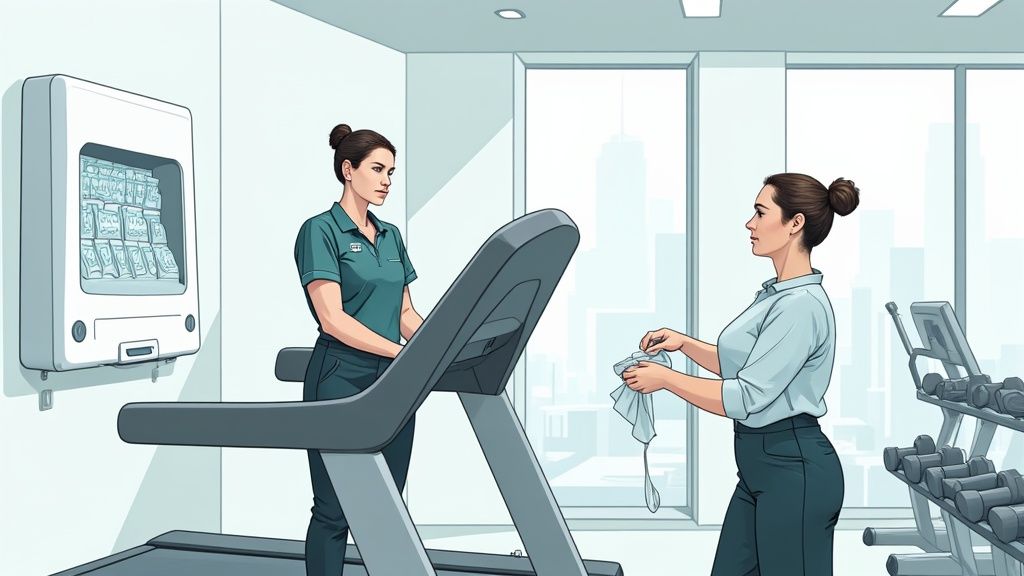
In any public facility—be it a gym, office, or retail store—exercise equipment wipes are your first line of defense in maintaining a clean and hygienic environment. They are specifically formulated to kill germs without destroying expensive machinery or sensitive surfaces—something harsh household cleaners just can't promise. On materials like vinyl, rubber, and electronic screens, the right disinfectant wipe makes all the difference.
For high-traffic commercial spaces, these wipes are what stand between your customers or members and the spread of bacteria and viruses. They’re not just a cleaning supply; they’re a critical component of a safe, welcoming, and professional-looking facility.
Beyond Clean: The Real Value of Disinfecting Your Facility
Everyone wants a clean facility, but what does that really mean for your bottom line? It’s more than just wiping away dirt. A visibly clean and disinfected space is a powerful, unspoken message about your brand’s commitment to health and safety. When clients are choosing between you and a competitor, a pristine environment can be the deciding factor.
This is where we must draw a clear line between cleaning and disinfecting. Cleaning gets rid of surface-level grime, and it's a vital first step. But disinfecting is what actually kills the harmful pathogens—the bacteria and viruses that thrive on high-touch surfaces.
The Business Case for a Disinfection Strategy
Let’s be blunt: cutting corners on disinfection is a significant business risk. A facility that feels grimy or neglected is inviting negative online reviews that can damage your reputation overnight. It sends a clear signal to potential customers that you don't prioritize their well-being.
Worse, it creates a very real risk of germ transmission, putting both your staff and your clients' health on the line. This is why high-quality exercise equipment wipes aren't just an operational cost. They are a strategic investment in your business.
By making effective, easy-to-use disinfecting wipes a core part of your environment, you can:
- Boost Customer Trust: When people see wipe dispensers and staff actively cleaning, they know you’re serious about their health. That builds immediate confidence and long-term loyalty.
- Increase Retention Rates: A clean, safe-feeling environment is one of the biggest drivers of customer satisfaction. People who feel comfortable in your space are far less likely to take their business elsewhere.
- Strengthen Your Brand: A reputation for impeccable hygiene positions your facility as a premium, responsible choice. It becomes a key part of your brand identity.
A clean facility is no longer a perk—it's the absolute baseline. But a disinfected facility? That’s a powerful competitive advantage. It shows you’re truly invested in your clients’ health and running a top-tier operation.
Framing Hygiene as a Strategic Investment
Stop thinking of cleaning supplies as just another line item on your expense report. Start seeing them as an investment in the health of your business. The return on that investment isn't just measured in dollars; it's seen in higher customer satisfaction, fewer complaints, and a stronger reputation in your community.
When you build a culture of cleanliness—where both staff and patrons are actively involved—hygiene stops being a chore and becomes a shared value.
For sales professionals in the cleaning industry, this reframes the conversation. You're not just selling a product anymore. You're offering a complete solution that protects a business's assets, elevates the customer experience, and actively reduces business risk.
Ultimately, integrating disinfectant wipes into your facility's daily routine is a proactive move toward building a healthier, safer, and more successful business. It's about creating a space where people feel genuinely cared for—and that’s what keeps them coming back.
How to Choose the Right Wipes for Your Facility
Picking the right exercise equipment wipes isn't about grabbing the cheapest box off the shelf. That's a rookie mistake. The wrong wipe can damage equipment, fail to disinfect, and leave behind a sticky, linty mess. A smart choice comes from understanding your facility's real-world needs, from the type of upholstery on your benches to the number of people touching a door handle during peak hours.
Sorting through the options can feel overwhelming, but it really just comes down to a few key factors. The wipe's chemistry does the germ-killing, the fabric determines if it'll survive a single swipe, and the dispenser is what actually gets people to use it. Nail these three things, and you're building a hygiene program that works.
This visual decision tree makes it simple. It shows how the choice to move beyond basic cleaning and toward strategic disinfection is a direct path to growing your business.

As the infographic shows, just wiping things down is a task. Disinfecting properly is a business strategy that builds the kind of trust and safety that keeps customers loyal.
Understanding the Chemistry Behind the Wipe
The active ingredient in a disinfectant wipe is what does all the heavy lifting. Each chemical has its pros and cons, which is why matching the formula to your facility's surfaces and environment is non-negotiable.
When it comes to the different chemistries available, it helps to see them side-by-side to figure out what fits your facility best.
Comparing Disinfectant Wipe Chemistry
This table breaks down the common disinfectant types you'll find in exercise equipment wipes, highlighting their strengths and where they fit best.
| Disinfectant Type | Key Advantages | Considerations | Best For Facilities Like |
|---|---|---|---|
| Quat-Based | Kills a broad spectrum of germs. Gentle on most surfaces like vinyl, rubber, and metal. Typically low-odor. | Can leave a slight residue if not formulated correctly. May require a longer contact time to be effective. | All-purpose fitness centers, offices, retail stores, and high-traffic public areas with diverse equipment. |
| Alcohol-Based | Kills germs quickly and evaporates fast, leaving no residue. Excellent for hard, non-porous surfaces. | Can dry out and crack upholstery over time. May damage sensitive electronic screens. Strong initial odor. | Medical facilities, physical therapy clinics, and for cleaning hard surfaces like metal, glass, or plastic. |
| Plant-Based | Uses natural ingredients like thymol or citric acid. Biodegradable and free of harsh chemicals. | May have a narrower spectrum of germ-killing power. Can be more expensive. Scent profiles vary. | Boutique studios, schools, wellness centers, and facilities with an eco-conscious brand identity. |
| Hydrogen Peroxide | Breaks down into water and oxygen, making it eco-friendly. Effective against tough-to-kill pathogens. | Can be more corrosive to certain metals or sensitive surfaces over time. May cause slight discoloration on some plastics. | Facilities that need hospital-grade disinfection without the harshness of bleach, like sports training centers or childcare facilities. |
Choosing the right chemistry isn't just about killing germs; it's about protecting your equipment and creating a pleasant environment for your patrons. A quat-based wipe is often the safest bet for general use, but don't hesitate to use specialized wipes where they make sense.
Material Durability and Surface Compatibility
A wipe that shreds the second it touches a textured dumbbell handle is completely useless. The fabric of the wipe is just as important as what it's soaked in. You need something made from a durable, non-abrasive material that can handle a serious scrub without leaving linty fuzzballs all over your surfaces.
Always check your equipment manufacturer’s cleaning guide. Using an incompatible wipe can void your warranty and turn a simple supply cost into a massive repair bill. It happens more often than you think.
Think about all the different surfaces in your facility. The touchscreen on a $10,000 treadmill needs a gentle, streak-free formula. The upholstery on your office chairs needs a disinfectant that won't make it crack and peel. While a good multi-surface wipe can cover most of your bases, it’s smart to invest in a specialized product for your most expensive or sensitive gear.
Choosing the Right Dispensing System
The best wipes on the planet are worthless if nobody can find them or be bothered to use them. Your dispensing strategy is what drives compliance. It’s all about placement, capacity, and even aesthetics.
- High-Capacity Buckets: Perfect for busy gyms or back-of-house cleaning carts in a restaurant. They reduce refill frequency and their visible presence encourages use.
- Sleek Wall-Mounted Dispensers: For a boutique studio, a corporate office, or near a retail checkout counter, a stylish dispenser fits the professional vibe. They look clean and are great for high-traffic hallways.
- Refillable Canisters: This is a sustainable option that cuts down on plastic waste. They're great for staff to carry on cleaning carts or for placing in smaller, dedicated spaces like a conference room or yoga studio.
When you think through the chemistry, the material, and the dispensers, you're not just buying wipes anymore. You're building a system that protects your patrons, your equipment, and your brand's reputation for quality. It's a small detail that makes a huge operational difference.
Putting Your Wipes to Work Effectively

Having the perfect disinfectant wipes is only half the battle. If they're tucked away in a closet or used incorrectly, your investment in hygiene goes right down the drain. An effective rollout is all about building a system—a smart approach that makes cleaning easy, visible, and part of your facility's daily rhythm.
This is about more than just sticking a dispenser on a counter and hoping for the best. A truly great strategy starts with a clear map of your facility’s hygiene landscape. It means zeroing in on the germ hotspots, putting your tools exactly where they're needed most, and creating simple, repeatable routines for both your staff and patrons. The real goal here is to remove friction and make proper disinfection the path of least resistance.
Mapping Your High-Touch Zones
Every facility has its own unique layout and traffic flow, which creates specific high-touch zones that become hubs for germ transmission. Simply telling your staff to "wipe everything down" isn't just inefficient; it guarantees missed spots. A much better approach is to create a visual map of your most critical areas.
Think beyond the obvious. The real culprits are often the places people touch without a second thought.
- Gym Hotspots: Dumbbell handles, barbell grips, and especially the adjustment pins on cable machines.
- Office & Retail Hotspots: Door handles, payment terminals, conference room remotes, and shared kitchen appliance buttons.
- School & Restaurant Hotspots: Tabletops, chair backs, condiment dispensers, and bathroom fixtures.
- Universal Hotspots: Light switches, elevator buttons, and water fountain controls see constant contact in any public space.
When it comes to specific items like movement mats, you also need to understand the material to ensure you're cleaning effectively without causing damage. Once you've identified these zones, you can build your entire placement and cleaning strategy around them.
Strategic Placement for Maximum Impact
Where you place your disinfectant wipes directly influences how often they get used. The guiding principle is simple: make them impossible to ignore. Wipes should be within arm's reach at the exact moment someone needs one—right when they enter a room, finish a task, or use shared equipment.
This is where a well-thought-out dispenser strategy comes into play. We dive deeper into this in our guide on choosing the right gym wipes dispenser, but the core idea is to match the dispenser to the zone. Think high-capacity floor stands in busy areas and sleek, wall-mounted units in hallways and near entryways.
The secret to effective disinfecting is understanding contact time, also known as dwell time. This is the non-negotiable period a surface must remain visibly wet to kill the pathogens listed on the product label. A quick swipe-and-dry cleans but doesn't disinfect.
Establishing Effective Cleaning Protocols
With your high-touch zones mapped and dispensers in place, the final step is creating a clear, easy-to-follow cleaning protocol. This protocol needs to cover two key things: frequency and technique.
Frequency Recommendations:
- Patron Protocol: In gyms or shared offices, encourage users to wipe down equipment before and after every use with clear signage.
- Staff Protocol: During peak hours, staff should perform a "hygiene loop," wiping down all high-touch zones every 60-90 minutes.
- Deep Clean: Schedule a daily deep clean where all surfaces are thoroughly disinfected according to the wipe's required contact time.
Technique and Efficiency Hacks:
Train your staff on proper technique. Emphasize using enough wipes to ensure the surface stays wet for the required dwell time—often 30 seconds to several minutes. For efficiency, teach them to work from top to bottom and clean to dirty, preventing cross-contamination and ensuring a systematic approach.
By creating this structured system, you transform cleaning from a reactive chore into a proactive strategy. You empower your team and your patrons to take ownership of the facility's hygiene, fostering a culture of cleanliness that protects everyone.
Selling Hygiene as a Business Solution
If you’re a sales professional or a facility supplier, it’s time to change the conversation. You’re not just moving a consumable product; you’re delivering a complete hygiene solution that protects a business’s reputation and boosts its bottom line. The most successful sales calls pivot from a product’s price to the value it creates.
Let's get past the "cost-per-wipe" mentality. Your real job is to become a strategic partner who helps clients see exercise equipment wipes and other disinfectant products as powerful tools for managing risk, elevating their brand, and keeping customers coming back.
Shifting from Commodity to Solution
The first step is to reframe the product. Don’t lead with spec sheets and pricing. Instead, open with questions about their business goals and biggest headaches. Are they getting negative online reviews about cleanliness? Are they trying to attract a more health-conscious clientele or reduce employee sick days?
Once you know what keeps them up at night, you can connect the dots between your product and their goals. This tactic instantly transforms a disposable wipe into a core part of their business strategy.
Think of it this way: a business doesn't just buy computers; they invest in tools for productivity. In the same way, they aren't just buying wipes; they're investing in a system that protects their clients' health and safeguards their reputation.
When you frame the conversation around these outcomes, premium, surface-safe disinfectant wipes stop being an expense and become a necessary investment.
Highlighting the Return on Investment (ROI)
Business owners live and die by the numbers. To make a compelling case, you must speak their language. The return on investment (ROI) for a solid hygiene program is very real, and you can prove it with metrics they care about.
Metrics That Matter to Your Clients:
- Fewer Customer Complaints: A visibly clean facility means fewer complaints, freeing up staff time and creating a happier environment.
- Better Online Reviews: Cleanliness is one of the first things people mention in online reviews. Proactive hygiene is a direct path to better ratings on Google and Yelp.
- Higher Customer Retention: Studies show a direct link between facility cleanliness and customer loyalty. A clean space makes people feel safer and more valued.
- Reduced Employee Sick Days: In an office setting, a robust cleaning protocol can directly contribute to a healthier, more productive workforce.
- Stronger Brand Perception: A clear commitment to hygiene signals that an operation is professional and premium, justifying higher prices and attracting quality clients.
Help them do the math. Show a client how investing $500 a month in top-tier wipes and dispensers could stop them from losing a handful of customers, each worth $600 or more per year. The numbers are simple and incredibly powerful.
Creating Value-Driven Bundles
To truly cement your role as a solutions provider, think bigger than just selling one product at a time. Create value-driven bundles that solve a whole range of your client's cleaning and sanitation challenges.
For example, you could pair exercise equipment wipes with other must-have supplies.
- The "Gym Starter" Kit: High-capacity wipe dispensers bundled with hand sanitizer stations and a starter pack of microfiber towels—a complete front-of-house solution.
- The "Studio Upgrade" Package: For boutique fitness centers, offer sleek, wall-mounted dispensers along with specialized mat cleaners and eco-friendly paper products.
- The "Office Wellness" Bundle: For corporate clients, combine electronics-safe disinfectant wipes with surface sprays and hand soap refills.
Bundling doesn't just increase your average order value; it simplifies the purchasing process for your client. When you make their life easier, you become an indispensable partner. When you lead conversations focused on health, safety, and brand building, you sell more than just wipes—you provide peace of mind and a clear path to a stronger business.
Facility-Specific Cleaning Playbooks

When it comes to facility hygiene, a generic, one-size-fits-all checklist is a recipe for failure. The cleaning needs of a high-traffic, 24-hour gym are worlds apart from those of a quiet corporate wellness center or a busy retail store. To protect your equipment and earn customer trust, you need a strategy tailored to your specific environment.
This means creating a practical playbook that accounts for your facility's unique high-touch zones, traffic flow, and customer expectations. The right exercise equipment wipes are a huge part of this, but they’re only as good as the plan you build around them. Many top-tier facilities develop a comprehensive playbook to outline exactly how they tackle hygiene.
The Modern Fitness Center
Gyms are on the front lines of public hygiene. Between the constant sweat, chalk dust, and heavy foot traffic, the risk of germ transmission is high. Your playbook for a fitness center needs to be aggressive, highly visible, and dead simple for both members and staff to follow.
The global gym wipes market hit USD 350 million in 2022 and is projected to reach USD 500 million by 2025. This isn't just a trend; it's a direct response to members demanding cleaner, safer workout spaces.
High-Priority Touchpoints:
- Dumbbell & Kettlebell Racks: Everyone wipes the handles, but the racks themselves are often forgotten.
- Cable Machine Pins: Touched by nearly every user, these small metal pins are major germ hotspots.
- Cardio Machine Screens: Sweat and fingerprints can damage sensitive touchscreens if you're not using a compatible, non-damaging wipe.
- Benches & Upholstery: These need wipes that can disinfect without cracking, fading, or drying out the material.
A great place to start is by building out a solid gym cleaning checklist that clearly defines daily, weekly, and monthly tasks for your entire team.
Corporate Offices and Wellness Spaces
In the corporate world, a clean environment is directly tied to employee well-being and productivity. With the rise of hot-desking and shared collaborative hubs, visible cleaning protocols have become more critical than ever.
The focus shifts from heavy sweat to preventing the spread of common colds and flu through shared surfaces. The goal is to create a healthy office where employees feel safe and respected.
Hotspots to Target:
- Shared Workstations: Keyboards, mice, and desk surfaces need to be disinfected daily in hot-desking areas.
- Conference Rooms: Tabletops, chair arms, and A/V remotes are handled by dozens of people every day.
- Kitchenette Areas: Coffee machine buttons, microwave handles, and fridge doors are some of the highest-contact points in any office.
- In-House Gyms: Treadmills and weight machines require the same diligence as a commercial gym, with a focus on equipment-safe wipes that won't harm electronics.
For office environments, the key is discretion and consistency. Sleek, professional-looking dispensers paired with low-odor, residue-free wipes maintain a clean aesthetic while effectively reducing germ spread.
Retail Stores and Restaurants
For any retailer or restaurant, cleanliness has a direct line to brand perception and customer experience. A dirty shopping cart handle or a sticky menu can be all it takes for a shopper to walk out. Your playbook must zero in on the areas customers touch most.
Speed and efficiency are everything here. Staff need quick access to wipes that work on a variety of surfaces without leaving streaks or residue. Plus, the simple act of a customer seeing an employee wipe down a counter sends a powerful message: we care about your well-being.
Priority Checklist:
- Shopping Carts & Baskets: The handles are often the single most-touched item in the entire store.
- Payment Terminals & Checkout Counters: These surfaces see constant hand traffic and need frequent wiping.
- Door Handles & Entryways: They're the first and last thing every single customer touches.
- Tables, Menus, & Condiment Dispensers: In food service, these must be disinfected between every single customer.
Ultimately, a facility-specific playbook turns cleaning into a proactive strategy. By tailoring your approach, you’re not just creating a safer space—you’re building undeniable trust with your clients, members, and employees. Prioritize cleanliness today and consider how integrating a robust disinfectant wipe strategy can elevate your business.
Leave a Reply