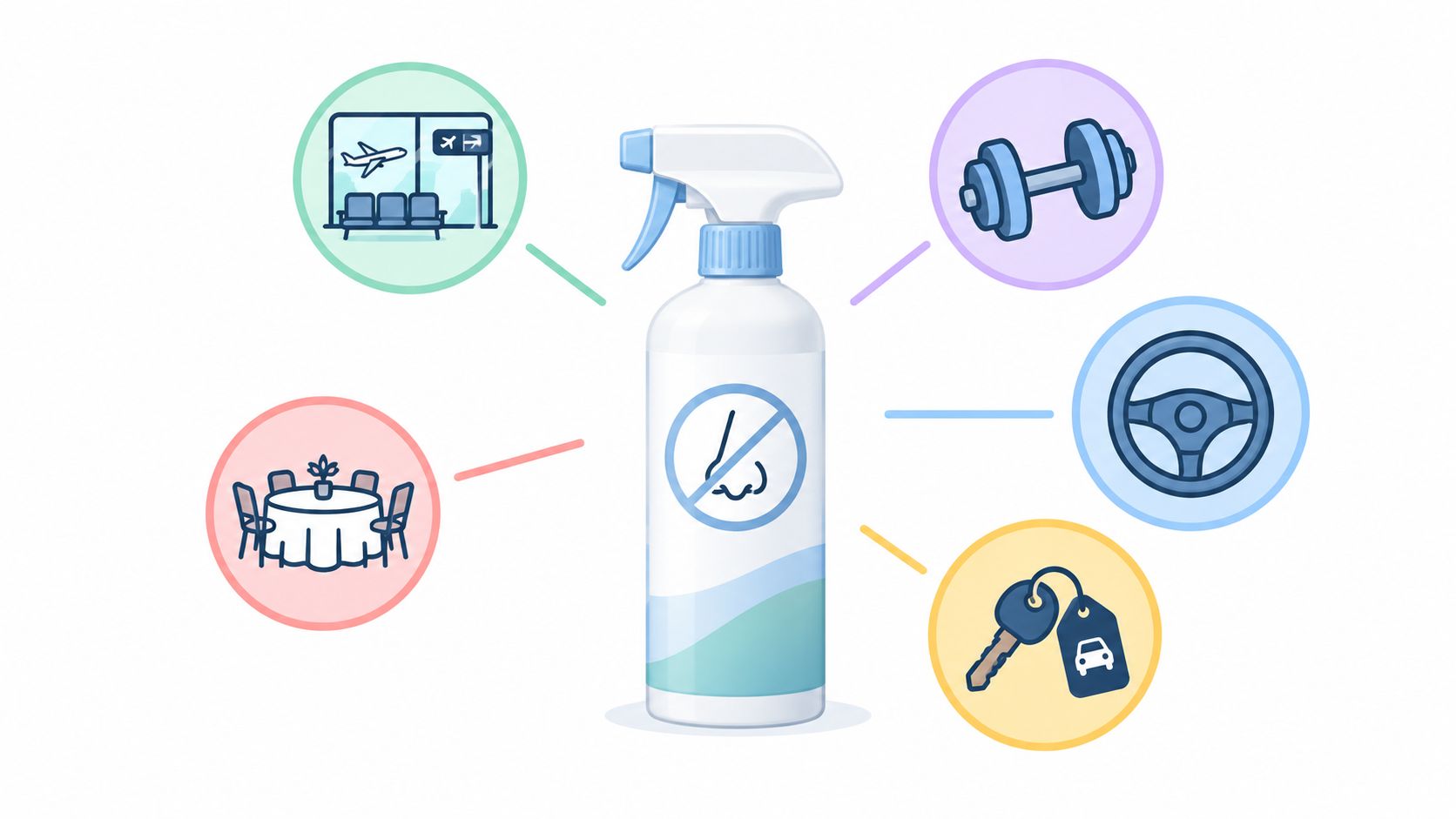
At 6:40 a.m., the first flight is boarding, a gym floor is filling up, and a rental property is between guests. Staff have cleaned the obvious surfaces, but the room still carries the sharp lemon scent of the product they used. One visitor asks for the cleaning chemical to be removed. Another starts coughing near the pump station. The manager now has a sanitation problem and a guest-experience problem.
That's why a fragrance free disinfectant deserves more attention than a neutral-smelling label. In a commercial facility, the right product must support verified antimicrobial performance, realistic contact time, surface compatibility, worker safety, and occupant comfort. A pleasant scent is not proof of cleanliness, and a scent-free product is not automatically effective.
The strongest programs treat disinfecting wipes as one part of a controlled workflow. Staff clean visible soil first when needed, apply the product correctly, keep surfaces wet for the labeled contact time, and document the work. That approach works for airports, gyms, offices, schools, restaurants, retail stores, event venues, rentals, and dealerships.
Why Scented Cleaners Are Quietly Costing You Guests
A traveler enters a freshly cleaned gate area and immediately asks staff to stop using the product. At a gym, a member avoids the weight machines because the fragrance lingers. In a short-term rental, a guest assumes the strong scent is covering an odor rather than removing its source. Each incident turns a routine cleaning choice into an operations issue.
Managers should treat scent as an operating decision, not a matter of taste. The same fragrance that reassures one occupant can irritate another, linger in a poorly ventilated room, and prompt repeat work after complaints. A facility needs a written scent policy that staff can apply consistently across public areas, restrooms, vehicles, and guest rooms.
Fragrance blends can contain hundreds of undisclosed ingredients, according to independent consumer guidance summarized by this fragrance-free cleaning resource. That does not make every scented disinfectant equally problematic. It does mean “fresh” is not a reliable standard for occupant comfort, ingredient transparency, or facility suitability.
The hidden cost sits outside the product invoice
A scented program can add operational costs in several places:
- Guest complaints: Front-desk and facilities staff spend time handling scent concerns instead of routine operations.
- Ventilation demands: Teams may need to air out rooms or vehicles after application, especially in small rentals, restrooms, and enclosed event spaces.
- Accommodation pressure: Managers may need a response for visitors who report respiratory or sensitivity concerns.
- Reputation exposure: Guests can mention a strong chemical smell in reviews even when the cleaning work was thorough.
- Procurement friction: Corporate tenants, public agencies, and venue buyers may request ingredient disclosure and indoor-air information.
For odor-control tactics that avoid masking fragrances, use this chemical odor control guide. It supports a better rule for managers: remove the source, improve the process, and verify the product instead of adding scent to signal cleanliness.
California's consumer product VOC program applies fragrance rules across more than 100 product categories and has reportedly cut VOC emissions by 50% relative to uncontrolled levels, according to the California Air Resources Board fragrance-use guidance. Under updated rulemaking, products manufactured on or after January 1, 2031 would not be allowed to use the 2% fragrance exemption, while disinfectants and sanitizers would be limited to a 0.25% fragrance exemption under the stated provisions. Managers should review product labels and procurement standards before those requirements affect purchasing decisions.
Operations rule: If your facility serves people who stay, exercise, travel, eat, or shop indoors, choose a scent policy before complaints choose it for you.
Stop buying fragrance to communicate cleanliness. Use visible procedures, verified labels, clean surfaces, and consistent wipe-downs instead. For facilities serving sensitive occupants, make fragrance-free the default unless a documented operational reason supports another choice.
What Fragrance Free Actually Means on a Disinfectant Label
Fragrance-free means the formula is made without fragrances. EPA labeling distinguishes that claim from a general promise that the product has no noticeable odor. An EPA-registered label can use claims such as fragrance free, scent free, or no scent when the product is manufactured without fragrances, as shown in the EPA-registered product label.
That distinction matters because active disinfectant chemistry can still have a recognizable odor. Fragrance-free removes added scent materials. It doesn't guarantee that the active ingredient, solvent, preservative, or surface reaction will be completely odorless.
Unscented is not the same thing. A product can use a masking agent to cover the odor of other ingredients. The label may feel neutral to the user, but the formula can still include fragrance-related materials. Think of fragrance-free as a silent HVAC unit. Unscented can be a noisy unit with a muffler. The room sounds quieter, but the source hasn't necessarily disappeared.
“Free and clear” creates another problem. It's a retail phrase, not a substitute for disinfectant registration, ingredient review, or a verified kill claim. Some products sold under that positioning are cleaners rather than disinfectants, including the free-and-clear all-purpose cleaner used as an example of why buyers need to distinguish cleaning from disinfection.
Read the label, SDS, and registration details together
A purchasing team should verify:
- EPA registration: Confirm that the product is registered for the intended use and that the label supports the pathogen claim required by the facility.
- Active ingredient: Identify the chemistry responsible for disinfection. Fragrance doesn't provide the kill claim.
- Contact time: Find the time the surface must remain visibly wet.
- Ingredient disclosure: Review the label and SDS for fragrance, parfum, masking materials, essential oils, and botanical extracts.
- Use directions: Check whether the product is intended for hard, nonporous surfaces, equipment, electronics, food-contact areas, or other specific applications.
Natural ingredients don't receive a free pass. Essential oils, botanical extracts, and fragrance allergens can still create an unwanted sensory or exposure issue for sensitive guests. If your objective is a fragrance free disinfectant program, don't accept “plant-based scent” as a compromise without checking the formula and the label.
| Scent Claims Compared | Fragrance Added | Masking Agents | Label Verification | Best For |
|---|---|---|---|---|
| Fragrance-free | No added fragrance materials | Should not be used to create a neutral scent claim | Verify EPA label, SDS, active ingredient, and directions | Sensitive indoor facilities |
| Unscented | May be present | May be used to hide chemical odor | Review SDS and ingredient disclosure carefully | Buyers who need a neutral sensory profile but can verify the formula |
| Free and clear | Varies by product | Varies by product | Confirm whether it's a cleaner or registered disinfectant | General cleaning only unless disinfection claims are verified |
| Naturally scented | Yes, from essential oils or botanical materials | May also be present | Check all ingredients and surface directions | Facilities with an approved scent policy |
A facility that serves sensitive occupants should select based on the formula and registration, not the front-panel wording. The same disciplined label review makes sense in vehicle interiors too, and buyers comparing products can use this guide to fragrance free car detailing as a useful example of why odor control and material compatibility belong in the same conversation.
The Active Ingredients That Power Fragrance Free Disinfectants
Fragrance-free status doesn't determine whether a product disinfects. The active ingredient, concentration, registration, and contact time do. A low-odor formulation can perform well, but only when staff use it according to the approved label.
Four chemistry groups appear frequently in fragrance-free programs. Each has a different operational profile, so the best choice depends on the surfaces, staffing pattern, ventilation, and turnover pressure in your facility.
Hydrogen peroxide
Hydrogen peroxide formulas can suit routine hard-surface work when the label supports the intended claim. The chemistry breaks down into water and oxygen, but that doesn't remove the need to check contact time or material compatibility.
These products can work well for shared equipment, sealed surfaces, and daily wipe-downs. The specific dwell time varies by formulation and concentration, so staff must follow the product label rather than rely on a general assumption.
Hypochlorous acid
Hypochlorous acid products offer a low-odor option for some facilities and can fit programs that prioritize a mild sensory profile. Buyers still need to consider storage, shelf life, and compatibility with metals.
Some formulations can contribute to corrosion on sensitive metal surfaces. Test the product on the actual stainless steel, plated hardware, rubber, vinyl, or painted equipment used in the facility before standardizing it across every zone.
Quaternary ammonium compounds
Quats are common in hard-surface disinfection and can suit high-touch, nonporous areas. Their performance depends on the label directions, including the required wet contact time. Residue can also matter, particularly on surfaces that guests touch repeatedly or where a visible film affects appearance.
For a deeper explanation of this chemistry, facility buyers can review what quaternary ammonium compounds are. The purchasing decision should still be made from the registered product label and the facility's surface test, not from chemistry names alone.
Alcohols
Alcohol-based products evaporate quickly and generally leave little residue. That makes them useful for some small electronic surfaces and glass, provided the manufacturer allows that application.
Alcohol has trade-offs. It can dry skin, requires attention to flammability, and may damage finishes, coatings, leather, vinyl, or plastics if used outside the approved directions. Never assume a product suitable for a phone screen is suitable for a treadmill display, vehicle touchscreen, or sealed wood counter.
| Active Ingredients at a Glance | Typical Contact Time | Surface Compatibility | Fragrance-Free Compatible | Watch-Outs |
|---|---|---|---|---|
| Hydrogen peroxide | Follow the registered product label | Often suitable for selected hard surfaces and shared equipment | Yes | Test finishes and follow the exact dwell time |
| Hypochlorous acid | Follow the registered product label | May suit selected surfaces and equipment | Yes | Shelf life and metal corrosion can matter |
| Quaternary ammonium compounds | Follow the registered product label | Commonly used on hard, nonporous surfaces | Yes | Residue, surface testing, and wet contact time |
| Alcohols | Follow the registered product label | Useful for some glass and electronics | Yes | Flammability, skin dryness, and finish damage |
The correct question isn't “Which ingredient smells best?” It's “Which registered formula meets the pathogen claim, contact time, and surface requirements of this zone?” A fitness center may need different products for rubber grips, touchscreens, mirrors, and stainless steel. An airport gate may need a fast workflow for scanners and armrests. A rental operator may need a formula that performs without leaving a noticeable residue on fixtures.
How to Choose a Fragrance Free Disinfectant That Actually Performs
Buyers can eliminate most poor choices quickly by scoring five things: label verification, fragrance disclosure, active chemistry, surface compatibility, and workflow fit. Marketing language comes last.
Start with the registered label. Confirm that the product supports the required pathogen claim, lists the active ingredient, and provides a contact time staff can meet during an actual shift. If the product requires a long dwell but workers wipe it dry immediately, the facility isn't receiving the labeled disinfection process.
Make the product prove its claim
Ask the supplier for the label and SDS before placing a large order. Don't rely on a sales sheet that says “clean scent,” “fresh,” “natural,” or “unscented.” Those phrases don't tell you whether the formula contains fragrance materials or masking agents.
Check the following:
- Registration details: Verify the EPA registration information and intended use.
- Fragrance status: Look for a clear formulation statement and review the SDS.
- Active chemistry: Match the ingredient to the required claim and surface.
- Contact time: Confirm that staff can keep the surface wet for the full labeled period.
- Application format: Decide whether wipes, a ready-to-use spray, or a concentrate suits the zone.
A fragrance free disinfectant should also survive a surface trial. Test it on stainless steel, vinyl seating, rubberized handles, touchscreens, sealed wood, mirrors, and painted equipment. Look for haze, tackiness, discoloration, drying, and residue after the product has been used according to the label.
Score candidates in one minute
| Fragrance Free Disinfectant Selection Criteria | What to Verify | Common Pitfall |
|---|---|---|
| Scent claim | SDS, label, and ingredient disclosure | Treating unscented as fragrance-free |
| Active chemistry | Registered active ingredient and intended claim | Choosing by odor instead of efficacy |
| Surface compatibility | Manufacturer directions and a local material test | Applying one formula to every surface |
| Contact time | Wet dwell time staff can achieve | Buying a long-dwell product for rapid turnover |
| Format | Wipe size, container, spray pattern, storage, and waste process | Ignoring how workers actually apply it |
Format affects compliance more than many managers expect. Wipes control dosing and reduce spray drift, which can help around screens, food-service counters, and occupied rooms. Sprays can cover broad surfaces efficiently, but they require more attention to ventilation, overspray, PPE, and wet coverage. Concentrates may support a larger janitorial operation, but only if dilution, labeling, and training are controlled.
For broader purchasing context, eco house cleaning by Canes Cleaners illustrates why product selection should consider ingredients, application, and the people occupying the space, not just the label's scent promise.
Choose one primary format by zone. Use commercial disinfecting wipes for high-frequency touchpoints when staff need a fast, repeatable application. Keep sprays or concentrates for areas where the team can control coverage and dwell without interrupting occupants.
Running a Wipe-Down Program That Hits Contact Time Every Shift
The most common failure is simple. A worker passes one wipe over a surface, sees that it looks clean, and moves on before the chemistry has completed its required contact time.
The corrected technique is equally simple: remove visible soil when necessary, apply enough product to wet the surface, keep it wet for the label-specified period, and let it air-dry or wipe it only after the contact time has ended. Visible coverage is not the same as disinfection.
Give staff a repeatable sequence
- Inspect the zone. If dirt, sweat, food residue, or another soil is present, clean first unless the product label supports a one-step clean-and-disinfect process.
- Use the right wipe. Select a product approved for that surface and task. Don't use a restroom wipe on a touchscreen or a wipe from a contaminated area on a food-contact surface.
- Cover the whole target. Wipe the full touch area, including edges, handles, buttons, seams, and contact points.
- Keep it visibly wet. Start the contact-time count only when the surface has adequate wet coverage.
- Replace the wipe when needed. If it dries before the dwell ends, use another wipe. If it becomes visibly soiled, switch to a clean side or a fresh wipe.
- Finish according to the label. Air-dry or remove residue only after the required contact time.
CDC-linked facility guidance prioritizes high-touch surfaces such as tables, doorknobs, light switches, countertops, handles, desks, phones, and keyboards, and recommends cleaning dirty surfaces before disinfection when soil is present. The same guidance identifies alcohol-based wipes or sprays containing at least 70% alcohol as a fallback when no other guidance is available, as described in this CDC-linked building disinfection document.
Build zones, not vague instructions
Fitness staff can group one treadmill console, rails, adjustment levers, and nearby touchpoints as a zone. A housekeeper can treat a bathroom vanity, handle, switch, and fixture as a turnover zone. A gate crew can assign scanners, armrests, tray tables, and queue rails to a route.
NASM recommends wiping in the same direction rather than back and forth, using multiple wipes when necessary, and keeping the surface wet for the product's required contact time in its fitness-facility guidance. Pennsylvania environmental-services guidance likewise says multiple wipes may be needed and advises stopping a wipe once it no longer leaves the surface visibly wet for more than 1 minute, as detailed in the Pennsylvania EVS guide.
Use nitrile or chemical-resistant gloves that match the SDS. Add eye protection for spray applications when the label or risk assessment calls for it. Keep exhaust fans running and doors open where practical, but never shorten the wet dwell to improve ventilation.
Post the schedule, color-code canisters by zone, and use a pre-shift checklist. Guests notice a stocked gym wipe dispenser, a clean canister, and staff who know exactly what to wipe.
Tailoring Your Program by Facility Type
A single product can't solve every facility's sanitation problem. The best program assigns a chemistry, format, contact time, and staffing routine to each environment.

Gyms and fitness centers
Gyms need products that tolerate repeated use on rubber grips, vinyl benches, coated metal, and shared controls. Choose equipment-safe quat or hydrogen peroxide formulas, then test them on the actual machines. Place canisters within arm's reach of cardio equipment, strength stations, mats, and stretching areas.
Peak periods need a defined cycle, not a sign telling members to clean “as needed.” Assign staff to inspect and replenish each station, while members receive clear directions for wipes to disinfect gym equipment without saturating screens, belts, or electrical openings.
Airports and transit hubs
Airport crews work around constant movement. Prioritize boarding pass scanners, gate seating armrests, tray tables, queue rails, family-room tables, and other high-turnover touchpoints. Select a formula with a contact time the crew can realistically maintain during passenger flow, then assign routes by zone instead of asking every worker to improvise.
Keep fragrance-free supplies at service desks and janitorial closets. Staff should know which surfaces can be wiped directly and which screens or scanners require manufacturer-approved application methods.
Short-term rentals
Rental turnover demands a compact, fragrance-free kit that protects the next guest from an unnecessary scent cloud. Include labeled wipes, gloves, a surface checklist, and separate materials for bathrooms, kitchens, electronics, and high-touch furniture.
The cleaning team should focus on handles, switches, remotes, faucets, countertops, and other contact points after removing visible soil. Never use fragrance to suggest that a room is clean. A neutral room with documented work is more credible than a perfumed room that leaves guests wondering what the odor is hiding.
Event venues
Stage wipes at food-service counters, restroom entrances, registration tables, AV controls, door hardware, and shared furniture. Assign a visible attendant during high-flow periods, but keep the operation professional rather than theatrical. The goal is consistent coverage and correct dwell time.
Car dealerships
Dealerships need a finishing-safe formula that won't haze touchscreens, dull vinyl, mark leather, or leave a sticky film on steering wheels and control panels. Keep a separate product for approved hard surfaces and test every interior material before broad use.
For each setting, establish two essentials: the right product for the surface and a contact time staff can complete. That's the operating standard behind gym equipment cleaning wipes, airport touchpoint routes, rental turnover kits, venue response stations, and dealership detail prep.
Turning Cleanliness Into Trust, Reviews, and Repeat Business
Fragrance-free disinfection is a brand decision, not merely a chemical substitution. Guests judge a facility by what they see, smell, and experience. A visible wipe station, a clear schedule, and staff who can explain the process create more trust than a strong scent ever will.
The commercial value comes from reducing friction. Fewer scent complaints mean fewer service conversations. Clear procedures help supervisors identify missed zones. A standardized product offering gives sales teams a concrete story for customers who need hygiene controls without added fragrance.
Don't promise a revenue lift you haven't measured. Instead, track the signals your operation can observe:
- Complaint categories: Record scent complaints separately from general cleanliness complaints.
- Work orders: Note repeat cleaning requests linked to residue, odor, or missed touchpoints.
- Guest feedback: Search reviews for terms related to smell, cleanliness, equipment, bathrooms, and comfort.
- Staff compliance: Audit whether workers use the correct product and complete contact time.
- Procurement fit: Track whether fragrance disclosure, registration, and surface documentation help meet customer requirements.
A fragrance-free program may cost more per gallon in some purchasing situations. That cost deserves a side-by-side review against labor spent responding to complaints, re-cleaning surfaces, ventilating rooms, replacing damaged finishes, and managing inconsistent products. The strongest business case comes from your own logs, not a promised percentage from a supplier.
A manager can assign this implementation list on Monday morning:
- Audit current products: Identify fragrance, parfum, masking agents, essential oils, and unclear “unscented” claims.
- Verify registration: Confirm the EPA registration, active ingredient, intended claim, and contact time.
- Standardize by zone: Select wipes, sprays, or concentrates for specific surfaces and workflows.
- Post the program: Display cleaning schedules and explain the fragrance-free policy where appropriate.
- Train staff: Demonstrate wet coverage, dwell timing, wipe replacement, PPE, and cross-contamination control.
- Log QA inspections: Record routine checks so supervisors can correct gaps.
- Review feedback: Examine guest and customer comments regularly, then adjust routes or products.
Businesses that want to evaluate service quality can also look at how customers discuss reviews for Gmaids services, using review language as a reminder that cleanliness, comfort, and trust are closely connected.

The recommendation is direct: replace scent-based reassurance with evidence-based operations. Prioritize high-touch surfaces, use EPA-registered products, respect contact time, ventilate responsibly, and keep fragrance-free supplies available where occupants notice them most.
Audit your current disinfectants this week, choose a verified fragrance free disinfectant for each surface zone, and train staff to keep every target visibly wet for the labeled contact time. If you sell cleaning supplies, add gym wipes, bulk formats, dispensers, and facility-specific training to the offer so customers can build a program instead of buying another unverified bottle.
Leave a Reply