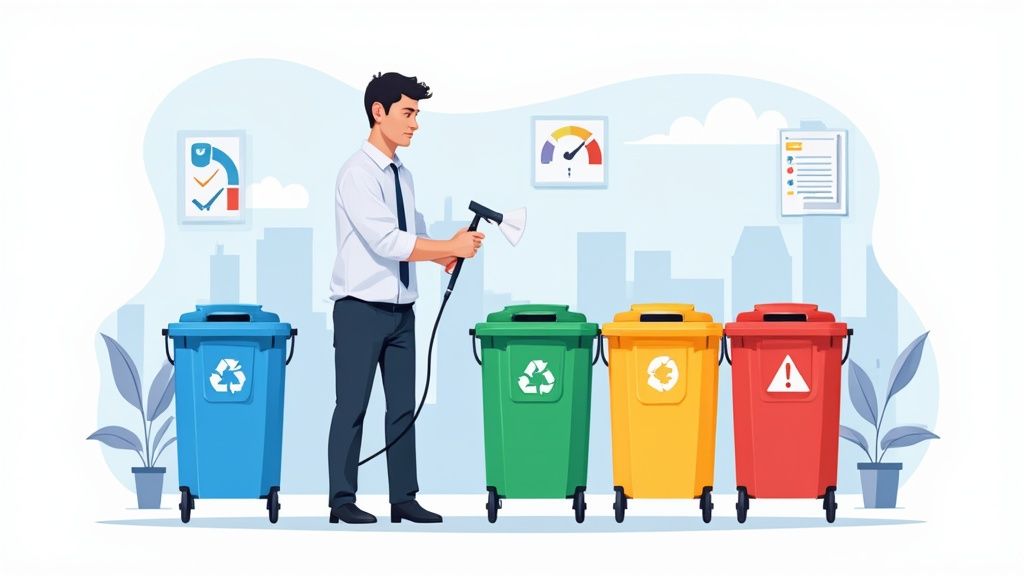
In today's competitive landscape, the perception of cleanliness can make or break a business. While polished floors and sparkling surfaces are crucial, a truly hygienic facility is built on a foundation of effective waste management and daily sanitation. This isn't just about taking out the trash; it's a strategic process that impacts everything from public health and operational efficiency to brand reputation and bottom-line profits. For business owners, janitorial staff, and gym owners, mastering waste management best practices is the first step toward creating a visibly safer and more welcoming environment for customers and staff alike.
Proper waste handling directly prevents the spread of germs and odors, reinforcing the high standards of cleanliness that patrons expect. When protocols are clear and easy to follow, it minimizes cross-contamination and ensures that high-touch areas around bins and disposal points remain sanitary. Integrating simple tools, like disinfectant wipes, to clean bin lids, handles, and surrounding surfaces can elevate these practices into a comprehensive hygiene strategy. A well-managed and meticulously cleaned facility signals a commitment to detail, safety, and overall excellence.
This guide moves beyond generic advice to provide a comprehensive roundup of actionable strategies. We will explore key waste management best practices and demonstrate how integrating disinfectant wipes can amplify their effectiveness. You will gain actionable cleaning tips, sales insights for janitorial suppliers, and facility-specific advice to help you transform your waste protocols from a daily chore into a powerful business asset and your cleanest competitive edge.
1. Reduce, Reuse, Recycle (The 3Rs of a Cleaner Facility)
The foundation of any effective waste management program is the 3Rs Hierarchy: Reduce, Reuse, and Recycle. This framework is not just a catchy phrase but a strategic order of operations. It prioritizes actions that prevent waste from being created in the first place, making it one of the most impactful waste management best practices. By focusing first on reduction, facilities can significantly cut disposal costs, conserve resources, and minimize their environmental footprint.
A Cleaner Approach with the 3Rs
The power of the 3Rs lies in its sequential priority. The goal is to address waste at the highest, most effective level possible.
-
Reduce: The top priority is to minimize waste generation. For a gym, this could mean promoting refillable water bottles over single-use plastics. This not only reduces waste but also lessens the burden on cleaning staff, freeing up time to focus on disinfecting high-touch equipment.
-
Reuse: The second level focuses on giving items a second life. A retail store can use durable, multi-use containers for stockroom transport. In customer-facing areas, stocking restrooms with refillable soap dispensers instead of single-use bottles reduces clutter and plastic waste.
-
Recycle: As the final step, recycling breaks down materials to create new products. While crucial, it's the last resort after reduction and reuse efforts.
The infographic below visualizes this critical order of operations, showing where facilities should focus their efforts for maximum impact.

This hierarchy clearly illustrates that waste reduction is the most powerful strategy, followed by reuse, with recycling positioned as the final option for materials that cannot be eliminated or repurposed.
Cleaning Tip for Sales Professionals & Facility Managers
Fewer disposable items mean fewer surfaces collecting germs. When pitching to clients, janitorial sales reps can highlight this "cleanliness ROI": by helping a facility reduce single-use waste, you're also helping them create a cleaner, more manageable environment. Suggest placing disinfectant wipe dispensers near water fountains or refill stations to encourage patrons to maintain hygiene as they embrace reusable containers.
2. Source Separation and Segregation
A critical component of any successful waste management program is source separation and segregation. This practice involves sorting waste into distinct streams at the point of generation—such as recyclables, organics, and general trash. This foundational step is one of the most effective waste management best practices because it prevents cross-contamination and dramatically increases the quality of recyclable materials.
The Categorical Approach to Cleanliness
Effective segregation requires a clear, simple, and—above all—clean system for users.
-
Recyclables: This includes paper, cardboard, plastic bottles, glass, and metal cans. In an office, keeping these items separate from food waste in the breakroom is essential.
-
Organics/Compost: This category covers food scraps and other biodegradable materials. A restaurant implementing a compost program can divert a massive volume of waste from landfills.
-
General Waste (Landfill): This is the final destination for non-recyclable materials.
The challenge? Waste bins themselves are high-touch surfaces that can become soiled and unhygienic, discouraging proper use. A sticky or smelly bin lid is a major deterrent to proper waste sorting.
Cleaning Tip: Keep Your Bins Approachable
To ensure compliance, waste stations must be impeccably clean.
- Frequency: Janitorial staff should wipe down all bin lids, handles, and surrounding surfaces with disinfectant wipes at least once daily, and more often in high-traffic areas like school cafeterias or gym lobbies.
- Efficiency Hack: Keep a pack of disinfectant wipes attached to the janitorial cart for quick, on-the-spot cleaning during routine rounds. This proactive measure prevents grime buildup and keeps the bins inviting to use.
- Sales Tip: For sales professionals, bundle disinfectant wipes with bin liners and waste receptacles as a "Hygiene Compliance Package." Educate clients that a clean sorting station directly leads to better recycling rates and a more positive perception of their facility.
3. Circular Economy Principles
Moving beyond the linear "take-make-dispose" model, adopting Circular Economy Principles represents a paradigm shift in waste management best practices. This regenerative approach aims to eliminate waste entirely by keeping materials and products in use for as long as possible. For facilities, this means viewing waste not as a liability but as a valuable resource.
The Regenerative Approach
The circular model designs out waste and pollution from the beginning. It's a proactive solution for a cleaner future.
-
Design for Longevity: Products are created to be durable and easily repaired. An office might invest in modular furniture where individual components can be replaced instead of the entire unit.
-
Keep Resources in Use: The goal is to extend the lifecycle of every material. This could involve a restaurant participating in a closed-loop system for its take-out packaging, where containers are returned, sanitized, and reused.
-
Regenerate Natural Systems: The circular economy seeks to return biological materials safely to the earth. This includes composting food scraps or using biodegradable cleaning products that break down without harming the environment.
Sales Tip: Connecting Circularity to Cleanliness
The principles of durability and reusability are directly linked to facility hygiene. Reusable items require cleaning, creating a new service and supply opportunity.
- Educate Clients on Hygiene ROI: When a facility switches to reusable containers (e.g., a coffee shop offering ceramic mugs), they create a new, recurring need for sanitization. Position disinfectant wipes and other cleaning supplies as the essential tools that make a circular, reusable model safe and viable.
- Incorporate into Your Offering: Frame disinfectant wipes as a key enabler of sustainable practices. For a gym that encourages reusable bottles, position wipe dispensers as a value-added amenity that allows members to clean their bottle tops or the water cooler spigot, ensuring hygiene and promoting the gym's green initiatives simultaneously.
4. Waste Auditing and Characterization
To effectively manage waste, you first need to understand it. A waste audit is a systematic process of sorting, weighing, and categorizing a facility's waste. This data-driven approach moves beyond guesswork, providing a detailed snapshot of what is being thrown away. It is one of the most fundamental waste management best practices because it provides the essential baseline data needed to develop targeted reduction strategies.
The Analytical Approach
A waste audit provides the critical intelligence to implement the 3Rs hierarchy effectively and reveals key areas for hygiene improvement.
-
Identify Reduction Opportunities: If a retail store's audit shows a high volume of single-use disinfectant wipes being used for minor spills, it presents an opportunity to introduce reusable cloths for general cleaning while reserving wipes for disinfecting high-touch surfaces.
-
Pinpoint Hygiene Hotspots: An audit can reveal which bins overflow the fastest or which areas generate the most food waste. This data helps janitorial teams prioritize their cleaning schedules, focusing more frequent disinfection on problem areas.
-
Optimize Recycling: Understanding waste composition ensures you have the right-sized bins, preventing overflow that compromises cleanliness and creates slip-and-fall hazards.
Facility-Specific Suggestion: The Gym Audit
For a fitness center owner, a waste audit might reveal a large number of disposable paper towels used to wipe down equipment. This data could justify an investment in strategically placed disinfectant wipe dispensers, which are often more effective for sanitizing surfaces and can reduce overall paper waste. The audit provides the numbers to prove the ROI of switching to a more specialized and hygienic solution.
5. Composting and Organic Waste Processing
A significant portion of the waste generated by commercial facilities is organic, including food scraps and soiled paper products. Composting and organic waste processing transforms these materials into nutrient-rich compost, diverting substantial volume from landfills. For facilities like restaurants, schools, and offices with breakrooms, managing organic waste is a critical step towards sustainability.

The Hygienic Approach to Organics
The primary challenge with organic waste is managing odors and preventing pests, which directly impacts facility cleanliness.
-
Source Separation: The first step is providing clearly labeled bins for organic waste in kitchens and break areas. Education is key to preventing contamination from non-compostable items.
-
Process Management: Proper management is crucial to prevent odors. This includes using bins with tight-fitting lids and ensuring frequent collection.
-
Closing the Loop: The final stage is using the finished compost. Facilities with landscaping can apply it to their grounds, creating a closed-loop system.
Cleaning Tip: Tame the Compost Bin
To maintain high standards of cleanliness, organic waste bins require diligent attention.
- Daily Disinfection: Ensure organic waste bins are lined and that the lids and surrounding areas are wiped down daily with disinfectant wipes. This simple step is crucial for controlling odors and bacteria, especially in high-traffic areas like office kitchens or restaurant prep areas.
- Efficiency Hack: After emptying the bin, leave a fresh disinfectant wipe on the bottom before putting in a new liner. This can help neutralize odors from the source. This is a practical tip janitorial staff can implement immediately.
6. Extended Producer Responsibility (EPR)
Extended Producer Responsibility (EPR) is a policy approach where manufacturers are responsible for the entire lifecycle of their products, including disposal. This framework is a cornerstone of modern waste management best practices because it incentivizes the design of more sustainable, easier-to-recycle products from the outset.
The Lifecycle Approach
EPR makes producers internalize the environmental costs of their products, leading to smarter design.
-
Design for Sustainability: Producers are motivated to create products that are durable, easy to repair, and simple to disassemble for recycling.
-
Financing Collection and Recycling: Companies often fund take-back programs, ensuring items like batteries and electronics are properly handled.
-
Consumer Convenience: EPR systems create convenient collection points, like drop-off bins for old cell phones at retail stores.
Sales Tip: Align Your Products with EPR Values
For sales professionals, understanding EPR offers a sophisticated way to frame your products.
- Promote Sustainable Choices: When selling disinfectant wipes, highlight brands that use recyclable packaging or offer refills. This shows you understand your client’s broader sustainability goals.
- Educate on Hygiene ROI: Position your products as part of a responsible lifecycle. High-quality disinfectant wipes protect the longevity of assets like smart bins or reusable containers, aligning with the EPR principle of extending product life and value. By helping clients maintain their investments, you become a strategic partner, not just a supplier.
7. Zero Waste Programs
A Zero Waste program represents a holistic commitment to eliminating landfill-bound waste entirely. This ambitious approach re-engineers resource life cycles so all materials are reused, recycled, or composted. It fundamentally shifts the perspective from managing refuse to preventing its existence, making it one of the most transformative waste management best practices.
The Cyclical Approach to Cleanliness
The core principle of a Zero Waste program is to close the loop on material flows. A clean facility is a direct outcome of this philosophy.
-
Upstream Redesign: This involves working with suppliers to eliminate non-recyclable packaging. In a retail store, this means less cardboard and plastic to manage, resulting in cleaner, less cluttered stockrooms.
-
Comprehensive Diversion: Robust systems are established to capture all recoverable materials, including advanced sorting and organics collection.
-
Cultural Integration: A successful program requires buy-in from everyone, embedding waste reduction and cleanliness into daily operations.
Cleaning Tip: Zero Waste Starts with a Clean Slate
A key component of a Zero Waste culture is maintaining a high standard of facility hygiene. A clean and organized environment makes it easier for people to make the right choices.
- Focus on High-Touch Areas: Fewer disposable items mean fewer surfaces collecting germs. This allows cleaning staff to focus their efforts on disinfecting essential high-touch points: doorknobs, light switches, and shared equipment.
- Facility-Specific Suggestion (Offices): In an office aiming for Zero Waste, place disinfectant wipe dispensers in shared spaces like conference rooms and kitchens. This empowers employees to clean surfaces after use, reinforcing a culture of shared responsibility for both waste reduction and hygiene.
8. Smart Waste Management Technology
Integrating smart technology is one of the most transformative waste management best practices for modern facilities. This approach leverages Internet of Things (IoT) sensors and data analytics to create a highly efficient, responsive, and cost-effective waste system. Smart technology prevents bin overflows that compromise cleanliness and provides deep insights into waste generation patterns.
The Data-Driven Approach
Smart technology provides actionable data, turning waste management from a reactive chore into a proactive strategy.
-
IoT Sensors: These devices monitor bin fill levels in real-time. When a container is full, it sends an alert, eliminating unnecessary pickups and preventing messy overflows in high-traffic areas like school hallways or retail centers.
-
Data Analytics & Route Optimization: The data is used to create the most efficient collection routes for custodial staff, saving time, fuel, and labor.
-
Automated Compaction: Some smart bins include compactors that crush waste, drastically reducing collection frequency.
Cleaning Tip: Protect Your Smart Investment
Smart bins are a significant investment; proper cleaning is essential for protecting their functionality and appearance.
- Maintain Sensor Integrity: Janitorial staff should be trained to gently wipe down the sensors inside smart bins with a suitable disinfectant wipe to prevent grime from obstructing their function.
- Enhance User Perception: The exterior of a smart bin is a high-touch surface. Regular disinfection prevents it from becoming a source of cross-contamination and ensures this visible piece of technology always reflects the facility's commitment to modern, hygienic standards.
9. Hazardous Waste Proper Handling
Facilities must implement specialized protocols for hazardous waste—materials that pose a threat to public health or the environment. Proper handling is not just one of the most critical waste management best practices; it is a legal mandate.
The Specialized Approach
Managing hazardous waste requires a strict, documented process from creation to disposal.
-
Identification & Segregation: Correctly identify hazardous materials, such as certain professional cleaning chemicals, and keep them separate in clearly labeled, sealed containers.
-
Storage & Disposal: Store materials in a designated, secure area and use a certified hazardous waste disposal company.
-
Documentation: Meticulously document every step, from on-site handling to final disposal.
Facility-Specific Suggestion: Restaurants and Retail
Even facilities that don't seem "industrial" generate hazardous waste. For a restaurant, this includes used cooking oil and corrosive cleaning agents. For a retail store, it could be returned electronics with batteries. Staff must be trained to handle these items safely. Using disinfectant wipes to clean up minor leaks or spills around hazardous waste storage areas can prevent wider contamination, provided the wipes themselves are then disposed of as hazardous waste.
10. Community Engagement and Education
A successful waste management program requires the active participation of everyone in the facility. Community Engagement and Education is a foundational best practice that transforms passive observers into active partners. This involves systematic efforts to inform and involve staff, customers, and visitors about proper waste disposal.
A Cleaner, Collective Approach
Effective engagement makes correct waste management behaviors easy, understood, and habitual.
-
Awareness: Use clear, simple signage to explain why proper sorting matters. An office can display posters in the breakroom explaining the benefits of composting.
-
Education: Provide specific, actionable instructions. A gym can use decals on mirrors to remind members to wipe down equipment after use.
-
Participation: Foster active participation. Create feedback channels where people can suggest improvements, fostering a sense of shared ownership.
Sales Tip: Position Yourself as an Educator
For sales professionals, providing educational value is a powerful sales tool.
- Offer Training Materials: Create simple, one-page guides on "How to Maintain a Hygienic Waste Station" that your clients can share with their janitorial staff. This guide should feature practical tips, such as the best way to use disinfectant wipes for cleaning bins.
- Promote Hygiene ROI: Connect education to tangible benefits. Explain to a school administrator how well-placed disinfectant wipe dispensers and clear signage not only improve cleanliness but also teach students valuable lessons in hygiene and responsibility. More information on effective training can be found in our guide to staff training best practices.
Unify Your Strategy: A Culture of Cleanliness
Throughout this guide, we've explored a suite of waste management best practices. Each pillar, from the 3Rs to smart technology, represents a powerful lever for operational excellence. Together, they form a robust framework for sustainability and efficiency.
However, the journey doesn't end with a new recycling program. True transformation occurs when these protocols merge with an unwavering commitment to daily hygiene. A well-organized waste station is only effective if it remains clean. A zero-waste event is only successful if attendees feel safe in a pristine environment. This is where the tactical meets the tangible, and waste management evolves into a holistic culture of cleanliness.
The most sophisticated waste plan can be undermined by poor daily sanitation. The critical link is proactive, routine cleaning, and this is where tools like disinfectant wipes become indispensable.
- Empower Staff: Equip janitorial teams to quickly sanitize bin lids, handles, and surrounding surfaces. This prevents cross-contamination and odor buildup.
- Enhance User Experience: Place disinfectant wipe dispensers near waste stations in high-traffic areas like office kitchens, gym floors, or retail entryways. This fosters a sense of shared responsibility for hygiene.
- Maintain Asset Integrity: Regular cleaning of waste receptacles and smart sensors prevents grime buildup that can damage equipment.
By fusing macro-level waste strategy with micro-level daily cleaning, you create an environment that doesn’t just look clean but feels safe, directly translating into higher customer satisfaction and a stronger brand reputation.
Your Next Step: From Strategy to Action
Mastering these waste management best practices is more than an operational upgrade; it's a strategic imperative. The principles discussed in this article provide the blueprint, but the final structure is built with daily action and the right tools.
Now is the moment to move from planning to implementation. Review your current protocols and identify where waste management and daily sanitation intersect. Prioritize cleanliness, empower your team, and consider integrating high-quality disinfectant wipes into your daily routines or product offerings to cultivate a culture where every individual plays a role in maintaining a safe, clean, and sustainable environment.
Leave a Reply