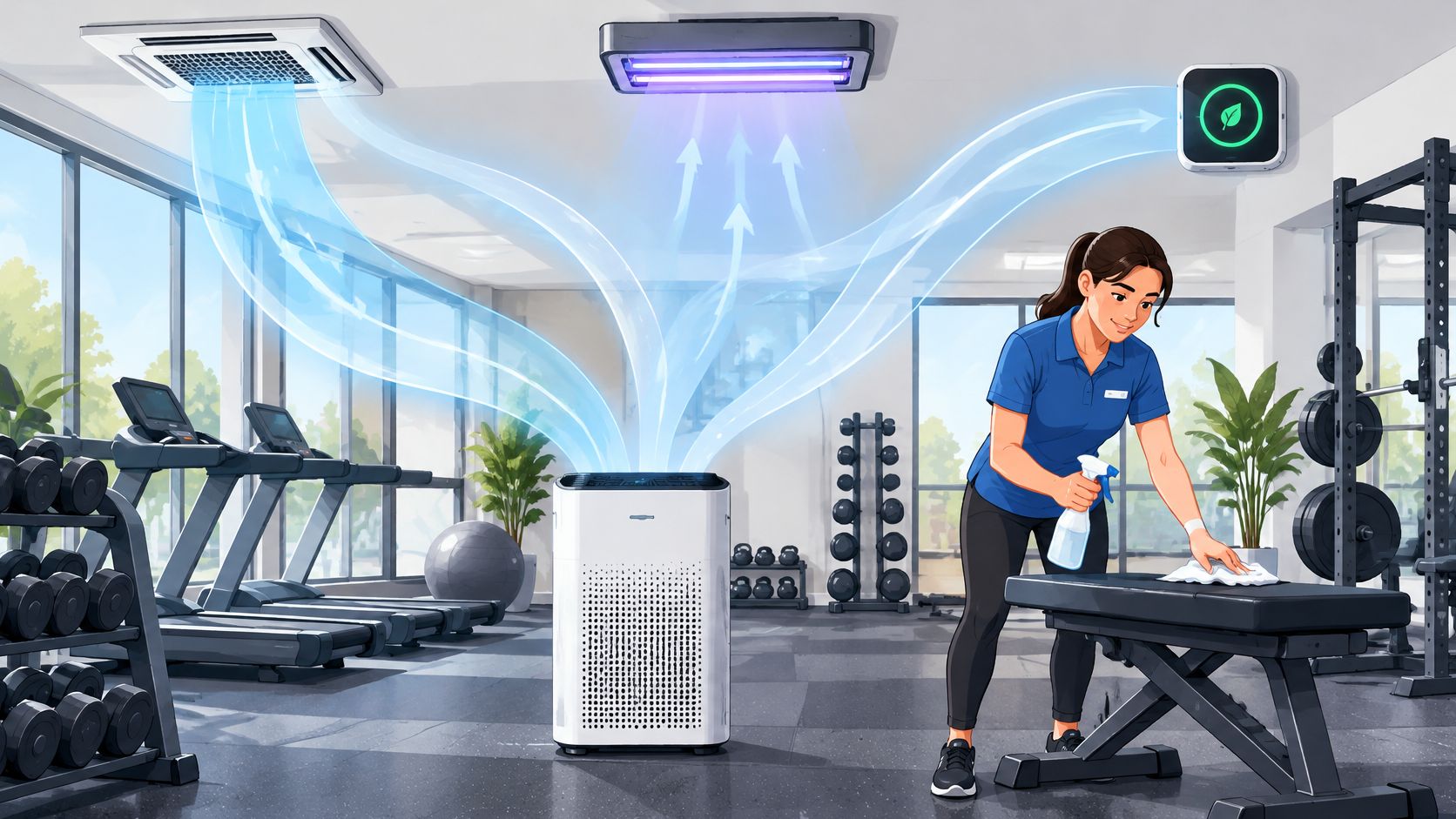
It's 5:40 p.m., your cardio floor is full, and a member finishes on a bike, grabs the shared spray cloth, gives the handlebars one quick swipe, and walks away. The HEPA units are running. The vents look dusty. The next member sits down on a still-damp seat and immediately decides how clean your facility really is.
That's why air sanitation methods can't stop at what's floating in the air. Guests judge you by what they breathe, what they see, and what their hands touch next. A strong filter doesn't fix a sweaty console, and a spotless bench doesn't fix stale, poorly ventilated air.
The World Health Organization guidance on ventilation and infection control identifies dilution, filtration, and disinfection as core environmental controls, with ventilation used to increase outdoor-air exchange and direct airflow away from occupants. Think of that as the air side of one system. The surface side is cleaning, wiping, and disinfecting on a schedule your team can repeat.
The eight methods below connect both sides. They're built for gyms, schools, airports, dealerships, offices, and short-term rentals, where high occupancy and constant turnover punish vague routines. You'll get honest trade-offs, not one product pitched as a universal fix.
1. Two-Step Clean-Then-Disinfect for High-Touch Surfaces
Disinfectant can't do its job through sweat, skin oil, sunscreen, and dust. If a surface is visibly soiled, clean it first, then disinfect it. Skipping step one often just smears grime around and leaves the disinfectant with poor contact where it matters.
The CDC cleaning and disinfecting guidance lists pens, counters, tables, doorknobs, light switches, handles, stair rails, elevator buttons, desks, keyboards, phones, toilets, faucets, and sinks as high-touch examples needing regular attention. Convert that logic to your floor. In a gym it's machine handles, adjustment levers, touchscreens, and locker latches. At a dealership it's service-counter keypads and pen stations before doors open.

Make the Sequence Obvious to Staff
Use a two-color system, such as blue cloths for cleaning and a distinct wipe for disinfecting, so nobody guesses mid-shift. Work from cleaner areas toward dirtier ones, and swap out any cloth or wipe that looks soiled. A quick pass with a dirty wipe creates a recontamination problem you can't see.
Many facilities stock familiar names such as Clorox and Lysol for small areas, then move to commercial disinfecting wipes in bulk through suppliers like wipes.com for predictable supply. Either way, the sequence matters more than the brand. Clean first, disinfect second, and document both steps on your route sheet so a new hire runs it the same way on day one.
2. Respecting Contact Time (Dwell Time) for Disinfectant Wipes
A fast swipe that dries in seconds looks productive. It usually isn't. The surface has to stay visibly wet for the full contact time on the label, or you haven't earned the claim printed on the package.
EPA directions for disinfectant wipes require users to wipe hard, nonporous surfaces until visibly wet, use enough wipes to maintain that wetness, and let the surface remain wet for the specified period before air-drying. This is a common training point that is often overlooked. If members dry equipment immediately with a towel, they cut the process short.

Turn the Label Into a Station Rule
Post a laminated card at each station with the product name, approved surfaces, and required wet time. An airport gate team can wipe armrests, start a phone timer, and move to the next row while the first row stays wet. A pool club can do the same at loungers and locker benches without slowing turnover.
Practical rule: If it looks dry before the timer ends, it wasn't wet enough. Add another wipe instead of hoping the first one counted.
Choose larger, wetter wipes for warm stainless steel and sunny glass that dry fast. For a fuller breakdown your leads can use in training, see this guide on what contact time means for disinfectants. I recommend picking products your staff can keep wet realistically during peak traffic, not the longest dwell time on paper.
3. Gym Equipment Wipe Stations and Dispenser Placement
Members will clean equipment if you make it effortless. They won't walk across the floor hunting for a spray bottle, and they shouldn't have to. Put the station where the workout ends.
A gym wipe dispenser at each equipment cluster turns cleanup into shared responsibility instead of a janitorial rescue job. A boutique studio can mount dispensers at rowing and bike rows, while a university recreation center pairs dispensers with regular staff sweeps during busy periods. Both approaches work because the wipe is visible before the next person sits down.

Placement Rules That Hold Up on a Busy Floor
- Keep stations within a few steps: Place one within reach of each small cluster of machines, not only by the entrance.
- Check at opening and mid-day: An empty dispenser at peak hour trains members to skip wiping altogether.
- Add a small bin beside it: Used fitness wipes on the floor undo the clean signal you're trying to send.
- Verify console safety before bulk buying: Confirm your gym equipment cleaning wipes suit touchscreens, rubber, vinyl, and metal.
Sourcing bulk gym wipes keeps cost predictable, but only if the wipe size and wetness match your equipment. A cheap, dry wipe that members need three of isn't a saving.
4. Wiping HVAC Vents, Grilles, and Return Air Surfaces
Your air system does the heavy lifting, but the parts people see collect dust, skin oils, and moisture. Vent covers, return grilles, and thermostat housings won't get clean because a filter upstream is working. They need hands on them.
For the air side, ASHRAE filtration and disinfection guidance recommends at least MERV 13 filtration, with MERV 14 or better preferred when the HVAC system can handle the added pressure drop. It also treats ultraviolet treatment as engineered, not automatic, since delivered dose depends on irradiance, exposure time, airflow, and maintenance. Don't buy a lamp on wattage claims and assume the duct is disinfected.

Dust first with a dry microfiber cloth, then use a disinfectant wipe on exposed, wipe-safe surfaces. For technique on the visible build-up, this resource on cleaning dust from return grilles is a useful companion to your custodial checklist. Never spray liquid into a vent.
A school can add grille wiping after scheduled filter changes. A rental host can wipe bedroom vent covers during turnover. Log both alongside filter replacement dates, and leave ductwork and fan work to licensed HVAC professionals. Surface wiping complements ventilation. It doesn't replace it.
5. Yoga Mat and Soft-Surface Wipe-Down Protocol
Mats are where good intentions damage inventory. Rubber, foam, and vinyl trap sweat, but harsh disinfectants can dry, crack, or discolor them. The right protocol protects the member and the mat.
Start with compatibility. Yoga mat wipes and gentler mat-specific formulas exist for a reason, but “gentle” on a label still needs a spot test on a hidden corner. If the surface gets tacky, shiny, or discolored, stop and switch products before you process a whole rack.
A Routine Studios Can Repeat Between Classes
A yoga studio can place wipes for gym equipment and mats at the studio entrance, ask students to wipe before and after class, and hang mats to air-dry fully before rolling. Rolling a damp mat traps odor and keeps the next user in contact with whatever you just tried to remove. A hotel pool club can use the same hang-dry logic for padded loungers between guests.
Wash mats with mild soap and water on a weekly deep-clean cycle, then use wipes between classes for turnover. Avoid bleach-based products on rubber and vinyl unless the mat manufacturer approves them. For step-by-step mat care, see the best way to clean a yoga mat.
Don't stack or roll a mat that still feels damp. Dry storage is part of sanitation, not an afterthought.
6. High-Frequency Restroom and Washroom Touchpoint Protocol
Restrooms carry your reputation. A guest who finds a clean lobby and a neglected washroom believes the washroom. In airports, gyms, schools, and restaurants, that judgment forms fast and sticks.
Build the route around fixtures hands touch. Faucet handles, flush levers, stall latches, door handles, soap dispensers, and paper dispensers need scheduled attention based on traffic, not a once-a-day promise. High-touch surfaces should be cleaned at least daily as a baseline, with busy, high-traffic spaces serviced more often when use is heavy and hand hygiene is inconsistent.
Run It Cleanest to Dirtiest
Wipe faucets and counters before toilets, use a fresh wipe when one looks soiled, and don't carry one wipe through every fixture to save pennies. An airport attendant can work touchpoints on a timed loop during peak banks of flights. A restaurant can hit handles and faucets at shift change and initial a posted log.
That visible log matters commercially. It tells guests someone owns the room, and it tells your manager whether the route happened. Pair touchpoint wiping with ventilation checks, stocked soap, and trash removal in the same visit. If a restroom smells stale, wiping alone won't fix the perception. Check exhaust operation, restock, wipe in order, sign the sheet, and move on.
7. Event-Based and Seasonal Cleaning Frequency Matrix
A Tuesday morning and a tournament Saturday shouldn't run on the same cleaning schedule. Occupancy, activity, weather, and illness season change how fast surfaces get contaminated and how quickly supplies disappear. A frequency matrix makes those adjustments planned instead of improvised.
List zones down one side, surfaces across the top, and assign a normal interval and a surge interval to each cell. Add a named owner and a par level for sanitizing wipes and other supplies. When a sports complex hosts tournament weekends, shared benches, water fountains, and entry handles move to surge frequency. When a dealership runs a sales event, key fobs, lobby counters, and coffee stations get the same treatment.
Build the First Version in One Sitting
- Start with your busiest zones: Entrances, restrooms, equipment floors, checkouts, and food or coffee areas usually drive complaints first.
- Set two modes: Normal operations and event or illness-season operations, with no ambiguity about who declares the switch.
- Attach supply pars: Staff can't follow a surge schedule with an empty dispenser or a locked closet nobody can access.
- Review before each major event: Walk the route, check bins and dispensers, and brief temporary staff before doors open.
I recommend printing the matrix where leads start their shift. A document buried in email isn't an operating standard. Reviewed regularly, it turns cleanliness from an intention into staffing, supply, and accountability decisions.
8. Matching Disinfectant Wipes to Surfaces, Safety, and Staff Training
The wrong wipe creates three problems at once. It can damage a finish, fail on the target surface, and teach staff that products are interchangeable. They aren't.
An EPA-registered wipe label example shows users may need one or more wipes to thoroughly wet a surface and should add wipes when needed to maintain coverage and contact time. Use that thinking when you standardize. One EPA registered disinfecting wipes option for equipment and hard surfaces, and another approved option for restrooms, is easier to train than six partial tubs under different counters.
What Training Must Cover
Teach surface compatibility, wet contact time, glove and ventilation needs, and storage away from heat, sunlight, and children. Never mix disinfectants with bleach or other cleaners. Keep safety data sheets in one binder or digital folder every shift lead can open, and remove discontinued products each season so nobody grabs an orphan container.
This is also where sales and operations meet. If you're selling fitness center wipes or advising a client, don't lead with price per wipe. Sell the outcome: correct product by zone, trained staff, fewer damaged consoles, stocked stations, and a documented routine the client can show members. That's hygiene ROI a buyer can picture.
A rental company can give hosts a one-page guide for counters, bathroom fixtures, and electronics. A gym can post the same logic at each station. Simple matching prevents expensive mistakes.
How the eight sanitation methods compare by use case, requirements, and main limitation
| Item | Best For | Key Requirement | Main Limitation |
|---|---|---|---|
| Two-Step Clean-Then-Disinfect for High-Touch Surfaces | Removing soil before disinfecting hard, nonporous surfaces | Clean visible dirt first, then apply disinfectant | Takes more time and requires supplies for both steps |
| Respecting Contact Time (Dwell Time) for Disinfectant Wipes | Reliable disinfection in busy facilities | Keep the surface visibly wet for the label's full contact time | Long dwell times can slow high-traffic cleaning |
| Gym Equipment Wipe Stations and Dispenser Placement | Encouraging gym members to clean shared equipment | Place accessible, stocked dispensers near equipment clusters | Dispensers need regular restocking, and members may not use them |
| Wiping HVAC Vents, Grilles, and Return Air Surfaces | Reducing dust on accessible vent surfaces | Wipe exterior grilles and pair cleaning with professional HVAC maintenance | Does not clean air or ductwork |
| Yoga Mat and Soft-Surface Wipe-Down Protocol | Cleaning mats and padded surfaces without damaging them | Choose products labeled as compatible with the material | Some disinfectants are unsuitable, and mats must dry before reuse |
| High-Frequency Restroom and Washroom Touchpoint Protocol | Maintaining busy public restrooms | Set cleaning intervals and record checks on a log | Requires flexible staffing and frequent supplies |
| Event-Based and Seasonal Cleaning Frequency Matrix | Adjusting cleaning schedules to traffic and seasonal demand | Assign and review cleaning frequencies by zone and surface | Requires setup and updates as conditions change |
| Matching Disinfectant Wipes to Surfaces, Safety, and Staff Training | Consistent, safe wipe use across a facility | Match products to surfaces and train staff on labels and handling | Multiple products and recurring training add complexity |
Build One Sanitation System, Not Eight Separate Tasks
Air controls handle what's circulating. Wipes and cleaning routes handle what people touch. You need both, working on the same schedule, owned by named people, and checked with the same seriousness you'd give any other operating system.
On the air side, don't let technology labels blur together. The ASHRAE overview of Standard 241 describes an equivalent-clean-airflow framework that lets ventilation, filtration, and germicidal ultraviolet be judged against a common infection-control objective. That's a healthier way to compare options than trusting separate marketing claims. Ask how a system will be verified, how lamps or filters will be maintained, and whether it complements outdoor air instead of replacing it.
Use the same skepticism with add-on devices. The EPA guide to air cleaners identifies source control and outdoor-air ventilation as the foundation, with filtration as a supplement, and warns that ozone-generating cleaners shouldn't be used in occupied spaces because ozone is a lung irritant. A device sold as sanitizing can make air worse if you don't check its by-products. Conventional filtration, ventilation, and monitored operation are less flashy, but they're easier to verify in a real building.
Start this week with a walk you'd be willing to do beside a customer. Map your five busiest zones, list every high-touch surface in each, and check whether the right wipe is physically there. Read each label for approved surfaces and wet contact time. Inspect dispensers, bins, vent covers, and restroom logs in the same pass. You'll find gaps quickly, usually an empty station, a product nobody can keep wet long enough, or a route that exists on paper but has no owner.
Then fix the system, not just the surface. Put gym wipes where members finish sets. Give offices and schools route checklists for handles, switches, keyboards, and shared counters. Give restaurants and retail stores surge schedules for restrooms, checkout points, and entry doors. Track supply pars like you track towels or coffee, because a protocol without stock fails at the busiest moment.
For sales professionals, package that system. Bundle disinfectant wipes with dispensers, station cards, training, and replenishment checks, and show clients how visible cleanliness protects reviews, renewals, and repeat visits. Don't promise sterile air from a wipe, and don't promise a UV lamp removes the need to clean. Credibility sells longer than a claim you can't defend. Resources such as WipesBlog.com can support that education with facility-specific cleaning guidance, but your own documented routine is what guests experience.
Keep the closing tips simple. Clean visibly soiled surfaces before disinfecting. Keep surfaces wet for the label time. Match chemistry to material. Ventilate and filter for air, wipe and log for touchpoints. Review the whole plan when seasons, events, or occupancy change.
Audit your high-touch zones this week, stock every station with the right disinfectant wipes for the surface, and assign one owner per area. If unpredictable supply keeps breaking your routine, set up a bulk program through wipes.com and make clean air and clean surfaces the standard your guests can see, touch, and trust.
Leave a Reply