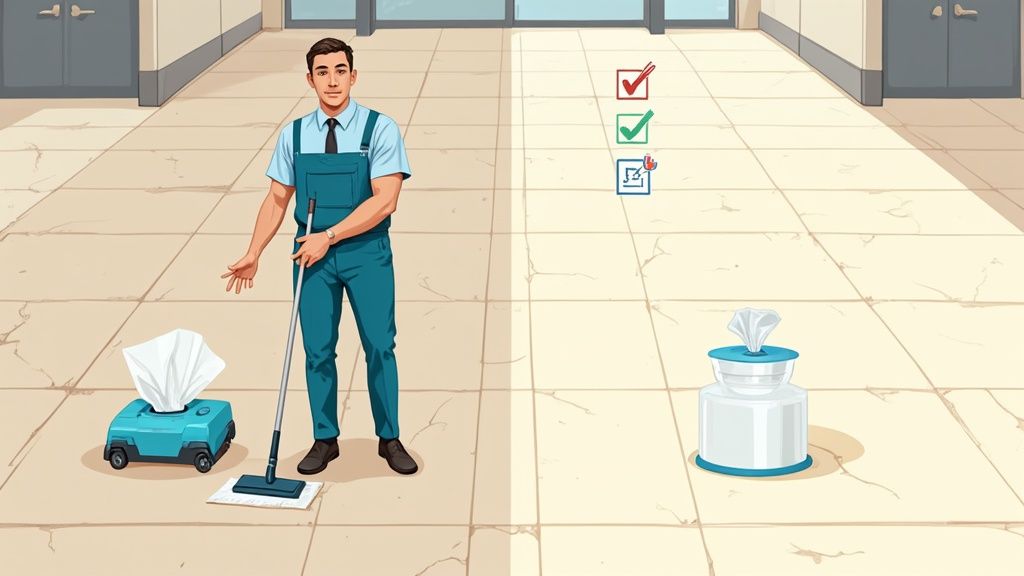
When it comes to your commercial facility, floor cleaning and maintenance is far more than a janitorial task—it's a critical component of your brand identity, public health commitment, and operational success. A proactive floor care program isn't an expense; it's an investment that protects your assets, ensures safety, and sends a powerful message of quality to every person who walks through your doors. This guide offers practical strategies for business owners, janitorial staff, and sales professionals to elevate their cleaning standards from good to great.
Why Impeccable Floors are a Business Cornerstone

Your floors are the foundation of a first impression. A gleaming, well-kept surface instantly communicates professionalism, attention to detail, and a commitment to a healthy environment. Conversely, dirty, scuffed, or stained floors can suggest neglect and erode brand credibility before a single word is spoken.
This perception goes far beyond aesthetics. In any commercial space—from a bustling office to a high-traffic gym—clean floors are a non-negotiable pillar of public health and safety. A proactive cleaning strategy is not just about looking good; it's about creating a space where customers and employees feel safe and valued.
The Tangible ROI of a Proactive Cleaning Strategy
A dedicated floor care program is a strategic investment that delivers measurable returns. The demand for professional care reflects this, with the global floor cleaning services market projected to reach approximately $14.33 billion by 2025. You can explore this growing market trend and its trajectory on Data Insights Market.
Here are the key benefits of a robust maintenance plan:
- Enhanced Customer Trust: A visibly clean environment, especially in restaurants, gyms, and retail stores, builds immediate confidence and loyalty.
- Improved Employee Morale & Productivity: A clean and safe workspace demonstrates respect for employee well-being, which can boost job satisfaction and reduce absenteeism.
- Increased Safety and Reduced Liability: Regular, thorough cleaning eliminates slip-and-fall hazards like spills and debris, significantly lowering the risk of accidents and potential legal costs.
Integrating Disinfectant Wipes for Superior Hygiene
While comprehensive floor scrubbing is vital for deep cleaning, modern hygiene standards demand a smarter, more targeted approach. This is where a simple yet powerful tool—the disinfectant wipe—becomes invaluable. Wipes are perfect for rapid, on-the-spot sanitation of high-touch and high-risk areas that are often overlooked between major cleaning cycles.
Integrating disinfectant wipes into a daily routine allows for quick, effective sanitation of targeted zones. This complements broader floor cleaning efforts by addressing specific hygiene risks in real-time, creating a healthier environment for everyone.
By combining broad-stroke floor cleaning with precise disinfection, you create a powerful, layered defense that protects your facility and its occupants from the ground up.
Building Your Floor Care Foundation

A robust floor care program is built on consistency, not just occasional deep cleans. Small, daily efforts are what prevent major issues and keep your floors looking pristine. A truly effective program relies on a smart, layered approach of daily, weekly, and periodic tasks designed to stop dirt at the door and manage what gets past with a repeatable system.
Your First Line of Defense
Prevention is your most powerful tool. An estimated 80% of all dirt and soil enters a building on the shoes of staff and visitors, making high-quality entrance mats your most valuable asset. These mats act as filters, scraping away grit, absorbing moisture, and trapping debris before it can be ground into your flooring. This simple step dramatically reduces abrasive damage and extends the life of your floors, making it a highly cost-effective investment.
Identifying the Enemy: Soil Types
Knowing what you're cleaning is as important as knowing how. Different types of soil require different cleaning methods:
- Dry Particulate Soil: Dust, sand, and grit act like sandpaper underfoot, scratching and dulling floor surfaces. Daily dust mopping is the best defense.
- Water-Based Soil: Tracked-in mud, spilled drinks, or slush can stain porous surfaces and create dangerous slip hazards that need immediate attention.
- Oil-Based Soil: Grease, asphalt, and food oils are sticky, attract more dirt, and require specific chemical agents for effective removal.
Recognizing these soils helps your team choose the right tools and methods, making their work faster and more effective.
The Daily, Weekly, and Monthly Rhythm
A successful floor care program operates on a consistent, predictable rhythm. This tiered approach ensures comprehensive coverage and that maintenance efforts build upon each other over time.
A well-structured floor cleaning program functions like a three-tiered system: daily attention removes immediate threats, weekly routines tackle accumulated grime, and monthly resets restore the floor's original condition and protective finish.
Let's break down what each tier looks like:
- Daily Wipes and Sweeps: These are high-impact tasks like dust mopping, spot-cleaning spills instantly, and using disinfectant wipes on high-touch floor-level areas (e.g., door kick plates, baseboards in restrooms).
- Weekly Scrubs: This is your core maintenance clean. It involves damp mopping or using an auto-scrubber with a neutral cleaner to lift embedded soils that daily sweeping misses.
- Monthly Resets: This is deep, restorative work. Depending on the floor type, this could mean burnishing, spray buffing to remove scuffs, or applying a fresh coat of finish to restore the protective layer.
Choosing the Right Tools for the Job
Selecting the right equipment and supplies can transform floor care from a chore into an efficient, repeatable process. The global market for floor cleaning equipment, valued at USD 13.06 billion in 2024 and projected to reach USD 30.5 billion by 2035, reflects a clear industry shift toward smarter, more powerful cleaning technology.
From Manual Mopping to Automated Solutions
The choice between traditional and modern tools depends on your facility's specific needs. While a mop and bucket are useful for small spills, automation offers superior efficiency and hygiene for larger areas.
- Traditional Mops: Ideal for small spaces and immediate spill response. To improve hygiene, consider systems with disposable pads to avoid cross-contamination.
- Automatic Scrubbers: Game-changers for large commercial spaces like schools, retail stores, and gyms. They apply cleaning solution, scrub, and vacuum up dirty water in one pass, delivering a deeper, more uniform clean in a fraction of the time.
- Robotic Sweepers and Scrubbers: The latest innovation, these autonomous machines handle routine cleaning during off-hours, freeing up staff for more detailed tasks.
To build a professional toolkit, it's helpful to see what experts use. You can find a comprehensive list of essential cleaning supplies to guide your purchasing decisions.
Selecting the Right Cleaning Agents
The right machine is only half the equation; the cleaning chemical you pair it with is equally important. Using the wrong product can damage a floor’s finish or fail to remove soil effectively.
A powerful machine like this walk-behind auto-scrubber requires the right chemical partner to deliver a streak-free shine.
Choosing a cleaner is like prescribing medicine for your floor. You need a specific diagnosis—is the soil oily, water-based, or particulate?—to select the right formula. A neutral pH cleaner is a safe bet for most daily tasks on surfaces like vinyl or sealed tile, while specialty cleaners are needed for challenges like salt residue or grease.
The Strategic Role of Disinfectant Wipes
While large machines handle broad areas, disinfectant wipes are your go-to for surgical strikes. They are essential for on-the-spot sanitation, filling the gaps in your cleaning schedule by tackling hygiene risks as they appear.
- Cleaning Tip: Use wipes for quick cleanups of spills in a restaurant, sanitizing the floor area around gym equipment, or disinfecting floor-level fixtures in a retail store. They bridge the gap between major cleaning cycles, maintaining high hygiene standards throughout the day.
Pairing powerful machines with precision tools like disinfectant wipes creates a truly comprehensive floor care system.
Creating a Practical Cleaning Schedule
An effective floor cleaning plan is built on consistency, not intensity. A customized schedule that maps out tasks logically prevents dirt buildup and transforms a monumental job into a series of manageable actions. The first step is to identify your facility’s high-traffic zones—lobbies, hallways, entrances—and focus your energy where it counts most.
Zone-Based Cleaning Frequency
Not every area requires the same level of daily attention. Tailor your schedule to the real-world flow of your facility for maximum efficiency.
- High-Traffic Zones (e.g., Entrances, Main Corridors): Require daily sweeping/vacuuming and spot-mopping. Cleaning Tip: Use disinfectant wipes multiple times a day to address spills and high-contact floor-level surfaces, like the base of reception desks or entry door kick plates.
- Medium-Traffic Zones (e.g., Office Spaces, Retail Aisles): Daily sweeping is still necessary, but mopping can be done every other day. Spot cleaning with wipes for spills should remain a daily priority.
- Low-Traffic Zones (e.g., Storage Rooms, Conference Rooms): A full clean may only be needed once or twice a week, with daily checks for incidental spills or debris.
A detailed commercial cleaning checklist is a game-changer for ensuring consistency and accountability.
Integrating Tasks for Maximum Efficiency
A smart schedule weaves daily, weekly, and monthly tasks together seamlessly. Daily spot-cleaning makes the weekly deep clean faster, and the monthly reset becomes a restorative process rather than a rescue mission.

This process highlights that sanitation is not an afterthought but an integrated part of the routine.
A smart schedule doesn't just list tasks; it creates a proactive system. By combining routine floor sweeps with targeted use of disinfectant wipes for spills and high-contact floor areas, you shift from a reactive cleaning model to a preventative hygiene strategy.
This approach ensures your facility doesn’t just look clean—it is consistently maintained to a higher standard of hygiene.
Adapting Floor Care for Different Facilities

A one-size-fits-all approach to floor cleaning is ineffective. The relentless foot traffic of a retail store, the strict hygiene demands of a restaurant, and the professional quiet of a corporate office each require a tailored cleaning protocol.
Facility-Specific Suggestion: Offices and Retail
In corporate offices, the goal is to maintain a professional appearance with minimal disruption. Cleaning is typically scheduled around business hours, favoring quiet, battery-powered equipment.
Retail spaces face a constant battle with heavy traffic and spills. Proactive spot-cleaning during business hours is critical for safety and appearance.
- Office Focus: Daily use of microfiber dust mops helps control dust and allergens. Deeper cleaning, like scrubbing or burnishing, should occur after hours.
- Retail Focus: Frequent walk-throughs to tackle spills immediately are the best defense against accidents. Cleaning Tip: Keep disinfectant wipes at checkout counters and service desks for quick cleanups of spills and sanitization of floor-level displays.
Facility-Specific Suggestion: Gyms and Restaurants
Gyms and restaurants are high-stakes environments where cleanliness directly impacts customer trust. Gyms are breeding grounds for bacteria, while restaurants must meet strict health codes and manage grease buildup.
In facilities like gyms and restaurants, visible cleanliness is a core part of the customer experience. A sticky floor or a dirty corner can instantly undermine a patron's confidence in your brand's commitment to hygiene.
- Gyms: Floors in workout areas, studios, and locker rooms require daily scrubbing with a hospital-grade disinfectant. Cleaning Tip: Place disinfectant wipe dispensers in prominent locations to empower members to wipe down equipment and the floor space around them after use, creating a culture of shared responsibility.
- Restaurants: Kitchen floors need daily degreasing. In dining areas, train staff to use disinfectant wipes for immediate spill cleanup, ensuring tables can be turned over quickly and hygienically.
Recommended Cleaning Frequency By Facility
This table summarizes how cleaning schedules can be adapted for different commercial spaces.
| Facility Type | Daily Tasks | Weekly Tasks | Disinfectant Wipe Frequency |
|---|---|---|---|
| Office | Dust mopping, spot cleaning, vacuuming high-traffic areas. | Machine scrubbing hard floors, deep vacuuming all carpets. | 2-3 times daily on shared surfaces near floors (e.g., reception). |
| Retail | Sweeping/dust mopping multiple times, immediate spill cleanup, auto-scrubbing. | Burnishing or polishing floors, deep cleaning entryways. | Hourly checks at checkout lanes and high-touch displays. |
| Gym | Disinfectant mopping of all floors, sanitizing locker rooms. | Machine scrubbing under equipment, deep cleaning studio floors. | Constant availability for members; staff checks every 30-60 min. |
| Restaurant | Degreasing kitchen floors, disinfectant mopping of dining areas. | Power washing kitchen floors, deep cleaning under dining tables/booths. | Immediate use for spills; hourly wipe-downs of high chairs. |
By tailoring your program, you create a safer, more welcoming environment that shows a commitment to excellence.
Positioning Hygiene as a Smart Investment
For too long, the conversation around floor cleaning and maintenance has focused on cost. It’s time to reframe the discussion. For sales professionals and facility managers, the goal is to position cleaning not as an expense, but as a strategic investment with a tangible return on investment (ROI). A pristine, hygienic environment is a powerful asset.
Building the Business Case for Cleanliness
To shift the conversation from price to value, connect cleanliness to key business outcomes. A clean facility reduces employee sick days, boosting productivity. It also builds powerful customer trust—a spotless gym floor reassures members of a safe workout environment, encouraging loyalty and positive reviews.
A superior cleaning program is a competitive advantage. It communicates a commitment to excellence that customers notice and appreciate, often translating into higher satisfaction scores, better reviews, and increased loyalty.
Furthermore, high-quality maintenance extends the life of your flooring, deferring the significant capital expense of replacement for years.
Sales Tips for Promoting a Hygiene-First Approach
Sales professionals in the cleaning industry should lead with education, not product features. Identify your client's pain points—be it employee absenteeism, customer complaints, or high maintenance costs—and position your products as the solution.
- Sales Tip: Bundle Solutions: Instead of selling a single case of disinfectant wipes, offer a "Restaurant Hygiene Starter Kit" that includes floor cleaner, mops, and strategically placed wipe dispensers for front-of-house staff. Make it an easy, comprehensive solution.
- Sales Tip: Educate on Hygiene ROI: Explain how spending slightly more on an effective, fast-acting disinfectant wipe saves money on labor. Quick, efficient spot-cleaning frees up staff for other value-added tasks, directly impacting the bottom line.
- Sales Tip: Pitch Facility-Specific Benefits: For a gym owner, demonstrate how visible wipe stations and a rigorous cleaning schedule can be a marketing tool to attract health-conscious members.
Seizing a Growing Market Opportunity
The demand for effective cleaning solutions is booming. The global floor cleaner product market is projected to grow from USD 5.8 billion in 2025 to USD 10.6 billion by 2035. This growth is fueled by facilities demanding better, safer, and more efficient products. Dive deeper into these market projections on Future Market Insights.
Stop selling cleaning supplies and start offering comprehensive hygiene strategies. By encouraging clients to integrate tools like disinfectant wipes into their daily routines, you help them turn a necessary expense into a proactive investment that pays dividends in safety, satisfaction, and success. Prioritize cleanliness—it’s one of the smartest business decisions you can make.
Common Questions About Floor Care
Navigating floor cleaning and maintenance can bring up a lot of questions. Here are answers to some of the most common ones to help you refine your program.
How Often Should High-Traffic Areas Be Deep Cleaned?
This depends entirely on your facility. A busy retail store or gym lobby may require a deep clean with an auto-scrubber weekly. A corporate office hallway, however, might only need that level of attention every two to four weeks. The key is consistent daily maintenance, which significantly extends the time between heavy-duty deep cleans.
Are Disinfectant Wipes Safe for All Floor Types?
Disinfectant wipes are generally safe for non-porous, sealed floors like vinyl, sealed concrete, and ceramic tile. However, you should avoid using them on unsealed hardwood, porous stone, and carpet, as the moisture and chemicals can cause damage. When in doubt, always test a wipe on a small, inconspicuous area first.
Used correctly, disinfectant wipes are excellent for targeted cleanups on appropriate surfaces. They’re perfect for wiping up a small spill in a dining area or sanitizing the floor around a gym's water fountain between major cleanings.
Which Is Better: Manual or Automated Cleaning Equipment?
The best choice depends on the size of your space and your cleaning goals.
- Manual Tools (Mops, Brooms): Essential for small spaces, tight corners, and immediate spill response. They offer precision but are labor-intensive for large areas.
- Automated Equipment (Auto-Scrubbers): A game-changer for any facility with significant square footage. They provide a deeper, more consistent clean in a fraction of the time, boosting productivity and overall hygiene.
What Are the Most Important Safety Precautions for Staff?
Staff safety is paramount. Ensure your team follows these non-negotiable rules:
- Use "Wet Floor" Signs: Always display signs prominently during and after mopping or scrubbing to prevent slip-and-fall accidents.
- Wear Proper PPE: Slip-resistant shoes and gloves are essential, especially when handling cleaning chemicals.
- Ensure Proper Ventilation: When using strong cleaning agents, maintain good airflow to prevent inhalation of fumes.
- Follow Chemical Guidelines: Never mix cleaning chemicals. Always dilute concentrates according to the manufacturer’s instructions.
Leave a Reply