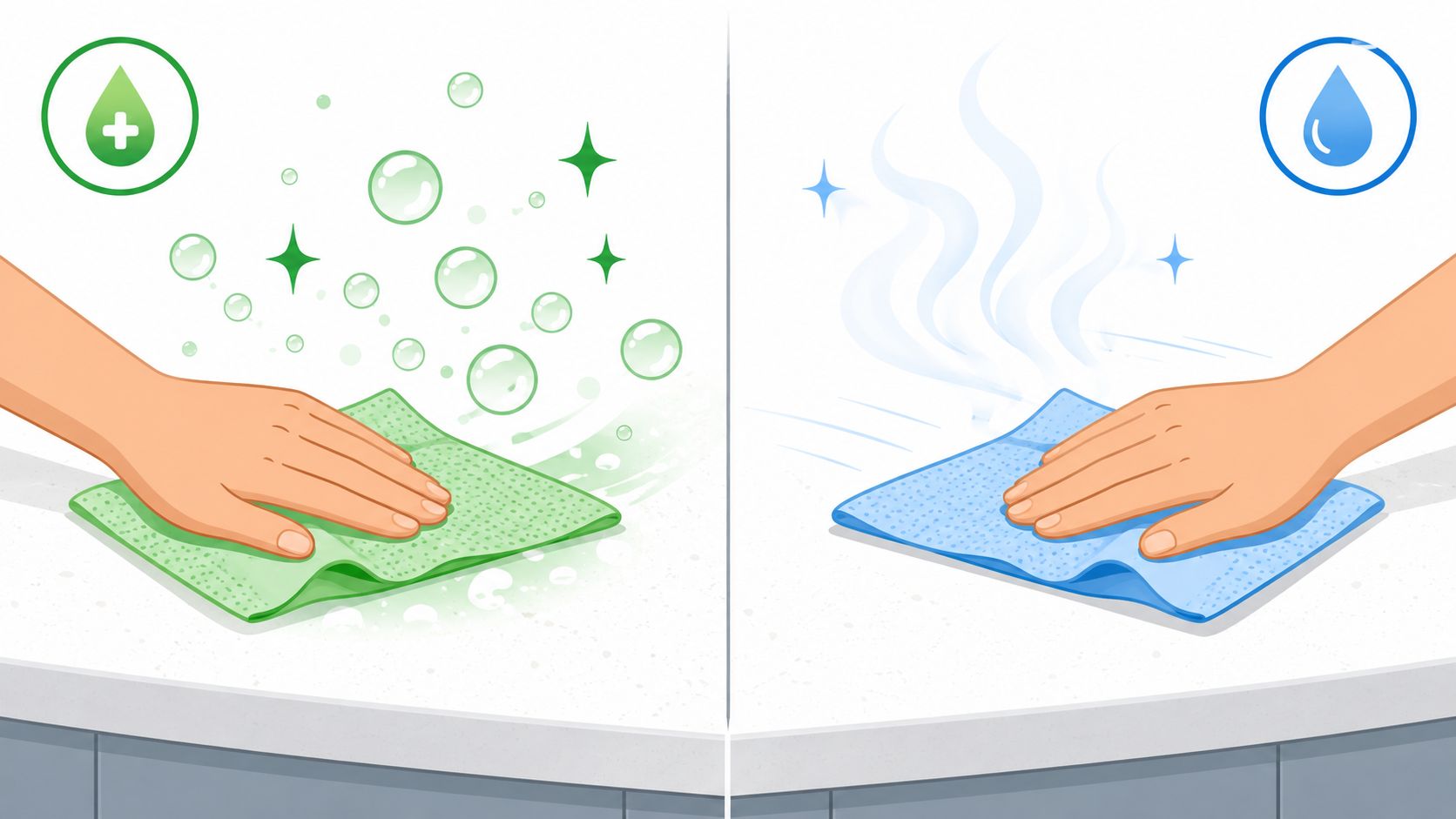
A staff member is already waiting for direction. The front desk wants fast turnaround on shared surfaces. A trainer needs wipes for gym equipment that won't ruin upholstery. A school administrator is asking about respiratory sensitivity. A restaurant manager just wants a product that works and fits the pace of service.
That's why bleach wipes vs alcohol wipes isn't a small purchasing question. It's an operating decision. The wipe you put in a canister, wall station, or janitorial cart affects cleaning speed, labor flow, surface life, guest confidence, and how consistently your team follows the protocol.
In commercial settings, cleanliness isn't just visual. It's behavioral. Staff clean more often when the product is easy to grab and easy to use. That matters in gyms, offices, schools, retail, and food service, where a practical wipe program often outperforms a complicated spray-and-rag routine that nobody follows under pressure.
Your First Strategic Decision of the Day
A facility manager at a busy fitness center usually faces the same question before the first rush starts. Do we stock bleach wipes at every station because they're stronger for deep disinfection, or do we rely on alcohol-based fitness wipes because members and staff can use them quickly between sets?
The wrong answer creates friction all day. If the wipe is too harsh, it damages surfaces or leaves an odor people notice. If it's too slow, equipment sits wet and unusable. If it's too complicated, staff skip steps and members improvise. In a public facility, that turns into visible inconsistency fast.
Why this choice affects more than cleaning
The best operators don't treat wipes as a commodity. They treat them as part of workflow design.
Disposable disinfectant wipes have been proven to significantly reduce the risks of cross-contamination compared to reusable wipes, making them one of the most efficient and prevalent methods for decontaminating high-touch environmental surfaces and non-critical medical devices in hospitals and healthcare centers, as described in this review of disinfectant wipe effectiveness in healthcare settings.
That matters well beyond healthcare. In gyms, offices, and retail environments, disposable wipes remove one of the oldest weak points in surface care: the reused cloth that moves contamination from one touchpoint to the next.
Operational reality: A wipe program only works if people will actually use it during a busy shift.
What strong operators check first
Before comparing active ingredients, check the basics:
- Surface mix: Electronics, vinyl, coated metals, bathroom fixtures, and food-adjacent counters don't all tolerate the same chemistry.
- User mix: Janitorial staff can handle stricter protocols. Customers, teachers, trainers, and front-desk teams usually need simpler instructions.
- Pace of the building: A low-traffic office can tolerate slower processes. A packed gym or event venue usually can't.
- Compliance detail: If you're comparing products with regulatory claims, start with a clear understanding of label language and registration using this EPA registration number explainer.
A lot of buyers still shop by headline claims. Experienced operators shop by how the product performs during the day people have.
Understanding the Science of Disinfection
At 10 a.m., a front desk team wipes down a check-in screen, a gym staffer clears sweat from a bike console, and a restroom attendant disinfects a faucet handle between traffic spikes. All three jobs look similar. The chemistry and the required wet time are not. That gap is where labor hours get lost and disinfecting claims fall flat.

How alcohol wipes work
Alcohol-based wipes disinfect by denaturing proteins and disrupting lipid membranes. On the right organisms and the right surfaces, that gives them a fast action profile that fits high-frequency wiping. The CDC notes that alcohols used on hard surfaces can be effective against many vegetative bacteria and enveloped viruses, but performance still depends on concentration, soil load, and labeled use conditions, as outlined in its guidance on chemical disinfectants.
In practice, alcohol works best where speed matters and residue is a problem. Touchscreens, shared devices, fitness equipment, and reception counters all benefit from a wipe that flashes off cleanly. The catch is operational. Fast drying helps turnover, but if the label requires more wet contact than the wipe delivers on that surface, staff may need a second pass. That adds time, product use, and inconsistency.
How bleach wipes work
Bleach-based wipes rely on sodium hypochlorite, an oxidizing chemistry with a broader and often heavier-duty role in disinfection programs. They are commonly selected for hard, non-porous surfaces in restrooms, utility spaces, and other contamination-prone areas where a stronger sporicidal option may be needed. For example, facilities dealing with spore-forming pathogens often review when bleach wipes are used for C. diff control.
The operational trade-off is straightforward. Bleach usually asks more of the process. Staff need enough solution on the surface, enough time for the chemistry to work, and a surface that can tolerate repeated exposure without fading, corrosion, or odor complaints.
Dwell time is the detail teams miss
Dwell time, also called contact time, is the number on the label that determines whether the product achieved disinfection or only cleaned the surface. A surface must stay visibly wet for that full period. If it dries early, the kill claim does not fully apply.
Payroll costs highlight purchasing mistakes. A product with a short headline time can still be inefficient if staff must re-wet surfaces to meet the label. A product with a longer contact time can still make sense in scheduled cleaning blocks if teams are working methodically and the area can stay out of service for a few minutes. In high-traffic facilities, those differences affect room turnover, fixture availability, and how many labor minutes each round really costs.
Training has to cover that point clearly. Staff often judge success by whether the surface looks clean and dry. Supervisors need to train to the label, not to appearance. For managers building that training into broader chemical safety procedures, this guide to WHMIS duties for businesses is a useful companion resource.
A disinfectant wipe earns its claim only if the surface stays wet for the full labeled contact time.
The Core Comparison Efficacy Speed and Safety
A facility manager usually feels this choice at 8:15 a.m., not in a product demo. The lobby doors have been open for fifteen minutes, the fitness floor is filling up, and a staff member is wiping touchpoints between users. One wipe chemistry fits the pace of traffic. The other may deliver broader disinfection, but only if the surface stays wet long enough for the label to count.
That is the essential comparison. Efficacy matters, but so do speed, material compatibility, and the labor required to achieve the kill claim in normal operating conditions.
| Criteria | Bleach wipes | Alcohol wipes |
|---|---|---|
| Best use | Higher-level disinfection on hard, non-porous, bleach-safe surfaces | Fast wipe-downs on shared touchpoints and many delicate surfaces |
| Contact time profile | Often needs longer wet contact to meet the label | Fast evaporation can support turnover, but may shorten wet time |
| Surface compatibility | Better reserved for bleach-tolerant materials | Often preferred for electronics and coated surfaces |
| Odor and user comfort | Stronger odor, more ventilation concerns | Lower odor for many users, but repeated use can dry skin |
| Workflow fit | Better for scheduled disinfection tasks | Better for frequent cleaning during active hours |

Efficacy on real shared surfaces
Bleach wipes usually offer broader disinfection performance, especially for harder contamination scenarios on non-porous surfaces. Alcohol wipes are often a better fit for high-frequency touchpoints where speed, residue control, and surface sensitivity matter.
The mistake is treating those strengths as interchangeable. A front-desk counter, touchscreen kiosk, and restroom grab bar do not present the same risk, and they do not tolerate the same chemistry.
Teams handling pathogen-specific planning should also separate routine disinfecting from sporicidal response. For example, bleach remains part of many C. diff response conversations, and this overview of whether bleach kills C. diff is useful background for facilities with healthcare-adjacent risk or outbreak protocols.
Speed changes the real cost
Contact time is where product selection becomes a staffing decision.
Some bleach disinfecting wipes carry a 4-minute contact time on the label. Clorox lists a 4-minute contact time for disinfection on certain wipes products in its Clorox Healthcare wipes directions for use. That requirement is easy to miss in purchasing meetings and impossible to ignore on a busy floor.
Alcohol wipes often support faster turnaround because they flash off quickly and are easier to use during continuous traffic. That same fast drying can work against the label if the surface does not stay wet long enough for the intended claim. In practice, alcohol wipes often align better with quick, repeated wipe-downs, while bleach wipes fit scheduled passes, terminal cleaning, and higher-risk incidents.
A short task on paper can turn into two visits, extra supervision, and delayed access to the surface.
Decision point: If the surface must go back into service quickly, contact time belongs in the labor budget, not just the safety data file.
Safety and material compatibility
Bleach wipes ask more from both surfaces and staff. Repeated use can discolor fabrics, dull some finishes, and create odor complaints in tight spaces. Staff also need better ventilation discipline and clearer handling rules.
Alcohol wipes are usually easier on electronics, laminated controls, and many finished surfaces, but they are not risk-free. Frequent use can dry skin, and flammability still affects storage and handling procedures.
For managers building a product policy across custodial, purchasing, and operations teams, Estimatty on cleaning chemicals is a useful reference alongside manufacturer labels and compatibility guidance.
Which one belongs in your program
Strong programs rarely choose one wipe and force it into every task. They assign bleach wipes to situations that justify the longer dwell time and surface trade-offs. They assign alcohol wipes to touchpoints that need to be cleaned fast, often, and with less risk to equipment or finishes.
Use bleach wipes for contamination events, restroom disinfection, and bleach-safe hard surfaces where staff can keep the area wet for the full label time. Use alcohol wipes for shared devices, checkout stations, fitness equipment consoles, and other touchpoints where traffic speed matters.
The better product is the one your team can apply correctly, keep wet for the required time, and repeat without damaging surfaces or slowing the facility down.
Operational Impact Beyond the Kill Claim
Most buyers still compare wipes by reading the front label. Operators should compare them by asking a different question: what happens to the workday after this product is deployed?
A critical gap in most comparisons is the operational impact of dwell time: bleach wipes often require surfaces to remain wet for 4 minutes for EPA-registered disinfection, creating a major bottleneck for facility managers in high-traffic venues where speed is paramount, as summarized in this discussion of dwell time in real-world facility use.
Where bottlenecks show up first
In a gym, members don't want to stand beside a wet bench waiting for a timer. In retail, staff can't leave a checkout touchpoint out of service during active traffic. In an airport lounge or sports venue, cleaning teams don't control the pace of use. Guests do.
That's why labor cost isn't just the wage attached to the person holding the wipe. It also includes:
- Interrupted access: Equipment, counters, and fixtures may stay unusable longer.
- Rework: Staff return to the same area because the first pass didn't fit the traffic pattern.
- Training burden: More complicated chemistry requires clearer instruction and closer supervision.
- Guest friction: Strong odors or visibly wet surfaces can reduce confidence instead of building it.
The hidden cost of the cheap wipe
A lower unit price can be misleading if the wipe slows the room down. If a product requires more waiting, more explanation, more ventilation management, or more restrictions on where it can be used, the total cost per clean rises even when the purchase price looks favorable.
Visible cleaning also shapes perception. Members trust a trainer wiping down machines with gym wipes they can recognize. Guests feel more comfortable when a cashier quickly sanitizes a payment counter. That kind of visible hygiene works best when the product fits the tempo of public use.
A better way to evaluate wipe programs
Use this filter before you standardize a product:
- How fast does this area need to return to service?
- Who will do the wiping, trained staff or the public?
- Will scent help or hurt the environment?
- Does the wipe match the surface mix across the building?
- Can the team follow the label every single time?
The best wipe program doesn't chase the most aggressive chemistry. It removes friction from daily cleaning while preserving a stronger option for the places that most need it.
Facility Specific Recommendations and Cleaning Tips
Different facilities need different wipe strategies. That's where many programs break down. One product gets rolled out everywhere, then staff stop using it on the surfaces where it doesn't fit.

Gyms and fitness centers
For most member-facing stations, alcohol-based gym equipment cleaning wipes or workout wipes make more sense. They're practical for handles, seat adjustments, touchscreens, selector pins, and mats where users expect quick wipe-downs and immediate reuse.
Deep cleaning is different. Use bleach-based products on appropriate hard surfaces in locker rooms, shower zones, and restrooms where contamination risk is higher and the surface is bleach-safe.
Good gym habits include:
- Place wipes where decisions happen: Put a gym wipe dispenser beside cardio banks, free-weight zones, studios, and entrances.
- Separate member wipes from staff disinfecting products: Public-use wipes to disinfect gym equipment should be simple. Staff-only products can be more specialized.
- Include mat-specific options: Yoga mat wipes should match the material guidance for the mat and the pace of class turnover.
Offices, retail, and front-of-house spaces
Alcohol wipes are usually the better fit for keyboards, phones, shared desks, payment terminals, and breakroom touchpoints. They're also easier to integrate into quick, repeated cleaning by reception, sales, and admin staff.
Studies show that using disinfecting wipes encourages non-custodial workers to perform quick, on-the-spot cleaning while also helping prevent cross-contamination, according to this overview of sanitizing wipe use in workplaces.
Put the wipe where the touchpoint is. If staff have to leave the area to find supplies, the wipe-down usually won't happen.
Schools, daycares, and family-focused facilities
Here, respiratory impact matters. Emerging research highlights health risks for children with asthma, noting that fumes from bleach or quat-based wipes can trigger respiratory irritation, making hydrogen peroxide or specific alcohol-based options a potentially safer choice in schools and daycares, as covered in this Consumer Reports article on the downsides of disinfecting wipes.
That means school buyers shouldn't look only at kill claims. They should also weigh odor, ventilation, user training, and who occupies the room after cleaning.
For teams managing clinical environments or medical-adjacent spaces, this article on the importance of healthcare facility cleaning offers useful context on how cleaning standards support trust and safety.
Restaurants and commercial kitchens
Food service needs stricter zoning discipline. In commercial kitchens, using separate disinfectant wipes for different areas, such as one set for countertops and another for equipment handles, significantly reduces cross-contamination risks, according to this commercial kitchen disinfecting wipe guide.
That practice matters more than many operators realize.
- Countertops: Use the product approved for that surface and task.
- Equipment handles and controls: Keep a dedicated wipe stream to avoid cross-use.
- Back-of-house frequency: Clean high-touch points repeatedly during active service, not only at opening and close.
If you're buying for multiple sites, commercial disinfecting wipes and bulk gym wipes should be selected by use case, not just by price tier.
Sales Strategy and The Business of Clean
A weak wipe proposal usually fails in the same place operations fail. It ignores contact time.
From a facility manager's side of the table, that is the first filter. A product can look inexpensive on a bid sheet and still cost more to run if staff must keep a surface wet for longer than the workflow allows, repeat the wipe-down because it dried too fast, or block equipment and counters from use while they wait for dwell time to finish. The key comparison is cost per compliant disinfection event, not cost per canister.
That changes how procurement should evaluate vendors. Ask them to show where their wipe fits in the day, who will use it, how often, and whether the required contact time matches the pace of the space. If they cannot explain that clearly, the kill claim is doing too much work in the sales pitch.
A practical proposal usually includes three parts:
- Routine-use product: A wipe for frequent, high-volume disinfection where short turnaround matters
- Targeted-response product: A stronger option for incidents, outbreak response, or bleach-safe areas that can tolerate longer dwell time and surface restrictions
- Execution support: Dispensers, refill planning, and staff instructions that reduce missed contact times and wasted product
The strongest proposals also put a labor number next to the chemistry. If one product adds even a small delay to every room turn, equipment reset, or restroom check, the monthly labor cost rises fast in a high-traffic facility. If another product lowers rework because staff can realistically meet the label time, compliance improves without adding headcount.
For buyers comparing formats and dispensing setups across multiple use cases, Wipes.com's disinfecting wipe selection is one way to review the range side by side.
Cleanliness affects revenue, but the business case starts in operations. The right wipe program protects uptime, contains labor, and gives staff a standard they can readily execute.
Making Your Final Decision A Practical Checklist
The right answer is rarely bleach only or alcohol only. Most facilities need a system, not a single winner.

Use this checklist before you standardize
- Start with the surface. Electronics, screens, coated metal, and upholstery usually call for a gentler approach than restroom fixtures or bleach-safe counters.
- Define the cleaning goal. Fast daily wipe-downs and targeted deep disinfection are different tasks.
- Check the operational pace of the area. If equipment or counters must return to service immediately, fast-drying options usually fit better.
- Match the product to the user. Public-facing wipe stations need simplicity. Staff carts can support more specialized products.
- Review air, odor, and comfort. In enclosed or family-oriented spaces, harsh fumes can create operational problems of their own.
- Separate routine from response. Day-to-day maintenance and illness-event cleaning shouldn't always rely on the same wipe.
Cleaning and sanitizing tips worth keeping
- Focus on high-touch zones first: Handles, rails, payment touchscreens, locker latches, machine grips, counters, and shared desks.
- Train for one-pass consistency: Staff should know which wipe belongs to which surface.
- Avoid cross-use: Don't move the same wipe from one zone to another.
- Restock before stations run empty: Empty canisters kill compliance fast.
- Use EPA registered disinfecting wipes when the setting or protocol requires that level of claim.
Clean facilities earn trust because people can see the system working. Prioritize cleanliness, build the wipe program around real use, and make daily sanitation easy enough that staff and customers follow through.
If you're tightening your hygiene program or expanding your product mix, make disinfectant wipes part of the daily routine, not an afterthought. For more practical cleaning guidance and facility-focused sanitation advice, visit WipesBlog.com.
Leave a Reply