A freshly disinfected gym can still have contaminated equipment. In a study of six gyms, routine disinfection reduced combined surface contamination by 64.2%, but didn't eliminate it, according to the published gym-surface study. That's the practical reason to build layers rather than buy a machine and assume the hygiene work is finished.
Cleanliness is your competitive edge. Automation helps you scale it. Customers notice sticky handles, dusty equipment, empty wipe stations, and neglected restrooms, even when the floors shine. Business owners and facility managers need both broad-area cleaning and a dependable response to the surfaces people touch throughout the day.
Automated cleaning technologies can take repetitive work off a janitorial team's route. They can't all remove soil, disinfect surfaces, verify results, and respond to fresh contamination. Those are different jobs.
A useful program assigns each technology a clear role, then gives staff the supplies and time to close its gaps. Across gyms, offices, schools, restaurants, retail stores, and public venues, that means pairing equipment with visible wipe stations, high-touch routines, and documented inspections. Buy the technology that fits your building, not the machine that makes the most impressive demonstration.
1. UV-C Disinfection Robots
UV-C is a supplemental disinfection layer, not a substitute for removing dirt. Mobile systems expose accessible surfaces to ultraviolet light during controlled treatment cycles. Their usefulness depends on the device, room layout, exposure conditions, and the organisms covered by its validated claims.
Systems such as UVD Robots by Blue Ocean Robotics and Xenex LightStrike illustrate this equipment category. Don't assume different devices deliver interchangeable results, or that a surface behind a bench receives the same treatment as an exposed countertop.

Where the Human Layer Matters
Consider an athletic training room scheduled for treatment after closing. Staff should remove debris, clean benches, arrange equipment to reduce shadowing, and establish the required exclusion controls before starting the cycle. A trained operator should confirm that occupancy sensors and interlocks function as intended.
- Prepare the room. Open access to target surfaces without creating unsafe equipment arrangements.
- Respect exclusion controls. Keep people out during treatment according to the system's safety requirements.
- Cover the exceptions. Wipe handles, controls, and other touchpoints that are shaded or used after treatment.
A completed UV-C cycle isn't proof that every surface in the room received an effective dose.
Keep surface treatment separate from air-treatment decisions. The Purified Air Duct Cleaning UV guide offers context on duct applications, but a duct-mounted installation and a mobile room robot solve different problems.
The operational win is consistency during planned closures. The limitation is immediate re-use: once athletes return and touch equipment, staff still need a practical response between scheduled cycles.
2. Electrostatic Spray Disinfection Systems
A sprayer can distribute disinfectant across equipment quickly. It doesn't scrub away sweat, grease, fingerprints, or dried residue. Electrostatic systems charge droplets to help deposition, but equipment geometry and application technique still matter.
Say a fitness center wants to treat benches and machine frames after closing. Staff should first remove visible soil, protect sensitive electronics, and confirm that the selected disinfectant label permits the application method and intended surfaces. Don't assume a chemical approved for wiping is automatically approved for electrostatic spraying.
The electrostatic spraying guide explains how this delivery method fits into a broader facility routine. The important purchasing question is whether your team can execute the complete process, not merely operate the sprayer.
Build the Workflow Around the Label
- Check application permission. Match the product, dilution, equipment, surface, and use site.
- Control access. Follow ventilation, protective-equipment, drying, and re-entry requirements rather than relying on a generic reopening interval.
- Preserve contact time. Don't immediately wipe away the disinfectant.
- Manage residue appropriately. After the required contact time, rinse or wipe only where the label and surface instructions call for it.
For restaurant seating or school furniture, check food-contact and child-access considerations before choosing a chemical. Broad coverage isn't permission to spray every object in the room.
The wipe layer handles precision work. Door hardware, touchscreens, shared controls, and freshly soiled surfaces need targeted attention during occupied hours. Spraying makes the most sense when a facility can manage preparation and access restrictions without disrupting customers.
3. Autonomous Floor Scrubbers
An airport concourse is a strong candidate for autonomous scrubbing. A cramped equipment room full of loose cables usually isn't. Predictable routes and accessible floor space matter more than the appeal of hands-free operation.
Autonomous scrubbers map routes, dispense solution, agitate floors, and recover dirty water. Product families such as Tennant autonomous scrubbers and Avidbots Neo give managers concrete options to evaluate against their floor types, routes, and service requirements.

A SourceAmerica review identified RoboKent's 1987 launch as the first commercial floor-cleaning robot in its historical assessment, showing that this isn't an entirely new operating concept (SourceAmerica custodial automation white paper). Today's buying decision should still rest on a local trial, not the category's history.
Measure Completed Work, Not Movement
Clear temporary displays and cords before a run. Assign someone to inspect brushes, squeegees, recovery tanks, sensors, and charging connections, then review missed areas and interruptions.
The robotic floor scrubber guide provides additional context for planning an autonomous route. During a pilot, track completed area, staff intervention, downtime, and inspection results alongside the machine's activity logs.
Practical rule: Reassign saved floor-care time to named tasks, such as restroom inspections and touchpoint wiping, before calling it a labor saving.
In a dealership, the robot might handle open showroom aisles while employees clean vehicle controls, reception counters, and door handles. It won't clean stairs, remove dirt from every edge, or disinfect a sales desk merely because it passed nearby.
4. Hydrogen Peroxide Vapor (HPV) Room Decontamination
Hydrogen peroxide vapor belongs in a controlled decontamination plan, not a casual daily cleaning routine. Systems associated with names such as STERIS and Bioquell require careful selection, trained operation, and procedures matched to the room and equipment.
The process introduces hydrogen peroxide vapor into a prepared enclosure, followed by a controlled aeration stage. Don't confuse vapor systems with every aerosolized peroxide product, because application methods and validation requirements differ.

Reserve It for a Defined Need
A specialized medical room at an event venue could be assessed for this approach during a planned closure. An occupied gym floor or a short-term rental awaiting its next guest is a different operating environment. The preparation and release process may outweigh the benefit for routine turnover.
- Prepare and isolate. Remove occupants, clean soil, and follow the system's enclosure and HVAC procedures.
- Check compatibility. Review electronics, finishes, furnishings, and other contents before treatment.
- Authorize reopening. Confirm required aeration and release criteria with appropriate monitoring, not smell or an assumed waiting period.
Hydrogen peroxide decomposes into water and oxygen, but that doesn't make the active treatment safe for occupants. Don't enter until the validated release procedure permits it.
The daily layer remains straightforward: staff clean and disinfect used handles, fixtures, and shared controls between deep-treatment events. Whole-room treatment doesn't prevent fresh contamination after reopening. For most commercial operators, reliable daily wiping deserves attention before investing in a specialized room-decontamination system.
5. Smart Touch-Free Dispensers and Usage Monitoring
An empty dispenser is a supply-management failure, even in a building full of advanced cleaning equipment. Smart dispensing is valuable when it helps staff keep the right product available where people need it.
Some sanitizer dispensers offer sensor activation, usage records, or refill alerts. Wipe dispensers vary: a unit described as touch-free may let users pull a wipe without touching the housing, rather than automatically dispense a measured portion.

In an office, place hand-hygiene supplies near shared kitchens and provide suitable surface-cleaning supplies for conference tables. In a gym, position a gym wipe dispenser near equipment clusters, with a waste bin close enough that members won't leave used wipes on machines.
Turn Alerts Into Assigned Work
An alert needs an owner. Route notifications to the employee responsible for restocking, keep backup stock accessible, and include physical checks when staff inspect the area.
- Match the format. Confirm roll dimensions, sheet size, feed mechanism, and compatibility with the purchased refill.
- Protect the product. Keep closures functional so wipes don't dry out.
- Separate purposes. Clearly distinguish hand sanitizer from surface disinfectant.
- Verify actual use. Check whether users can wet the intended surface properly, not just whether sheets were dispensed.
Usage logs show consumption, not correct technique or completed disinfection. A busy dispenser can coexist with quick, ineffective passes over equipment.
6. Antimicrobial Copper and Self-Disinfecting Surfaces
A treated handle still needs cleaning. Antimicrobial copper alloys and surface coatings can offer supplemental activity under their registered conditions, but they shouldn't be treated as instant disinfection or a permanent shield against every pathogen.
The term self-disinfecting deserves scrutiny. Before specifying a product, examine exactly which organisms, surfaces, cleaning products, wear conditions, and maintenance procedures its claims cover.
For a gym renovation, copper-alloy grab handles might be worth evaluating on heavily used fixtures. In an airport or dealership, door pulls and accessible rails may be more sensible priorities than decorative surfaces customers rarely touch. The material must suit the fixture's physical use as well as its hygiene role.
Buy the Maintenance Plan With the Material
- Verify the claim. Distinguish a registered public-health claim from a coating intended only to protect the material itself.
- Protect the finish. Use compatible cleaners and avoid abrasives or chemicals that damage the treatment.
- Inspect wear. Record peeling, exposed substrate, damaged seams, or other deterioration.
- Keep wiping. Remove soil and continue the facility's high-touch protocol.
Treat antimicrobial materials as an extra margin between cleanings, not permission to lengthen every cleaning interval.
The trade-off is ongoing maintenance. A surface may look intact while its approved cleaning requirements differ from the products already on the janitorial cart. Give staff clear instructions before installation, and don't apply a new coating over an existing antimicrobial material without confirming compatibility.
Wipes remain useful because they let staff address fresh fingerprints, sweat, and visible soil immediately. Select a compatible product rather than assuming a stronger chemical is automatically the better choice.
7. High-Touch Disinfectant Wipe Strategies
Cleaning removes soil. Disinfecting targets microorganisms under the product's labeled conditions. Sanitizing is another defined outcome, not an interchangeable name for either task. Choose products by the result and use site you need.
The CDC's community-facility guidance recommends cleaning high-touch surfaces at least once daily, with additional cleaning when conditions require it. That isn't a blanket instruction to disinfect everything constantly; adjust disinfection to the facility's risks, illness conditions, and applicable procedures.
Make Wet Contact Time Observable
A current EPA disinfectant-wipe label specifies a one-minute visibly wet contact time for listed disinfection uses and directs users to clean heavily soiled surfaces first. That timing belongs to that product and claim, not every wipe on the market.
Train staff to remove heavy soil, apply sufficient product, and leave the surface wet for the selected label's full contact time. If it dries prematurely, follow the label's reapplication instructions rather than counting a quick pass as completed disinfection.
- Offices and schools. Prioritize shared keyboards, phones, switches, door hardware, and classroom work surfaces; control children's access to chemicals.
- Retail and restaurants. Address checkout touchpoints, cart handles, and shared fixtures; follow food-contact rinsing requirements where applicable.
- Public venues. Assign rails, elevator buttons, faucets, and restroom fixtures to specific staff routes.
Use EPA-registered disinfecting wipes suited to the surfaces and claims required. Replace wipes when dirty or insufficiently wet, don't stretch a contaminated wipe across unrelated zones, and never mix cleaning chemicals.
Touchscreens need special care. Apply only compatible products using the equipment maker's approved method, and don't let liquid collect around switches or openings.
8. Gym Equipment Wipe Programs
Members can't follow a cleaning routine if supplies are across the building. Place gym equipment wipes where the workout happens, then make the instructions short enough to follow between sets.
A sports-fitness-center investigation found contamination on bicycle handles, dumbbells, and sit-up benches, reinforcing the need to treat shared workout equipment as recurring cleaning points (fitness-center contamination study). Don't use a study's treatment conditions as a substitute for your chosen product's label.
Make Member Participation Practical
Consider a strength area with benches, dumbbells, and cable machines. Put compatible wipes for gym equipment near that cluster, provide an obvious bin, and show members which contact surfaces to address. Encourage wiping before and after use while explaining that disinfection requires the labeled wet-contact period before reuse.
- Check materials. Confirm compatibility with upholstery, rubber grips, coated metal, and screens.
- Coach technique. Include handles, adjustment levers, and bench contact areas rather than only the most visible panel.
- Keep staff accountable. Member participation supplements scheduled staff cleaning; it doesn't replace it.
A visible, well-maintained station gives members something useful, while an empty or badly placed one gives them another reason to question the facility's standards.
Automated Cleaning Technologies at a Glance
No single technology covers every surface or task. These options can support a layered hygiene program, with staff routines filling the gaps in coverage, access, and upkeep.
| Item | Best For | Ease of Adoption | Main Limitation |
|---|---|---|---|
| UV-C Disinfection Robots | Supplementing room disinfection during off-hours | Requires safety protocols and surface preparation | Light cannot reach shadowed areas or disinfect through soil |
| Electrostatic Spray Disinfection Systems | Applying disinfectant to complex surfaces in large spaces | Requires operator training and compatible disinfectants | Does not remove dirt or organic matter |
| Autonomous Floor Scrubbers | Consistent cleaning of large hard-floor areas | Requires mapping, setup, and technical support | Needs manual cleaning for corners, stairs, and clutter |
| Hydrogen Peroxide Vapor (HPV) Room Decontamination | Planned deep decontamination of sealed rooms | Requires trained operators, room preparation, and aeration | Causes room downtime and has high costs |
| Smart Touch-Free Dispensers and Usage Monitoring | Tracking hygiene supply use and supporting restocking | Requires setup and battery or sensor maintenance | Wipe-format compatibility can be limited |
| Antimicrobial Copper and Self-Disinfecting Surfaces | Adding ongoing protection to high-touch fixtures | Requires installation or coating application | Soil reduces effectiveness, and coatings may wear off |
| High-Touch Disinfectant Wipe Strategies | Disinfecting frequently touched surfaces across facilities | Easy to train and deploy | Effectiveness depends on following the product's contact time |
| Gym Equipment Wipe Programs | Encouraging members to wipe shared workout equipment | Simple to roll out with dispensers and regular restocking | Requires ongoing supplies and correct contact time |
Use machines for the work they can reliably reach. UV-C and spray systems have coverage limits, while floor scrubbers focus on accessible floors. Wipes and consistent high-touch protocols address handles, controls, and other frequently touched surfaces those systems may miss.
Build Your Layers, Stock Your Stations, Win the Trust
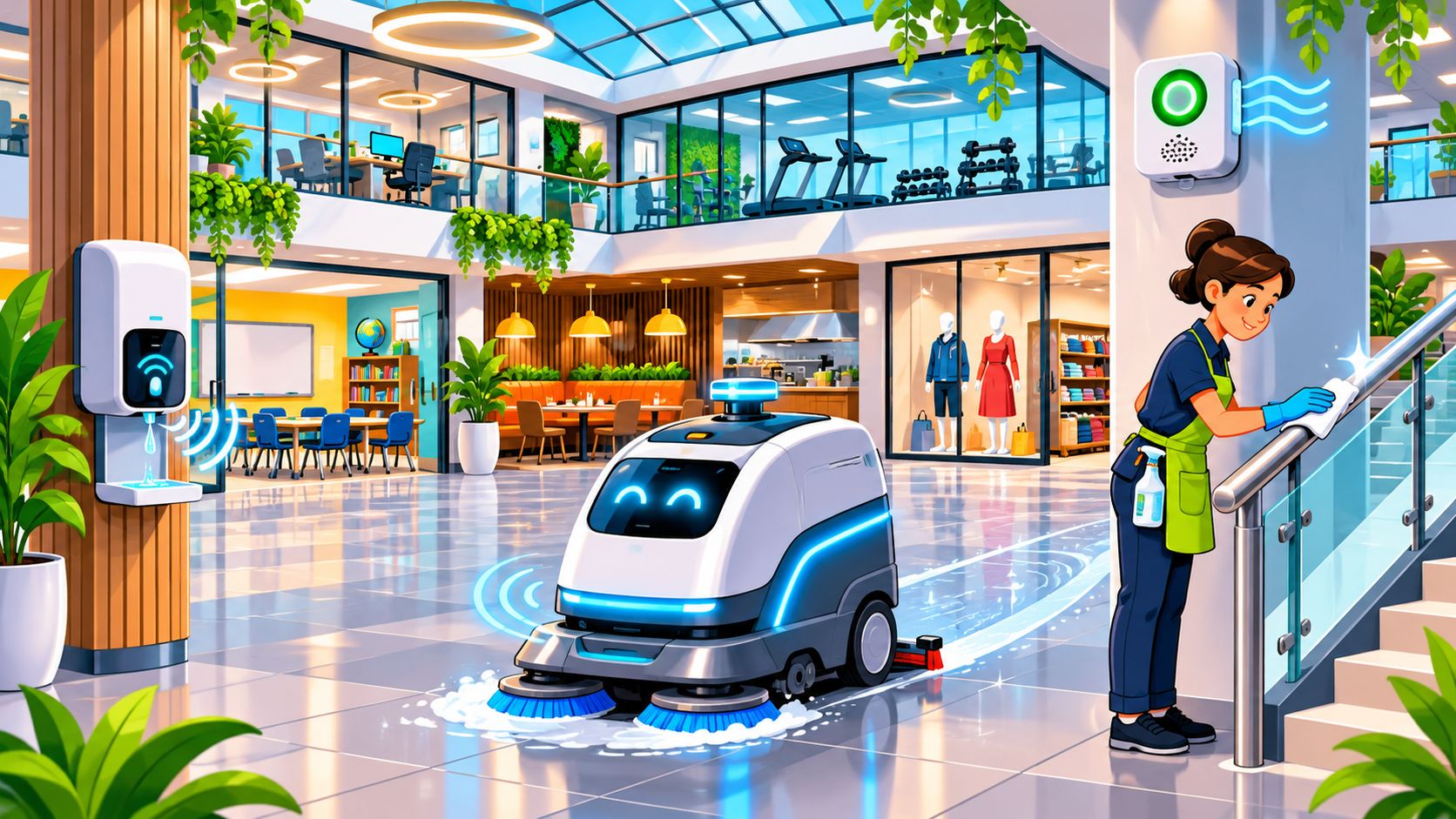
Automated cleaning technologies work best when every task has an owner. A scrubber handles accessible floors. A controlled disinfection system handles its validated treatment area. Dispensers keep supplies available, while staff address touchpoints, exceptions, and inspection findings.
Start by mapping what people touch, not just what machines can reach. Walk the route from entry to exit and record door handles, reception screens, exercise equipment, classroom desks, checkout counters, and restroom fixtures. Note who cleans each surface, which product they use, and how they confirm completion.
Fund the Complete Routine
Compare equipment proposals against the full operating workload. Include charging, maintenance, consumables, software, mapping, supervision, repairs, and downtime coverage. Keep manual tools available for blocked routes and breakdowns.
A useful trial should answer practical questions rather than produce an impressive demonstration:
- Coverage. Which assigned areas were completed, and which required staff intervention?
- Quality. Were surfaces visibly clean, and were disinfection procedures followed?
- Availability. Were wipe stations stocked, accessible, and functioning?
- Labor allocation. Did employees gain time for restrooms, spills, and high-touch work?
Don't confuse a digital completion record with verified disinfection. Visual checks can identify soil and missed areas; fluorescent markers can help assess wiping coverage. ATP results can support cleanliness monitoring, but they aren't proof that a particular pathogen was eliminated.
For customer-facing teams, make cleanliness visible without exaggerating it. Explain where supplies are located, what staff clean, and how customers can participate.
Our sanitation articles at WipesBlog.com translate cleaning and disinfection practices into practical guidance for facility managers and business owners. The strongest starting point remains simple: remove soil, use a suitable product, preserve its contact time, and keep supplies within reach.
Prioritize cleanliness today by assigning your high-touch routes and checking every wipe station. Choose compatible products, train the people using them, and make consistent hygiene part of normal operations.
Leave a Reply