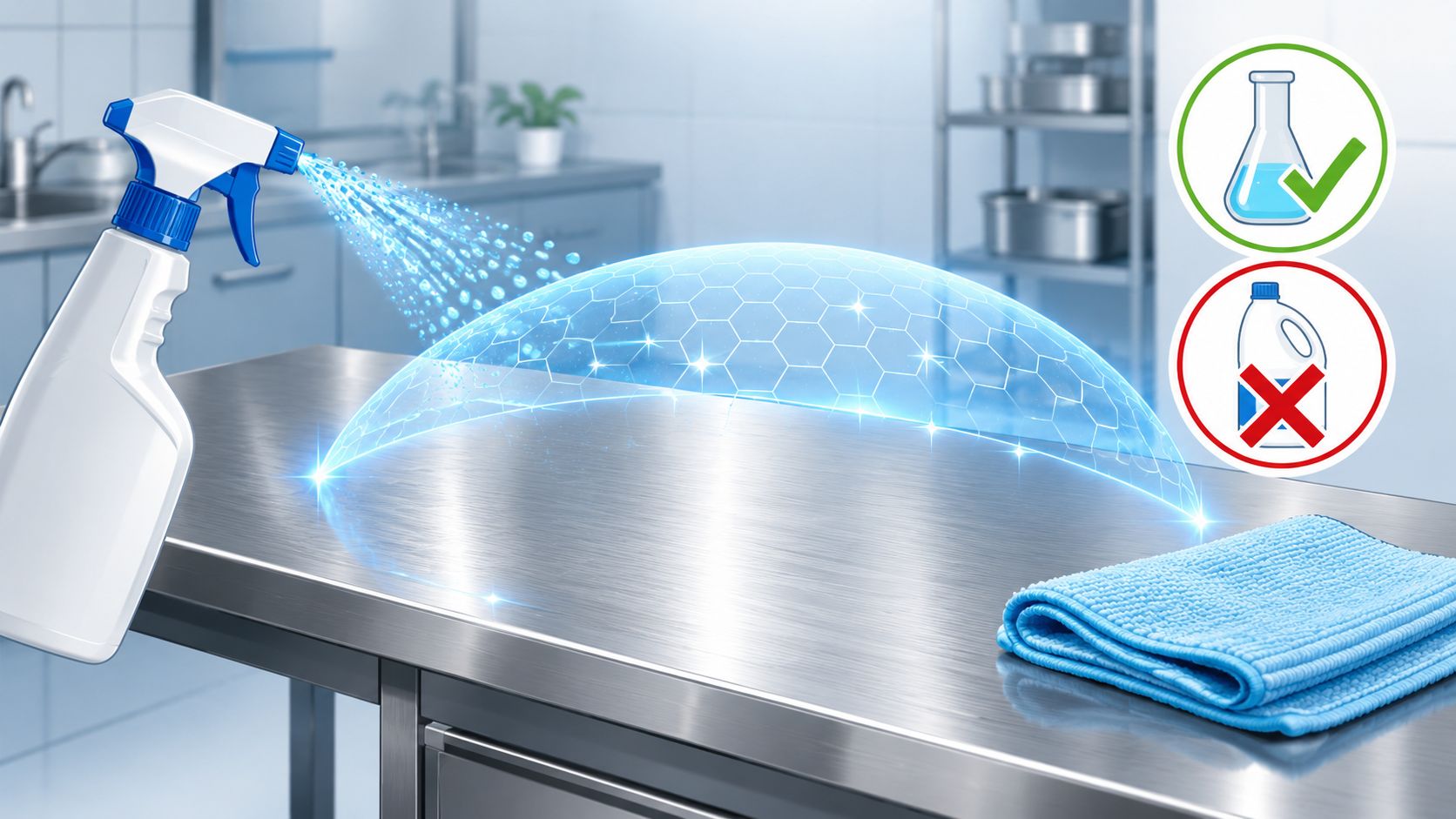
The two best and safest disinfectants for stainless steel are 70% isopropyl alcohol and hydrogen peroxide. 70% isopropyl alcohol kills over 99.9% of common bacteria and viruses within 30 seconds when used properly, while hydrogen peroxide is a strong secondary option that protects the metal's surface when staff follow label contact times.
If you're managing a gym, restaurant, office, school, or retail space, that answer matters more than it seems. Stainless steel is everywhere because it looks clean, holds up under heavy use, and signals professionalism. But plenty of teams damage it while trying to disinfect it. They grab bleach, use the wrong cloth, skip contact time, or treat cleaning and disinfecting like the same step.
That's where smart hygiene programs separate themselves. The best disinfectant for stainless steel doesn't just kill germs. It protects equipment, preserves finish quality, reduces avoidable replacement costs, and supports the kind of visible cleanliness customers notice right away. In many facilities, that also means pairing liquid disinfectants with practical tools like disinfectant wipes, sanitizing wipes, and well-placed wipe stations so staff and guests can act fast on high-touch surfaces.
The Hidden Cost of Using the Wrong Disinfectant
A facility manager installs new stainless steel drinking stations, sink surrounds, and fitness equipment trim. A few months later, the surfaces look older than the building. There are dull patches, spotting, and the first signs of pitting. The team thinks they've been doing the right thing because they've been “disinfecting constantly.”
The problem usually isn't effort. It's product choice.
In commercial spaces, stainless steel gets hit from all sides. Sweat in a fitness center. Food acids in a restaurant. Hand oils in an office breakroom. Splash zones in locker rooms. If staff use harsh chemicals to fight contamination, they can wear down the same surfaces they're trying to protect. Then the business pays twice. Once for hygiene supplies, and again for repairs, refinishing, or early replacement.
What that damage really costs
When stainless steel loses its clean, brushed finish, guests notice. Members at a gym read corrosion as poor maintenance. Restaurant customers associate stained metal with weak food safety. Prospects walking through an office or showroom take those details as signals about the whole operation.
That's why this choice is strategic, not just operational. The right disinfectant supports:
- Asset longevity by protecting stainless surfaces from avoidable chemical damage
- Guest confidence because clean metal reads as well-managed space
- Lower liability exposure when teams use products and protocols that disinfect
- Faster daily execution through tools like commercial disinfecting wipes and refillable stations
Stainless steel is one of the easiest materials to make look expensive, or neglected. The difference is usually your chemical program.
High-quality wipes also play a practical role here. In a gym, gym wipes near cardio equipment help members participate in hygiene between deeper staff cleanings. In offices and schools, antibacterial wipes or broader disinfecting wipe programs make it easier to stay ahead of touchpoints like door hardware, shared appliances, and counters. Convenience matters because the best protocol is the one staff and customers will follow.
Why Stainless Steel Needs Special Care
Stainless steel isn't stainless because it's immune to damage. It stays resistant because it has a thin chromium oxide layer on the surface. Think of that layer as an invisible shield. When you preserve it, the metal keeps its resistance to rust and corrosion. When you strip or scratch it with the wrong chemistry or abrasive tools, the surface gets vulnerable fast.

Cleaning, sanitizing, and disinfecting aren't the same
A lot of confusion starts here. Teams often say they “sanitized” a surface when they only wiped away visible dirt.
Use this distinction in staff training:
- Cleaning removes soil, grease, residue, and debris.
- Sanitizing reduces bacteria to a safer level for certain use cases.
- Disinfecting is the pathogen-kill step, and it only works when the product is used correctly.
On stainless steel, the sequence matters. The standard protocol is a two-step process. Clean first with a neutral detergent or deionized water, then disinfect. Verified guidance notes that failure to follow that protocol can reduce disinfection efficacy by up to 40% because organic matter can shield pathogens from the disinfectant.
Why common advice often goes wrong
One of the most misunderstood products is vinegar. It's useful for removing mineral deposits, but that doesn't make it a disinfectant. As noted in this discussion of disinfecting metal surfaces, vinegar is not EPA-recognized as a disinfectant and cannot clear viruses like SARS-CoV-2 or influenza from metal surfaces, even though many online cleaning tips present it as a complete hygiene solution.
That matters in breakrooms, rental kitchens, gyms, and school sinks. A surface can look polished and still not be disinfected.
Practical rule: If the product removes spots but isn't meant to kill pathogens, you cleaned the surface. You didn't finish the job.
Physical technique matters too
Chemistry is only half the story. Stainless steel also responds to how staff wipe it.
Good practice includes:
- Use microfiber or lint-free cloths instead of abrasive brushes
- Wipe with the grain to reduce visible streaking and surface wear
- Avoid tap water residue where spotting is a problem
- Dry the surface after treatment so minerals and particles don't stay behind
If you're dealing with existing corrosion on marine or outdoor fixtures, this guide on how to remove rust from boat stainless steel is a useful maintenance reference because it helps teams separate restoration from routine disinfection.
The Best Disinfectants for Stainless Steel Surfaces
There isn't one universal product for every building, every workflow, and every surface finish. But there is a clear top tier. If your goal is to disinfect stainless steel without damaging it, two chemistries stand out: 70% isopropyl alcohol and hydrogen peroxide.

70% isopropyl alcohol
This is the benchmark answer for many professional environments. Cleanroom and laboratory standards explicitly recommend 70% isopropyl alcohol for disinfecting stainless steel without damaging the chromium oxide layer. Verified guidance also states that 70% isopropyl alcohol kills over 99.9% of common bacteria and viruses within 30 seconds and should be wiped with a lint-free cloth in the direction of the grain, then followed by rinsing with deionized warm water and drying to prevent spotting, as described in this cleanroom disinfection reference.
Why it works so well comes down to balance. At 70%, the alcohol has enough water content to support protein denaturation and enough dwell time to be effective before flashing off too fast. That's why stronger isn't automatically better.
Best fit:
- medical and lab-adjacent spaces
- high-touch stainless fixtures
- fast-turn environments where residue is a concern
Trade-offs:
- flammability requires careful storage
- some teams dislike the smell
- rapid evaporation can work against you if staff apply too little
Hydrogen peroxide
Hydrogen peroxide is the strongest secondary choice when you want effective disinfection with a stainless-safe profile. Verified guidance states that hydrogen peroxide must be allowed to sit for a minimum contact time of 1 minute before wiping with a microfiber cloth, and that 3% hydrogen peroxide is a strong routine option for stainless steel surfaces in hospitality and healthcare settings, as covered in this hydrogen peroxide sanitizing guide.
Its practical advantage is residue profile. Hydrogen peroxide breaks down into water and oxygen, which makes it attractive in facilities that want a cleaner finish and less chemical linger.
It's a strong option for:
- hospitality kitchens and back-of-house prep areas
- locker rooms and wash stations
- schools, clinics, and customer-facing counters
For a deeper look at where this chemistry fits into a facility program, the breakdown on hydrogen peroxide disinfectants is worth reading.
Where disinfectant wipes fit
Most managers don't want every touchpoint handled with bottles and cloths all day. That's where EPA registered disinfecting wipes and other wipe-based formats can make daily execution easier.
Many disinfecting wipes use quaternary ammonium compounds, often called quats. They're common in commercial hygiene because wipes improve consistency. Staff don't have to guess how much chemical to apply, and members or guests can clean shared touchpoints without hauling spray bottles around. In gyms, that's why fitness wipes, workout wipes, and wipes for gym equipment are so useful around selectorized machines, benches, and bike handles.
The trade-off is discipline. Wipes only disinfect if the surface stays visibly wet for the required contact time on the label. They also need to match the environment. A restaurant has different expectations than a yoga studio or front office.
A practical buying rule is simple:
| Facility need | Better fit |
|---|---|
| Fast flash-off, minimal residue | 70% isopropyl alcohol |
| Mild oxidative disinfection | Hydrogen peroxide |
| Convenient daily touchpoint coverage | Wipe-based disinfectant system |
If you're evaluating supply options for public-facing hygiene stations, Wipes.com is a relevant place to compare wipe formats, dispensers, and commercial-use products for day-to-day deployment.
Damaging Chemicals You Should Never Use on Stainless Steel
Most stainless steel damage in commercial facilities isn't caused by age. It's caused by bad habits that get normalized. A bottle sits in the janitor closet for years, someone calls it “strong,” and it gets used on everything.
That's how expensive surfaces get ruined.

The rogues' gallery
Start with the biggest offender.
Bleach and chlorine-based products
Commercial guidance states that using bleach or chlorine-based products on industrial stainless steel can cause long-term discoloration, pitting, and surface corrosion, and recommends microfiber cloths with mild detergents or citric acid solutions for safe cleaning in this industrial stainless steel cleaning guide.Abrasive brushes and scouring powders
These physically scratch the surface. Once staff rough up the finish, they create tiny holding points for grime and moisture. The metal gets harder to keep clean and starts looking worn even when it's technically sanitized.Ammonia-heavy or harsh mixed chemicals
They may cut through grime, but they're a poor choice for a surface you need to preserve. Mixed-chemical habits also create training problems because staff stop understanding what product belongs on what material.
Why this mistake keeps happening
Teams often confuse “strong smell” with “strong disinfectant.” Or they assume kitchen-safe means stainless-safe. Those aren't the same thing.
Another problem is speed. Bleach is familiar. So are rough pads. In a rushed shift change, people reach for whatever seems fastest. That decision shows up later as dull sink bowls, etched appliance faces, and rusting seams around fixtures.
If a product attacks the finish, it's not helping your hygiene program. It's creating the next maintenance ticket.
What to use instead for routine safe cleaning
For everyday prep before disinfection, stay conservative:
- Microfiber cloths for low-abrasion wiping
- Neutral detergents when you need to remove visible grime
- Citric acid solutions for specific cleaning tasks where appropriate
- Purpose-built wipes for fast high-touch maintenance on shared surfaces
This matters in gyms especially. A member using gym equipment wipes on touchpoints is helping preserve both hygiene and surface appearance. A staff member scrubbing stainless trim with an abrasive pad is doing the opposite.
Your Step-by-Step Disinfection Protocol for Any Facility
The best protocol is simple enough to train, repeat, and audit. If your team can't execute it consistently during busy hours, it won't protect your surfaces or your reputation.

The universal four-step method
Clean
Remove visible dirt, grease, fingerprints, sweat, and residue first. On gym rails or restaurant counters, this step is what clears the way for the disinfectant to reach the surface.Rinse
If your cleaner leaves residue, remove it. Residue can interfere with finish quality and sometimes with disinfectant performance.Disinfect
Apply your approved disinfectant and keep the surface wet long enough to work. For commercial stainless steel disinfection, leading guidance states the surface should remain wet for a 3-minute contact time to effectively kill germs, as specified in this stainless steel disinfection protocol.Dry
Dry with a clean cloth or allow appropriate air drying, depending on the product and use area. In food equipment settings, equipment must be completely dry before storage, and disinfecting products should be used at the manufacturer's recommended concentration to help prevent corrosion, as noted in this food equipment cleaning training reference.
Non-negotiable: If the disinfectant doesn't stay wet for the required contact time, you didn't complete the disinfection step.
High-touch areas to prioritize
Across most facilities, these are the surfaces that deserve wipe-ready access and scheduled attention:
- Hand-contact hardware such as door pulls, push plates, railings, and faucet handles
- Shared equipment controls including treadmill panels, microwave buttons, and POS touchpoints
- Breakroom and lounge surfaces like fridge handles, counters, and sink rims
- Locker room contact points including benches, stall latches, and dispenser fronts
A lot of managers see the best compliance when they pair staff rounds with user-accessible stations. A gym wipe dispenser beside strength zones or a canister of gym equipment cleaning wipes near a studio entrance makes the expected behavior obvious.
Facility-specific suggestions
Gyms and fitness centers
Sweat, skin contact, and rapid member turnover make wipe strategy especially important here. Put fitness center wipes near cardio decks, selectorized equipment, and free-weight zones. Keep yoga mat wipes separate if you run classes and want a specific station for mats and props.
For gyms, the practical rhythm looks like this:
- Members use wipes between sets or after use
- Staff perform scheduled surface disinfection rounds
- Locker room stainless fixtures get extra attention
- Dispensers get checked before peak traffic windows
Offices and schools
Shared kitchens, reception counters, and door hardware are the obvious touchpoints. But don't overlook copy rooms, elevator surrounds, and breakroom sink areas. In these settings, sanitizing wipes are often the bridge between janitorial service windows.
Keep instructions visible and simple. Staff shouldn't have to guess whether a wipe is for monitors, hands, or metal fixtures.
Restaurants and foodservice
Separate routine surface care from food-contact compliance decisions. Stainless fronts, sink rims, prep-adjacent handles, and cooler hardware need safe, repeatable protocols. Managers should train staff to avoid using random degreasers as stand-ins for disinfectants.
Drying also matters more in these environments because lingering moisture around seams and hardware leads to finish issues and sloppy presentation.
Retail and showrooms
Customers touch what they're considering buying. That makes visible wipe access part hygiene measure, part brand signal. Sleek stainless around fitting rooms, counters, demo stations, and beverage areas should look polished, not smeared.
Efficiency hacks that actually work
- Zone your supplies so wipes and cloths are stored where the work happens
- Use color coding to separate restroom, fitness, foodservice, and front-of-house tools
- Train for contact time instead of just “wipe until it looks clean”
- Standardize dispensers so refill ordering is easier and staff know where to restock
Sales angle: Don't sell wipes as a convenience item alone. Sell them as a compliance tool, a surface-protection tool, and a guest-confidence tool.
When clients hesitate on bulk gym wipes or dispenser programs, tie the conversation to what they already care about: cleaner-looking equipment, faster between-use turnover, and fewer complaints about shared surfaces.
For cleaning distributors and reps, the strongest approach is bundling. Don't offer wipes as a standalone line item. Pair commercial disinfecting wipes, dispensers, microfiber cloths, and stainless-safe liquid disinfectants into a simple facility package. That makes the buying decision easier and shifts the conversation from unit price to operating outcome.
Frequently Asked Questions About Stainless Steel Disinfection
Can I make my own disinfectant solution for stainless steel
You can mix cleaning solutions for some maintenance tasks, but for disinfection claims in a commercial setting, stick with products that are designed and labeled for that purpose. Stainless steel is too visible, and liability is too real, to rely on improvised chemistry. If you want wipes, use products intended for surfaces and train staff on contact time.
How often should high-touch stainless surfaces be disinfected
There isn't one universal schedule because traffic patterns drive the answer. A gym entrance rail, locker room sink, or restaurant prep-adjacent handle needs far more attention than a low-use back-office cabinet face. In practice, disinfect after known high-contact periods, during routine rounds, and anytime visible soil appears.
Are wipes enough on their own
Sometimes yes, sometimes no. Wipes are excellent for fast response and daily upkeep, especially on high-touch stainless touchpoints. But if the surface is visibly dirty, staff should clean first. That's why wipes to disinfect gym equipment work best when members are handling light sweat and touch residue, while staff still perform deeper scheduled cleaning.
What about quats in wipe products
They're common in commercial wipe systems and often make sense when you need simple deployment across many touchpoints. The key is choosing the right product for the setting and using it correctly. If you want a technical primer, this overview of quaternary ammonium compounds is a solid reference.
What should I remember most
Keep it simple:
- Choose stainless-safe disinfectants
- Clean before disinfecting
- Honor contact time
- Avoid bleach, chlorine, and abrasives
- Use wipes where speed and consistency matter
A clean-looking facility earns trust. A properly disinfected one protects people and protects the investment you've already made in stainless steel surfaces.
If you want a stronger daily routine, start by tightening your high-touch schedule, standardizing staff technique, and placing the right disinfectant wipes where people will actually use them. For more practical cleaning and sanitizing tips, plus guidance on wipe programs for gyms, offices, and public facilities, explore the resources at WipesBlog.com.
Leave a Reply