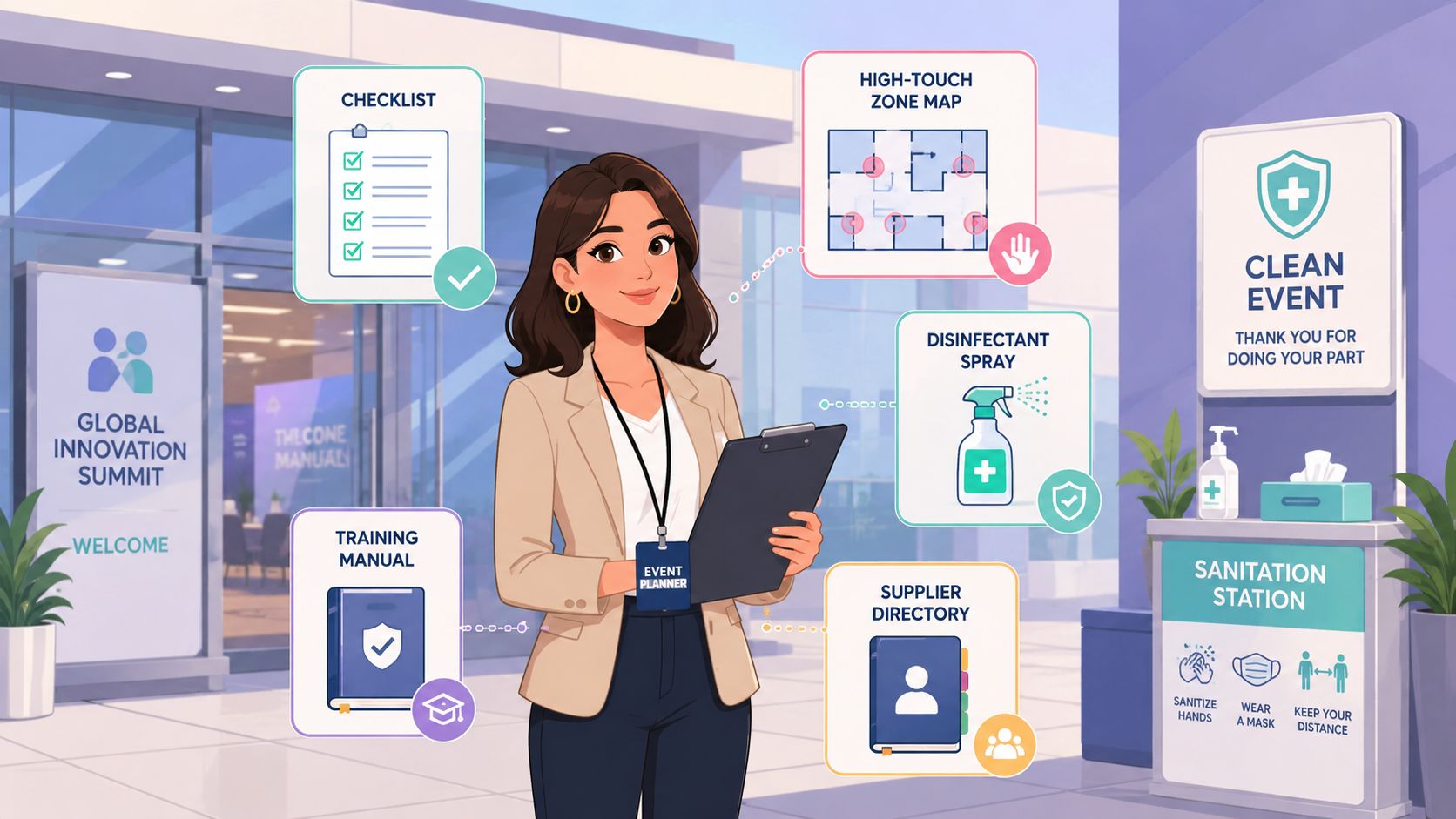
Doors open in twenty minutes. Registration is forming a line, a breakout room still needs a reset, and guests are already judging the space before the keynote starts. They notice the check-in counters, the restroom condition, the table setup, and whether hand-cleaning supplies are visible and stocked. Those details shape confidence fast.
Event planning tools now need to do more than manage invites and schedules. The useful ones help teams control traffic flow, reduce crowding at choke points, coordinate room turns, document safety steps, and communicate hygiene expectations clearly. Software for registration, floor plans, and attendee engagement still matters. So does practical sanitation guidance that shows staff where to place wipes, how to cover high-touch surfaces, and how to keep cleaning visible without making the event feel clinical.
That is the lens for this list. It looks at standard event planner resources through day-of operations, guest trust, and hygiene control. A strong platform is not just the one with the most features. It is the one that helps your team run a clean, organized event without losing speed at check-in, during session changes, or through the final room flip.
If you're tightening your pre-event process and trying to plan for smooth event entry, these are the event planner resources worth using now.
1. WipesBlog.com

WipesBlog.com is the most practical resource on this list if your biggest concern is execution on the floor. Not branding. Not trend pieces. Execution.
A lot of event planner resources tell you cleanliness matters. WipesBlog gets into the harder question, which is how to run sanitation like an operating system. That includes where teams miss high-touch zones, how to standardize wipe placement, how to think about dilution, labeling, restocking, and what visible cleanliness does for guest trust in public-facing facilities.
Why it stands out
What makes it useful is that it's written with facility logic, not generic content marketing language. That matters for event planners working in arenas, conference centers, gyms, temporary venues, festival grounds, and mixed-use public spaces. You need advice that survives a busy load-in, a rushed room flip, and a crowd that touches everything.
The site is also stronger than most hygiene content because it connects sanitation to business outcomes. It treats cleaning as part of brand protection, labor efficiency, liability reduction, and guest perception. That's the right frame for modern events.
Practical rule: If sanitation only exists in your post-event cleanup plan, you waited too long.
A strong event cleanliness plan needs visible supplies and repeatable routines. WipesBlog is especially good for that operational layer.
- SOP-focused guidance: Articles tend to break work into steps teams can assign, train, and audit.
- Facility-specific thinking: The advice maps well to airports, fitness spaces, venues, rentals, and other public environments where touchpoints change by zone.
- Useful buying context: It helps planners think through product fit, dispenser placement, and usage patterns instead of buying wipes as an afterthought.
Where it fits in a real event workflow
Use WipesBlog early, not after your venue walk-through. It's most valuable when you're building a sanitation plan into staffing, procurement, and room setup instead of reacting once operations are already locked.
That's also where hidden gaps usually show up. Accessibility planning often needs more than a simple checklist. Cornell's guidance notes that disability access costs should be built into the event budget, and deeper operational planning can include low-stimulation rooms, AV or ITS coordination, remote participation, and wayfinding across multiple entrances, as discussed in this accessibility-focused event planning guidance. Hygiene planning works the same way. It needs budget, layout, supplies, and staff ownership.
WipesBlog won't replace in-person EHS training or venue-specific compliance review. But as a field-ready playbook, it's one of the best event planner resources available for teams that want sanitation to look organized, credible, and guest-facing.
2. Cvent
Registration opens at 8:00 a.m. By 8:20, the line is backing into the lobby, two badge printers are lagging, and guests are already judging whether the event feels organized. Cvent earns its place in that moment. It gives planners one system to run registration, event pages, email, mobile app functions, on-site check-in, badge printing, session management, and reporting without patching together separate tools.
That matters for hygiene planning because cleanliness is not a side task once doors open. It shows up in arrival timing, traffic flow, staffing, message consistency, and how quickly a team can respond when a check-in counter, kiosk, or shared device needs attention. A platform that keeps guest communications and on-site operations connected helps teams maintain both sanitation standards and guest confidence.
Best use case
Cvent fits larger conferences, association meetings, corporate programs, and multi-day events where registration volume and schedule complexity create operational risk. It is a strong choice when planners need the front-end guest experience to match back-of-house discipline.
Used well, Cvent supports hygiene operations in practical ways:
- Pre-event communication: Send arrival instructions that tell guests what to expect at entry, where sanitation stations will be located, and how health-related updates will be handled.
- Check-in control: Faster badge pickup reduces crowding around counters and kiosks, which makes high-touch surfaces easier to maintain on schedule.
- Session and traffic management: Cleaner attendee flow helps teams keep restrooms, entrances, and shared equipment from getting overwhelmed at the same time.
- Post-event follow-up: Surveys and event reporting can help identify whether guests felt the venue was clean, orderly, and well managed.
I also like Cvent when an event has multiple entrances or staggered programming. Those conditions create sanitation pressure points. Guests bunch up, touch the same surfaces, and form opinions fast. Clear communications and better on-site coordination do not replace cleaning protocols, but they make those protocols visible.
For planners working outdoor or seasonal programs with heavier foot traffic swings, pair the software side with a stronger venue-readiness plan. This festival cleanliness guide for event venues and outdoor concert spaces covers the physical side of that job.
The trade-off is real. Cvent can be more platform than a small team needs, and setup takes time. If the event is simple, the system may feel heavier than necessary. For high-attendance programs where guest trust depends on orderly entry, clean flow, and consistent communication, that extra structure usually pays for itself.
3. Eventbrite
Eventbrite is the fast-launch option. If Cvent is the enterprise operations stack, Eventbrite is the practical self-serve tool for workshops, classes, public events, community programs, and smaller festivals where speed matters.
Its value is simplicity. You can get an event live quickly, manage ticketing without much setup, and support contactless check-in with less friction for both organizers and guests. That's helpful when your team is small and you'd rather spend time on floor readiness, wipe placement, restroom checks, and vendor coordination than on software configuration.
Where it works well
Eventbrite shines when you need attendance momentum and straightforward on-site control. Public-facing events benefit from its marketplace exposure, and the mobile organizer tools are useful when staff are spread across entry points.
For sanitation planning, it pairs well with visible operational habits:
- Use registration emails to tell guests where sanitation stations will be located.
- Train entry staff to wipe down counters, tablets, and shared pens on a set rhythm.
- Keep check-in touchpoints minimal so the line moves and surfaces stay easier to maintain.
For outdoor and seasonal events, I'd pair Eventbrite's speed with a more deliberate venue cleanliness plan. This festival cleanliness guide for event venues and outdoor concert spaces is a useful complement because it focuses on the physical environment attendees judge.
Eventbrite's main limitation is customization. It won't give you the same enterprise depth, workflow control, or integration breadth as a full event management suite. Service and payment processing fees also matter on paid events.
Still, for lean teams, it's one of the better event planner resources because it leaves you more attention for the things software can't clean up for you.
4. Whova
Whova earns its place when attendee communication is part of the operating plan, not an afterthought. A full lobby, a session room change, and a line forming at registration can turn a clean venue into a messy one fast if guests do not know where to go. Whova helps planners push instructions in real time, which supports cleaner traffic flow, steadier check-in, and more visible control.
That matters for hygiene because guest confidence is built through signals. People notice whether your team communicates refill locations, directs them away from crowded touchpoints, and updates them before confusion spreads. The app's announcements, agenda updates, exhibitor messaging, and networking features give planners a practical way to connect event tech with on-site sanitation habits.
Where Whova helps most
Whova is a strong fit for conferences, association meetings, and multi-session programs where attendees rely on the event app throughout the day. Used well, it reduces preventable clustering by sending room updates, schedule changes, and service reminders before staff have to manage the problem in person.
I've found it most useful when planners treat it as an operations channel, not just an engagement tool. Use it to direct guests to lower-traffic entrances, remind exhibitors about shared-surface cleaning expectations, and point attendees toward hygiene stations and restroom alternatives when one area gets overloaded.
For planners who need help visualizing where those pressure points are likely to form, Room Sketch 3D's ultimate guide is a useful planning reference.
Whova's trade-off is straightforward. Pricing is custom-quoted, so side-by-side budget comparison takes more work, and the platform does not replace venue logistics. It can broadcast a sanitation plan clearly, but your team still has to decide placement, replenishment cycles, and who owns each check. Used that way, Whova becomes more than an event app. It helps turn health protocols into visible, organized guest experience.
5. Cvent Event Diagramming (formerly Social Tables)
Cvent Event Diagramming is one of the most underrated safety and sanitation tools available to planners because room diagrams aren't just about tables and chairs. They're about movement.
If you treat floor plans as décor documents, you'll miss their real value. They're operational maps. You can use them to identify congestion points, registration queues, beverage stations, restroom approaches, cleaning closet access, service corridors, and the best locations for visible sanitation supplies.
Use it for traffic, not just aesthetics
The strongest planners use diagramming tools to reduce avoidable touch and crowding. That means wider queue space, cleaner check-in geometry, smarter buffet layouts, and clear paths for custodial staff to service high-use areas without fighting through guests.
A good floor plan should answer questions like these:
- Where do guests pause and touch surfaces most often
- Which doors need wipe stations nearby
- How will staff restock supplies without crossing the main attendee flow
- Where can a crowded room release into open circulation instead of another bottleneck
For layout thinking, Room Sketch 3D's ultimate guide is also useful as a visual planning reference.
Cvent Event Diagramming is strong because it's collaborative. Venues, planners, caterers, and operations leads can all react to the same plan. That cuts down on last-minute assumptions, which is where sanitation often gets forgotten. Someone assumes engineering will place dispensers. Someone else assumes janitorial owns it. Event day arrives and there's nothing at the side entrance.
The main drawback is scope. This is a layout tool, not a complete event management system. It's best when paired with registration and communication software elsewhere in your stack.
6. Stova
Stova fits teams that run many events across the year and need the operation to feel controlled every time. Its platform covers registration, event websites, mobile apps, virtual and hybrid delivery, on-demand badging, and portfolio oversight. The practical value is consistency. That matters when guest expectations around cleanliness and visible readiness carry from one event to the next.
A common failure point in multi-event programs is variation. One venue has clear pre-arrival guidance, touchpoints placed where guests need them, and fast badge pickup. The next event uses a different process, lines build, supplies are hidden, and staff improvise. Guests notice that kind of inconsistency right away. So do internal stakeholders.
Stova helps larger teams standardize the parts of the attendee journey that affect safety, guest confidence, and labor efficiency. Instead of rebuilding the process for every show, planners can set a repeatable operating model and adjust for venue size, audience type, or local requirements.
That can include:
- Pre-event attendee messaging about arrival procedures, hygiene expectations, and what guests will see on-site
- Check-in flows designed to reduce crowding, limit unnecessary contact, and keep the front entrance moving
- Badge printing and access control that support orderly arrivals instead of clustered pickup points
- Post-event feedback collection that surfaces complaints about cleanliness, congestion, or unclear health procedures
The hygiene value is not that Stova cleans the event. It gives planners one system to document, repeat, and audit the guest-facing processes that shape whether an event feels safe and well run.
There is a trade-off. Stova asks for process discipline. Teams need naming standards, template control, and someone who owns how health and operations protocols get built into each event setup. Smaller organizations or planners running a handful of simple events may find that overhead hard to justify. But for enterprises, associations, and agencies managing a broad calendar, that structure often prevents the small operational misses that erode trust.
Used well, Stova turns sanitation planning from a one-off checklist into part of the event program itself. That is a meaningful difference if the goal is repeatable guest confidence, cleaner execution, and fewer surprises on show day.
7. zkipster
zkipster is a specialist tool, and that's exactly why some planners love it. It focuses on guest lists, invitation flows, seating, VIP management, and polished check-in for invitation-only events where the front door experience matters a lot.
That front door is also where hygiene confidence gets set. For private dinners, galas, donor events, brand launches, and executive receptions, guests notice every visible detail. A clean check-in desk, tidy device handling, fresh wipes within reach, and a staff team that looks prepared all reinforce the same message. This event is controlled.
Best fit
zkipster is best when hospitality is high-touch and guest relationships are central. It handles photos, relationship records, dynamic seating, QR or barcode check-in, wallet passes, and badge printing. That gives hosts better command of arrivals and table management.
For sanitation, its value is indirect but real:
- Rapid check-in shortens lines and reduces crowding around podiums.
- Tablet-based seating tools reduce paper shuffling and desk clutter.
- Guest visibility helps staff solve issues quickly instead of creating front-entry backups.
The limitation is pricing structure and specialization. It's subscription-based, and it isn't trying to be a full conference management platform. If you need broad registration marketing, deep analytics, or a full content hub, you'll likely need another system around it.
But for premium events where presentation matters, zkipster earns its place among event planner resources because it helps the clean, organized front-of-house experience feel deliberate.
8. Event Safety Alliance

Event Safety Alliance gives planners something software cannot. It strengthens operating judgment before the first guest arrives.
That matters most when the event looks polished on paper but the field plan is thin. A registration platform can process names and badges. It cannot decide who owns restroom inspection logs during peak traffic, how often high-touch surfaces get reset, or what staff should do when a guest raises a health concern at the information desk. ESA helps teams ask those questions early, assign responsibility, and document the answer.
ESA focuses on live-event safety guidance, training, and industry collaboration. For planners, the value is practical. It pushes sanitation out of the janitorial bucket and into the event operations plan, where it belongs alongside crowd flow, emergency procedures, staff communication, and service recovery.
That shift improves guest confidence.
Guests rarely read a written cleaning protocol, but they notice whether the plan is visible and controlled. Refilled sanitation stations, clean service points, stocked restrooms, and staff who know the response process all signal that the event is being run with discipline. Teams that want a stronger baseline should align hygiene routines with broader cleaning of facilities standards and operating practices, then build those checks into pre-open, live-event, and closeout procedures.
A broader event-planning overview from Events.com on operational safeguards and planning risks reinforces the same lesson. Sanitation works best when it is treated as part of risk management, staffing, documentation, and communication, not as an afterthought delegated at load-in.
ESA does have limits. It will not run registration, seating, or badge printing. Its role is different. Use software to manage attendee data and logistics. Use ESA to pressure-test the operating plan so hygiene standards hold up under real guest volume, real staffing constraints, and real-time disruptions.
9. Meeting Professionals International (MPI)

A registration platform can collect names and print badges. It cannot teach a planner how to set sanitation expectations that staff will follow under pressure. Meeting Professionals International fills that gap with education, peer access, and chapter-level conversations that sharpen operational judgment.
That matters because hygiene standards are now part of the attendee experience, not a back-of-house detail. Guests notice whether check-in counters stay clean, restrooms are serviced on schedule, food areas are controlled, and staff can answer basic cleanliness questions without hesitation. MPI helps planners learn how peers are handling those details in hotels, convention centers, campuses, and corporate venues.
What MPI does well
MPI is strongest as a professional network with a practical use case. It gives planners a place to compare notes on staffing models, vendor expectations, communication practices, and risk controls that software alone does not solve. For sanitation planning, that peer input is valuable because the trade-offs are real. A venue can add more hygiene checkpoints, but if the placement slows entry or creates congestion, guest confidence can drop instead of improve.
I've seen planners get the most value from MPI when they use it to pressure-test operating assumptions. How often should high-touch areas be checked during a reception. Who owns restroom status updates during a staffing gap. What should appear in pre-event vendor briefings so cleaning standards stay consistent across security, catering, and facilities. Those are the conversations that make a hygiene plan usable on event day.
For teams building that baseline, this guide to commercial facility cleaning standards and operating practices is a useful companion. It helps connect event-specific decisions to broader facility expectations, which is where guest trust is usually won or lost.
MPI also has limits. Membership only pays off if planners attend chapter events, use the education, and stay active in the community. Chapter strength varies by market, so the experience is not identical everywhere.
Still, among event planner resources, MPI stands out for planners who want better judgment around safety, cleanliness, and execution, not just another system to configure.
10. Skift Meetings

Skift Meetings is the resource I'd use to stay current. Not for setup. Not for guest list management. For perspective.
Planners need that because tools age quickly, but attendee expectations shift even faster. Skift Meetings helps you track conversations around design, technology, operations, business travel, and evolving event norms so your sanitation plan doesn't feel stuck in a past playbook.
Why trend awareness matters
AI is one reason this matters. Market tracking from Market.us reported that about 70% of event planners are incorporating AI for tasks such as registration and attendee engagement, with AI lowering planning costs by up to 30% and improving attendee satisfaction by 20% through personalization. Even if you're cautious about those claims in practice, the direction is clear. Planners are using smarter tooling to manage communication and attendee flow.
Skift Meetings is useful for interpreting shifts like that without immediately buying into every product pitch. It helps planners think through questions such as:
- Will AI-driven messaging improve safety communication
- Are self-service workflows making on-site environments cleaner or just less staffed
- How are other teams balancing convenience with guest assurance
Follow trend reporting to sharpen decisions, not to copy every new workflow.
The limitation is obvious. It's a journalism and research resource, not an operating system. Some reports sit behind paid access. But for planners who want to make cleaner, safer events without falling behind, it's one of the smartest event planner resources to keep in the mix.
Top 10 Event Planner Resources Comparison
| Product | Core features | ★ Quality | 💰 Pricing / Value | 👥 Target audience | ✨ Unique selling points |
|---|---|---|---|---|---|
| WipesBlog.com 🏆 | SOPs, checklists, dilution math, GHS/SDS guidance, deployment advice | ★★★★★ Practical & evidence‑based | 💰 Free expert content; no procurement services | 👥 Facility managers, event planners, hospitality ops | ✨ Field‑ready templates, compliance+ROI focus; vendor‑agnostic playbook 🏆 |
| Cvent | End‑to‑end EMS: registration, apps, on‑site, analytics, integrations | ★★★★☆ Enterprise reliability | 💰 Custom enterprise pricing | 👥 Large conferences, associations, enterprises | ✨ Deep integrations, vendor ecosystem, professional services |
| Eventbrite | Self‑serve ticketing, marketplace, promo tools, mobile check‑in | ★★★★☆ Fast launch & reach | 💰 Free for free events; fees on paid tickets | 👥 Workshops, festivals, community events | ✨ Marketplace distribution + rapid setup |
| Whova | Registration + branded mobile app, networking, on‑site check‑in | ★★★★☆ Strong engagement tools | 💰 Custom quoted (organizer dashboard) | 👥 Associations, conferences, educational events | ✨ Community boards, attendee networking; clear on‑site comms |
| Cvent Event Diagramming (Social Tables) | 2D/3D floor plans, seating, venue library, collaboration | ★★★★☆ Accurate room‑sets & sharing | 💰 Tiered paid plans; pro plan/services | 👥 Venues, operations teams, planners | ✨ Scaled floor plans to map seating & sanitation stations |
| Stova | Registration, branded apps, NFC badging, portfolio management | ★★★★☆ Robust for multi‑event programs | 💰 Custom (often premium) | 👥 Organizations running frequent/portfolio events | ✨ Series management + on‑demand badging (NFC) |
| zkipster | Guest lists, dynamic seating, QR/barcode rapid check‑in | ★★★★☆ Premium VIP experience | 💰 Subscription (no pay‑per‑event) | 👥 Invitation‑only & high‑touch hospitality events | ✨ Polished check‑in & tablet seating tools |
| Event Safety Alliance (ESA) | Safety guidance, webinars, training, resource library | ★★★★☆ Credible nonprofit guidance | 💰 Many free resources; member benefits via dues | 👥 Production crews, safety managers, planners | ✨ Operations‑level safety playbooks for visible sanitation |
| Meeting Professionals International (MPI) | Chapters, education, CMP prep, industry research | ★★★★☆ Network & credentialing value | 💰 Annual membership dues; chapter variance | 👥 Meeting & event professionals seeking PD | ✨ Certification prep, local chapter networking |
| Skift Meetings | Daily news, research, webinars, trend reports | ★★★★☆ Timely industry insights | 💰 Freemium; paid reports/subscriptions | 👥 Planners, execs, researchers benchmarking trends | ✨ Vendor‑neutral trend analysis & playbooks |
Make Cleanliness Your Signature
The strongest events don't feel sterile. They feel controlled, cared for, and easy to trust. That comes from planning cleanliness as part of operations, not as an invisible support task that someone handles in the background.
The resources above work best when you use them together. Software platforms like Cvent, Eventbrite, Whova, Stova, and zkipster help you control registration, communication, and entry flow. Diagramming tools help you place people and supplies intelligently. Organizations like ESA and MPI help you strengthen judgment. Trade resources like Skift Meetings help you stay current. Practical sanitation guidance from WipesBlog helps you turn all of that into repeatable action inside the venue.
That combination matters because event tech is getting bigger and more central to planning. Grand View Research estimated the event management software market at USD 8.40 billion in 2024 and projected it to reach USD 17.33 billion by 2030 at a 13.2% CAGR from 2025 to 2030. Whatever platform mix you use, the direction is clear. More event operations are running through software, and that creates a chance to make sanitation planning more visible, measurable, and consistent.
A few practical habits make the biggest difference:
- Stock high-touch zones first: Registration counters, shared tablets, podiums, door handles, elevator buttons, buffet utensils, restroom touchpoints, and breakroom surfaces deserve the most attention.
- Make wipes visible: Guests trust what they can see. Put disinfectant wipes where attendees and staff naturally pause.
- Assign cleaning ownership by zone: Don't leave sanitation to “the team.” Name who owns the lobby, check-in, green room, breakout rooms, and restrooms.
- Use communication tools well: Registration emails, event apps, and on-site signage should reinforce where supplies are located and what guests can expect.
- Treat turnover as a cleaning event: Room resets are the easiest time to wipe high-touch surfaces before the next wave of attendees enters.
For business owners, janitorial teams, venue operators, and planners, that same logic applies beyond events. Offices, gyms, schools, restaurants, and retail spaces all benefit when disinfection supplies are easy to reach and easy to use. Good wipes save time, support better habits, and make daily hygiene more consistent for staff and visitors.
Cleanliness is one of the few event investments every attendee notices, even when they never mention it. Build it into your workflow, keep disinfectant wipes close to the action, and use a practical standard you can repeat event after event. If you want a helpful benchmark for inspections and process follow-through, review this 2026 quality control checklist.
Prioritize visible cleanliness, tighten your sanitation routine, and make disinfectant wipes part of your everyday event setup or facility offering. A safer space is easier to trust, and that trust carries the whole event.
Leave a Reply