A guest walks into a gym and notices a sticky treadmill handle before noticing the new equipment. An office employee touches a shared keyboard after a colleague calls in sick. A restaurant manager sees a restroom that looked clean at opening, then watches the standard unravel as the shift gets busy. In each case, the problem isn't a lack of effort. The problem is a sanitation routine that wasn't designed to remain reliable under pressure.
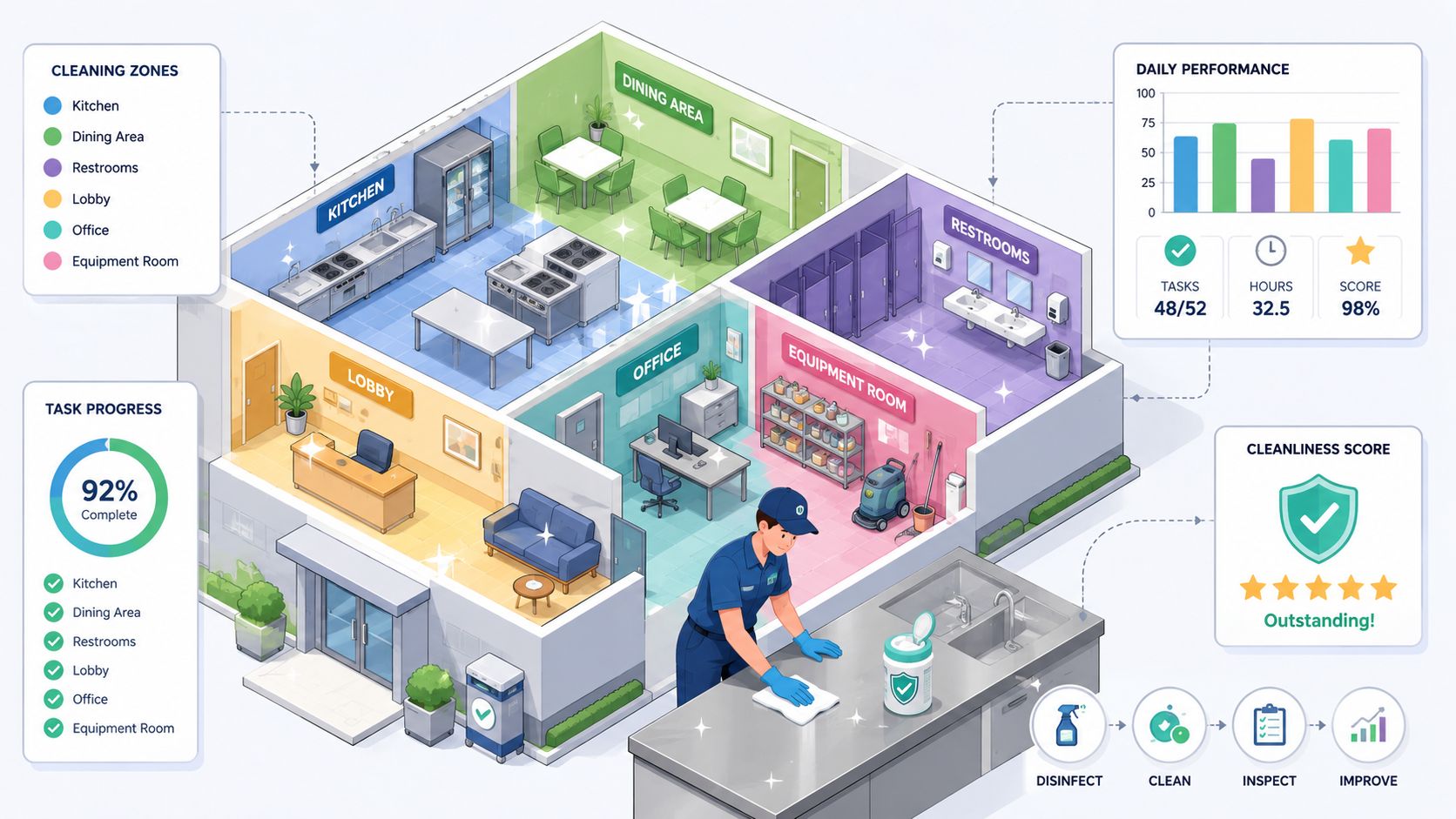
That's where operational excellence becomes practical. It means turning cleaning from an informal task into a managed system with clear ownership, repeatable procedures, appropriate products, and visible verification. Disinfectant wipes can support that system because they place a ready-to-use tool close to the surface that needs attention. Used correctly, they can help teams respond quickly without skipping the steps that make disinfection effective.
When Cleanliness Becomes the Whole Game
A facility manager rarely sees sanitation failure arrive all at once. It starts with a missed wipe-down, an unfilled dispenser, a cleaner covering an unfamiliar zone, or a supervisor assuming someone else completed the round. Then guest traffic rises, staff availability changes, and a health concern puts every routine under scrutiny.
The manager is left asking uncomfortable questions. Which surfaces were cleaned? Which were disinfected? Who owned the lobby, the equipment floor, or the restrooms? Did the product remain wet for the required contact time, or did someone wipe it dry immediately?
Those questions reveal the difference between hoping a facility stays clean and knowing it will. A reliable sanitation program doesn't depend on one experienced employee remembering every task. It gives each person a defined zone, a short standard, the right supplies, and a way to report exceptions before guests discover them.

Cleanliness is a visible operating promise
Customers judge cleanliness through small signals. A dry wipe station, a clean door handle, an orderly restroom, and equipment without visible residue tell visitors that the facility is being managed. The reverse is also true. A neglected touchpoint can make the entire operation feel uncertain, even when less visible areas are clean.
That perception matters across gyms, offices, schools, restaurants, retail stores, airports, venues, rentals, and dealerships. In public environments, customers often decide whether they trust the facility before speaking with an employee.
Practical rule: If a guest can touch it, see it, or smell it, assign it to a routine rather than leaving it to chance.
Operational excellence doesn't mean making every task complicated. It means simplifying the work so that a busy team can perform it consistently. A gym may place a gym wipe dispenser beside each equipment cluster. An office may stock desk-side disinfectant wipes near shared workstations. A retail store may add fitting-room handles and checkout counters to a visible cleaning round.
The competitive advantage comes from repeatability. A facility that maintains sanitation during peak traffic earns more confidence than one that looks clean only during quiet periods. The right products matter, but they work best inside a system built around frequency, ownership, and verification.
What Operational Excellence Means for Sanitation
A facility can have diligent cleaners and still produce uneven results. One shift wipes door handles every hour, another misses them during peak traffic. Operational excellence closes that gap by designing cleaning work so the standard remains clear, repeatable, and visible.
In sanitation, the discipline combines standardized routines, consistent execution, and continuous improvement. The outcome should not depend on memory, personal preference, or whether a manager happens to be nearby. Before a facility adds dashboards or automation, it needs defined zones, supplies, methods, timing, and inspection points.
The idea has roots in structured continuous-improvement systems. Modern practice commonly traces back to Seiichi Nakajima's Total Productive Maintenance work in the 1980s. OEE, or Overall Equipment Effectiveness, emerged from that TPM framework as a way to measure improvement progress. The familiar 85% world-class OEE benchmark comes from multiplying 90% availability, 95% performance, and 99% quality. For teams interested in the history, the principles of Total Productive Maintenance and Overall Equipment Effectiveness explain why that benchmark became influential across operations.
Sanitation teams will not calculate equipment effectiveness exactly as factories do. They can apply the same questions to cleaning zones: Was the area available for service? Was the assigned routine completed at the expected pace? Did the work meet the defined quality standard?

Three pillars for a dependable program
Structured processes specify what happens, where it happens, and which product is appropriate. Each process should identify high-touch surfaces, preparation steps, wiping technique, contact time, disposal, and escalation procedures.
Consistent execution puts the process into daily practice. A checklist, zone board, digital task record, or supervisor walk can confirm that the work occurred and that the surface met inspection requirements.
Continuous improvement converts recurring failures into design information. If employees repeatedly miss a door handle, examine the supply-cart location, zone boundary, traffic pattern, or schedule before blaming individual effort.
The same operating logic extends beyond sanitation. Teams reviewing modern operations strategies for restaurants can connect front-of-house service, back-of-house controls, staffing, and routine verification.
Technology supports this system after the work is defined. A dashboard can display overdue tasks, while automation can make patterns easier to review. Neither can determine whether the checklist covers the right surfaces or whether employees understand the product label. Process discipline comes first. Technology should make a sound routine easier to see and manage.
The Business Impact of Sanitation Excellence
Cleanliness affects the customer experience before a customer evaluates the service itself. A guest entering a gym may notice the condition of the equipment handles, locker-room fixtures, and water fountain. An office visitor may touch the reception counter or restroom faucet. A shopper may judge a store by the checkout area and fitting-room surfaces.
These observations create an immediate impression of management quality. Visible sanitation signals that employees pay attention to details that customers can't always inspect. A facility that ignores obvious touchpoints can make visitors question less visible controls as well.
Trust begins with what people can see
A clean-looking environment doesn't replace proper disinfection, but visible routine supports confidence. Wipes placed at equipment stations show customers that the operator expects shared surfaces to be addressed. A staff member completing a defined cleaning round makes the standard observable rather than theoretical.
That visibility can influence whether people return, recommend the facility, or raise a complaint. A fitness center with residue on weight benches and handles may lose trust even if the equipment is mechanically sound. A school with neglected restroom fixtures can create concern among families and staff. An airport with sticky gate seats can make travelers remember the facility for the wrong reason.
Sanitation also protects the organization from avoidable operational confusion. A documented program can show which areas were assigned, when tasks were completed, what product was used, and which issues required escalation. Documentation isn't a substitute for good work, but it helps managers identify patterns and respond consistently.
The cost of an informal routine
An informal routine creates several forms of exposure:
- Reputation exposure: Customers may report visible hygiene problems through reviews or direct complaints.
- Service exposure: Employees stop serving guests to handle preventable messes, creating delays and frustration.
- Compliance exposure: Teams may use a product incorrectly or fail to follow label directions.
- People exposure: Staff may face unnecessary confusion when responsibilities change between shifts.
The business case for wipes is therefore broader than convenience. A ready-to-use wipe can reduce setup friction for small, frequent tasks, especially when the container is positioned near the relevant zone. The value comes from pairing access with a clear standard. If the team doesn't know which surfaces to target or how long the surface must remain wet, extra product won't repair the process.
Sanitation excellence protects trust through ordinary actions repeated well. It helps a facility present the same standard during opening, peak traffic, shift changes, and closing. That consistency is the operating asset.
Frameworks and KPIs That Make Sanitation Measurable
A sanitation program becomes manageable when a facility manager can answer four questions: what must be cleaned, how often, who owns it, and how do we know it passed? Begin with the building, not the software. Walk each area, divide it into zones, and mark the surfaces people touch repeatedly. A dashboard can display performance, but it cannot define a missed surface or correct an unclear assignment.
CDC guidance says facilities should select an EPA-registered disinfecting product for the specific harmful germ and keep the surface wet for the product's full labeled contact time. CDC's facility cleaning and disinfection guidance should shape product selection, written procedures, and staff training.
Build the zone map
Divide the property into practical areas, such as reception, equipment floors, locker rooms, restrooms, classrooms, dining areas, fitting rooms, and staff spaces. Assign a named owner for each zone during each operating period. Ownership does not require one person to perform every task. It means one person confirms completion, records the result, and escalates any gap.
Create the priority list from actual contact patterns. Tables, doorknobs, light switches, countertops, handles, desks, phones, keyboards, toilets, faucets, and sinks provide a useful starting point. The CDC surface list can help managers check that common touchpoints are represented before adding surfaces unique to the facility.
| High-Touch Surface | Where It Appears | Recommended Wipe Use |
|---|---|---|
| Handles and doorknobs | Entrances, offices, locker rooms, restrooms | Include in every defined high-touch round and keep the surface visibly wet for the labeled contact time |
| Tables and countertops | Break rooms, classrooms, dining areas, reception | Remove visible soil first when required, then disinfect with the selected product |
| Phones and keyboards | Offices, reception desks, staff stations | Confirm the product label permits use on the surface and avoid liquid entering openings |
| Toilets, faucets, and sinks | Restrooms, locker rooms, classrooms | Assign to a dedicated restroom or locker-room checklist |
| Equipment handles | Gyms and shared-use areas | Place appropriate wipes nearby and verify material compatibility before routine use |
Choose KPIs that expose failures
Track a small starter set instead of building a complicated dashboard:
- Coverage rate: The share of assigned zones or surfaces completed during the required round.
- Contact-time compliance: Whether staff maintained visible wetness for the full labeled time.
- Audit pass rate: The share of inspected tasks that met the written standard.
- Guest complaint frequency: The number of sanitation complaints recorded and categorized by zone.
An OEE-style mindset separates availability, execution, and quality. A restroom may be available for cleaning but missed after its zone owner is reassigned. A wipe station may exist but lack supplies. A task may be marked complete even though the product was removed before contact time ended. Each failure points to a different correction, such as reassignment, replenishment, or retraining.
When the zone map reveals recurring gaps, apply continuous-improvement thinking to close them rather than treating each miss as a one-time failure. Review the assignment, supplies, timing, and written method together. After an incident, a final walkthrough for water damage reinforces the same verification principle: inspect actual conditions instead of relying only on completed paperwork.
Tailoring Sanitation Excellence to Each Facility
A morning shift begins in four different facilities. Gym members move between equipment, office staff share workstations, students rotate through classrooms, and shoppers handle carts before reaching checkout. Each site needs the same operating backbone, zones, assigned ownership, product controls, frequency rules, and verification. The touchpoints and timing must match the way people use the building.
The CDC surface list offers a useful baseline, but it should not become a universal checklist. Start with the site map, observe traffic, and add the surfaces that customers and employees handle. That surface guidance can support that review without replacing facility-specific judgment.

Gyms and fitness centers
Gym routines work best when members can handle simple upkeep and staff control the standard. Put gym wipes near equipment clusters so users can act without leaving the training area. Staff rounds should cover treadmill rails, bike handles, weight-machine grips, benches, dumbbells, locker-room handles, faucets, and water-fountain controls.
Use gym equipment wipes only when the label permits the intended surface. For yoga areas, select yoga mat wipes that suit the mat material, and give staff a separate method for visibly soiled surfaces. Assigning work by station keeps responsibility beside the equipment rather than in an abstract hallway.
Offices
Office teams need routines for shared desks, phones, keyboards, door hardware, light switches, break-room appliances, faucets, and meeting tables. Desk-side commercial disinfecting wipes support quick response, while written instructions should identify which products are compatible with electronics and sensitive finishes.
Schools
School zones should follow classroom rotations, shared equipment, cafeterias, entrances, and restrooms. Assign routine touchpoint work to the relevant zone owner, then record areas that require attention outside the normal schedule. Keep deeper-cleaning tasks distinct so a routine wipe-down is not mistaken for a full reset.
Restaurants and retail stores
Restaurants should separate guest-facing tables, menus, counters, door handles, and restroom fixtures from food-contact surfaces. Food operations require product and procedure controls suited to those surfaces. Retail routes should include fitting-room handles, checkout counters, payment terminals, carts, baskets, and display fixtures that receive frequent handling.
Across every facility, ask one practical question: which surface creates the greatest customer or hygiene concern, and who will address it next?
Staffing, Training, and the Routines That Actually Stick
Tools don't create operational excellence by themselves. A cleaner can have a full cart and still miss the highest-priority surfaces if the role, route, and standard aren't clear. Training must translate the product label into observable behavior.
Start by assigning zones rather than vague shift duties. “Clean the floor” is difficult to verify. “Complete the equipment cluster, wipe listed touchpoints, check the dispenser, and record exceptions” gives the employee a defined result.
Make standard work short and visible
A practical training card should answer:
- Where: Which room, station, or equipment group belongs to the employee?
- What: Which high-touch surfaces receive attention?
- Which product: Is the product appropriate for the surface and intended germ?
- How: Must the surface be pre-cleaned, wiped until visibly wet, and kept wet for the labeled contact time?
- What next: How does the employee report a missing supply, damaged surface, or contamination concern?
CDC healthcare cleaning guidance recommends cleaning and disinfecting all high-touch surfaces at least twice daily and as needed, with separate daily instruction to disinfect all high-touch surfaces in environmental cleaning training materials. The CDC healthcare cleaning procedures can help managers shape frequency discussions, while each facility should adapt schedules to its environment and approved procedures.
Supervisors should observe the routine, not just inspect the final appearance. Can the employee identify the priority surfaces? Do they understand contact time? Do they know when to stop and escalate?
Turn product conversations into program conversations
Cleaning-industry sales professionals can create more value by asking operational questions before recommending a case quantity. Where are wipes stored? Who uses them? Which surfaces need frequent attention? Does the customer need a refill system, a gym wipe dispenser, bulk gym wipes, or a wider supply package that includes liners, gloves, signage, and cleaning chemicals?
A customer evaluating a fitness center wipes program may need help connecting product use to labor flow, visible member participation, supply availability, and audit records. That is a stronger hygiene ROI conversation than promising an unsupported financial return.
For food-service operations, a food industry preventive maintenance guide provides useful context for thinking about routine ownership, inspection, and prevention beyond one cleaning product. Managers building a training system can also adapt the staff training program template to document roles and verification.
Your First 30 Days Toward Sanitation Excellence
A facility doesn't need a complicated transformation program to begin. It needs a controlled starting sequence that exposes weak points, defines the standard, and gives employees enough practice to make the routine normal.
Week one, observe the current state
Walk the facility during quiet and busy periods. Mark high-touch surfaces, empty dispensers, unclear zone boundaries, recurring messes, and tasks that depend on one experienced employee. Record what happens rather than what the written schedule claims.
Ask employees where the routine breaks. They may identify supply locations, handoff gaps, difficult surfaces, or peak-traffic conflicts that aren't visible from a manager's desk.
Week two, standardize the priority work
Create short checklists for each zone. Select EPA registered disinfecting wipes or another EPA-registered product appropriate for the harmful germ and surface. Confirm the label directions before placing the product into routine use.
The EPA label mechanic is specific: users should wipe hard, non-porous surfaces until visibly wet and maintain visible wetness for the full labeled contact time. The EPA disinfectant wipe label should be the reference employees use during training.
Week three, train and verify
Demonstrate the full motion, including preparation, wiping coverage, wetness, contact time, disposal, and documentation. Have employees repeat the process while supervisors check the same pass or fail points.
For gyms, position fitness center wipes or workout wipes near shared equipment and include equipment, lockers, fountains, and mats in the zone design. For other facilities, place the appropriate disinfecting wipes close to the surfaces employees and customers touch most.
Week four, review the first findings
Track coverage, contact-time compliance, audit results, supply gaps, and complaints. Fix the process before blaming the person. A missed task may indicate an unrealistic route, a poorly placed dispenser, or an ownership gap.
Operational excellence is a discipline, not a one-time project. Prioritize cleanliness now, integrate wipes into daily routines, and give customers a sanitation program they can see and trust. Visit Wipes.com for disinfectant wipe options when you're ready to evaluate products for your facility or cleaning-supply offering.
Make your next cleaning round measurable: map the high-touch zones, assign ownership, confirm contact time, and stock the right wipes where the work occurs. Start today with one facility area, then build the same disciplined routine across the entire operation.
Leave a Reply