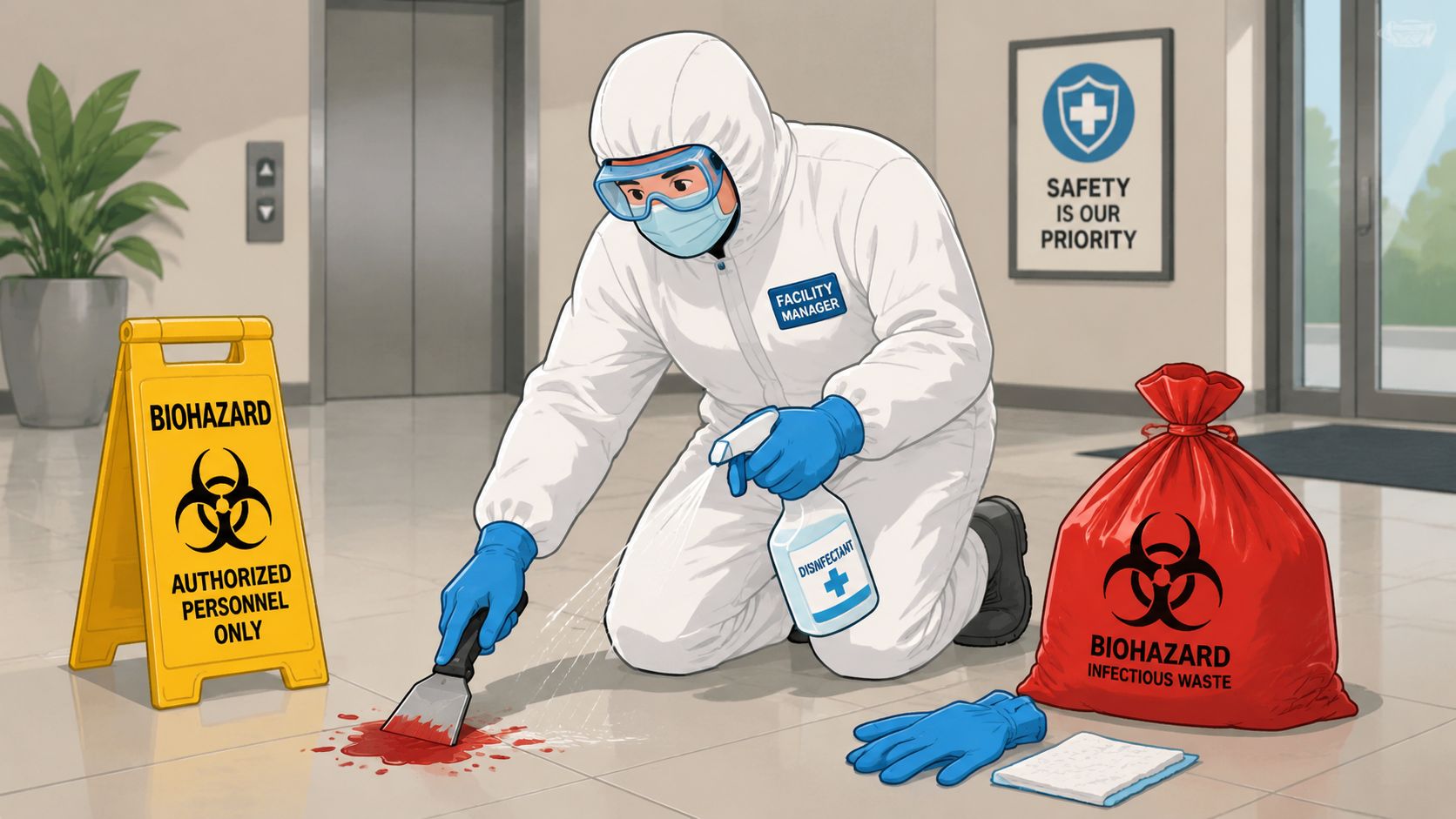
A member slips near the free weights. A guest cuts a hand in a restroom. An employee responds before management even knows there's a problem. In that moment, most facilities don't have a cleaning issue. They have a bloodborne pathogen cleanup issue.
That distinction matters in gyms, offices, schools, restaurants, retail stores, and event venues. Daily hygiene can rely on routines, checklists, and products like disinfecting wipes, sanitizing wipes, and gym wipes placed where staff and visitors can use them quickly. A blood spill is different. It triggers a regulated response that has to protect people first, then the facility.
Facility managers who treat every red-stained surface like “just another mess” usually create two risks at once. They expose staff to preventable harm, and they open the door to compliance failures that are hard to defend later. The good news is that the response can be standardized, trained, and executed well.
The Critical Moment After an Incident
The first mistake usually happens in the first minute. Someone grabs a towel, a spray bottle, or a container of workout wipes and moves in fast because they want the area to look normal again. That instinct is understandable. It's also where unsafe cleanup starts.
Approximately 3 million occupational exposures to bloodborne pathogens occur annually in the United States, which shows why standardized response protocols belong in all kinds of facilities, not only hospitals, according to Imperial Dade's overview of bloodborne pathogen cleanup. For non-healthcare managers, that's the key operating reality. Exposure risk follows the task, not the building type.
Everyday cleaning and biohazard response are not the same
Routine visible cleaning supports brand trust. Members notice whether a gym wipe dispenser is stocked. Shoppers notice whether checkout counters are wiped down. Restaurant operators know that clean handles, card readers, and service stations influence customer confidence.
That's where disinfectant wipes and commercial disinfecting wipes earn their place. Pre-moistened wipes simplify application because staff can clean, disinfect, and discard a soiled wipe without mixing chemicals or spraying, which can reduce prep time and lower cross-contamination risk, as described in Imperial Dade's discussion of pre-moistened disinfecting wipes.
But a blood or body fluid incident changes the job entirely. At that point, staff need isolation, PPE, controlled removal, approved disinfection, disposal, and reporting.
Practical rule: If the job involves blood or potentially infectious material, stop thinking like a housekeeper and start responding like a trained exposure-control team.
Where routine wipes still matter
A strong wipe program doesn't replace biohazard protocol. It supports it by keeping the rest of the facility cleaner and easier to manage.
High-touch priorities vary by site:
- Gyms and fitness centers: Wipes for gym equipment, benches, touchscreens, locker handles, and yoga props.
- Offices: Door pulls, conference tables, breakroom counters, and shared keyboards.
- Schools: Desks, faucet handles, railings, and nurse-adjacent waiting areas.
- Retail stores: POS devices, baskets, carts, fitting room handles, and service counters.
- Restaurants: Front-of-house counters and non-food-contact touchpoints, with food-safe product separation where needed.
In commercial kitchens, separate wipes that are safe for food surfaces should be used for distinct areas or tasks, such as one set for countertops and another for equipment handles, to help prevent transfer between surfaces, according to Zogics' guide to wipes in commercial kitchens.
That's the operational line managers need to teach clearly. Daily cleanliness protects perception and reduces general contamination. Bloodborne pathogen cleanup protects people from exposure and protects the business from preventable liability.
Your Legal Duty Risk Assessment and Staff Training
Most compliance failures in non-healthcare settings begin with a bad assumption: “We don't do medical work, so OSHA's bloodborne pathogens standard probably doesn't apply to us.” That's wrong often enough to create real exposure.
A gym, venue, office, or retail site may not employ nurses, but it often does assign someone to respond when a guest is injured. If that response is part of the job, the obligation changes.
Who needs coverage under your plan
A frequent compliance gap in commercial venues is confusion over which employees are covered by OSHA's bloodborne pathogens standard. If rendering first aid is part of an employee's designated job duties, even in a non-medical setting, that employee needs full training and an exposure control plan, as explained in Safetec's OSHA bloodborne pathogens FAQ.

That means managers should review job descriptions with a blunt question: who might reasonably be expected to render first aid, secure an injury scene, or clean contaminated materials? In many facilities, that includes lifeguards, coaches, front-desk leads, event staff, building supervisors, and security personnel.
What an effective program looks like
A written Exposure Control Plan should connect policy to the way the building operates. It isn't useful if it sits in a binder and nobody can execute it during a real incident.
Focus on these elements:
- Task-based risk review: Identify where exposure could happen, including locker rooms, restrooms, fitness floors, loading areas, food courts, and public lobbies.
- Defined responder roles: Name which positions may provide first aid or initiate spill response.
- Training cadence: Make sure at-risk employees receive annual training and know the site-specific procedure.
- Accessible PPE: Gloves, eye protection, barrier protection, and disposal supplies have to be close enough to use immediately.
- Post-exposure process: Staff should know who to notify, how to document the event, and where medical follow-up starts.
For managers balancing multiple OSHA obligations, it helps to view this within the larger environment of workplace health compliance. Guidance on navigating OSHA's IAQ requirements is useful because it shows the same principle at work: written plans only matter when they reflect real building conditions, real tasks, and real employee exposure.
The safest facilities don't rely on “whoever is nearby.” They assign responders, train them, and equip them before an incident happens.
Where wipes fit into training
For hygiene training, be specific about product categories. Staff can use gym equipment wipes, fitness wipes, or antibacterial wipes for routine touchpoint cleaning if the product is appropriate for the surface and task. That's especially useful in member-facing spaces where visible sanitation supports confidence.
But staff also need clear stop-sign language. If blood is present, routine sanitizing wipes are not your incident response plan. Training should say that plainly.
Assembling an OSHA Compliant Spill Kit
A proper spill kit should live outside your everyday janitorial inventory. If staff have to improvise with whatever sits in the supply closet, the facility has already lost control of the response.
General-purpose products still matter. A reliable stock of gloves, towels, surface cleaners, and bulk gym wipes supports daily upkeep and member expectations. For broad facility supply needs, teams often source everyday wipe products and related consumables through vendors such as Wipes.com. But a bloodborne pathogen spill kit needs a narrower purpose and tighter control.

What belongs in the kit
Think in terms of protection, containment, removal, and disposal.
- Gloves and barrier PPE: Include disposable gloves and other appropriate protective gear based on likely tasks and spill conditions.
- Absorbent material: Staff need something to control liquid before they start wiping or scraping.
- Mechanical pickup tools: Scraper, tongs, or similar tools prevent hand contact with contaminated material.
- Approved disinfectant: Stock an EPA registered disinfecting wipes option only if the label supports the relevant use, or a liquid disinfectant intended for bloodborne pathogen cleanup.
- Red biohazard bags: Waste needs dedicated containment, not regular trash liners.
- Incident materials: Include reporting forms or clear instructions for where incident reporting begins.
Storage and upkeep
The best location is the one responders can reach fast without crossing the whole facility with exposed traffic still moving around. In a gym, that may be near the front desk, training office, or lifeguard station. In an office, it may be in security or facilities control. In a venue, place kits near first-aid stations and back-of-house event operations.
Use a simple monthly check that asks:
| Checkpoint | What to verify |
|---|---|
| PPE readiness | Gloves and other protective items are sealed and usable |
| Disinfectant status | Product is present, legible, and appropriate for the intended use |
| Waste supplies | Biohazard bags are stocked |
| Tools | Tongs, scraper, and related items are clean and available |
| Access | Staff know where the kit is and who may use it |
A spill kit is one of those low-cost controls that pays off only if it's complete when needed. Half-stocked kits create false confidence, which is often worse than no plan at all.
The Step by Step Bloodborne Pathogen Cleanup Protocol
When trained staff respond well, the scene looks controlled. Traffic is redirected. Supplies arrive quickly. Nobody touches contaminated material with bare hands. The sequence matters more than speed.
The expert methodology for bloodborne pathogen cleanup follows a strict order: isolate, apply absorbent, remove bulk material, disinfect with proper contact time, and double-bag waste. A major pitfall is skipping contact time, which leads to a 40% failure rate in untrained teams, according to Bloodborne Certification's cleanup protocol guidance.

Phase one through three
Secure the area first. Keep guests, members, and untrained staff out of the space. In a gym, that might mean closing off a section of turf or a locker room aisle. In retail, it may involve pausing traffic around a register lane.
Put on PPE before contact. Don't start by “just grabbing the paper towels.” If a responder needs gloves, eye protection, or other barriers for the task, those go on before anything touches the spill.
Control and remove the bulk material. Apply absorbent material and give it time to work. Then remove bulk contamination using a scraper, tongs, or another tool. Never use bare hands.
Phase four and five
Disinfect the surface correctly. Here, routine cleaning habits often create failure. The surface has to stay visibly wet for the required contact time listed for the product being used. Wiping too soon turns disinfection into surface polishing.
Contain all waste. Bag contaminated absorbent, disposable PPE, and related materials in approved biohazard waste containment, then follow the site's disposal procedure. Reusable tools need disinfection before they go back into storage.
Wet time is work time. If the surface dries too early or staff wipe early, the chemical hasn't finished the job.
Building repeatability into the response
Managers should reduce decision-making during an incident. A printed wall card, spill-kit checklist, and short drill schedule help responders execute the same way every time. Facilities that want cleaner handoffs between staff, supervisors, and incident documentation can borrow ideas from emergency workflow platforms focused on Optimizing workflows for public safety. The value isn't software for its own sake. It's consistent action under pressure.
For sales teams in the cleaning industry, education beats product pushing. Clients usually don't need more SKUs. They need a cleaner distinction between everyday gym equipment cleaning wipes and a true biohazard response process. The better you explain that line, the more credible your product recommendations become.
Choosing the Right EPA Registered Disinfectant
Managers lose a lot of time by asking the wrong question. They ask, “What wipe should we buy?” The better question is, “What product is appropriate for routine sanitation, and what product is appropriate for bloodborne pathogen cleanup?”
Those are not interchangeable categories.
The bleach benchmark and why dwell time matters
The standard for effective bloodborne pathogen cleanup is a 1:9 bleach-to-water solution that must remain on surfaces for a minimum dwell time of 10 to 20 minutes to ensure pathogen elimination, a requirement recognized by organizations including the Red Cross, according to the Red Cross bloodborne pathogens fact and skill sheets.
That requirement changes how you train staff. They can't spray, wipe immediately, and assume the job is done. The disinfectant has to stay on the surface for the required period. If it dries too soon, or if someone wipes it off because they're trying to reopen the area fast, the process breaks.
For a deeper product-focused overview, this guide on disinfectants for bloodborne pathogens is a useful reference point when comparing labels and use cases.
Why standard sanitizing wipes often fall short
According to Janitors Supply's explanation of disinfecting wipes vs. sanitizing wipes, a sanitizing wipe is defined by the FDA as capable of killing up to 99.99% of bacteria within 30 seconds to 5 minutes, while EPA-regulated disinfectant wipes must be proven to kill 99.999% of germs on hard surfaces. That distinction matters in high-touch daily cleaning, but bloodborne pathogen cleanup still requires you to match the product label to the hazard and follow the listed contact time.
For gym operators, that means yoga mat wipes, fitness center wipes, and wipes to disinfect gym equipment can be excellent for member-facing sanitation programs. They are not automatically suitable for a blood incident.
If the label doesn't support the use, the product doesn't belong in your spill protocol, no matter how convenient it is.
EPA-Registered Disinfectant Comparison
| Disinfectant Type | Active Ingredient | Required Contact Time (HBV/HIV) | Notes |
|---|---|---|---|
| Bleach solution | Sodium hypochlorite at a 1:9 bleach-to-water ratio | 10 to 20 minutes | Strong benchmark for bloodborne pathogen cleanup when mixed and applied correctly |
| EPA-registered disinfectant wipe or liquid | Varies by product label | Follow product label | Use only if the label supports the intended bloodborne pathogen claim and surface type |
| Sanitizing wipe | Varies by product | Not a substitute for BBP cleanup protocol | Useful for routine hygiene, not for treating every biohazard incident |
A practical buying lens
For business owners and sales reps, product recommendations land better when they solve a workflow problem:
- For offices and retail: Pair visible front-of-house disinfecting wipes with a separate controlled spill response kit.
- For gyms: Keep a member-accessible gym wipe dispenser on the floor, but store incident-response chemicals and biohazard supplies with trained staff.
- For restaurants: Use task-specific wipes for food-contact and non-food-contact areas, and keep blood cleanup procedures outside the standard line-cleaning routine.
- For schools: Standardize approved products by room type so custodial and administrative staff don't guess.
Proper Waste Disposal and Incident Reporting
A poor cleanup can still look neat. That's why waste handling and documentation matter. If contaminated material is bagged incorrectly, moved casually, or never reported, the facility can't show that it effectively controlled the risk.
According to Trauma Services' analysis of bloodborne pathogen cleanup risks and prevention, 95% of cleanup failures stem from three pitfalls: inadequate saturation, insufficient contact time, and improper waste handling. That same source notes that pushing air out of hazmat bags can aerosolize pathogens and increase exposure risk by 30%.

What proper disposal looks like
The final stage should be deliberate, not rushed.
- Use designated containment: Put contaminated disposable materials and PPE into red biohazard waste bags or the approved site container.
- Don't compress the bag: Staff should never push air out to “make it fit better.”
- Separate the clean from the dirty: Keep reusable tools out until they've been disinfected before storage.
- Close the loop: Once waste is contained, remove PPE carefully and follow hand hygiene and site procedures.
Reporting protects the facility and the employee
A written report does more than satisfy paperwork expectations. It creates a defensible record of what happened, who responded, what area was affected, what materials were used, and whether any employee exposure may have occurred.
That information drives corrective action. It also matters if an employee later needs follow-up, if a client asks what happened, or if a regulator reviews your process. Teams that want a practical framework for documenting incidents can use this guide on OSHA accident reporting essentials as a reference for building cleaner internal reporting habits.
Cleanups end twice. First in the room, then on the record. If the second part never happens, the facility is still exposed.
For managers, this is also where hygiene ROI becomes easier to explain. Clients and executives understand stocked wipes and visible cleaning. They remember professional incident handling even more. Competent disposal and reporting show that the business takes both cleanliness and duty of care seriously.
Turning Protocol into a Culture of Safety
The strongest facilities don't separate cleanliness from operations. They treat it as part of operations. That mindset changes how managers buy supplies, train staff, and evaluate risk.
Routine sanitation still matters every day. The CDC recommends cleaning shared spaces once a day when no confirmed COVID-19 cases are present, and says that if a sick person tested positive within the last day, the facility should clean and disinfect the space while keeping the surface wet for the full listed contact time, as summarized in this discussion of disinfectant wipe use and CDC guidance. That reinforces a broader lesson: product choice and contact time matter in normal operations, and they matter even more during a blood or body fluid incident.
For gyms, offices, schools, restaurants, and retail stores, the practical path is straightforward. Keep daily disinfectant wipes available for high-touch surfaces. Train staff on where wipes for gym equipment or similar routine products belong. Keep a dedicated spill kit separate from general cleaning stock. Drill the response so trained employees don't hesitate or improvise.
The sales lesson is just as clear. Don't sell wipes as a magic fix. Sell them as part of a complete hygiene system that includes placement, training, replenishment, and clear limits. Customers trust suppliers who explain what a product can do and what it can't.
Prioritize visible daily cleaning, restock the right wipes for the right surfaces, and make sure your bloodborne pathogen cleanup procedure is written, trained, and practiced. If you're refining your sanitation program or product mix, keep building your playbook with practical guidance from WipesBlog.com.
Leave a Reply