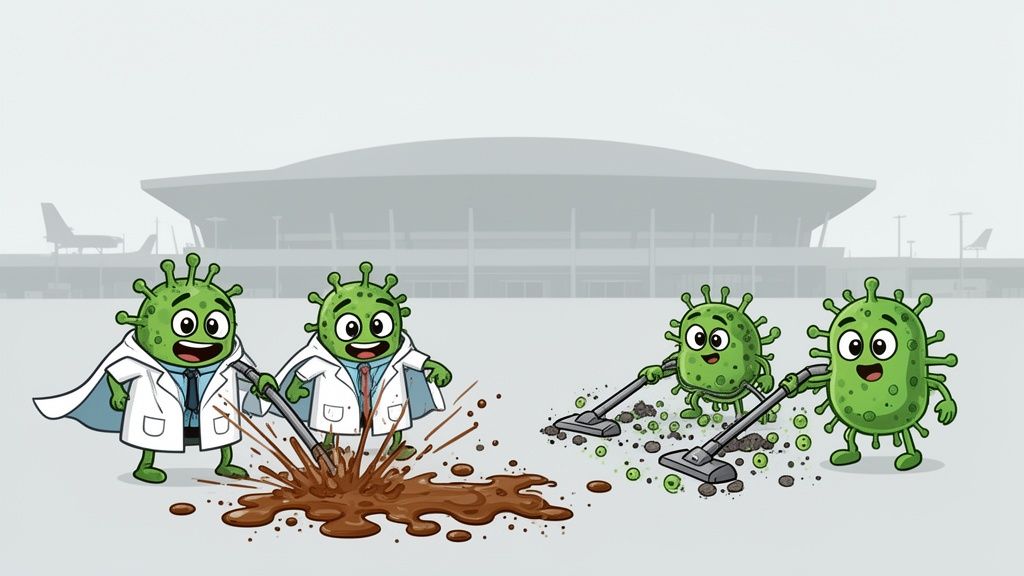
In any commercial or public facility, cleanliness isn't just a chore—it's a critical component of customer experience, employee well-being, and brand reputation. While bio-enzymatic cleaners offer a powerful, deep-cleaning solution for organic messes, achieving total hygiene requires a two-pronged approach: deep cleaning for the source of grime and surface disinfection for immediate pathogen control. This guide will explore how bio-enzymatic cleaners work and how to pair them with essential tools like disinfectant wipes for a complete hygiene strategy.
The Unseen Power of Continuous Cleaning
Imagine a cleaning crew that never clocks out, relentlessly working its way into surfaces to destroy grime at the source. That’s the core idea behind bio enzymatic cleaners. Unlike harsh chemicals that just bleach or burn away surface-level dirt, these are intelligent solutions packed with beneficial bacteria and specific enzymes that deliver a much deeper, more persistent clean.
This microscopic tag-team is what makes them so different from traditional cleaning agents. Think of it as a one-two punch that knocks out stubborn organic messes for good.
A Deeper Dive Into the Mechanism
The real magic happens in a two-stage process. First up is the "demolition crew": the enzymes. These aren't living organisms but highly specialized proteins engineered to target and fracture large, complex molecules. For instance, lipase enzymes go after fats and grease, while protease enzymes are designed to dismantle proteins found in food spills or bodily fluids.
Once the enzymes have broken down these large messes into smaller, more "bite-sized" pieces, the second stage kicks in. This is where the "cleanup crew"—the beneficial bacteria, or probiotics—gets to work, consuming the smaller particles and digesting them completely.
The final byproducts of this digestion are just simple, harmless water and carbon dioxide. This means bio enzymatic cleaners don't just move grime around or mask odors—they truly eliminate the source of the problem.
This continuous action is a game-changer for commercial facilities. A traditional chemical cleaner stops working the second it dries. But the beneficial bacteria in a bio-enzymatic solution can stay active for hours or even days, constantly breaking down any new organic soil they find. You can see how this fits into a bigger picture by reading our guide on developing a green clean janitorial program.
Why This Matters for Your Facility
This ongoing cleaning action delivers benefits that you’ll see in your operations, your staff’s workload, and your bottom line. It's especially good at tackling the persistent problems that plague high-traffic commercial spaces.
- Odor Elimination: By consuming the odor-causing bacteria and organic matter in places like restroom drains, grout lines, and trash disposal areas, these cleaners eradicate foul smells at their root. They don't just cover them up.
- Deep Stain Removal: They penetrate porous surfaces like concrete, tile grout, and carpet fibers, breaking down embedded stains that typical surface cleaners can't even touch.
- Preventative Maintenance: Regular use in drains and grease traps helps prevent the buildup of organic sludge. That means fewer costly blockages and fewer emergency calls to the plumber.
In the end, adopting bio enzymatic cleaners is about shifting from a reactive cleaning model to a proactive one. It’s a method that ensures a higher standard of cleanliness that lasts long after your staff has gone home, creating a consistently more pleasant and hygienic environment for everyone.
How Bio Enzymatic Cleaners Actually Work
To really get why bio-enzymatic cleaners are in a league of their own, you have to think smaller. Much smaller. We're talking about a microscopic cleaning crew that works in two distinct phases, delivering a deep clean that keeps working long after your team has gone home.
It’s a powerful tag-team of enzymes and bacteria. Think of them as a highly specialized demolition crew and a super-efficient cleanup team, working together to get the job done right.
This quick visual breaks down how they turn stubborn grime into a spotless surface.

As you can see, this isn't about pushing dirt around. It's about breaking it down and eliminating it completely.
Phase One: The Enzymatic Breakdown
This is the "demolition" phase, and it’s all about speed and precision. The moment you apply a bio-enzymatic cleaner, the enzymes get to work. These aren’t living things; they’re specialized proteins that act like a key in a lock, instantly targeting specific types of organic messes.
Think of it like this: if you have a massive boulder of grime, the enzymes are the demolition experts who strategically place charges to fracture it into small, manageable rocks. This first step is fast, effective, and absolutely essential for what comes next.
Matching The Enzyme To The Mess: A Quick Guide
The secret to getting the most out of these cleaners is picking the right formula for your facility's specific soils. This means matching the enzymes in the bottle to the messes you deal with every day.
This table breaks down the common types of enzymes in bio-enzymatic cleaners and the specific organic soils they eliminate, helping you select the right formula for your needs.
| Enzyme Type | Targets This Type of Soil | Common Commercial Applications |
|---|---|---|
| Protease | Protein-based soils such as blood, urine, food spills, and sweat. | Restrooms, healthcare facilities, gym locker rooms, and carpet spotting. |
| Lipase | Fats, oils, and grease (FOG). | Commercial kitchens, restaurant floors, grease traps, and garage floors. |
| Amylase | Starch-based soils like gravies, sauces, potatoes, and sugar. | Dining areas, kitchen floors, food prep surfaces, and cafeteria tables. |
| Cellulase | Cellulose-based materials, often used to soften fabrics and remove dirt. | Laundry applications, carpet cleaning, and treating paper-based soils. |
Understanding this chemistry allows you to deploy these cleaners with almost surgical accuracy. You’re not just cleaning; you’re prescribing the perfect solution for a specific problem, which is why they so often outperform generic chemical cleaners.
Phase Two: The Bacterial Digestion
Once the enzymes have done their job breaking down the large soils, the "cleanup crew" arrives. This is where the beneficial bacteria—the living microorganisms in the formula—take over.
These hardworking microbes literally eat the small, pre-digested organic particles left behind by the enzymes. Through a natural metabolic process, they consume the mess and convert it into two simple, harmless byproducts: water (H₂O) and carbon dioxide (CO₂). That's it.
This is the secret to true, permanent odor elimination. Instead of just spraying a perfume to cover up a bad smell, bio-enzymatic cleaners find the organic source of the odor and eat it. When the source is gone, the smell is gone. For good.
This digestive action is also what gives these cleaners their incredible residual effect. The beneficial bacteria don’t just die off. They remain on the surface, dormant, waiting for their next meal. As soon as new organic soil appears, they wake up and get back to work, keeping your facility cleaner and fresher for far longer.
Key Benefits Over Traditional Chemical Cleaners
So, why are so many facility managers ditching their old-school chemical cleaners? It's not just about "going green." Switching to bio-enzymatic cleaners is a smart operational move that pays off in safety, performance, and even your bottom line.
Let's break down the real-world advantages.
First and foremost, these solutions are a massive upgrade for the health and safety of everyone in your building. Traditional cleaners often get their power from harsh acids or caustic alkalis with extreme pH levels. The result? Volatile organic compounds (VOCs) and aggressive fumes that can create respiratory risks for your cleaning staff and building occupants.
In contrast, most bio-enzymatic cleaners are pH-neutral and non-toxic. This simple fact eliminates the risk of chemical burns, cuts down on indoor air pollution, and fosters a healthier environment for your employees and guests—a non-negotiable in any public-facing facility.

Superior Long-Term Performance
While traditional chemicals give you a quick surface clean, they stop working the second they dry. Bio-enzymatic cleaners, on the other hand, deliver a deeper, longer-lasting clean because the work isn't over. The beneficial bacteria stick around, ready to digest any new organic soils that appear.
This continuous cleaning action has a huge impact on your team's efficiency.
- Reduced Cleaning Frequency: Because the microbes prevent grime from building up in grout lines, drains, and carpets, you can stretch the time between deep cleans.
- True Odor Elimination: Instead of just masking smells with perfumes, the microbes literally eat the odor-causing organic matter. The smell is gone because its source is gone—a game-changer for restrooms and food service areas.
This "clean deeper, not harder" approach lets your janitorial staff focus on other critical tasks, optimizing their time and driving down labor costs. It shifts cleaning from a constant, reactive battle to a proactive, manageable system.
Preserving Your Facility's Assets
Here’s one of the most overlooked benefits: bio-enzymatic cleaners protect your physical assets. The very thing that makes traditional cleaners work—their corrosiveness—is also what causes long-term damage.
Harsh chemicals can slowly eat away at grout, etch the finish on your floors, and corrode metal pipes and fixtures. That slow degradation leads to expensive repairs and premature replacement of facility assets, inflating your operational costs over time.
Because bio-enzymatic cleaners are gentle and pH-neutral, they clean without causing all that collateral damage.
Benefit Comparison: Bio-Enzymatic vs. Traditional Cleaners
| Feature | Bio-Enzymatic Cleaners | Traditional Chemical Cleaners |
|---|---|---|
| Safety Profile | Non-toxic, pH-neutral, no harsh fumes. | Often corrosive, can release VOCs, requires PPE. |
| Cleaning Action | Continuous; bacteria remain active for hours. | Instant; stops working once dry. |
| Odor Control | Eliminates the source of the odor. | Masks odors with fragrances. |
| Asset Impact | Gentle on surfaces; preserves pipes, grout, and finishes. | Can etch, corrode, and degrade surfaces over time. |
This makes them a much smarter choice for maintaining the value and extending the lifespan of your facility’s infrastructure. It’s not just cleaning; it’s an investment in asset protection. Plus, as you adopt smarter solutions, it's helpful to see how they fit into the broader world of sustainable maintenance, like other biodegradable cleaning products.
By choosing these advanced cleaners, facility managers are embracing a safer, more efficient, and more cost-effective strategy that ultimately delivers a higher standard of clean.
Practical Applications In Your Commercial Facility
Theory is one thing, but where do these microscopic cleaners really make a difference on the ground? Let's move past the science and create a practical playbook for putting bio-enzymatic solutions to work in your facility. The trick is to deploy them where organic messes are a constant headache, while using disinfectant wipes for immediate sanitization of high-touch surfaces.

Unlike traditional chemicals that just wipe the surface clean for a moment, bio-enzymatic cleaners get deep into the grime and keep working. They're built for your most persistent problem areas because they actually digest the organic waste that causes odors, grease, and stubborn stains.
Restrooms and High-Traffic Public Venues
In places like airports, stadiums, and schools, restrooms are the ultimate battleground for clean. With constant foot traffic, organic buildup is unavoidable, especially around toilets and in floor drains. This creates odors that even frequent mopping can't touch.
This is exactly where bio-enzymatic cleaners shine. When you use them on restroom floors or pour them down drains, the good bacteria set up shop in the porous grout and pipes. They continuously eat the uric acid crystals and other gunk that cause those stubborn, lingering smells.
For daily surface sanitation on high-touch points like stall locks, flush handles, and faucet levers, you’ll still need a fast-acting disinfectant. For this, we recommend pairing your deep cleaning protocol with Wipes.com Disinfectant Wipes to knock out pathogens on contact and assure users the space is hygienic.
Commercial Kitchens and Restaurants
A busy commercial kitchen is a perfect storm for grease and food soils. Fats, oils, and grease (FOG) not only create dangerously slippery floors but also clog drains and lead to foul-smelling grease traps. Using a lipase-rich bio-enzymatic cleaner for floors and drains is a game-changer. It improves safety and acts as preventive maintenance for your plumbing.
Meanwhile, front-of-house and food-prep surfaces require constant disinfection. Wiping down tables, POS systems, and door handles with disinfectant wipes between uses is crucial for diner safety. For sales professionals, positioning disinfectant wipes as a necessary partner to deep cleaners creates a comprehensive hygiene package that clients need.
Hospitality: Hotels and Short-Term Rentals
In hospitality, first impressions are everything. A lingering odor or a faint stain can quickly turn into a devastating online review. Carpets, upholstery, and mattresses are notorious for trapping organic materials. Bio-enzymatic cleaners are a must-have for deep cleaning these soft surfaces between guests. They don't just fade the visible part of a stain; they penetrate the fabric fibers and break down the entire organic source, which is crucial when you need to get rid of dog urine smells.
However, the guest's perception of cleanliness is formed by what they can touch. Door knobs, TV remotes, and light switches must be visibly clean and disinfected. Using disinfectant wipes on these high-touch points provides immediate assurance of a sanitized environment.
Gyms and Fitness Centers
Gyms are a unique challenge, combining the sweat and body oils of a locker room with the high-touch surfaces of workout equipment. Locker room floors and drains are prime candidates for bio-enzymatic cleaners to control odors and mildew.
For the equipment itself—dumbbells, treadmill screens, and benches—efficiency and speed are key. Disinfectant wipes are the ideal solution. Place dispensers throughout the facility to empower members and staff to wipe down equipment before and after each use. This visible commitment to hygiene enhances member confidence and safety.
How To Choose And Implement The Right Solution
Making the switch to bio-enzymatic cleaners is a smart move, but getting it right is about more than just buying a new bottle. Success comes from picking the right product for your specific messes and training your team to use it correctly.
Decoding the Product Label
When you’re looking at different bio-enzymatic cleaners, a few key things on the label can tell you everything you need to know about a product's strength and purpose.
- Targeted Enzyme Blend: Look for formulas that name the specific enzymes they contain. A cleaner packed with lipase is your best bet for kitchen grease. On the other hand, a product high in protease will be a lifesaver in restrooms and locker rooms.
- Bacteria Count (CFU/mL): This number, which stands for Colony-Forming Units per milliliter, is a direct measure of the product's power. A higher CFU count usually means a more concentrated and effective cleaner.
Think of it like hiring a specialized crew for a construction project. You wouldn't send your drywall team to pour the foundation. In the same way, matching the enzyme to the soil ensures you have the right "specialists" on hand to demolish your facility's unique grime.
Your Four-Step Implementation Framework
Once you’ve picked the right product, how you roll it out is everything. The living organisms in these cleaners need the right conditions to do their job.
1. Prepare the Surface Properly
For the very first use, clear away any heavy debris and rinse away any residue from harsh chemical cleaners you used in the past. This gives the good bacteria a clean shot at the deep-down, embedded gunk.
2. Respect the Dwell Time
This is the most important step. Bio-enzymatic cleaners are not "spray and wipe" products. The enzymes and bacteria need time to work their magic. This can be a few minutes for light cleaning or several hours for deep-set stains. Always check the manufacturer's directions.
3. Create the Right Environment
To make sure the microbes survive, avoid two major mistakes:
- Extreme Temperatures: Never dilute concentrates with hot water. The heat can kill the beneficial bacteria. Tepid or cool water is what you want.
- Mixing with Disinfectants: Never mix these cleaners with disinfectants, bleach, or sanitizers on the same surface at the same time. The disinfectant will kill the good bacteria. Use your bio-enzymatic cleaner for deep cleaning floors and drains, and use disinfectant wipes for separate, high-touch surface cleaning.
4. Establish a Consistent Schedule
Bio-enzymatic cleaners are at their best when used regularly. This builds up a colony of good bacteria that keeps working around the clock. For more tips on choosing products, you might find our guide on the different types of professional cleaning chemicals useful.
Sales Tip: Demonstrating Hygiene ROI
For sales professionals, the key to promoting a comprehensive cleaning solution is to focus on the return on investment (ROI). Explain to clients like gym or business owners how investing in both bio-enzymatic cleaners and disinfectant wipes is not a cost, but a benefit. A visibly clean and hygienic facility leads to higher customer retention, better reviews, and reduced employee sick days. Frame the purchase as an investment in their brand's reputation and bottom line.
By integrating both deep-cleaning bio-enzymatic solutions and convenient disinfectant wipes, you create a complete system that addresses all facets of facility hygiene. This proactive approach ensures a space that is not only deeply clean but also safe and welcoming for everyone. Prioritize total cleanliness today by incorporating these powerful tools into your daily routine or product offerings.
Leave a Reply