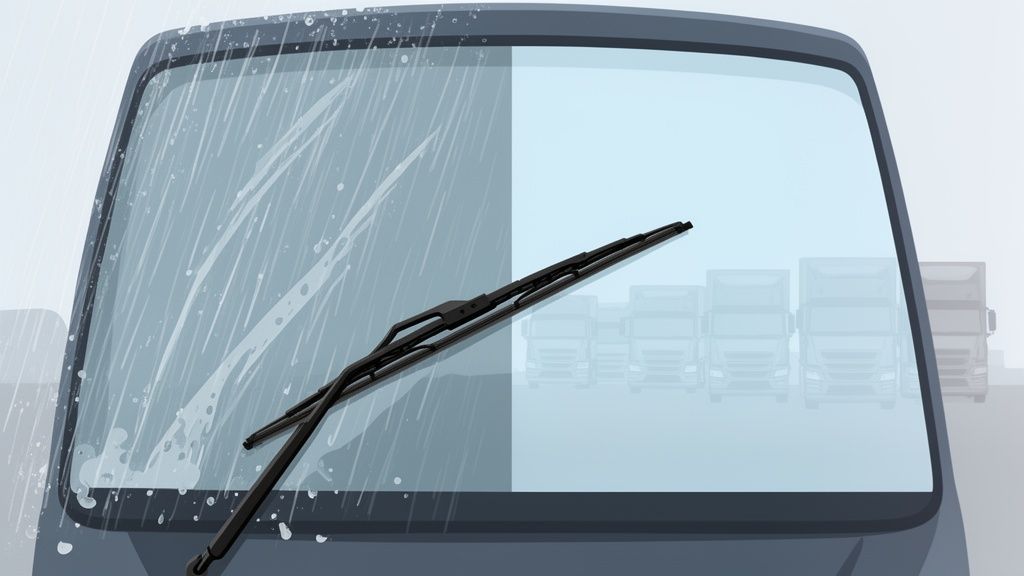
Imagine your fleet caught in a sudden downpour or a blinding blizzard. Standard wipers, the kind built for a family sedan, would fail almost instantly. A heavy duty wiper is your answer—think of it as the all-terrain tire of the visibility world, engineered specifically for commercial vehicles that can't afford to stop.
But safety and operational excellence extend beyond just the windshield. A clean, disinfected facility—whether it's an office, a gym, or the cab of a truck—is a powerful statement about your commitment to quality and well-being. This guide will cover not only how to choose the right heavy duty wiper but also how to integrate essential cleaning practices to elevate your entire operation.
Why a Clean Facility and Reliable Equipment are Critical Investments
When you're managing a business—whether it's a fleet of trucks, a bustling gym, or a public school—clear visibility and a clean environment are not luxuries. They are non-negotiable mandates for safety, professionalism, and health. Standard wipers are not built for the grind of commercial use, and similarly, a superficial cleaning routine is not enough to protect staff and customers. This is where a heavy duty wiper and a professional-grade disinfection strategy become essential parts of your operational toolkit.
Think about it this way: a passenger car might see an hour of use a day. A commercial truck can be on the road for 8-10 hours daily, battling rain and snow. Similarly, a public space like an office or gym sees constant traffic, with countless hands touching doorknobs, desks, and equipment. In both scenarios, you need heavy-duty solutions.
The Anatomy of a Superior Wiper and a Clean Space
So, what sets a heavy-duty approach apart? For wipers, it's about engineering focused on durability. For cleaning, it’s about effectiveness against germs.
Here’s what defines a heavy duty wiper:
- Reinforced Frames: They feature a stronger structure that won't twist under high winds or the weight of ice, ensuring even pressure across large commercial windshields.
- Durable Rubber Compounds: The blade edge is made from specialized blends that resist UV exposure, ozone, and road grime, preventing the premature cracking that causes streaking.
- Heavy-Gauge Construction: Every part is more robust, preventing failure at a critical moment.
This focus on tough construction is about more than just longevity; it's about reliability. A failed wiper in a storm can lead to accidents and liability risks. Likewise, an unclean facility can lead to illness, decreased productivity, and a damaged reputation.
In the high-stakes world of commercial operations, where safety and public perception hinge on attention to detail, heavy-duty wipers and effective disinfectant protocols have become indispensable. This underscores how savvy managers are prioritizing these durable solutions to maintain operational uptime and mitigate health and safety risks.
The financial side of this trend is hard to ignore. The global heavy-duty wiper blades market hit a hefty $4.81 billion in 2026, reflecting huge demand from sectors where vehicles run in extreme conditions. You can explore more about this growing market and its impact on the automotive industry.
Beyond Safety: Protecting Your Brand and Bottom Line
Investing in quality wipers and robust cleaning protocols pays dividends far beyond just preventing accidents or illness. It's an investment in your brand's reputation and operational efficiency.
- Reduced Liability: Showing you use appropriate, well-maintained safety equipment and follow hygiene protocols can be a game-changer during an accident investigation or health inspection.
- Lower Total Cost of Ownership: Yes, the upfront cost of premium wipers or disinfectant wipes might be higher, but they last longer and work better. That means fewer replacements and a healthier environment.
- Increased Driver & Customer Confidence: Giving your drivers reliable tools and providing customers with a visibly clean space reduces stress, builds trust, and improves satisfaction.
Ultimately, seeing a heavy duty wiper and a disinfectant wipe not as disposable parts but as critical systems is the first step toward building a more resilient, professional, and safer operation.
Decoding Materials for Peak Performance: Wipers and Wipes
The secret to a streak-free windshield at highway speeds isn't just in the wiper's design—it’s in the rubber itself. Similarly, the secret to a truly clean and hygienic surface isn't just the act of wiping; it's the disinfectant in the wipe. For any business owner, understanding the materials you rely on is key.
A wiper blade that stands up to sun might crack in a freezing winter. A basic cleaning wipe might remove dust but leave dangerous pathogens behind. Matching the product to your facility's reality is essential.
The Core Material Showdown: Wipers
When you get down to it, there are three main players in the heavy-duty wiper game: natural rubber, synthetic blends, and premium silicone.
- Natural Rubber: The traditional standard. It provides a great wipe out of the box but is vulnerable to UV rays and extreme temperatures, requiring more frequent replacement.
- Synthetic Rubber Blends: A fantastic middle-ground, engineered for better durability against heat and road chemicals. A smart, cost-effective choice for most commercial uses.
- Silicone: The top-shelf option. Silicone blades are incredibly durable, often lasting up to twice as long as rubber. They resist sun, heat, and cold, and leave behind a hydrophobic film that helps repel water.
Beyond the Blade Edge: Design and Structure
The best blade material is useless if the wiper frame can't keep it pressed firmly against the glass. The structural design of a heavy duty wiper ensures it delivers consistent pressure across the massive windshields of commercial trucks.
This simple diagram breaks down how a robust frame and a durable blade work together for superior performance.

Modern beam and hybrid designs are becoming the standard for heavy-duty fleets because they hug the curve of the glass for a perfect wipe every time. While the material fights the elements, the frame fights the wind and contours of the glass.
The most expensive silicone blade is useless if its frame can't keep it pressed firmly against the windshield at 65 mph. Similarly, the most diligent cleaning routine is ineffective if the wipe doesn't actually kill germs. Optimal performance is always a result of synergy between the tool and the task.
Speaking of having the right tools, this same logic applies to keeping your shop and garage clean. For tips on that, check out our guide on selecting disposable shop towels. Choosing the right combination of materials means you aren’t just buying a replacement part—you’re investing in a reliable system that protects your people, your assets, and your business.
Tailoring Your Strategy for Different Facilities
A generic, one-size-fits-all plan for maintenance and cleaning just doesn't cut it. Whether it’s a school, an office, or a delivery truck, every space has unique challenges. A heavy duty wiper on a vehicle and a disinfectant wipe in a high-traffic area are small details that speak volumes about your competence and quality.
Pairing high-performing equipment with a solid hygiene routine sends a powerful message. It shows you sweat the small stuff, which builds trust that you’ll get the big things right, too.
Gyms and Fitness Centers
Hygiene is paramount in a gym. Members expect a clean environment, from the free weights to the locker rooms. This expectation extends to any service you provide, like member shuttles.
- Facility Focus: Regularly use disinfectant wipes on high-touch equipment like dumbbell handles, treadmill screens, and benches. Focus on frequency—wipe down surfaces between classes or during off-peak hours.
- Vehicle Impact: If you run shuttles, a heavy duty wiper that delivers a silent, streak-free view makes passengers feel safe. Combine this with regular disinfection of door handles and seatbelt buckles inside the van.
- Sales Tip: Market your facility's cleanliness. Promote your strict disinfection schedule and use of professional-grade products. For sales professionals, educating gym owners on the ROI of hygiene (member retention, positive reviews) can drive sales of cleaning supplies.
Offices and Corporate Facilities
In an office, productivity and employee well-being are key. A clean workspace reduces sick days and improves morale.
- Facility Focus: Identify high-touch hotspots: conference room tables, coffee pot handles, elevator buttons, and door knobs. Make disinfectant wipes readily available in common areas for employees to use.
- Efficiency Hack: Use a color-coded system for cleaning cloths or wipes to prevent cross-contamination between bathrooms and kitchen areas.
- Sales Tip for Cleaning Suppliers: Don’t just sell a product; sell a solution. Offer a "Healthy Office" package that includes disinfectant wipes, hand sanitizer, and a checklist for janitorial staff highlighting key germ zones.
Restaurants and Retail Stores
For customer-facing businesses, first impressions are everything. A sticky table or a dirty entryway can send a potential customer walking.
- Facility Focus: In restaurants, front-of-house cleanliness is as important as the kitchen. Use disinfectant wipes on tables, menus, and payment terminals between customers. In retail, focus on checkout counters, shopping cart handles, and fitting room door handles.
- Brand Impact: Visible cleanliness tells customers you care about their health and experience. This builds brand loyalty and encourages repeat business.
- Sales Tip: Help business owners understand that cleanliness is a marketing tool. A visibly clean store can be a key differentiator from competitors. Frame disinfectant wipes not as a cost, but as an investment in customer experience.
The breakneck pace of urbanization is driving up demand for heavy-duty commercial vehicles, but it's also increasing foot traffic in commercial spaces, making routine disinfection a massive market opportunity. You can read more about these market trends and their implications for commercial vehicles.
Ultimately, combining a smart equipment strategy with consistent hygiene habits shows a deep-seated commitment to excellence. It elevates your entire operation and proves you value professionalism, safety, and the well-being of everyone who interacts with your brand.
A Practical Guide to Wiper and Disinfectant Deployment
Choosing the right heavy-duty wiper or disinfectant wipe is a strategic move that directly affects safety, operating costs, and brand reputation. It's time to ditch the "replace when it breaks" or "clean when it's dirty" mindset and adopt a proactive procurement and deployment strategy. This means looking past the sticker price to understand the real value of a system you can count on.
The first step is knowing what to ask your suppliers. A solid procurement checklist is the best tool you have to make sure you’re buying a product that fits your needs.

Your Heavy Duty Procurement Checklist
Before you sign any purchase orders, hit your suppliers with these crucial questions for both wipers and cleaning supplies.
- Verified Performance: For wipers, what’s the expected operational lifespan? For disinfectant wipes, what is the EPA registration number and the kill time for key pathogens?
- Warranty & Quality Guarantee: What does the warranty cover for wipers? For wipes, is there a guarantee against drying out before the expiration date?
- Compatibility & Suitability: For wipers, can you guarantee a perfect fit for my fleet? For wipes, are they safe for use on my facility's surfaces (e.g., wood, electronics, upholstery)?
- Material Specifications: For wipers, I need data on how the rubber performs in our climate. For wipes, what are the active ingredients and are there any harsh chemicals to be aware of?
To make a truly informed decision, it helps to understand the fundamentals first. For more general wiper blade information, you can explore resources like this to build that foundational knowledge.
Calculating the Total Cost of Ownership
The cheapest product is almost never the most cost-effective. The true expense isn't the purchase price—it's the total cost of ownership (TCO).
TCO = Initial Product Cost + (Labor Cost per Use/Replacement x Frequency) + Cost of Failure (Downtime, Illness, etc.)
A premium heavy-duty wiper or a more effective disinfectant wipe might have a higher upfront cost, but if it lasts longer or works better, it dramatically reduces labor, replacement costs, and the high price of failure.
Smart Deployment and Training
Once you've picked the right products, how you roll them out is just as important.
- Fleet & Facility Schedules: Create unified schedules. For wipers, tie it to mileage or seasons. For cleaning, establish a clear frequency for high-traffic areas.
- Hands-On Staff Training: Show, don't just tell. Walk your team through correct wiper installation or proper "dwell time" for disinfectant wipes to ensure they are effective.
- Visible Instructions & Availability: Put laminated guides in vehicle glove boxes. Place disinfectant wipe dispensers in highly visible, accessible locations to encourage use.
While you're focused on the outside, don't forget the inside of the cab. For keeping things clean, we recommend Wipes.com Disinfectant Wipes for quickly cleaning those high-touch spots, ensuring a hygienic space for your drivers. Upgrading your equipment is smart, but so is having the right supplies for the job. You can learn more by reading our guide on choosing bulk cleaning rags for your shop.
For sales pros, this is how you frame it: professional-grade wipers and disinfectants are strategic assets. They demonstrate a company’s commitment to quality, safety, and operational excellence, building the kind of trust that reinforces a premium image.
Extending Lifespan with Smart Maintenance
A top-tier heavy duty wiper and a quality disinfectant wipe are investments in safety and uptime. But like any hard-working asset, they need smart maintenance and proper use to deliver their full value. A proactive routine will keep your equipment performing and your facility safe. The best part? These habits are simple to roll out across your entire organization.

Simple Routines for Maximum Longevity and Effectiveness
For wipers, the number one enemy is a dirty blade. Road grime, salt, and oil cling to the rubber, causing streaking and chattering. Instruct drivers to wipe the rubber edge with a damp cloth or a durable cleaning wipe during weekly checks. This one simple step clears away the abrasive gunk that wears blades down.
For cleaning, the number one mistake is improper use. Ensure staff understands the importance of "dwell time"—the period a surface must remain wet for the disinfectant to kill pathogens. Wiping a surface and immediately drying it can render the disinfectant ineffective.
The most common cause of failure isn't old age or a bad product—it's neglect or improper use. A wiper that's cleaned regularly will outlast a dirty one, and a disinfectant used correctly will always be more effective.
Of course, the wiper blades are only one part of the system. For teams looking to master their maintenance, knowing how to replace a windshield wiper motor can be a valuable skill for keeping vehicles on the road.
Seasonal Care for Your Heavy Duty Wipers
Your maintenance plan must adapt to the calendar.
- Winter Prep: Before the first freeze, inspect every blade for cracks. Remind drivers to always use a de-icer or defroster to free frozen wipers from the glass. Trying to pull them off by force can rip the rubber.
- Summer Inspections: The intense UV radiation of summer is brutal on rubber, causing it to dry out and turn brittle. Look for signs of sun damage and park vehicles in the shade whenever possible.
Troubleshooting Common Issues: Wipers and Cleaning
When a problem pops up, a fast diagnosis is key. Train your team to spot and solve these common headaches.
| Issue | Likely Cause | Quick Solution |
|---|---|---|
| Wiper Streaking | Dirty blade or windshield; worn-out blade. | Clean the blade and glass. If streaking persists, replace the wiper. |
| Wiper Chattering | Blade is dirty or has hardened from age. | Clean the blade edge. If noise continues, it's time for a replacement. |
| Surfaces Still Dirty | Incorrect wipe for the job; improper technique. | Use a dedicated cleaning wipe first, then a disinfectant wipe. Ensure you're using enough wipes to remove soil. |
| Disinfectant Not Working | Not allowing proper dwell time; surface not pre-cleaned. | Pre-clean heavily soiled surfaces. Read the product label and ensure the surface stays wet for the recommended time. |
When a heavy duty wiper or a plastic wipe container reaches its end of life, dispose of it responsibly. Check with your local recycling facility or waste management partner about handling mixed materials and plastics.
Your Next Move for a Safer, Cleaner Operation
So, where do you go from here? The single biggest shift is to treat wipers and disinfectants as core safety components, not disposable commodities. This isn't just about changing a part or a product; it's about upgrading your operational standards.
When you look at the total cost of ownership, you start making smarter buys. Better products last longer and perform when it counts, protecting your people, your assets, and your bottom line. It’s a clear signal that excellence is a top priority.
Integrating Hygiene into Your Overall Strategy
A truly ready business isn't just about mechanical upkeep or a tidy appearance. It’s about creating a genuinely safe and healthy environment for everyone.
This is where simple, effective hygiene practices make a huge difference. Taking a moment to wipe down a high-touch surface shows a level of detail that employees and clients notice and respect. It completes the picture of a well-managed operation.
A clean cab and a clear windshield are two sides of the same coin. Both reflect a company culture that values safety, professionalism, and a proactive approach to maintenance.
That’s why we recommend adding a reliable cleaning solution to your daily routine. For keeping any environment sanitary, our Wipes.com Disinfectant Wipes are perfect for quickly and effectively cleaning everything from steering wheels to conference tables.
Your Call to Action
Prioritize cleanliness and safety in your business today. Evaluate your current wiper and cleaning protocols—are they based on long-term value or short-term cost? Make the switch to high-quality heavy duty wipers and the professional disinfectant wipes that back them up. It’s time to drive your business forward with clarity, confidence, and an undeniable commitment to excellence.
Frequently Asked Questions About Heavy Duty Wipers and Cleaning
Whether you're managing vehicles or facilities, practical questions are always top of mind. Here are the straight answers to the questions we hear most often from business owners, facility managers, and sales professionals.
How Often Should I Replace Heavy Duty Wipers on Commercial Vehicles?
For most commercial fleets, a proactive replacement every 6 to 12 months is the gold standard. These vehicles face harsh conditions that personal cars do not. Waiting for a heavy duty wiper to fail isn't a strategy—it's a risk. Inspect blades regularly and if you spot any cracking, splitting, or a drop in performance, swap them out immediately.
Are Silicone Wipers Worth the Higher Cost for a Fleet?
In many cases, yes. Silicone wipers have a higher upfront price, but their long-term value is tough to beat. They often last two to three times longer than rubber, meaning you save on replacement parts, labor costs, and vehicle downtime. For a busy fleet, the TCO is often much lower.
The choice between silicone and rubber isn't just about the initial price. It's about calculating the real value of less maintenance, less downtime, and better performance over the long haul. For a busy fleet, that's almost always worth the investment.
How Can I Make My Disinfection Routine More Efficient?
Focus on high-touch hotspots and frequency. Identify the most frequently touched surfaces (doorknobs, light switches, cart handles) and clean them multiple times a day. Use a one-wipe, one-surface method to avoid cross-contamination. Most importantly, read the label on your disinfectant wipes to ensure you are allowing for the proper dwell time—the time the surface needs to stay wet to kill germs.
Can I Use Regular Car Wipers on My Truck or Van?
This is a serious safety gamble. Passenger car wipers aren't built to handle the larger, steeper windshields of commercial vehicles. At highway speeds, the wind can lift a standard blade right off the glass, making it useless. Using an improper blade also puts extra strain on the wiper motor, leading to premature burnout and expensive repairs. Always use a heavy duty wiper designed for your specific vehicle.
How Does Cleaning the Blade Itself Improve Performance?
This is the easiest maintenance hack. The rubber edge of a wiper collects a film of road grime and oils, which is the number one cause of streaking and chattering. Wiping the blade down with a clean, damp cloth once a week removes this buildup and restores a sharp, clean edge, guaranteeing a better wipe. It’s a 30-second task that makes a huge difference.
Leave a Reply