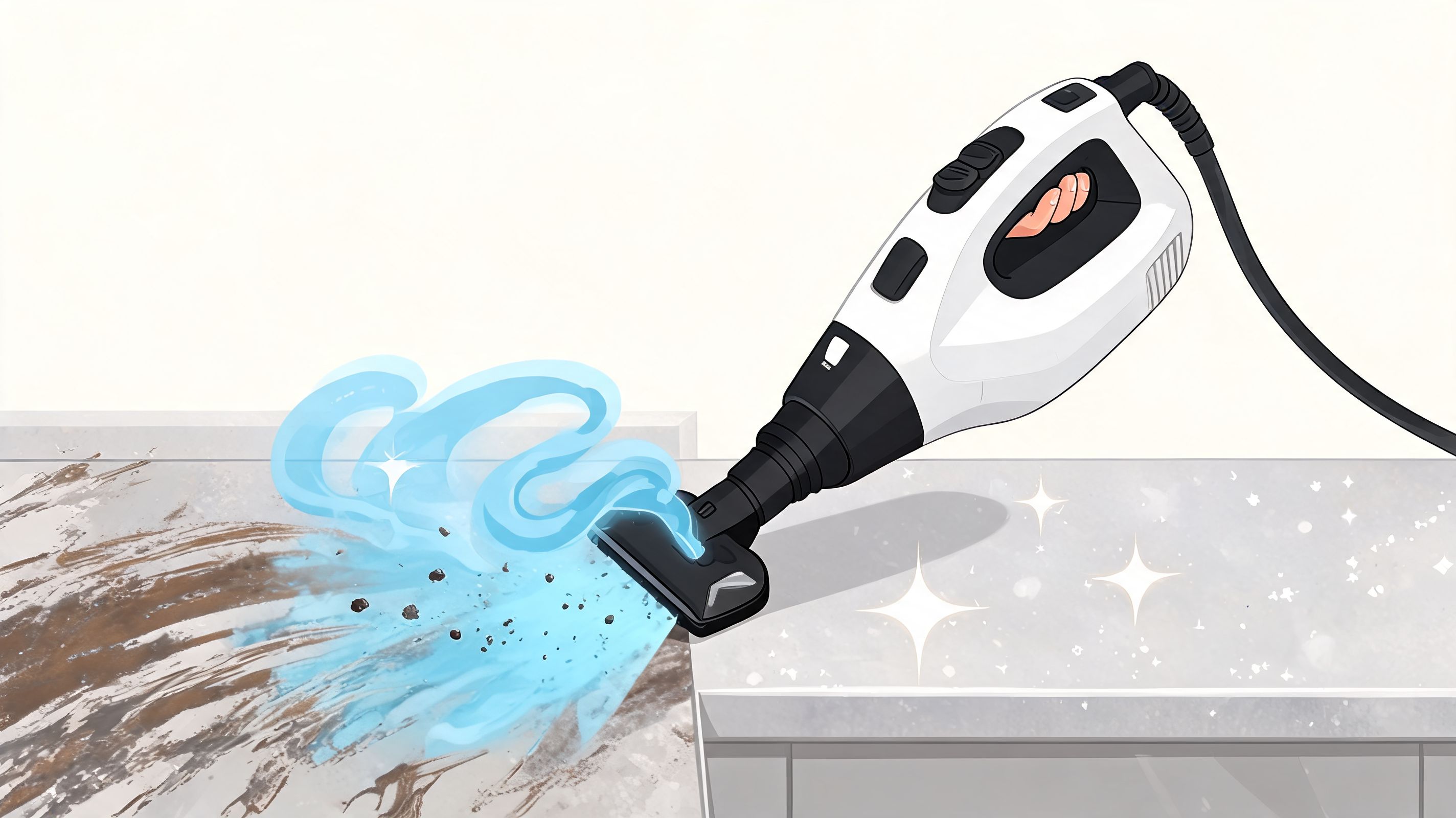
A lot of facility managers are dealing with the same problem right now. Floors are mopped, counters are wiped, restrooms are stocked, and the building still doesn't feel fully clean. Staff can make a space look tidy, but occupants, guests, and inspectors increasingly expect something more than appearance. They expect hygiene that's visible, repeatable, and defensible.
That's where steam starts getting attention. It promises deep cleaning, less chemical residue, and strong sanitation performance on the right surfaces. But managers often ask the same practical question before they invest in equipment or build a protocol around it.
How do steamers work, and where do they fit in a real facility cleaning program?
The short answer is that a steamer heats water into high-temperature vapor and uses that heat and moisture to loosen soil, soften residues, and sanitize compatible surfaces. The better answer is more operational. Steam is excellent for some jobs, inefficient for others, and rarely a complete system by itself. In commercial settings, the strongest hygiene programs use steam for deep work and pair it with disinfectant wipes for fast, daily coverage on high-touch points.
The Rising Demand for a Deeper Clean
A clean lobby used to satisfy most visitors. Now people look closer. They notice restroom odors, smudged elevator buttons, sticky fitness equipment grips, dressing room benches, and the condition of soft surfaces that don't get wiped down easily.
That shift matters because many facilities are managing two standards at once. The first is visual cleanliness. The second is hygienic cleanliness, which is harder to fake and easier to question.
What managers are really trying to solve
In gyms, one member sees a sweat mark on a bench and assumes the whole room is under-cleaned. In a dealership, a customer may never mention the smell inside a used vehicle, but it still shapes trust. In event venues and short-term rentals, soft surfaces carry a lot of the hygiene burden because fabrics hold wrinkles, odors, and residue that standard wipe-downs don't fully address.
Steam enters the conversation when teams want a method that can do more than spread a chemical across a surface. It can reach seams, textured materials, grout lines, upholstery, and garment fibers in a way that dry wiping can't.
There's also a long history behind steam technology. Steamship propulsion changed dramatically after John Ericsson and Francis Smith re-invented the screw propeller in 1836, and by the mid-19th century that approach had become standard on ocean-going vessels, according to a history of maritime steam power. Different application, same lesson: steam technology became dominant when engineers learned how to control force, heat, and reliability in a practical system.
Why steam appeals to operations teams
Managers usually aren't looking for novelty. They're looking for tools that solve persistent cleaning problems:
- Textured surfaces: Steam can help release grime from grooves, seams, and crevices.
- Soft materials: Upholstery, curtains, uniforms, and fabric panels often benefit from heat and moisture instead of aggressive scrubbing.
- Odor control: Steam can freshen materials that hold stale smells.
- Reduced residue: Teams often like that steam doesn't rely on heavy chemical application for every task.
Practical rule: If a surface is hard to wipe thoroughly because of texture, shape, or fabric construction, steam may be the better deep-cleaning tool.
That said, steam isn't a magic wand. It doesn't replace dwell time requirements for every disinfectant task. It isn't right for electronics, many delicate finishes, or every type of flooring. And it's slower than a wipe for daily touchpoints.
That's why strong programs separate tasks clearly. Steam handles the deep reset. Wipes handle the fast, repeatable, high-frequency protection that keeps shared surfaces under control between larger cleaning cycles.
The Science of How Steamers Work
The core mechanics are simple. A steamer heats water, turns it into vapor, and directs that hot vapor through a nozzle or head onto a target surface. The result is a combination of thermal energy and fine moisture that loosens unwanted material so staff can remove it more easily.

What happens inside the machine
A steamer starts with a reservoir and a heating element. As the water heats, the unit creates steam and sends it through an internal path to the outlet. In garment applications, that steam contacts textile fibers and changes how the material behaves.
According to AENO's guide to clothes steamers, clothes steamers work through hydrothermal relaxation of fabric fibers, using high-temperature steam, typically 100-150°C at 1-5 bars pressure, to penetrate textile structures, disrupt hydrogen bonds, and help fibers return to their natural state. The same source explains that the fine moisture is absorbed by fibers while heat increases molecular mobility, which is why steam relaxes creases without the mechanical pressure of an iron.
For facility managers, that matters beyond garment care. The same basic principle explains why steam helps on curtains, upholstered seating, fabric partitions, and other soft surfaces where friction cleaning can be too harsh or too slow.
Why heat and moisture work together
Heat alone can dry out residue and lock it in if you apply it poorly. Moisture alone can spread mess and leave surfaces overwet. Steam works because it combines both in a controlled way.
Think of it as a fast transfer of energy into the soil layer or fabric. The heat softens oils, residues, and bonded grime. The micro-moisture helps separate that material from the surface. Then the operator wipes, brushes, or extracts the loosened contamination away.
That's also why steam cleaning is usually best seen as a two-step action:
- Steam loosens and lifts
- A cloth, pad, or extraction step removes what the steam released
If you skip the second step, you often just relocate soil.
Where operators get confused
Many people assume steam means soaking. In practice, quality units produce a relatively low-moisture vapor compared with spraying liquid cleaner across a surface. That makes steam useful where too much water would be a problem, though “low moisture” doesn't mean “safe for every material.”
For facilities handling carpets and vehicle interiors, steam also intersects with heated extraction. If you're comparing methods for textile restoration or interior detailing, this guide to best heated extractors for mobile detailers is useful because it highlights when heat plus recovery can outperform steam alone.
Steam loosens contamination. Recovery removes it. The best results usually come from pairing those functions instead of expecting one tool to do both.
In day-to-day operations, that distinction saves time. Staff stop treating steam as a miracle device and start using it as part of a process. That's when it becomes productive.
Beyond Cleaning How Steam Sanitizes Surfaces
Cleaning and sanitizing aren't the same task. Cleaning removes soil, residues, and visible contamination. Sanitizing reduces microbial load to a safer level on the right surface under the right conditions. Steam can do both, but only if teams understand the difference.

The sanitation advantage of heat
Steam sanitizes through thermal inactivation. High heat damages microbial structures in a way that makes many bacteria unable to survive. That is the actual business case for steam in locker rooms, rental turnovers, hospitality back-of-house areas, and similar environments.
AENO notes that at 100°C (212°F), steam can achieve a 99.9% bacterial kill rate, which makes it valuable for hygiene and odor removal in high-turnover settings such as event spaces and short-term rentals. That performance is one reason managers use steam on surfaces that need more than cosmetic attention.
Where steam earns its keep
Steam is especially useful on surfaces that are awkward to disinfect thoroughly with sprays alone:
- Grout lines and tile edges
- Fabric-covered seating
- Mattress seams and upholstered panels
- Locker room benches
- Curtains and drapes
- Vehicle upholstery and floor mats
Those surfaces often trap moisture, body oils, dust, and odor. Steam helps because the heat reaches into texture and seams that wipes can only skim.
A related issue is application consistency. Teams using electrostatic methods or spray systems still need to think about coverage, compatibility, and practical workflow. This article on electrostatic disinfectant sprayer use in facilities is worth reviewing if you're building a broader sanitation program and deciding where steam fits versus chemical disinfection.
What steam does not do by itself
Steam doesn't excuse poor pre-cleaning. Heavy grease, thick soil, and visible debris still need removal. It also doesn't replace every disinfectant label claim you may need for regulated settings, healthcare-adjacent spaces, or outbreak response.
Use steam when the goal is deep sanitation on compatible materials. Use wipes or approved disinfectants when the job requires rapid turnaround on high-touch surfaces, clear application control, or a product-specific protocol.
The best sanitation programs don't argue steam versus wipes. They assign each tool to the task it performs best.
That distinction is what separates an impressive demo from a durable operating standard.
Choosing the Right Steamer for Your Needs

A poor equipment choice usually gets blamed on steam itself. In practice, the problem is usually mismatch. The machine is too small for the workload, too slow for the turnover window, or too awkward for staff to use consistently.
The right buying process starts with three questions. What surfaces are being cleaned. How often does the task repeat. How much operator control does the job require. Managers who answer those first usually avoid the common mistake of buying a light-duty unit for commercial sanitation work.
Four common steamer categories
| Type | Best use | Main advantage | Main limitation |
|---|---|---|---|
| Handheld garment steamer | Uniforms, drapes, quick fabric refresh | Easy to carry and store | Limited reach and runtime |
| Portable canister steamer | Restrooms, grout, upholstery details | Better attachments and control | Slower for large open areas |
| Steam mop or floor unit | Hard floors and larger zones | Faster area coverage | Less precise on edges and fixtures |
| Pressurized commercial system | Hotels, dealerships, gyms, event venues | Stronger output for repeated commercial use | Higher cost and more training required |
Pressure changes the result
Pressure and recovery time affect productivity more than many buyers expect. As noted in GoFoodservice's commercial steamer guide, higher-pressure commercial units produce hotter steam and are built for faster repeat use. That matters in facilities where teams cannot wait for long reheating cycles between tasks.
I usually see entry-level units perform acceptably in light, occasional work. They struggle once the schedule includes locker rooms, upholstery, grout lines, or multiple rooms back-to-back. Commercial systems cost more up front, but they often reduce labor time and operator frustration enough to justify the difference.
Match the machine to the job
Selection gets easier when managers match the machine to the surface and the pace of the operation.
- Gyms and studios: Pressurized unit for mat seams, benches, and locker room detail work.
- Dealerships: Commercial steamer for upholstery, fabric panels, floor mats, and interior crevices.
- Schools: Portable canister unit for restroom edges, sink surrounds, and detailed floor cleaning.
- Retail fitting rooms: Garment steamer for curtains and soft goods, plus a portable unit for benches and corners.
There is also a clear line where steam loses efficiency. Electronics, touch screens, exposed wiring, unsealed wood, and bonded materials can be poor candidates because heat and moisture can damage finishes, adhesives, or internal components. Steam is also too slow for every shared touchpoint that needs frequent daytime disinfection.
That is where managers need a two-tool standard. Use steam for scheduled deep sanitation, odor control, and textured or fabric surfaces. Use disinfectant wipes for fast, repeatable cleaning on door hardware, checkout equipment, tablets, fitness machine controls, and other high-touch points that need quick return to service.
A simple decision filter
Choose steam when the surface is:
- Textured
- Fabric-based
- Odor-prone
- Difficult to scrub without damage
Choose wipes when the surface is:
- High-touch
- Sensitive to heat or moisture
- Needed back in service quickly
- Part of a frequent daytime cleaning loop
The practical question is not which tool is better overall. The practical question is which tool fits the surface, the risk, and the labor window. Managers who make that distinction usually get better sanitation results and a cleaning program staff can sustain.
Strategic Steam Application in Commercial Facilities
The most effective facilities don't use steam randomly. They build repeatable protocols around traffic patterns, touch frequency, and the difference between deep sanitation and fast maintenance.

Gyms and fitness centers
Steam has a clear role in end-of-day or low-traffic sanitation. Staff can use it on rubber mat seams, locker room benches, tile joints, and upholstered waiting-area seating where body oils and odor build up over time.
Wipes handle the speed side of the operation. Use them between users on dumbbells, treadmill rails, bike handles, touch screens, and check-in counters. Those surfaces need immediate turnaround, not a slower deep-cleaning process.
In gyms, steam should reset the environment. Wipes should protect it all day.
Car dealerships and service lounges
Dealerships benefit from steam because customers evaluate cleanliness emotionally as much as visually. Steam works well on used vehicle upholstery, floor mats, trunk liners, and fabric seat seams. It can also help refresh waiting-area chairs and detail hard-to-reach crevices that trap dust and spills.
For customer-contact surfaces, wipes are the practical choice. Steering wheels, gear selectors, door handles, key counters, tablets, and finance desk touchpoints all need fast, controlled disinfection without exposing electronics or glossy finishes to steam.
Offices and schools
These spaces need a layered plan because they mix hard surfaces, shared devices, and soft furnishings.
A workable protocol looks like this:
- Morning prep: Wipe reception counters, breakroom handles, copier buttons, faucet handles, and desk-sharing points.
- Scheduled deep clean: Steam restroom edges, grout, partition fabrics, and selected upholstered seating after hours.
- Spot response: Use wipes for spills and hand-contact surfaces during the day, especially around shared equipment.
For janitorial supervisors, this structure also creates a useful sales narrative. Don't sell steamers or wipes as isolated products. Sell a hygiene system with a daily layer, a deep-clean layer, and a response layer. Clients understand that immediately because it sounds like operations, not theory.
Restaurants, event venues, and retail
These environments turn over quickly and often rely on appearance as part of the brand. Steam can support fabric chair refresh, grout detailing, restroom sanitation, and odor control in soft surfaces. It's also useful for corners and edges where mops and cloths leave residue behind.
Wipes remain the frontline tool for menus, host stands, payment stations, fitting room hooks, service counters, and restroom touchpoints. In retail and hospitality, the visible act of wiping matters almost as much as the chemistry because customers notice it in real time.
A good standard is simple. Assign steam to periodic deep sanitation and assign wipes to the surfaces people touch constantly. Once teams stop forcing one tool to do both jobs, productivity improves and the building stays cleaner between major service intervals.
Essential Safety and Maintenance Practices
Steam can be powerful and cost-effective, but only when the machine is maintained and the operator respects material limits. Most steam-related failures in facilities come from the same two issues: poor surface judgment and poor machine care.
Watch the surface before you pull the trigger
Steam is not safe for everything. Be cautious with unsealed wood, moisture-sensitive laminates, some plastics, delicate finishes, adhesives, and electronics. Test an inconspicuous area first, and train staff to recognize when heat or moisture can distort, lift, haze, or swell a material.
Wool deserves extra care. If your team handles premium rugs or decorative textiles, this guide on protecting wool rug investments is a useful reference because wool can react poorly when the wrong cleaning method or moisture level is used.
The overlooked hygiene risk inside the machine
Many operators think of the nozzle and forget the tank. That's a mistake. According to Steamery's garment steaming guide, a 2023 study found that 68% of household garment steamers harbored significant bacterial loads after 48 hours of non-use. The same guidance recommends emptying tanks immediately after use and disinfecting nozzles weekly with a 70% isopropyl alcohol wipe.
That recommendation matters in shared commercial environments. If multiple employees use the same steamer on uniforms, fabric panels, or guest-facing materials, poor internal hygiene can undermine the very sanitation goal the machine was supposed to support.
A maintenance standard that actually works
Use a simple routine and make it part of equipment care, not optional cleanup:
- After each use: Empty the tank completely. Don't leave warm water sitting in the unit.
- Weekly: Wipe the nozzle and contact surfaces with a 70% isopropyl alcohol wipe.
- On a schedule: Descale according to the manufacturer's guidance. Hard water shortens machine life and weakens output.
- Before storage: Let the unit cool, dry, and store upright if the design calls for it.
For managers building repeatable SOPs, this article on maintenance programs for equipment is a helpful companion because steamers perform far better when they're treated like maintained assets instead of occasional gadgets.
A neglected steamer loses output, creates inconsistency, and can introduce hygiene risk of its own.
Staff safety matters too. Use gloves when appropriate, keep hands clear of active steam, avoid aiming vapor toward skin, and make sure attachments are secured before use. Steam injuries happen fast. Training should be short, practical, and specific to your actual machine models.
Steam works well when the protocol is disciplined. Without that discipline, the machine becomes another underused tool in the closet.
Steam is worth using because it solves problems wipes and sprays can't solve well on their own. It reaches texture, refreshes fabrics, supports odor control, and adds real sanitation value on compatible surfaces. But the best facility programs don't rely on steam alone. They pair steam for deep cleaning with wipes for fast, daily high-touch protection.
If you're tightening your hygiene standards, make steam part of the system, not the whole system. Prioritize the surfaces people notice, the surfaces they touch, and the equipment your staff can realistically maintain. For more practical sanitation guidance, visit WipesBlog.com, and if you're updating your daily disinfection routine or product offering, consider adding Wipes.com Disinfectant Wipes to the mix.
Leave a Reply