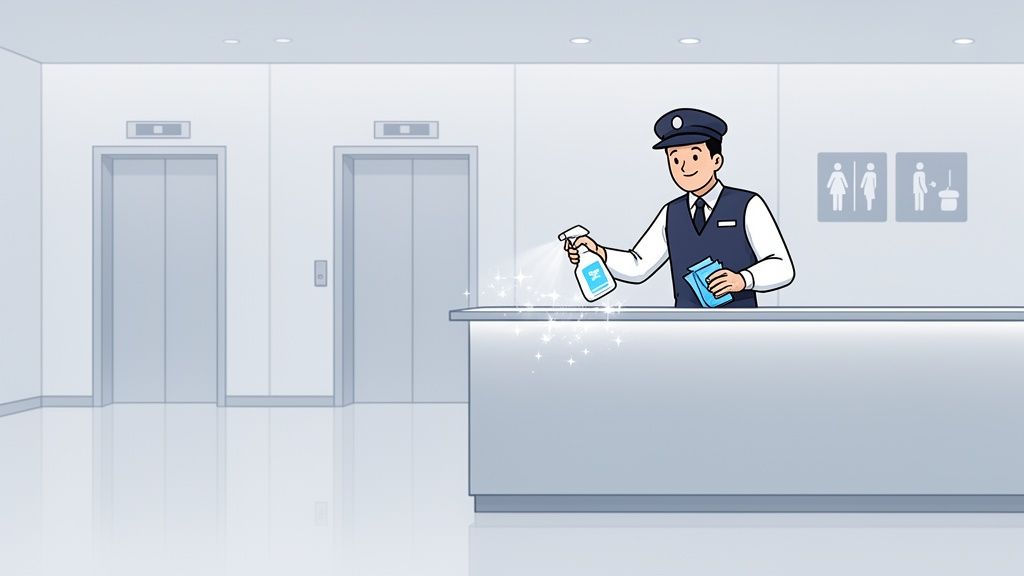
Think of a porter service as your facility's on-duty hygiene team, working in plain sight to keep your space clean, safe, and welcoming while your business is running. Unlike a traditional janitorial crew that comes in after everyone’s gone home, a porter provides a constant, visible presence. They're there to tackle messes the moment they happen and continuously sanitize high-touch surfaces, ensuring your building looks its best for every single person who walks through the door, all day long.
The Role of a Modern Porter Service

Here's a simple analogy: if a janitorial crew is the theater's maintenance team doing a deep clean after the show, the porter service is the stage crew. They work quietly behind the scenes during the performance, fixing any little thing that goes wrong so the show—your business—can go on without a hitch. This real-time response is what truly defines a modern porter service.
They aren't just cleaning up yesterday's mess; they are actively maintaining the health, safety, and appearance of your space while it’s buzzing with people. This visible commitment sends a powerful message that you prioritize a clean and hygienic environment for your customers and staff.
Proactive vs. Reactive Cleaning
The biggest difference comes down to their approach. An after-hours janitorial service is reactive—they clean up the mess that accumulated over the course of the day. A day porter service is proactive, stopping small issues before they become big, noticeable problems.
- Immediate Spill Response: A porter cleans a coffee spill in the lobby in seconds, which prevents a slip-and-fall hazard and keeps the entrance looking sharp.
- Constant Sanitization: They're the ones continuously wiping down high-touch surfaces like door handles, elevator buttons, and reception counters. This isn't just for looks; it's a critical hygiene function that helps reduce the spread of germs.
- Restroom and Breakroom Upkeep: Porters make sure restrooms and common areas stay stocked and tidy, preventing complaints and keeping employees or guests happy.
A day porter’s value isn’t just in the tasks they complete but in the problems they prevent. Their visible presence reinforces a culture of cleanliness and care, directly impacting customer trust and employee morale.
Day Porter vs. Janitorial Service at a Glance
To make the distinction crystal clear, here’s a quick breakdown of how these two essential services differ.
| Attribute | Day Porter Service | Traditional Janitorial Service |
|---|---|---|
| Timing | During business hours | After business hours (overnight) |
| Approach | Proactive (preventative maintenance) | Reactive (deep cleaning) |
| Visibility | Highly visible to staff & guests | Works behind the scenes |
| Core Focus | Maintaining a clean state in real-time | Restoring the facility to a clean state |
| Key Tasks | Spill cleanup, restroom checks, trash, sanitizing touchpoints | Floor stripping, carpet cleaning, detailed dusting, waste removal |
While both roles are crucial for a well-maintained facility, they serve entirely different purposes. The day porter handles the "during," while the janitorial crew handles the "after."
First Impressions Last All Day
Your building might look perfect at 9 AM, but what does it look like by 3 PM? Without a porter, lobbies get littered with tracked-in debris, restrooms start to show heavy use, and high-traffic areas look worn out.
A porter service makes sure that great first impression you made in the morning holds up all day long. For facility managers in busy offices, gyms, or retail stores, this means peace of mind and knowing your standards are being met, minute by minute.
This proactive approach is what separates a facility that's just "clean" from one that feels genuinely cared for and safe. Equipping your porters with effective tools, like powerful disinfectant wipes, ensures high-touch surfaces aren't just wiped, but properly sanitized—adding a layer of protection that everyone can see.
The Core Duties of a Professional Porter

A porter service is all about consistent, high-impact tasks that keep a facility running smoothly all day long. Think of a professional porter as a dynamic force, moving through your building to manage cleanliness, safety, and order in real-time. They’re the reason a building’s great first impression doesn’t fade by lunchtime.
While the job can be tailored to fit the unique needs of any facility, the duties almost always fall into a few key categories. The work is both preventative and reactive—they’re trained to get ahead of messes before they happen while being ready to respond the second they do.
High-Traffic Zone Management
A porter’s main focus is always on the busiest parts of a building. These are the spaces that see the most foot traffic, and therefore, need the most attention to stay polished and hygienic for guests and employees.
- Lobbies and Entrances: Porters are responsible for keeping the main entryways looking sharp. This means cleaning glass doors, tidying up waiting areas, and making sure floors are free of dirt or water, especially when the weather is bad.
- Restrooms and Break Rooms: They’re in and out of these areas all day, restocking essentials like soap and paper towels, wiping down counters, and making sure sanitation standards are always met. This constant attention is what stops these critical spots from becoming a source of complaints.
- Hallways and Corridors: Porters keep an eye on these connecting spaces for any litter, scuff marks, or anything else that looks out of place, ensuring the flow of traffic is always clean and clear.
Sanitation of High-Touch Surfaces
One of the most crucial jobs for a modern porter is the constant sanitation of high-touch surfaces. This single responsibility is central to slowing the spread of germs and showing everyone who walks through your doors that you take health and safety seriously.
The secret is consistency. Porters methodically patrol a facility, zeroing in on all the points of frequent human contact. Using quality disinfectant wipes, they can quickly and effectively neutralize germs on all sorts of surfaces.
Sales Tip: When talking to clients, frame this as the hygiene ROI. Don’t talk about disinfectant wipes as a cost; present them as an investment in employee health, fewer sick days, and stronger customer confidence. A visibly clean facility is a powerful, tangible asset.
The consistent wiping of a doorknob, elevator button, or reception desk is a small action with a significant impact. It transforms a routine cleaning task into a visible declaration of a facility’s commitment to wellness.
A great porter knows to hit these often-overlooked hotspots again and again:
- Door handles and push plates
- Elevator call buttons and interior panels
- Reception desks and service counters
- Shared equipment like coffee machines or copiers
- Handrails on staircases and escalators
And this role is bigger than you might think. Porter services aren't just for airports; they’re vital in hospitality and automotive sectors where cleanliness builds immediate customer trust. In the US, a staggering 211,519 porters are currently employed, making up a critical workforce across retail (17%), hospitality (14%), and automotive (12%) industries. They handle everything from luggage in hotels to getting vehicles prepped for detailing. You can dig into more porter demographics over on Zippia.com.
Light Maintenance and Operational Support
Beyond cleaning, porters are the unsung heroes of operational support, handling the small things that keep a facility from grinding to a halt. Their ability to tackle minor maintenance tasks saves facility managers a ton of time and stops small issues from blowing up into expensive problems.
Their duties often include:
- Trash and Recycling Management: Regularly emptying bins to prevent them from overflowing and keep the space looking tidy.
- Immediate Spill Response: Acting as the first line of defense for spills to prevent slips, falls, and stubborn stains.
- Meeting Room Preparation: Setting up and breaking down conference rooms, ensuring they are spotless and ready for the next group.
By blending all these duties, a porter service elevates facility maintenance from a simple cleaning function to a strategic program that protects and enhances the entire business environment. It’s a proactive approach that ensures cleanliness is always a priority, never an afterthought.
Why a Visible Cleaning Strategy Matters
Let's move beyond the what of a porter's duties and get into the why. A visible cleaning strategy is more than just keeping the floors clean; it's a powerful, unspoken message to every single person who walks through your doors. When customers and employees see a uniformed porter actively maintaining the space with tools like disinfectant wipes, it tells them something instantly: you care about their health, safety, and well-being.
This simple act of "visible cleaning" builds a foundation of trust. In a world where hygiene is always on our minds, seeing proactive sanitization isn't just nice—it's a critical reason people choose to come back. It shows a commitment that goes beyond a pretty storefront, creating a secure and positive environment people want to be in.
The Psychology of a Clean Space
The presence of a day porter has a real psychological effect. An environment that is consistently clean and orderly isn't just pleasant; it actually reduces stress and boosts feelings of safety. For a business, this translates into tangible benefits that directly hit the bottom line.
- Boosted Customer Confidence: Think about it. A retail store with a porter wiping down checkout counters or a gym where equipment is sanitized between uses makes customers feel safer. That confidence often leads to them staying longer and coming back more often.
- Improved Employee Morale: For office workers, a clean breakroom or a well-stocked restroom isn't a perk; it's a basic sign of respect from their employer. This boosts job satisfaction and productivity because people feel valued and cared for.
- Enhanced Brand Reputation: Your facility is a direct reflection of your brand's standards. A visible porter service elevates your reputation, positioning your business as a responsible, high-quality organization that pays attention to the details.
To help your porter team deliver on this visible promise, we recommend Wipes.com Disinfectant Wipes. They’re incredibly effective for quickly and efficiently sanitizing the high-touch surfaces that matter most. You can check out the full product line at Wipes.com.
Tangible Business Outcomes from Visible Hygiene
A proactive porter service isn't just another line item on the expense report; it's an investment with a clear return. The benefits go far beyond aesthetics and touch every part of the business.
One of the biggest advantages is reduced liability. Porters provide an immediate response to spills and hazards, which drastically cuts down the risk of slip-and-fall incidents—a huge source of expensive insurance claims. By tackling potential dangers in real-time, they make the environment safer for everyone.
A visible porter service transforms cleanliness from a background task into a frontline asset. It’s a strategic decision that pays dividends in customer loyalty, employee retention, and risk management.
On top of that, this strategy gives you a serious competitive edge. Imagine two identical medical offices. The one where a porter is seen consistently sanitizing waiting room chairs and doorknobs will almost certainly be perceived as safer and more professional, directly influencing which one a patient chooses. A complete approach to facility cleanliness includes not just the daily upkeep from porters but also specialized services. For instance, a professional commercial window cleaning service can take your building's appearance to the next level and amplify your visible cleaning strategy.
The impact is measurable across all kinds of industries. In the non-stop world of global airports, these services are essential. The global airport porter services market hit USD 1.82 billion and is projected to climb to USD 2.97 billion by 2033. Airports with sharp porter teams report passenger satisfaction scores that are up to 15-20% higher, which means fewer complaints and more revenue. You can find more insights on this growing market at Growth Market Reports.
Ultimately, integrating a visible cleaning program with a dedicated porter service is a smart, strategic move. By putting cleanliness first and using effective tools like disinfectant wipes, you aren't just cleaning—you are actively building a healthier, safer, and more successful business. It's time to think about how this visible commitment can become a cornerstone of your daily operations.
How To Implement A Porter Service In Your Facility
Bringing a porter service into your facility isn’t just about hiring a cleaner; it’s about shifting from periodic cleaning to a continuous, visible standard of care. Getting started boils down to one foundational decision that will shape your entire program’s cost, control, and complexity.
The first big choice is whether to build an in-house team or outsource to a professional service provider.
Hiring your own staff gives you direct command over everything—personnel, training, scheduling—and lets you build a team that’s truly part of your company culture. But that path also means you’re on the hook for recruiting, payroll, benefits, insurance, and stocking all the supplies.
Outsourcing, on the other hand, passes those administrative headaches to a company that specializes in facility services. You get a pre-trained workforce and sidestep the HR and liability maze. While it might feel like you have less direct control, it often leads to greater efficiency and gives you access to industry-grade equipment and expertise without the huge upfront cost.
Choosing Between In-House And Outsourced Porters
The right move really depends on your organization's resources, priorities, and scale. There’s no one-size-fits-all answer, so you have to weigh what matters most to your business. Is it total control or total convenience?
This table breaks down the key differences to help you decide which model fits your needs.
In-House vs Outsourced Porter Service Comparison
| Factor | In-House Porter Team | Outsourced Porter Service |
|---|---|---|
| Cost Structure | Higher fixed costs (salary, benefits, insurance, supplies) | Variable costs based on contract; predictable monthly expense |
| Control & Integration | Maximum control over staff and deep integration into company culture | Less direct control; staff works for the service provider, not you |
| Training & Expertise | You are responsible for all training on safety and cleaning protocols | Staff arrives professionally trained with industry knowledge |
| Liability & HR | You manage all liability, workers' compensation, and HR tasks | The provider handles all liability, insurance, and personnel issues |
| Flexibility | Less flexible; difficult to scale team up or down quickly | Highly flexible; easy to adjust service levels for events or seasons |
Ultimately, deciding whether to hire or outsource is a classic balancing act between control and convenience. Startups and smaller businesses might prefer outsourcing to keep things simple, while larger corporations with established HR departments might find an in-house team more cost-effective in the long run.
Having a porter on-site, visible and active, sends a powerful message. It reinforces that you care about the health and safety of every person who walks through your doors.

As the chart shows, making your porter’s work visible isn’t just about cleaning—it’s about actively mitigating risk while building brand trust and a genuine sense of safety.
Creating A Customized Porter Checklist
Once you’ve nailed down your staffing model, the next step is building a detailed checklist and schedule. This document is the absolute backbone of your program, the thing that ensures every task gets done right, every time. It needs to be tailored to your facility’s unique traffic patterns, busy hours, and specific hotspots.
A great way to start is to walk through your space during its busiest time of day. See for yourself which areas get messy the fastest and make a list of every single high-touch surface. Your checklist should then be broken down by area (lobby, restrooms, breakroom) and by frequency (hourly, daily, or as needed). For a deeper dive, our guide on how to create a cleaning schedule offers a step-by-step framework you can easily adapt.
A well-designed porter checklist does more than just list tasks; it gives your porter a clear roadmap for success. It turns a vague goal—'keep it clean'—into a series of specific, measurable actions.
For example, a gym’s checklist would probably prioritize hourly wipe-downs of cardio machine touchscreens. An office checklist, on the other hand, might focus on sanitizing conference room tables after each meeting. Always include disinfectant wipes as a key tool for these jobs. Their convenience and effectiveness make them perfect for the fast-paced, on-the-go nature of a porter’s duties.
Essential Training Topics For Porters
Proper training is what separates a good porter service from a great one. Whether your team is in-house or outsourced, they need to be experts in a few key areas to do their jobs safely and effectively.
Key training modules should cover:
- Proper Use of Cleaning Chemicals: This means understanding dwell times for disinfectants, knowing correct dilution ratios, and learning which products are safe for specific surfaces to avoid damage.
- Health and Safety Protocols: Training on OSHA standards is a must. So is proper handling of bodily fluids (BBP training) and knowing how and when to use personal protective equipment (PPE). This is non-negotiable.
- Customer Service Etiquette: Porters are highly visible brand ambassadors. They need to be trained to interact politely and professionally with employees and guests, because every interaction reflects on your company.
- Emergency Procedures: Your porter should know exactly how to respond to spills, identify potential hazards like a wet floor, and understand the facility's emergency action plan.
To make sure your porter service fits smoothly into your broader operations, look at these essential facilities management best practices as a guide for your overall strategy. By investing in a smart implementation and thorough training, you're not just keeping your facility clean—you're enhancing its safety and boosting its reputation.
Adapting Porter Services for Different Industries
A porter’s duties are never a one-size-fits-all solution. The role has to be shaped to fit the environment it serves, because what's mission-critical in a bustling gym is secondary in a quiet corporate office.
While the core mission—maintaining cleanliness and safety—remains the same, the priorities can shift dramatically from one industry to another. Understanding these nuances is the key to unlocking the full value of what a porter service can bring to your specific facility.
Corporate Offices: A Focus on Professionalism
In a corporate setting, the porter’s role is all about maintaining a pristine, professional atmosphere. It’s less about heavy-duty cleaning and more about constant, subtle upkeep that keeps the space client-ready at a moment's notice.
A clean environment directly reflects a company's attention to detail and high standards, impressing clients and supporting employee productivity.
Key responsibilities in an office environment usually include:
- Conference Room Readiness: Wiping down tables with disinfectant wipes, arranging chairs, and cleaning whiteboards after each use to ensure the next meeting starts in a perfectly clean space.
- Kitchen and Breakroom Hygiene: Constantly monitoring coffee stations, wiping down counters, stocking supplies, and managing dishwashers to keep these high-traffic common areas sanitary and inviting.
- Lobby and Reception Upkeep: Making sure the first impression is flawless by keeping glass doors fingerprint-free, tidying seating areas, and managing any tracked-in debris throughout the day.
Fitness Centers and Gyms: A Priority on Sanitization
For gyms and fitness centers, the porter's primary focus is aggressive and visible sanitization. In a place where sweat and shared equipment are the norm, a proactive cleaning strategy is non-negotiable for member safety and retention.
The goal here is to build member confidence by demonstrating a relentless commitment to hygiene.
Cleaning Tip: Equip porters with large-format disinfectant wipes to enable quick, efficient wipe-downs of equipment between users. Instruct them to sanitize the entire touch-surface of a machine—handles, seats, screens, and adjustment pins—not just the most obvious parts.
Porter duties in a fitness facility are heavily weighted toward:
- Equipment Sanitization: Routinely circulating through the gym floor to wipe down cardio machines, weight benches, and free weights, paying special attention to high-touch points.
- Locker Room Maintenance: Performing frequent checks to mop wet floors, sanitize benches and locker handles, and restock amenities like soap and towels. A clean locker room is a major factor in member satisfaction.
- Studio Turnover: Quickly cleaning and sanitizing studio floors and equipment between group fitness classes to ensure a fresh, hygienic start for the next wave of members.
Luxury Car Dealerships: Preserving Showroom Shine
In a luxury car dealership, a porter service is all about preserving the "wow" factor. The entire facility, from the showroom floor to the service lounge, must reflect the premium quality of the vehicles on display. Here, cleanliness is an integral part of the sales experience.
A porter in a high-end dealership isn't just a cleaner; they are a brand guardian. Every polished surface and spotless window contributes to the narrative of quality and excellence that convinces a customer to buy.
The porter’s checklist in this setting includes:
- Showroom Floor Perfection: Constantly monitoring the main floor for smudges, dust, or scuff marks, ensuring the high-gloss floors remain immaculate.
- Vehicle Presentation: Assisting with the final wipe-down of showroom cars to remove fingerprints and dust, keeping them in pristine condition for potential buyers.
- Client Lounge Comfort: Maintaining the customer waiting area by keeping it tidy, stocking the coffee bar, and ensuring the restrooms are spotless, providing a comfortable and luxurious experience for service clients.
Retail Stores: Enhancing the Shopping Experience
For retail stores, a porter's work directly impacts the customer's shopping experience and perception of the brand. A clean, well-organized store encourages shoppers to linger longer and feel more comfortable, which can lead to increased sales.
The porter's role is to manage the mess that naturally comes with high foot traffic, from spills in the food court to litter in the aisles.
Sales Tip: For cleaning companies pitching to retail clients, focus on the connection between cleanliness and sales. Explain how a porter service protects their brand image, prevents slip-and-fall accidents, and creates a more appealing environment that can directly influence purchasing decisions. This shifts the conversation from a cost to an investment in the customer experience.
By tailoring a porter's duties to the unique demands of each industry, their role is transformed from a simple cleaning function into a strategic asset. A well-adapted porter service doesn't just clean a facility—it actively contributes to its success by supporting its specific business goals.
Measuring the Success of Your Porter Program
So, you’ve invested in a porter service. How do you actually know if it’s paying off? Moving beyond a simple “it looks clean” gut feeling requires a real strategy. By using Key Performance Indicators (KPIs), you can turn your porter program from a line-item expense into a data-backed asset that proves its value day in and day out.
Measuring success isn’t just about keeping people accountable; it’s about getting smarter. Good data gives you the insights needed to tweak schedules, update checklists, and make sure your porter’s efforts are hitting the spots that matter most to your tenants, customers, and employees.
Key Performance Indicators for Porter Services
To track performance, you have to define what a “win” looks like. These KPIs give you a clear, measurable way to grade your porter service.
- Restroom Cleanliness Scores: This is a classic for a reason. Use a simple 1-5 scoring system during regular inspections. It turns a subjective idea like "clean" into hard data, letting you track consistency and spot trends over time. Is Floor 3 always scoring lower on Tuesdays? Now you know.
- Response Time to Cleaning Requests: Sooner or later, someone’s going to spill coffee or report an empty paper towel dispenser. Log every one of those ad-hoc requests and track the time it takes for the porter to show up and solve the problem. A fast response time is a direct measure of your program’s agility.
- Supply Consumption Rates: Keeping an eye on how quickly you’re going through paper towels, soap, and disinfectant wipes does more than just help with inventory. It can also flag areas with unusually high traffic or potential waste, helping you manage costs and resources better.
Gathering Feedback and Demonstrating ROI
Numbers tell one part of the story, but what people feel is just as important. Qualitative feedback is where you capture the human impact of your program.
The real return on investment (ROI) of a porter service isn't just measured in cleanliness scores. It's measured in the confidence and satisfaction of every single person who walks through your doors. That perception is a powerful business asset.
Sales Tip: If you run a cleaning company, this data is pure gold. Stop promising a clean building and start delivering reports that show a 95% average restroom score, a sub-10-minute average response time to spills, and glowing feedback from tenant surveys. This data-driven proof justifies the investment and sets you apart from the competition.
Facility-Specific Suggestion: The context of your facility changes how you can connect the dots. In a corporate office, you might link porter performance to employee satisfaction surveys. In a retail store, you could look for correlations between high cleanliness scores and customer dwell time or even repeat business. Digging into these connections should be a core part of your strategy, something we explore in our guide on facility management best practices.
By consistently tracking KPIs and asking for feedback, you can continuously sharpen your porter program. This ensures your facility doesn’t just stay spotless—it evolves right alongside the needs of your business. To really deliver, make sure essentials like disinfectant wipes are part of your porter's daily toolkit to keep hygiene and safety standards sky-high.
Got Questions About Porter Services? We've Got Answers.
Still have a few questions about what a day porter really is and how the service works? You’re not alone. Here are some of the most common things facility managers and business owners ask.
What’s the Going Rate for a Day Porter?
The cost for a day porter can swing a bit depending on where you're located, the size of your facility, and exactly what you need them to do. Generally, you can expect a professional cleaning company to charge somewhere between $20 and $40 per hour. That rate usually wraps in the porter's wages, all the necessary insurance, and the company's management oversight.
If you’re thinking about a full-time porter, that hourly rate translates to a monthly cost of roughly $3,500 to $7,000. The best move is always to get a few quotes from local providers. That way, you can find a price that works for your budget and gets you the coverage you actually need.
Isn't a Porter Just Another Name for a Concierge?
It's a common mix-up, but their roles are actually quite different, even though both are there to make the experience better for everyone in the building. A porter is all about the physical space—think cleanliness, light maintenance, and making sure everything is running smoothly. They're the ones wiping down high-touch surfaces, cleaning up a sudden spill, or restocking the restrooms before they run low.
A concierge, on the other hand, is focused on personal service for your guests or tenants. They’re making dinner reservations, giving directions, or booking transportation. Put simply: a porter takes care of the building, while a concierge takes care of the people inside it.
Can I Just Hire a Porter for a One-Off Event?
Yes, absolutely. Most commercial cleaning and staffing companies are happy to provide porter services for single events. It’s an incredibly popular choice for big gatherings like conferences, trade shows, weddings, or corporate parties where keeping the venue pristine is non-negotiable.
Hiring a porter for your event ensures that high-traffic spots like restrooms and catering stations stay clean and sanitary from start to finish. It also means someone is on top of emptying trash cans and tackling spills right when they happen, which goes a long way in making sure your attendees have a great experience.
Prioritizing the cleanliness of your facility is a direct investment in your brand, your employees' well-being, and your customers' confidence. Consider integrating a proactive cleaning strategy with disinfectant wipes into your daily routine or product offerings to create an environment that is not just clean, but demonstrably safe and cared for.
Leave a Reply