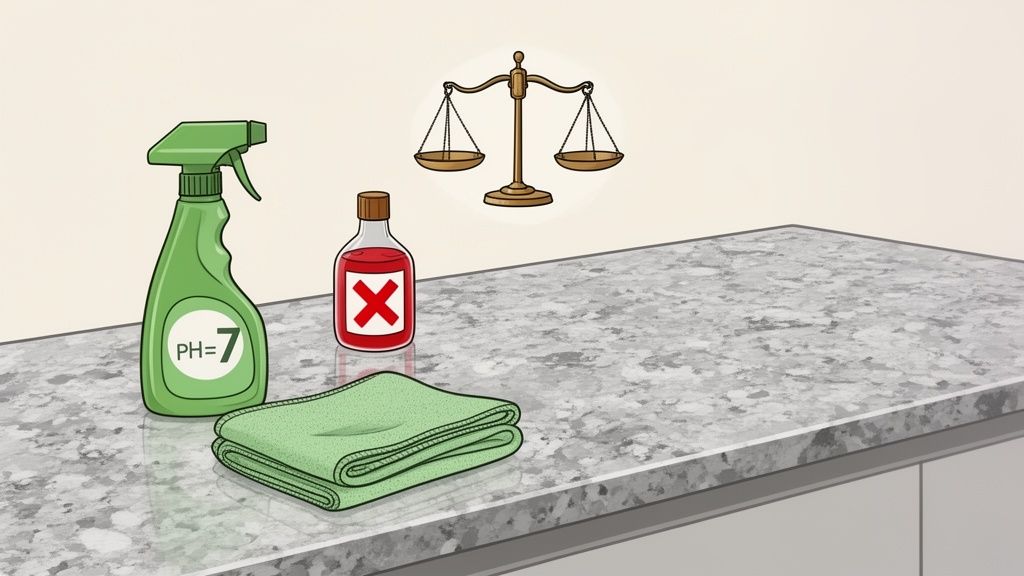
The only safe cleaners for granite are the ones that are pH-neutral. That’s it. End of story. In commercial and public facilities, using anything with harsh acids or alkalis—think bleach, ammonia, or even vinegar—is a critical mistake. These substances actively destroy the stone’s protective seal and dull its finish, setting the stage for costly repairs and a negative brand image.
Why Your Granite Cleaner Is a Critical Business Asset
That gleaming granite counter in your lobby isn’t just a countertop. It's a statement. In an airport lounge, an executive washroom, a gym, or a luxury retail store, that surface tells every visitor that you prioritize quality and don’t cut corners. It’s a powerful piece of your brand’s first impression, signaling a commitment to cleanliness and a superior customer experience.
But here’s the catch: that significant investment is surprisingly easy to ruin. The biggest threat isn’t a dropped briefcase or a coffee spill; it’s the wrong cleaning bottle in the wrong hands. For business owners and facility managers, ensuring staff use safe cleaners for granite isn't just a janitorial task—it's a core strategy for protecting a valuable asset and maintaining your brand’s reputation.
The Hidden Costs of Improper Cleaning
When you use harsh, acidic cleaners or highly alkaline solutions, you're essentially waging a chemical war on your granite. These products attack the protective sealer, which is the stone’s only line of defense against stains and moisture.
Once that barrier is gone, the granite’s natural porosity takes over. It starts soaking up coffee, wine, or oil like a sponge, leading to deep, permanent stains that you can’t just wipe away.
Worse yet, these aggressive chemicals cause etching. This isn't a stain; it's physical damage to the stone itself, leaving a dull, shadowy spot where the polish used to be. Etching can't be cleaned off. It has to be professionally ground and re-polished, a costly and disruptive process. The return on investment (ROI) for proper hygiene is clear: preventing damage is far cheaper than repairing it.
The numbers don't lie. Industry reports show that improper cleaning methods contribute to a staggering 40% of granite surface failures in commercial buildings within the first five years.
Protecting Your Investment for the Long Haul
The demand for the right products is huge for a reason. The global market for granite cleaners hit USD 1.42 billion in 2024, which shows just how seriously facility managers are taking the protection of their high-end surfaces.
Choosing a safe, pH-neutral cleaner is a direct investment in the longevity of your granite. With the right care, you can extend its life by up to 20 years. To see why this is such a critical focus for modern facilities, you can explore more data on the growing market for specialized stone cleaners.
Ultimately, this shifts your cleaning budget from a routine expense into a strategic investment. You’re preserving the physical value of your property and the brand value it represents, ensuring that brilliant first impression lasts for years to come.
The Science of Safe Granite Cleaning
You don't need a chemistry degree to understand what makes a cleaner safe for granite—just a simple analogy. Think of the pH scale like a perfectly balanced seesaw. Right in the middle, sitting level, is pH 7. That’s neutral, and it’s the sweet spot where your granite is safe and happy.
Tip the seesaw to one side, and you get acidity (pH 0-6). Tip it to the other, you get alkalinity (pH 8-14). When you grab a cleaner that isn’t pH-neutral, you’re basically dropping a heavy weight on one side, knocking your granite's environment completely off-kilter.
Why pH Balance Is Non-Negotiable
This imbalance isn’t just a minor issue; it causes real, physical harm to the stone. Granite is a porous rock, and its primary defense against stains and moisture is its sealer. Think of the sealer as its suit of armor. Acidic cleaners—like those with vinegar, lemon juice, or other harsh chemicals—aggressively eat away at this protective layer.
Alkaline cleaners, like products containing ammonia or bleach, are just as bad. They strip that sealer right off and can even react with the minerals inside the granite, leading to dull spots and discoloration. Once that sealer is gone, your expensive countertop is left exposed to every coffee spill, wine splash, and oil splatter.
Etching is not a stain—it's a chemical burn. When acidic or highly alkaline substances sit on granite, they physically damage the stone's surface, leaving a permanent dull mark that can only be fixed through professional re-polishing.
Proper granite care is directly linked to protecting your business's assets and brand image, as this quick map shows.
It’s simple: choosing the right cleaners protects your investment and boosts your brand image. The wrong ones lead straight to costly, irreversible damage.
Identifying Safe vs. Harmful Ingredients
Knowing which ingredients to avoid is the single most important skill for any janitorial team or operations manager. A cleaner might be labeled "all-purpose," but that term can be dangerously misleading when natural stone is involved. For a deeper look at this, you can learn more about what is a neutral pH cleaner and why it’s so critical for sensitive surfaces.
Always, always check the label for specific language. Look for phrases like "pH-neutral," "pH-balanced," or "safe for natural stone." If a product contains anything from the "Do Not Use" list below, it has no business being anywhere near your granite.
This checklist is a fantastic quick reference for your team to instantly tell the good from the bad.
Granite Cleaner Ingredient Safety Checklist
| Ingredient/Chemical | Safety Status | Potential Impact on Granite |
|---|---|---|
| Isopropyl Alcohol (diluted) | SAFE | A great degreaser and disinfectant that evaporates quickly without leaving streaks. |
| Mild Dish Soap (Phosphate-Free) | SAFE | Gentle enough to lift dirt and grime without harming the stone's sealer. |
| Water | SAFE | The universal solvent and the perfect base for any safe granite cleaner. |
| Specialized Stone Cleaners | SAFE | Formulated specifically with a neutral pH to clean stone without causing damage. |
| Vinegar (Acetic Acid) | DO NOT USE | Highly acidic; it will etch the surface and strip the sealer almost immediately. |
| Lemon Juice (Citric Acid) | DO NOT USE | Another strong acid that dulls the finish and makes the stone porous. |
| Bleach (Sodium Hypochlorite) | DO NOT USE | Highly alkaline; it can discolor the stone and degrade the protective sealer. |
| Ammonia | DO NOT USE | Very alkaline; strips sealers and can dull the granite’s natural polish. |
| Abrasive Powders | DO NOT USE | These will physically scratch both the sealer and the stone surface, creating micro-fissures. |
By committing this simple science to memory and training your staff accordingly, you transform cleaning from a risky chore into a strategic act of asset preservation.
Developing Your Granite Maintenance Program
The secret to keeping granite surfaces looking sharp and professional year after year isn't some magic formula. It's consistency. When you move from just reacting to spills to having a proactive maintenance plan, you’re not just cleaning—you’re protecting a serious investment. This is about building a simple, repeatable system that ensures every counter, desk, and vanity reflects your facility’s high standards.

A great program starts by giving your staff clear protocols. You have to define the how, what, and when of granite care. That’s how you turn guesswork into a reliable routine that delivers the same great results, every single time.
Establishing Daily Cleaning Protocols
High-traffic areas need daily attention. Think about your reception desks, food service counters, gym check-in areas, and bathroom vanities—these surfaces are the first impression your facility makes. A simple, consistent daily cleaning routine isn't just nice to have; it's non-negotiable for both aesthetics and hygiene.
The goal here is simple: get rid of dust, smudges, and fingerprints before they have a chance to build up. The best tool for the job? A soft microfiber cloth. Its tiny fibers are incredible at grabbing dust and buffing the surface to a streak-free shine without ever scratching the sealer.
For this daily wipe-down, all you need is a quick spray of a pH-neutral, safe cleaner for granite. Just lightly mist the surface and wipe it down with a clean, dry microfiber cloth. This takes seconds, but doing it at the start or end of each day prevents that slow buildup of grime that eventually dulls the stone's finish.
Managing Spills and Stains Immediately
If there’s one golden rule in granite care, it’s this: act fast. Granite is porous, even when it’s sealed. Spills from acidic stuff like coffee, soda, or wine can start to etch the surface or creep into the stone if they’re left to sit.
Your team needs to be trained to treat every spill like a priority. The right way to handle it is simple but absolutely critical:
- Blot, Don't Wipe: Grab a clean, absorbent cloth or paper towel and blot the spill right away. Wiping just spreads the liquid around and can force it deeper into the stone's pores.
- Clean the Area: Once you've soaked up the mess, clean the spot with a pH-neutral cleaner and a fresh microfiber cloth.
- Rinse and Dry: Give the area a light spray with plain water to rinse off any leftover cleaner, then buff it dry with another clean cloth to stop water spots from forming.
A well-drilled spill response protocol like this can prevent 99% of potential stains, saving you thousands in restoration costs down the road.
Integrating Disinfection Safely
In a world where hygiene is top of mind, just cleaning often isn't enough. The problem is, many common disinfectants are way too harsh for granite. This is where choosing the right product becomes crucial for keeping your surfaces sanitary without destroying them. In busy commercial spaces like gyms, offices, and schools, providing a convenient and safe disinfecting option is key.
When you need a solution that's both effective and safe, we recommend Wipes.com Disinfectant Wipes. They give you a quick, convenient way to sanitize high-touch granite surfaces without using damaging chemicals like bleach or ammonia. Adding these wipes to your daily routine—especially for lobby counters, service desks, and gym check-in areas—helps you meet hygiene standards without putting your assets at risk.
For sales professionals, this is a powerful selling point: offer your clients a solution that not only cleans but also disinfects safely, demonstrating a deeper understanding of their operational needs and asset protection challenges.
How to Protect Your Granite with the Right Sealer
Even the world's best pH-neutral cleaner can only do so much. When it comes to protecting your granite investment for the long haul, the real hero is the sealer.
Think of it like a high-performance raincoat for your stone. Just as a good coat makes water bead up and roll away, a quality sealer stops liquids in their tracks, preventing spills from soaking into the granite’s naturally porous surface.

Without this invisible shield, your daily cleaning routine is just playing defense. A properly sealed surface makes your entire maintenance program more effective, ensuring that safe cleaners for granite can easily wipe away messes that would otherwise set in and cause permanent damage.
The Quick Water Test for Sealer Integrity
So, how do you know if that raincoat is still doing its job? There’s a dead-simple test any facility manager or staff member can perform in less than a minute. It’s called the water test, and it gives you an instant diagnosis of your granite's health.
- Pour a small puddle of water (about three inches across) onto the countertop.
- Start a timer and just watch what happens.
- Check the results after about 10-15 minutes.
If the water is still beaded up on the surface like a freshly waxed car, your sealer is in great shape. But if the water has started to soak in, creating a dark, wet-looking spot, your sealer has worn down. The granite is now vulnerable.
This simple test is a powerful proactive tool. By regularly checking your high-traffic surfaces, you can spot a weakened defense barrier long before a costly coffee or oil stain makes the problem painfully obvious.
Understanding Impregnating vs. Topical Sealers
Not all sealers are created equal, and in a commercial setting, choosing the right one is critical for getting protection that stands up to heavy use. The two main players are impregnating and topical sealers.
- Impregnating Sealers: These are the gold standard for natural stone, hands down. They work by soaking into the granite to clog its pores from the inside out, stopping liquids before they can penetrate. Because the protection is part of the stone itself, it can’t peel or flake away and preserves the granite's natural look and feel.
- Topical Sealers: These create a film on top of the granite, more like a layer of floor wax. While they can add a high-gloss finish, they're far less durable. They can be easily scratched or worn away by daily traffic and cleaning, often requiring constant reapplication in a commercial environment.
For any business, an impregnating sealer is the only real choice. You get invisible, long-lasting protection that just works.
Sealing Frequency for Commercial Facilities
So, how often do you need to reseal? The answer depends entirely on traffic and use. A one-size-fits-all schedule is a recipe for failure.
- High-Traffic Areas (Restaurant Bars, Cafe Counters, Gym Front Desks): These surfaces face a constant barrage of spills, wiping, and acidic ingredients. Test them quarterly and plan on resealing every 6 to 12 months.
- Medium-Traffic Areas (Office Kitchenettes, Lobby Desks): These spots see regular but less intense action. A semi-annual water test is a good rhythm, with resealing typically needed every 1 to 3 years.
- Low-Traffic Areas (Conference Room Credenzas, Bathroom Vanities): With minimal exposure, these surfaces are much lower maintenance. An annual check is usually plenty, and they may only need a fresh coat of sealer every 3 to 5 years.
When you treat sealing as the foundation of your granite care, you turn daily cleaning from a reactive chore into a simple act of preservation.
Smart Procurement and DIY Granite Cleaning Solutions
Keeping your facility’s granite in pristine condition doesn’t have to drain your budget. When you pair smart purchasing with a reliable in-house cleaning solution, you get the best of both worlds: top-tier results and controlled costs. This two-pronged approach gives you the flexibility to either buy the best commercial products with confidence or mix up a safe, effective cleaner using ingredients you already have on hand.
Whether you're buying by the case or making it by the bottle, the core principle is the same: stick to a pH-neutral formula. Anything else is a gamble. Getting this right isn't just about cleaning; it's about asset protection. The right choice prevents expensive repairs down the line and keeps your granite looking as impressive as the day it was installed.
Crafting a Safe DIY Granite Cleaner
For daily wipe-downs and quick spill cleanups, a simple DIY cleaner is often your best bet. It’s incredibly cost-effective and perfectly safe if you get the recipe right. Mixing your own pH-neutral solution is easy and uses just a few household staples that won’t strip your stone’s protective sealer.
Here’s a simple, field-tested recipe you can whip up in minutes:
- The Base: Grab a standard-sized spray bottle and fill it with 1 3/4 cups of cool water. This is the gentle carrier for the active ingredients.
- The Degreaser: Add 1/4 cup of isopropyl (rubbing) alcohol. Alcohol is fantastic for cutting through light grease and helps the solution evaporate in a flash, leaving zero streaks behind.
- The Lift: Squeeze in just a few drops—no more than 1 teaspoon—of a mild, pH-neutral dish soap. That tiny amount is all you need to lift away grime without leaving a dulling film.
- The Mix: Screw the nozzle on tight and give it a gentle shake to combine everything. Make sure you label the bottle "Granite Safe Cleaner" so your team knows exactly what it is and what it’s for.
This simple mix is one of the best safe cleaners for granite out there because it completely avoids the acids and harsh alkalis that wreak havoc on natural stone. It’s perfect for daily maintenance that delivers a streak-free shine. And if you’re managing more than just granite, understanding how to clean natural stone countertops effectively is a great next step.
Smart Procurement for Long-Term Protection
For larger operations, buying commercial-grade cleaners is usually the more practical route. The trick is to stop thinking of it as an expense and start seeing it as an investment in asset protection. When you choose a certified safe cleaner, you’re basically buying an insurance policy against etching, stains, and sealer breakdown.
When you're making the case to management or clients, talk about the Total Cost of Ownership (TCO). A pH-neutral cleaner might cost a bit more upfront, but it saves thousands in potential restoration fees. That makes it the smarter financial choice every single time compared to cheaper, abrasive alternatives.
To make sure your purchasing team gets it right every time, give them a simple checklist. This takes the guesswork out of sourcing and prevents someone from accidentally buying a product that will cause irreversible damage.
The Procurement Checklist for Granite Cleaners
Before any new cleaner makes it into your supply closet, run it against this list. Check the product label and the Safety Data Sheet (SDS) to confirm it meets these non-negotiable standards:
- Says "pH-Neutral" or "pH-Balanced": This is the single most important thing to look for. If the label doesn't shout it from the rooftops, move on.
- No Harsh Chemicals: Scan the ingredients list. If you see ammonia, bleach, vinegar, citric acid, or any other strong acids or alkalis, it’s a hard pass.
- Made for Natural Stone: The product should explicitly state it's "Safe for Natural Stone," granite, or marble. Vague "all-purpose" claims aren't good enough.
- Non-Abrasive Formula: The cleaner should be a liquid spray. Never use powders or creamy cleansers, which often contain tiny abrasives that will scratch the finish over time.
By running this dual playbook—mixing your own safe solution for daily tasks and using a strict checklist for commercial buys—you’ll guarantee your granite surfaces stay brilliant, beautiful, and damage-free for years.
Make Your Surfaces Your Competitive Advantage
Let’s be honest. Your facility's granite surfaces are much more than just countertops or floors. They're a silent billboard for your brand's commitment to quality. A gleaming, well-maintained surface tells every client, guest, and customer who walks through your doors that you care about the details. On the flip side, a dull, stained, or etched surface sends an equally powerful message—and it's not the one you want.
Exceptional granite care really comes down to three things. First, using a pH-neutral cleaner is non-negotiable if you want to protect the stone itself. Second, a tough, regularly maintained sealer is your first line of defense against stains and damage. And finally, a simple, standardized daily cleaning protocol turns asset protection into a reliable routine that anyone on your team can follow.
From Expense to Investment
It’s time to stop thinking about your sanitation budget as a sunk cost. Instead, see it as a direct investment in customer trust and brand reputation. When a client walks in and sees pristine surfaces, they immediately feel more confident in your entire operation. That perception is a powerful driver of loyalty and positive reviews, turning your maintenance budget into a genuine marketing asset.
In a crowded market, how clean your facility feels is a huge differentiator. A well-cared-for environment doesn't just look better—it makes customers feel safer and more valued, which is a big reason they choose to come back.
By adopting these proven practices and using cleaners that are actually safe for granite, you're doing more than just cleaning. You’re protecting a major financial investment, elevating the guest experience, and building a stronger brand from the ground up. Prioritize the cleanliness of your facility and consider integrating convenient solutions like disinfectant wipes into your daily routine or product offerings to set a new standard of excellence.
Granite Care FAQs
When you're managing a busy commercial facility, questions about granite care are bound to pop up. Downtime isn't an option, and keeping those surfaces looking pristine is critical. Here are some straightforward answers to the questions we hear most from operations managers and cleaning crews.
How Can I Test a New Cleaner for Safety?
Before you roll out a new product across every granite surface in your building, you absolutely have to do a spot test. It's a non-negotiable step that can save you from a costly disaster.
Find a small, hidden area to work with—think a back corner of a countertop that's usually covered by equipment, or even the underside lip of a bar. Apply a little bit of the cleaner, let it sit for a few minutes as directed, then wipe it off and rinse the spot with plain water. Dry it completely with a microfiber cloth.
Now, wait. Give it a full 24 hours. Then, go back and inspect the area under good lighting. If you see any dullness, discoloration, or etching, that cleaner is a no-go. If it looks exactly the same, you're likely in the clear.
What Is the Best Way to Remove Tough Stains?
For stubborn stains like permanent marker or grease, your first instinct might be to scrub harder. Don't do it. A targeted approach is what you need, not brute force. For anything oil-based (like cooking grease or some cosmetics), a poultice is your secret weapon.
- Mix baking soda and water into a thick, peanut-butter-like paste.
- Slather the paste over the stain, about a quarter-inch thick.
- Cover it with plastic wrap and tape the edges down to keep it from drying out.
- Let it sit for 24 hours. The poultice will work like a magnet, slowly pulling the oil out of the stone’s pores.
- Once the time is up, remove the plastic, let the paste dry completely, and then gently scrape it off with a plastic putty knife. Finish by cleaning the area with your usual pH-neutral cleaner.
For ink stains, try dabbing the spot with a cloth dampened with isopropyl alcohol. The key is to blot, never rub. Work from the outside of the stain toward the center to keep it from spreading.
How Often Should Commercial Granite Be Professionally Serviced?
There’s no magic number here; it all comes down to traffic and usage. A one-size-fits-all schedule just doesn't work for commercial spaces.
- High-Traffic Zones (Hotel lobbies, busy bars): These areas take a beating. Plan on having them professionally assessed every year. They'll likely need a deep clean and polish every 1-2 years to keep their shine and ensure the protective seal is holding up.
- Moderate-Traffic Zones (Office kitchenettes, reception desks): For these spots, a professional service every 3-5 years is usually enough to handle minor wear and tear and re-evaluate the sealer.
Can I Use All-Purpose Disinfectant Wipes on Granite?
This is a big one, and the short answer is almost always no. Your standard disinfectant wipes are loaded with harsh chemicals like citric acid or even bleach. These ingredients will eat away at the granite's sealer and can even etch the stone itself, leaving behind permanent dull spots.
Always, always check the label. If a wipe doesn't specifically say it's safe for sealed natural stone, keep it far away from your granite. To be safe, stick with sprays or wipes that are formulated for stone. That way, you’re sanitizing the surface without causing expensive, irreversible damage. This is exactly why it's so important to source safe cleaners for granite that are built for the job.
Leave a Reply