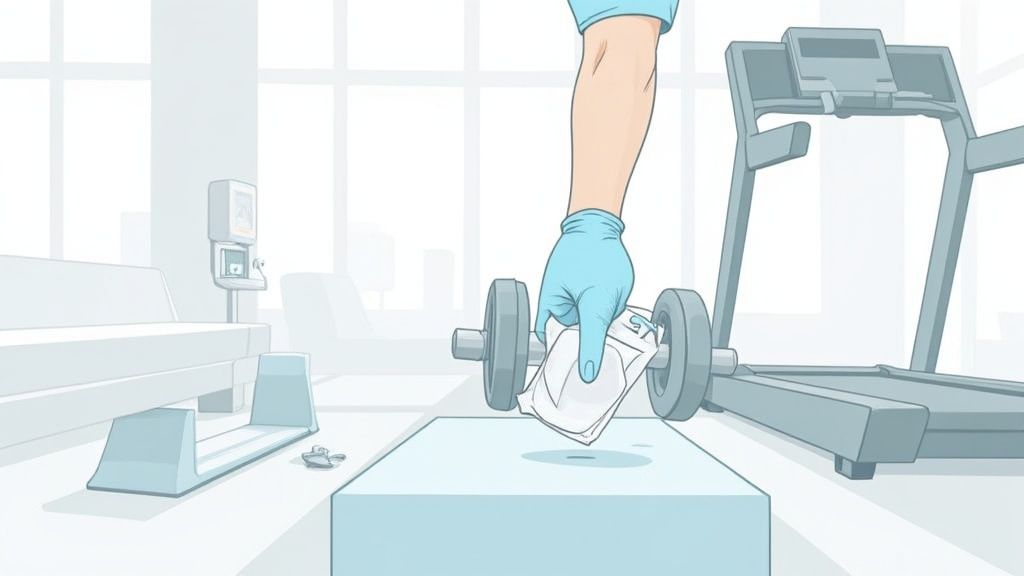
In any high-traffic facility, from a bustling gym to a busy office, a simple wipe-down just doesn’t cut it anymore. For a space to be truly clean and safe for clients, members, and staff, disinfecting is the new standard. Using quality gym wipes disinfectant goes beyond just making things look good—it actively kills the germs that linger on surfaces, a critical step in protecting your people and your brand's reputation.
The Shift from Clean to Disinfected
In today’s health-conscious world, the definition of "clean" has been fundamentally redefined. Customers and employees no longer just assume a space is sanitary; they actively look for proof. This means that simply wiping away visible dirt and sweat is only half the job. The real work—and the real value—lies in disinfection.
This is the perfect time to get clear on the difference between cleaning and disinfecting. They are not the same thing, and understanding why will revolutionize how you approach your facility's hygiene strategy.
Cleaning vs. Disinfecting at a Glance
For anyone managing a commercial facility or selling cleaning solutions, understanding this distinction is non-negotiable. Cleaning is about appearance; disinfecting is about health. Here's a quick breakdown.
| Aspect | Cleaning | Disinfecting |
|---|---|---|
| Primary Goal | Remove visible dirt, grime, and debris. | Kill germs like bacteria and viruses. |
| Tools Used | Soap, detergent, water. | EPA-registered chemical disinfectants. |
| Outcome | Surfaces look visually clean. | Reduces the risk of spreading illness. |
| Germs | Physically moves germs from a surface. | Kills germs on contact. |
| Best For | The first step in any sanitation process. | High-touch surfaces after they've been cleaned. |
In short, you must clean before you can effectively disinfect. You can't kill germs if they're hiding under a layer of grime. One sets the stage; the other finishes the job.
High-Touch Zones: The Hidden Dangers
Think about the journey a customer, employee, or member takes through your facility. They touch door handles, check-in screens, locker doors, and dozens of pieces of equipment. In an office, it’s the coffee pot handle, microwave buttons, and conference room chairs. These are the high-touch zones where invisible threats thrive.
- Gyms: Dumbbell handles, treadmill screens, and weight benches get touched by countless people every single hour.
- Offices: Shared keyboards, elevator buttons, and kitchen faucets can harbor germs that lead to more sick days.
- Schools: Desks, water fountains, and doorknobs are constant points of contact for students and staff.
Without a dedicated disinfecting protocol, these surfaces become hotspots for spreading illness, impacting everything from customer health to staff productivity.
Building Trust Through Visible Cleanliness
Placing dispensers with disinfecting wipes in strategic, visible locations does more than just promote hygiene. It sends a powerful message to everyone who walks through your doors: we care about your health and safety.
This simple act builds a massive amount of trust and loyalty. Imagine a potential member touring your gym. They see other members and staff actively wiping down equipment. That visible commitment to cleanliness instantly becomes a key differentiator that sets you apart from the competitor down the street.
Your cleaning budget is no longer just an operational expense. It's a direct investment in your brand's reputation, customer confidence, and long-term success.
This isn't just a feeling; the market data backs it up. The global anti-infective wipes market, valued at around USD 7.2 billion, is projected to more than double to USD 15.4 billion by 2035. Disinfectant wipes are the powerhouse in this space, making up 69% of the market because they work. You can learn more about the anti-infective wipes market growth and what it means for facility standards.
The True ROI of a Disinfection Program
For facility managers and sales professionals, it's time to reframe the conversation. You're not just selling wipes; you're selling the solution they provide. A solid disinfection strategy delivers a real, tangible return on investment.
It cuts down the risk of outbreaks, minimizes staff absenteeism, and protects your brand from the damage that comes from being seen as an unclean facility.
Prioritizing hygiene with a product like a gym wipes disinfectant is a proactive business strategy. It shows you’re not just meeting expectations but exceeding them, creating an environment where people feel safe, valued, and ready to come back.
How to Use Disinfectant Wipes Correctly
There's a right way and a wrong way to use a gym wipes disinfectant. A quick, careless swipe might make a surface look clean, but it does little to actually kill the germs lurking there. To truly get the job done, there's a technique involved—a method that turns a simple wipe into a powerful tool for facility health.
Mastering this isn't just about cleaning; it's about disinfecting at a microbial level.
First, let's get one thing straight: cleaning and disinfecting are not the same. This visual guide breaks down the essential steps to take a surface from dirty to genuinely safe.

As you can see, you can't skip a step. You have to get rid of the physical grime before the disinfectant can go to work on the germs underneath.
The Secret to Germ-Killing Success: Dwell Time
Here’s the single most overlooked factor in any disinfection process: dwell time. This is the non-negotiable amount of time a surface must stay visibly wet with the disinfectant to actually kill the pathogens listed on the label.
If a wipe's solution evaporates before the required dwell time is up, you're not disinfecting. You're just wiping. Look at the product's packaging for this critical piece of information—it’s usually listed near the EPA registration number and can be anywhere from 30 seconds to several minutes.
A disinfectant wipe that dries in 15 seconds is useless if the product requires a 2-minute dwell time to kill a specific virus. The surface must stay wet for the entire duration to do its job.
This one piece of knowledge can dramatically boost the effectiveness of your team's sanitation protocols. Make sure every staff member knows how to read the label and respects the required contact time.
Master the Wipe Technique
How you wipe is just as critical as how long the surface stays wet. A common mistake is using one wipe for a huge area or scrubbing back and forth, which often just smears the germs you picked up right back onto the surface.
To sidestep cross-contamination, teach your team the S-pattern method:
- Start at one corner of the surface.
- Wipe in a sweeping "S" motion, moving from the cleanest area toward the dirtiest.
- Don't lift the wipe and go back over an area you’ve already covered.
- For bigger surfaces, grab a fresh wipe. You need enough solution to meet that dwell time.
This technique ensures you’re consistently pushing contaminants away from clean zones instead of just spreading them around.
Targeting High-Touch Zones for Maximum Impact
An effective strategy doesn’t treat all surfaces equally. It focuses on the areas that see the most human contact. These hotspots are the front lines in the battle against germs, and prioritizing them means your efforts will have the biggest impact on health and safety.
Facility-Specific Hotspot Checklist
- Gyms & Fitness Centers: Dumbbell and barbell handles, treadmill control panels, weight machine grips and pins, locker room benches, and water fountain buttons.
- Offices: Door handles, light switches, conference room tables, shared keyboards and mice, and kitchen appliance handles (microwave, fridge, coffee pot).
- Schools & Daycares: Desks and tabletops, shared toys, doorknobs, handrails, and cafeteria tables.
- Retail Stores & Restaurants: POS systems, shopping cart handles, front door handles, and public restroom fixtures.
For a sales professional, this checklist is a fantastic tool. You can walk a potential client through their own facility, point out these vulnerable spots, and show them how disinfectant wipes offer a direct, simple solution. Highlighting these specific points of failure makes the need for a solid hygiene program immediately obvious.
Establishing the Right Cleaning Frequency
So, how often should you disinfect? The answer hinges on your foot traffic. A small, boutique personal training studio has totally different needs than a massive commercial gym that's open 24/7.
Here’s a good rule of thumb:
- High-Traffic Areas: Surfaces like dumbbell handles or front door knobs should be wiped down multiple times a day—ideally after every few uses.
- Medium-Traffic Areas: Think shared office equipment or conference tables. These might only need a thorough disinfection once or twice daily.
- Low-Traffic Areas: Less-used spaces can typically be handled as part of a daily closing routine.
The best approach is to build a culture where both your staff and members chip in. Placing user-friendly gym wipes disinfectant dispensers in convenient locations empowers everyone to help maintain a cleaner environment. By focusing your efforts on key hotspots and prioritizing correct usage, you create a demonstrably safer space that builds confidence and keeps people coming back.
Match Your Cleaning Plan to Your Facility
A one-size-fits-all cleaning plan just doesn't work. The hygiene challenges in a high-traffic gym are worlds apart from those in a quiet office or a busy restaurant. To get real results, you have to think about your specific environment—where people touch, how they move, and what they leave behind.
It’s about moving from a generic checklist to a smart, customized playbook. This means putting gym wipes disinfectant dispensers where they’ll actually get used and giving your team clear, simple protocols to follow. When your plan fits your facility, it's not just more effective; it's more efficient, too.

The Fitness Center Playbook
Let's be honest: gyms are breeding grounds for germs. You've got sweat, heavy breathing, and hundreds of people sharing the same equipment. It’s the perfect storm. Your strategy needs to be two-pronged: a defensive game played by your staff (deep cleaning) and an offensive game played by your members (wipe-downs).
Placement is everything. Don't just toss a dispenser by the front door and call it a day. Think like a member walking through their workout:
- Cardio Zone: Put dispensers right in the mix—near every bank of treadmills, ellipticals, and bikes. People need to wipe down screens and handles the second they hop off.
- Free Weights Area: This is a non-negotiable. Scatter multiple dispensers near dumbbell racks, benches, and cable machines. The goal is to build a "wipe-as-you-go" culture.
- Machine Circuits: A centrally located dispenser within a machine circuit makes it easy for members to grab a wipe between sets without breaking their flow.
Your staff should be hitting the equipment hard throughout the day, focusing on the spots members often forget, like weight pins, seat adjustment levers, and cable attachments. For a deeper dive, check out our guide on choosing the best disinfectant wipes for gym equipment.
Sanitizing the Modern Office
In an office, the game changes. You're not fighting sweat, you're fighting the spread of seasonal bugs that lead to sick days and kill productivity. The focus shifts from heavy-duty equipment to shared resources and high-touch communal areas.
Start by encouraging a clean-desk culture. Employees should be wiping down their own keyboards, mice, and phones. For common spaces, however, you need a more structured approach.
A clean office isn't just about appearances; it's a direct contributor to employee wellness and operational continuity. Fewer sick days and a healthier workforce are tangible returns on your hygiene investment.
Office Hotspot Checklist:
- Kitchen/Breakroom: Microwave handles, fridge doors, coffee pot buttons, and water cooler spigots need to be sanitized multiple times a day.
- Meeting Rooms: Make it a rule to wipe down tables, chairs, remotes, and conference call equipment after every single meeting.
- Common Areas: Don't forget the silent spreaders: elevator buttons, reception desks, and door handles that everyone touches.
By making disinfectant wipes impossible to miss in these key areas, you empower your team to take an active role in keeping the workplace healthy.
Hygiene in Educational Settings
Schools are high-density, high-energy environments where germs can spread like wildfire. The strategy here is all about frequency and targeting the surfaces that hundreds of little hands touch between classes.
Disinfection needs to be a scheduled, non-negotiable routine. In classrooms, desks and chairs should be wiped down at the end of each day. In the cafeteria, tables must be sanitized between every lunch period to stop cross-contamination in its tracks.
Key focus areas include:
- Classroom Surfaces: Desks, shared supplies (like scissors, tablets, or art materials), and doorknobs.
- Common Areas: Library tables, computer lab keyboards, and hallway water fountains see constant use.
- Playground Equipment: Often overlooked, playground structures should absolutely be part of a regular disinfection schedule.
Restaurants and Retail Front-of-House
For businesses like restaurants and retail stores, visible cleanliness is currency. It builds trust and directly impacts sales. A customer who sees a staff member actively wiping down a payment terminal is instantly more confident in that establishment's overall hygiene.
Your front-of-house sanitization plan has to be meticulous. In restaurants, that means tables, menus, condiment bottles, and payment terminals get disinfected between every single party. In retail, the hot spots are shopping cart handles, checkout counters, and fitting room doors.
This isn't just good practice; it's what modern consumers expect. In fact, this shift is driving major market growth. North America’s gym and fitness wipes sector alone is projected to grow from $75.5 million to around $132.8 million by 2032. This surge shows that people are actively looking for—and rewarding—businesses that take hygiene seriously.
No matter the building, a tailored strategy is the only one that works. By identifying your unique high-risk zones and putting smart, specific protocols in place, you create a safer, more trustworthy environment for everyone. Make disinfectant wipes a visible part of your daily routine—your customers and your staff will thank you for it.
How to Sell the True Value of Cleanliness
For sales pros and business owners, the conversation around hygiene has changed for good. You're not just selling a disposable product; you're offering a critical business solution. The key is to stop talking about cost-per-wipe and start talking about the undeniable return on investment that a real cleanliness program delivers.
Selling gym wipes disinfectant isn't about the product's features. It's about the problems it solves for your clients. Whether you're talking to a fitness center, a corporate office, or a retail store, your goal is to become their go-to hygiene partner, not just another line item on an invoice.
Frame the Conversation Around Hygiene ROI
The real value of a disinfectant wipe isn't the wipe itself—it's the results it creates. As soon as you connect your product to a client's bottom line, the conversation flips from an expense to an investment. You have to frame the benefits in the language they speak: revenue, reputation, and risk.
-
For Gyms: The ROI is simple: member retention. A visibly clean gym makes members feel safer and more valued, which is a huge factor in their decision to renew. Higher retention means predictable revenue and lower marketing costs to replace churn.
-
For Offices: The ROI is all about productivity. Fewer germs on shared keyboards, door handles, and coffee makers mean fewer employee sick days. Less absenteeism keeps projects on track and keeps the engine running smoothly.
-
For Retail & Restaurants: The ROI is customer confidence. A clean environment makes people stay longer, spend more, and come back. It builds trust and protects the brand's reputation, which you can't put a price on.
This approach turns a simple roll of gym wipes disinfectant into a tool for business growth. You’re selling peace of mind, operational continuity, and a stronger brand.
Uncover Pain Points with Strategic Questions
Don't lead with your product. Lead with curiosity. Your job is to uncover the specific hygiene challenges your client is actually dealing with. The right questions will get them to spell out their own needs, making your solution the obvious next step.
Start with open-ended discovery questions that get them talking:
- "How are you currently handling health and safety concerns in your busiest areas?"
- "Have you gotten any feedback—good or bad—from customers or staff about the cleanliness of the facility?"
- "What's your biggest worry when it comes to keeping a healthy environment for everyone who walks through your doors?"
Then, just listen. If a gym owner mentions members complaining about sweaty equipment, you've got your opening. If an office manager is worried about the flu season wiping out half their team, you can frame disinfectant wipes as a proactive wellness strategy.
The best sales conversations aren't about pitching; they're about problem-solving. When you understand a client's specific pain points, you can present your product not as a commodity, but as the exact solution they were looking for.
This diagnostic approach makes you a consultant. You’re not just pushing a product; you’re helping them solve a real business problem. That builds a much stronger, more loyal relationship.
Create Comprehensive Hygiene Solutions
Never sell wipes in a vacuum. The smartest strategy is to bundle them into a complete hygiene program. This adds a ton of value for the client and positions you as an indispensable supplier. When you think holistically, you can build a custom package that solves all their problems at once.
Think about offering a tiered "Hygiene Program" that includes:
- The Essentials: High-quality, EPA-registered disinfectant wipes as the core of the program.
- Dispensing Systems: Strategically placed wall-mounted units or freestanding stations that encourage people to actually use the wipes.
- Educational Materials: Simple, visual guides for staff and customers on how to wipe correctly, especially explaining things like dwell time.
- Complementary Products: Hand sanitizer stations, back-of-house surface cleaners, or even air purifiers.
By bundling, you shift from a one-off sale to a recurring partnership. You become their expert for all things clean, which makes it way harder for a competitor to swoop in with a lower price on a single item. You're giving them a full-service solution that saves them time, simplifies their ordering, and gets them better results.
Ultimately, your success comes down to selling the outcome, not the object. When you treat cleanliness as a business strategy, you empower your clients to create safer, more trusted environments. And a solid disinfectant wipe program is the first, most visible step to getting there.
Choosing the Right Gym Wipes Disinfectant
Not all disinfecting wipes are created equal. When you're standing in a supply aisle or scrolling through dozens of online options, it’s easy to get overwhelmed. Every brand promises a superior clean, but for a facility manager or business owner, the right choice goes way beyond price-per-wipe. You're balancing safety, equipment longevity, and your brand's reputation.
This is your no-nonsense buyer's guide. We'll cut through the marketing fluff and focus on what actually matters, ensuring the wipes you pick truly kill germs without damaging your expensive equipment.

Decoding the Label: EPA Numbers and Kill Claims
The single most critical detail on any disinfectant wipe container is the EPA Registration Number. This isn't just a random string of digits; it’s your guarantee. It proves the product's germ-killing claims have been rigorously tested and verified by the Environmental Protection Agency.
Without that number, you have zero assurance the wipe is doing anything more than just smearing germs around. It's the difference between a real disinfectant and a glorified wet napkin.
Once you spot the EPA number, look for the "kill claims." This is the list of specific bacteria and viruses the wipe is proven to eliminate, like Staph, MRSA, or Influenza. Your job is to match these claims to the most common threats in your environment.
An EPA registration number is non-negotiable. If you don't see one on the label, put the product back. It's the only way to be certain you're buying a true disinfectant.
This one step is the foundation of any hygiene program that actually works.
Surface Compatibility: Protect Your Assets
A powerful disinfectant is completely useless if it destroys the very surfaces you're trying to protect. Think about it—your treadmills, office furniture, and POS systems are massive investments. The wrong chemical formula can cause vinyl to crack, rubber to degrade, and screens to cloud up, leading to premature aging and costly replacements.
Always check the product label for surface compatibility. Look for formulas specifically designed to be safe on common commercial materials:
- Vinyl and Upholstery: Found on nearly all benches and machine pads.
- Rubber: Essential for dumbbell grips, floor mats, and cable handles.
- Plastics and Acrylics: Used for cardio machine consoles and equipment housing.
- Metals: Including the stainless steel and chrome on your racks and machines.
Many of the best modern gym wipes use quaternary ammonium compounds (or "Quats"), which are known for being tough on germs but gentle on surfaces. If you’re sourcing for a large facility and need more details, check out our guide on purchasing bulk disinfecting wipes.
The Practical Stuff That Makes a Real Difference
Beyond the chemical formula, the physical wipe and its dispenser have a huge impact on whether people actually use them—and how much you spend. The global gym wipes market is booming, expected to hit around $500 million as health awareness continues to drive demand. Your choice matters more than ever. You can learn more about the gym wipes market's upward trend and what it means for your facility.
To help you decide, let's break down the features to look for.
Disinfectant Wipe Feature Comparison
Use this table to weigh the options and find the perfect fit for your facility's unique needs. It compares the key features, explains what to look for, and clarifies why each one is important for your day-to-day operations.
| Feature | What to Look For | Why It Matters |
|---|---|---|
| EPA Registration | A clearly visible EPA Registration Number on the label. | This is your only proof that the product is a legitimate disinfectant that has been scientifically tested and approved. |
| Kill Claims | Lists specific pathogens like MRSA, Staph, Influenza, and Human Coronavirus. | You need a wipe effective against the germs most commonly found in high-traffic environments. |
| Wipe Material | Thick, textured, and durable fabric that doesn't tear easily. Non-linting is a plus. | A flimsy wipe forces users to grab multiple, driving up costs and waste. A durable wipe cleans more surface area. |
| Surface Safety | Explicitly states it's safe for vinyl, rubber, plastic, and finished metals. "Non-corrosive" is a key term. | Protects your expensive equipment from damage, discoloration, and premature wear and tear. |
| Formula Ingredients | Quaternary Ammonium Compounds (Quats) are effective and surface-friendly. Alcohol-free formulas prevent drying/cracking. | The right ingredients kill germs without harming your assets or leaving harsh chemical odors. |
| Wipe Size | Look for larger wipes (e.g., 7"x8" or bigger). | Bigger wipes cover more ground. A member can clean an entire bench with one wipe instead of three. |
| Dispenser Options | Wall-mounted, freestanding stations, or portable canisters. | The right dispenser placement encourages use, saves space, and reduces clutter. |
Ultimately, the best wipe is the one that fits seamlessly into your facility's flow. Think about where your customers and staff need them most and choose a system that makes it easy for them to do the right thing.
Choosing the right gym disinfectant wipe is a strategic decision. It directly impacts your customers' health, the longevity of your equipment, and the reputation of your brand. By looking beyond the price tag and focusing on these critical details, you can select a product that provides real protection and gives everyone who walks through your doors total peace of mind.
Answering the Common Questions About Disinfectant Wipes
Even with the best plan, you're going to get questions. From your staff, from your customers, from just about everyone. Getting ahead of these common concerns helps make sure your new hygiene program runs smoothly and everyone uses your wipes the right way.
Here are the questions we hear all the time, along with the straight answers.
Can I Use These Wipes on the Cardio Screens?
This is probably the #1 question you'll get, especially with all the high-tech equipment in modern gyms and offices. The answer is a solid maybe. It all comes down to the product label.
You absolutely have to check first. Many modern disinfectant wipes are formulated to be safe on electronics, but you can’t just assume. Wiping down a sensitive touchscreen with the wrong formula can cause serious damage over time.
As a rule of thumb, always tell your team and customers to avoid using a wipe that’s dripping wet. A gentle but thorough wipe-down is all it takes.
How Do I Know a Wipe Actually Disinfects Anything?
Great question. The proof is right on the label: look for the EPA Registration Number.
This little number is your guarantee that the U.S. Environmental Protection Agency has reviewed all the scientific data and verified that the product actually kills the germs it claims to kill.
An EPA number is your assurance that you're using a true disinfectant, not just a fancy cleaning wipe. Without it, you’re just guessing.
The label also lists the dwell time—that’s the critical amount of time a surface must stay visibly wet for the disinfectant to do its job. If the dwell time is 2 minutes, but the wipe dries in 30 seconds, you haven't disinfected anything. This is non-negotiable for effective germ-killing.
What’s the Difference Between Sanitizing and Disinfecting?
People use these words interchangeably, but in the world of public health, they mean very different things.
Sanitizing is about reducing the number of germs to a level that's considered safe. Think of it as knocking down the germ population.
Disinfecting, on the other hand, is about eliminating them. A true disinfectant is formulated to kill nearly 100% of the specific bacteria and viruses listed on its label.
For high-touch environments like a gym, clinic, or a busy office, you need a gym wipes disinfectant. It offers a much higher level of protection against illness, which is exactly what your customers and staff expect. It’s not just about cleaning; it’s about showing you’re committed to their health. Don't settle for clean when you can achieve disinfected. Prioritize the health of your community by integrating a proven disinfectant wipe into your daily routine or product offerings today.
Leave a Reply