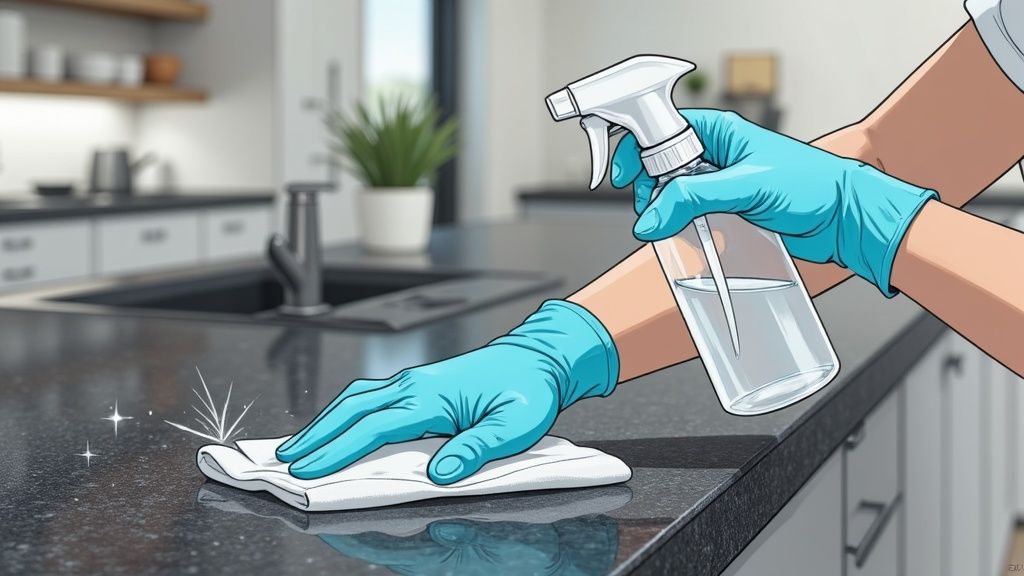
In high-traffic commercial and public facilities, maintaining impeccable cleanliness isn't just a task—it's a statement. A pristine granite reception desk, a spotless gym counter, or a clean restaurant bar communicates a powerful commitment to health and safety. The key to achieving this standard lies in an effective daily routine that goes beyond simple cleaning to include proper disinfection, often made simple and efficient with disinfectant wipes.
First, you must clean before you disinfect. Clear the surface, then wipe it down with a pH-neutral cleaner to remove dirt and grime. This allows your disinfectant to work effectively. For the disinfection step, use a 70% isopropyl alcohol solution or a dedicated granite-safe disinfectant wipe. Crucially, allow the disinfectant to sit for its required contact time before wiping it dry. This two-step process—clean, then disinfect—is the foundation of a truly hygienic environment.
Why Daily Granite Disinfection is a Smart Business Move

In any commercial space, perception is reality. A sparkling granite countertop sends a clear message: this business prioritizes health, safety, and attention to detail. This visible commitment to cleanliness can be a deciding factor for customers, clients, and employees, directly impacting your bottom line. Investing in a consistent daily disinfection program for high-touch surfaces isn't just an operational cost; it's an investment in your brand's reputation and long-term success.
The ROI of a Proactive Hygiene Strategy
A clean environment delivers tangible business benefits. In an office, it contributes to fewer sick days and higher productivity. For a restaurant, gym, or retail store, it builds customer trust, encouraging repeat business and positive reviews. The stakes are high—one study found that a staggering 94% of customers would avoid a business with dirty restrooms. Daily disinfection is a direct investment in customer retention and public health.
The principles of preventing cross-contamination in home cleaning are magnified in public facilities, where the volume of traffic increases the risk of germ transmission exponentially.
For a gym owner, a visibly clean granite check-in counter is a silent promise to members that equipment and other surfaces receive the same meticulous care. This builds a foundation of trust that is essential for member retention and satisfaction.
Integrating disinfectant wipes into your daily routine makes this process incredibly efficient. They offer a pre-measured, no-fuss solution that empowers your entire team—from dedicated janitorial staff to front-desk employees—to quickly sanitize surfaces throughout the day, ensuring a consistently high standard of cleanliness. This simple habit elevates your facility's reputation and becomes a cornerstone of the customer experience.
Choosing Disinfectants That Protect Your Granite Investment

When disinfecting granite surfaces daily, using the wrong product is a costly mistake. Harsh, all-purpose disinfectants can strip the protective sealant, dull the finish, and even etch the stone itself. Common cleaners like bleach, ammonia, or acidic options like vinegar and lemon juice are detrimental to granite. Over time, they break down the sealant, leaving the porous stone vulnerable to stains, spills, and the very bacteria you're trying to eliminate.
The Right Tools for a Tough Job
To protect your granite while effectively killing germs, you need gentle yet powerful solutions.
- Isopropyl Alcohol Solution: A spray bottle containing a 70% isopropyl alcohol and 30% water solution is one of the most effective tools. It's a powerful disinfectant that is safe for sealed granite and evaporates quickly, leaving a streak-free finish.
- pH-Neutral Disinfectants: Your other go-to should be a dedicated stone cleaner or disinfectant with a neutral pH. These are specifically formulated to clean and kill germs without corrosive effects. To understand the science behind them, you can learn more about what pH-neutral cleaners are and how they work. Always check the product label to ensure it's approved for use on sealed natural stone.
For quick reference, here’s a guide to help your team make the right choice every time.
Granite Disinfectant Safety Guide
| Cleaning Agent | Safety for Granite | Effectiveness | Best For |
|---|---|---|---|
| 70% Isopropyl Alcohol | Excellent. Safe for daily use on sealed granite. | High. Kills a broad spectrum of bacteria and viruses. | Quick, daily disinfection of high-touch commercial surfaces. |
| pH-Neutral Stone Cleaner | Excellent. Specifically designed for stone surfaces. | High. Cleans and disinfects without damaging the seal. | Routine cleaning and disinfecting for a pristine, streak-free shine. |
| Mild Dish Soap & Water | Good. Safe for light daily cleaning. | Low. Cleans grime but does not reliably disinfect. | Wiping up spills and light daily maintenance. |
| Bleach, Ammonia, Vinegar | Very Poor. Will damage the sealant and etch the stone. | High (but damaging). | Never use on granite. |
Protecting your facility's investment in granite starts with using the right tools. For more insights on maintaining similar surfaces, you can find excellent expert tips for natural stone floor cleaning, including granite.
A Practical Daily Granite Disinfection Routine for Staff
A consistent, repeatable daily protocol is essential for keeping granite surfaces safe in a high-traffic environment. This simple process can be followed by any team member, from professional janitorial staff to front-desk employees, ensuring a consistently high standard of hygiene. The first rule is always to pre-clean the surface. You can't properly disinfect a dirty countertop. Use a pH-neutral cleaner and a microfiber cloth to remove crumbs, spills, and visible grime, which allows the disinfectant to do its job effectively.
The Disinfection Process
Once the surface is clean, it's time to disinfect. A 70% isopropyl alcohol solution is a highly effective and granite-safe option. Health experts consistently recommend alcohol-based solutions for reliable disinfection, a practice reinforced in many professional guides for countertop disinfection.
The most critical step is observing dwell time—the amount of time a disinfectant must remain wet on a surface to effectively kill pathogens. For a 70% alcohol solution, this is typically 3 to 5 minutes. Wiping it away too soon significantly reduces its germ-killing power.
This simple three-step process is visualized below, making it easy to train your staff for perfect execution every time.

After the dwell time is complete, wipe the surface with a clean, water-dampened cloth to remove any residue, then dry it completely with a fresh microfiber cloth. This final step prevents streaks and leaves your granite with a polished, professional finish.
Efficiency Hack: The S-Pattern Technique
For large surfaces like reception desks or bars, technique matters. Avoid circular wiping motions, which can spread germs around. Instead, train your staff to use the S-pattern. Start at one end of the counter and wipe in a continuous "S" motion to the other end without lifting the cloth. This ensures complete coverage and prevents re-contaminating areas you've just cleaned—a small change that delivers a big impact on hygiene.
Tailoring Your Strategy: Facility-Specific Disinfection Tips

Effective daily disinfection isn't a one-size-fits-all strategy. The key is to tailor your cleaning frequency and methods to your facility's specific use patterns, focusing on high-touch granite surfaces.
- Gyms & Fitness Centers: Reception counters and locker room vanities are germ hotspots, especially during morning and evening rush hours. Implement a schedule to disinfect these surfaces every hour during peak times. Keeping disinfectant wipes at the check-in desk also empowers staff to maintain cleanliness between professional cleanings.
- Offices: The granite countertops in breakroom kitchens and at the main reception desk are primary contamination points. An effective strategy is to empower employees by placing canisters of granite-safe disinfectant wipes in these areas. This fosters a culture of shared responsibility and keeps surfaces sanitary throughout the day.
- Restaurants & Retail: Bar tops and checkout counters require constant disinfection due to rapid customer turnover. Here, speed and efficiency are critical. Equip staff with a quick-use 70% isopropyl alcohol spray and microfiber cloths to create a seamless clean-and-disinfect workflow between transactions. Providing disinfectant wipes for customer use can also build confidence and demonstrate a commitment to safety.
Sales Tip: When talking to clients, frame this not as an extra task but as a proactive hygiene system. Explain how providing disinfectant wipes in key areas—like office kitchens or gym entrances—creates a visible commitment to health that employees and customers will notice and appreciate. This tangible benefit often justifies a higher-level service package.
By customizing your approach, you move from simply cleaning to implementing a smart, facility-specific hygiene program that protects staff, impresses customers, and enhances your brand's reputation.
Selling Hygiene: Integrating Disinfectant Wipes into Your Service Offering
For cleaning industry professionals, disinfectant wipes are more than a convenience—they are a powerful sales tool. When positioned correctly, they transform your service from a simple cleaning contract into a comprehensive hygiene partnership. The conversation with clients should shift from "what we clean" to "how we help you maintain a safe and healthy environment." This demonstrates a higher level of value and expertise.
Proving Value and Boosting Client Retention
How do you strategically incorporate disinfectant wipes into your offerings?
- Create "Always Stocked" Packages: Bundle a monthly supply of granite-safe disinfectant wipes into your service contracts. This offers clients a turnkey solution and adds tangible, recurring value to your service.
- Pitch Branded Sanitation Stations: Propose setting up easy-access "sanitation stations" at high-traffic points like reception desks, building entrances, and breakrooms. This makes hygiene visible and encourages participation from employees and visitors. It positions your company as a proactive partner in their facility's well-being.
- Educate on Hygiene ROI: Explain to facility managers how empowering their staff with disinfectant wipes protects their environment between your scheduled visits. The front desk team at a hotel or gym can disinfect a counter after a rush, maintaining standards and reducing overall risk. This shows you are thinking about their business operations, not just your cleaning checklist.
By making hygiene easy and visible, you position yourself as an indispensable consultant, not just a contractor. Show clients how this simple tool helps protect their investment, their people, and their reputation, reinforcing the value of your partnership.
Protecting Granite for the Long Haul: The Importance of Sealing
Daily disinfection is critical, but its effectiveness depends heavily on the integrity of your granite's sealant. The sealant acts as a protective shield, creating a non-porous barrier that prevents liquids, food particles, and bacteria from penetrating the stone. When this shield weakens, germs can hide within the natural pores of the granite, making your daily disinfection efforts far less effective because the disinfectant can't reach them.
The 15-Minute Water Test
Checking the health of your sealant is a simple but non-negotiable part of any commercial maintenance plan. Perform this quick test regularly:
Sprinkle a few drops of water onto the countertop and wait 15 minutes.
- If the water beads up on the surface: Your sealant is in excellent condition.
- If the water soaks in or leaves a dark spot: The sealant has worn down, and it's time to reseal the granite.
For most high-traffic commercial spaces like office kitchens, retail counters, or restaurant bars, granite should be resealed at least once a year. This ensures the surface remains non-porous, making your daily cleaning and disinfection routines maximally effective.
A well-sealed countertop is fundamentally easier to keep clean and safe. It ensures your disinfectant wipes and sprays are working on the surface, where they belong, rather than fighting a losing battle against germs hidden inside the stone.
Granite is a popular choice, found in about 64% of new homes and countless commercial properties, but its natural porosity is a key vulnerability. Research from the stone sanitation findings on the Natural Stone Institute's website confirms that properly sealed and cleaned granite is among the easiest surfaces to sanitize, showing a massive reduction in bacteria.
This proactive maintenance, similar to best practices for properly cleaning stone floors, transforms daily cleaning from a routine task into a reliable safety protocol. By combining a robust daily disinfection strategy with annual sealant maintenance, you ensure your granite surfaces remain hygienic, beautiful, and safe for everyone. Prioritize cleanliness today by integrating disinfectant wipes into your daily routine or product offerings to create a safer, more welcoming environment.
Leave a Reply