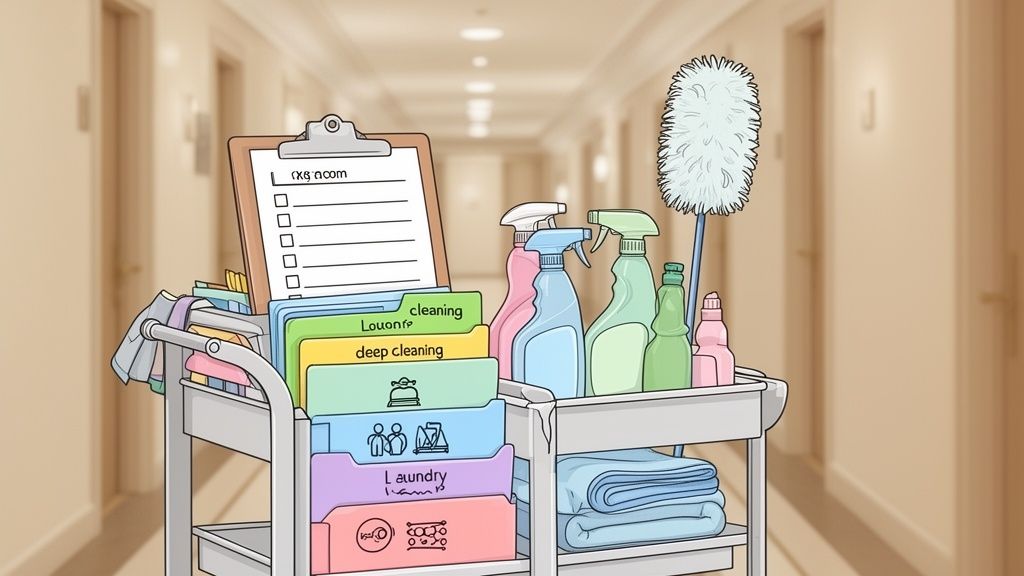
Hotel housekeeping checklists aren't just to-do lists; they're the operational backbone of your hotel's reputation and a critical asset for any commercial facility. In a world where cleanliness directly influences customer choice, these documents are your single most important tool for ensuring every room and public space meets the highest standards. This consistency is what fuels guest satisfaction, glowing online reviews, and repeat bookings.
Why Checklists Are Your Most Critical Operational Asset
In hospitality and public-facing businesses, cleanliness isn't just a feature; it's the baseline expectation. A stunning 86% of guests point to cleanliness as the number one thing they look for in hotel reviews, making cleaning protocols a direct line to revenue. A good checklist turns this expectation into a repeatable, measurable, and consistent process. For business owners, janitorial staff, and facility managers, this standardization is key to protecting brand reputation and ensuring public safety.
These checklists are also vital for management. They provide a clear framework that defines your property's brand standards. This isn't just about cleaning; it's about disinfection. Incorporating tools like disinfectant wipes into your checklists ensures high-touch surfaces are not just visibly clean but also sanitized, which is a powerful selling point for health-conscious customers.
Empowering Staff and Driving Accountability
A well-crafted checklist does more than list tasks; it empowers your team by setting crystal-clear expectations. No more relying on memory or patchy training. Staff have a concrete guide for everything, whether it's a daily room turnover or a deep clean in a fitness center. This clarity reduces errors and boosts efficiency, letting your team work with confidence.
Checklists also build a culture of accountability. When every task is documented, it’s simple for supervisors to run quality control inspections and offer specific, helpful feedback. At their core, hotel housekeeping checklists are a tangible way to create standard operating procedures that boost consistency across the board. By putting these structured guides in place, you’re not just cleaning rooms—you’re standardizing excellence.
Daily Guest Room Cleaning Checklist
Of all the documents in your housekeeping arsenal, the daily guest room cleaning checklist is the most critical. It’s your front line for consistency and the bedrock of guest satisfaction. The second a guest swings open that door, their first impression solidifies. A systematic checklist makes sure that impression is a great one, every single time.
This isn't just about ticking boxes; it's about creating a logical workflow. A good checklist guides your team from the moment they enter the room to the final quality check, killing guesswork and giving them the confidence to work efficiently. It also makes training new hires smoother and quality inspections far more objective.
When you nail down a consistent process, the results speak for themselves. A clear checklist sets clear expectations, which directly boosts guest satisfaction and keeps them coming back.

As you can see, that simple piece of paper (or digital form) is the engine driving your hotel's reputation and, ultimately, its bottom line.
Step 1: Initial Room Preparation
Before a single surface gets wiped, a solid prep phase can save minutes and prevent cross-contamination. This is all about setting the stage for an efficient and thorough clean.
- Enter and Ventilate: Always knock and announce "housekeeping" before entering. Prop the door open and crack a window to get fresh air circulating while you work.
- Strip the Room: Pull off all used linens—sheets, pillowcases, duvet covers, and every last towel. They go straight into a designated laundry bag, never on the floor.
- Clear Trash: Empty every trash can, from the main bin to the small one in the bathroom, into a single waste bag.
- Remove Used Items: Gather any used glasses, mugs, room service trays, or disposable amenities left behind.
Step 2: Cleaning and Sanitizing
Here's the core of the job, where you tackle both the visible grime and the invisible germs. The key is to work from top to bottom. This simple rule ensures dust and debris fall downward to be caught in the final pass.
Dusting and Wiping Surfaces
Start high. Dust picture frames, headboards, lampshades, and the tops of window sills. Then, work your way down to wipe all hard surfaces like nightstands, desks, and dressers.
Focus on High-Touch Points
These are the germ hotspots and your top priority for guest safety and peace of mind. Grab a quality disinfectant wipe and give these areas a thorough cleaning. Using a disinfectant wipe is an efficiency hack—it cleans and disinfects in one step, saving valuable time.
- Light switches and thermostat controls
- All door handles and knobs (room, closet, and bathroom)
- Remote controls and the in-room telephone
- Alarm clocks and handles on the mini-fridge or microwave
For an even more detailed breakdown, you can learn more about creating a complete hotel housekeeper checklist in our comprehensive guide.
Step 3: Bathroom Deep Clean
For most guests, the state of the bathroom is a deal-breaker. It requires meticulous attention to detail because a sparkling clean bathroom isn't just a bonus—it's an expectation.
- Sanitize All Fixtures: Get in there and thoroughly clean and disinfect the toilet (inside and out), sink, and countertops.
- Clean Shower and Tub: Scrub the shower walls, the tub basin, and all the fixtures. Always check for and remove any hair from the drain.
- Polish and Shine: Wipe down the mirror until it’s completely streak-free and polish all chrome fixtures until they gleam.
- Restock Supplies: Replenish toilet paper, tissues, and all the guest toiletries like soaps and shampoos.
Step 4: Final Touches and Inspection
The final steps are what separate a merely clean room from a truly guest-ready one. This is your chance to double-check your work and add those welcoming touches.
A final walkthrough is not just a check; it's a promise to the next guest that their comfort and safety are your top priority. It's the last chance to catch small errors before they become a guest's first impression.
Make the bed with fresh, crisp linens, aiming for that neat, inviting look that says "welcome." Next, vacuum the entire room, starting from the farthest corner and working your way toward the door. Mop any hard floors. To finish, do one last scan: flip on all the lights to ensure they work, set the thermostat to a comfortable temperature, and make sure the room has a fresh, neutral scent.
Your Comprehensive Deep Cleaning Checklist
While daily tidying keeps rooms looking fresh for the next guest, a real deep cleaning checklist is what protects your hotel's long-term value. This is where you go beyond the surface to fight the grime, dust, and wear-and-tear that routine cleanings just can't handle. Think of it as a scheduled, intensive reset that keeps everything from carpets to curtains looking and feeling brand new.
This isn't just about maintenance; it's smart business. Even before the pandemic, a huge 78% of hotel guests said cleanliness was their number one factor in choosing where to stay. That number has only gone up. When you have a documented deep cleaning program, it becomes a powerful selling point that shows you're serious about hygiene. You can get more details on how these standards shape guest perception in these insights on hotel quality.
How Often Should You Deep Clean?
Consistency is everything. Random deep cleans are far less effective than a planned, recurring schedule that’s baked right into your operational calendar. This prevents disruption and makes sure critical tasks are never skipped. This applies to all facilities, from retail stores to school campuses.
- Quarterly Tasks (Every 3 Months): These hit areas with moderate wear and tear. Doing them every quarter is frequent enough to prevent major buildup but still totally manageable for your staff.
- Biannual Tasks (Every 6 Months): These are for the bigger, more intensive jobs. They often require more time, specialized gear, or even calling in an outside vendor.
Pro tip: Schedule these deep cleans during your slower seasons. You'll minimize room downtime and keep labor costs in check.
The Deep Cleaning Checklist Breakdown
This checklist is designed to plug right into your existing housekeeping workflows, giving you a clear framework for the periodic maintenance that preserves the quality of your entire property.
Quarterly Deep Cleaning Tasks (4x a Year)
Tackle these four times a year to maintain impeccable standards and stop small issues from turning into costly problems.
- Carpet and Upholstery Care: Shampoo all carpets. It's also time to spot-clean or steam-clean every piece of upholstered furniture, from the accent chairs to the sofa.
- Window and Curtain Treatment: Wash all interior and exterior windows until they sparkle. Take down all curtains and drapes to be laundered or dry-cleaned.
- Behind and Underneath Furniture: This is the big one. Move all heavy furniture—beds, dressers, desks, nightstands—to deep clean the walls and floors that are usually hidden.
- Wall and Baseboard Washing: Wipe down every wall to remove marks and scrub all baseboards to get rid of scuffs and that layer of dust that always seems to build up.
- Light Fixture Detailing: Take apart and thoroughly clean all light fixtures. Don't forget the lampshades and bulbs, where dust loves to hide.
Biannual Deep Cleaning Tasks (2x a Year)
Schedule these more demanding tasks twice a year to handle deep-seated dirt and perform crucial maintenance that extends the life of your assets.
- Mattress Maintenance: Flip and rotate every single mattress. This ensures even wear and helps you get the most out of your investment.
- Grout and Tile Scrubbing: Get in there and deep scrub all the tile and grout in the bathrooms. You're looking to eliminate any trace of mold, mildew, or discoloration.
- Fixture Descaling: Descale all shower heads, faucets, and in-room coffee makers. This removes mineral buildup, improves water pressure, and keeps everything functioning properly.
- HVAC and Vent Cleaning: Clean all air conditioner filters and vents. This is non-negotiable for improving indoor air quality and making your HVAC system run more efficiently.
A Quick Sales Tip For Facility Managers
Don't just do the deep cleans—promote them. When talking to clients, whether they are corporate event planners or a fitness center member, highlight your documented cleaning schedule. Frame it as a commitment to their well-being. For a sales professional, this is your hygiene ROI pitch: a visibly clean and disinfected space leads to higher customer trust and loyalty. Highlighting the use of quality disinfectant wipes in your protocol can be the detail that sets you apart from competitors.
Public Area And Common Space Checklists
A guest’s impression of your hotel is formed long before they ever swipe a key card. That journey from the front door, through the lobby, and to the elevator sets the tone for their entire stay. Meticulously kept public areas are your first—and best—chance to prove your commitment to quality. It builds immediate trust.
Unlike a guest room, which is a controlled environment, your common areas are constantly in flux. A lobby that looked pristine at 9 AM can feel tired and messy by noon. This is why public spaces demand their own specialized housekeeping checklists, broken down by both zone and frequency, to keep them spotless around the clock.

High-Traffic Zone Cleaning Priorities
In public areas, the name of the game is sanitizing the endless high-touch surfaces that guests and staff interact with all day long. This isn't just about appearances; it's a critical part of keeping everyone safe. For fast, efficient sanitization throughout the day, we recommend tools like Wipes.com Disinfectant Wipes, which make it easy for your team to hit critical spots on the fly.
Your checklist needs to call out these high-risk points specifically so nothing gets missed:
- Lobby & Reception: Front desk countertops, luggage carts, door handles, and those public-use pens.
- Elevators & Hallways: Elevator buttons (both inside and out), stairway handrails, and ice/vending machine buttons.
- Public Restrooms: Door handles, stall locks, faucet levers, and soap or towel dispensers.
- Fitness Center: Grips and handles on all equipment—from treadmills to dumbbells—plus water cooler buttons. This is crucial for gyms and fitness centers where shared equipment is the norm.
A visibly clean public space does more than just impress. It sends a powerful, non-verbal message of care and safety to every person who walks through your doors, reinforcing their decision to stay with you.
Sample Public Area Checklist By Frequency
The most effective way to manage common spaces is to structure your checklist by how often a task needs to be done. This system ensures that urgent sanitation needs are met consistently while deeper cleaning tasks are scheduled at the right cadence.
Hourly Tasks:
- Public Restroom Check: Wipe down countertops, restock toilet paper and hand towels, and spot-clean the floor.
- Lobby Entrance: Clean the glass on entry doors to get rid of fingerprints and smudges.
- Sanitize Hotspots: Quickly wipe elevator buttons, main door handles, and the front desk counter with a disinfectant wipe.
Daily Tasks (During Each Shift):
- Lobby Polish: Dust all furniture, polish wood surfaces, and give all rugs and carpets a thorough vacuuming.
- Fitness Center Wipe-Down: Sanitize every piece of equipment, wipe down all mirrors, and restock towels and water.
- Hallway Maintenance: Vacuum hallways and spot-clean any scuffs on walls or baseboards.
By building disinfectant wipes into these frequent checks, you create a hygiene program that’s both effective and visible. This approach not only keeps germs under control but also gives guests a powerful sense of reassurance that their well-being is truly your top priority.
Back Of House Checklists For Laundry And Inventory
Operational excellence in a hotel isn't just about what guests see; it’s forged behind the scenes. The back of house is the engine room of your property, and two of its most critical functions are laundry and inventory management. If you don't have disciplined checklists running these areas, even the sharpest front-of-house team will struggle to deliver that flawless guest experience.
Think about it: a messy supply closet or an inefficient laundry process creates an immediate domino effect. It can lead to stockouts of essential cleaning chemicals, a shortage of fresh linens right at peak check-in, and, ultimately, a drop in room readiness and guest satisfaction. For smooth, profitable operations, specialized checklists for these BOH functions are non-negotiable.
Laundry Operations Checklist
The promise of crisp, clean sheets and fluffy towels is a core part of the hotel experience. A systematic laundry checklist ensures every single piece of linen meets both hygiene and quality standards before it ever reaches a guest room. This process protects your investment in textiles and, more importantly, upholds your brand’s commitment to cleanliness.
An effective laundry checklist should cover the entire workflow from start to finish:
- Sorting: Separate whites, colors, and heavily soiled items. This is ground zero for preventing color bleeding and cross-contamination.
- Washing: Always verify the correct machine settings, detergent measurements, and water temperatures are used for different fabric types.
- Drying: Check and clean lint filters before every single cycle. Use the right heat settings to avoid fabric damage and extend linen life.
- Folding & Storage: Fold all linens uniformly for a professional look and easy, stackable storage. Store them in clean, designated areas only.
- Machine Maintenance: Schedule and log regular descaling and cleaning for all washers and dryers to keep them running efficiently.
Inventory Management Checklist
Running out of toilet paper, coffee pods, or disinfectant spray is simply not an option. A sharp inventory management checklist prevents those costly last-minute stockouts and minimizes waste from over-ordering. Its real purpose is to create a predictable, streamlined supply chain so your team always has the tools they need to do their jobs right. To streamline your back-of-house operations, including efficient hotel laundry services, explore additional resources.
A well-managed inventory is more than just counting boxes; it's a financial control system that directly impacts your operational budget and your team's ability to perform.
Key tasks for this checklist should include:
- Daily Restocking: Track every item that leaves the main storeroom for the housekeeping carts.
- Weekly Audits: Conduct a physical count of all supplies—cleaning agents, guest amenities, paper products, you name it.
- Par Levels: Establish and maintain minimum stock levels (par levels) for every single item. When stock hits par, it’s the trigger to reorder.
- Receiving & Storage: Inspect all incoming deliveries for accuracy and damage before anyone signs off. Organize your storerooms using the FIFO (First-In, First-Out) method to ensure older stock is used first.
Of course. Here is the rewritten section, crafted to sound completely human-written and natural, following the provided style guide.
More Than a To-Do List: Using Checklists to Train Staff and Run Shifts
Let's be clear: a housekeeping checklist isn't just a piece of paper with boxes to tick. It’s one of the most powerful tools you have for training new staff and making daily workflows run smoothly. A great checklist turns abstract ideas like "hotel standards" into concrete, step-by-step actions anyone can follow.
For a new hire, that checklist is a roadmap. It cuts the learning curve dramatically and shows them exactly what a perfectly clean room looks like at your property—right from day one. Instead of relying on word-of-mouth instructions that change from trainer to trainer, a checklist locks in consistency. That uniformity is the bedrock of a five-star guest experience.
Onboarding New Hires the Right Way
A well-designed checklist is an absolute game-changer for training. It takes a big job, like flipping a suite after checkout, and breaks it down into a simple, manageable sequence. This helps new team members build muscle memory and absorb the right way of doing things much faster.
- A Visual Guide: The checklist acts as a tangible reference they can hold and follow during those first few overwhelming shifts.
- Fewer Rookie Mistakes: It makes it nearly impossible to forget small but critical steps, like sanitizing the TV remote or checking for a burnt-out bulb in the bedside lamp.
- Building Confidence: It gives trainees a clear way to double-check their own work before a supervisor comes in for the final inspection, giving them a real sense of ownership.
Structuring Shifts and Assigning Work
Checklists are also your best friend for organizing daily operations. Managers use them to clearly divide and conquer, assigning specific floors, room blocks, or public areas to different team members. Suddenly, everyone knows exactly what they’re responsible for during their shift. No more confusion.
This is how you build a true "culture of cleanliness." When every task is clearly defined and assigned, it creates a sense of shared pride in keeping the hotel looking its best. Your team can work more efficiently, turning rooms over faster without ever cutting corners on quality.
A checklist gets rid of ambiguity. It replaces "someone should clean that" with a name and a deadline, making sure no detail ever falls through the cracks.
The travel industry's comeback has been tough, with ongoing staffing shortages after losing 62 million jobs in 2022. This has forced hotels everywhere to find smarter ways to work, and checklists are helping them maintain exceptional standards even with leaner teams. You can dive deeper into how the industry is adapting in this comprehensive hotel housekeeping guide.
Modern digital checklist apps take this a step further. These tools offer real-time task tracking, instant communication between housekeepers and the front desk, and even let staff attach photos of maintenance issues. This creates a seamless flow of information, keeping everyone on the same page, from room status updates to urgent guest requests. By weaving checklists into your daily rhythm, you build a rock-solid system that supports your staff, raises your standards, and delivers the kind of pristine experience that keeps guests coming back.
Implementing Quality Control With Inspection Scorecards
A detailed hotel housekeeping checklist tells your team what to do, but an inspection scorecard proves how well it was done. This is where quality control gets serious. By moving beyond a simple "done/not done" checkmark, scorecards bring objective, measurable data into your process.
This simple shift empowers managers to evaluate room cleanliness and staff performance with real fairness and precision. Without a solid inspection process, even the best checklists fade into the background. Scorecards transform a quick, subjective look-over into a structured audit, creating a powerful feedback loop for your team.

Building A Fair And Effective Scoring System
The secret to a great scorecard is breaking down the cleaning process into specific, measurable tasks. Instead of just grading the "Bathroom," you assign points to individual items like "Mirror is streak-free," "Fixtures are polished," and "Floor is sanitized." It leaves no room for guesswork.
A simple 1-5 point scale for each item is usually the most effective approach:
- 5 – Exceeds Expectations: Flawless work. The room looks exceptional.
- 4 – Meets Expectations: The standard was met perfectly. No issues found.
- 3 – Minor Improvement Needed: Mostly correct, but a small detail was missed.
- 2 – Significant Improvement Needed: The task was poorly executed or incomplete.
- 1 – Task Not Completed: A required step was skipped entirely.
This numerical system strips away ambiguity and gives you clear, actionable data. It helps you pinpoint exactly where a team member might need a bit more coaching, turning what could be a negative review into a genuine opportunity for growth. For more strategies on getting rooms guest-ready, check out our guide on effective methods for cleaning rooms in hotels.
Below is a simplified example of what a scorecard might look like in practice. This format helps quantify quality and provides a clear basis for feedback.
Sample Housekeeping Inspection Scorecard
| Area/Item | Task Checked | Score (1-5) | Notes for Improvement |
|---|---|---|---|
| Bathroom | Mirror is streak-free and polished. | 4 | |
| Bathroom | Toilet is sanitized inside and out. | 5 | |
| Bathroom | Floor is mopped and free of hair/debris. | 3 | Small amount of hair noted behind the door. |
| Bedroom | Bed is made to brand standard (tight corners). | 5 | |
| Bedroom | Surfaces (desk, nightstand) are dusted and wiped. | 4 | |
| Bedroom | TV remote is sanitized and placed correctly. | 2 | Remote was found on the floor. |
| Overall | Room has a fresh, neutral scent. | 5 |
This table-based approach makes it easy for both the inspector and the housekeeper to see what went well and what needs attention at a glance.
Linking Inspections To Business Outcomes
When you conduct regular, random inspections using this system, you start generating incredibly valuable performance data. You can track scores over time for individuals, teams, or even entire floors of the hotel. This data doesn't just sit there—it connects directly to your hotel's most important goals.
You can start correlating high inspection scores with positive guest satisfaction surveys and five-star online reviews. Suddenly, you have a powerful, data-backed case for investing in better training or higher-quality supplies. With the global average hotel occupancy rate hitting 69% in late 2023, the ability to manage high turnover while delivering consistent quality is a massive competitive advantage.
By putting a scorecard system in place, you create a complete loop: standards are set, performance is measured, feedback is delivered, and the results are tied directly to guest happiness and, ultimately, your bottom line.
Got Questions? We've Got Answers
You're not alone if you're trying to fine-tune your housekeeping operations. Getting the details right on your checklists can bring up a lot of questions. Here are some straightforward answers to the most common queries we hear from hoteliers.
How Often Should We Update Our Housekeeping Checklists?
Think of your checklists as living documents, not tablets set in stone. A solid rule of thumb is to give them a thorough review at least twice a year. But honestly, you should be ready to tweak them anytime something significant changes in your hotel.
Don't wait for a calendar reminder. Pull them out for an update when you see:
- Recurring Guest Feedback: Are guests consistently mentioning a dusty shelf or a slow drain? It's time to add a specific checkpoint for it.
- New Health & Safety Rules: Public health guidelines shift, and your protocols need to shift right along with them.
- Recent Renovations: New furniture, different bathroom fixtures, or updated amenities all demand new cleaning steps.
- Better Cleaning Tech: If you've just invested in new vacuums, steamers, or eco-friendly chemicals, your workflow is going to change. Make sure the checklist reflects that.
Keeping your lists current ensures they're actually effective and aligned with what today's guests expect.
What's the Best Way to Train Staff on a New Checklist?
Just handing over a new piece of paper and hoping for the best is a classic recipe for failure. The only training method that truly sticks is a blend of showing and doing.
Start with a quick huddle. Explain the why behind the updates, connecting the changes to benefits for both the team (making their job easier, clearer) and the guests. Then, take them into a room. A supervisor should walk through the new process, step-by-step, demonstrating exactly how it's done.
Finally, let your team members practice the new tasks while you observe, offering immediate and constructive feedback. This simple explain, demonstrate, practice model is your ticket to getting everyone on the same page from day one.
Should Our Checklists Be Digital or Paper?
Look, paper checklists have their place. They're simple and everyone knows how to use them. But in today's world, digital checklists on a tablet or smartphone offer advantages that a clipboard just can't compete with.
With a digital solution, you get real-time room status updates that the front desk can see instantly. Staff can snap a quick photo of a broken lamp or a stained carpet and send it directly to maintenance—no more forgotten phone calls. It’s a game-changer for communication.
Even better, digital systems collect data. You can see how long rooms are taking, spot recurring maintenance issues across the property, and identify where your team is excelling or might need more support. For most hotels looking to get serious about efficiency and quality, moving to a digital system is a smart investment.
How Can Checklists Actually Help Reduce Our Costs?
It might seem like just another piece of paper, but a well-designed checklist directly impacts your bottom line in a few key ways. For one, they standardize how cleaning supplies are used, which cuts down on waste and makes your inventory last longer.
They also ensure tasks are done correctly the first time. This means fewer guest complaints and, therefore, fewer comps, refunds, or last-minute room changes you have to scramble to accommodate.
Plus, a great checklist includes small but crucial preventive maintenance checks—like spotting a leaky faucet or a flickering lightbulb. Catching those little things before they turn into big, expensive repairs is one of the smartest ways to control operational costs. When you optimize labor and supplies, checklists stop being a task list and start being a profit tool. For any business, prioritizing cleanliness isn't an expense—it's an investment. By integrating efficient tools like disinfectant wipes into a structured checklist, you protect your customers, empower your staff, and build a stronger, more resilient brand.
Leave a Reply