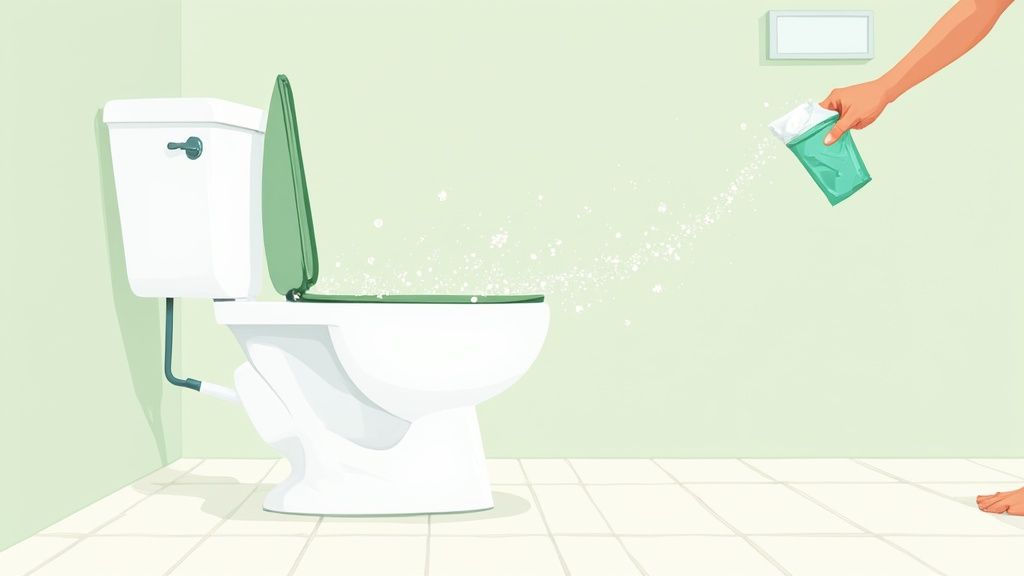
That lingering urine odor in a bathroom isn't just an unpleasant annoyance—it's a direct reflection on your business. For commercial facilities, from offices to gyms, a clean and disinfected restroom is a non-negotiable part of the customer and employee experience. It's a powerful signal that you care about health, quality, and attention to detail.
Why Bathroom Odor Is a Business Problem

Let's be blunt: a persistent urine smell in your commercial restroom is costing you money. It’s a powerful, non-verbal signal to every single person who walks through your door, and what it communicates is almost never good. A clean restroom isn't just about appearances; it's a critical component of brand reputation, customer loyalty, and employee satisfaction.
For customers, a smelly bathroom screams a lack of care. They'll naturally assume that neglect extends to your products or services. Imagine a customer in your retail store who needs to use the restroom. If they're hit with a foul odor, their entire perception of your brand can tank on the spot. It's no surprise that over 90% of consumers report that an unclean restroom negatively impacts their view of a business, often causing them to spend less time—and less money—on-site.
Facility-Specific Consequences
While the impact of poor restroom hygiene varies, it's always damaging. Every type of facility faces its own set of risks when that tell-tale urine odor becomes a recurring problem.
- Gyms & Fitness Centers: A gym that smells unsanitary completely undermines its core promise of health and wellness. Members paying for a premium experience will quickly start looking for alternatives if the locker rooms and restrooms aren't impeccably clean.
- Offices: For employees, a consistently dirty restroom feels disrespectful. It becomes a daily frustration that signals the company doesn't value its staff's well-being, which can kill morale and productivity.
- Restaurants & Retail: In any service environment, restroom cleanliness is absolutely non-negotiable. An odor problem can make customers question the hygiene of your kitchen or the quality of your merchandise, leading to scathing online reviews and a damaged reputation.
Persistent bathroom odor isn't just an operational nuisance; it's a direct threat to your bottom line. The negative impacts ripple across different business types, often in ways that facility managers don't see until it's too late. The table below breaks down just how costly this "small" problem can be.
The Hidden Costs of Bathroom Odor in Commercial Spaces
| Facility Type | Primary Impact on Business | Potential Consequence |
|---|---|---|
| Retail Stores | Negative Brand Perception | Customers leave sooner, spend less, and don't return. |
| Restaurants | Questionable Food Safety | Bad reviews, loss of diners, and potential health code issues. |
| Offices | Decreased Employee Morale | Higher turnover, reduced productivity, and difficulty attracting talent. |
| Gyms & Spas | Undermined Health Promise | Membership cancellations and loss of trust in wellness services. |
| Healthcare | Compromised Patient Trust | Patients question overall sanitation and infection control standards. |
| Hotels | Poor Guest Experience | Negative online ratings, reduced bookings, and brand damage. |
As you can see, a clean restroom isn't just a janitorial task—it's a critical component of risk management and brand protection.
A clean restroom isn't an operational expense; it's a critical investment in customer retention and brand protection. The simple act of maintaining a fresh, sanitary space directly influences your bottom line.
The Sales Advantage of Visible Cleanliness
For janitorial teams and cleaning sales professionals, this common problem is a golden opportunity. When you can educate clients on the real-world return on investment (ROI) of superior hygiene, the conversation immediately shifts from cost to value. You're no longer just selling a cleaning service; you're providing a solution that protects their brand reputation.
Promoting an integrated approach that includes daily sanitization with effective tools like disinfectant wipes for high-touch surfaces can be a powerful sales tool. It demonstrates a proactive, visible strategy that clients can see and appreciate every single day.
By framing cleanliness as a core part of the customer and employee experience, you stop being a vendor and become an indispensable partner in their success. Prioritize restroom cleanliness—it's one of the simplest ways to protect a brand, retain customers, and build a reputation for undeniable excellence.
The Science Behind Lingering Urine Smells

To win the war against a stubborn urine odor in a bathroom, you first have to understand what you’re up against. This isn't a simple surface spill that can be wiped away. It’s a chemical problem hiding in plain sight. The real enemy isn't the liquid urine; it’s the invisible residue it leaves behind.
When urine evaporates, it forms microscopic uric acid crystals. Think of them as tiny, rock-hard odor bombs. These crystals are the true source of that persistent, foul smell. They don't dissolve in water, so your standard soaps and all-purpose cleaners can’t touch them.
These crystals lie dormant, just waiting for one thing: moisture. The humidity from a hot shower, a freshly mopped floor, or even just a damp day is enough to reactivate them. When that happens, they release a pungent ammonia gas—that signature urine smell that hits you out of nowhere, even in a restroom that looks perfectly clean.
Why Your Standard Cleaning Isn't Working
Your cleaning crew might be scrubbing surfaces with everything they’ve got, but if they're using the wrong products, they are guaranteed to fail. Most general-purpose cleaners simply aren’t designed to break down uric acid crystals. They might cover the smell with a floral scent for an hour or two, but the odor-producing source is still there, ready to make a comeback.
This is exactly why a restroom can appear spotless yet reek of stale urine. Your team is essentially fighting a ghost they can't see, and it’s a battle they will lose every single time without the right scientific approach.
You're not just cleaning a stain; you're neutralizing a chemical compound. Uric acid crystals are the hidden enemy, and they require a specific type of cleaner to be destroyed, not just covered up.
Identifying Odor Hotspots Beyond the Bowl
The problem is almost never confined to the inside of the toilet. With every flush, urine aerosolizes, sending microscopic droplets far and wide. These droplets land and settle in places you’d never think to clean, turning porous materials into odor reservoirs.
These are the hotspots that are probably sabotaging your efforts:
- Grout Lines: Tile grout is incredibly porous. It acts like a sponge for urine, making it a five-star hotel for uric acid crystals.
- The Toilet Base: The caulking and floor right around the base of the toilet are notorious for collecting and absorbing urine splashes.
- Wall Partitions: The bottoms of stall dividers, especially near the floor, are constantly hit with overspray.
- Floor Drains: Drains are a magnet for all kinds of gunk, including urine, creating a constant source of ammonia odor if not treated correctly.
- Under Sinks: Hidden leaks or splashes can cause urine residue to build up in unseen nooks under the sink or vanity.
To finally get rid of restroom odors for good, your team needs to stop just wiping surfaces and start thinking about molecular neutralization. That means targeting these hidden hotspots and arming your crew with cleaners specifically formulated to destroy uric acid on contact. Only then can you achieve a truly, deeply clean and odor-free restroom.
Mastering Your Cleaning with Disinfectant Wipes

Simply wiping down surfaces isn't going to cut it when you're battling a stubborn urine odor in a bathroom. To truly get the upper hand on germs and odors, your team needs to use disinfectant wipes like a pro. This isn't about a quick swipe; it's about a strategic, science-backed approach that guarantees a deeper, lasting clean.
The single most overlooked concept in disinfecting is dwell time. This is the non-negotiable amount of time a disinfectant must stay wet on a surface to actually kill the germs and bacteria listed on its label. When staff immediately wipes a surface dry, they're rendering the wipe's power useless and leaving odor-causing bacteria right where they found them.
Think of it this way: the disinfecting solution needs time to do its job. A quick swipe-and-go is like showing germs the medicine and then snatching it away before it can work. Make sure your team understands they must leave the surface visibly wet for the full time specified on the product’s packaging—this can be anywhere from 30 seconds to several minutes.
The High-Touch Zone Checklist
In a busy commercial restroom, some surfaces get touched hundreds of times a day. These become hotspots for germs and are major contributors to the overall hygiene problem. A focused, consistent attack on these areas is non-negotiable.
Train your staff to meticulously disinfect these zones every single day:
- Door Handles (entry and stall): The first and last thing every visitor touches.
- Faucet Handles & Soap Dispensers: Prime real estate for germ transfer.
- Toilet Flush Handles or Buttons: A major hotspot for both germs and aerosolized urine droplets.
- Partition Locks and Handles: So often missed, but so frequently touched.
- Countertops: Where purses, phones, and other personal items land.
- Baby Changing Stations: These demand extreme attention to detail to protect your most vulnerable users.
For facilities like gyms, where hygiene expectations are through the roof, this level of detail is even more critical. You can learn more about the best practices for these high-stakes environments in our guide on using disinfectant wipes for gym equipment.
Efficiency Hacks for Your Cleaning Routine
Mastering the right technique doesn't just improve your results—it makes the whole process faster. A few professional hacks can save your team serious time while elevating your standard of clean.
Top-to-Bottom Cleaning Pattern
Always work from high surfaces down to lower ones. It's just gravity. Dust, germs, and droplets fall downward, so wiping countertops before you tackle toilets or partitions ensures you aren’t re-contaminating freshly cleaned areas. Start with mirrors and dispensers, move to counters and partitions, and finish with the toilet exterior.
Color-Coding Wipes
This is a game-changer for preventing cross-contamination. Assign different colored cloths or wipes to specific areas. For example, use blue for mirrors and faucets, yellow for countertops, and reserve red exclusively for toilets. This simple visual system is a powerful, almost foolproof way to stop germs from traveling from a toilet bowl to a sink handle.
"A visibly clean restroom communicates respect for your customers and employees. It's a non-verbal promise of quality that builds trust from the moment they walk in."
By implementing these strategies, cleaning becomes more than a chore. It becomes a powerful tool for protecting your brand. A pristine, odor-free restroom is a testament to your commitment to excellence.
Building a Proactive Odor Prevention Plan
Putting out the fire of an existing urine odor in a bathroom is one thing. Actually fireproofing your facility so it never happens again? That's the real win. A truly effective strategy is all about prevention, building a maintenance program that stops odors before they can even take hold.
This proactive approach turns cleaning from a reactive chore into a strategic asset for your facility, protecting your brand's reputation with every flush and every visitor.
The cornerstone of any solid prevention plan is a consistent, easy-to-follow schedule. High-traffic facilities like a bustling restaurant or a 24-hour gym need a completely different cleaning rhythm than a quiet office building. The secret is to match the cleaning frequency to the usage level, making sure high-touch surfaces are dealt with long before residue and bacteria can throw a party.
Creating Your Cleaning Schedule
A robust schedule isn't just one long to-do list; it’s broken into daily, weekly, and deep-cleaning tasks. Think of it like this: daily tasks are your frontline defense, managing surface-level germs and immediate spills. Weekly tasks come in to tackle the more stubborn build-up, and deep-cleaning sessions hunt down the hidden odor sources that standard mops and sprays always miss.
Daily Must-Dos (Especially in High-Traffic Areas):
- Wipe Down All High-Touch Surfaces: Use quality disinfectant wipes on every handle (door, stall, faucet), flusher, and dispenser. In busy restrooms, this should happen multiple times a day.
- Spot-Clean Floors: Immediately clean any visible spills or drips around toilets and urinals. Don't let them sit.
- Check and Restock: Nothing says "we don't care" like an empty soap dispenser. Ensure supplies like soap, paper towels, and extra wipes are always available.
Weekly Deeper Dives:
- Deep Clean Toilets & Urinals: This means thoroughly scrubbing them inside and out, paying extra attention to the base and the mounting hardware where grime loves to hide.
- Treat Grout and Drains: Apply an enzymatic cleaner directly to grout lines and pour it down floor drains. This is your secret weapon against the uric acid crystals that cause that lingering, unmistakable smell.
This simple, three-tiered approach provides a clear roadmap for keeping bathroom odors from ever becoming a problem in the first place.

As you can see, a proactive plan is a team effort between consistent daily sanitization, targeted weekly treatments, and proper ventilation. When all three work together, odors don't stand a chance.
Empowering Your Staff
Let’s be clear: your cleaning crew is your most valuable asset in the war against odors. But you have to train them to inspect, not just clean.
They should be empowered to look for the early warning signs—things like discolored grout, a hint of dampness around the base of a toilet, or a persistent musty smell that could signal a hidden plumbing leak. When your team knows what to look for, they can flag minor issues before they explode into major, expensive disasters.
This proactive mindset is especially critical in businesses that depend on rapid turnovers and pristine conditions. For property managers, these same principles are non-negotiable; you can find more cleanliness secrets for short-term rental success in our dedicated guide.
A proactive cleaning plan isn't about working harder; it's about working smarter. It's a system that anticipates problems, empowers your people, and ensures a consistently high standard of hygiene that customers and employees will absolutely notice.
Ultimately, preventing urine odor comes down to two things: consistency and using the right tools for the job. By building a clear schedule, training your team to be vigilant, and tackling porous surfaces before they become permanent odor reservoirs, you can ensure your restrooms always reflect the high standards of your entire business.
How to Sell Cleanliness as a Solution
For any cleaning pro, walking into a commercial bathroom with that unmistakable, lingering urine odor isn't just a challenge—it's a sales pitch waiting to happen. When a potential client is at their wit's end with a smell they just can't shake, you’ve got the perfect opening to pivot the entire conversation from price to value.
Forget selling janitorial services. You’re there to sell them a guaranteed solution to their most frustrating, brand-damaging headache.
The trick is to completely reframe what they're buying. They aren’t just paying for someone to mop floors; they're investing in their reputation, their customer's experience, and even their employee morale. A foul restroom smell actively sabotages all three. Your job is to connect the dots and show them the clear Return on Investment (ROI) that comes from paying for real expertise.
Shifting from Price to Partnership
Think of the client walkthrough as your stage, and the smelly restroom is your moment to shine. Don’t just point out the obvious problems—use them to showcase your expertise. Anyone can say, "It smells in here." A true professional diagnoses the problem on the spot.
"I'm picking up a faint ammonia smell, which is a classic sign of uric acid crystals that have penetrated the grout. Standard mopping actually spreads that around, but our enzymatic cleaner is designed to get into those pores and break the crystals down at a molecular level. It eliminates the source for good, not just masks it for a few hours."
That single sentence does all the heavy lifting. Suddenly, you're not just another cleaner quoting a price; you're a specialist, a problem-solver who understands the science behind the smell. You have a specific, targeted solution.
Better yet, offer to prove it. A quick test patch on a high-traffic spot, like the grout around a urinal, can work wonders. When they see—and smell—the difference, the sale is practically made.
Bundling Solutions for Maximum Impact
Once you've diagnosed the issue, make it incredibly easy for the client to say "yes." Don't just sell them one deep clean. Package your services into a complete, no-brainer program that solves their problem today and prevents it from ever coming back.
Instead of just offering an enzymatic treatment, you could create a "Total Restroom Odor Control" package.
This bundle could look something like this:
- Initial Deep Clean: A one-time, intensive enzymatic treatment targeting all porous surfaces—grout lines, concrete floors, and even the lower sections of walls where splash-back occurs.
- Daily Sanitization Protocol: You’ll provide and train their staff on using the right high-quality disinfectant wipes for daily upkeep on all high-touch points.
- Ongoing Odor Maintenance: A scheduled weekly or bi-weekly service where your team re-treats floors and drains to ensure that odor-causing bacteria never get a foothold again.
By presenting a complete, multi-step strategy, you’re not just addressing their immediate pain point—you're offering a long-term preventative plan. This move positions you as an indispensable partner who gets their challenges and has the tools to solve them for good.
You're no longer just selling a one-time service. You're selling them peace of mind and a consistently positive experience for their customers and staff. That’s a value proposition that’s almost impossible to compete with on price alone.
Answering Your Top Bathroom Odor Questions
Even with the best plan in place, you're bound to run into stubborn odor issues. It happens. Let's tackle some of the most common questions I hear from facility managers and business owners who are fighting to keep their restrooms fresh.
We Clean Constantly, but the Urine Smell Always Returns. What Are We Missing?
This is the classic, frustrating restroom mystery. If the odor snaps back right after you've mopped, you’re dealing with a problem that standard cleaners can't solve. The issue isn't surface dirt; it’s uric acid crystals. These microscopic culprits have seeped deep into porous surfaces like grout lines, unsealed concrete, or even the subfloor around toilets and urinals.
When you mop with a regular cleaner (or just water), the moisture temporarily quiets the smell. But as it dries, that same moisture reactivates the uric acid, releasing that potent, foul ammonia odor all over again. It’s a vicious cycle.
The only way to win this battle is with a targeted chemical attack. You need an enzymatic cleaner specifically designed to digest uric acid. Apply it generously to grout lines, the base of the toilet, and any surrounding walls or partitions. Let it sit and "dwell" according to the product directions—don't rush it. This gives the enzymes time to literally break down and consume the odor source at a molecular level. It's something all-purpose cleaners just aren't built to do.
Are Disinfectant Wipes Enough on Their Own?
Disinfectant wipes are an absolute must-have for your daily cleaning arsenal. They are perfect for the constant, on-the-go sanitation of high-touch, non-porous surfaces. Think flush handles, faucets, door locks, and toilet seats. They're fantastic for managing surface-level germs and tackling immediate messes, giving everyone that visible sign of cleanliness that builds trust.
But for deep, persistent urine odor that’s embedded in grout or other porous materials, wipes alone won't cut it. You need a two-pronged strategy.
Think of it like this: Disinfectant wipes are your daily shield, protecting surfaces from immediate threats. Enzymatic cleaners are your special ops team, sent in weekly to neutralize the deeply entrenched enemy hiding in grout and drains.
Using both in tandem is the key. Wipes handle the daily hygiene and surface sanitation, while a quality enzymatic cleaner does the heavy lifting on subsurface odors once or twice a week. This comprehensive approach is what truly keeps a restroom smelling clean.
How Can I Stop Odor from Starting in Our Employee Restroom?
When it comes to a shared space like an employee restroom, prevention is everything. The solution isn't just about cleaning more; it's about creating a culture of shared ownership. This comes down to three things: a rock-solid routine, clear communication, and giving your team the right tools.
Here’s a practical approach that actually works:
- Make Daily Wipe-Downs Non-Negotiable: Implement a simple, mandatory daily cleaning schedule. Every high-touch surface gets a thorough wipe-down with a disinfectant wipe. No exceptions.
- Post a Professional Reminder: A small, well-designed sign can work wonders. Something that politely reminds users of shared responsibility—"Let's keep this space clean for everyone"—encourages tidiness without sounding accusatory.
- Empower with Easy-to-Use Tools: This is the most important step. Place a canister of disinfectant wipes right there in the restroom. This simple act empowers employees to handle small drips or spills the moment they happen, preventing them from turning into a bigger problem.
By making cleanliness a shared and easy standard to maintain, you stop odor before it starts and show that the company respects its employees. It's a small change that pays huge dividends in workplace morale. Don't just clean up problems—prevent them. Prioritize a higher standard of hygiene by integrating disinfectant wipes into your facility's daily routine or sales offerings today.
Leave a Reply