A clean restroom is more than just a pleasant amenity—it's a direct reflection of your business's standards. For any commercial facility, from a bustling corporate office to a high-traffic gym, the state of the restrooms speaks volumes. A sparkling clean space builds trust and confidence, while a neglected one can instantly tarnish a customer's perception.
But true cleanliness goes deeper than just visible shine. It’s about creating a hygienic environment that protects the health and well-being of every person who walks through your doors. This is where the power of not just cleaning, but disinfecting, comes into play—and disinfectant wipes are an invaluable tool in that mission.
The True Cost of a Dirty Restroom

For business owners, facility managers, and janitorial professionals, an unclean restroom is a major liability. It projects an image of poor maintenance that can be detrimental in any commercial setting. Clients, guests, and employees notice the details, and a restroom that looks or feels unsanitary can negatively impact their entire experience and perception of your brand.
Beyond appearances, a poorly maintained restroom is a breeding ground for germs. High-touch surfaces like door handles, faucets, and flushers can become hotspots for bacteria and viruses. Regular cleaning might remove dirt, but it doesn't kill the pathogens left behind. This is why incorporating a disinfecting step is crucial for public health and safety.
The Sales Advantage of Superior Hygiene
Promoting a clean and safe environment is a powerful sales tool. Whether you're a sales professional in the cleaning industry or a gym owner trying to attract members, you can leverage hygiene as a key differentiator.
- Educate on the ROI of Cleanliness: Explain to clients that investing in quality cleaning supplies, like effective disinfectant wipes, isn't a cost—it's an investment. A cleaner facility leads to higher customer satisfaction, better employee morale, and a stronger public image.
- Highlight the "Why": Don't just sell a product; sell the outcome. Instead of saying "These are our new disinfectant wipes," try "Our wipes kill 99.9% of germs on high-touch surfaces, protecting your staff and customers and showing you prioritize their well-being."
- Bundle for Success: Incorporate disinfectant wipes into a larger cleaning supply offering. Create "Hygiene Kits" for different facilities—an office kit might include surface wipes and hand sanitizer, while a gym kit could add equipment-specific wipes.
For any facility, whether it's a restaurant, school, or retail store, prioritizing cleanliness is non-negotiable. It silently builds your reputation, supports public health, and ultimately contributes to a healthier bottom line.
Cleaning and Disinfecting Tips for Maximum Impact

To get the most out of your cleaning routine, you need to be strategic. Wasting time and product on ineffective methods helps no one. A professional approach ensures every wipe counts and every surface is properly sanitized.
Start with a plan. Identify the most critical areas and establish a cleaning frequency that matches the foot traffic and use of your facility.
How to Clean Effectively and Efficiently
From years of experience in the cleaning industry, I can tell you that technique matters. Knowing how to use your tools properly makes all the difference.
- Focus on High-Touch Hotspots: The most important areas to disinfect are the ones people touch most often. In a restroom, this includes toilet flush handles, stall locks, sink faucets, paper towel dispensers, and door handles.
- Use Wipes Correctly: A disinfectant wipe isn't a reusable cloth. Use one wipe per surface area to avoid cross-contamination. For a surface to be properly disinfected, it needs to remain visibly wet for the time specified on the product label (often called "dwell time"). Don't wipe it dry.
- Establish a Cleaning Frequency: For high-traffic commercial restrooms, high-touch surfaces should be wiped down multiple times a day. Less-used areas might only need daily disinfection. Create a checklist for janitorial staff to ensure consistency.
Efficiency Hack: Work from top to bottom, and from the cleanest area to the dirtiest. This prevents drips and re-soiling surfaces you've already cleaned. For example, wipe down mirrors and counters before moving to the toilets.
This disciplined approach is crucial for any professional cleaning team. It ensures you're not just moving dirt around but actively eliminating germs, resulting in a facility that is both visibly clean and hygienically safe.
Facility-Specific Hygiene Strategies
A one-size-fits-all approach to cleaning rarely works. The hygiene needs of a corporate office are vastly different from those of a bustling gym or a primary school. Tailoring your strategy and product recommendations to the specific environment is key to providing real value.
The goal is to address the unique challenges and traffic patterns of each type of facility, ensuring that your cleaning protocols are both effective and efficient.
Tailoring Your Approach for Different Environments
Let's look at how to adapt cleaning routines for specific commercial spaces.
- Offices: Focus on shared spaces. Regularly disinfect conference room tables, kitchenette appliances (microwave handles, coffee pot buttons), and reception area surfaces. Providing canisters of disinfectant wipes in common areas empowers employees to maintain their own workspaces.
- Gyms & Fitness Centers: This is a high-stakes environment for hygiene. Focus on wiping down equipment grips, weight benches, and yoga mats between users. Locker room benches, shower handles, and locker doors are also critical hotspots. The perceived cleanliness of a gym is a major factor for members, especially when it comes to retaining summer memberships.
- Schools: Prioritize classrooms and cafeterias. Desks, doorknobs, shared learning tools, and lunch tables need frequent disinfection to help reduce the spread of illness among students and staff.
- Restaurants & Retail: Customer-facing areas are paramount. Disinfect payment terminals, service counters, shopping cart handles, and dining tables between each customer use to build confidence and trust.
This infographic gives you a quick visual of key hotspots to target with disinfectant wipes in a typical commercial restroom.

As you can see, the core steps are simple: identify hotspots, wipe thoroughly ensuring proper dwell time, and dispose of the wipe. This simple but consistent routine makes a world of difference.
The Power of Proactive Cleanliness
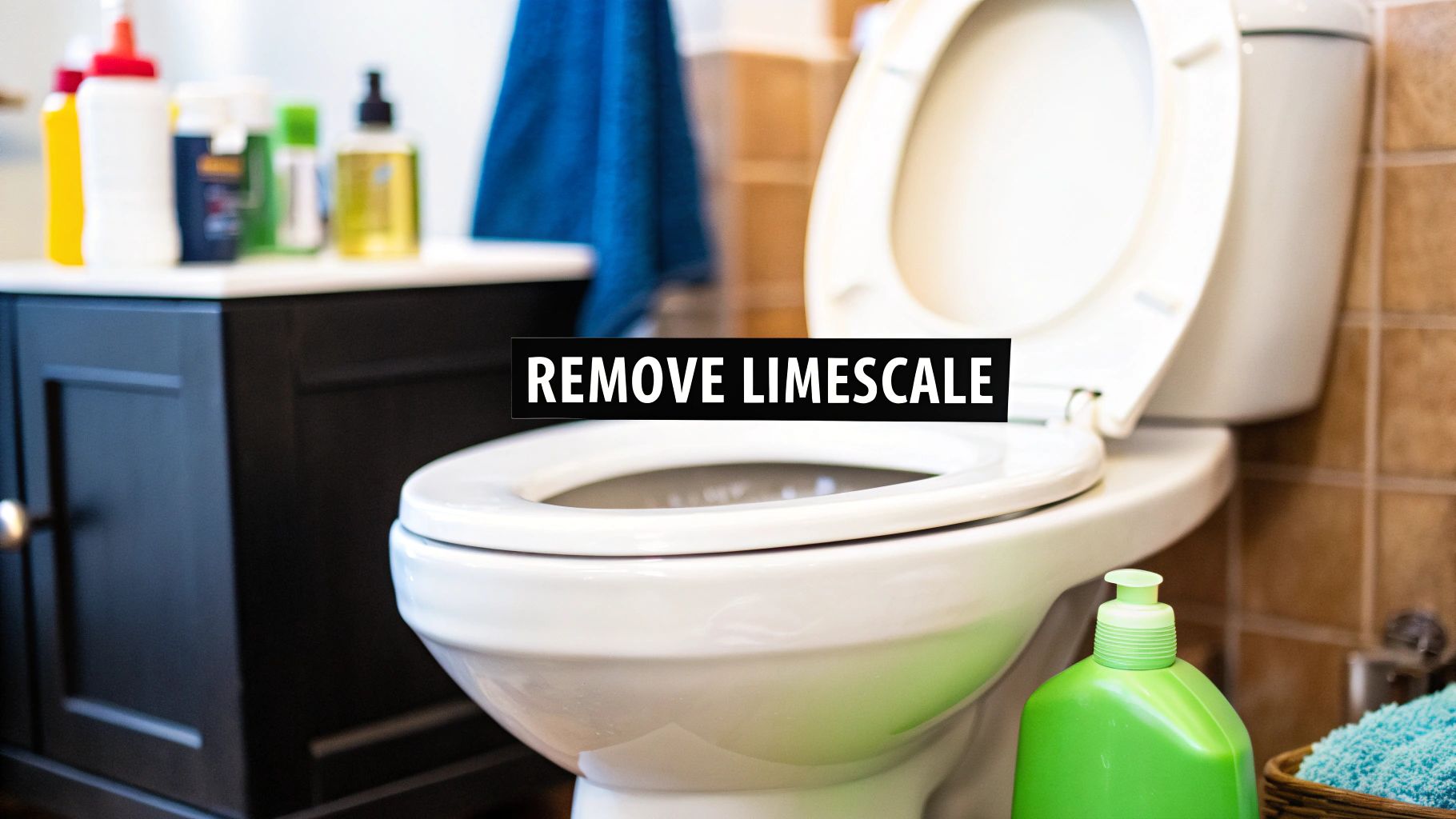
But what about stubborn, ingrained problems like limescale? Even the best disinfectant wipe can't fix a toilet bowl stained by hard water. The chalky buildup of limescale in a toilet creates a rough surface that harbors germs, making true disinfection difficult. Addressing this requires a two-pronged approach.
Pro-Tip: First, remove existing limescale with an appropriate cleaner (natural solutions like vinegar for light stains, or a commercial descaler for severe buildup). Then, maintain cleanliness with a weekly scrub and daily wipe-downs of the exterior and handle with a disinfectant wipe.
This combined strategy ensures the entire fixture is not only free of stains but also hygienically clean. This level of detail is a hallmark of a truly professional cleaning service. The global market for toilet cleaners is expected to reach USD 7.5 billion by 2033, driven by demand for effective solutions. You can learn more about these trends at DataHorizzon Research.
Building a Culture of Cleanliness
Removing existing grime is only half the battle. The ultimate goal for any facility manager or business owner is to create a sustainable culture of cleanliness that prevents problems before they start. A proactive plan saves time, protects assets from long-term damage, and consistently reinforces your brand's commitment to quality.
At its core, a winning strategy is built on consistency and empowerment.
Your first line of defense is a clear, non-negotiable daily and weekly cleaning schedule. This includes wiping down all high-touch surfaces with disinfectant wipes, cleaning glass, and thoroughly scrubbing restroom fixtures. This routine isn't just about appearances; it's about actively preventing the buildup of dirt and germs.
Empower your staff and even your customers by making cleaning supplies accessible. Placing disinfectant wipe dispensers in key locations like gym floors, office kitchens, and grocery store entrances encourages everyone to take part in maintaining a hygienic space. This shared responsibility can significantly elevate the overall cleanliness of your facility.
Long-Term Maintenance and Health
Don't forget the unseen issues. Limescale, for example, isn't just an ugly stain; it poses health risks by creating a haven for pathogens. In hard water regions, poor sanitation linked to scale can drive up maintenance costs by 15-20% annually. This is a global issue with serious consequences, as detailed by the World Health Organization.
For facilities in areas with hard water, installing a commercial water softening system is the ultimate preventive measure. While it's a significant initial investment, it tackles the source of the problem, protecting not just your toilets but all plumbing and appliances from scale buildup.
Frequently Asked Questions About Commercial Cleaning

Even with a solid plan, questions about best practices in commercial cleaning always arise. Getting clear, practical answers is what separates an average cleaning program from an exceptional one.
Here are some of the most common questions from facility managers, janitorial teams, and business owners.
How Often Should High-Touch Surfaces Be Disinfected?
The ideal frequency depends entirely on foot traffic. In a busy commercial space like a retail store, gym, or public restroom, high-touch surfaces (door handles, payment pads, flushers) should be disinfected several times a day. In a lower-traffic office setting, once or twice a day might be sufficient. The key is to match your efforts to the risk. Create a visible cleaning log to track this and reassure customers.
What's the Difference Between Cleaning, Sanitizing, and Disinfecting?
These terms are often used interchangeably, but they mean different things.
- Cleaning removes visible dirt, grime, and germs from surfaces, but doesn't necessarily kill them.
- Sanitizing lowers the number of germs on a surface to a safe level, as judged by public health standards. It typically kills up to 99.9% of certain bacteria.
- Disinfecting uses chemicals to kill a wider range of germs (bacteria, viruses, fungi) on surfaces. This is the most effective way to stop the spread of infection. Most EPA-registered wipes are disinfectants.
Is It Safe to Use Disinfectant Wipes on All Surfaces?
No, not always. While most disinfectant wipes are safe for common, non-porous surfaces like plastic, laminate, sealed wood, and metal, they can damage others. Avoid using them on unsealed wood, natural stone like marble or granite (the acid in some disinfectants can cause etching), or electronic screens unless the product is specifically labeled as safe for electronics. Always test a wipe on a small, inconspicuous area first if you're unsure. True hygiene excellence is built on safe, effective protocols. This is especially vital in high-traffic facilities; you can read more about why summer hygiene is critical for sports facilities in our detailed guide.
Ultimately, a commitment to superior hygiene is a powerful statement. We encourage all facility managers, business owners, and cleaning professionals to prioritize robust cleaning and disinfecting protocols. Consider integrating high-quality disinfectant wipes into your daily routine or product offerings to create safer, more welcoming environments for everyone.
Leave a Reply