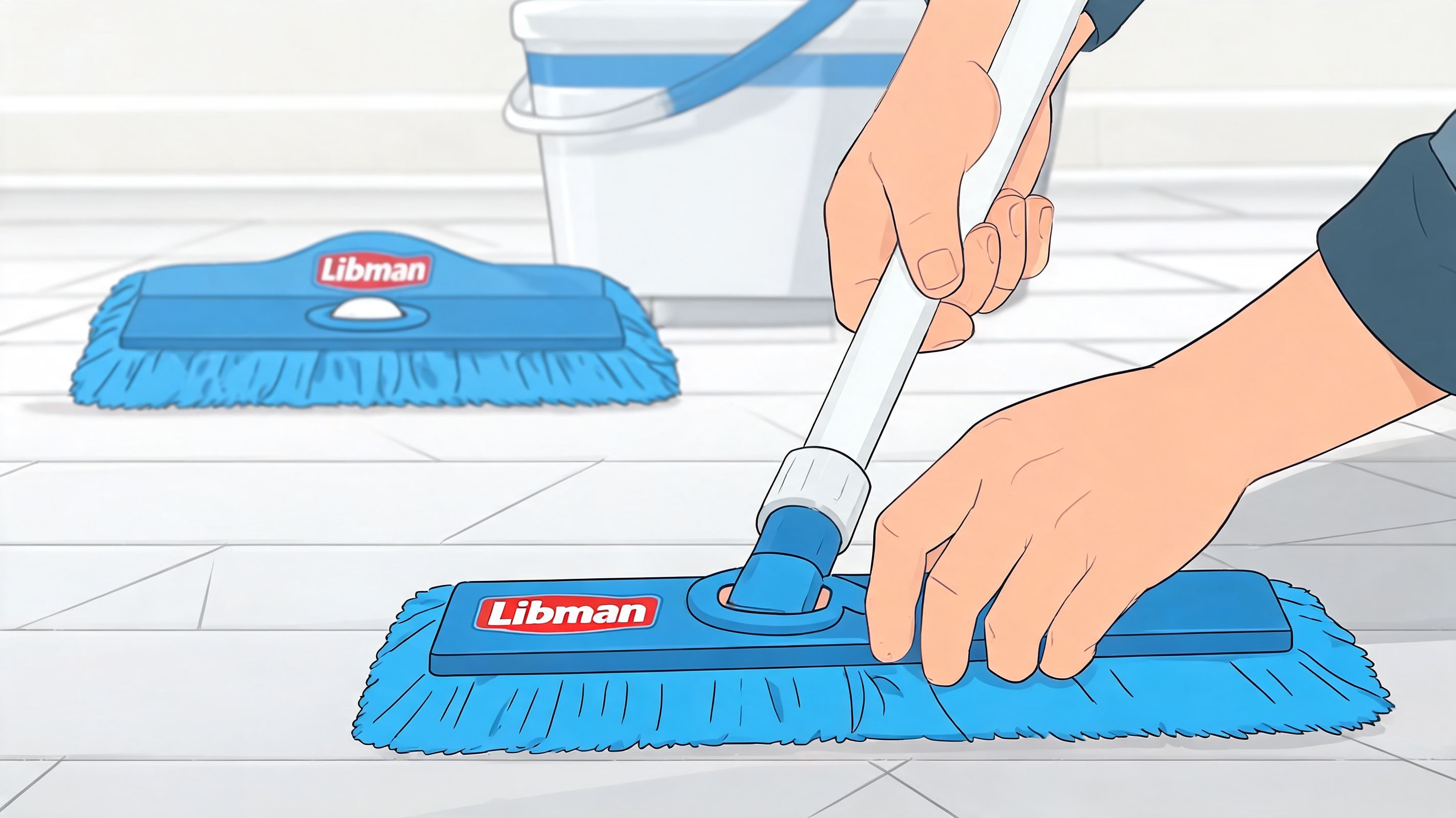
A mop head never seems to fail when the building is quiet. It gives out during a restroom reset before opening, halfway through a school hallway, or right before guests walk into a lobby that still has wet streaks on the floor. That’s usually when a new team member learns that replacing a mop head isn’t a small task. It affects safety, speed, and whether the floor looks clean when people see it.
In a professional setting, a loose or worn mop head creates more than inconvenience. It can leave excess water behind, slow down the crew, and make your whole cleaning program look careless. If you’re responsible for floors in an office, gym, school, retail store, or public venue, knowing how to replace a Libman mop head the right way is part of doing the job to standard.
More Than a Mop The Role of Proper Tools in Facility Hygiene
A busy floor crew usually notices tool problems before management does. The handle feels off. The head drags unevenly. The spin cycle throws water where it shouldn’t. Then someone has to stop a job, find a replacement, and redo part of the area because the floor didn’t dry cleanly the first time.
That’s why I treat mop head replacement like any other maintenance task. If your team installs the new head correctly, the mop goes back into service without drama. If they rush it, you get water leaks, poor extraction, and another avoidable problem on an already full shift.
Commercial cleaning standards are built on small repeatable habits. A fresh, secure mop head helps staff move faster between zones, keeps floors presentable, and supports the professional image of the facility. The same thinking applies across the building. If you manage wider upkeep issues, this guide to Arizona commercial property upkeep is useful because it puts floor care in the context of the whole property instead of treating it like an isolated janitorial task.
Practical rule: If a tool touches the floor every day, your team needs a consistent replacement and inspection routine for it.
There’s also a hygiene angle people skip. A mop isn’t just a cleaning tool. In many facilities, it moves between break rooms, entryways, locker areas, restrooms, and service corridors. If the head is worn out or attached poorly, you don’t just lose cleaning quality. You lose control over the entire process.
That matters more in public-facing facilities. Guests don’t know whether the issue was a rushed staff change or the wrong refill. They just see wet patches, debris left behind, or a floor that looks half-finished.
Understanding Your Libman Mop System
Before you swap anything, identify the mop you’re holding. That sounds obvious, but crews waste time every week trying to force the wrong replacement head onto the wrong frame. A Libman mop system only works well when the head matches the attachment style.

Know the parts before you start
Most crews should check three areas first:
- Handle assembly: Look at the upper and lower handle sections. Some Libman models use a straightforward threaded connection, while others rely on a more specific fit at the base.
- Connector point: Most mistakes often occur at this point. If the replacement head doesn’t line up with the connector design, don’t force it.
- Wringing or spin mechanism: A spin mop system behaves differently than a traditional string mop. The head has to seat correctly for the bucket system to work as intended.
In practical terms, you’re usually dealing with one of a few common styles in the field. The Tornado Spin Mop uses a more precise attachment process at the lower end. A Wonder Mop style setup typically has a different release and install pattern centered around the wringer sleeve and handle assembly. A Gator Mop style unit has its own head and frame style, so the replacement process won’t mirror a spin mop.
What works and what doesn’t
What works is simple. Match model to refill, inspect the connector, and install with control instead of speed. What doesn’t work is grabbing “close enough” inventory from the closet and trying to make it fit because the crew is behind schedule.
I tell new staff to look for signs of mismatch before they start:
- The head won’t seat evenly
- The connector holes or tabs don’t align
- The base wobbles when you turn the handle
- The wringer or spin function feels rough right away
If the replacement takes force, stop. A proper fit should feel deliberate, not improvised.
This matters for purchasing too. If you’re ordering for multiple buildings, label storage bins by mop model, not just by brand. “Libman” alone isn’t enough in a large supply room. Separate Tornado refills from other Libman heads, and your team will make fewer mistakes before a shift even starts.
A Step-by-Step Guide to Replacing Your Mop Head
The right replacement process depends on the model. The biggest errors happen when staff assume every Libman head comes off and goes on the same way. It doesn’t. Treat the attachment method as part of the tool, not an afterthought.

Replacing a Libman Tornado mop head
This is the one to slow down on. The Libman Tornado Mop replacement system uses a dual-connector mechanical assembly that requires precise alignment of two independent attachment points. If your team misses that alignment, water extraction suffers and the system can wear out faster. The source material notes that improper installation can reduce the mop’s operational lifespan by 30 to 40 percent in typical commercial use, and it recommends a tactile pull test after installation to make sure both connectors are fully seated, as shown in this Libman Tornado replacement demonstration.
Use this sequence:
Remove the old head carefully
Hold the lower assembly steady and detach the old head without twisting the connector out of position.Clean the connector area
Wipe away grime, chemical residue, and buildup around the lower connection points. A dirty connector can stop the new head from seating fully.Insert the white ringer handle through the top hole of the new mop head
This first connection has to align with the bar mechanism.Align the holes on the green handle and the white connector piece
This is the second critical connection. If these holes don’t line up cleanly, stop and reset.Seat the head fully
Don’t assume it’s attached because it looks close. You need a complete fit on both points.Perform the pull test
Gently pull the mop head in different directions. If there’s movement, it’s not ready for service.
A Tornado head that isn’t fully seated usually tells on itself in the bucket. You’ll see weak extraction, sloppy spinning, or water where it doesn’t belong.
Replacing a Wonder Mop style head
A Wonder Mop style unit is usually more straightforward, but crews still make it harder than it needs to be. Remove the worn head based on the release point near the lower handle assembly, then inspect the sliding wringer sleeve and the connector area for residue or damage.
Install the new head by lining it up squarely and securing it without over-torquing or bending the assembly. Once attached, run the wringer action by hand before the mop touches the floor. If the sleeve binds or the head shifts, reset it.
Replacing a Gator Mop style head
The Gator style setup is less about spinning and more about making sure the base connection is even and stable. Remove the used head according to the frame design, clear away trapped dirt near the connector points, and attach the new head so the base sits level.
Check two things before you release it to the crew:
- The head doesn’t sag to one side
- The attachment stays stable during a short test pass
If it tilts, drags, or partially detaches during that test pass, don’t send it out. Reinstall it and inspect the frame again.
A quick field check before use
Before any fresh head goes into service, have staff confirm:
- Fit: The head is seated and locked as intended
- Movement: The handle and lower assembly move normally
- Function: The wringer or spin system works without resistance
- Safety: No loose attachment that could leave excess water behind
That final check takes less time than remopping a visible traffic lane.
Pro Tips for Mop Maintenance and Sanitation
A clean mop head isn’t enough. The whole system needs a maintenance routine that protects performance and keeps contamination in check. In commercial facilities, that means treating the mop, handle, and bucket as shared equipment, not just supplies.

Wash microfiber heads the right way
Libman microfiber heads are reusable, which is a real advantage when your team needs quick turnaround between cleaning cycles. But reusable only helps if the heads are washed correctly. Libman guidance says facilities should keep documented washing protocols and should not wash microfiber heads above 140°F or dry them above 160°F because excess heat degrades the material and reduces the absorbent performance that supports faster floor drying in high-traffic areas, as shown in this Libman microfiber care video.
That’s not a minor detail. A damaged microfiber head may still look usable, but it won’t perform the same way on busy floors.
Use a simple routine:
- Rinse first: Don’t send heavily soiled heads straight into the wash with debris packed into the fibers.
- Separate loads: Keep mop heads away from oily rags or heavily contaminated textiles when possible.
- Monitor dryer settings: Commercial laundry rooms can run hotter than staff realize.
The same source notes that facilities using a standardized replacement schedule of every 50 to 75 cleaning cycles or quarterly, whichever comes first maintain more consistent performance and help protect connector components from buildup over time.
Use the head change as an inspection point
Every mop head change is a chance to catch bigger problems early. Look at the lower handle, the connector, and the bucket spinner or wringer while the tool is out of service. Cracks, looseness, and mineral residue rarely fix themselves.
If you’re managing resilient surfaces, this is also a good time to review floor-specific technique. A practical guide for maintaining vinyl floors can help crews avoid using too much water or the wrong approach on surfaces that show every mistake.
Don’t forget the high-touch parts of the tool
Staff handle mop grips, bucket wringers, and carry points all shift long. Those are high-touch surfaces. If you’re serious about sanitation, add them to the routine.
For this, we recommend Wipes.com Disinfectant Wipes to ensure the tools your team uses are as clean as the surfaces they are cleaning.
A good habit is to wipe down the handle and bucket touchpoints when the head is being swapped or the bucket is being reset. If your team needs a tighter process for that part of the workflow, this article on cleaning a mop bucket properly is worth adding to your SOP library.
Clean floors with dirty tools is a contradiction your guests can’t see, but your cleaning results will show it anyway.
Choosing the Right Replacement Head for Your Facility
The right mop head depends on the floor, the traffic pattern, and how your crew works. Too many supply rooms stock one refill and expect it to solve every problem. That usually leads to poor pickup on one surface and unnecessary wear on another.
Match the head to the environment
In offices, clinics, schools, and gyms with finished hard floors, microfiber is usually the better fit because it supports efficient water pickup and a cleaner-looking finish. In rougher service areas or utility zones, some teams may prefer a more rugged material for scrubbing and spill response, even if it doesn’t behave the same way as microfiber.
The decision isn’t just about cleaning performance. It affects training, laundry handling, and how often your team needs to swap heads during a shift.
Here’s a practical way to look at it:
| Libman Mop Head Comparison for Commercial Use | |||
|---|---|---|---|
| Mop Head Type | Best For | Key Benefit | Facility Example |
| Microfiber spin mop head | Smooth finished floors | Better water pickup and cleaner presentation | Gym studio, office lobby, school hallway |
| String mop head | General-purpose wet cleaning | Familiar handling for broad cleanup tasks | Restaurant back-of-house, restroom routes |
| Scrub-style mop head | Heavier grime and textured surfaces | More aggressive contact on stubborn soil | Service corridor, warehouse support area |
What purchasing teams should ask
If you’re buying for a facility, ask these questions before you reorder:
- What surface is this head used on most often?
- Does the crew need quicker drying or more aggressive agitation?
- Can laundry staff support reusable heads properly?
- Are we buying by convenience or by actual fit for the building?
That last one matters. A low-cost refill that doesn’t hold up in daily use creates labor waste fast, even if the unit price looks good on paper.
A sales and management angle that works
If you sell cleaning supplies or you’re trying to justify a better refill to management, don’t pitch it as a “premium” option. Pitch it as a tool choice tied to outcomes. A head matched to the floor helps crews clean more consistently, protects the mop system, and reduces the frustration that comes from poor fit or weak performance.
For operations comparing reusable and single-use approaches across broader programs, this piece on disposable mop heads in facility cleaning is a useful companion read.
Buying the right refill once is cheaper than buying the wrong refill repeatedly and paying for the labor problems it causes.
Conclusion Elevating Cleanliness One Mop at a Time
A mop head change looks minor until it goes wrong in the middle of a shift. Then it affects floor safety, cleaning speed, sanitation, and how the facility presents itself to everyone who walks in. That’s why doing it correctly matters.
Train your crew to identify the model, install the head properly, verify the fit, and maintain the tool like shared equipment. Then support that routine with better hygiene habits, including disinfecting the high-touch parts of the tools themselves.
Prioritize the basics, because the basics shape results. If you want to strengthen your daily cleaning routine and build a more visible sanitation program, explore more facility-focused guidance at WipesBlog.com and consider adding disinfectant wipes to your standard process or product offering.
Leave a Reply