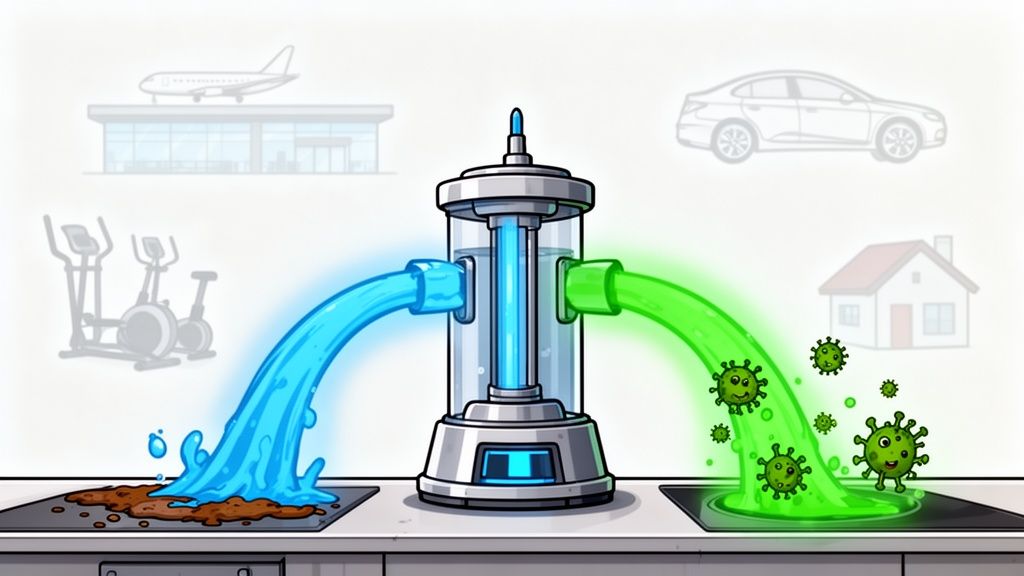
In any commercial or public facility—be it a bustling office, a high-traffic gym, or a popular restaurant—cleanliness isn't just a chore; it's a critical component of your brand, customer experience, and public health responsibility. Imagine creating a powerful, non-toxic cleaner and a hospital-grade disinfectant using just salt, water, and electricity. That’s the core idea behind electrolyzed water (EW), a technology that lets you produce your most essential cleaning solutions right on-site, completely changing the game for facility hygiene.
The Future of Clean Is On-Site and Comprehensive

Think of an electrolyzed water system as a tiny, on-demand factory for your sanitation needs. It takes the simplest ingredients—salt and water—and uses a controlled electrical charge to rework them into two distinct, powerful solutions. For business owners and facility managers, this means gaining control over your cleaning supply chain while elevating hygiene standards.
This isn't some far-off science fiction. The process, known as electrolysis, splits the salt (sodium chloride) and water (H₂O) molecules apart. It then recombines them into something entirely new, creating a dual-action cleaning system from a single, compact device.
Two Solutions From One Simple Process
The real magic here is in the two separate outputs you get:
- A Powerful Degreaser (Sodium Hydroxide): This is a mild, alkaline solution that’s fantastic at cutting through grease, grime, and everyday dirt on surfaces. It works without the harsh, smelly solvents you find in most commercial degreasers.
- A Hospital-Grade Disinfectant (Hypochlorous Acid): This is where the technology truly shines. Hypochlorous acid is a potent disinfectant that’s remarkably effective at killing pathogens. It's the very same substance our own white blood cells produce to fight infection, making it both incredibly strong and exceptionally safe.
This simple but effective process is why the global Electrolyzed Water Generator Market, valued at USD 2.8 billion in 2026, is projected to skyrocket to USD 9.7 billion by 2036. That kind of explosive growth signals a major shift in how commercial facilities approach cleaning, especially where safety and sustainability are top priorities.
An electrolyzed water system empowers a facility to produce its primary cleaning and disinfecting agents on-site, reducing reliance on a complex supply chain of chemical products. This shift simplifies inventory, lowers costs, and improves safety for both staff and visitors.
As more industries look for sustainable solutions, this kind of innovation is gaining serious traction. It’s part of a bigger trend toward greener practices, similar to what you see in specialized markets exploring eco-friendly boat cleaning products and other non-toxic alternatives.
The on-site generation model is a huge leap forward. It eliminates the need to store, handle, and mix concentrated chemicals, which immediately lowers the risk for janitorial staff and gets rid of harsh fumes in your public spaces. It’s an approach that not only cleans effectively but also sends a clear message that you’re committed to modern, responsible sanitation.
How Electrolyzed Water and Disinfectant Wipes Create a Powerful Hygiene Strategy

The real power of a comprehensive hygiene plan is its ability to create a multi-layered defense against germs. While an electrolyzed water cleaner provides a fantastic foundation with its two-step process, combining it with other tools like disinfectant wipes creates a knockout blow for pathogens. With just tap water and salt, the system generates a tough degreaser and a potent disinfectant, but integrating wipes ensures maximum coverage and convenience.
This dual-action approach is what makes the technology so incredibly versatile. Instead of cramming your supply closet with dozens of specialized chemical bottles, you can handle the vast majority of your daily cleaning with two simple, on-demand liquids.
Let’s break down exactly what each solution is and how they work together.
The Degreaser: Lifting the Grime
The first solution created during electrolysis is an alkaline water called sodium hydroxide (NaOH), also known as the catholyte. This is your workhorse cleaner and degreaser. It’s brilliant at breaking down and lifting organic soils, oils, and general grime from surfaces, making them easy to wipe away.
Unlike harsh chemical degreasers that often rely on strong solvents and fill the air with nasty odors, this solution is mild and non-toxic. It’s perfect for:
- Daily Surface Cleaning: Wiping down countertops, tables, and desks in an office.
- Cutting Through Buildup: Tackling greasy residue on gym equipment, kitchen backsplashes, or grime on floors in high-traffic retail areas.
- Prepping Surfaces: By clearing away the protective layer of dirt and biofilm, it paves the way for the disinfectant to reach and kill pathogens effectively.
This first step is absolutely critical. You can't disinfect a dirty surface, and the sodium hydroxide solution does the heavy lifting to prepare for a true, deep clean.
The Disinfectant: Neutralizing the Threats
The second solution is where the magic really happens. This acidic water contains hypochlorous acid (HOCl), or the anolyte. This is the star of the show—a powerful antimicrobial agent that’s remarkably fast-acting against bacteria, viruses, and other pathogens.
What makes HOCl so special is that it pairs incredible efficacy with an outstanding safety profile. Research has shown that hypochlorous acid can be 200-300 times more effective against pathogens like norovirus than bleach, but without the toxic fumes or corrosive damage.
Because it’s non-toxic and leaves no harmful residue, hypochlorous acid is ideal for food-contact surfaces, kids’ play areas in schools, and sensitive electronics in gyms or medical offices.
You’re probably already familiar with its power. In pool maintenance, HOCl is the active sanitizer in modern saltwater systems, and it’s one of the most effective chlorine alternatives for pools because it keeps water safe without the harshness. That same principle applies here, delivering a powerful clean without the risks of traditional chemicals.
While an electrolyzed water cleaner is a comprehensive system, creating a multi-layered hygiene strategy is key to guaranteeing top-tier results in a commercial setting. To ensure consistent surface contact and adherence to dwell times for pathogen elimination, we recommend supplementing your protocol with Wipes.com Disinfectant Wipes. Integrating these wipes provides a robust, fail-safe approach to your cleaning program.
Implementing New Cleaning Systems in Your Facility
So, you're sold on the science, but what does it actually take to get a system like electrolyzed water or a new disinfectant wipe protocol up and running at your facility? The good news is, making the switch is a pretty straightforward process if you have a clear game plan.
It’s less about a massive, disruptive overhaul and more about a smart, strategic upgrade. This is about picking the right tools for your building’s unique footprint and then weaving them into your team’s daily cleaning rhythm.
Choosing the Right System for Your Needs
First things first: you need to match your cleaning solutions to your operational scale. A small business and a sprawling school campus have vastly different cleaning demands. For electrolyzed water, your choice will boil down to two main types of systems: portable units or plumbed-in, on-site generation (OSG) systems.
-
Portable Units: These are the smaller, countertop or cart-based generators. They’re perfect for targeted jobs, smaller facilities, or businesses that need to be nimble, like a retail store or a small office.
-
On-Site Generation (OSG) Systems: These are the heavy hitters. OSG systems are larger, plumbed-in units that connect right to your water supply. They produce a continuous, high-volume flow of solutions, making them the go-to choice for airports, massive sports complexes, hotels, and schools.
For broader applications, consider disinfectant wipes. They offer unparalleled convenience for quick, on-the-spot disinfection, especially for high-touch areas like doorknobs, light switches, and shared equipment. For more on this trend, you can read the full analysis on generator market growth.
Key Operational Steps and Considerations
Once you’ve picked your system, a successful launch depends on getting a few key details right. These steps aren't complicated, but they are absolutely crucial for making sure your new cleaning protocols work exactly as promised.
Efficiency Hack: Position disinfectant wipe dispensers near high-touch zones like entrances, elevators, and gym equipment. This encourages both staff and patrons to contribute to a cleaner environment, reducing the burden on janitorial teams.
Frequency Recommendation: High-touch surfaces in commercial spaces should be disinfected multiple times a day. For a restaurant, this means tables between every customer. For an office, this means shared keyboards and conference room phones at least daily.
One of the most common mistakes we see is teams failing to follow dwell time instructions. Whether using a spray or a wipe, the surface must remain visibly wet for the time specified on the product label to ensure pathogens are killed.
Creating a Seamless Rollout Plan
A smooth transition involves more than just buying a new product. You need a clear plan that gets your staff on board and folds the new technology into your existing routines. For a deeper look at optimizing your entire cleaning process, check out our guide on choosing the right surface cleaning machine for your facility.
A simple implementation checklist should cover these bases:
- Staff Training: Teach your team how the system works, the difference between cleaning and disinfecting, and the right way to use each tool—especially proper dwell times.
- Develop Standard Operating Procedures (SOPs): Create simple, visual guides for daily tasks. Post them where people can see them. This gets rid of guesswork and ensures everyone is on the same page.
- Integrate and Label: Use color-coded spray bottles and clearly labeled wipe dispensers to make it obvious which tool to use where. Then, build their use directly into your existing cleaning checklists.
From Offices to Gyms: Facility-Specific Cleaning Tips
The science behind modern cleaning solutions is impressive, but where the rubber really meets the road is in solving the daily, frustrating cleaning challenges that facility managers face. Let's move past the lab and talk about what this technology actually looks like in action. It’s about creating cleaner, safer, and far more efficient spaces, whether you’re running a massive school or a high-end gym.
These are real-world applications where a combination of on-site generation and convenient disinfectant wipes can eliminate harsh chemical odors, boost customer confidence, and simplify workflows.
Of course, putting any new system into place requires a solid process. It's not just about buying the equipment; it's about making it a core part of your operation.

As you can see, getting it right is a cycle. You have to test its effectiveness in your environment, maintain your equipment, and—most importantly—train your team to use it correctly.
Offices and Schools
In shared environments like offices and schools, high-touch areas are germ hotspots. Think keyboards, door handles, light switches, and shared tables.
- Cleaning Tip: Use a two-step process. First, clean surfaces of visible dirt with a general cleaner (like the sodium hydroxide solution from an EW system). Then, follow up with a disinfectant wipe, ensuring you cover the entire surface and let it air dry.
- Sales Tip: When talking to clients, frame hygiene as an investment in productivity. Fewer sick days from staff or students means a better bottom line and improved learning outcomes. This is the hygiene ROI.
Gyms and Sports Facilities
Every fitness center manager knows the struggle. You've got sweat, shared equipment, and humid locker rooms, creating a perfect storm for bacteria and fungi.
- Cleaning Tip: Place disinfectant wipe stations next to cardio machines and in the weight room. A clear sign encouraging members to "Wipe Down Equipment After Use" empowers them to maintain hygiene. Use electrolyzed water for large-scale floor and locker room cleaning.
- Sales Tip: For gym owners, the value proposition is twofold: member safety and asset protection. Non-corrosive disinfectants protect expensive machines from damage, while visible cleaning efforts build member trust and loyalty.
Restaurants and Retail Stores
In businesses where a customer's first impression is everything, "clean" is the bare minimum. A pristine dining table or a spotless checkout counter is non-negotiable.
- Cleaning Tip: In restaurants, use a food-safe disinfectant for all tables, counters, and payment terminals between customers. Disinfectant wipes offer a quick and efficient way to achieve this rapid turnover. In retail, focus on fitting rooms, checkout counters, and shopping cart handles.
- Sales Tip: For sales reps, highlight the visual impact. A clean facility directly translates to a perception of quality and care. Offer to bundle wipes with other cleaning supplies to create a comprehensive hygiene package for your clients.
Ultimately, a smart hygiene program isn't just another line item in the budget; it's a real competitive advantage. By integrating effective solutions into your daily routine, you're not just protecting people. You're building a reputation for quality and care that pays for itself.
Calculating the ROI of a Modern Hygiene Program
Investing in advanced cleaning solutions like an electrolyzed water cleaner isn't just a nod to sustainability—it's a smart financial play. Once you get past the initial equipment cost, the return on investment (ROI) starts showing up in almost every line of your operational budget. The business case isn't just about "going green." It’s about building a healthier bottom line.
A real ROI analysis goes way beyond just the money you'll save on chemical cleaners. It touches everything from staff safety and training hours to how much space you need for storage, and even how customers see your brand.
Direct Cost Savings
The first and most obvious return is simple: you stop buying cases of traditional chemical cleaners. Think about the typical cleaning closet, stuffed with separate degreasers, glass cleaners, all-purpose sprays, and disinfectants. With an on-site generation system, that recurring purchase order disappears.
This translates directly into major annual savings. For instance, facilities are finding that the sheer efficiency of electrolyzed water—which kills 99.9% of pathogens like E. coli and Listeria in less than 30 seconds compared to the five minutes bleach needs—can slash over $10,000 in yearly chemical spending per site. If you want to dig into the market forces behind this shift, the latest research on the water electrolysis market is a great place to start.
Indirect Returns and Risk Mitigation
Beyond the direct savings, the indirect financial wins are where things get really interesting. These returns come from cutting the hidden costs and operational risks that many businesses just accept as the price of doing business.
-
Less Training and PPE: Onboarding new staff to handle a cocktail of hazardous chemicals means extensive training and a closet full of personal protective equipment (PPE). Safer solutions like electrolyzed water and pre-moistened disinfectant wipes dramatically simplify your safety protocols.
-
Fewer Workplace Injuries: Chemical exposure—from skin burns to respiratory problems—is a huge driver of workplace injury claims. Switching to safer alternatives minimizes these risks, which can lead to lower insurance premiums and less money lost to staff downtime.
-
Lower Shipping and Storage Bills: Gallons of chemical cleaners are heavy and hog valuable real estate. An on-site generator replaces a crowded chemical closet with a compact unit and a bag of salt. Similarly, consolidated wipe orders are more efficient to store and manage.
The efficiency gains are a huge factor, too. Training your team on a simplified, two-product system (e.g., a primary cleaner and a go-to disinfectant wipe) can lead to up to 50% faster cleaning times, letting them get more done without ever cutting corners on quality.
Strategic Value and Brand Enhancement
Finally, don't underestimate the strategic value of making this switch. In today's market, customers and clients are more and more drawn to businesses that show a real commitment to health and safety.
Featuring your use of advanced, effective cleaning solutions in your marketing or sales pitches becomes a powerful way to stand out. It proves you put the well-being of your staff and customers first. This isn't just a cleaning upgrade; it's a compelling story that builds trust, strengthens customer loyalty, and gives you a genuine competitive edge.
Frequently Asked Questions About Advanced Cleaning Solutions
Making a change in your cleaning program always brings up a few questions. When facility managers and business owners first hear about an electrolyzed water cleaner or consider a new disinfectant wipe protocol, they usually have the same handful of concerns about safety, real-world effectiveness, and what it actually takes to get started.
Let's cut through the noise. Here are the straight answers to the questions we get asked most often.
Are These Solutions Safe for All Surfaces in My Facility?
For the most part, yes. The solutions from an electrolyzed water cleaner are incredibly gentle. The disinfectant, hypochlorous acid (HOCl), is remarkably non-corrosive, which makes it perfect for high-value items that would be ruined by bleach. Similarly, high-quality disinfectant wipes are formulated to be safe on most common non-porous surfaces.
Always spot-test a small, inconspicuous area first, but you can generally use them without worry on things like:
- Sensitive electronics on gym equipment
- Laminated desks and office furniture
- Stainless steel kitchen appliances
- High-end fixtures in hotel rooms
Since they evaporate without leaving toxic residue, they are ideal, worry-free solutions for food-contact surfaces and public-facing areas.
Can They Truly Replace All My Chemical Cleaners?
For the vast majority of your day-to-day cleaning and disinfecting, a combination of an electrolyzed water cleaner and disinfectant wipes is an absolute workhorse. This duo can handle everything from cutting through grease to providing hospital-grade disinfection.
That said, you might still hang onto a specialty product for a few rare, heavy-duty tasks like removing hard water scale or deep-set rust stains.
The goal is to get rid of 80-90% of the chemicals on your janitor cart. This move alone will radically simplify your cleaning protocols, boost safety, and deliver serious cost savings.
A modern hygiene strategy replaces the need for separate all-purpose cleaners, glass cleaners, degreasers, and surface disinfectants, streamlining your entire process.
What Maintenance Do the Systems Require?
This is one of the best parts for busy facility managers—the maintenance is minimal. For an on-site electrolyzed water generator, the main tasks are occasionally adding salt and running a periodic descaling cycle, which is often automated.
For a disinfectant wipe program, the "maintenance" is simply restocking dispensers. It's a system designed for convenience and ease of use. When you compare that to the headache of ordering, managing, and diluting dozens of different chemical products, the upkeep for a modern hygiene program is a massive upgrade in simplicity and time savings.
How Are Disinfectants Regulated?
This is a critical question. Any product that claims to kill germs, whether it's a liquid from a generator or a pre-moistened wipe, must be registered with the Environmental Protection Agency (EPA).
Here’s the key: when a disinfectant is produced by an EPA-registered device or is an EPA-registered product itself (like a wipe), you can legally use it as a public health disinfectant if you follow the manufacturer's instructions to the letter.
For you as a facility manager, this means you absolutely must buy equipment and products from reputable manufacturers. Always verify the EPA registration number. This is your proof that the product has been tested and shown to be effective against the pathogens it claims to kill.
A clean and safe environment is no longer a luxury—it’s an expectation. By prioritizing cleanliness and integrating effective, convenient tools like disinfectant wipes into your daily routine or product offerings, you are making a powerful investment in the health of your business and the trust of your customers.
Leave a Reply