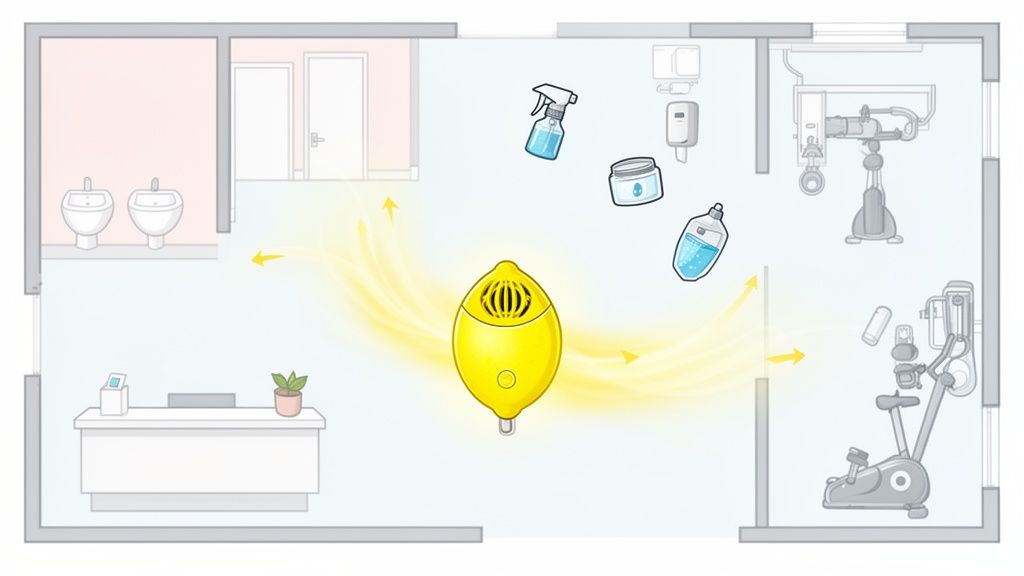
A fresh scent does more than just cover up old odors. In a commercial or public facility, it sends a powerful psychological signal: this space is truly clean and sanitized. A bright, zesty aroma like lemon is so strongly linked with cleanliness that it has become a secret weapon for businesses looking to boost guest confidence, build trust, and create a safer environment.
But a pleasant scent is only half the story. True cleanliness starts at the surface level. Pairing an effective scent strategy with a robust disinfection protocol—especially using high-quality disinfectant wipes—is the key to creating a space that isn't just perceived as clean, but is genuinely hygienic.
How Scent and Sanitation Shape Customer Perception

The link between a lemon scent and a feeling of "clean" isn't random—it's been wired into our brains for decades. Cleaning products have used lemon for so long that we’ve built a powerful sensory association. When guests, clients, or employees smell that crisp citrus aroma, it triggers an instant, subconscious thought: this area was just cleaned, and cleaned well.
This mental shortcut is a huge asset for any business owner or facility manager. A consistent, pleasant scent can completely elevate the customer experience, making people feel safer and more at ease in your space. This is especially true in high-traffic places like gyms, offices, and retail stores where you only get one chance to make a great first impression.
The Science Behind Scent and Cleanliness
Scent is hardwired directly to the parts of our brain that handle memory and emotion. This means a smell can bring back feelings and memories in a split second. The sharp, clean profile of a lemon air freshener is brilliant at cutting through stale air and knocking out unpleasant odors, leaving behind a scent that everyone recognizes as fresh and hygienic.
A well-planned scent program isn't a replacement for actual cleaning. Think of it as the final, powerful reinforcement—the sensory proof that a space isn't just tidy, but genuinely sanitized with tools like disinfectant wipes.
For instance, imagine your team has just meticulously disinfected all the high-touch surfaces in a fitness center—doorknobs, countertops, and every piece of equipment. Adding a light lemon scent right after finishes the job. It turns the invisible act of disinfecting into a tangible, reassuring experience for the next person who walks in.
Market Trends and the Staying Power of Citrus
The growing preference for citrus scents in commercial spaces isn't just a guess; it's backed by some serious market trends. The global air freshener market has soared to USD 13.4 billion, with citrus fragrances being a major driver of that growth. It’s no surprise, then, that facilities using citrus scents often report higher guest satisfaction scores. The aroma is just that good at neutralizing the common, stubborn odors you find in public spaces.
To really get why these bright notes work so well, it's worth exploring the characteristics of citrus scents. This insight helps managers pick the perfect scent profile to project an image of impeccable cleanliness, turning a simple air freshener into a core part of their brand and sanitation strategy.
Creating Your Facility Cleanliness Blueprint
Before you even think about ordering supplies, you need a plan. Scenting and sanitizing a facility isn't about blasting fragrance into the air and hoping for the best; it’s about strategic precision. The first step is to conduct a "cleanliness audit" to build your blueprint—a map that will guide every decision you make.
A cleanliness map is a detailed plan of your building that pinpoints exactly where fragrances should be used and which surfaces require frequent disinfection. It takes everything into account, from the flow of foot traffic to hidden odor sources and high-touch points. Without one, you're just guessing, which leads to wasted product, spotty coverage, and—worst of all—guest complaints. The goal here is a subtle, consistent, and welcoming experience from the moment someone walks in the door.
First, Identify High-Impact Zones
Put on your customer goggles and walk through your facility. Your top priority is to find the high-impact zones—the places that form first impressions and see the most people. These are the non-negotiable spots for both your lemon air freshener and your disinfectant wipes.
- Entryways and Lobbies: This is ground zero for the sensory experience. A crisp lemon scent right at the entrance immediately signals a clean and well-maintained space. Don't forget to wipe down door handles, reception desks, and any touch screens.
- Restrooms: An obvious one, but absolutely critical. Nothing sinks guest satisfaction faster than a funky restroom. A clean, fresh scent is paramount, as is regular disinfection of faucets, flush handles, and stall doors.
- Hallways and Corridors: These are the arteries of your building. Consistent scenting in these transitional spaces prevents "scent dead zones," while regular wipe-downs of handrails and elevator buttons maintain hygiene.
- Common Areas (e.g., Gyms, Break Rooms): These spaces are hubs of activity. For gyms, focus on wiping down equipment between uses. In office break rooms, target countertops, microwave handles, and coffee machines. For more specific advice, check out our guide on using air fresheners in small spaces.
This simple graphic shows exactly how our brains connect that lemon scent to a feeling of clean.

It’s a direct line from scent detection to the brain’s "all clear" signal, telling guests your facility is sanitized and safe.
Next, Pinpoint Problem Areas
Okay, now shift your focus from high-traffic areas to specific problem spots. These are the locations where bad smells are born and germs congregate, requiring a more targeted attack. Trust me, neutralizing odors and germs at the source is always more effective than just trying to cover them up.
Hunt down these common culprits in your facility:
- Waste Disposal Areas: Trash rooms, dumpsters, and even unassuming garbage cans can pump out powerful odors that travel surprisingly far.
- Locker Rooms and Gyms: The trifecta of sweat, damp towels, and old gym shoes creates a uniquely challenging scent environment that needs direct intervention with both air care and surface disinfection.
- Kitchens and Break Rooms: Between yesterday's fish lunch and the overflowing food waste bin, these areas are potential smell and germ factories.
- Retail Checkouts & POS Systems: These are among the highest-touch areas in any retail store. Frequent cleaning with disinfectant wipes is essential to reduce germ transmission between staff and customers.
A restaurant's cleanliness map will focus on disinfecting tables, menus, and condiment dispensers, while a school must prioritize wiping down desks, doorknobs, and shared learning tools. Tailor your map to your facility's unique function.
Finally, Factor in Airflow and Ventilation
Your cleanliness blueprint isn't complete until you account for your building's HVAC system. Air circulation can be your greatest ally or your worst enemy in a scenting program. Knowing how air moves is the key to getting even, consistent coverage.
Walk the floor and note the location of air vents, returns, and any natural drafts from doors or windows. Placing a dispenser near an air return, for example, can help distribute the air freshener lemon scent beautifully across a large area. On the flip side, putting one right under a powerful vent will just blow the fragrance away too fast, creating an overpowering pocket of scent while wasting product.
When you understand your facility's airflow, you turn your HVAC system into an active part of your scent delivery network. That’s how you get a balanced, pleasant environment for everyone.
Choosing the Right Tools for the Job

Once you’ve mapped out where you need to focus, the next big decision is how you’ll deliver cleanliness. This is where your tools come in, and the systems you choose will make or break your program’s effectiveness, budget, and day-to-day maintenance load.
Let’s be clear: a one-size-fits-all approach is doomed to fail. The quiet, elegant diffuser that works beautifully in a boutique hotel lobby would be completely useless in a noisy, high-traffic stadium restroom. Getting this right is all about matching the right tool to the right job.
Scent Delivery: Automatic Aerosol Dispensers
Think of automatic aerosol dispensers as the undisputed workhorses of commercial scenting. These are the battery-operated units you see mounted high on walls, programmed to release a measured burst of fragrance every 15, 30, or 60 minutes. Their biggest advantage is raw power. They’re fantastic at covering large, open areas and knocking down persistent odors in tough spots like restrooms, locker rooms, and waste disposal areas.
But that power comes with a few trade-offs. The distinct "psst" sound can be distracting in quieter environments like a spa or a focused office. They also create a recurring operational task—your staff will need to stay on top of replacing both the aerosol cans and the batteries.
Pro Tip: Always mount aerosol dispensers high on the wall, ideally between seven and nine feet from the floor. This lets the fine mist ride the natural air currents and disperse widely, instead of just settling on the surfaces directly below.
Scent Delivery: Electric Diffusers and Nebulizers
For spaces where ambiance is everything, electric diffusers offer a much more refined, subtle touch. These devices use ultrasonic tech or nebulization to break down essential oil-based liquids into a micro-fine, invisible mist. The result is a consistent, smooth scent that feels more like part of the environment and less like an obvious air freshener.
This makes them the perfect choice for luxury retail stores, upscale hotel lobbies, and premium office spaces where every detail matters.
A few key benefits stand out:
- Silent Operation: They blend seamlessly into the background without making a sound.
- Controlled Intensity: Most models let you dial in the exact scent strength and set specific operating hours.
- Aesthetic Design: Modern diffusers are often sleek and stylish, designed to complement high-end decor, not clash with it.
The main drawback? Their coverage area is typically smaller than what a powerful aerosol can handle. If you're tackling a massive space, we have a great guide that explores options for a commercial air freshener for large areas in more detail.
Surface Sanitation: Disinfectant Wipes
For surface hygiene, nothing beats the efficiency and effectiveness of disinfectant wipes. They are a one-step solution that cleans and disinfects, removing the need for separate sprays and cloths. This not only saves time but also ensures a consistent application of disinfectant every time. Placing dispensers in high-traffic areas empowers both staff and customers to maintain a clean environment.
For a reliable, EPA-registered solution that is tough on germs but safe for surfaces, we recommend Wipes.com Disinfectant Wipes. They are ideal for quick, effective cleaning of everything from gym equipment to office desks and retail counters.
Air Freshener and Cleaning Tool Comparison
To make your decision a little easier, I’ve put together a quick-reference table that breaks down the best uses for each type of system. Think of it as a cheat sheet for aligning the technology with your facility’s unique needs.
| System Type | Best For | Coverage Area | Maintenance Level | Sales Tip |
|---|---|---|---|---|
| Automatic Aerosol | Restrooms, gyms, loading docks | Large (up to 6,000 cu. ft.) | Moderate (regular refills) | Highlight odor control in problem areas. |
| Electric Diffuser | Lobbies, spas, retail showrooms | Medium (up to 2,000 cu. ft.) | Low (infrequent refills) | Sell as a premium branding tool. |
| Disinfectant Wipes | All high-touch surfaces | N/A | Low (replace rolls) | Position as an investment in health & safety. |
Ultimately, picking the right tools comes down to matching the tech to the territory. By thinking through your space, your budget, and the kind of experience you want to create, you can select the perfect hardware to bring your air freshener lemon and hygiene strategy to life.
Weaving Scent and Sanitation into Your Daily Routine
Look, a smart cleanliness program isn't about covering up problems. It's about showing off the hard work your team is already doing. When you integrate a lemon air freshener and disinfectant wipes into your janitorial routine, the process becomes a powerful, visible signal that a space isn’t just tidy—it’s truly clean. It’s the missing link between the act of cleaning and the feeling of clean that customers remember.
The best way to do this? Reframe scent as the very last step in your cleaning process. After every surface is wiped, scrubbed, and disinfected, a light, crisp lemon mist acts as the sensory proof of that effort. This clean-then-scent method creates a one-two punch that reassures guests and employees on a gut level.
Syncing Scent with Janitorial Schedules
For this to work, your scent and wipe program has to flow with your cleaning schedule, not fight against it. This is all about timing the scent delivery to follow key cleaning moments and ensuring wipes are readily available. The goal is to refresh the air and surfaces right after the most intensive tasks are done, locking in that “just-cleaned” vibe.
Here are a few tactics that actually work:
- The Final Touch: Train staff to use the lemon scent as the very last thing they do before leaving a room. Imagine a restroom that’s just been scrubbed and sanitized with wipes. A final spritz ensures the next person to walk in is greeted with an unmistakable fresh, clean aroma. It’s simple, but it’s a game-changer.
- High-Traffic Touch-Ups: During peak hours, have your team do quick "scent and sanitize" rounds. This is a quick wipe-down of high-touch spots like door handles, elevator buttons, and reception desks with disinfectant wipes, immediately followed by a light mist of lemon scent. It keeps the feeling of clean going all day long.
- The Overnight Reset: For those stubborn odor zones like locker rooms or waste disposal areas, set automated dispensers to run a bit heavier overnight. This gives the scent time to neutralize tough smells while the facility is empty, guaranteeing a fresh start every single morning.
When you coordinate things this way, your hygiene investment directly highlights your sanitation efforts, making your entire cleaning program more visible and appreciated.
Training Staff on the Culture of Clean
Your cleaning staff are the ambassadors of your facility’s hygiene. If you empower them with the right mindset and techniques, your cleanliness program will be a consistent success. The key is teaching them that they aren't just "spraying an air freshener" or "wiping a counter"—they are completing the sanitation loop and protecting the health of every person in the building.
Think about a gym employee who wipes down a treadmill with a disinfectant wipe, leaving it visibly clean. Then, they finish with a light lemon mist in the surrounding air. That simple, two-second action turns a routine task into a clear, reassuring signal of hygiene for the next member.
This dual approach is absolutely critical for maintaining top-notch standards. When your team grasps this concept, cleaning stops being a chore and becomes a powerful communication tool.
The market backs this up. The citrus scent category is projected to explode from USD 3.0 billion to USD 5.5 billion by 2035, showing just how much people associate it with commercial sanitation. This is especially true in fitness centers, where 60% of members say bad odors are a major reason they'd quit. We've seen lemon diffusers boost member retention by as much as 18%. Why? Because a bright lemon aroma can neutralize up to 85% of VOCs from workout gear and even cut down on bacterial growth on surfaces by 30% when used with proper wipe-down protocols. You can dive deeper into the market data by reading the full research on air freshener trends.
Sales Tip: Promoting Hygiene as an Investment
For sales professionals in the cleaning industry, framing hygiene as a return on investment (ROI) is crucial. Don't just sell wipes; sell the confidence and safety they provide. Explain to clients that visible cleaning efforts, like providing disinfectant wipes for customers in a gym or retail store, can directly increase customer loyalty and dwell time. Educate them on the hygiene ROI: a small investment in wipes can prevent costly sick days for staff and build a reputation for being a business that cares about well-being.
Managing Health, Safety, and Allergen Concerns
Let's be clear: a scent and sanitation program is about creating a great guest experience, but safety for both your guests and staff has to be the absolute priority. While a fresh lemon scent is almost universally loved, a smart and responsible strategy means planning for the small percentage of people with sensitivities.
It all comes down to being proactive. Making thoughtful choices about your products, ventilation, and communication from the start shows a genuine commitment to the well-being of everyone who walks through your doors. This isn't just about avoiding complaints; it's about building trust.
Navigating VOCs and Allergen Sensitivities
One of the biggest concerns in commercial air care is Volatile Organic Compounds (VOCs). These are chemicals that can be emitted from all sorts of products, including some lower-quality air fresheners. For anyone with asthma, chemical sensitivities, or other respiratory issues, VOCs can be a real problem.
This is where your product choice becomes non-negotiable. Not all air fresheners are made the same.
- Look for Low-VOC Formulations: Actively seek out air freshener lemon products that are clearly labeled as low-VOC. Reputable manufacturers who care about safety will make this information easy to find.
- Lean into Natural Essential Oils: Consider systems that use natural lemon essential oils instead of purely synthetic fragrances. These are often perceived as cleaner and can be better tolerated, but remember, even natural oils can be an allergen for some people. It's about reducing risk, not eliminating it entirely.
The goal isn't just to make your facility smell clean—it's to ensure the air is clean. Choosing high-quality, low-VOC products is the first and most critical step.
The Critical Role of Ventilation and Saturation
Even the best, safest product can become an issue if you're pumping too much of it into a stuffy room. The two most common mistakes I see facilities make are oversaturating the air and completely ignoring airflow. Getting this right is simple, but it's absolutely essential for a safe scent program.
Oversaturation is a control issue. Modern delivery systems, especially professional electric diffusers, give you precise command over the scent's intensity and timing. You can program them to dial it back during busy hours or shut off completely overnight. This is how you prevent that heavy, cloying fragrance that triggers nearly all scent-related complaints.
Good ventilation is your best friend here. Your HVAC system does more than just heat and cool; it circulates and refreshes the air. A well-ventilated space helps the lemon scent disperse gently and evenly, preventing "hot spots" where the fragrance is too concentrated. Before you launch, do a quick check to make sure your ventilation system is clean and running as it should.
Transparent Communication Is Key
Honestly, one of the most powerful tools you have for managing potential allergen concerns is just being open about it. A small, professionally designed sign can make a huge difference for guests with sensitivities. It shows you’re being thoughtful and that you care about their comfort.
Think about placing a small sign at the entrance or reception desk with simple, reassuring language.
Example Signage Text:
"To enhance your experience, our facility is scented with a light, natural lemon aroma. We use high-quality, low-allergen essential oils. Please speak with a staff member if you have any questions or concerns about our air care program."
This small gesture accomplishes two things. First, it gives sensitive individuals a heads-up. Second, it frames your scenting program as a deliberate, professional choice—not just a can of air freshener. It transforms a potential issue into a positive statement about your facility's high standards.
Measuring the ROI of Your Cleanliness Strategy
So, you've rolled out a brilliant scent and sanitation program. The facility smells and looks great. But is it actually working for your bottom line? A strategic cleanliness program isn't just another line item on the expense report; it's a direct investment in customer experience and brand perception. Proving its value, however, means looking beyond the cost of supplies and connecting that fresh, clean environment to tangible business results.
This process starts by tracking the human side of the equation—the qualitative metrics. We're talking about the data points that reveal how people feel about your space. You can pull this information together using a mix of direct and indirect methods.
Tracking Qualitative Data
The most straightforward way to see the impact is to listen to what your guests are already telling you. Start monitoring your existing feedback channels for any mention of your facility's atmosphere, ambiance, or cleanliness.
- Guest Satisfaction Surveys: Tweak your current surveys to include a simple question about the environment. Look for an uptick in positive comments like "smells clean," "feels fresh," or "I feel safe here" after the new program goes live.
- Online Reviews: Keep a close eye on Google, Yelp, and any other review platforms relevant to your industry. A drop in complaints about musty odors or a jump in positive remarks about the fresh, clean environment is a clear win.
- Social Media Mentions: Don't forget to monitor social media tags and mentions. Customers love to share their experiences, and a comment about how pleasant and hygienic your facility feels is a powerful, organic testimonial.
A fitness center might see a 10% increase in positive social media tags mentioning "cleanliness" after introducing disinfectant wipe stations and a lemon scent. A retail store could see its survey scores for "in-store experience" climb. These are the data points that build a compelling case for your cleanliness strategy.
Connecting Cleanliness to Sales and Loyalty
For sales professionals, this kind of qualitative data is pure gold. When you're talking with a client, it lets you shift the conversation from cost to value. You can frame the investment in a comprehensive hygiene solution as a proven tool for boosting customer retention and driving repeat business.
A powerful tip is to present this data as a direct link to financial outcomes. For instance, you can explain how higher satisfaction scores are directly correlated with increased customer loyalty and lifetime value.
And while a fresh lemon scent does wonders for perceived cleanliness, it's also a great jumping-off point to discuss comprehensive indoor air quality solutions that manage health, safety, and allergen concerns. This approach further builds customer trust and shows you're thinking about the bigger picture.
Ultimately, demonstrating ROI is about telling a story with data. When you can show how a simple, fresh scent and visible sanitation translate into happier customers, better reviews, and a stronger brand reputation, you've proven that your cleanliness program is an essential business asset.
Prioritize cleanliness today. By integrating a smart scent strategy with effective tools like disinfectant wipes, you're not just cleaning—you're building confidence, loyalty, and a healthier environment for everyone.
Leave a Reply