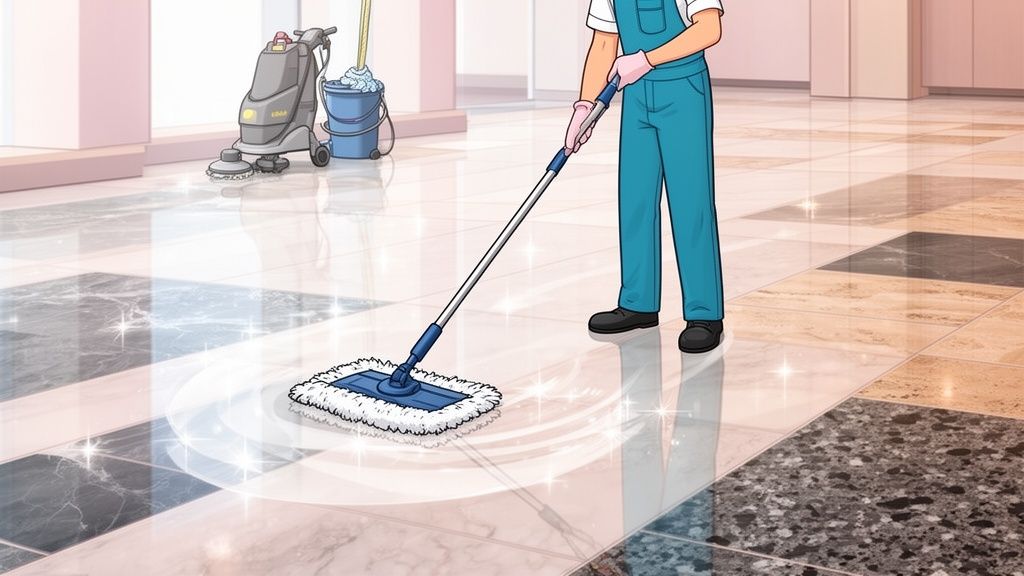
In any commercial facility, from a bustling corporate lobby to a high-end gym, your stone floor isn't just a surface—it's the first handshake you offer every guest. It’s a powerful, unspoken statement about your brand’s commitment to quality, cleanliness, and detail. This is why proper maintenance is so much more than cleaning; it's a direct investment in protecting your asset, ensuring guest safety, and shaping the entire customer experience.
Neglecting specialized care isn't just an oversight; it's a business risk that chips away at your reputation and your bottom line. This guide provides practical, informative tips for business owners, janitorial staff, and sales professionals on how to maintain pristine stone floors, highlighting the undeniable benefits of a truly clean and hygienic facility.
Why Your Stone Floor Is a Business Asset
Your gleaming marble lobby or rustic slate showroom is often the very first physical touchpoint a customer has with your business. Long before anyone says "hello," that floor is communicating a message of professionalism and high standards. The problem is, many facility managers treat these high-value surfaces with the same generic cleaning methods they’d use on vinyl tile, completely unaware of the irreversible damage they’re causing.
Unlike resilient flooring, natural stone like granite, marble, and travertine is porous and incredibly sensitive to chemicals. Sloshing the wrong product on it—like an acidic or highly alkaline cleaner—doesn't just fail to clean; it actively etches, dulls, and degrades the stone itself. Before you know it, you’re looking at a massive restoration project that could have been easily avoided.
The True Cost of Improper Care
The financial fallout from neglecting your stone floors is bigger and more complex than most people realize. These installations are a significant investment. The global stone flooring market, valued at a hefty USD 14.68 billion, is on track to hit USD 26.40 billion by 2034. Yet, this valuable asset can turn into a huge liability in a heartbeat.
A shocking 70% of facility managers report slip-and-fall incidents that are directly linked to improperly cleaned or maintained stone surfaces. For short-term rental hosts, something as simple as using the wrong pH-neutral cleaner can visibly etch a marble floor in just six months, potentially slashing the property's value by up to 15%. To get the full picture, you can explore more data on the stone flooring market and its maintenance impact.
"A well-maintained stone floor is a direct reflection of a business's operational excellence. It tells customers that you care about the details, which builds trust and confidence in your brand from the ground up."
Shifting from Cost to Investment
When you start viewing stone floor maintenance as an investment instead of just another expense, the returns become obvious. Venues that switch to targeted stone care protocols don't just protect their floors; they see real, measurable improvements across the board.
Facilities with a proper stone care plan report an average 25% reduction in long-term maintenance costs and an 18% boost in guest satisfaction scores. The data doesn't lie—a smart approach to cleaning your stone floors pays for itself.
By putting a solid care regimen in place, you’re hitting several key business goals at once:
- Enhance Brand Perception: A pristine floor reinforces a premium, high-quality brand image.
- Improve Guest Safety: A clean, dry, and properly finished floor dramatically cuts down on slip-and-fall risks.
- Protect Your Asset: You extend the life of an expensive installation, avoiding costly repairs or premature replacement.
This guide is your practical roadmap. We’ll cover everything a facility manager or cleaning professional needs to know, from daily upkeep and deep cleaning to stain removal. The goal is to give you the expertise to protect your investment and elevate your customer experience—one gleaming floor at a time.
Know Your Stone Before You Clean
Treating all stone floors the same is one of the costliest mistakes a facility manager can make. Grabbing a generic, all-purpose cleaner might seem efficient, but for natural stone, it can lead to irreversible damage like etching, dulling, and staining. Before you even think about cleaning, you have to become a bit of a detective and figure out exactly what you're working with.
Natural stone generally falls into two main categories, and this distinction dictates your entire cleaning strategy. This isn't just technical jargon; it's the fundamental rule that separates a pristine floor from a permanently damaged one.
Siliceous vs. Calcareous Stone
The first and most critical step is determining if your stone is siliceous or calcareous. It’s a simple classification that will save you a world of headaches and repair bills.
- Siliceous Stone: This type is primarily composed of silica or quartz-like particles. Think of granite, slate, and sandstone. They are generally tough as nails and resistant to most acids found in common cleaning products.
- Calcareous Stone: Made mainly of calcium carbonate, this category includes marble, travertine, limestone, and onyx. These stones are beautiful but are extremely sensitive to acidic substances—even something as mild as vinegar or lemon juice can cause permanent etching.
Understanding this difference is non-negotiable for anyone tasked with maintaining a stone floor. A cleaner that makes granite shine could instantly ruin the finish on a marble entryway.
The golden rule of stone care is simple: When in doubt, assume your stone is sensitive. Always test cleaning products in an inconspicuous area first, like under a mat or in a corner, before applying them to the entire floor.
Identifying Your Floor Type
So, how can you tell what you have? While a professional can give a definitive answer, you can often identify the stone based on a few visual cues.
- Granite: Look for a granular, crystalline appearance with a mix of different colored minerals. It often has a speckled look and is known for its hardness, making it a popular choice for high-traffic commercial lobbies.
- Marble: Famous for its elegant veining, marble has a smoother, more uniform look than granite. Its surface is softer and more prone to scratching and etching, requiring a much gentler touch.
- Slate: This stone is easy to spot with its layered, cleft surface, which gives it a rustic, textured feel. Colors range from dark gray and black to green and purple.
- Travertine: Characterized by its pitted surface and creamy, earthy tones, travertine is a form of limestone. Those natural holes are often filled with a resin during processing, but it remains a soft and porous stone.
This decision tree illustrates the critical choice you make every time you clean, highlighting how proper care protects your asset while improper methods lead to costly damage.

As you can see, the path to a well-maintained floor that enhances customer experience starts with the right cleaning choices, directly avoiding expensive repairs down the line.
Performing a Quick Floor Diagnostic
Once you’ve got a good idea of your stone type, do a quick walk-through to assess its current condition. Pay close attention to high-traffic areas like entryways and main corridors, as these zones reveal the most about your floor's health.
First, check the integrity of the sealant. A simple water test will do the trick: place a few drops of water on the surface and wait a few minutes. If the water beads up, your sealant is intact. If it darkens the stone or soaks right in, your floor is vulnerable and needs to be resealed promptly.
Next, look for existing damage. Get down at a low angle and use a flashlight to spot etches, which look like dull, discolored spots on the surface. Also, map out any obvious wear patterns—areas where the finish has been worn away by foot traffic.
You can learn more about why the chemical makeup of your cleaner is so crucial by reading our guide on what pH-neutral cleaners are and how they protect sensitive surfaces. This quick diagnostic creates a custom roadmap for cleaning, ensuring you address specific issues instead of using a generic approach that might do more harm than good.
Daily Routines for High-Traffic Stone Floors
In any busy commercial space—be it a gym, office, or retail store—your stone floors are under constant assault. Foot traffic, spills, and whatever the weather drags in—it all adds up. This daily grind acts like a slow-motion sandblaster, wearing away the floor's finish and integrity.
A solid, consistent daily maintenance routine isn't just about looking good. It’s your first and best line of defense against long-term, expensive damage. The goal is simple: get rid of abrasive grit before it can scratch the surface and tackle spills before they become permanent stains. If you skip this, small issues snowball, turning a beautiful asset into a dull, worn-out liability.

Start with Dry Dust Mopping
Before a single drop of water hits your floor, the most important daily task is getting rid of dry soil. Dirt, sand, and grit are the number one enemies of a stone floor’s finish. Under the pressure of footsteps, these tiny, sharp particles create microscopic scratches that rob the stone of its natural shine.
Your best tool for this job is a large, untreated microfiber dust mop. Its natural static charge is perfect for trapping fine dust and debris instead of just pushing it around. Make this the first and last thing your team does each day in high-traffic zones like lobbies, main corridors, and entryways. It’s a low-effort, high-impact step that significantly extends the life of your floor.
Master the Damp Mop Technique
Once the abrasive grit is gone, it’s time to damp mop. This lifts away any leftover soil and light spills. The key word here is damp, not wet. Soaking a stone floor is a classic mistake. Too much water can seep into grout lines or even the stone itself, which can lead to problems like efflorescence—that chalky white residue that’s a pain to remove.
The right gear and solution are just as important as your technique.
- The Right Mop: Always grab a clean microfiber flat mop head. Microfiber is a game-changer; it grabs and holds onto dirt instead of just smearing it around. Plus, it works effectively with less water and cleaning solution.
- The Right Cleaner: Stick exclusively to a pH-neutral cleaner made specifically for natural stone. Anything acidic (like vinegar) or alkaline (like bleach or ammonia) will etch and damage calcareous stones like marble, limestone, and travertine for good.
- The Right Method: Use a two-bucket system. One bucket is for your cleaning solution, the other for clean rinse water. This simple setup prevents you from mopping with dirty water, which is the main culprit behind streaks and a hazy, dull finish.
A consistent daily cleaning schedule is more than just aesthetics; it's a fundamental safety protocol. One study found that over 55% of all slip-and-fall accidents are caused by hazardous walkway surfaces. Daily debris removal and proper mopping directly tackle that risk.
Managing High-Spill and High-Touch Zones
Let's be realistic—some areas are just messier than others. Entrances on rainy days, the floor around a coffee station, or service counters in a restaurant are hotspots for spills that can quickly become slip hazards or permanent stains.
This is where a spot-cleaning protocol is essential. Keep a kit with absorbent cloths and disinfectant wipes handy so staff can handle small messes immediately. A quick cleanup of a coffee spill or a drop of grease can stop it from penetrating the stone's pores and setting in. For high-touch surfaces like door handles, counters, and railings near your stone floors, using disinfectant wipes is a highly efficient way to reduce germ spread without the risk of overspray damaging the floor.
Think about the environment. In a gym, it's sweat and water bottles. In an office breakroom, it's food and drink spills. Instead of leaving it all for the nightly cleaning crew, empower your daytime staff to tackle these minor incidents as they happen. This maintains a higher standard of both cleanliness and safety all day long. For more expert techniques that apply to daily care, you can find great tips on cleaning tile floors and grout like a pro. It’s a proactive approach that keeps your stone floors looking impeccable and safe for everyone.
When It’s Time for a Deep Clean (and How to Tackle Stubborn Stains)
Daily maintenance is your first line of defense, but let’s be real—high-traffic commercial floors take a beating. Over time, even the best daily routine can't stop the slow creep of grime that gets ground into the pores of the stone. That’s when the floor’s finish starts to look dull and tired, and stubborn stains begin to feel like a permanent feature.
This is where a good deep cleaning strategy comes in. It’s not about scrubbing harder; it’s about using the right approach to restore your stone's original pop and tackle the problems that a mop just laughs at.
For big commercial lobbies, hallways, or retail spaces, you’ll need to bring in the heavy hitters. I’m talking about professional equipment like a low-speed floor scrubber or a walk-behind automatic scrubber. These machines deliver the kind of consistent pressure and agitation that you simply can’t get by hand, lifting out that deep-seated dirt that’s been hiding for months.

Picking the Right Gear for the Job
When you’re using a floor scrubber, the pad you choose is everything. Get it wrong, and you can easily scratch or haze the stone, creating a bigger problem than you started with. The golden rule is to always start with the least aggressive pad and only move up if you absolutely have to.
- White or Red Pads: These are your go-to for sensitive stones like polished marble and travertine. They’re soft, non-abrasive, and perfect for light cleaning or polishing without risking damage.
- Blue or Green Pads: A step up in aggression, these are great for deep scrubbing on tougher stones like granite or slate that can handle a bit more friction.
- Black Pads: These are the most aggressive pads out there, designed for stripping old, heavy layers of sealer. Use these with extreme caution on natural stone—they can easily etch the surface if you’re not careful.
After scrubbing the floor with a good pH-neutral cleaner, your next move is critical: use a wet vacuum to get all that dirty slurry off the floor immediately. If you let that grimy water sit and air-dry, you’ve just wasted your time. The dirt will settle right back onto the stone and into the grout lines, leaving you with a hazy, streaky mess.
Getting Tactical with Stain Removal
Stains happen. It's a fact of life in any commercial space. But very few are a life sentence for your floor if you know how to handle them. The key is to first figure out what kind of stain you're dealing with, because that dictates your entire plan of attack.
You’d be surprised how many stone floor issues are completely preventable. Industry data shows that 40% of stone floor failures in the first three years are a direct result of improper cleaning. Often, it's acidic products that eat away at sealers, leading to expensive restoration work down the road. In a place like an airport terminal, grime can build up so fast that it reduces a floor’s slip resistance by as much as 35% in just 48 hours.
When you're facing tough stains, choosing the right product is half the battle. This guide to the best floor cleaners is a great resource for understanding what works and what doesn't.
Using a Poultice for Stains That Won't Quit
For those deep, stubborn stains that have worked their way into the stone itself, a poultice is your secret weapon. Think of it as a chemical magnet. A poultice is a thick, paste-like material you apply directly to the stain. As it dries, it pulls the staining agent up out of the pores of the stone. You can even make your own with a few basic ingredients.
Poultice Recipes for Common Stains
| Stain Type | Poultice Base | Active Ingredient | Application Notes |
|---|---|---|---|
| Organic | Unscented Baby Powder | 12% Hydrogen Peroxide | Mix to a peanut butter consistency. Apply, cover with plastic, and tape edges. Let dry 24-48 hours. |
| Oil-Based | Baking Soda | Acetone or Mineral Spirits | Use in a well-ventilated area. Mix, apply, and cover as above. |
| Inorganic (Rust) | Diatomaceous Earth | Commercial Rust Remover | Follow product instructions carefully. Test on an inconspicuous spot first. |
A successful deep clean is like hitting the reset button for your floor. It doesn't just bring back the stone's beauty—it properly preps the surface for a fresh coat of sealer, which is the single most important step in protecting your investment for the long haul.
Between these heavy-duty cleaning sessions, don't forget about day-to-day hygiene, especially in a busy facility. For quick, effective sanitation on high-touch surfaces in and around your stone floor areas, we recommend Wipes.com Disinfectant Wipes. They’re a simple way to keep things sanitized without dragging out sprays and cloths.
Protecting Your Investment With Sealing and Polishing
Think of sealer as your stone floor's invisible shield. Without it, every coffee spill, muddy footprint, and bit of tracked-in grime has a direct path into the stone's pores. Sealing isn't just an optional add-on; it's the single most important preventative step you can take. It transforms a vulnerable, porous surface into a resilient, protected asset.
When a floor is properly sealed, it blocks moisture, oil, and dirt from getting a foothold, which makes your daily cleaning far more effective and helps you avoid those deep-set, frustrating stains. Knowing the difference between sealer types is the first step in choosing the right defense for your facility.
Choosing the Right Sealer for Your Facility
Not all sealers are created equal. They generally fall into two categories, and the one you choose will depend on your stone type, your foot traffic, and the final look you’re going for.
Impregnating Sealers: These are the workhorses for almost every commercial setting. They soak into the stone's pores, creating a protective barrier below the surface. The best part? They don't change the floor's natural look or make it more slippery. They're also vapor-permeable, which means they let moisture escape, preventing ugly issues like efflorescence (that chalky white residue).
Topical Sealers (Coatings): These products form a film on top of the stone. While they can deliver a high-gloss finish and offer great stain resistance, they just don't hold up in high-traffic commercial areas. They’re prone to scuffing, peeling, or yellowing and eventually require a full-blown, labor-intensive stripping and reapplication process.
For the vast majority of commercial applications—from hotel lobbies to retail showrooms—an impregnating sealer is the superior choice. It offers robust, long-lasting protection while preserving the authentic look and feel of the natural stone you invested in from the start.
Choosing the right sealer can feel overwhelming, so we've put together a quick guide to help you compare the most common options and decide which one best fits your facility's needs and maintenance capacity.
Stone Sealer Selection Guide
| Sealer Type | Best For | Pros | Cons |
|---|---|---|---|
| Impregnating Sealer (Solvent-Based) | High-traffic areas, dense stone like granite, and oily stain protection (food courts, kitchens). | Deepest penetration, superior durability, excellent oil and water repellency. | Strong odor during application, requires good ventilation, longer cure time. |
| Impregnating Sealer (Water-Based) | General use on porous stones like travertine and limestone, low-odor environments. | Low VOCs, easy cleanup, good water-based stain protection. | May not be as effective against oil-based stains as solvent-based options. |
| Topical Sealer (Acrylic) | Low-traffic decorative areas where a high-gloss finish is desired. | Creates a shiny, wet look; provides a surface barrier against stains. | Scratches easily, can yellow with UV exposure, requires frequent stripping and re-coating. Not breathable. |
| Enhancing Sealer | Bringing out the deep, rich colors in stones like slate or honed travertine. | Darkens and enriches the stone's natural color while also providing protection. | The effect is permanent, so test a small, inconspicuous area first. |
Ultimately, for most commercial settings, an impregnating sealer hits the sweet spot between powerful protection and preserving the stone's natural beauty. It's a low-maintenance choice that works with the stone, not just on top of it.
The Sealing Application Checklist
Applying sealer isn't rocket science, but attention to detail is everything. If you rush the job or skip steps, you'll end up with a weak barrier that fails a lot sooner than it should.
Prep the Surface Flawlessly: The floor has to be spotlessly clean and bone dry. Any dirt, grime, or moisture you leave behind gets trapped under the sealer, wrecking the bond and making the floor look cloudy.
Get the Air Moving: Most sealers have fumes. Open windows, use fans, and make sure the area is well-ventilated during application and curing. Safety first.
Apply a Thin, Even Coat: Use a low-pressure sprayer or a microfiber applicator. Your goal is a consistent, thin coat. Don't let the sealer puddle up anywhere.
Give It Time to Sink In: Let the sealer sit and penetrate the stone for the time recommended by the manufacturer, usually 10-15 minutes. This is when the magic happens.
Remove Every Bit of Excess: This is the step people mess up most often. Use a clean, dry cloth or a floor buffer with a soft pad to wipe away any sealer that hasn't soaked in. If you let it dry on the surface, you’ll be left with a sticky, hazy mess that’s a nightmare to remove.
Respect the Cure Time: The floor might feel dry enough for light foot traffic in a few hours, but a full cure takes 24 to 72 hours. During this period, keep the area completely dry and roped off to prevent any spills from compromising the new seal.
The market for professional floor cleaning equipment, including the scrubbers needed to prep stone, has swelled into a USD 5.81 billion industry. This isn't surprising—businesses are realizing just how much appearance impacts the bottom line. For instance, car dealerships, which welcome 20 million visitors annually, are estimated to lose USD 2.5 billion in sales from poor first impressions, with 30% of that tied directly to the sad state of their showroom floors. You can learn more about the impact of professional floor care equipment and why investing in it pays off.
Polishing: From Routine Maintenance to Full Restoration
Once your floor is sealed, polishing is how you keep it looking sharp. You can achieve anything from a subtle satin finish to a brilliant, mirror-like shine.
For day-to-day maintenance, a simple buff with a floor buffer and a soft white pad is often enough to pop the shine and erase minor scuffs. Some facilities even run a spray buffing program, using a special solution to clean and polish in one pass.
But what if your floor has suffered from years of heavy traffic, deep scratches, or etching from acidic spills? A quick polish won't fix that. That’s when you need professional restoration, which usually involves diamond grinding and honing. An expert can mechanically resurface the stone, literally grinding away the damaged top layer to reveal a fresh, flawless surface underneath, ready to be polished and resealed.
Knowing when to call in a pro versus handling it in-house is a key part of protecting your investment for the long haul.
Making Floor Care Part of Your Business Strategy
Think of your stone floor as more than just a surface to walk on. It’s a strategic asset. A pristine, well-maintained floor is a silent ambassador for your brand, sending a powerful message about quality and safety the moment a client walks through your door. This isn't just about looking good; it's about shaping how customers see you, cutting down on liability, and protecting what was likely a very significant financial investment.
When you get serious about cleaning a stone floor, you’re directly influencing the guest experience. A gleaming, non-slip surface builds instant trust. On the other hand, a dull, stained floor can subtly suggest neglect, and that perception can impact everything from sales in a retail showroom to member retention in a high-end gym. The protocols we've covered—from daily dust mopping to periodic deep cleaning and sealing—aren't just isolated tasks. They're all connected parts of a comprehensive asset management plan.
From Cost Center to Competitive Advantage
This is where integrating high-quality disinfectant wipes into your daily routine really elevates your strategy. In a fitness center, this means having wipes available for members to clean equipment, which cuts down on the transfer of sweat and germs to your beautiful floors. In an office, it’s about empowering staff to tackle small coffee spills right away, preventing stubborn stains and keeping the space looking professional all day long. For sales professionals, framing hygiene as a return on investment (ROI) is a powerful pitch; a visibly clean facility with accessible sanitation options like wipes leads to higher customer satisfaction and repeat business.
This proactive approach creates a visibly cleaner environment that people absolutely notice and appreciate. If you want to explore more advanced strategies for keeping your entire facility in top shape, our comprehensive guide on floor cleaning and maintenance offers even deeper insights.
By putting these protocols into practice, you're doing more than just cleaning. You're cultivating an environment of excellence. That commitment becomes a tangible competitive advantage, reinforcing your brand’s reputation and ensuring your stone floors continue to deliver value for years to come. Don't just clean—create an environment of undeniable quality. Prioritize cleanliness today and consider making disinfectant wipes a core part of your daily routine or product offering.
Your Top Stone Floor Care Questions Answered
When you're responsible for maintaining thousands of square feet of natural stone, you're bound to have questions. Getting it right protects your investment, keeps the space looking sharp, and ensures a safe floor for guests and staff. Here are the answers to the questions we hear most often from facility managers on the ground.
How Often Should a Commercial Stone Floor Be Resealed?
The resealing schedule for any stone floor comes down to one thing: foot traffic. A high-traffic hotel lobby or retail entryway getting thousands of footsteps a day is going to wear down a sealant much faster than a quiet executive corridor.
For those heavy-traffic zones, you’re likely looking at a professional deep clean every quarter and a full reseal at least annually. On the other hand, that low-traffic hallway might only need a deep clean once a year and could go 3-5 years between resealing jobs.
The best way to know for sure is the water test. Just place a few drops of water on the stone in your busiest areas. If the water beads up perfectly, your sealer is doing its job. If the stone darkens or the water soaks in within about 10 minutes, it's time to get resealing on the schedule.
What Are the Biggest Mistakes People Make When Cleaning Granite or Marble?
The two most common—and most damaging—mistakes we see are using the wrong chemicals and absolutely drowning the floor with water. These slip-ups can cause permanent damage, especially to sensitive stones like marble, travertine, and limestone.
- Chemical Catastrophes: Using anything acidic or highly alkaline is the cardinal sin of stone care. Cleaners with vinegar, bleach, or ammonia will physically etch the surface, leaving dull spots that can only be fixed with professional honing and polishing.
- Over-Wetting the Floor: A sopping wet mop is your enemy. When too much water seeps into porous stone and grout lines, it can cause efflorescence—that stubborn, chalky white film that appears as the moisture evaporates.
Bottom line: Stick to a pH-neutral cleaner made specifically for natural stone and always use a well-wrung, damp mop. It's the simplest way to prevent chemical burns and moisture damage that can ruin a beautiful floor.
Is It Safe to Use a Steam Cleaner on a Sealed Stone Floor?
We get this question a lot, and the answer is generally no. Using a steam cleaner on a sealed stone floor, especially one with a topical sealer or wax finish, is a bad idea. The combination of intense heat and high-pressure steam can quickly break down and strip that protective layer right off.
Once that sealer is gone, your floor is completely exposed to staining, etching, and moisture damage. You've essentially undone all the hard work of protecting it.
For a much safer and more effective deep clean, your best bet is a floor scrubber with a non-abrasive pad and a high-quality, pH-neutral cleaning solution. This approach lifts away the deep-down grime without compromising the sealer. For daily sanitation, incorporating quality disinfectant wipes for spot cleaning helps keep surfaces hygienic without putting your expensive floors at risk.
Leave a Reply