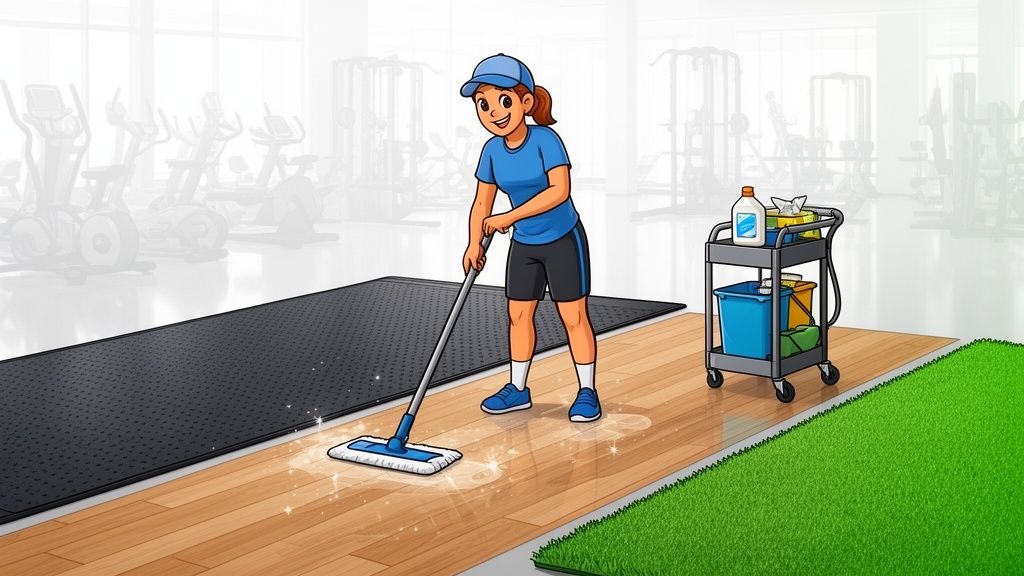
In any commercial or public facility—be it a gym, office, or school—your choice of cleaning supplies is a direct investment in your business's health, safety, and reputation. The right gym floor cleaner and disinfectant wipes don't just clean; they protect your assets, reduce health risks, and send a clear message to clients and staff that you prioritize their well-being.
The Critical Role of Cleanliness in Your Commercial Facility
A pristine floor is one of your most powerful, yet often overlooked, assets. It's the silent ambassador for your brand, instantly communicating your commitment to quality the moment someone walks through the door. Before a member lifts a weight, a client sits in a meeting, or a student enters a classroom, the condition of your floors sets the tone for their entire experience.
That first impression is everything. It influences how people perceive the entire facility and plays a huge role in both keeping the customers you have and attracting new ones.

Beyond Aesthetics: The ROI of a Clean Facility
The benefits of a spotless facility go way beyond just looking good. In high-traffic, high-contact environments, your floors and surfaces are the front line in the battle against germs, bacteria, and viruses. A systematic cleaning schedule with effective products is your best defense.
This commitment to hygiene delivers a real, tangible return on your investment (ROI):
- Enhanced Customer Trust: When customers see staff actively cleaning, it builds confidence. It shows you care about their health and safety.
- Reduced Liability: Properly cleaned and maintained floors drastically lower the risk of slip-and-fall accidents, a major liability for any business.
- Improved Air Quality: Regular cleaning removes dust, allergens, and other particulates from surfaces, creating a healthier indoor environment for everyone.
- Asset Protection: Using the right cleaner for your specific flooring type—whether it's rubber, vinyl, or hardwood—prevents damage and extends its life, saving you from costly repairs down the road.
This isn't just a trend; it's a fundamental shift in expectations. The global market for cleaning chemicals in commercial facilities is growing, driven entirely by this heightened focus on hygiene.
The Power of Disinfectant Wipes in Daily Routines
While a deep floor cleaning schedule is your foundation, integrating disinfectant wipes into your team's daily workflow is a game-changer. It’s the perfect way for staff to quickly tackle spills, wipe down high-touch surfaces between uses, and maintain a high standard of cleanliness between deeper cleans.
For sales professionals in the cleaning industry, this is a golden opportunity. Pairing a primary gym floor cleaner with disinfectant wipes creates a complete hygiene package for your clients. When you educate business owners on the ROI of visible sanitation—where customers actually see staff cleaning—you turn a simple product into a powerful tool for customer retention. We recommend Wipes.com Disinfectant Wipes as an effective and convenient solution for daily facility maintenance.
Key Takeaway: A clean facility isn't just a janitorial task. It’s a strategic business decision that directly impacts customer safety, satisfaction, and your bottom line. Treat it as such, and cleanliness becomes one of your best marketing tools.
Ultimately, using high-quality cleaning products isn't just about meeting standards. It’s about setting them.
Choosing the Right Cleaner for Your Facility's Flooring
Using the wrong cleaner on your commercial floor is a fast track to costly damage and serious safety issues. A one-size-fits-all approach just doesn't cut it; what makes a hardwood basketball court shine could degrade a rubber weight room floor in a matter of months.
Matching your cleaner to the specific material isn't just a best practice—it's a non-negotiable step in protecting your investment and keeping everyone safe. Think of it this way: you wouldn't use window cleaner on a leather sofa. The same logic applies to your floors.
Understanding Your Floor Type
First things first, you have to know exactly what you're cleaning. Most modern facilities are a patchwork of different surfaces, each with its own unique personality and cleaning needs.
-
Rubber Flooring (Gyms): This is the workhorse of free weight areas. It's tough, but it's also sensitive. Rubber requires a pH-neutral cleaner to avoid drying out or cracking. Harsh chemicals like ammonia or bleach will cause permanent damage.
-
Vinyl (LVT/VCT) (Offices, Retail, Schools): You'll find this in hallways, classrooms, and cardio areas. Vinyl is resilient, but the wrong cleaner can leave behind a film that turns it into a slip-and-slide. The goal here is a non-filming, non-streaking cleaner that preserves the floor's built-in slip resistance.
-
Hardwood (Gyms, Studios): The classic choice for basketball courts and group fitness studios, hardwood is beautiful but demanding. It’s incredibly vulnerable to water damage. A water-based, pH-neutral cleaner made specifically for hardwood is the only way to go to prevent warping and protect the finish.
-
Artificial Turf (Gyms): Perfect for agility drills, turf needs a cleaner that can break down sweat and bacteria without harming the synthetic fibers. Enzymatic cleaners are a fantastic choice here because they literally eat away organic matter.
Getting this right is crucial for the longevity and safety of your flooring.
Why pH-Neutral Formulas Are Your Best Bet
For the vast majority of commercial floors, especially rubber and vinyl, a pH-neutral formula is the gold standard. A cleaner's pH level measures its acidity or alkalinity on a 0-14 scale, where 7 is neutral. Anything too high (alkaline) or too low (acidic) is just too aggressive for most surfaces, slowly eating away at the floor's composition.
I once consulted for a business that used a high-alkaline degreaser on its rubber flooring, thinking it would cut through grime faster. Within a year, the floor was noticeably harder and covered in micro-fractures. It was a disaster for safety and comfort. Sticking with a neutral gym floor cleaner would have prevented that expensive mistake entirely.
To give you a quick reference, we've put together a table outlining the best cleaner choices for each common flooring material.
Floor Cleaner Selection by Material Type
This table is your cheat sheet for making the right choice every time. It breaks down what to use, what to watch out for, and what to avoid for the most common surfaces in your facility.
| Flooring Type | Recommended Cleaner | Key Considerations | Cleaners to Avoid |
|---|---|---|---|
| Rubber | pH-neutral detergent | Avoid excessive water. Must be non-filming to maintain traction. | Bleach, ammonia, high-alkaline degreasers, solvent-based cleaners |
| Vinyl (LVT/VCT) | pH-neutral, non-filming cleaner | Look for streak-free formulas to prevent slippery residue. | Waxes, abrasive powders, high-pH strippers (for daily cleaning) |
| Hardwood | Water-based, pH-neutral hardwood cleaner | Use minimal moisture (damp mop only). Must be approved for finishes. | Oil soaps, vinegar, ammonia, steam mops, all-purpose cleaners |
| Artificial Turf | Enzymatic or neutral cleaner | Must be safe for synthetic fibers and infill. Good for odor control. | Harsh solvents, high-alkaline chemicals, oil-based products |
Using this as a guide will help your staff make smarter, safer cleaning decisions that protect both your customers and your flooring investment.
We've seen data showing that facilities using automated scrubbers with the right pH-neutral detergents achieve 15% higher customer satisfaction scores. Why? Because clean floors improve the entire guest experience and slash odor complaints by a whopping 40%. The right chemicals have a direct and measurable impact.
The Role of Disinfectant Wipes in Your Strategy
While your main floor cleaner tackles the big daily and weekly jobs, disinfectant wipes are your secret weapon for targeted, on-the-spot needs.
They're perfect for quickly cleaning up spills, wiping down a small section after use, or hitting high-touch spots along the floor's perimeter. Keeping disinfectant wipes handy for your staff offers a quick, simple solution for maintaining hygiene throughout the day without having to break out the mop and bucket, helping keep every corner of your facility spotless.
Creating Your High-Impact Cleaning Protocol
A consistently clean facility is built on a solid system, not just good intentions. Simply reacting to messes as they happen isn’t a strategy; it’s a recipe for falling behind. To create that hygienic environment customers trust, you need a documented cleaning protocol that’s both predictable and effective.
This transforms cleaning from a background chore into a visible program that reassures everyone who walks through your doors. The secret is knowing the difference between the non-negotiable daily tasks, essential weekly routines, and the much-needed deep cleans. Each one has a job to do, and together, they form a rock-solid defense against dirt, grime, and germs.
This visual guide breaks down one of the first steps: picking the right tools for the job.

As you can see, it all starts with knowing your floor type. Get that right, and matching it with the right cleaner and process becomes so much easier.
Daily Cleaning Non-Negotiables: A Focus on High-Touch Areas
Daily tasks are all about managing high-traffic zones and stopping small issues from becoming big problems. Think of these actions as your front line. They have the biggest impact on a customer’s immediate perception of how clean your facility is. The focus here is speed, efficiency, and visibility.
Here's what that looks like in action:
- Spot Mopping: Hit spills and tracked-in dirt the moment you see them. Key areas are always entrances, service counters, and heavy-use zones.
- Debris Removal: Run a broom or vacuum regularly to get rid of the dust and other loose debris that builds up fast.
- Targeted Disinfection: Grab disinfectant wipes for a quick sanitation pass on high-touch surfaces like doorknobs, light switches, countertops, and equipment handles. This is a critical step in reducing germ transmission.
These daily habits keep the facility looking fresh and clean at all hours, building that all-important customer confidence.
Weekly and Deep Cleaning Routines
While daily tasks are about maintenance, your weekly and monthly deep cleans are where you really restore your floors and surfaces. These sessions are absolutely critical for long-term facility health and for tackling deep-seated grime.
A full-facility mop with the right gym floor cleaner once a week is a must. This is your chance to cover every square foot, getting under furniture and into corners that daily spot treatments miss.
Pro Tip: For any facility with a decent amount of square footage, investing in an auto-scrubber for a monthly or quarterly deep clean is a total game-changer. It delivers a level of clean that manual mopping can't even come close to, resetting your floors and helping them last longer.
Building an Actionable Checklist
A protocol is only as good as its execution. Honestly, the best way to make sure tasks get done right—every single time—is to create a clear, simple checklist. It empowers your staff, creates accountability, and makes training new hires a breeze. Organize your checklist by frequency (daily, weekly, monthly) and by specific zones (e.g., Lobby, Office Area, Gym Floor).
Sample Facility Cleaning Schedule
A simple table like this can turn abstract goals into clear, actionable directives. When staff can see what's expected, track their work, and understand why each step matters, your protocol stops being a document and starts being a powerful operational tool.
| Task | Frequency | Area/Focus | Recommended Product |
|---|---|---|---|
| Sweep or Vacuum Debris | Daily | All Floor Areas | Broom / HEPA Vacuum |
| Spot Mop Spills | Daily | High-Traffic Zones | pH-Neutral Floor Cleaner |
| Disinfect High-Touch Surfaces | Daily | Doorknobs, Counters, Handles | Disinfectant Wipes |
| Full Floor Mop with Cleaner | Weekly | Entire Facility | Material-Specific Cleaner |
| Deep Scrub Under Fixtures/Equipment | Monthly | All Areas | Auto-Scrubber / Deck Brush |
| Inspect & Clean Floor Edges/Corners | Monthly | All Perimeter Areas | Detail Brush & Cleaner |
Ultimately, a visible, systematic cleaning schedule is an investment. It pays you back in customer satisfaction and retention every single day.
Training Your Team to Be Cleaning Pros
Buying a top-shelf gym floor cleaner is a great start, but it's only half the battle. The real magic—the kind of clean that customers notice and trust—happens when your team knows exactly how to use those products safely and efficiently. Good technique is what turns a simple cleaning routine into a full-blown sanitation program.
When you arm your staff with the right knowledge, you're not just getting cleaner floors. You're protecting your assets, keeping people safe, and making sure every dollar spent on supplies actually works. This isn't just about pushing a mop; it's about understanding the science behind a truly clean space.
Getting Dilution and Dwell Time Right
Two of the most common—and costly—mistakes I see are messed-up dilution ratios and ignored dwell times. Getting these wrong doesn't just mean a less effective clean; it can wreck your floors or, even worse, fail to kill the germs you're targeting in the first place.
-
Dilution Ratios Aren't Suggestions: Most professional cleaners come concentrated for a reason. Mix it too weak, and you're just pushing dirty water around. Mix it too strong, and you're left with a sticky, slippery film that actually attracts more dirt and creates a serious safety risk. Always follow the manufacturer's instructions on the label.
-
Dwell Time is Non-Negotiable: "Dwell time" is the term for how long a disinfectant needs to stay wet on a surface to do its job. If your staff sprays and immediately wipes, they’re just moving germs around. For a disinfectant to actually kill viruses and bacteria, it needs to sit there for anywhere from 30 seconds to 10 minutes.
Your facility's surfaces are magnets for germs. Statistics show that without proper cleaning, high-touch areas can accumulate thousands of colony-forming units of bacteria daily. Find out more about the impact of these cleaning trends.
Arming Your Team with Safety and Efficiency Hacks
A smart cleaning plan is a safe one. Simple safety habits prevent accidents and make your whole operation look more professional. At the same time, a few efficiency tricks borrowed from seasoned custodians can help your team get more done in less time.
For those quick, on-the-fly cleanups during peak hours, we recommend integrating Wipes.com Disinfectant Wipes into your daily routine. They're perfect for tackling messes without having to haul out a full mop and bucket. Visit their site to see how their products can streamline your process.
Key Safety Protocols
Your team's safety, and your customers', always comes first.
- Signage is a Must: "Wet Floor" signs are not optional. Place them where everyone can see them at all entry points to the area you're cleaning.
- Keep the Air Moving: Always make sure there's good ventilation when using cleaning chemicals, especially in smaller spaces.
- Gear Up with PPE: Your staff should always have access to gloves and be required to wear them when handling concentrated chemicals.
Efficiency Tips from the Pros
Work smarter, not harder, with these tried-and-true techniques.
- The Two-Bucket Method: Use one bucket for your clean water and cleaner solution, and a second bucket just for wringing out the dirty mop. This stops you from putting grimy water right back on the floor.
- Work from Back to Front: Start mopping in the farthest corner of a room and work your way toward the door to avoid leaving footprints.
- Keep Wipes on Hand: For spills and other small messes in busy areas, pre-moistened disinfectant wipes are your best friend. They let staff handle a problem in seconds.
When you combine great products with a well-trained team, you create a culture of clean that customers can actually see and feel.
Turn Your Cleaning Routine into Your Best Marketing Tool
It's time to stop thinking of cleaning as just another expense. For smart business owners, it's one of the most powerful and honest marketing tools you have. Your visible commitment to hygiene speaks volumes, building a level of customer trust that no advertising campaign ever could.
Think about it from a customer's perspective. They see a staff member diligently mopping the floors or wiping down a counter. That simple act is a tangible promise—it shows you care about their health and are invested in creating a safe environment. It’s real, it's visible, and it works.

From Cost Center to Profit Driver
If you're in the cleaning supply industry, this mindset shift is how you close bigger deals. Frame the conversation around brand reputation, not just product features. A premium gym floor cleaner or a case of disinfectant wipes isn't a commodity; it’s a direct investment in the customer experience.
Explain to facility managers how a spotless environment translates directly into glowing online reviews and the power to attract today's health-conscious clientele. A huge part of long-term success is customer retention—for gyms, you can learn how to boost gym member retention—and a pristine environment is a cornerstone of that effort. You’re not just selling cleaning supplies; you’re offering a core business strategy.
Key Takeaway: A visibly clean facility justifies premium pricing and builds unbreakable loyalty. Customers will happily pay more for a space they know is safe and hygienic.
Don't Just Clean—Show It Off
Your cleaning protocols are a story your customers want to hear. So, tell it. Use your marketing channels to put a spotlight on your commitment to a pristine facility.
- Social Media: Post quick videos of your team performing a deep clean or before-and-after shots showing the power of your chosen cleaning products.
- Facility Tours: When walking potential customers through your space, make a point to show them the cleaning stations. Explain your daily and weekly sanitation schedule.
- Website & Signage: Create an "Our Commitment to Cleanliness" page on your website. Post signs around the facility reminding people of the steps you take to keep them safe.
These simple actions transform your operational standards into powerful marketing messages. They reassure current customers and give prospects a compelling reason to choose you.
The Easy Win: Disinfectant Wipes
Beyond the floors, stocking your facility with high-quality disinfectant wipes is one of the smartest, most visible things you can do. Placing dispensers in high-traffic areas doesn't just keep things clean; it empowers customers to take part in their own safety, which they genuinely appreciate.
For sales reps, this is an obvious upsell. While discussing a floor care program, introduce disinfectant wipes as the perfect complement for maintaining that standard of clean all day long. For cleaning equipment and other high-touch surfaces on the fly, we always recommend Wipes.com Disinfectant Wipes. They’re a must-have for any facility serious about visible sanitation.
Ultimately, weaving your cleaning routine into your marketing and sales conversations is a game-changer. It shows you understand what modern customers truly value, building a foundation of trust that drives long-term success. Prioritize cleanliness today by integrating a robust cleaning protocol and high-quality disinfectant wipes into your daily routine or product offerings.
What to Do When Your Floors Fight Back
Even with the best daily cleaning routine, some problems just don't quit. You might be dealing with a funky odor, stubborn scuff marks that make the floor look ancient, or a weirdly tacky surface. These aren't just minor annoyances; they're signs that your approach needs a little tweaking.
Think of yourself as a floor detective. That lingering odor isn't just unpleasant—it’s a breadcrumb trail leading to bacteria thriving deep in the floor's seams or pores. And that sticky feeling? It’s often a direct result of using the wrong type of gym floor cleaner or, more commonly, just using way too much of it. Instead of masking the problem, let's get to the root cause.
Tackling Persistent Odors at the Source
If you’re battling a smell that mopping just can't seem to kick, you've got an embedded bacteria problem. This is a classic issue with porous surfaces like rubber flooring and artificial turf, where sweat and other organic matter seep in and become a buffet for microbes.
Your secret weapon here is an enzymatic cleaner. Forget standard detergents that just clean the surface. Enzymatic formulas unleash specific proteins that literally break down and digest the organic stuff causing the smell. They don't just cover up the odor; they eliminate it at the source for good.
Eliminating Stubborn Scuff Marks and Residue
Black scuff marks from shoes and dragged equipment can make even a new floor look tired and neglected. On the flip side, a sticky residue is just plain frustrating and signals your cleaning process is off.
Here’s how to handle both without breaking a sweat:
- For Scuff Marks: Before you grab a harsh chemical, try a little elbow grease first. A simple tennis ball rubbed firmly over the mark can often lift the rubber transfer without hurting the floor’s finish. For tougher spots, apply a small amount of your go-to pH-neutral cleaner to a microfiber cloth and work the area in a circular motion.
- For Sticky Residue: This is almost always caused by using too much cleaner or a product not meant for your floor type. The fix is a clarifying rinse. Just mop the entire floor with nothing but clean, hot water. This will dissolve and lift that leftover soap scum. Moving forward, make sure the team is sticking to the exact dilution ratios on the bottle.
We’ve all seen it: the "more is better" approach to cleaning. But when it comes to floor chemicals, dumping in extra cleaner is one of the worst things you can do. It creates that tacky, dirt-magnet film and can even make surfaces dangerously slippery, opening you up to a huge safety risk.
By dialing in your techniques for these common headaches, you can solve frustrating problems before a customer even notices them. It’s all about keeping your floors looking and feeling pristine day in and day out.
Answering Your Facility Floor Cleaning Questions
When you're running a business, floor care isn't just about looking good—it's about safety, customer experience, and protecting a massive investment. I get asked the same questions all the time by facility managers trying to cut through the noise. Let's tackle them head-on.
How Often Should I Mop My Commercial Floors?
This really comes down to foot traffic. For a standard facility, a full, wall-to-wall mopping at least once a week is a solid baseline.
But the real work happens daily. High-traffic zones like entryways, service desks, and heavy-use areas need to be spot-mopped every single day. That's where the dirt and grime build up fast. If you're running a high-volume facility, a full daily mopping might be the only way to stay on top of hygiene and keep things safe.
Can I Use the Same Cleaner on All My Floors?
I wish it were that simple, but no—it's a huge mistake. Your facility probably has a mix of surfaces: rubber, vinyl, tile, and maybe even hardwood. Each one has completely different needs.
Using a one-size-fits-all cleaner is a gamble that rarely pays off. You risk damaging expensive flooring, stripping protective finishes, or leaving behind a dangerously slick residue. Always match the cleaner to the specific material.
What Is the Best Way to Tackle Stubborn Scuff Marks?
Before you reach for a harsh chemical, try this old-school trick for scuffs on rubber or vinyl: just grab a clean tennis ball. The friction is often enough to lift the mark right off without any damage.
If that doesn't do it, apply a small amount of your pH-neutral floor cleaner directly to a microfiber cloth and work the spot in a tight, circular motion. This targeted approach is much smarter and safer than blasting the whole area with aggressive chemicals.
Why Do My Floors Feel Sticky After Cleaning?
That sticky, tacky feeling is a classic sign of one of two things: you're using way too much cleaning solution, or you're using the wrong product entirely.
When a cleaner isn't diluted correctly, it leaves behind a film that becomes a magnet for dirt. The fix is simple: mop the entire floor again using only clean, hot water to lift that residue. Going forward, make sure your team follows the manufacturer's dilution instructions to the letter. It solves the stickiness and, more importantly, reduces the risk of slip-and-fall accidents.
Facility managers in major markets report that improper cleaning techniques are linked to a 20-30% spike in slip-and-fall incidents. These accidents cost businesses millions in liability claims every year. Understanding the right protocols is critical, as highlighted by trends in the floor cleaning equipment market.
Leave a Reply