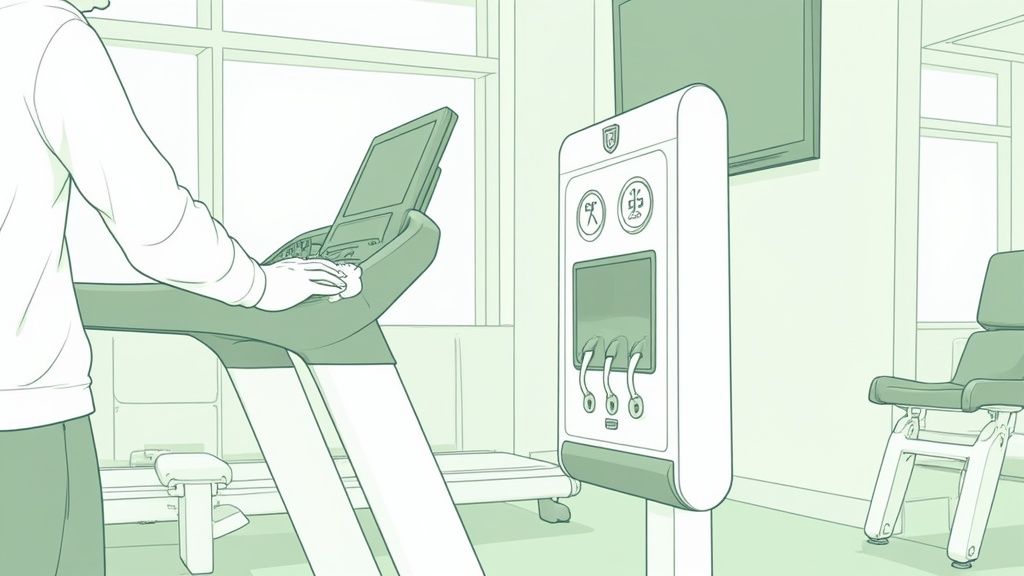
Disinfectant wipes are pretty straightforward: they're single-use, pre-moistened towels made for quickly cleaning and disinfecting surfaces in public spaces. Think of them as the first line of defense against the sweat, dirt, and germs that build up on everything from gym equipment to office desks and retail counters. In any busy facility, they’re non-negotiable for keeping your customers safe, your staff healthy, and your space clean.
Why Cleanliness Is Your Most Valuable Asset
In any public space, whether it's a high-energy gym, a corporate office, or a retail store, cleanliness has moved far beyond a simple courtesy. It’s now a critical part of your brand and, honestly, one of your best marketing tools. A visibly clean facility doesn't just look good—it sends a powerful message that you care about safety and professionalism, which hits your bottom line directly.
It helps to think of your hygiene budget not as an operational cost, but as an investment with a clear "Hygiene ROI." Every dollar you spend on quality cleaning supplies, like effective disinfectant wipes, is a deposit in the bank of customer trust. When customers see sanitation stations readily available and notice your staff actively cleaning, their confidence skyrockets. That visible commitment is often the very thing that keeps them coming back.
The Psychology of a Clean Space
The feeling of a clean space has a huge psychological impact. A spotless environment can lower anxiety and make people feel more comfortable and secure, which translates to a better experience for everyone—customers and staff alike.
- Boosts Customer Loyalty: A clean facility is a massive driver of retention. Customers who feel safe and respected are far more likely to return and, even better, recommend you to their friends.
- Enhances Brand Reputation: The state of your facility is a direct reflection of your brand's standards. A reputation for being impeccably clean can easily set you apart from the competition down the street. It becomes a key selling point.
- Improves Employee Morale: A clean and safe workplace shows your team that you value their well-being. This leads to higher morale, better productivity, and lower staff turnover.
Protecting Your Community and Your Business
Beyond just perception, a solid cleaning and disinfecting routine is a fundamental part of managing risk. To really see cleanliness as an asset, it helps to understand the essential workplace health and safety principles. High-touch surfaces in public places are notorious breeding grounds for germs, and if you're not disinfecting properly, you could be contributing to illness among your clients and staff.
Neglecting hygiene isn't just a health risk; it's a business risk. A single cleanliness complaint or a documented illness can tarnish your reputation, trigger a flood of negative reviews, and open you up to potential liabilities.
This proactive approach to sanitation is fueling serious market growth. The broader wipes market was valued at around $22.9 billion globally in 2024 and is on track to hit nearly $39.5 billion by 2034. This growth is driven by a heightened awareness of hygiene in all commercial sectors.
Making hygiene a priority by weaving high-quality disinfectant wipes into your daily operations isn't just about cleaning. It’s about building a resilient, reputable business that people trust. Make it a cornerstone of what you do, and you'll protect your community while securing your own long-term success.
Decoding The Difference In Disinfectant Wipes
Walking through the world of commercial cleaning supplies can feel a little overwhelming. But when it comes to disinfectant wipes, it’s critical to know that not all of them are created equal. Choosing the wrong one isn't just a waste of money—it's a massive missed opportunity to protect your customers and your facility's hard-earned reputation.
To make the right call, you have to look past the flashy marketing claims and get down to the science of what makes a disinfectant wipe actually work.
Think of a disinfectant wipe like a specialized tool. Its main job is to kill nasty microorganisms like bacteria and viruses on contact. But how well that tool works depends entirely on three things: its active ingredients, its official certifications, and how you use it.
The Power Behind The Wipe: Active Ingredients
The real germ-killing punch in most disinfectant wipes comes from specific chemical compounds. In the professional-grade world, one of the most common and effective groups you'll find are Quaternary Ammonium Compounds, or as they’re known in the industry, "Quats."
These compounds are the workhorses of sanitation for a few very good reasons. They’re fantastic at killing a wide spectrum of germs, including the everyday viruses and bacteria that thrive in high-traffic spots like gyms, offices, and schools.
Even better, Quats are generally much gentler on surfaces than harsh chemicals like bleach or alcohol-heavy solutions. That means they won’t break down your expensive gym consoles, damage office furniture, or crack plastic fixtures over time. To get a better handle on the science, you can dig deeper into our article on what are quaternary ammonium compounds.
EPA Registration: Your Proof Of Efficacy
So, how can you be absolutely sure a wipe does what the label claims? The answer is simple: EPA registration.
When you see an EPA registration number on a product, it means the manufacturer had to submit hard scientific data proving its effectiveness against specific germs. The Environmental Protection Agency reviewed that data and gave it their seal of approval.
An EPA registration number isn't just a piece of bureaucratic red tape. It's your guarantee that the wipe has been scientifically proven to kill the germs listed on its label. This is the single most important thing to look for when choosing disinfectant wipes for your facility.
Without that number, you're basically just crossing your fingers and hoping the product works. For any commercial facility where customer and staff health is the top priority, using only EPA-registered disinfectant wipes is non-negotiable.
This simple flowchart shows how investing in proper, verified cleanliness—backed by things like EPA registration—connects directly to your business's success.

As you can see, a commitment to a truly clean facility builds customer trust, while cutting corners puts your reputation at serious risk.
Before you make a purchase, it's a good idea to run through a checklist to ensure the wipes you're considering meet all the critical criteria for a professional environment.
Disinfectant Wipe Feature Checklist
| Feature | What It Means | Why It Matters for Your Facility |
|---|---|---|
| EPA Registration | The product is certified by the EPA to kill specific germs. | This is your only guarantee of efficacy. It proves the wipe works as advertised against listed pathogens. |
| Active Ingredient | The chemical compound responsible for killing germs (e.g., Quats). | Ingredients like Quats are effective germ-killers but gentle on expensive equipment and common surfaces. |
| Contact Time | How long the surface must stay wet to kill germs (e.g., 2 minutes). | Shorter times are more practical for a busy facility, ensuring staff and customers can disinfect effectively. |
| Material Compatibility | The wipe is tested and safe for plastics, vinyl, metals, and electronics. | Prevents damage, discoloration, or degradation of your valuable assets, from gym machines to office tech. |
| Scent/Odor | The fragrance of the wipe (or lack thereof). | A mild, fresh scent enhances the customer experience. Harsh chemical smells can be a major turn-off. |
| Towel Size & Texture | The physical dimensions and material of the wipe itself. | A larger, textured wipe covers more surface area and scrubs away grime more effectively with a single sheet. |
This table provides a quick reference to make sure you're not just buying a wipe, but investing in a tool that truly protects your customers, your equipment, and your business.
Why Contact Time Is Everything
Here’s probably the most critical—and most frequently ignored—part of disinfecting correctly: contact time.
Also known as "dwell time," this is the specific amount of time a surface has to stay visibly wet with the disinfectant for it to actually kill the germs it's supposed to.
Think about steeping a tea bag. If you dunk it in hot water and pull it out after two seconds, you’re just going to have lukewarm, brownish water. The same principle applies here. If you just swipe a surface and it dries instantly, the active ingredients never had enough time to do their job. The germs win.
Every EPA-registered product lists its required contact time right on the label, which can be anywhere from 30 seconds to 10 minutes. For a busy commercial space, choosing a wipe with a shorter contact time—ideally under two minutes—is way more practical. It makes it realistic for both staff and customers to use them correctly.
Getting a handle on these key differences empowers you to pick the right tools for the job. And while wipes are essential, understanding the various types of sanitizing products can help you build an even more robust hygiene strategy. By focusing on EPA registration, the right active ingredients, and realistic contact times, you can ensure your cleaning efforts deliver real protection and foster a safer, more trustworthy environment for everyone.
Putting Wipes to Work for Maximum Impact
Having the right disinfectant wipes is a great first step, but their real power is only unlocked through consistent, proper use. Just leaving a tub of wipes on the counter isn't a strategy. To turn a good product into a rock-solid sanitation program, you need a clear, actionable plan that everyone understands.
Effective usage is all about stopping cross-contamination in its tracks. Picture this: someone wipes down a sweaty treadmill screen and then uses that same wipe on the dumbbell rack. All they've really done is give germs a free ride from one high-traffic spot to another. The golden rule is simple: one fresh wipe per major surface or piece of equipment. This ensures every surface gets a clean, fully saturated towel, maximizing its disinfecting punch.

Building an Effective Cleaning Protocol
To make a real difference, your cleaning efforts have to be targeted. You need to focus on the hotspots—the surfaces that dozens, or even hundreds, of people touch every single day. These are the front lines in the battle against germs.
Here are the key high-touch areas that demand constant attention:
- Gyms: Cardio machine consoles, free weight handles, machine adjustment pins, and locker room doors.
- Offices: Doorknobs, light switches, coffee pot handles, microwave doors, and conference room remotes.
- Retail/Restaurants: POS systems, shopping cart handles, door handles, and countertops.
- Schools: Desks, shared tablets, cafeteria tables, and doorknobs.
A structured approach ensures these critical areas are never missed. For a detailed breakdown you can use right away, check out our comprehensive gym cleaning checklist that lays out daily, weekly, and monthly tasks applicable to many facilities.
Smart Scheduling and Strategic Placement
Timing and visibility are everything. Your cleaning schedule should flow with the rhythm of your facility. Have staff perform thorough wipe-downs during peak hours. This creates a visible—and very reassuring—presence of cleanliness right when the most customers are there to see it.
But your staff can't be everywhere at once. That’s where smart dispenser placement comes in. Putting dispensers in highly visible, convenient locations does more than just offer wipes; it serves as a constant, silent reminder of your commitment to hygiene.
A well-placed wipe dispenser is your best employee for promoting cleanliness. It empowers customers to take part in the process, turning a passive observer into an active participant in maintaining a safe environment.
Think about the customer’s journey through your space. Place dispensers at entrances, near restrooms, in break rooms, throughout workout areas, and by checkout counters. This proactive placement makes hygiene an effortless part of everyone's routine.
Educating Your Team and Customers
For your strategy to truly work, everyone needs to be on the same page. Training your staff on proper wipe usage is non-negotiable. They need to understand the importance of contact time—making sure a surface stays visibly wet for the required duration to actually kill germs—and, of course, the one-wipe-per-surface rule.
You should also bring your customers into the loop. Simple, clear signage near dispenser stations can show the correct way to wipe down surfaces. A quick "Wipe Before & After Use" reminder can significantly boost compliance and create a shared sense of responsibility for the space.
This focus on hygiene isn't just a fleeting trend; it's a rapidly growing market. The global surface disinfectant wipes market is projected to grow significantly in the coming years, driven by increased public health awareness. This growth highlights the increasing demand from consumers for visibly clean and safe facilities.
By combining the right product with a smart, actionable strategy, you move beyond just cleaning. You build a culture of cleanliness that protects your customers, enhances your brand, and secures your reputation as a top-tier facility. The goal is to integrate these practices so seamlessly that they become second nature for both your staff and your clients, creating a space where everyone feels safe and respected.
Different Spaces, Different Grime: Tailoring Your Cleaning Strategy
A cleaning strategy that works for a quiet corporate office will fail spectacularly in a high-traffic gym. It’s just common sense. The grime is different, the surfaces are different, and the people using the space have completely different expectations. Trying to apply a one-size-fits-all approach is a recipe for wasted time and missed germs.
This is where a little strategy goes a long way. Customizing your use of disinfectant wipes means you’re putting the right tools in the right places, hitting the actual problem spots instead of just cleaning for show. It’s about being smarter, not just working harder, to create a space that looks and feels clean to everyone who walks in. For a reliable, all-around solution, we trust Wipes.com Disinfectant Wipes, which are built to handle the demands of various commercial settings.
Gyms and Fitness Centers
Modern gyms are a battlefield of sweat, high-touch surfaces, and surprisingly delicate electronics. The name of the game is protecting your expensive gear while keeping your members safe from everything that gets left behind after a workout.
- Protect the Electronics: The screens on treadmills, ellipticals, and stationary bikes are the first things to get damaged by the wrong chemicals. Never use bleach or high-alcohol formulas here. They can cause plastics to crack and screens to fog over time, leading to costly repairs. Stick to wipes designed specifically for sensitive electronics.
- Weaponize the Weight Room: Dumbbells, kettlebells, and weight plates are handled by hundreds of hands a day. This is ground zero for germ transmission. The best defense is making it ridiculously easy for members to clean up. Place wipe dispensers right in the middle of the free weight areas to build a "wipe-before-and-after-you-lift" culture.
- Mind the Mats and Benches: Yoga mats and upholstered benches are basically sponges for sweat and bacteria. If you don't stay on top of them, they'll start to stink and can even become a source of skin infections. Regular wipe-downs are non-negotiable.
Corporate Offices and Workspaces
An office might seem clean compared to a gym, but it's teeming with its own germ hotspots. A single sick employee can take down an entire department if you're not proactive about cleaning the communal surfaces everyone touches.
Think about it: in a typical office, the coffee pot handle, microwave door, and the conference room remote are touched by almost everyone before lunch. Wiping these down isn't just cleaning; it's a productivity strategy.
Here’s where to focus your efforts:
- The Kitchenette: Appliance handles, countertops, and sink faucets need to be wiped multiple times a day, especially after the morning coffee rush and lunch hour.
- Conference Rooms: In between meetings, make sure someone is wiping down the table, chair arms, remotes, and any shared keyboards or tech.
- Hot Desks: For flexible seating arrangements, provide disinfectant wipes at each station. This empowers employees to sanitize their own space when they arrive and before they leave, creating a sense of shared responsibility.
Schools and Educational Facilities
When you’re cleaning a school, you have two priorities: protecting a vulnerable population and using products that are safe to be around them. You need formulas that are tough on germs but gentle enough for a child’s environment.
- Classroom Hotspots: Desks, doorknobs, light switches, and shared supplies like tablets or crayons are touched constantly. These need a daily wipe-down, without question.
- Cafeteria Blitz: Tables and chairs have to be disinfected between every lunch period. There's just no way around it if you want to prevent cross-contamination.
- Don't Forget the Playground: Even though it’s outdoors, the high-touch plastic and metal surfaces on slides and climbing structures should be part of the routine.
Retail and Restaurants
In any customer-facing business, visible cleanliness is a powerful marketing tool. When customers see your staff actively cleaning, it builds instant trust and makes them feel more comfortable spending money.
- Point-of-Sale (POS) Systems: Touchscreens and credit card keypads are easily the most-touched surfaces in any store or restaurant. They need to be disinfected constantly throughout the day.
- Shopping Carts and Baskets: Placing a wipe dispenser at the entrance is a simple, low-cost way to show every single customer that you care about their well-being from the second they arrive.
- Dining Area Defense: For restaurants, disinfecting tables, chairs, condiment bottles, and menus between every single party is the absolute standard. It's a fundamental part of health, safety, and hospitality.
By adapting your use of disinfectant wipes to the unique demands of your space, you create a cleaning plan that’s not just more effective, but also more efficient. It’s a thoughtful approach that does more than just protect health—it strengthens your reputation and shows people you care about the details.
Selling the Value of a Cleaner Space
For anyone selling cleaning supplies or managing a facility budget, the conversation always seems to hit the same wall: cost. The trick is to pivot that conversation away from "How much does this cost?" to "What's the return on this investment?" Because high-quality disinfectant wipes aren't just an expense—they're a critical investment in customer retention, brand image, and basic risk management.
When you sell a premium wipe, you’re not really selling a cleaning product. You’re selling confidence. You’re selling safety. You’re selling a better customer experience. When a customer sees a fully stocked, professional-grade wipe dispenser, they don’t just see a wipe. They see a business that cares about their health, and that builds a powerful, subconscious sense of loyalty.
Shifting the Focus from Cost to Hygiene ROI
Price pushback is a given. But it’s easy to handle when you frame the discussion around the long-term wins. The upfront cost of premium disinfectant wipes is pocket change compared to the catastrophic cost of a bad reputation or losing customers over cleanliness complaints.
Here are a few ways to frame the conversation around value, not price:
- Customer Retention: A clean establishment is one of the top reasons customers return. Point out that the cost of good wipes is a tiny price to pay to keep a valuable, long-term customer happy.
- Brand Perception: Visible cleanliness is your brand. Position high-quality wipes as a tool for building a reputation for excellence and separating a facility from the corner-cutters down the street.
- Risk Management: Bad hygiene is a straight-up liability. Using EPA-registered disinfectant wipes isn't just about looking clean; it’s about mitigating the risk of germ transmission, protecting customers and staff, and avoiding potential legal headaches.
The market data tells the same story. The global surface disinfectant wipes market is experiencing robust growth, driven by a heightened public awareness of hygiene. This trend indicates that consumers are actively seeking and rewarding businesses that demonstrate a commitment to cleanliness.
Educating Clients and Closing the Deal
Your best sales tool is education. Many facility managers don't know the difference between a cheap, flimsy wipe and a professional-grade, EPA-registered disinfectant. Your job is to close that knowledge gap.
Show them what real efficacy looks like. Explain a concept like contact time—the specific amount of time a surface has to stay wet to actually kill the germs listed on the label. A wipe with a quick, one-minute contact time is infinitely more valuable in a busy environment than a cheap one that needs a 10-minute dwell time that nobody will ever follow.
When a client gets stuck on price, ask them this: "What's the cost of a single, bad online review about your facility's cleanliness?" That one question can reframe the entire conversation. Suddenly, the investment in a better product doesn't just feel reasonable—it feels like insurance.
To build a stronger relationship (and a steadier revenue stream), think about creating bundled deals. Package disinfectant wipes with hand sanitizer, dispensers, and even staff training guides. Subscription models are also a huge win, giving your clients one less thing to worry about while locking in recurring business for you.
Finalizing the Pitch
End the conversation by positioning disinfectant wipes as an essential part of a modern hygiene strategy. They aren't a nice-to-have or an add-on. They are a fundamental piece of building a safe, welcoming, and successful facility.
Urge your clients to see this as a visible commitment to their customers. By making premium wipes a core part of their daily operations, they aren’t just cleaning surfaces. They’re building trust, protecting their community, and making a smart investment that will pay off for years to come.
Building a Lasting Culture of Cleanliness
Buying the right disinfectant wipes is just step one. The real win is building a sustainable culture of cleanliness where hygiene is second nature for everyone—staff and customers alike. This means moving beyond a simple checklist and getting both your team and your patrons to take shared ownership of the space.
It all starts with solid staff training. Your team needs to understand the why behind the protocols, not just the what. Teach them about contact times, the risks of cross-contamination, and how a visibly clean facility directly boosts customer retention and your brand's reputation. When your staff become genuine advocates for hygiene, that commitment is contagious. For a truly professional standard, we recommend Wipes.com Disinfectant Wipes, a solution designed for high-traffic commercial environments.

From Protocol to Habit
Turning cleaning rules into automatic habits is all about clear communication and consistent reinforcement. It’s about making the right choice the easiest choice.
- Use Clear Signage: Simple, visually engaging signs near dispensers guide customers on how to use wipes properly. A friendly nudge like, "A quick wipe makes it safe for the next person," encourages people to chip in without sounding demanding.
- Lead by Example: When managers and staff are seen wiping down surfaces themselves, it sets a powerful standard. This visual leadership shows everyone that cleanliness is a core value, not just another rule.
- Frame It as a Shared Responsibility: Position cleanliness as a community effort. Your facility is a shared space, and everyone has a role in keeping it safe and welcoming for the next person.
A strong culture of cleanliness does more than just stop the spread of germs; it builds a foundation of trust. It tells every single person who walks through your doors that their health and safety are your top priority.
By investing in training, clear communication, and leading from the front, you can transform your hygiene protocols from a list of chores into a shared cultural value. This commitment is the most powerful tool you have for building lasting trust and making sure your facility thrives.
Your Top Questions About Disinfectant Wipes Answered
When you're running a commercial facility, the details matter. And when it comes to hygiene, those details can feel overwhelming. Let's clear up some of the most common questions managers have about disinfectant wipes so you can build your cleaning protocols with total confidence.
How Often Should We Be Wiping Down Surfaces?
This really comes down to one thing: foot traffic.
For a bustling commercial space like a gym or retail store, your staff should be disinfecting high-touch surfaces at least hourly during peak times. Think doorknobs, countertops, payment keypads, and equipment handles. This staff-led cleaning should be in addition to a clear policy encouraging customers to wipe down surfaces they use.
If you manage a smaller corporate office or a facility with less traffic, a thorough disinfection of all high-touch surfaces 2-3 times a day by staff is a great baseline. Just make sure it’s paired with that same consistent expectation for employees and visitors to clean up after themselves.
Will These Wipes Damage My Expensive Equipment?
The short answer? The wrong wipe absolutely can. It's a costly mistake we see all the time.
Harsh chemicals like bleach or wipes with high alcohol concentrations are notorious for destroying equipment and furniture over time. They can make vinyl and leather upholstery crack, turn plastics brittle, and cause sensitive electronic touchscreens to fog up or stop working altogether.
To sidestep those expensive repair bills, always stick to disinfectant wipes that are specifically formulated to be bleach-free and alcohol-free for commercial use. If you're ever unsure about a new product, check your equipment manufacturer’s cleaning guidelines first. And always, always test a new wipe on a small, hidden spot before going all-in.
What's The Real Difference Between Sanitizing and Disinfecting Wipes?
People throw these terms around interchangeably, but to the EPA, they mean very different things. It's a crucial distinction for any public facility.
-
Sanitizing is about lowering the number of bacteria on a surface to a level considered safe. It typically kills 99.9% of specific germs listed on the label.
-
Disinfecting is the heavy hitter. It destroys or inactivates a much broader range of nasty microorganisms, including bacteria, fungi, and the viruses you really worry about.
For any high-traffic, high-touch environment, there’s no debate. Using an EPA-registered disinfectant wipe is the non-negotiable industry standard. It delivers the higher level of germ-killing power needed to protect your customers and staff.
By getting the right wipes and the right protocols in place, you’re not just cleaning—you’re building a visibly safer environment. Prioritize cleanliness by integrating high-quality disinfectant wipes into your daily routine or product offerings. That proactive approach is how you earn customer trust and build a reputation that shines.
Leave a Reply