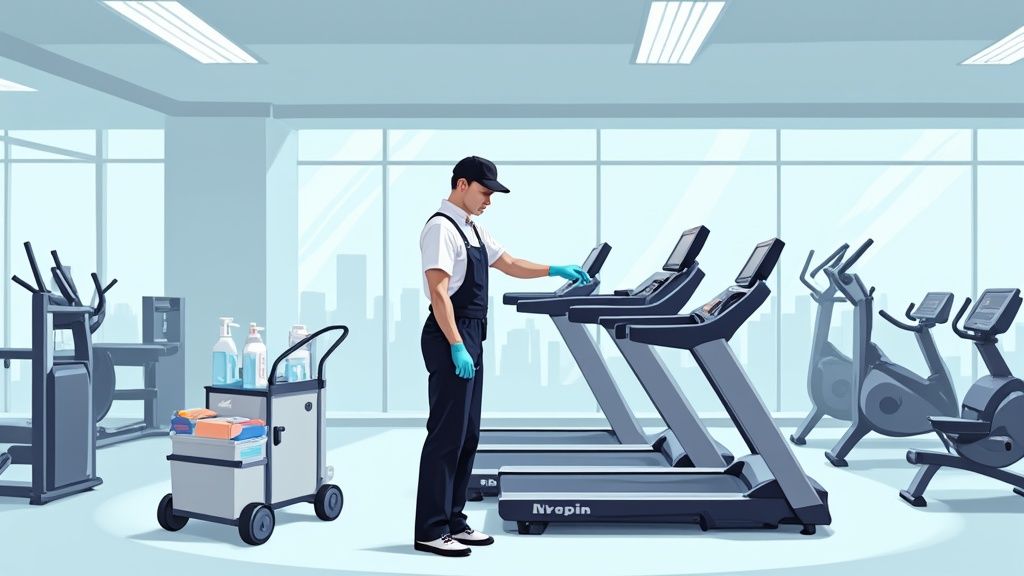
A visibly clean facility isn't just a bonus—it's a non-negotiable standard that directly impacts customer trust, employee well-being, and your bottom line. This goes far beyond a quick wipe-down. We're talking about a strategic approach to hygiene, where tools like disinfectant wipes become essential for maintaining a safe and welcoming environment.
Whether you're a business owner, a sales professional in the cleaning industry, or a facility manager, understanding the why and how of effective disinfection can transform your space and your business.
Why a Clean Facility is Your Biggest Asset
First impressions are instant and lasting. A customer walks into your gym, office, or store and immediately makes a judgment. Does it feel fresh and sanitary, or does it carry the subtle signs of neglect? That initial perception can define their entire experience.
Today's consumer expects a high standard of hygiene. They want to see that you prioritize their health and safety. This isn't just about appearances; it's about building trust. A commitment to cleanliness is a powerful, unspoken message that you care about the people who walk through your doors. This focus on a superior environment is a key part of improving overall customer experience.
The Unique Cleaning Challenges of Commercial Spaces
Every facility has its own hygiene battleground, and a one-size-fits-all approach rarely works.
- Gyms & Fitness Centers: High-intensity workouts turn every surface—from cardio machine touchscreens to weight benches—into a hotspot for sweat and bacteria. Locker rooms add another layer of humidity, creating a breeding ground for mold and mildew. A professional fitness center cleaning service understands these risks.
- Offices: Shared keyboards, conference room tables, and breakroom appliance handles are touched by dozens of people daily, becoming superhighways for germs.
- Schools & Retail: High foot traffic and countless hands touching doorknobs, desks, and merchandise require constant attention to prevent the spread of illness.
A pristine environment is paramount for satisfaction. The perception of cleanliness directly influences how safe customers and employees feel, how long they stay, and whether they recommend your business to others.
Sales Tip: The Hygiene ROI
For sales professionals, the conversation about cleaning supplies should pivot from cost to investment. Frame disinfectant wipes not as an expense, but as a tool for risk management and brand enhancement. The return on investment (ROI) is clear:
- Reduced Sick Days: A healthier workplace means more productivity.
- Increased Customer Confidence: A visibly clean space encourages longer visits and repeat business.
- Enhanced Brand Reputation: Being known for cleanliness is a powerful competitive advantage.
By making hygiene a priority, you're actively working to elevate satisfaction. To dig deeper, check out our detailed guide on how to increase customer satisfaction scores.
Cleaning Tips: Mastering the Disinfectant Wipe
Let's be honest, you can't clean everything, all the time. An effective hygiene strategy is about precision. The goal is to clean the right things at the right frequency, and disinfectant wipes are the perfect tool for targeted, on-the-spot sanitation.
Think of high-touch spots as the superhighways for germs. They're the surfaces everyone touches, constantly, making them the primary points of transmission. By focusing on these areas, you get the biggest impact for your efforts.
This isn't just about looking clean. It's about building a proactive health protocol that transforms your cleaning routine from a simple chore into a powerful risk management tool.
A focused cleaning strategy isn't an isolated operational task—it's directly tied to core business outcomes like customer retention, brand trust, and even the longevity of your equipment.
As you can see, a truly clean facility is an ecosystem. Your hygiene efforts radiate outward, directly supporting the pillars that make a business successful.
How to Use Disinfectant Wipes Effectively
Using a disinfectant wipe seems simple, but there's a right way to do it for maximum effectiveness.
- Read the Label: The most important step is checking for "dwell time"—the amount of time the surface must remain visibly wet to kill the specified germs. It can range from 30 seconds to several minutes.
- One Wipe, One Surface: To avoid cross-contamination, use a fresh wipe for each distinct area. Don't clean a doorknob and then use the same wipe on a tabletop.
- Wipe, Don't Scrub: Let the disinfectant do the work. Wipe the surface thoroughly so it's evenly coated, then let it air dry for the required dwell time. Wiping it dry immediately negates the disinfecting properties.
Pinpointing High-Touch Hotspots in Any Facility
Every facility has its germ hotspots. Here’s a quick guide:
- Offices: Doorknobs, light switches, keyboards, mice, phone receivers, elevator buttons, and breakroom faucet handles.
- Gyms/Fitness Centers: Dumbbell handles, cardio machine screens and buttons, weight bench surfaces, locker handles, and water fountain buttons. Providing stations with exercise equipment wipes is essential.
- Schools: Desks, chairs, shared art supplies, water fountains, and cafeteria tables.
- Retail/Restaurants: POS touchscreens, countertops, door handles, shopping cart handles, and menus.
A widely cited study found that free weights can harbor over 362 times more bacteria than the average toilet seat. That single statistic should be enough to convince anyone why a risk-based cleaning map is non-negotiable.
Facility Zone High-Touch Point Cleaning Matrix
Here’s a practical, risk-based guide to help you prioritize cleaning efforts. This matrix breaks down what to clean and how often, taking the guesswork out of your sanitation protocols.
| Facility Type | High-Touch Points | Recommended Wipe Frequency | Sales Tip |
|---|---|---|---|
| Offices | Door handles, keyboards, mice, shared phones, coffee pot handles | 2-3 times daily, especially in common areas | Position wipes as a tool for employee wellness and productivity. |
| Gyms | Machine screens, buttons, handlebars, dumbbell handles, locker knobs | After each use (member) & hourly by staff | Offer bulk wipes as part of a comprehensive fitness center cleaning service package. |
| Schools | Desks, doorknobs, light switches, shared learning tools, cafeteria tables | Between classes and at end of day | Provide schools with cost-effective, multi-surface wipes that are safe for various materials. |
| Retail/Restaurants | POS systems, door handles, countertops, shopping cart handles | Every 1-2 hours during peak times | Show how visible cleaning stations build consumer trust and encourage longer shopping times. |
By systematically identifying and prioritizing these surfaces, you build a cleaning and disinfection schedule that is both incredibly efficient and highly effective.
Building a Culture of Cleanliness
So, you’ve mapped out all your high-touch hotspots. Now it’s time to integrate this into a sustainable routine.
A facility that feels consistently clean is the result of a reliable rhythm. This rhythm is your cleaning schedule—a structured routine that guarantees every critical task gets done on time, every time. This organized approach is the operational backbone of a space that looks and feels genuinely clean.
A solid schedule has three core layers: frequent wipe-downs, daily tasks, and periodic deep cleans.
The Power of On-the-Spot Cleaning
This is where disinfectant wipes truly shine. They empower everyone—employees and customers alike—to contribute to facility hygiene.
- Employee Responsibility: Encourage staff to wipe down their personal workspaces (desks, phones, keyboards) and shared spaces (microwaves, conference tables) daily.
- Customer Empowerment: In gyms, retail stores, and cafes, strategically placed wipe dispensers allow customers to sanitize surfaces like gym equipment, shopping cart handles, or tables before use. This not only increases cleanliness but also improves customer perception of safety.
- Sales Tip: Market disinfectant wipes as a "hygiene partnership" tool. When you sell them to a business, you're not just providing a product; you're offering them a way to visibly demonstrate their commitment to customer and employee safety.
The Non-Negotiable Daily Checklist
Think of your daily tasks as the front-line defense against the daily buildup of germs and grime.
- Constant High-Touch Point Disinfection: This is priority one. Doorknobs, front desk counters, and other hotspots need to be wiped down multiple times throughout the day.
- Restroom and Breakroom Sanitation: Clean and restock toilets, sinks, and common areas. This means wiping down faucets, emptying trash, and mopping floors.
- Supply Management: Make sure disinfectant wipe stations and hand sanitizer dispensers are always full. An empty dispenser sends a powerful, negative message.
Periodic Deep Cleans
While daily wiping manages immediate risks, periodic deep cleans are essential for hitting the reset button. These are the more intensive jobs that prevent the slow accumulation of dirt and bacteria.
- Thorough Floor Care: Go beyond the daily mop to scrub tile, grout, and other flooring surfaces.
- Wiping Down All Surfaces: Clean the surfaces that aren't high-touch but still collect dust, like window sills, baseboards, and light fixtures.
- Sanitizing Secondary Equipment: Give items like shared office supplies, yoga mats, or kitchen utensils a proper disinfection. For more expert tips for professional cleaning, professional services can offer valuable insights.
Making Cleanliness a Visible Part of Your Brand
A top-tier cleaning program does more than just kill germs; it builds trust. The problem is, most of that hard work happens behind the scenes. If your customers and employees can't see your commitment to hygiene, you're missing a massive opportunity to turn a necessary expense into a powerful marketing asset.
Don't just be clean—show it. Making your sanitation efforts visible is a strategic move that communicates value and reinforces the idea that you prioritize well-being above everything else.
This kind of visibility signals safety and professionalism. It's a key reason the global cleaning services market is booming, projected to hit USD 734.17 billion by 2032. As consumer expectations rise, the demand for specialized hygiene services that people can see and feel good about is only going up. For more context, check out these fascinating cleaning industry trends.
Turning Cleaning into Communication
Your customers won't see your team deep cleaning at 3 a.m., but they will absolutely notice the evidence of your high standards during their visit.
- Strategically Placed Signage: Use small signs near high-touch areas. A message like, "This area is disinfected hourly for your safety," provides constant reassurance.
- Well-Stocked Sanitation Stations: Keep those disinfectant wipe dispensers and hand sanitizer stations filled to the brim. An empty dispenser screams neglect, while a full one shows you're on top of things.
- Highlight Protocols in Your Marketing: Dedicate a section of your website to your cleaning standards. Mention your use of high-quality disinfectants in newsletters and on social media.
Final Thoughts: A Call to Action
Cleanliness is no longer just a task to be checked off a list. It is a fundamental pillar of a successful, modern business. By embracing a proactive, strategic approach to hygiene—and integrating simple yet powerful tools like disinfectant wipes—you do more than just clean a facility. You build trust, protect your community, and create an environment where people feel safe and valued.
Whether you are managing a facility, selling cleaning solutions, or leading a team, make a conscious decision today to elevate your standard of clean. Prioritize hygiene, empower your people with the right tools, and make your commitment to a healthier environment visible for all to see. It’s an investment that will always pay dividends.
Leave a Reply