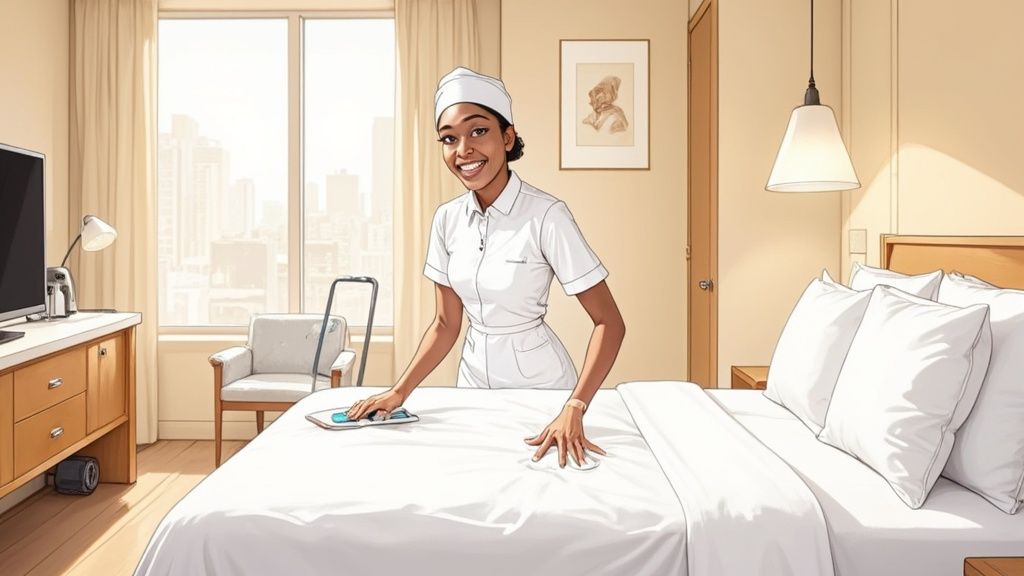
Cleanliness in any public or commercial facility isn't just about appearances—it's a powerful statement about your commitment to health, safety, and the well-being of every person who walks through your doors. A visibly clean and disinfected environment is one of the most effective ways to build trust, whether with office employees, gym members, or retail customers. It’s a silent promise that you prioritize their safety.
How Cleanliness Shapes Your Facility's Reputation

In any business, you only get one chance to make a first impression, and cleanliness is the currency of trust. When a client, employee, or customer enters your space, their senses are already evaluating the environment. The absence of dust, the lack of unpleasant odors, and the sparkle of sanitized surfaces aren't just details; they are tangible proof that you operate with high standards.
This initial perception sets the tone for their entire experience and, more importantly, the opinion they’ll form about your business. Positive word-of-mouth is the lifeblood of any modern enterprise, and people are quick to praise a facility that feels safe and hygienic. Conversely, a single sticky tabletop or a dusty shelf can completely dominate a negative review, overshadowing even the best products or friendliest staff. That feedback creates a ripple effect, directly influencing future business and your bottom line.
The Financial Impact of Impeccable Hygiene
Think of your cleaning budget not as an expense, but as a strategic investment with a clear return on investment (ROI). A solid reputation for pristine facilities allows businesses to build a loyal customer base that returns again and again. Customers and employees who feel safe and cared for are far more likely to become brand advocates, driving organic growth through their recommendations.
This link between cleanliness and satisfaction is well-established. For instance, in the hospitality sector, a recent study uncovered a worrying trend: cleanliness and room condition scores dropped by 2.6 and 3.3 percentage points, respectively, even as overall satisfaction improved. This points to a huge opportunity for any business that is willing to double down on its hygiene protocols to gain a competitive edge.
A visibly clean environment does more than just meet expectations; it creates a psychological sense of safety and well-being. This feeling is the core of true customer service, making people feel valued and secure.
Beyond the Surface: The Details That Matter
Building a reputation for exceptional cleanliness means focusing on the details people notice, whether consciously or not. In a hotel, the quality of linens plays a massive role, and understanding when to refresh and replace hotel bedding is crucial. In an office, it might be the state of the shared kitchen.
Ultimately, a business's commitment to cleanliness is woven into its brand identity. It’s a promise you make to every person who enters that their health and comfort are your top priority. When you consistently deliver on that promise, you don't just maintain a space—you build a lasting reputation that translates directly to a healthier business.
The Modern Customer's Expectation for Hygiene
The modern consumer's mindset has fundamentally shifted. People no longer just hope for a clean space; they arrive with a non-negotiable expectation for proven sanitation. A tidy appearance isn't enough. Today's customers are actively looking for tangible evidence that their environment is not just clean, but hygienically safe.
This heightened awareness means every detail is under scrutiny. Visible cues like sanitization stations, individually wrapped items, and clear communication about cleaning protocols are no longer optional extras. They are now core components of the customer experience, directly influencing feelings of safety and trust.
What Customers Are Really Looking For
People have become savvy at performing their own informal hygiene inspections. Their focus immediately goes to the high-touch items that can harbor the most germs—things like door handles, light switches, payment keypads, and shared equipment. These are the items previous generations might have overlooked.
Online reviews reflect this new standard. Customers are more likely than ever to mention specific cleanliness details, both positive and negative. A review might praise a gym for "always having disinfectant wipes available" or criticize a café for a "sticky menu." These public-facing comments are incredibly powerful, shaping the decisions of countless future customers.
Consumer expectations around cleanliness have dramatically evolved. Data shows that cleanliness issues—especially in restrooms and common areas—have a consistently strong impact on customer satisfaction scores. Cleanliness remains a top factor influencing ratings and retention, compelling businesses globally to maintain stringent cleaning protocols. To dive deeper, explore what guests are saying about hotel hygiene.
Turning Hygiene Protocols into a Marketing Asset
Instead of viewing these new expectations as a burden, savvy business owners see them as a powerful opportunity. By being transparent and proactive about your hygiene efforts, you can turn your operational standards into a key differentiator that builds immense confidence.
This doesn't require intrusive communication. Simple, elegant touches can speak volumes:
- Visible Cleaning: Having staff visibly wiping down high-touch surfaces during operating hours is a powerful, reassuring signal.
- Website Transparency: Dedicate a section of your website to detailing your commitment to cleanliness. Explain the products you use (like hospital-grade disinfectant wipes) and the training your staff receives.
- On-Site Signage: Place small, professionally designed signs in key areas that briefly outline your cleaning promise and highlight your focus on high-touch points.
This infographic illustrates the journey a customer takes, from spotting proof of sanitation to making decisions based on hygiene protocols.

The flow from visual cues to review submission highlights how your operational standards directly translate into reputation and revenue.
By understanding and meeting modern hygiene expectations, you do more than just provide a clean space. You create an environment where people feel genuinely cared for and secure. This lays the foundation for stellar reviews, repeat business, and a reputation that stands out in a competitive market.
Your Guide to Disinfectant Wipes Done Right

Effective disinfection is a science, not a quick wipe-down. Simply swiping a surface doesn't guarantee it's truly sanitized. To achieve a higher level of hygiene, your team needs to understand the techniques that eliminate germs instead of just spreading them around. Disinfectant wipes are an invaluable tool when used correctly. They come pre-saturated with the ideal amount of solution, removing the guesswork of mixing chemicals and ensuring consistent application—a crucial advantage in any fast-paced commercial environment.
Master the Technique, Maximize the Impact
How your team uses a wipe is just as critical as using one in the first place. A few small tweaks to their technique can dramatically boost your disinfection results without slowing them down.
One of the most effective methods is the S-wipe method. Forget wiping in circles or scrubbing back and forth—that just redeposits germs. Instead, train staff to wipe in a single direction, following an "S" pattern from the cleanest part of the surface to the dirtiest. This traps contaminants and lifts them away. For larger areas, they should fold the wipe to a clean side or grab a fresh one.
Then there's the critical factor: dwell time. This is the amount of time a surface must remain visibly wet for the disinfectant to effectively kill the pathogens listed on the label. This can range from 30 seconds to several minutes. Wiping a surface until it's dry is a common mistake that renders the product ineffective.
Always check the product label for the specific dwell time. Your team must ensure surfaces stay wet for that entire period to achieve true disinfection. This isn't just a suggestion; it's the most critical step for proper hygiene.
Don't Forget the Overlooked High-Touch Points
Even the best cleaning teams can develop blind spots. High-touch points are magnets for germs, but while everyone remembers doorknobs and light switches, many other spots get missed.
Here's a quick look at some of the critical high-touch points that are often forgotten across different facilities.
High-Touch Point Disinfection Checklist
| High-Touch Area | Disinfection Frequency | Pro Tip |
|---|---|---|
| TV Remotes & Thermostats | Daily (In Hotels) | Use a fresh wipe and pay attention to the buttons. |
| Curtain Pulls & Wands | Daily (In Hotels) | These are touched by every guest but almost always missed. |
| Desk Chairs (Armrests & Levers) | Daily (In Offices) | Focus on where hands rest and adjust the chair height. |
| Gym Equipment Grips & Screens | Multiple Times Daily | Provide wipes for members to use before and after. |
| Toilet Flush Levers/Buttons | Multiple Times Daily | Obvious, but a quick wipe isn't enough. Ensure full dwell time. |
| Light Switches & Power Outlets | Daily | Especially those in common areas like conference rooms. |
| Shared Office/Retail Keypads | Multiple Times Daily | Keypads on phones, payment terminals, and copiers. |
Creating simple, visual checklists for cleaning carts serves as a constant reminder for staff, ensuring these critical zones receive the attention they need during every cleaning cycle.
Turning Cleanliness into a Competitive Edge
For managers and sales professionals, discussing hygiene is about demonstrating a return on investment. Disinfectant wipes aren't just a line item on a supply order; they are a tool for managing risk and building brand reputation.
Efficiency Hack: Create portable "disinfection kits." Stock a small pouch with wipes, gloves, and a laminated card listing dwell times and key high-touch points. This keeps essentials within arm's reach and reinforces best practices.
Sales Tip: Shift the conversation from cost to value. Educate clients on the tangible benefits of a solid hygiene program: fewer employee sick days in an office, higher guest satisfaction scores in a hotel, and greater member confidence in a gym. Frame disinfectant wipes as a key part of a system that protects their reputation and their bottom line.
By focusing on these practical steps, any facility can elevate its standard of cleanliness from "good enough" to truly exceptional.
Cleaning Isn't a One-Size-Fits-All Job

While the core principles of good hygiene are universal, their application must be tailored to the specific environment. A one-size-fits-all cleaning plan just won't cut it. The high-touch surfaces in a bustling office are a world away from those in a steamy gym locker room, and each demands a targeted strategy to be truly clean and safe.
Understanding these differences is the first step toward building a sanitation program that works. Whether you're a facility manager or a sales expert advising a client, using disinfectant wipes effectively means knowing exactly where germs hide in each unique setting. This is what turns a basic cleaning routine into a powerful tool for health and safety.
Fitness Centers and Gyms
Gyms are a special battleground for hygiene. You’ve got sweat, high humidity, and tons of shared equipment—the perfect recipe for bacteria and viruses. Your cleaning focus here needs to be frequent, visible, and thorough.
Members are hyper-aware of cleanliness in a gym, making disinfectant wipes a game-changer for both staff and members.
Hit these critical zones hard:
- Equipment Grips and Handles: Every treadmill screen, dumbbell handle, and cable machine grip needs to be wiped down multiple times a day.
- Locker Room Benches and Handles: High humidity makes these spots prime real estate for germs. Daily deep cleaning and regular wipe-downs are essential.
- Water Fountain Buttons and Yoga Mats: These are major hubs for cross-contamination.
Sales Tip: When selling to fitness centers, don't just sell wipes; sell member retention. Frame bulk wipe dispensers as an amenity that empowers members to protect their own health. This builds trust and loyalty, which is invaluable for any gym owner.
Offices and Corporate Spaces
In an office, the hygiene challenge boils down to shared resources. From the coffee machine in the breakroom to the conference phone, countless hands touch the same surfaces all day. The mission is to minimize germ spread, which directly impacts productivity and reduces sick days.
A smart cleaning strategy hones in on these communal touchpoints. Making disinfectant wipes readily available in shared areas encourages everyone to contribute to a cleaner, healthier workplace.
A clean, healthy workplace isn't just a perk; it's a fundamental part of employee well-being and operational success. When staff see a commitment to cleaning, they know their health is a priority.
Key areas to keep disinfected in an office:
- Conference Room Equipment: Microphones, remote controls, and tables.
- Kitchen and Breakroom Appliances: Microwave handles, fridge doors, and coffee pot buttons.
- Shared Workstations and Hot Desks: These require a solid wipe-down between each user.
Retail Stores and Public Venues
Retail spaces have a constant flow of people, making high-touch points a huge concern. A store’s perceived cleanliness can directly impact shopper behavior—whether they enter, how long they stay, and if they make a purchase.
Your cleaning plan should be both effective and visible, reassuring customers that you prioritize their safety. For a great framework, you can adapt principles from a detailed hotel housekeeping checklist, as many high-traffic sanitation rules apply.
Focus your efforts on these retail-specific zones:
- Checkout Counters and Payment Keypads: These are the most-touched surfaces in any store and require frequent disinfection.
- Shopping Cart and Basket Handles: Place disinfectant wipes at the entrance so shoppers can wipe down their own carts—a small touch that makes a big impression.
- Fitting Room Handles and Benches: These small spaces need careful attention between each use.
For any business looking to sharpen its cleaning game, a comprehensive housekeeping checklist for hotel rooms can provide useful and transferable ideas.
By tailoring your cleaning strategy to your facility's specific needs, you are building an environment that actively protects health, inspires confidence, and supports your business goals. It’s time to weave smart, targeted disinfection into your daily routine and turn cleanliness into one of your most valuable assets.
How to Sell the Value of Superior Hygiene
If you’re in the cleaning and janitorial supply business, you know the conversation often defaults to price. To succeed, you must shift the focus from the cost of a disinfectant wipe to the value of a comprehensive hygiene program. You aren't just selling a product; you're selling a solution to a much larger problem.
It all starts with framing hygiene as an investment, not an expense. Every office, gym, and retail store is a business, and your job is to connect the dots between superior cleanliness and their bottom line.
Shifting from Cost to ROI
When a client pushes back on the price of quality disinfectant wipes, they see a line item on a spreadsheet. Your job is to reframe that line item into what it really is: an investment in risk management, brand reputation, and customer confidence. A proactive hygiene strategy is their insurance policy against bad reviews, employee absenteeism, and lost customers.
Here are a few ways to steer that conversation:
- Employee Productivity: In an office, a healthier environment means fewer sick days. Show a manager how a small drop in absenteeism can easily pay for a year's supply of quality wipes.
- Customer Confidence: In a gym or retail store, visible cleanliness is everything. When people see staff wiping down equipment or find wipe dispensers ready for use, it builds instant trust that keeps them in the building longer and encourages spending.
- Brand Reputation: A single negative online review about poor hygiene can scare away hundreds of potential customers. Conversely, proactive, visible cleanliness is a powerful form of marketing that communicates care and professionalism.
The goal isn't to sell more wipes; it's to sell fewer problems. A client who invests in a robust hygiene program is buying peace of mind, operational stability, and a stronger brand.
Educating Clients on the Hygiene Payoff
Education is your most powerful sales tool. Most facility managers are focused on daily operations and may not have connected cleaning protocols to broader business goals. This is where you become a true partner, armed with data and practical insights.
Build a business case with tangible benefits. Explain how using the right wipe ensures the disinfectant meets its required "dwell time"—the time it needs to sit on a surface to kill germs. Cheaper, faster-drying wipes often fail to do this, meaning they aren't truly disinfecting. Suddenly, the conversation isn't about cost; it's about effectiveness and liability.
Help them see the whole picture. In the hotel world, a pristine room is directly tied to higher ratings and repeat bookings. When you can show a hotel manager how better sanitation can improve guest satisfaction and drive positive reviews, you stop being a supplier and become a strategic advisor.
Integrating Wipes into a Complete Solution
Disinfectant wipes shouldn't be sold in a vacuum. Position them as a key component of a larger hygiene ecosystem. Wipes are the flexible, on-the-go tool that complements deeper cleaning schedules and empowers everyone—staff and customers alike—to maintain high standards throughout the day.
Offer to help them map out a tiered cleaning strategy:
- Daily Deep Cleans: The foundation, handled by the janitorial crew.
- Frequent Disinfection: Where wipes come in, used by all staff to hit high-touch spots during their shifts.
- Empowered Users: Place wipe dispensers in common areas like gyms, breakrooms, and lobbies to let customers and employees help maintain a clean space.
This holistic approach demonstrates that you understand their operational challenges. You’re not just moving a product; you're helping them build a culture of cleanliness that protects every person who walks through their doors.
By prioritizing cleanliness and integrating effective tools like disinfectant wipes into your daily routine or product offerings, you are not just cleaning—you are building trust, protecting health, and investing in long-term success.
Leave a Reply