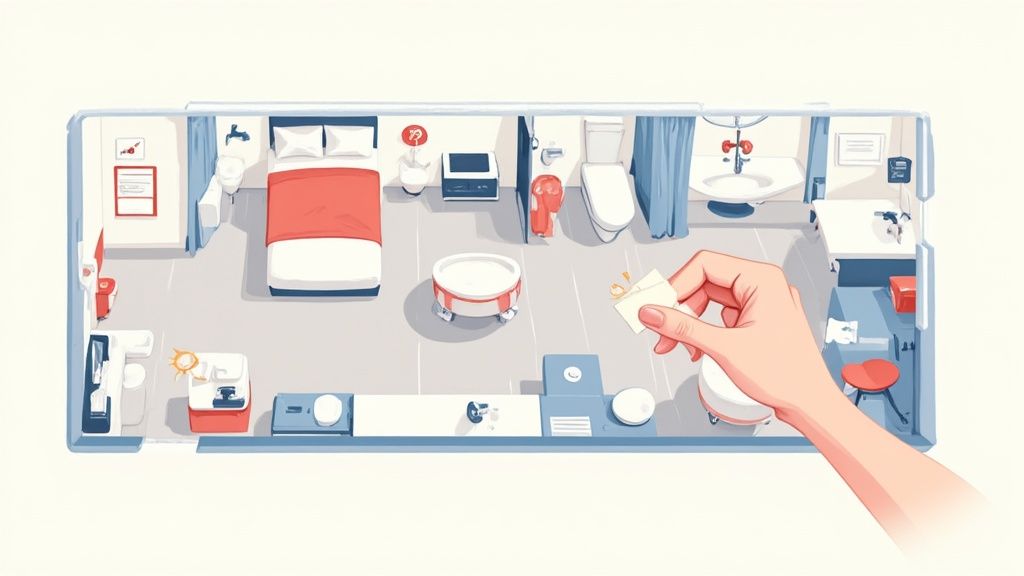
In a competitive market, cleanliness is a powerful business driver. For hotel managers, business owners, and facility operators, a pristine environment directly translates to higher customer satisfaction, stronger brand loyalty, and increased revenue. This isn't just about appearances; it's a tangible demonstration of your commitment to health and safety, building immediate trust with every visitor, from hotel guests to gym members.
The secret to achieving this level of excellence lies in a systematic approach that leaves nothing to chance, particularly in high-traffic areas where germs and bacteria thrive. A comprehensive housekeeping checklist for hotel rooms and other commercial spaces is the foundation of this system. This guide moves beyond simple tidying to provide a definitive protocol for any facility. It integrates the strategic use of powerful tools like disinfectant wipes to target and eliminate pathogens on high-touch danger zones, from light switches and remote controls to doorknobs and gym equipment.
We'll explore not only what to clean but how to do so with maximum efficiency, transforming a routine task into a cornerstone of your operational success. For sales professionals in the cleaning industry, this article also uncovers powerful strategies to articulate the ROI of superior hygiene. You will learn how to position essential cleaning supplies, like disinfectant wipes, as non-negotiable investments for business resilience and customer confidence.
This comprehensive checklist is designed to be your go-to resource for elevating cleaning standards across various facilities. It provides actionable steps to ensure every space is not just visually appealing but hygienically safe, securing your reputation as a leader in customer care and facility management.
1. Bathroom Deep Clean and Sanitization
The bathroom is often the first and last place a visitor judges a facility's cleanliness, whether in a hotel room, office, or restaurant. It's a high-stakes area where perceptions of hygiene are formed instantly. A comprehensive bathroom deep clean and sanitization protocol is a non-negotiable part of any professional cleaning plan, moving beyond simple surface wiping to eliminate pathogens and ensure public safety. This process involves a systematic, multi-step approach to disinfect every fixture, surface, and amenity, leaving the space pristine and instilling confidence.
This protocol is essential for frequent cleaning cycles, as public bathrooms are breeding grounds for bacteria and viruses. By following a strict procedure, janitorial staff can prevent cross-contamination and address high-touch "danger zones" effectively.
Best-Practice Implementation
Leading brands across industries have set high standards for bathroom sanitization. For example, many large office buildings and retail centers integrate the use of hospital-grade disinfectants and electrostatic sprayers to cover all surfaces. These programs are heavily influenced by guidelines from organizations like the CDC and the Global Biorisk Advisory Council (GBAC), which stress the importance of verified cleaning processes in all public spaces.
Key Insight: A sanitized bathroom isn't just a clean bathroom. It's a space where invisible threats have been neutralized, directly impacting public health and your facility's reputation. The ROI on a thorough sanitization process is measured in positive reviews, customer loyalty, and risk mitigation.
Actionable Sanitization Protocol
To implement this crucial step in your facility's cleaning checklist, adopt a structured and consistent approach.
- Systematic Workflow: Begin with the toilets. Apply a high-quality bowl cleaner and a disinfectant to the exterior, lid, and base. While the chemicals dwell, move to the sinks and vanity, then to dispensers and fixtures, and finish with the floors. This "top-to-bottom" method prevents cleaned surfaces from being re-contaminated.
- Color-Coded Tools: Assign different colored microfiber cloths and sponges to specific areas (e.g., red for toilets, blue for mirrors/glass, yellow for sinks/vanities). This simple strategy is a powerful defense against spreading germs from the toilet to the sink.
- Respect Dwell Time: Disinfectant wipes and sprays need time to work. Always follow the manufacturer's instructions for contact or "dwell" time, which is typically 30 seconds to several minutes. Wiping a surface and immediately drying it can render the disinfectant ineffective.
- High-Touch Hotspots: Use disinfectant wipes to meticulously clean all high-touch points: faucet handles, soap dispensers, paper towel levers, door handles (inside and out), and flush levers. This targeted approach is quick, efficient, and critical for preventing the spread of germs.
2. Bed Making and Linen Standards
The bed is the centerpiece of a hotel room, and its presentation directly influences a guest's perception of comfort, luxury, and cleanliness. Bed making and linen standards are a cornerstone of any professional housekeeping checklist for hotel rooms, transforming a routine task into an art form. This process involves a meticulous, systematic approach to stripping, inspecting, and dressing the bed to create an inviting, perfectly crisp appearance that promises a restful night.

A perfectly made bed is more than just an aesthetic detail; it’s a powerful signal of quality and care. It assures guests that the linens are fresh and sanitary, and that the property adheres to high standards. Consistent execution of these standards is crucial for brand identity and guest satisfaction, turning a simple bed into a signature experience.
Best-Practice Implementation
Luxury hotel chains are renowned for their signature bed-making techniques. For instance, The Ritz-Carlton is famous for its precise method using 300-thread-count sheets and perfectly folded corners. Similarly, the Hampton by Hilton brand built its reputation on the "Clean and Fresh Hampton Bed" program, which includes washing duvet covers for every new guest, a practice that directly addresses guest hygiene concerns. These standards are often inspired by military bed-making for its precision and are reinforced through rigorous training at professional housekeeping institutes.
Key Insight: A guest's first glance at the bed sets the tone for their entire stay. An impeccably made bed communicates hygiene, attention to detail, and a commitment to comfort. The return on investment is immediate, measured in guest satisfaction, positive online reviews, and enhanced brand perception.
Actionable Bed-Making Protocol
To ensure this vital element of your housekeeping checklist for hotel rooms is executed flawlessly, implement a clear and repeatable protocol.
- Strip and Inspect: Completely strip all linens from the bed for every turnover. This is non-negotiable for hygiene and provides a critical opportunity to inspect the mattress, mattress protector, pillows, and box spring for stains, damage, or pests. Report any issues immediately.
- Precise Tucking and Folding: Use hospital corners for a tight, smooth fit on the fitted and flat sheets. This classic technique prevents sheets from pulling loose during the night. Ensure the top sheet, blanket, and duvet have an equal overhang on both sides of the bed for a balanced, symmetrical look.
- Pillow and Accent Placement: Pillows should be fluffed and placed symmetrically at the head of the bed. Follow brand standards for arranging decorative pillows and bed runners, as these elements complete the visual presentation and reinforce your hotel’s style.
- Final Inspection: Before leaving the room, take a final look at the bed from the doorway. Check for any wrinkles, unevenness, or loose threads. The final product should be smooth, taut, and visually perfect, inviting the guest to relax.
3. Surface Dusting and Furniture Care
Beyond high-traffic areas, the cleanliness of a facility's surfaces and furniture plays a critical role in shaping a customer's overall impression. A systematic approach to dusting and furniture care is a cornerstone of a comprehensive cleaning checklist, ensuring that every surface—from an office desktop to a restaurant table—is free from dust, smudges, and fingerprints. This process is not just about aesthetics; it is a fundamental hygiene practice that removes allergens and pathogens, contributing to a healthier indoor environment for everyone.
This detailed cleaning is essential for all commercial spaces. Dust and fingerprints on surfaces like conference tables, retail displays, and gym equipment can make an otherwise clean facility feel neglected. A consistent protocol ensures that every visitor enters a space that feels fresh, well-maintained, and truly clean, reinforcing the value and quality of your business.

Best-Practice Implementation
Leading businesses across sectors set the standard for furniture and surface care. High-end retail stores implement meticulous protocols to keep glass displays and counters spotless, understanding that presentation drives sales. Modern offices often focus on using sustainable, non-toxic cleaners that align with corporate wellness goals. These practices are guided by standards from organizations like the International Executive Housekeepers Association (IEHA), which promotes best practices in the industry.
Key Insight: Consistent surface and furniture care is a silent communicator of quality. A smudge-free glass door or a clean reception desk signals that your attention to detail is absolute, which directly builds trust and enhances brand perception. The ROI is found in fewer complaints and more positive customer feedback.
Actionable Dusting and Care Protocol
To integrate this crucial step into your facility's cleaning plan, a methodical and detail-oriented approach is required.
- Systematic Workflow: Always work from top to bottom. Start by dusting high surfaces like shelving, tops of picture frames, and light fixtures. This ensures that any dislodged dust falls onto lower surfaces that have not yet been cleaned, preventing rework.
- Use the Right Tools: Use high-quality microfiber cloths, which trap and hold dust particles rather than just pushing them around. For high-touch surfaces in offices, gyms, or retail, disinfectant wipes are ideal for quickly cleaning and sanitizing items like phones, keyboards, payment terminals, and dumbbells.
- Lift, Don't Just Wipe: A common mistake is to wipe around objects. Train staff to lift every item—monitors, product displays, condiment holders—to clean the surface underneath completely. This ensures a thorough clean and prevents dust buildup.
- Facility-Specific Focus: Tailor your approach. In a gym, use disinfectant wipes on every piece of cardio and strength equipment between uses. In an office, focus on conference tables, shared workstations, and pantry surfaces. In a retail store, prioritize counters, fitting rooms, and display cases.
4. Floor Cleaning and Vacuuming
Floors are the foundation of a facility's perceived cleanliness, silently accumulating dirt, dust, and debris that can undermine an otherwise spotless environment. A thorough floor cleaning protocol is a fundamental component of any professional cleaning checklist, as it directly impacts air quality, customer comfort, and the overall impression of hygiene. This process goes beyond a quick pass with a vacuum, requiring meticulous attention to different surface types, stain removal, and hard-to-reach areas.
This task is critical because floors are high-traffic surfaces that harbor allergens and bacteria. A comprehensive approach not only enhances aesthetics but also contributes to a healthier indoor environment, a key factor for customers and employees, especially those with allergies or sensitivities.

Best-Practice Implementation
Leading commercial properties invest heavily in floor care as a pillar of their cleanliness standards. Many corporate offices follow a carpet care program that includes daily vacuuming, immediate spot treatment, and scheduled deep cleaning to restore fibers. Similarly, high-end retail stores and restaurants have specific maintenance protocols for hardwood or tile, using pH-neutral cleaners to protect the finish. These standards, often detailed in operations manuals and reinforced by commercial equipment manufacturers, ensure consistency and prolong the life of expensive flooring.
Key Insight: A clean floor is more than just debris-free; it is an indicator of deep, systematic cleaning. Customers notice the details, from spotless corners to the fresh scent of a properly cleaned carpet. Investing in proper floor care is an investment in customer satisfaction and asset protection.
Actionable Cleaning Protocol
To ensure your floors meet the highest standards, integrate a structured and consistent process into your facility's cleaning schedule.
- Systematic Vacuuming Technique: For carpeted areas, vacuum in methodical, overlapping parallel strokes, first in one direction and then perpendicular to it (a crosshatch pattern). This technique lifts the carpet pile from multiple angles and ensures maximum soil and allergen removal. Pay special attention to edges and corners.
- Targeted Stain Treatment: Equip janitorial carts with a multi-purpose spot and stain remover. Pre-treat any visible stains on carpets or rugs before general cleaning. Blot the stain from the outside in to prevent it from spreading, and always follow product instructions.
- Clean Under and Behind: In spaces like offices or hotel rooms, use furniture sliders to safely move desks and chairs. This provides access to often-neglected areas where dust and dirt accumulate, significantly improving overall cleanliness and air quality.
- Equipment Maintenance: A vacuum's performance is directly tied to its maintenance. Staff should be trained to check and empty the vacuum bag or canister regularly. Inspecting and cleaning filters, especially HEPA filters, is crucial for maintaining suction power and ensuring the machine effectively traps dust and allergens. Find out more about how to clean HEPA vacuum filters to optimize your equipment's performance.
5. Amenities Restocking and Organization
Beyond a clean space, the thoughtful provision and presentation of amenities are what elevate a standard customer experience into a memorable one. Amenities restocking and organization is a critical component of any housekeeping checklist for hotel rooms and applies to many other businesses, from office pantries to gym locker rooms. This process involves a systematic replenishment of all consumables and a meticulous arrangement of items to create a sense of welcome, order, and care.
This step is far more than just replacing used items. It’s an opportunity to reinforce brand standards, anticipate customer needs, and control operational costs through efficient inventory management. A well-stocked and perfectly organized space communicates attention to detail and a commitment to comfort, directly influencing satisfaction.
Best-Practice Implementation
Leading businesses understand that amenities are a powerful branding tool. For example, high-end gyms often partner with luxury brands for their shower products, providing a premium experience. Modern offices offer a curated selection of snacks and beverages in their pantries, boosting employee morale and reflecting company culture. These thoughtful touches show an investment in the user experience.
Key Insight: Amenities are a tangible expression of your brand's promise. Disorganized, missing, or low-quality items signal a lack of care, undermining all other cleaning efforts. A strategic and well-executed restocking process not only meets expectations but also provides an opportunity to exceed them, turning a simple visit into a positive experience.
Actionable Restocking Protocol
To ensure consistency and excellence, this part of the cleaning checklist should be treated with precision.
- Follow Par Levels: Establish a clear "par" for every single amenity, from coffee pods in a hotel room to paper towels in an office kitchen. This standard quantity ensures every user receives the same experience and helps staff quickly identify what needs replenishment, preventing waste.
- Check Expiration Dates: Diligently check the expiration dates on all consumable items, including coffee, tea, and any snacks. Removing and replacing expired products is a crucial step in protecting health and avoiding negative feedback.
- Create Visual Appeal: The placement of amenities matters. Arrange toiletries in a neat, symmetrical line. Stack paper cups and organize condiments so they look inviting and easy to use. This visual organization enhances the perception of cleanliness and quality.
- Conduct a Final Scan: Before finishing a service cycle, conduct a final visual sweep dedicated solely to amenities. Confirm that all dispensers are full, supplies are neatly arranged, and branded materials are in pristine condition. This last check catches small oversights that can make a big difference.
6. Trash Removal and Recycling
Effective waste management is a critical, though often overlooked, element of a facility's presentation and hygiene. A proper trash and recycling protocol goes beyond simply emptying bins; it reflects the business's commitment to cleanliness, sustainability, and public safety. A comprehensive approach, embedded within any professional cleaning checklist, ensures that all waste is removed efficiently, disposed of responsibly, and that the process itself does not introduce new contaminants.
This protocol is essential for daily operations to eliminate odors, pests, and the visual clutter that detracts from a pristine customer experience. By standardizing waste handling, janitorial staff can operate more safely and efficiently, aligning daily tasks with broader brand initiatives like environmental stewardship and public health. This practice is vital for ensuring cleanliness in all commercial spaces, from retail stores to corporate offices.
Best-Practice Implementation
Leading companies have integrated sophisticated waste management into their core operations. Many large corporations have green initiatives that provide tools to measure and manage waste, encouraging practices like centralized recycling stations. Similarly, many businesses partner with local waste management companies to ensure compliance with recycling regulations and promote sustainable disposal methods. These initiatives are heavily influenced by guidance from environmental protection agencies and green certification programs.
Key Insight: Trash removal is more than a chore; it's a touchpoint for brand values. An organized, sustainable waste protocol communicates respect for the customer, the environment, and staff safety. The ROI is demonstrated through improved public perception, operational efficiency, and a strengthened corporate social responsibility profile.
Actionable Waste Management Protocol
To implement this crucial step in your facility's cleaning plan, adopt a structured and consistent approach that prioritizes hygiene and safety.
- Systematic Collection: Begin by collecting waste from all receptacles, including main bins, bathroom bins, and recycling containers. Always check less obvious places where visitors may have left items. This "all-points" check ensures nothing is left behind.
- Safety First Handling: Always wear gloves when handling trash to protect against sharp objects and potential contaminants. For any wet or odorous waste, double-bag the liner to prevent leaks and spills in common areas. This simple step is a powerful defense against cross-contamination.
- Replace and Inspect: After removing the old liner, inspect the inside of the wastebasket for spills or residue. Wipe it down with a disinfectant wipe before placing a fresh, clean liner inside. Ensure the new liner is opened fully and fits snugly.
- Hazardous Material Protocol: Train staff to immediately report any suspicious or hazardous items found in the trash. Do not handle these items directly. Follow your facility's established protocol for contacting management or security for proper disposal.
7. Electronic Equipment and Technology Check
In the modern business and hospitality landscape, functional technology is as fundamental to the user experience as a clean environment. An Electronic Equipment and Technology Check ensures that every digital and electronic amenity—from a hotel TV to an office conference phone or a gym's cardio machine screen—is in perfect working order. This crucial step moves beyond simple cleaning to proactively verify functionality, preventing user frustration and negative feedback before they happen. It’s a systematic verification process that guarantees technology enhances, rather than hinders, the experience.
This protocol is essential because a single non-functional device can sour an otherwise perfect visit. Customers and employees now expect seamless connectivity and intuitive control, and failing to meet these expectations can lead to service calls, complaints, and a perception that the facility is outdated or poorly maintained.
Best-Practice Implementation
Leading businesses have integrated technology checks into their standard operating procedures. In hospitality, Hilton's Connected Room allows guests to control their environment from a mobile device, making the network's integrity paramount. In the corporate world, tech-forward offices ensure all AV equipment in meeting rooms is tested daily. These initiatives show a commitment to a flawless tech experience, recognizing it as a core component of satisfaction.
Key Insight: A functional device is no longer a luxury; it's a basic utility. Verifying technology isn't just a maintenance task; it's an act of good business that demonstrates respect for the user's time and needs, directly impacting their overall impression and likelihood to return.
Actionable Technology Check Protocol
To effectively integrate this step into your cleaning and maintenance routine, staff must adopt a detailed and consistent testing process.
- Comprehensive Functionality Test: Go beyond a simple power-on check. For TVs, cycle through channels. For conference phones, check for a dial tone. For gym equipment, test the screen's responsiveness.
- Connectivity and Charging Verification: In spaces with public Wi-Fi, connect a test device to confirm signal strength and login accessibility. Plug a charging cable into all available USB ports and outlets to ensure they are providing power.
- Clean and Sanitize: Technology is a major high-touch point. Use electronic-safe disinfectant wipes to clean remote controls, keyboards, touch screens, and control panels. This is crucial for preventing the spread of germs in shared environments.
- Immediate Reporting System: Train staff to immediately document and report any technological issue, no matter how minor, to the maintenance or IT department using a clear system. This prevents a known issue from being passed on to the next user and allows for swift resolution.
Housekeeping Checklist Comparison of 7 Key Tasks
| Service | Implementation Complexity 🔄 | Resource Requirements ⚡ | Expected Outcomes 📊 | Ideal Use Cases 💡 | Key Advantages ⭐ |
|---|---|---|---|---|---|
| Bathroom Deep Clean and Sanitization | High 🔄🔄 | Multiple specialized products, PPE ⚡ | Thorough sanitization, disease prevention 📊 | Hotels aiming for high hygiene standards | Prevents infections, boosts guest satisfaction ⭐ |
| Bed Making and Linen Standards | Moderate 🔄 | Linen inventory, staff training ⚡ | Comfortable, attractive beds, positive impressions 📊 | Mid to high-end hotels focusing on presentation | Enhances comfort, professionalism ⭐ |
| Surface Dusting and Furniture Care | Moderate 🔄 | Multiple cleaning agents, care tools ⚡ | Maintained furniture, allergen reduction 📊 | Hotels with extensive furnishings, allergy concerns | Prolongs furniture life, improves air quality ⭐ |
| Floor Cleaning and Vacuuming | Moderate to High 🔄🔄 | Vacuum systems, mops, cleaning solutions ⚡ | Clean floors, reduced allergens, pest prevention 📊 | Properties with carpeted & hard floors | Improves air quality, extends floor lifespan ⭐ |
| Amenities Restocking and Organization | Low to Moderate 🔄 | Inventory management, storage space ⚡ | Guest convenience, cost control 📊 | Hotels focusing on hospitality and upsell opportunities | Reduces complaints, increases revenue ⭐ |
| Trash Removal and Recycling | Moderate 🔄 | Waste sorting tools, PPE ⚡ | Sanitary environment, sustainability compliance 📊 | Eco-conscious hotels, busy properties | Supports sustainability, prevents odors ⭐ |
| Electronic Equipment and Technology Check | Moderate to High 🔄🔄 | Technical knowledge, coordination ⚡ | Fully functional tech, reduced guest complaints 📊 | Tech-equipped rooms, smart hotels | Avoids costly repairs, enhances guest experience ⭐ |
Elevating Your Standards: Make Exceptional Cleanliness Your Signature
The journey from a standard facility to an exceptionally clean and welcoming space is paved with precision, consistency, and a deep commitment to public safety. The detailed breakdown provided in this article serves as your operational blueprint. Moving beyond a simple to-do list, this comprehensive cleaning checklist is a strategic tool designed to standardize excellence, eliminate oversights, and build a powerful reputation for quality across any commercial environment.
By deconstructing the cleaning process into distinct tasks and zones, your team can systematically address every critical point. This structured approach ensures that no detail, from the sanitized door handle to the spotless floor, is left to chance. This is not just about cleaning; it is about creating an environment where customers and employees feel genuinely cared for and confident in their surroundings.
From Checklist to Culture: Actionable Next Steps
Mastering a checklist is the foundation, but transforming your operations requires embedding these principles into your team's daily mindset. Here is how to transition from simply following instructions to leading with a culture of cleanliness:
-
Implement and Customize: Use this checklist as a starting point. Adapt it to the unique features of your facility, whether it's a school, gym, or retail store. Add specific items relevant to your equipment, high-traffic zones, or amenities to create a truly bespoke guide.
-
Train for the "Why": Go beyond teaching the "what" and "how." Educate your staff on why certain steps are crucial. Explain the health risks associated with high-touch zones and how tools like disinfectant wipes provide a targeted, efficient solution for neutralizing pathogens on surfaces like light switches, POS systems, and shared equipment. This knowledge empowers them to clean with purpose.
-
Conduct Regular Audits: A checklist is only effective if it is followed consistently. Implement a system of regular inspections using this guide as your scorecard. Use these audits as coaching opportunities to provide constructive feedback and reinforce best practices.
The ROI of Impeccable Hygiene
For business owners, janitorial staff, and facility managers, the value of this meticulous approach extends far beyond a tidy space. It directly impacts your bottom line.
A visibly and verifiably clean environment is one of the most powerful marketing tools at your disposal. It generates positive online reviews, encourages repeat business, and builds invaluable brand trust. In a competitive market, it is your most tangible differentiator.
For sales professionals in the cleaning and janitorial supply industry, this presents a clear opportunity. The conversation with clients—whether they manage a hotel, a fitness center, or an office—should pivot from product features to strategic outcomes. Frame your offering, particularly high-quality disinfectant wipes, as an essential component of their risk management and customer satisfaction strategy. Help them understand the return on investment that comes from preventing negative experiences and building a reputation for superior hygiene.
Ultimately, the principles outlined in this guide are about more than just maintaining a space. They are about building confidence, ensuring well-being, and delivering an experience that resonates with customers long after they leave. Prioritize cleanliness, consider integrating powerful tools like disinfectant wipes into your daily routine or product offerings, and commit to this higher standard. You are not just cleaning; you are crafting a legacy of excellence and trust that will set your business apart.
Leave a Reply