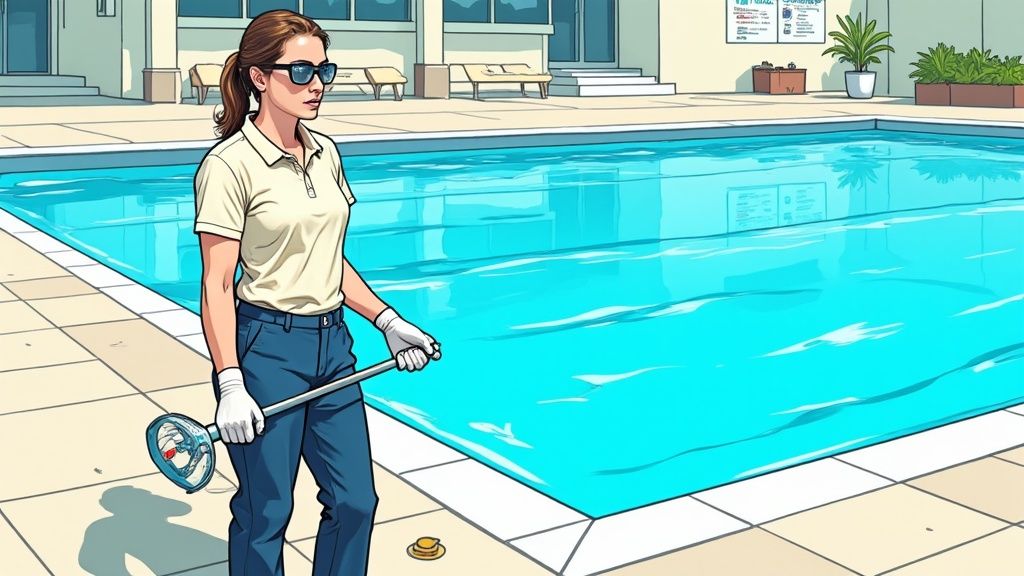
When it comes to managing a commercial facility with a swimming pool, cleanliness is the cornerstone of success. It's about three core pillars: consistent circulation, precise chemical balancing, and routine physical cleaning. Mastering these ensures your water is not just crystal clear, but also hygienically safe for every guest. Forgetting even one can turn a valuable asset into a serious liability.
Why Pristine Public Facilities Are Non-Negotiable

For any facility manager, gym owner, or hospitality professional, the swimming pool and its surrounding environment are a direct reflection of your brand's commitment to safety and quality. A sparkling, well-maintained area builds instant trust and keeps patrons coming back. Conversely, a pool that’s even slightly cloudy or a deck area that feels grimy can send customers elsewhere—permanently.
The stakes are significantly higher in a public setting. Unlike a private backyard pool, a commercial facility handles a massive bather load, introducing a constant stream of sweat, oils, and sunscreen into the water. The surrounding high-touch surfaces—railings, lounge chairs, gate latches—become critical vectors for germ transmission. This is why a diligent, professional-grade cleaning protocol, including the strategic use of disinfectant wipes, isn't just a good idea—it's an absolute necessity for protecting public health and your business's reputation.
The Real Risks of Cutting Corners
Ignoring proper maintenance isn't just about aesthetics; it's a major public health gamble and a significant financial risk. When pool chemistry is off or the cleaning schedule for the entire facility gets sloppy, you’re inviting a host of problems that can harm both your clients and your bottom line.
Here’s what you're up against:
- Recreational Water Illnesses (RWIs): These are nasty infections spread through contaminated water. The CDC highlights that even clear-looking pools can harbor chlorine-resistant germs like Cryptosporidium.
- Surface-Transmitted Illnesses: High-touch surfaces around the pool can harbor bacteria and viruses, spreading illness from one guest to another.
- Physical Safety Hazards: Slippery decks from algae, cloudy water obscuring a swimmer in distress, or poorly maintained equipment are immediate physical dangers.
- Financial Liability: A single incident tied to poor hygiene can trigger lawsuits, health department fines, and do irreparable damage to your facility's reputation.
A clean facility is your first and best line of defense. This isn't just about making things look nice; it's about active risk management, protecting your guests, and safeguarding your business.
The Business Case for Expert Maintenance
Demand for professional-grade cleanliness is skyrocketing as health regulations tighten and the public becomes more health-conscious. This trend is reflected in market data, with the pool cleaning services market jumping from $24.96 billion to an expected $26.92 billion in just one year. This growth underscores the industry's shift towards expert-level upkeep.
For a clearer picture, here’s a breakdown of what a comprehensive commercial cleaning plan entails.
Commercial Facility Cleaning At a Glance
| Component | Objective | Key Actions |
|---|---|---|
| Water Chemistry | Maintain safe, balanced water that sanitizes effectively. | Daily testing of chlorine/bromine, pH, alkalinity. Regular shocking. |
| Circulation & Filtration | Remove debris and distribute chemicals evenly. | Run pump 24/7, backwash filter regularly, check pressure gauges. |
| Physical Cleaning | Remove visible dirt, organic matter, and buildup. | Skim surface, brush walls/tile, vacuum floor, clean skimmer baskets. |
| Equipment Checks | Ensure all mechanical systems are functioning safely. | Inspect pumps, filters, heaters, and chemical feeders. Check for leaks. |
| Deck & Facility Hygiene | Prevent slip hazards and reduce germ transmission. | Regularly clean decks, sanitize high-touch surfaces with disinfectant wipes. |
Investing in a robust cleaning regimen is a powerful business move. It communicates a message of quality and care that resonates with customers, whether they're choosing a gym, a hotel, or a community center. For those in the cleaning supply industry, demonstrating how superior facility hygiene sells more summer memberships can be a powerful sales tool.
Ultimately, knowing how to clean swimming pools and their surrounding facilities to a professional standard is about creating a safe, welcoming, and trustworthy environment that ensures patrons return, swim after swim.
Mastering Pool Chemistry for Safe Water

While skimming leaves and vacuuming the pool floor are visually satisfying tasks, the most crucial work for protecting your guests occurs at a microscopic level. For any commercial facility manager, mastering water chemistry is paramount. It’s the invisible force that transforms a simple body of water into a safe, hygienic, and inviting amenity.
Think of your pool as a delicate ecosystem. When one chemical level is off, it triggers a chain reaction, compromising both safety and clarity. This isn’t about blindly adding chemicals; it’s about understanding their interplay to achieve a perfect, stable balance.
The Core Four of Pool Chemistry
To maintain a healthy commercial pool, you must become an expert on four key chemical parameters. Each plays a distinct role, but they all work in concert to keep the water safe and protect your equipment.
-
Chlorine (The Sanitizer): This is your primary defense against bacteria, viruses, and algae. For a commercial pool, the free chlorine level should remain consistently between 1.0 and 3.0 parts per million (ppm).
-
pH (The Balancer): This measures how acidic or alkaline your water is. If the pH is too high, your chlorine becomes ineffective. If it's too low, the water becomes corrosive, damaging equipment and irritating swimmers. The ideal range is a narrow window between 7.2 and 7.6.
-
Total Alkalinity (The pH Buffer): This acts as an anchor for your pH. Without proper alkalinity, your pH will fluctuate wildly, making it impossible to maintain balance. Aim for a range of 80-120 ppm.
-
Calcium Hardness (The Protector): This measures the amount of dissolved calcium. If it’s too low, water will leach calcium from pool surfaces, causing damage. If it's too high, you'll get cloudy water and scale buildup. Keep it between 200-400 ppm.
Understanding the interaction between these four is critical. For instance, you can add all the chlorine you want, but if your pH is 8.0, that chlorine is barely effective. This delicate balance is why frequent, accurate testing is non-negotiable.
Accurate Testing and Precise Adjustments
In a high-traffic commercial setting, water chemistry can shift dramatically in just a few hours. Daily testing is the absolute minimum. During peak season, you should test multiple times a day. A high-quality digital test kit is a wise investment, offering far greater accuracy than test strips.
When making adjustments, always follow the manufacturer's instructions precisely. Add one chemical at a time and allow the water to circulate for a few hours before retesting to avoid overshooting your target.
Remember, the goal isn't just crystal-clear water; it's hygienically safe water. A perfect chemical balance ensures your sanitizer is working at peak efficiency to kill invisible threats and protect every swimmer from Recreational Water Illnesses (RWIs).
The Power of a Good Shock
Periodically, your pool needs a hard reset. This is where "shocking," or superchlorination, comes in. It involves adding a large dose of chlorine to break down stubborn contaminants, kill budding algae, and eliminate combined chlorine (chloramines).
It’s time to shock when:
- You smell a strong "chlorine" odor (which is actually chloramines).
- The water looks dull or cloudy despite balanced levels.
- You see any signs of algae growth.
- After a major event, like a rainstorm or a day with heavy bather load.
For commercial facilities, the best practice is to shock the pool in the evening after closing. This allows the chlorine to work overnight without being degraded by sunlight, ensuring levels return to a safe range by morning. This practice is a vital part of professional maintenance at hotels, resorts, and fitness centers, where standards are exceptionally high. The demand for these services continues to grow, as detailed in recent pool maintenance market projections.
Mastering water chemistry is about being proactive. Consistent testing and thoughtful adjustments will keep your pool safe, sparkling, and ready for business—building the trust that fosters customer loyalty.
Elevating Facility Hygiene Beyond the Water's Edge
Don't let a grimy, slippery deck ruin a perfectly balanced pool. The guest experience—and your facility’s reputation for cleanliness—doesn’t stop at the water's edge. This is where your focus on high-touch surfaces becomes a game-changer.
Every single day, patrons grab railings, climb ladders, open gate latches, and relax on lounge chairs. Each touchpoint is an opportunity for germs to spread. Simply hosing down the deck is insufficient. You need a proactive disinfection plan to keep patrons safe, healthy, and confident in your facility.
Cleaning Tip: The Power of Proactive Disinfection
This is where disinfectant wipes become an essential tool. Integrating them into your daily cleaning routine is a practical and highly effective way to target high-risk areas. Unlike the old spray-and-rag method, which can cross-contaminate surfaces, a fresh wipe for each key area ensures true sanitization. For maximum efficiency, have staff work in a consistent pattern, wiping down all railings first, then moving to ladders, and so on, to ensure nothing is missed.
This approach is non-negotiable in high-traffic commercial environments. Think about a hotel where hundreds of guests use the same lounge chairs, or a gym where members constantly grab handrails right after a workout. Wipes offer a quick, visible, and reassuring layer of hygiene that people notice and appreciate.
The goal isn’t just to make things look clean. It's to slash the microbial load that every guest encounters. A strategically placed wipe station empowers both your staff and your patrons to uphold a higher standard of cleanliness all day long.
Facility-Specific Suggestions
The best cleaning protocols are tailored to the venue. The high-touch zones at a school natatorium are vastly different from those at a luxury resort.
- Gyms & Fitness Centers: This is ground zero for sweat and germs. Staff should frequently use disinfectant wipes on pool ladders, railings, locker room benches, and any shared poolside equipment like resistance bands or foam rollers.
- Offices & Retail: While they may not have pools, the principle applies. Focus on door handles, reception counters, and breakroom surfaces to maintain a healthy environment for employees and customers.
- Restaurants & Schools: Hygiene is paramount. In addition to kitchen and classroom protocols, common areas like railings, door handles, and bathroom fixtures require consistent disinfection to prevent outbreaks.
Sales Tip: Selling a Complete Hygiene Solution
If you're in the cleaning and janitorial supply business, this is a golden opportunity. Don't just sell clients chlorine; sell them a complete hygiene solution. Frame the conversation around hygiene ROI (Return on Investment).
Educate them on how a small investment in disinfectant wipes can prevent negative online reviews about dirty facilities, reduce liability from slips or illnesses, and boost their brand’s reputation for safety. Offer bundled packages: water treatment chemicals plus a starter kit of surface disinfectant wipes and dispensers. When you show clients how to protect their entire environment, you transition from a simple supplier to an indispensable health and safety partner.
Ultimately, a truly clean facility is one where every surface has been considered. By pairing meticulous pool care with diligent disinfection of high-touch points, you create an environment that is genuinely safe and welcoming. Prioritize this holistic approach to cleanliness and consider integrating disinfectant wipes into your daily routine or product offerings to achieve a higher standard of hygiene.
Leave a Reply