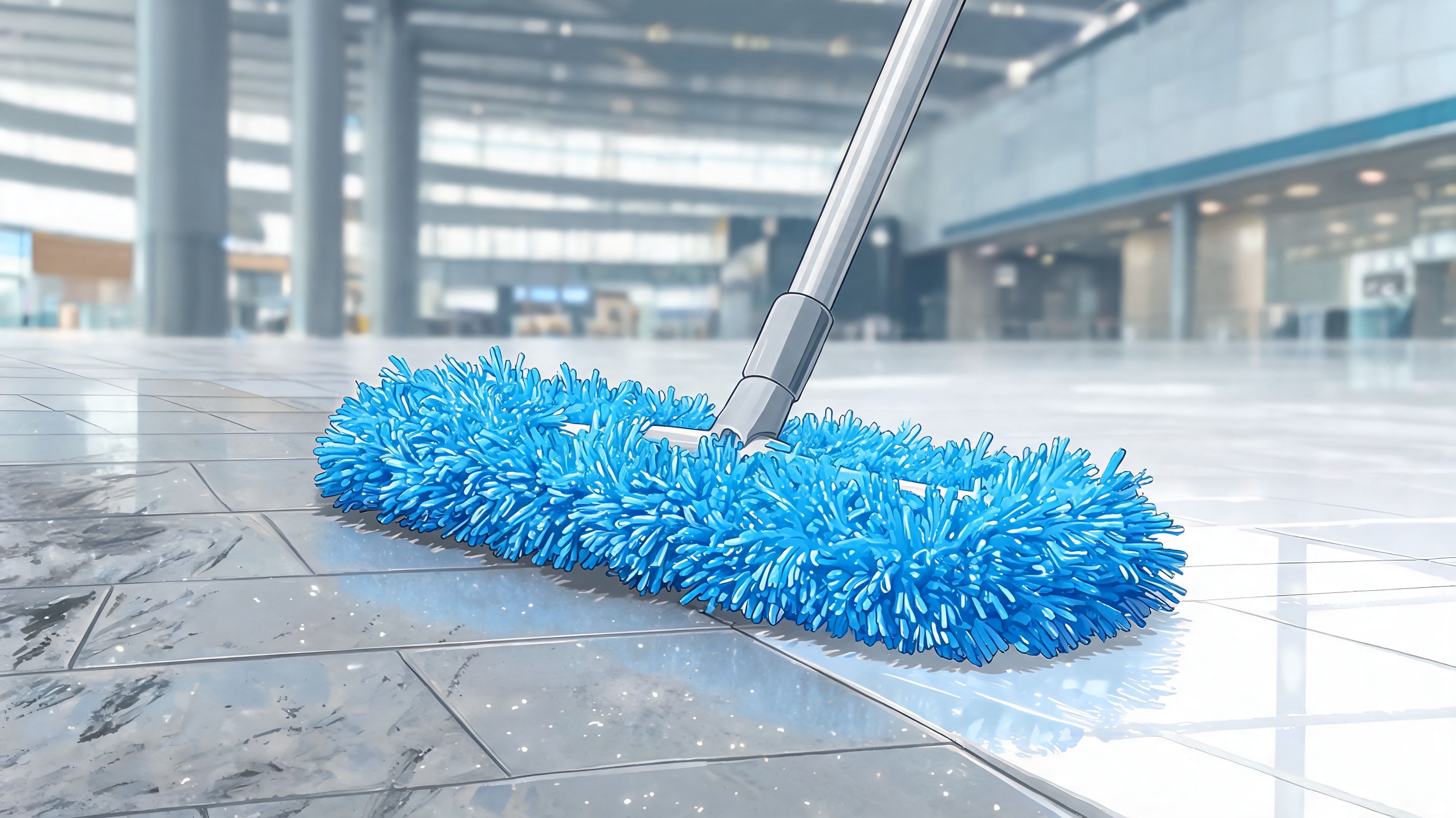
You’re probably dealing with one of two floor care problems right now. Either your team is cleaning constantly and the building still doesn’t look clean, or the floors look fine at a glance but your process is too slow, too wet, and too dependent on staff effort to hold up during busy hours.
That’s where microfiber mop pads change the conversation.
In commercial and public facilities, floor care isn’t just a custodial routine. It affects slip risk, odor control, visible presentation, infection prevention, and how customers judge the rest of your operation. A streaky lobby floor in a hotel, damp tile in a gym locker room, or dingy entry path in a dealership tells people something immediately. They may not know your cleaning process, but they know when a space feels neglected.
Microfiber mop pads are one of the few supply upgrades that can improve cleaning quality, labor efficiency, and sanitation consistency at the same time. The catch is that they only deliver those gains when managers treat them as part of a system. Pad selection matters. Change-out rules matter. Laundry matters. Chemical compatibility matters.
That’s the core business case. This isn’t about replacing one mop with another. It’s about building a more controllable, more defensible cleaning program.
The Strategic Value of Advanced Mopping Systems
Traditional mopping often creates hidden costs. Staff flood the floor, push soil around, wait on drying time, and circle back to fix streaks or missed residue. In a high-traffic facility, that’s not a minor inconvenience. It slows turnover, increases complaint risk, and leaves your team cleaning the same zones repeatedly.

Microfiber mop pads solve a different problem than string mops. They’re built for controlled soil removal, faster reset between areas, and a cleaner-looking finish in spaces where appearance affects trust. That includes airports, event venues, fitness centers, schools, restaurants, retail stores, and hospitality properties.
Why managers are upgrading now
The broader market shift tells you this isn’t a niche product trend. The global microfiber mop pads market was valued at approximately USD 1.2 billion in 2023 and is projected to reach USD 2.4 billion by 2032, with a CAGR of 7.8%, driven by hygiene awareness and microfiber’s efficiency in trapping bacteria, according to Dataintelo’s microfiber mop pads market analysis.
That growth matters because procurement patterns usually follow operational pressure. Managers don’t adopt a new mopping system at scale unless the old one is failing in visible ways.
Operational reality: Guests rarely praise a clean floor, but they notice a dirty one immediately. Cleanliness protects reputation by removing a reason to complain.
Clean floors support more than appearance
An advanced mopping system does three jobs at once:
- Protects guest perception: Cleaner-looking floors support confidence in the rest of the facility, especially in entrances, restrooms, concessions, and waiting areas.
- Reduces process drift: Standardized pads and frame systems make it easier to train staff to clean the same way every shift.
- Supports risk control: Better soil removal and faster drying help managers reduce sanitation concerns and operational disruption.
Sales teams in the cleaning industry should pay attention to that framing. Don’t sell microfiber mop pads as a premium accessory. Sell them as a way to tighten labor, improve visible outcomes, and support a more professional sanitation program.
Deconstructing the Microfiber Mop Pad
A microfiber mop pad looks simple. It isn’t. A good one is a small engineered cleaning tool with layers that each solve a different problem.

At the surface level, microfiber works because the fibers are extremely fine and densely packed. Instead of behaving like a loose wet bundle, the pad creates a broad contact area that lifts and holds soil. That’s why the best pads don’t just smear dirty water from one end of the corridor to the other.
What a quality pad is made of
A typical high-quality wet mop pad uses a looped 80/20 polyester/polyamide blend yarn at 0.1 to 0.2 denier, attached to a hook-and-loop backing with a 3mm foam core, according to Microfiber Wholesale’s wet mop pad specifications.
Those details matter in practice:
- Polyester adds structure and glide: It helps the pad move smoothly across finished floors instead of grabbing.
- Polyamide improves absorbency: It helps hold moisture and pull in fine soil.
- The foam core stores solution: That gives the pad a more even release profile and helps keep it from collapsing during use.
- Hook-and-loop backing speeds change-outs: Staff can swap a dirty pad quickly without handling a saturated mop head.
Why the construction changes cleaning behavior
Think about the difference between wiping a spill with a flat absorbent towel and pushing it around with a wet rope. That’s the difference between microfiber mop pads and old-style string mops.
A well-built pad can get into microscopic floor crevices and improve emulsification of dirt because the fiber structure and retained solution work together. On sealed hard floors, that means more controlled pickup and less residue.
The pad isn’t just carrying water. It’s managing contact, friction, and soil capture at the same time.
For facility buyers, this is the first filter. If a pad lacks a stable backing, a durable edge finish, or enough body to stay flat under pressure, you’ll see the difference on the floor long before you see it on an invoice.
Performance Showdown Microfiber vs Traditional Mops
Managers usually compare mop systems the wrong way. They look at unit price first. A proper comparison starts with performance under actual operating conditions.
Cotton string mops still show up in many facilities because they’re familiar. They’re also harder to standardize, harder to keep clean, and more likely to carry too much water into the work area. That creates a messy process in spaces where drying time, presentation, and repeatability matter.
Where microfiber mop pads outperform
The strongest technical advantage is how the pad interacts with the surface. According to Premier Mop’s microfiber wet mop pad guide, the split microfiber structure increases surface area for liquid retention, while polyester twists provide scrubbing action. That combination lets the pad penetrate surface pores and remove over 99% of contaminants that conventional mops miss, while quick-change designs help eliminate cross-contamination.
That statement has practical consequences:
| Performance area | Microfiber mop pads | Traditional cotton mops |
|---|---|---|
| Soil pickup | Holds fine debris within the pad structure | Often pushes soil through a larger wet zone |
| Moisture control | Applies solution more evenly | Tends to over-wet surfaces |
| Change-out speed | Fast pad replacement on frame systems | Slower reset and more handling |
| Cross-contamination control | Easier to assign fresh pads by area | More likely to stay in circulation too long |
What this looks like on the floor
In offices and schools, microfiber usually produces a cleaner finish with less streaking on smooth hard surfaces. In gyms and restaurants, it gives staff more scrubbing control without dragging a heavy bucket through occupied areas. In retail, it helps crews clean around fixtures quickly without leaving a soaked path behind.
For janitorial supervisors, the labor effect is often as important as the cleaning effect. A mop that glides, changes out fast, and doesn’t flood the floor is easier to use consistently across shifts.
For sales professionals, this is the stronger close. Don’t position microfiber as “better technology” in the abstract. Position it as a system that helps clients clean with less rework and fewer preventable complaints.
Critical Laundering Disinfection and Chemical Compatibility
Many microfiber programs break down at this stage. Teams buy good pads and see decent results for a while, but then performance slips. Pads start dragging, odors show up, and sanitation confidence drops. The issue usually isn’t the pad design. It’s laundering discipline.

Microfiber traps soil effectively because the fiber structure is dense and fine. That same strength becomes a liability when staff wash pads casually, overload machines, use the wrong detergent, or return partially contaminated pads to service.
The risk most teams miss
A 2025 ISSA study found that improperly laundered microfiber can harbor up to 30% more pathogens than cotton after 50 cycles, and effective cleaning requires hotter washes of 140°F+ and specific detergents, according to ERC Wipe’s overview of professional microfiber mop practices.
That’s the overlooked trade-off. Microfiber mop pads can support a stronger sanitation program, but they don’t forgive a weak laundry program.
Practical rule: If you can’t control collection, wash settings, chemical use, drying, and storage, you can’t claim your microfiber system is controlled.
Laundering rules that actually work
Most facilities don’t need a complicated SOP. They need a strict one.
Segregate used pads immediately
Don’t let wet pads sit in carts for long periods. Collect them in designated containers by area or soil level.Use the correct wash temperature
The cited guidance above matters most in high-touch and high-risk environments where sanitation isn’t optional.Choose detergents carefully
Use products intended for microfiber. Avoid anything that leaves residue, because residue clogs fibers and reduces pickup.Keep fabric softeners out of the process
Softener coats fibers. That lowers absorbency and undermines the pad’s ability to grab soil.Dry completely, but don’t abuse the pad
Overheating can shorten useful life. Incomplete drying can create odor and storage problems.
For a deeper operational breakdown, use this guide on how to clean microfiber correctly.
Disinfection and high-touch surface strategy
Floor care and surface disinfection shouldn’t be merged into one vague routine. They need separate tools and standards. Mop pads handle floors. Disinfectant wipes handle touchpoints.
That’s especially important in gyms, offices, schools, and retail counters where staff need a fast, visible way to clean handles, rails, checkout stations, touchscreens, and equipment between deeper floor care cycles. We recommend Wipes.com Disinfectant Wipes for those high-touch sanitation tasks because they fit into a broader daily hygiene routine without complicating floor workflows.
Chemical compatibility is a management issue
Many teams also make the mistake of overloading pads with whatever disinfectant is on hand. That can create residue, damage fibers, or leave the floor looking worse even when the surface is technically treated.
Set these controls:
- Match pads to approved chemistries: Don’t assume every disinfectant plays well with every pad.
- Train staff on dwell time separately: A floor that looks dry quickly may not have received the contact time the chemical requires.
- Use wipes for precision work: Door pulls, machine controls, and front desk counters need a different approach than open floor areas.
If your microfiber system isn’t supported by disciplined laundering and chemical controls, you don’t have a premium program. You have a contamination risk wearing a premium label.
Selecting the Right Mop Pads for Your Facility
A common buying mistake is choosing one microfiber pad and trying to make it work everywhere. That usually leads to overbuying for some spaces and underperforming in others.

The better approach is to match pad type to floor condition, traffic level, and reset speed. A polished showroom, a locker room, and a back-of-house kitchen don’t place the same demands on a mop pad.
Match pad style to the environment
For airports and large public venues, prioritize pads that stay flat, glide easily, and can be changed out fast. Open floor plans reward systems that let staff cover ground without over-wetting.
For gyms and fitness centers, absorbency and scrubbing control matter more. Locker rooms, studio floors, and entry zones collect body oils, moisture, and tracked-in debris. Choose pads that can handle damp, repetitive cleaning without leaving lint behind.
For car dealerships and retail showrooms, finish quality matters. You want a lint-free pad that leaves a clean visual result on polished surfaces and around display areas.
For restaurants and food-adjacent spaces, keep separate pads for front-of-house and back-of-house. Managers who don’t separate those workflows usually end up blending appearance cleaning with grease management, and neither gets done well.
A good pad choice reduces decisions at the shift level. Staff shouldn’t have to guess which tool belongs in which zone.
Build a small but intentional pad lineup
You don’t need dozens of SKUs. Most facilities can run well with a compact mix:
- Standard wet pads for routine hard-floor cleaning in public areas
- More aggressive scrubbing pads for textured or greasy zones
- Dust pads for dry pickup before wet mopping starts
- Color-coded assignments to separate restroom, food, fitness, and general-use areas
If you’re weighing reusable systems against throw-away options for certain risk-sensitive areas, this comparison of disposable mop pad use cases is worth reviewing.
Questions to ask before you buy
Ask your vendor or distributor practical questions, not marketing questions:
| Decision point | What to ask |
|---|---|
| Floor type | Will this pad glide on smooth finished floors without dragging? |
| Soil load | Is it built for light daily maintenance or heavier scrubbing? |
| Laundry process | Can our current wash program support this pad properly? |
| Change-out frequency | Can staff replace it quickly during active operations? |
That’s how you avoid buying a pad that looks right in a catalog and feels wrong in service.
Analyzing Total Cost of Ownership and ROI
The price objection is predictable. Microfiber mop pads usually cost more upfront, so budget-conscious buyers hesitate. That’s understandable, but it’s incomplete.
A floor care system should be judged on cost per usable cleaning cycle, labor efficiency, waste reduction, and how reliably it supports a presentable facility. Sticker price alone hides too much.
The numbers that matter
A 2025 Green Seal report shows microfiber pads have 25% higher upfront costs, but they can last up to 500 washes, reduce landfill waste by 80% compared to cotton, and typically reach neutral Total Cost of Ownership after 300 laundry cycles in high-volume settings, according to the product page citing Green Seal lifecycle findings.
That’s why seasoned managers stop arguing about purchase price and start asking better questions:
- How many uses will we get before performance falls off?
- How much labor are we spending on rewashing, re-mopping, and floor drying delays?
- How much waste are we generating with short-life alternatives?
- Can we standardize enough to capture the value of reusability?
Cost-Per-Use Breakdown Microfiber vs. Traditional Cotton Mops
| Metric | Microfiber Pad (18-inch) | Cotton Mop Head (24 oz) |
|---|---|---|
| Upfront cost | Higher | Lower |
| Useful lifespan | Can last up to 500 washes | Shorter usable life |
| Waste profile | Lower landfill impact with long reuse | Higher replacement frequency |
| TCO break-even | Neutral after 300 laundry cycles in high-volume settings | Lower initial cost but weaker long-run efficiency in many programs |
Where ROI actually shows up
The clearest return often appears in three places.
First, labor control. A pad system that’s easier to change, easier to push, and easier to standardize reduces wasted motion. Second, appearance stability. Floors that look cleaner with less rework protect brand perception. Third, risk mitigation. Better process control means fewer sanitation shortcuts and fewer “good enough” cleaning decisions during busy shifts.
Buy microfiber mop pads only if you’re prepared to operate them well. If you are, the financial case gets stronger over time, not weaker.
For sales teams, this is also the language clients respond to. Don’t pitch savings in the abstract. Show how reusable pads fit a controlled operating model with less waste and more consistent outcomes.
Staff Training and Implementation Checklists
A microfiber program succeeds or fails at the shift level. The pad can be excellent and the purchasing decision can be smart, but if staff over-saturate, under-change, or mishandle laundry, performance drops fast.
Training shouldn’t be elaborate. It should be specific, repeatable, and visible to supervisors.
Daily use checklist for frontline staff
Use this as a starting point for onboarding and refreshers:
- Inspect before use: Staff should reject pads with embedded debris, loose edges, odor, or visible residue.
- Preload correctly: Damp is usually better than soaked. A dripping pad turns a controlled cleaning tool into a streaking problem.
- Use an S-pattern: This keeps the cleaning path organized and limits pushing soil back into cleaned areas.
- Change pads before they fail visibly: Don’t wait until a pad is obviously dirty enough for a guest to notice.
- Separate floor care from touchpoint disinfection: Mop pads belong on floors. Wipes belong on handles, counters, equipment, and shared contact points.
Supervisor controls that improve consistency
Managers should audit behaviors, not just results.
One of the best habits is watching the first few minutes of a shift. You’ll see whether staff are using too much solution, skipping dry pickup, or carrying the same pad too far. Those small habits shape the whole program.
A simple implementation checklist helps:
- Assign pad colors by zone
- Post laundering instructions in the laundry area
- Define when a pad must be changed
- Separate clean storage from used collection
- Verify high-touch wipe-down routines during peak periods
Clean floors don’t come from better intentions. They come from repeatable methods that staff can follow under pressure.
Facility-specific reminders
For gyms, pair regular floor care with visible wipe availability near equipment and entry points. For offices, focus on lobbies, break rooms, restroom approaches, and conference areas. For schools, keep zone separation tight so restroom tools never migrate into classroom circulation. For restaurants, train separately for dining room presentation cleaning and back-of-house soil removal.
For distributors and sales reps, this is where value-added selling lives. Clients don’t just need pads. They need a rollout method, use rules, and a sanitation story they can defend to staff, customers, and ownership.
Microfiber mop pads are a strategic upgrade when they’re selected correctly, laundered correctly, and used as part of a full hygiene system. Prioritize cleanliness, tighten your floor care standards, and add reliable disinfectant wipes to your daily routine or product offering so your facility doesn’t just get cleaned. It stays presentation-ready and easier to trust.
If you’re reviewing your sanitation program now, make floor care and high-touch disinfection part of the same standard. For more facility hygiene guidance and practical product insights, visit WipesBlog.com.
Leave a Reply