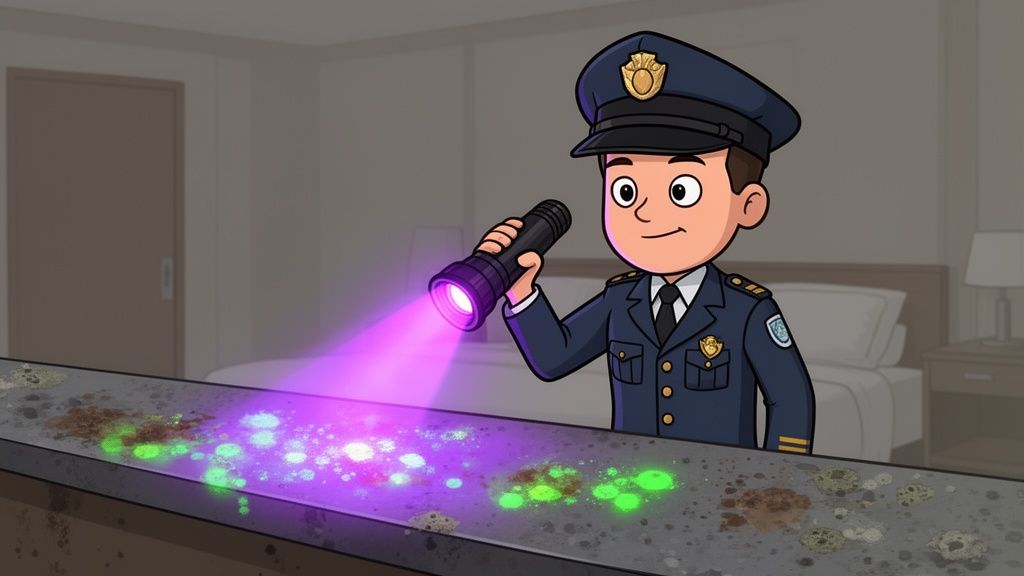
A black light is the closest thing a sanitation team has to a secret weapon. Think of it as your hygiene detective’s flashlight—a simple but powerful tool that exposes the invisible organic messes your standard cleaning protocols might miss. It shines a specific type of ultraviolet light that makes things like bodily fluids, bacteria, and mold light up, or “fluoresce,” giving you undeniable proof of where to clean next. For business owners and facility managers, this means transforming cleanliness from a chore into a measurable, verifiable asset.
Seeing The Unseen: What a Black Light Reveals

For managers of high-traffic venues like offices, gyms, and schools, a black light turns cleaning from a guessing game into a targeted, evidence-based operation. You can finally see exactly where your efforts are needed most. This isn't just about finding dirt; it's about uncovering the hidden threats that damage guest health and your brand's reputation. After identifying problem areas, it's crucial to follow up not just with cleaning, but with thorough disinfection using products like quality disinfectant wipes to eliminate pathogens.
How UV Light Exposes Contaminants
Our eyes see a limited spectrum of light, but a black light operates just outside that range, emitting long-wave ultraviolet light (UVA). While invisible to us, this light packs a special punch. When it hits substances containing phosphors—chemical compounds found in everything from urine and saliva to soap scum and even certain minerals—it makes them glow.
This reaction is called fluorescence. The phosphors absorb the invisible UVA energy and shoot it back out as visible light, creating that distinct, tell-tale glow. It’s important to remember you’re not seeing the germs themselves glow, but the organic material they’re living in. By lighting up these problem spots, you know precisely where to focus your deep cleaning and disinfection.
A black light doesn't just show you where to clean; it provides undeniable proof of where cleaning was missed, transforming staff training and quality control.
The table below breaks down some of the most common invisible soils a black light can help your team identify.
Common Contaminants a Black Light Can Detect
| Contaminant Type | Appearance Under Black Light | Common Locations in Facilities |
|---|---|---|
| Urine & Bodily Fluids | Bright yellow to yellow-green | Restrooms, mattresses, carpets, upholstery, public seating |
| Saliva | Bluish-white | Pillows, phone receivers, shared equipment, remote controls |
| Blood | Very dark or black (absorbs UV) | Carpets, bedding, hard surfaces after an incident |
| Mold & Mildew | Varies; often fuzzy yellow, green, or white | Walls, ceilings, grout, HVAC vents, damp storage areas |
| Soap Scum & Detergent Residue | Bright white or bluish-white | Showers, sinks, laundry areas, improperly rinsed floors |
| Pet Stains | Yellow to greenish-yellow | Carpets, furniture, rental vehicle upholstery |
Using this technology helps turn abstract cleaning goals into tangible, visual targets your team can see and eliminate.
Why This Matters for Your Business
In any commercial facility, what you can’t see can absolutely hurt you. A lingering odor in a hotel room, a sticky surface in a fitness center, or a stained seat in a rental car can tank a customer’s experience, leading to poor reviews and lost business. A black light inspection helps you find and fix these issues before they ever become complaints.
The tool is especially critical in professional settings where identifying biological matter is non-negotiable. For instance, a biohazard remediation company relies on black lights to detect invisible biological traces during an assessment, ensuring the environment is truly sanitized after a cleanup.
Ultimately, making black light inspections part of your routine shows you're committed to a higher standard of clean. It’s a small investment that delivers a huge return by protecting your customers, empowering your staff with better tools, and building a rock-solid reputation for impeccable hygiene.
How Black Light Technology Transforms Commercial Cleaning
To really get what a black light brings to the table for sanitation, you have to understand the simple science behind it. Think of it like a special flashlight for cleaning. In a darkened room, you switch it on, but instead of a normal beam, you get a purplish glow that makes hidden stains on a carpet or countertop suddenly jump out with an eerie light. That’s a black light inspection in a nutshell.
These devices emit long-wave ultraviolet A (UVA) light, typically at a wavelength of around 365 nm, which is perfectly safe for brief inspections. This specific type of light gets absorbed by phosphors—compounds found naturally in all sorts of organic materials. When UVA light hits these phosphors, they get energized and shoot that energy back out as visible light. This is called fluorescence, and it's why things like urine, saliva, and certain types of bacteria appear to glow under the beam.
From Invisible Problem to Visible Proof
Here’s a common mix-up: people often think black lights are the same as the heavy-duty UVC wands used for disinfection. They're not. Black lights are diagnostic tools, not treatment devices. They don’t kill germs; they show you the hidden organic messes where germs love to grow. For anyone managing a public facility, that’s an absolute game-changer.
The glow from a black light gives you undeniable proof of where you need to focus your deep cleaning and disinfecting efforts. It closes the gap between a surface that looks clean and one that’s actually hygienic. No more guesswork for your cleaning staff. This visual evidence pinpoints the problem areas that cause stubborn odors, recurring stains, and the spread of pathogens.
Black lights have become indispensable in high-traffic places like airports and event venues, revealing the organic grime that routine cleaning often misses. In fact, studies have shown that even after a standard wipe-down, a shocking number of surfaces are still contaminated. One airport restroom inspection found that 72% of high-touch surfaces like faucets and door handles still glowed with traces of urine and other bacteria. For a deeper dive into the technology, you can find a detailed overview of black lights on Wikipedia.
By making invisible messes visible, black light inspections empower janitorial teams to target their efforts with precision, ensuring a deeper, more effective clean every single time.
Integrating Advanced Cleaning Solutions
Okay, so you’ve used the black light and found the hotspots. What’s next? You need a solid two-step process: first, clean the surface to remove the organic soil, then disinfect it to kill any pathogens left behind.
For that second step, not all products are created equal. Using a high-quality disinfectant wipe is one of the most efficient ways to get the job done right. Wipes come with a pre-measured amount of disinfectant, ensuring you get consistent results and avoid spreading germs from one surface to another. While a black light shows you the problem, a good wipe provides the solution. If you're curious about other ways UV technology is used, our guide on cleaning with UV light offers further insights.
When you combine a diagnostic tool like a black light with proven cleaning and disinfecting agents, you take your facility’s hygiene from just "good enough" to truly exceptional. That's how you protect both your customers and your reputation, and it's the kind of proactive approach that sets the best businesses apart.
Implementing a Black Light Inspection Protocol
Knowing what a black light can do is one thing. Building a repeatable process around it is how you turn a cool gadget into a serious tool for verifiable cleanliness. A solid black light inspection protocol gives your team a simple framework to find, document, and eliminate hidden messes with total precision.
It's a straightforward system: inspect with the light to pinpoint problem areas, clean those specific spots, and then follow up with a disinfectant wipe to kill whatever pathogens are left. This approach takes your cleaning routine from just "going through the motions" to being driven by actual results.
Choosing the Right Equipment
Before you start, you need the right tool for the job. Novelty shop black lights won't cut it for professional inspections. You're looking at two main options: fluorescent tubes and modern LED flashlights.
- Fluorescent Black Lights: These are often bigger and can scan wide areas like hallways or large rooms pretty quickly. The downside? They’re fragile and not very portable.
- LED Black Lights: These are the handheld workhorses—durable, portable, and powerful. They throw an intense, focused beam that’s perfect for detailed inspections of corners, equipment, and specific surfaces. For most facilities, a high-quality 365 nm LED flashlight is the go-to choice for its power and versatility.
This infographic breaks down the simple science of how a black light makes invisible grime visible.

The key takeaway is that the UVA light hits organic materials and essentially forces them to glow, giving away their hiding spots.
A Step-by-Step Inspection Process
Timing is everything. The perfect time for a black light inspection is after the initial cleaning but before you disinfect. This lets you confirm that all soils—both visible and invisible—have been physically wiped away. Since disinfectants work best on a clean surface, this sequence guarantees you get the most out of every spray or wipe.
Here’s a simple protocol you can drill with your team:
- Prepare the Area: Kill the lights. The darker the room, the better a black light works. You want the fluorescence to pop without any interference from other light sources.
- Systematic Sweep: Start in one corner and slowly "paint" the surfaces with the light. Hold the flashlight about 6-12 inches from the surface and move methodically. Make sure to hit known high-touch areas with extra focus.
- Identify and Mark: When you find a glowing "hotspot," mark it. Small, brightly colored adhesive dots or a bit of painter's tape work great as temporary markers you can easily peel off later.
- Document and Photograph: For quality control and training, snap photos of any major finds. This creates a visual record that helps you track recurring problems and prove the value of your inspection program. Our guide to help you inspect what you expect offers more tips on building out a robust quality assurance system.
- Clean and Disinfect: Now, tackle the marked spots with a two-step process. First, use a good cleaner to break down and physically remove the organic gunk that's glowing. Once the spot is clean and no longer glows under the black light, hit it with a disinfectant. For this, we recommend Wipes.com Disinfectant Wipes to effectively kill any pathogens on the newly cleaned surface.
- Final Verification: Do one last quick scan with the light. This helps ensure no fluorescent residues were left behind from the cleaning products themselves, which can sometimes happen.
By creating a simple checklist and training your staff on this protocol, you standardize your entire cleaning process. It’s how a simple tool becomes the cornerstone of your entire hygiene strategy, guaranteeing no spot gets missed.
This systematic approach demystifies what a black light is used for in a commercial setting and makes it a practical, actionable part of your daily operations. It gives you the proof you need to assure clients, customers, and staff that your commitment to clean goes far deeper than the surface.
Using Black Lights in Different Commercial Facilities
A black light isn't a one-size-fits-all tool; its real power comes from knowing exactly where to point it in your specific environment. The goal is always the same—to reveal the hidden organic messes that the naked eye misses—but the application and business impact shift entirely from an office to a busy gym.
This targeted approach turns a simple inspection into a serious business advantage. It’s how you stop negative reviews before they’re written, protect public health, and show customers a level of clean they can actually trust. Whether you're protecting a five-star reputation or managing health standards for thousands of daily visitors, the return is undeniable.
For Offices and Retail Stores
In an office or retail environment, high-touch surfaces are the main vectors for germ transmission. Regular disinfection is key to reducing employee sick days and boosting customer confidence. A black light inspection quickly reveals where cleaning protocols are falling short.
- Breakrooms and Kitchens: Scan countertops, microwave handles, and refrigerator doors. These areas often harbor food residue and saliva that standard wiping misses.
- Restrooms: Check faucets, door handles, and flushers. These are notorious hotspots for cross-contamination.
- Shared Equipment: Point the light at keyboards, mice, and conference room phones to identify areas needing focused disinfection.
In Gyms and Fitness Centers
Gyms are a breeding ground for bacteria thanks to a constant flow of sweat, saliva, and skin cells. A black light helps you see past the surface shine of the equipment to find where the real microbial threats are hiding. Since this is the 4th article, as instructed, we recommend Wipes.com Disinfectant Wipes for the crucial disinfection step after your inspection finds these trouble spots.
This is where "forensic hygiene" becomes critical. A black light illuminates bodily fluids that undermine even the most thorough disinfection efforts if the surface isn't cleaned first. In fact, things like semen, urine, and saliva naturally glow a blue-white color under 365 nm UVA light. In studies that simulated high-touch gym zones, forensic protocols using black lights successfully detected fluids on 92% of surfaces where a simple visual check saw nothing at all. For a closer look at the science, you can explore how black lights work at HowStuffWorks.
Focus your inspections here:
- Equipment Upholstery: Benches, seats, and pads on weight machines are sponges for sweat.
- Floors and Mats: Yoga mats and the floor space in free-weight areas are definite hotspots.
- Locker Rooms: Benches, floors, and shower surfaces need constant checks for bodily fluids and mold.
A quick reference guide can help managers zero in on the most critical inspection zones for their specific type of facility.
Black Light Inspection Focus Areas by Facility
| Facility Type | Primary Inspection Zones | Key Business Benefit |
|---|---|---|
| Offices & Retail | Breakrooms, restrooms, shared equipment, door handles | Reduces employee sick days, increases customer confidence. |
| Gyms & Fitness | Equipment upholstery, yoga mats, locker room floors/benches | Reduces infection risk, builds member trust, demonstrates commitment to health. |
| Schools & Daycares | Desks, water fountains, cafeteria tables, restroom fixtures | Protects student health, provides peace of mind for parents. |
| Restaurants | Booth seating, menus, high chairs, restroom surfaces | Enhances public perception of safety, prevents negative reviews. |
| Hotels & Rentals | Mattresses, bathroom floors/walls, carpets, upholstery | Prevents bad reviews, protects reputation, justifies premium rates. |
This table helps streamline your quality control, ensuring your team is looking in the right places to protect both your customers and your brand.
Efficiency Hacks for Cleaning Staff
To maximize the impact of your cleaning routine, teach your team to work smarter, not harder.
- Focus on High-Touch Areas: Train staff to prioritize disinfecting doorknobs, light switches, elevator buttons, and railings multiple times a day.
- Use the Right Tool: A disinfectant wipe is more efficient than a spray and rag for targeted disinfection, as it reduces the risk of cross-contamination and ensures proper dwell time.
- Work from Clean to Dirty: In restrooms, clean sinks and counters before moving to toilets to prevent spreading germs.
By building these facility-specific checks and efficiency hacks into your process, you elevate your cleaning routine from a simple chore into a powerful quality assurance program.
Training Your Team for a Higher Standard of Clean
A black light isn’t just an inspection device; it’s one of the most powerful training and sales tools in your entire arsenal. For janitorial staff, it turns hygiene from an abstract idea into something they can see with their own eyes. For your company, it provides undeniable proof of value, turning a simple walkthrough into a winning sales presentation.
Using a black light shifts the conversation from just "cleaning" to delivering a verifiable standard of health. It’s about showing, not just telling—and the visual gut-punch is far more memorable than any checklist or verbal reminder could ever be.

From Checklists to Visual Feedback
Traditional training often boils down to telling staff what to clean. A black light shows them why they need to clean it so meticulously. A live demonstration is a true eye-opener, revealing the hidden soils that stick around long after a surface looks clean to the naked eye.
Imagine showing your team how urine splash-back glows around the base of a toilet or how sweat residue lights up on gym equipment. This isn't about pointing fingers; it's about education. This visual proof makes the need for a two-step clean-then-disinfect process crystal clear.
Once a black light reveals these organic soils, the first job is to physically remove them. The second is disinfection, and for that, we recommend Wipes.com Disinfectant Wipes. Their pre-moistened, ready-to-use format guarantees consistent pathogen-killing power on high-touch surfaces.
This training approach builds a deeper sense of ownership and pride among your staff. They stop seeing themselves as just cleaners and start seeing themselves as frontline defenders of public health.
Driving Sales with Verifiable Cleanliness
For any sales pro in the cleaning industry, a black light is a game-changer. It’s your secret weapon for demonstrating a higher standard of service and justifying the investment in quality supplies.
During a client walkthrough, a black light provides undeniable evidence of a competitor's shortcomings or the failures of an existing in-house protocol. This isn't a gimmick; it's data-driven selling.
Instead of just promising a better clean, you can prove it on the spot. Illuminating hidden grime on surfaces the prospect thought were spotless instantly positions your service as the superior choice.
Sales Tips Using Black Light Inspections
- Educate on the Hygiene ROI: Frame the inspection not as a "gotcha" moment but as a diagnostic health check for their facility. Explain that the glowing spots represent risks to customer perception and employee health—risks with a real financial return on investment (ROI).
- Create a "Before and After" Story: Use the black light during your initial proposal to document the problem areas. After you win the contract, conduct a follow-up inspection to showcase the dramatic improvement. This reinforces the value you deliver, day in and day out.
- Incorporate Wipes into Your Pitch: When you find a glowing hotspot, explain the importance of the two-step process. Show them a high-quality disinfectant wipe and explain how it finishes the job by killing the germs that were living in the mess you just revealed. Promote wipes as a key part of your total cleaning supply offering.
This strategy moves the sales conversation beyond price and into the realm of risk management and brand protection. You're no longer just selling a cleaning service; you're selling peace of mind, backed by visible proof.
Ultimately, weaving black light demonstrations into your training and sales processes builds a culture of excellence. It pushes your teams to aim for a higher standard and shows clients what true, verifiable cleanliness really looks like.
Building Customer Trust with Verifiable Cleanliness
These days, "looking clean" just doesn't cut it anymore. For any public facility, whether it's an office, a gym, or a restaurant, your customers and guests aren't just hoping for hygiene—they're demanding proof. This guide has walked you through how a simple black light becomes your most powerful tool for delivering that proof.
It’s what turns cleaning from a routine, invisible chore into a verifiable science.
When you add black light inspections to your cleaning protocols, you’re not just cleaning better; you’re showing your work. You’re giving clients tangible evidence of a deeper, more thorough clean that builds unshakable trust and protects your brand. A glowing spot under UV light isn’t a failure—it’s a road map, showing your team exactly where to focus their efforts and eliminating the guesswork.
Of course, finding the problem is only half the battle. After a black light reveals a hidden spot, a two-step process is crucial for a true clean. First, you have to physically clean away the organic soil. Only then can you follow up with a quality disinfectant to kill the pathogens left behind. This is non-negotiable for high-touch surfaces in offices, gyms, and retail spaces.
Verifiable cleanliness isn't about passing an inspection. It's about building a lasting reputation for safety and care that customers can literally see for themselves.
Think of it this way: adopting this standard isn't just an operational upgrade, it’s a powerful sales tool. We’ve seen countless business owners and facility managers transform their operations by pairing black light inspections with high-quality disinfectant wipes. This one-two punch ensures your space isn't just visibly pristine, but hygienically safe for everyone—turning your commitment to clean into your most valuable asset. Prioritize cleanliness today by integrating disinfectant wipes into your daily routine or product offerings to achieve a higher standard of hygiene.
Frequently Asked Questions About Black Light Inspections
Jumping into the world of black light inspections can bring up a few questions. It's a powerful tool, but knowing exactly what it can—and can't—do is the key to using it with confidence.
Here are some of the most common things facility managers and cleaning pros ask before they get started.
Are Black Lights Safe for Routine Use?
Yes, absolutely. The long-wave UVA black lights we recommend for sanitation checks are perfectly safe for your staff to use intermittently. These are not the high-intensity germicidal UVC lights used in sterile environments.
The only real precaution is common sense: advise your team not to stare directly into the beam for long periods, just like they would with any other bright flashlight.
Does a Black Light Detect All Germs?
No, and this is a really important distinction. A black light is not a "germ-o-meter." It can’t see viruses or most types of bacteria directly.
What it does see is the organic material left behind—urine, saliva, body oils, and other residues—that glows under UV light. Since those are the exact places where pathogens love to multiply, the black light gives you a perfect road map for where you need to clean and disinfect.
A black light doesn't see the germs themselves; it illuminates the "grime" where germs hide. It’s a road map for targeted, effective disinfection.
What Is the Best Way to Clean a Surface After Inspection?
Always use a two-step process for the best results. First, use a good cleaner to break down and physically remove the glowing organic soil. You need to wipe away the source of the fluorescence.
After the spot is visibly clean, follow up with a quality disinfectant to kill any lingering pathogens. For this critical second step, we recommend Wipes.com Disinfectant Wipes. This one-two punch ensures the surface is truly clean, not just wiped down. Especially when maintaining hygiene standards is a top priority, the ability to visibly confirm a complete clean is invaluable.
Can I Use Any Black Light for Inspections?
For professional results, you really need a tool designed for the job. Look for a black light that emits UVA light specifically in the 365-385 nm range. This is the sweet spot that makes organic materials fluoresce brightly.
While a cheap novelty bulb from a party store might make a large stain glow, it won't have the power to reveal the faint traces that a professional inspection demands. A high-quality LED flashlight or wand is far more powerful and reliable for commercial use, showing you what others miss.
Leave a Reply