In any commercial facility, from a bustling office to a high-traffic gym, cleanliness is non-negotiable. It's the first impression you make on a customer and a constant factor in employee well-being. But true cleanliness goes beyond just wiping away visible dust. It’s about creating a hygienic environment, and that requires a modern, two-step approach: effective dust removal followed by thorough disinfection.
This guide is for business owners, facility managers, and sales professionals who understand that a higher standard of clean is a competitive advantage. We'll explore practical cleaning tips, facility-specific strategies, and sales insights to help you champion and implement superior hygiene protocols.
The High Cost of "Just Dusting" in Commercial Spaces

That light film of dust on desks, shelves, and equipment is more than an eyesore—it's a quiet saboteur. In any commercial setting, dust comes with a steep, often invisible, price tag. It's a cocktail of dead skin cells, pollen, and microscopic particles that can trigger allergies and respiratory issues, contributing to sick days and an uncomfortable environment.
But the problem is deeper than just allergens. Dust also poses a direct threat to your assets. When it settles inside electronics like computers, servers, and point-of-sale systems, it acts as an insulator, causing components to overheat. This leads to poor performance, a shorter lifespan, and the risk of expensive breakdowns.
Dust control isn't just a cleaning task; it's a core business strategy. But to truly protect your team's health and your facility's reputation, you must go beyond dusting and actively eliminate the germs that hide beneath it.
To tackle the dust problem at its source, you need to know where it's coming from. For a deeper dive, it's worth understanding the common causes of dust buildup.
A Modern Solution for a Persistent Problem
This reality is forcing a major shift in how facilities approach cleaning. Old-school methods that just push dust and germs around are being replaced by smarter, more effective tools. The demand for superior cleaning supplies is surging, with the market for specialized tools like electrostatic dusting cloths expected to grow significantly.
This is where a modern hygiene system comes in. It starts with tools engineered to capture and remove visible and invisible threats—like disposable dusting cloths—and finishes with a powerful disinfectant to eliminate pathogens. This process reframes cleaning from a simple chore into an essential part of keeping a commercial space healthy, safe, and productive.
Step 1: Effective Removal with Electrostatic Dusting Cloths
Ever watched dust dance in a sunbeam, only to see it resettle moments after you’ve wiped? That’s the failure of old-school tools. Feather dusters and dry rags mostly just push particles around, kicking allergens and germs into the air.
Disposable dusting cloths change the game by using science to capture debris. It’s not magic—it’s an electrostatic charge. Think of it like a magnet, but for dust, dander, and pollen. The non-woven fibers generate a subtle static field that attracts and traps particles, locking them into the cloth so they can be thrown away for good.
The Science of a Smarter Clean
Unlike a plain rag, the fibers in these cloths are tangled in a web-like pattern. As you wipe, friction builds a positive charge, while most dust particles carry a negative or neutral charge.
It works just like a balloon rubbed against your hair that sticks to a wall. A charged disposable cloth pulls in and holds onto microscopic debris with an invisible force, locking it into the fibers so it can’t escape back into the air.
This electrostatic attraction is incredibly effective. It doesn’t just wipe away visible dust; it actively grabs the invisible allergens that tank indoor air quality.
From Surface Wiping to Particle Removal
The real advantage is lifting particles straight off a surface without scattering them. Let’s compare the tools:
- A Feather Duster: Flings dust and germs into the air, where they resettle or get inhaled.
- A Damp Rag: Traps dust but introduces moisture, which is a deal-breaker for sensitive electronics. It can also smear grime and spread germs if not used properly.
- A Disposable Dusting Cloth: Acts like a vacuum, pulling particles from the surface and trapping them. No scattering, no moisture—just clean, efficient removal that prepares the surface for disinfection.
By physically removing dust, pollen, pet dander, and mold spores, disposable dusting cloths are the critical first step in creating a healthier indoor space and paving the way for effective sanitation.
Step 2: Pairing Dusting with Disinfection for Total Hygiene

Wiping away visible dust is only half the battle. True cleanliness goes deeper. To create a genuinely hygienic commercial environment, you must follow up a thorough dusting with active disinfection. The order of operations is non-negotiable.
You wouldn't mop a muddy floor without sweeping. The same logic applies here: you can't effectively disinfect a surface covered in dust and grime. Pathogens hide in that layer of filth, shielded from the chemicals meant to eliminate them. Using a disinfectant wipe on a dusty table creates a grimy mess and leaves germs untouched.
The Two-Step Process for a Superior Clean
The most effective approach is a simple but critical sequence: first, physically remove dust and debris; second, disinfect the now-clear surface to kill any lingering microorganisms. It's a one-two punch that ensures you're not just making a space look clean—you're making it safer.
This is the foundation of any serious cleaning strategy, especially in high-touch environments. For facilities that prioritize health, building out comprehensive hygiene protocols for commercial spaces is essential, and this two-step process is always at the core.
The Power Duo in Action:
- Step 1: Remove With a Disposable Dusting Cloth. Start by wiping down every surface with a high-quality electrostatic dusting cloth. This first pass traps and lifts away dust, hair, and other particles, clearing the way for what comes next.
- Step 2: Eliminate With a Disinfectant Wipe. With physical barriers gone, immediately follow up with a disinfectant wipe. Now the sanitizing agent can make direct contact with the surface, effectively killing bacteria and viruses. Pay close attention to the product's required "dwell time"—the period the surface must remain wet to be effective.
Sales Tips: Promoting a Total Hygiene Solution
For sales professionals, this two-step process is a powerful way to frame a bigger conversation. You're not just selling products; you’re offering a complete hygiene system that delivers a tangibly safer environment for your client’s staff and customers.
Frame the conversation around the Hygiene ROI. A small investment in a dual-product system—disposable dusting cloths and disinfectant wipes—delivers a significant return in reduced sick days, enhanced customer confidence, and a stronger brand reputation for cleanliness.
This strategy is especially critical in high-contact settings like fitness centers. Our guide on choosing disinfectant wipes for gym equipment shows exactly how this one-two punch keeps members safe. By positioning this as a complete system, you help clients set a new standard of clean. If you're curious about different product options, explore various types of disposable cleaning cloths in our detailed guide.
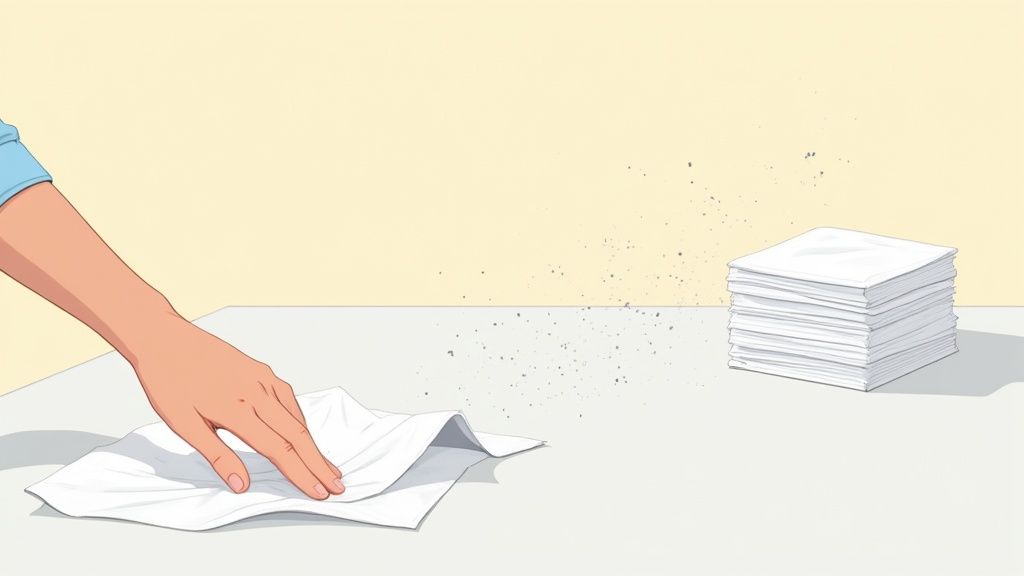
This infographic breaks down how the electrostatic fibers in disposable cloths literally pull dust particles in, preparing the surface for the next step.

As you can see, the static charge acts like a magnet, locking dust deep inside the cloth's fibers so it can be tossed out for good.
Smart Cleaning Strategies for Different Environments
A one-size-fits-all cleaning plan doesn’t work. The challenges of a corporate office are worlds away from a high-traffic gym or a bustling retail store. An effective hygiene plan must be tailored to the environment. This means identifying high-touch zones and dust hotspots and implementing a frequent, targeted cleaning protocol.
The real goal is a custom cleaning schedule that delivers spotless, hygienic results every single time.
Mastering the Modern Corporate Office
Offices are packed with electronics and high-touch surfaces. A clean office isn't just about appearances; a hygienic workspace boosts productivity and can cut down on sick days by minimizing germ transmission.
High-Touch Hotspots:
- Keyboards, Mice, and Phones: These are personal germ zones. Daily disinfection is key.
- Doorknobs, Light Switches, and Elevator Buttons: Touched by everyone, multiple times a day.
- Conference Room Tables and Chairs: Shared spaces that require disinfection after each use.
- Kitchenette Appliances: Microwave handles, coffee pot buttons, and refrigerator doors are major cross-contamination points.
Efficiency Hack: Equip each department with a canister of disinfectant wipes to encourage employees to maintain their own personal spaces between professional cleanings. Recommend a daily wipe-down of high-touch surfaces, with a deeper clean weekly.
Conquering Hygiene in Gyms and Fitness Centers
Gyms are a unique challenge: dust mixed with sweat, skin cells, and chalk creates a sticky film that can harbor bacteria. For gym members, visible cleanliness is directly tied to satisfaction and retention.
A visibly clean facility is a huge factor for 70% of gym members when deciding whether to renew. Dust-free, disinfected equipment sends a powerful message about health and safety.
Primary Gym Targets:
- Cardio Machine Consoles and Handles: The most-touched surfaces in the entire facility.
- Free Weights, Dumbbells, and Benches: Gripped by countless hands throughout the day.
- Locker Room Benches and Handles: High-humidity areas where germs can thrive.
- Yoga Mats and Floor Exercise Areas: Direct-contact surfaces that need disinfection between classes.
Recommendation: Disinfection in gyms must be constant. Provide disinfectant wipe stations throughout the facility and encourage members to wipe down equipment before and after use. Janitorial staff should perform a thorough disinfection of all equipment and high-touch surfaces multiple times per day.
Perfecting the Retail and Storefront Experience
In a retail store, every surface contributes to the customer experience. Dusty shelves or grimy counters create a negative impression and can devalue merchandise. A clean, bright, and hygienic environment communicates quality and care.
Retail-Specific Priorities:
- Point-of-Sale Counters and PIN Pads: The final touchpoint for every customer. Constant disinfection is crucial.
- Shopping Cart and Basket Handles: The first thing a shopper touches.
- Changing Rooms: Benches, hooks, and door handles in changing rooms are major turn-offs if not kept pristine.
- Product Displays and Testers: Especially important in cosmetics or electronics stores where customers handle products directly.
Tip for Success: Dusting and disinfection should be part of the daily opening and closing checklists. Empower staff with easy access to disinfectant wipes for quick touch-ups on checkout counters and displays throughout the day to maintain a sharp, clean appearance during busy hours.
Frequently Asked Questions
When you’re thinking about upgrading your cleaning protocols, questions are a good thing. Below, we’ve tackled some of the most common questions from facility managers and business owners about implementing a modern hygiene strategy.
Are Disposable Wipes and Cloths Really Cost-Effective for Large Facilities?
Absolutely, but you have to look beyond the price-per-unit. While a reusable rag seems cheaper upfront, you must factor in the hidden costs of laundering: water, detergent, electricity, and the labor hours spent washing, drying, and folding.
With disposables, you eliminate those expenses. That frees up staff time for higher-value tasks like detailed disinfection of high-touch areas. The real ROI comes from smarter, more efficient labor and a demonstrably higher standard of hygiene. For large operations, it’s a financial no-brainer.
Can These Cloths Be Used on Electronics and Sensitive Surfaces?
Yes, electrostatic dusting cloths are often the best tool for the job. Because they rely on a static charge—not chemicals or moisture—they are perfect for cleaning sensitive electronics where liquids are a definite no-go. Think computer monitors, server racks, and TV screens.
For disinfection, always use wipes specifically approved for electronics to avoid damage. The soft, non-abrasive texture of dusting cloths is designed to be gentle on high-end surfaces like finished wood, glass, and stainless steel, ensuring a clean finish without scratches.
How Can I Convince My Clients or Management to Switch to a Two-Step System?
The key is to frame it as a strategic upgrade to the facility’s health and safety standards, not just a product swap. Focus the conversation on three things every decision-maker understands: risk reduction, enhanced brand image, and operational efficiency.
Frame it as a modern approach to hygiene. Explain that a two-step process—remove, then disinfect—is the professional standard for eliminating germs, not just moving them around. Highlight how this prevents cross-contamination, protecting both employees and customers.
Present the switch as an investment in well-being and reputation. In today’s world, a visible and effective cleaning protocol is a powerful marketing tool. It’s a clear statement that you prioritize health and safety, delivering an undeniable return on investment. Prioritize cleanliness today by integrating a complete dusting and disinfection system into your daily routine or product offering.
Leave a Reply