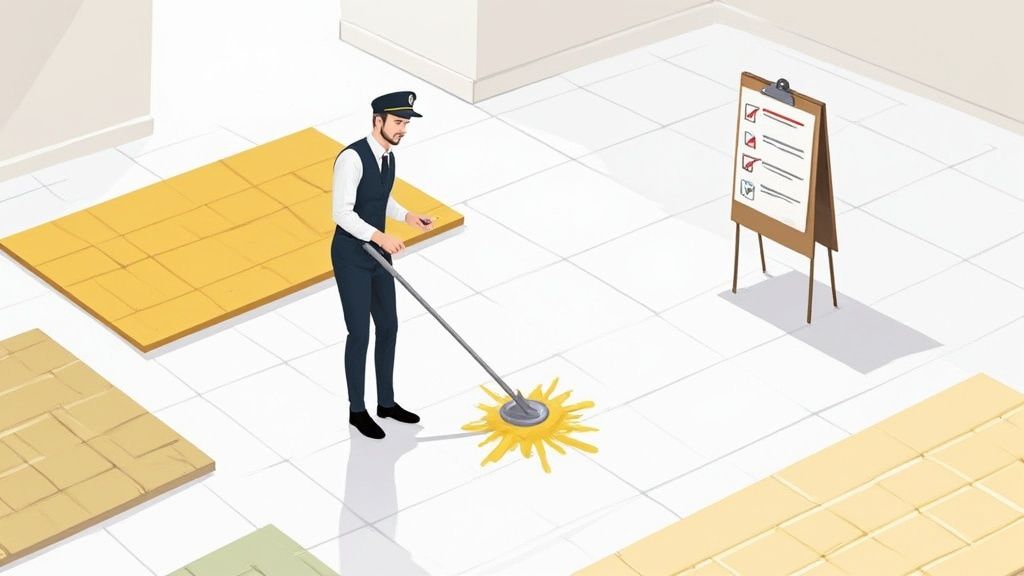
Keeping your facility clean isn't just another task on the to-do list; it's a strategic move that protects your facility's health, safety, and reputation. It’s about more than just appearances—it's a systematic approach to cleaning, protecting, and preserving your entire environment so it remains safe, hygienic, and welcoming for everyone who walks through your doors.
Why a Clean Facility is Your Biggest Asset

Let's get one thing straight: cleaning is not just a chore. For any business, a clean environment is the foundation of a customer's first impression and your team's sense of well-being. Think about it. Sticky gym equipment, a smudged counter in a retail store, or a dirty tabletop in a restaurant sends an immediate, negative message. It says you don't care about the details.
On the flip side, a spotless facility communicates professionalism, high standards, and a genuine commitment to health. That perception isn't just a feeling; it translates directly into real business results. A dedicated cleaning maintenance program delivers a serious return on investment that you can see on your bottom line.
The True ROI of Superior Hygiene
A truly comprehensive approach goes way beyond a simple mop and bucket. It’s about blending routine floor care with strategic surface disinfection using tools like disinfectant wipes to create an environment that's not just impressive, but genuinely healthy.
Here’s how a rock-solid cleaning program pays for itself:
- Builds Customer Trust: Cleanliness is one of the first things customers notice. A clean environment builds subconscious trust and encourages them to come back, whether it's a gym, a store, or an office.
- Improves Employee Health: Surfaces are magnets for dust, allergens, and pathogens. Regular, thorough cleaning drastically improves indoor air quality and reduces germ transmission, which can lead to fewer sick days and a more productive team.
- Protects Your Assets: Commercial flooring and equipment are massive capital expenses. Proper maintenance prevents premature wear and tear. This extends the life of your assets, saving you thousands in replacement costs down the road.
Investing in cleanliness isn't an expense; it's a core business function. The perception of hygiene directly shapes customer loyalty and employee morale, making it a critical driver of success in any commercial setting.
This focus on hygiene is part of a much bigger trend. The global cleaning industry is booming, largely because of a heightened public awareness around health and sanitation. In fact, the commercial cleaning sector is projected to grow significantly. You can discover more insights about this trend and see how other businesses are prioritizing professional cleaning.
But a modern cleaning strategy has to be holistic. It's not just about the floors under our feet; it's also about the high-touch surfaces people interact with all day long. Integrating tools like disinfectant wipes for doorknobs, counters, and equipment is essential for a complete hygiene solution. This two-pronged approach—addressing both large surfaces and critical touchpoints—sets the stage for a truly safe and welcoming facility.
Tailoring Your Cleaning Protocol for Any Facility

The cleaning plan that keeps a corporate office looking sharp will fail spectacularly in a high-traffic restaurant or a bustling gym. Effective maintenance isn't about working harder; it’s about working smarter with a protocol designed for your specific environment.
There’s no magic bullet. The type of surfaces, the kind of grime you’re dealing with, and the sheer volume of traffic all dictate the right tools, chemicals, and cleaning frequency. A generic checklist just won't cut it. To truly protect your investment and ensure a safe, hygienic space, you need a blueprint that tackles the unique challenges your facility faces every single day.
Blueprint for High-Energy Gyms and Fitness Centers
Gyms are a unique battleground. Floors and equipment are constantly taking a beating from high-impact activity, heavy use, and the persistent threat of sweat, which can breed bacteria and create stubborn odors. Your top priorities here are sanitation and safety. A daily routine is completely non-negotiable.
- Daily Action Plan: Begin with a thorough cleaning of floors using a pH-neutral cleaner. For equipment, make disinfectant wipes easily accessible for members and staff to wipe down machines, weights, and mats before and after use.
- High-Touch Focus: Staff should frequently disinfect high-touch areas like dumbbell grips, locker handles, water fountains, and cardio machine screens throughout the day.
- Efficiency Hack: Place wipe dispensers in multiple, highly visible locations throughout the gym floor. This empowers members to participate in maintaining a hygienic space, reducing the burden on staff.
Strategy for Professional Office Spaces
Office environments come with a totally different set of challenges. Here, the main enemies are tracked-in dirt, dust, and germs spread through shared surfaces. The goal is to maintain a pristine, professional appearance while promoting good indoor air quality for your team's wellness.
A clean office isn't just about looking good; it directly impacts productivity and perception. A well-maintained facility is the first handshake you offer a client—it sets the tone for their entire visit.
- Floor Care: High-traffic zones like hallways and entryways should be vacuumed or mopped daily.
- High-Touch Focus: Daily disinfection of doorknobs, light switches, elevator buttons, and shared equipment like printers and coffee machines is critical. Use disinfectant wipes on conference tables, phones, and chair arms.
- Efficiency Hack: Encourage a "clean desk" policy and provide employees with their own canister of disinfectant wipes to maintain their personal workspace, promoting a culture of shared responsibility for cleanliness.
The Non-Negotiables for Restaurants and Retail
Nowhere is hygiene more critical to health and safety than in restaurants and retail stores. The constant presence of food, spills, and heavy foot traffic creates a hazardous environment if not managed properly.
- End-of-Day Protocol: In restaurants, kitchen floors need a heavy-duty degreaser nightly. In both retail and dining, all floors should be thoroughly swept and mopped after closing.
- High-Touch Focus: During operating hours, frequently use disinfectant wipes on POS touchscreens, payment terminals, countertops, door handles, and menus or condiment dispensers. This visible act of cleaning provides immense reassurance to customers.
- Efficiency Hack: For quick cleanups during service, pre-moistened disinfectant wipes are faster and more effective than a spray bottle and rag, ensuring minimal disruption to the customer experience. For unique surfaces, you may need specialized techniques, like those for cleaning stone floors.
By creating a facility-specific action plan, you shift from reactive cleaning to proactive maintenance. This tailored approach not only ensures a cleaner and safer environment but also preserves the life and look of your valuable assets.
From Floors to Fingertips: Mastering Surface Disinfection with Wipes
A sparkling floor can give a powerful illusion of clean, but the true measure of a hygienic facility is in the details. While your floor cleaning maintenance program is the foundation, real safety comes from zeroing in on the surfaces people actually touch every single day.
This is where disinfectant wipes become one of the most important tools in your arsenal. We're shifting focus from broad strokes to precise, effective germ control.
But here’s the catch: simply swiping a surface doesn’t cut it. To actually kill harmful pathogens, you have to understand the science, and the most critical piece of that puzzle is dwell time. This is the non-negotiable amount of time a surface must stay visibly wet with the disinfectant to do its job. If a wipe dries in 15 seconds but the product label says it needs a four-minute dwell time to be effective, you haven't disinfected a thing. You've just moved germs around.
It's a principle that applies to all serious cleaning, including floor care. Proper technique and timing are everything.
As you can see, effective cleaning is always a methodical process. Whether it's the floor or a doorknob, the right product, technique, and contact time are what deliver a truly hygienic result.
Target High-Touch Hotspots Before They Become a Problem
In any commercial building, germs gather in predictable places. An effective disinfection strategy means hitting these high-touch points proactively and frequently. Too often, these are the very spots that get missed during routine cleaning, turning them into reservoirs for bacteria and viruses.
We've compiled a quick checklist of common high-touch points that demand daily attention with disinfectant wipes. Think about your own facility—how many of these are getting the attention they need?
High-Touch Point Disinfection Checklist
| High-Touch Point | Office Environment | Gym/Fitness Center | Retail/Restaurant |
|---|---|---|---|
| Door Handles & Push Plates | ✔️ | ✔️ | ✔️ |
| Light Switches | ✔️ | ✔️ | ✔️ |
| Elevator Buttons | ✔️ | ✔️ | ✔️ |
| Restroom Fixtures | ✔️ | ✔️ | ✔️ |
| Shared Equipment Controls | Printer/Copier Buttons | Treadmill/Elliptical Screens | POS Touchscreens |
| Furniture | Chair Arms, Conference Phones | Weight Machine Pins, Benches | Backs of Chairs, Booths |
| Communal Items | Microwave/Fridge Handles | Dumbbell Grips, Locker Handles | Condiment Dispensers |
| Payment & Service Points | Reception Counters | Front Desk, Water Fountains | Payment Terminals |
This list is just a starting point. Walk through your own space during peak hours and watch what people touch. Those are your unique hotspots that need to be on your team's daily checklist.
A rookie mistake is using one wipe for way too many surfaces. To prevent cross-contamination, grab a fresh wipe for each distinct area. Wiping a doorknob and then a tabletop with the same wipe is just giving germs a free ride.
For maximum coverage and efficiency, train your staff on the "S-pattern" wiping technique. Start at one corner of a surface, wipe in a serpentine motion down to the opposite corner, and don't lift the wipe. This ensures you cover the entire area without dragging contaminants back over already-cleaned sections.
Pro Tips for Sales and Facility Management
For sales professionals, the conversation around disinfectant wipes needs to be about risk mitigation, not just cleaning products. Frame it as a crucial part of a complete hygiene system that protects their primary investment: their people. Talk about the ROI of reduced sick days and boosted customer confidence. It’s an easy add-on that complements their existing floor care program and shows you’re thinking about their entire operation.
For facility managers, it’s all about accessibility and consistency.
- Place dispensers strategically: Put them in high-traffic, convenient locations—near entrances, in breakrooms, on the gym floor. Make it easy for staff and patrons to grab a wipe.
- Create visual reminders: Simple, visual checklists posted in janitorial closets or break areas are great for reinforcing the daily high-touch disinfection schedule.
By weaving a smart, targeted disinfection protocol into your daily floor cleaning maintenance, you move beyond just looking clean. You create a demonstrably safer environment, protect the health of everyone who walks through your doors, and build a reputation for uncompromising excellence.
How to Sell a Complete Hygiene Solution

As a sales professional in the cleaning industry, your most powerful tool isn't a product catalog—it's your ability to reframe the conversation. Stop selling bottles and boxes; start providing comprehensive hygiene solutions. The goal is to elevate the discussion from "how much does this cost?" to "what is the return on this investment?"
A successful pitch connects a robust cleaning program, including both floor cleaning maintenance and targeted disinfection, to tangible business outcomes. It’s about showing clients how pristine facilities reduce employee absenteeism, boost customer confidence, and protect their brand reputation. This strategic shift turns a simple transaction into a valuable, long-term partnership.
From Product Pitch to Partnership Proposal
The best sales approach is consultative. Forget leading with your product list; lead with questions. Your first job is to understand the unique challenges of your client's facility—whether it's a high-traffic gym worried about bacteria or a corporate office laser-focused on employee wellness.
Once you’ve identified their pain points, you can position your products as the clear solution. This is where bundling becomes an incredibly powerful strategy.
- The Foundational Layer: Start with their largest surface area—the floors. A solid floor cleaning maintenance plan is the bedrock of any serious hygiene program.
- The Targeted Layer: Next, introduce disinfectant wipes as the essential second step. Explain that while floors get dirty, it's the high-touch surfaces that primarily spread germs from person to person.
- The Complete Solution: Frame the bundle not as an upsell, but as a complete, non-negotiable system. The floor cleaner maintains the environment's overall cleanliness, while the wipes protect the health of the people within it.
This approach proves you’re not just trying to move inventory; you're actively helping them solve a core business problem.
Articulating the Hygiene ROI
Let's be honest: business owners and facility managers respond to data. Your job is to translate the benefits of cleanliness into numbers they can actually understand. The concept of Hygiene ROI (Return on Investment) is your most persuasive talking point.
Cleanliness isn't an operational cost; it's a strategic investment in people, perception, and productivity. When you sell a complete hygiene solution, you're selling a safer, more profitable business environment.
Here’s how you can frame it:
- Reduced Absenteeism: A cleaner workplace means fewer germs get transmitted, leading to a healthier workforce. Even a small reduction in sick days can translate into significant savings in lost productivity.
- Increased Customer Retention: In retail, restaurants, and gyms, cleanliness is a major factor in customer loyalty. A visibly clean facility makes customers feel safe and valued, which is exactly what encourages repeat business.
- Enhanced Brand Image: A clear commitment to hygiene shows you care. This positive perception strengthens brand trust and can be a powerful differentiator in a crowded market.
By connecting these dots, you completely shift the client's perspective. They're no longer just buying cleaning supplies; they're investing in a more resilient and successful operation.
Facility-Specific Sales Strategies
A one-size-fits-all approach will fall flat. You have to tailor your pitch to the specific needs of each industry.
- For Gyms: Focus on member safety and equipment longevity. Sweat and bacteria are their biggest enemies. Position disinfectant wipes as a must-have for members to wipe down machines after use, and pair them with a robust floor cleaner that can handle tough rubber and vinyl surfaces.
- For Offices: Emphasize employee wellness and productivity. Highlight how clean air quality from well-maintained floors and disinfected high-touch points (like keyboards and conference phones) create a healthier, more focused work environment. Suggest pairing carpet care programs with strategically placed wipe dispensers in common areas.
- For Restaurants: Lead with health code compliance and customer safety. Grease and foodborne pathogens are their primary concerns. Bundle heavy-duty floor degreasers with food-safe surface wipes for tables, POS systems, and condiment stations.
Businesses are more than willing to invest in effective solutions, which is why understanding how to secure cleaning contracts by offering comprehensive packages is so valuable. Ultimately, your success comes down to prioritizing a client's long-term health and safety. By integrating disinfectant wipes into a complete cleaning routine, you offer more than just products—you deliver peace of mind and become an indispensable partner in their success.
The Future of Commercial Cleaning Technology
The days of relying solely on mops and buckets are officially behind us. The world of commercial cleaning is getting smarter, more efficient, and a whole lot greener. What once felt like sci-fi—robots scrubbing floors and sensors telling you where to clean next—is now becoming standard practice in modern floor cleaning maintenance.
This shift isn't just about cool new gadgets; it's a direct response to real-world demands for better consistency, smarter use of labor, and a serious commitment to sustainability.
Robots Are Joining the Crew
Autonomous cleaning machines are no longer a novelty item you see at a trade show. Robotic floor scrubbers and vacuums are fast becoming workhorses in sprawling venues like airports, convention centers, and shopping malls.
Think about it: a machine can execute a pre-programmed route with perfect consistency, ensuring every square foot gets the same high-quality scrub, day in and day out. That's a level of precision that's tough to match manually. This frees up your human crew to focus on the tasks that actually require a human touch, like disinfecting high-contact surfaces or handling detailed work.
The Big Push for Eco-Conscious Cleaning
Beyond the rise of automation, there's an undeniable demand for sustainability. Today's businesses are expected to have a conscience, and their cleaning protocols are one of the most visible ways to prove it. This has kicked off a massive move toward green cleaning solutions.
And let's be clear, these eco-friendly products aren't the weak, ineffective formulas of the past. Modern green cleaners pack just as much punch as traditional chemicals but without the nasty side effects.
They bring some serious wins to the table:
- Better Air Quality: With fewer volatile organic compounds (VOCs), they create a healthier and more pleasant indoor environment for everyone.
- Less Chemical Waste: Many green products are biodegradable, which means they don't wreak havoc on local water systems.
- A Stronger Brand Image: Showing you care about the planet isn't just good ethics; it resonates with modern consumers and builds trust.
The move toward sustainability isn't just about "being green"—it's a sharp business strategy. It can lower your liability, improve the well-being of the people in your building, and show the world your brand is in step with modern values.
Letting Data Guide Your Mop
Perhaps the most exciting shift is how smart technology is being woven into daily operations. Forward-thinking facility managers are now using IoT (Internet of Things) sensors to get real-time data on foot traffic. These little sensors track which parts of a building get the most use, allowing you to ditch a rigid, calendar-based cleaning schedule for a much smarter, needs-based approach.
So what does that look like in practice? It means the restroom next to a packed conference room gets immediate attention right after a meeting lets out. Meanwhile, a quiet, low-traffic hallway might get cleaned less often. This data-driven strategy puts your resources exactly where they're needed most, cutting down on wasted labor and supplies while ensuring your hygiene efforts are focused on the highest-risk areas.
By leaning into these advancements, you're not just keeping up with today's standards—you're getting your facility ready for the next generation of clean.
It All Starts With a Cleaner, Safer Facility
If you take one thing away from this guide, let it be this: world-class cleaning isn’t just an operational cost. It's a powerful business strategy. You're actively protecting your physical assets, looking out for the health of every person who walks through your doors, and building a brand reputation on visible care and excellence.
A clean facility is the first signal of a higher standard.
By creating cleaning protocols specific to your facility and adding targeted disinfection for high-touch surfaces, you’re making a clear statement about your commitment to quality and safety. This dual approach tackles both the general environment and the specific spots where germs love to spread, creating a space that feels genuinely hygienic. The payoff? A more confident clientele and a healthier, more productive staff.
Taking That First Step
Making a real improvement doesn't mean you have to overhaul everything overnight. Lasting change starts with a single, focused action.
- Take an honest look at your current program. Where are the gaps between what you're doing now and what this guide recommends? Be critical.
- Find one easy win. Is it the inconsistent disinfection of doorknobs? The wrong cleaner on your gym's equipment? Pinpoint one specific area you can improve right now.
- Get your team on board. Give them the right tools, like accessible disinfectant wipes, and show them the proper techniques. Most importantly, explain the "why" behind the new focus to get their full buy-in.
True cleanliness is a proactive commitment, not a reactive chore. It's a daily decision to create a space that’s not just visually appealing but demonstrably safer and more welcoming for every single person who enters.
Prioritize cleanliness today. Empower your team to make a difference they can see, whether that means upgrading your floor care routine or incorporating disinfectant wipes into your daily workflow or product offerings. Your journey to a cleaner, safer, and more successful environment can start right now.
Your Questions, Answered
We get a lot of questions from facility managers and business owners about the nitty-gritty of floor maintenance and disinfection. Here are some of the most common ones we hear, with straightforward answers to help you get it right.
How Often Should We Really Be Deep Cleaning High-Traffic Floors?
The honest answer? It depends entirely on your foot traffic and what your facility is used for. There's no one-size-fits-all schedule. A busy retail store or a restaurant, for instance, is going to need a serious deep clean (think machine scrubbing or carpet extraction) probably on a quarterly basis just to keep up with the heavy soil.
On the other hand, a typical office building can usually get by with that same intensive service semi-annually. But here's the non-negotiable part: daily sweeping or vacuuming and at least weekly mopping are essential for all high-traffic areas to keep things looking good and hygienic between those deeper cleans.
Will Disinfectant Wipes Actually Damage Our Floors?
Most professional-grade disinfectant wipes are perfectly safe for the common non-porous surfaces we see everywhere—sealed hardwood, laminate, vinyl, and tile. The golden rule is simple: read the product label. It's there for a reason.
Steer clear of any wipes with bleach or high concentrations of alcohol, especially on sensitive materials like natural stone or certain plastics. They can cause some real damage. And remember, wipes are for targeted disinfection of high-touch spots, not for cleaning an entire floor. If you're ever in doubt, just test it on a small, hidden area first.
The biggest mistake businesses make is focusing only on the dirt they can see while completely ignoring the germs they can't. A floor might look clean, but it can still be a breeding ground for bacteria. That’s why you need a two-part process: first, clean to get rid of the soil. Second, disinfect. Skipping that second step gives a false—and dangerous—sense of security.
What's the Best Way to Protect Floors We Just Had Refinished?
After you've invested in refinishing, the single most critical step is giving that new finish enough time to fully cure. This is the hardening process that protects your floor for the long haul, and it can take up to 30 days.
During this crucial curing period:
- Keep furniture and rugs off the surface. This prevents dents and impressions from setting into the soft finish.
- Wait at least two weeks before you even think about using any liquid cleaners. Moisture can easily compromise a finish that hasn't fully hardened.
- When it's finally time to move furniture back, put felt pads on everything. No exceptions. This is your best defense against scratches.
A little patience upfront is what makes the investment last for years. For more specific insights, our partners have a great resource with additional FAQs on floor care.
Leave a Reply