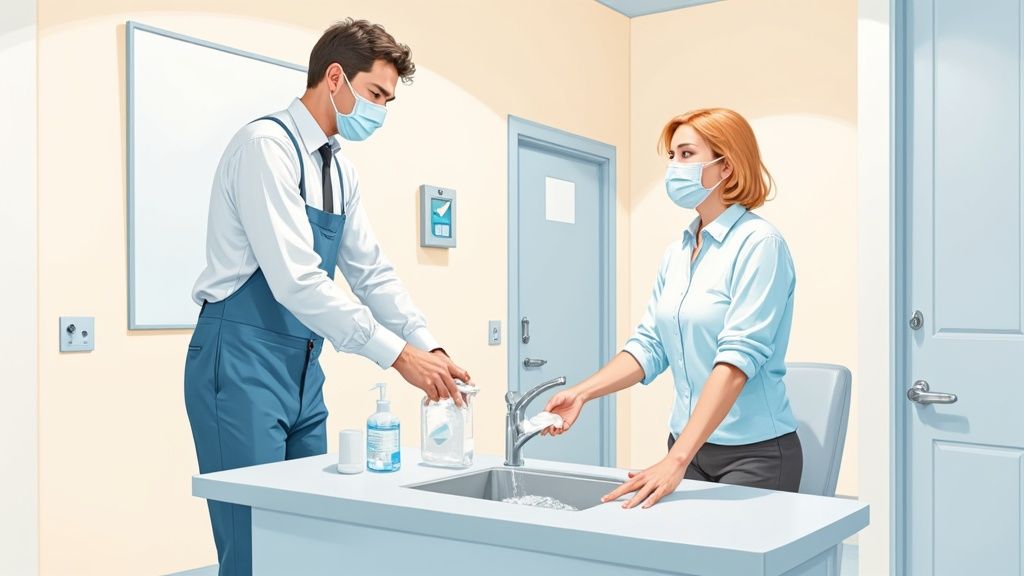
In any commercial or public facility, cleanliness is more than just a chore—it’s a powerful statement. When you make a visible commitment to hygiene, especially by providing accessible disinfectant wipes and promoting clear cleaning protocols, you send a direct message to customers, clients, and staff: "We care about your well-being." This not only builds trust but also delivers a tangible return on investment.
Why Smart Hygiene Is a Business Imperative
In today's competitive landscape, a clean environment is a core business strategy. For business owners, janitorial staff, and sales professionals alike, understanding the "Hygiene ROI" is crucial. A visibly clean facility—be it an office, gym, or retail store—builds immediate confidence and sets you apart from the competition.
Providing tools like disinfectant wipes empowers everyone to contribute to a healthier space. This proactive approach helps reduce the spread of germs, which can lead to fewer sick days, higher productivity, and smoother operations. For facility managers, this means less disruption and a more consistent, reliable workforce. For sales professionals, it’s a key selling point that demonstrates value beyond the product itself.
The Financial Upside of a Clean Environment
A pristine environment directly impacts your brand reputation. Customers who feel safe and comfortable are more likely to return, spend more, and recommend your business. This is a direct investment in customer loyalty that pays dividends.
Of course, a huge part of any solid hygiene strategy is making sure you have the right handwashing facilities in the first place. If you're looking to upgrade or install new ones, it's worth checking out a guide on choosing the right hand washing station for your business.
Take a look at the infographic below. It lays out the direct path from investing in hygiene to achieving better business outcomes.

As you can see, a small investment in supplies and training can lead to a huge drop in absenteeism and a serious boost in customer loyalty and revenue. Ultimately, disinfectant wipes and proper hand hygiene techniques aren't just operational costs—they are foundational investments in a thriving, respected business.
Making Your Disinfectant Wipes Actually Work

Here's a hard truth: simply swiping a surface with a disinfectant wipe and calling it a day is mostly a waste of time. To actually kill germs, you have to understand a little something called dwell time.
Dwell time is the secret sauce. It's the minimum amount of time the disinfectant needs to stay visibly wet on a surface to do its job and eliminate pathogens. If the surface dries before the recommended time is up, you've only moved germs around—you haven't killed them.
Most professional wipes need a dwell time between 30 seconds and several minutes. Always, always check the label and make sure the surface stays wet for that entire duration. It’s the difference between cleaning and truly disinfecting.
Key Takeaway: A quick, dry wipe accomplishes almost nothing. For true disinfection, the surface has to stay visibly wet for the entire recommended dwell time. This simple change in technique makes all the difference.
Efficiency Hacks from the Pros
Ever watch a professional janitorial team work? They don't just clean harder; they clean smarter. One of the most effective techniques is using a systematic cleaning pattern. Instead of wiping randomly, clean in an "S" pattern, starting from top to bottom. This simple trick prevents you from accidentally re-contaminating surfaces you just cleaned.
Another pro-level tip is to dedicate one wipe per surface area. Using the same wipe on a doorknob, then a light switch, and then a tabletop is a great way to spread germs, not kill them. For high-touch zones, a fresh wipe for each item is non-negotiable.
While these wipes are fantastic for surfaces, they aren't meant for your skin. For personal sanitation, you'll want to explore products specifically designed for that, like hand sanitizer wipes.
Zero In on High-Touch Hotspots
Germs don’t spread out evenly; they cluster on the surfaces people touch all day long. Your cleaning schedule needs to reflect that reality by prioritizing these hotspots with more frequent attention, especially in a busy facility.
Sure, you know about doorknobs and light switches. But what about the less obvious, but just as grimy, spots?
Here are some frequently-missed hotspots to add to your checklist:
- Payment Terminals: Every credit card swipe and PIN entry leaves something behind.
- Shared Equipment Controls: The buttons on the office printer, coffee maker, or microwave are touched by everyone.
- Chair Arms and Backs: Think about waiting rooms or conference areas—people are constantly grabbing these to adjust their seats.
- Vending Machine Buttons: A classic germ hub that often gets completely overlooked.
- Gym Equipment Pins and Handles: In a fitness center, every single adjustment pin and handle is a major point of cross-contamination.
High-Touch Hotspots Cleaning Frequency
To make this even more practical, here’s a guide for how often to hit these key areas in different commercial settings. A consistent schedule is your best defense against germ transmission.
| High-Touch Surface | Office Setting | Gym/Fitness Center | Retail/Restaurant |
|---|---|---|---|
| Door Handles & Push Bars | 2-3 times daily | Every 1-2 hours | Every hour |
| Light Switches | Daily | 2-3 times daily | 2-3 times daily |
| Payment Terminals | N/A | After each use (if possible) | Every 30-60 minutes |
| Shared Equipment Buttons | Daily | Every hour | Every hour |
| Countertops & Tables | Daily | After each use | After each customer |
| Restroom Faucets/Handles | 2-3 times daily | Every hour | Every 30-60 minutes |
This table serves as a baseline—if your facility experiences higher-than-normal traffic, you’ll need to increase these frequencies. The goal is to stay ahead of the germs, not just clean up after them.
By integrating proper dwell time, systematic cleaning patterns, and a focused hotspot checklist into your routine, you can turn a simple box of disinfectant wipes into a powerful tool for facility hygiene. This commitment doesn't just protect health—it builds confidence with every person who walks through your doors.
Tailoring Hygiene Protocols to Your Space

A bustling gym has completely different hygiene needs than a quiet corporate office. It seems obvious, but you’d be surprised how many facilities try to use a one-size-fits-all cleaning plan. It’s a recipe for failure, ignoring the unique challenges and high-traffic zones in each space.
Effective hygiene isn’t about cleaning everything, all the time. It’s about cleaning the right things at the right frequency.
Think about it: a restaurant’s germ hot spots are the point-of-sale systems, menus, and condiment dispensers. Over in a retail store, you’re looking at checkout counters, shopping cart handles, and fitting room doorknobs. This is where having disinfectant wipes handy becomes a game-changer. Their grab-and-go nature lets staff perform quick, targeted sanitation during peak hours without grinding business to a halt.
Customizing Your Cleaning Strategy
So, let's break down how to apply these ideas to different facilities. Each environment demands a focused approach that zeroes in on its specific points of contact.
- For Offices: The main culprits are shared spaces. This means prioritizing conference room tables, chair arms, coffee pot handles, and microwave buttons. Placing a wipe dispenser right in the break room is a smart move—it encourages employees to clean up after themselves and fosters a shared sense of responsibility.
- For Gyms: Here, it’s all about the shared equipment. Every single dumbbell handle, treadmill screen, and yoga mat is a potential germ hotspot. Install dispensers near every major equipment section and use clear signage prompting members to wipe down machines before and after use. And don't forget about locker handles and water fountain buttons.
- For Retail & Restaurants: High customer turnover means constant vigilance is key. Staff should be in the habit of regularly wiping down payment terminals, door handles, and any interactive displays. For restaurants, tables and chairs must be sanitized between every single seating. No exceptions.
The Global Perspective on Hygiene
It’s worth remembering that adherence to proper hand hygiene techniques varies wildly across the globe. Some studies have shown compliance can be as low as 9.1% in certain regions, while hitting 64.5% in others.
This gap presents a huge opportunity. Businesses that make hygiene a visible, easy priority can prevent up to 50% of certain infections and really stand out from the competition. You can read more about these global hand hygiene findings on who.int.
Making sanitation easy and visible is the first step. For instance, placing a strategically located hand sanitizer dispenser at your entrance does more than just offer sanitizer; it sends an immediate signal to visitors that you take their well-being seriously. By customizing your protocols and providing the right tools, you build a safer environment and earn lasting customer trust.
How to Sell the ROI of Cleanliness
Stop talking about disinfectant wipes like they're just another line item on an expense report. For facility managers justifying a budget or sales reps closing a deal, the magic happens when you shift the conversation from cost to investment. A smart, visible hygiene program isn't an expense—it's a direct contributor to your bottom line.
When you're pitching a new cleaning contract or asking for more budget, lead with the hard numbers. The easiest win to point to is reduced absenteeism. A healthier team means fewer sick days. Fewer sick days mean better productivity and smoother operations. This isn't just a small perk; it’s a measurable gain in efficiency that executives understand.
It’s Not Just Clean, It’s Customer Loyalty
The benefits go way beyond your own team. When a customer sees an employee wiping down gym equipment or a cashier sanitizing the checkout counter, something powerful happens. They feel safer. They feel valued. That positive, almost subconscious feeling is what turns a one-time visitor into a loyal regular.
Good hygiene is one of the most effective, low-cost marketing tools you have.
A proactive approach to hygiene isn't an operational chore; it's a strategic tool for customer retention. Making cleanliness a visible part of your brand tells customers you prioritize their well-being, turning a simple wipe-down into a powerful marketing message.
Bundle for Value, Sell a Solution
If you're in sales, stop selling boxes of wipes. Start selling complete solutions. Bundle your products into a "Facility Safety Kit" that includes wipes, hand sanitizer, and even signage. Frame it as an essential part of a modern business's compliance and safety strategy. This move changes the game from a simple transaction to a long-term partnership built on health and value.
The world has changed, and the expectation for clean spaces has skyrocketed. Just look at the healthcare industry. The percentage of U.S. hospitals meeting hand hygiene standards jumped from a shocking 11% in 2020 to 74% in 2023. That’s a massive shift, proving that proper hand hygiene techniques are now a non-negotiable standard of care. You can dig into the hospital hygiene data on leapfroggroup.org to see the full story.
Arm yourself with these points. Reframe disinfectant wipes not as a cost, but as a smart investment in your people, your customers, and your company's resilience. Make cleanliness a core part of your operations or your sales pitch, and you'll see a clear, undeniable return.
Building a Lasting Culture of Hygiene

Handing out disinfectant wipes without a plan is like giving someone a hammer and hoping they build a house. The supplies are only half the battle. Real success comes from creating a culture where cleanliness is a shared, visible responsibility—not just something the janitorial crew handles after hours.
This shift happens when proper hand hygiene techniques become part of your company’s DNA. It’s all about making good habits so easy and obvious that they become second nature for everyone, from the front-line staff all the way up to the CEO.
Lead by Example and Train for Success
Let's be honest: the most effective way to build this culture is through leadership. When a manager is seen wiping down a conference table after a meeting or using a hand sanitizer station, it sends a powerful message: "This is how we do things here." That one simple act does more than a hundred memos ever could.
Combine that modeling behavior with simple, consistent training. You don't need a lengthy seminar. Short, practical demonstrations during team huddles are far more effective.
- Show, Don't Just Tell: Actually demonstrate the "S" pattern for wiping surfaces to avoid spreading germs around. It takes 10 seconds.
- Explain the "Why": Briefly mention what dwell time is so your team understands why letting the surface stay wet for a moment actually matters.
- Make it Easy: Put wipe dispensers and hand sanitizer in high-traffic, obvious locations. Think break rooms, entrances, and right next to shared equipment like printers or coffee machines.
The Power of Visual Reminders
Never underestimate the power of a well-placed sign. Simple, clear posters near sinks, coffee stations, or equipment serve as friendly nudges that reinforce your training and keep hygiene top of mind. These visual cues are crucial for turning conscious actions into automatic habits.
The end game is to create an environment where everyone feels empowered to chip in. And the data shows it works. Focused efforts in some settings saw hand-hygiene compliance jump from 76.4% to 88.5% in just five years. That’s a massive improvement, proving these strategies pay off. You can dig into these trends in hygiene adherence on pmc.ncbi.nlm.nih.gov.
By combining leadership that walks the talk, training that sticks, and simple reminders, you transform hygiene from a chore into a shared value. It's a small step that builds a safer, more trusted brand from the inside out.
Answering Your Top Hygiene Questions
When you're rolling out new hygiene protocols, the questions always start bubbling up. As a facility manager, you need clear, practical answers to make sure your efforts are hitting the mark. Let's tackle some of the most common ones I hear from people in the field.
How Often Should We Disinfect High-Touch Surfaces?
This one comes down to a simple rule: match your frequency to your foot traffic.
For a super busy spot—think a retail checkout counter or the leg press machine at a gym—you need to be wiping surfaces down multiple times a day. No question. But in a lower-traffic office, hitting key spots like doorknobs, light switches, and the coffee maker once or twice daily is a solid baseline. The key is to observe your space and adjust based on real-world use, not just a generic schedule.
Are Disinfectant Wipes Better Than Sprays?
While both can get the job done, disinfectant wipes have some huge real-world advantages, especially when it comes to convenience and consistency.
Each wipe is pre-saturated with the perfect amount of disinfectant, which completely removes the guesswork for your staff. Even better, their single-use design helps prevent the cross-contamination that can easily happen when people reuse cloths from one surface to another. That makes them perfect for quick, reliable sanitation throughout the day.
How Do I Get Staff and Customers on Board?
The trick here is to make it visible and make it easy.
Place hand sanitizer stations and wipe dispensers in obvious, high-traffic locations like entrances, elevator banks, and break rooms. A little simple, clear signage can also serve as a friendly nudge without being preachy.
But honestly, the most powerful tool is leading by example. When your leadership team is seen wiping down a conference table after a meeting, it sends a crystal-clear message that hygiene is everyone's responsibility.
Of course, all that extra hand washing, while critical, can sometimes cause skin irritation. It's important to know how to manage hand dermatitis so that good hygiene practices don't come at the cost of your team's comfort.
Ultimately, a commitment to cleanliness is a commitment to your people. Whether you're managing a facility or selling cleaning solutions, prioritizing hygiene is a powerful strategy for success. We encourage you to make cleanliness a visible priority and consider integrating high-quality disinfectant wipes into your daily routine or product offerings to build a safer, more trustworthy environment for everyone.
Leave a Reply