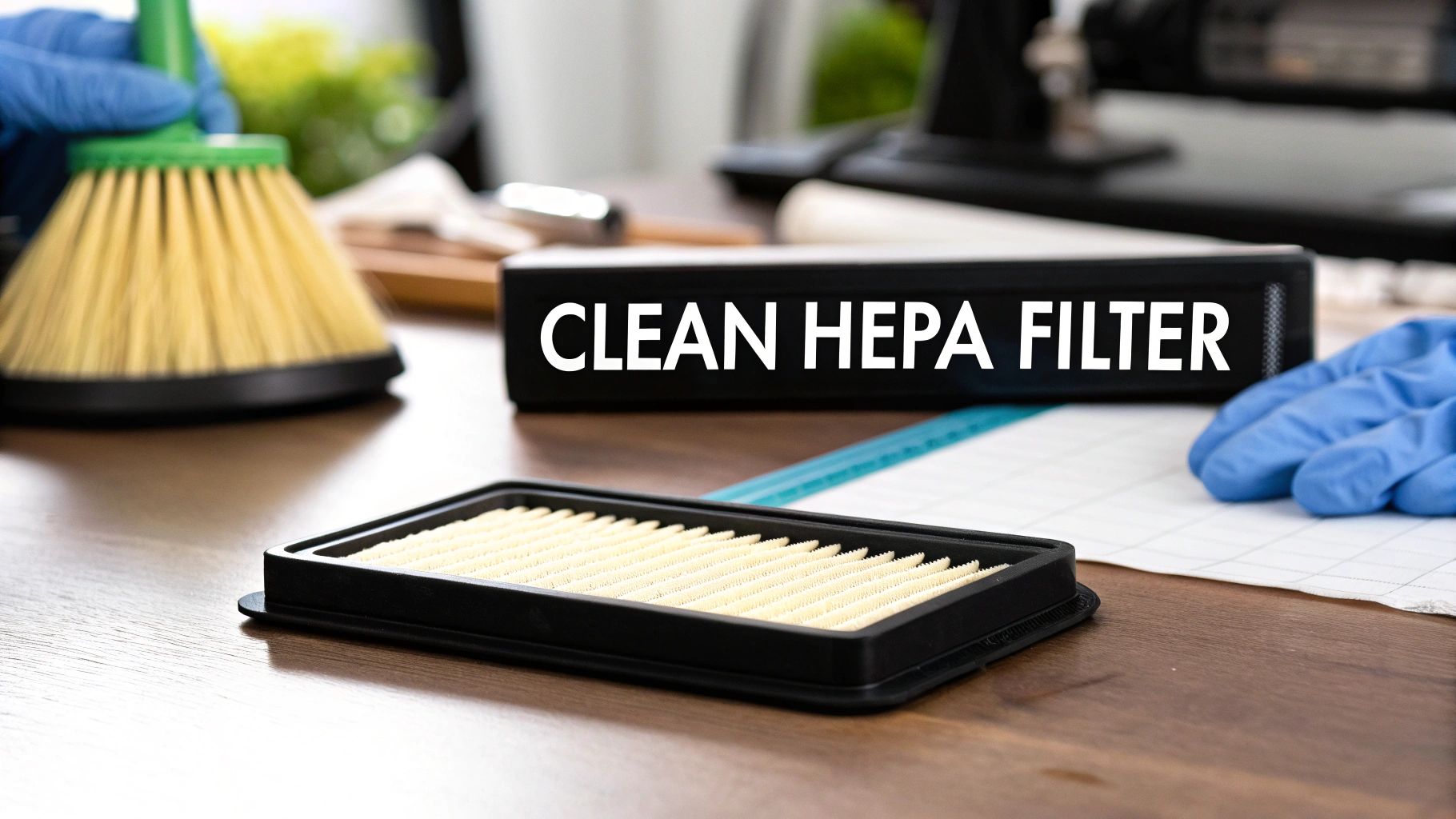
A clean facility isn't just about appearances; it's a direct reflection of your commitment to the health and safety of every person who walks through your doors. While knowing how to clean a HEPA vacuum filter is a critical skill for maintaining air quality, true hygiene excellence comes from a holistic approach that combines powerful air filtration with meticulous surface disinfection.
For business owners, facility managers, and sales professionals in the cleaning industry, this integrated strategy is non-negotiable. From offices and schools to gyms and retail stores, the message is clear: a higher standard of clean builds trust, enhances productivity, and protects your bottom line.
Why a Clean HEPA Filter Is Non-Negotiable

Think of a HEPA vacuum filter as your facility's first line of defense against the microscopic particles that compromise air quality. A High-Efficiency Particulate Air (HEPA) filter is engineered to capture a staggering 99.97% of particles as small as 0.3 microns. This includes the invisible culprits—dust, allergens, and airborne pathogens—that standard filters miss.
For any commercial space, from a bustling office to a high-traffic gym, keeping this filtration system at peak efficiency is vital. A clogged HEPA filter doesn't just weaken the vacuum; it can re-release trapped contaminants back into the air, defeating its purpose and negatively impacting employee health and customer perception.
The Business Case for Clean Air
In a commercial setting, poor air quality has tangible consequences. In an office, airborne allergens can trigger asthma and allergies, leading to discomfort and reduced productivity. In a fitness center, a neglected filter fails to trap bacteria and mold spores, creating an environment that’s anything but healthy. A clean filter isn't just a maintenance task; it's a cornerstone of your facility's hygiene protocol.
For facility managers and cleaning sales professionals, the message is clear: A clean HEPA filter isn't an expense. It's an investment in health, productivity, and your brand's reputation. It’s a tangible, visible commitment to providing a safe and clean environment.
This commitment yields measurable returns. Research consistently shows that using HEPA vacuums significantly reduces particulate contaminants. For instance, one study found that repetitive HEPA vacuuming cut dust loading by an average of 72.7%, proving how vital these filters are for creating genuinely cleaner spaces. You can review the full study about HEPA vacuuming effectiveness on PMC.
Beyond the Filter: The Role of Disinfectant Wipes
While the filter tackles airborne threats, surfaces require direct action. After servicing a vacuum, it's the perfect time to use disinfectant wipes on the machine's high-touch points—the handle, power switch, and housing. This two-pronged strategy ensures both your air and your equipment are impeccably clean.
Integrating this simple step elevates your entire cleaning protocol. From a sales perspective, this is a powerful talking point. Advise clients to:
- Wipe down vacuums and equipment after each use, especially in shared environments like gyms or schools.
- Establish a filter cleaning schedule based on facility traffic and usage intensity.
- Educate staff on the direct link between clean equipment and overall facility health.
Ultimately, understanding how to clean a HEPA vacuum filter is a fundamental skill. Prioritizing this task supports a healthier indoor environment, boosts customer confidence, and protects your investment in high-quality cleaning equipment.
Your Pre-Cleaning Checklist: Tools and Setup
Before you handle a HEPA filter, preparation is paramount. Jumping in without the right gear can re-contaminate your space or compromise safety. This is your pre-flight check for getting the job done right.

Remember, you’re dealing with a concentrated collection of everything you’ve vacuumed—dust, allergens, and other microscopic debris. To avoid inhaling these particles, always wear a protective mask and gloves before handling a used filter.
Your Essential Toolkit for HEPA Filter Maintenance
To perform this task safely and effectively, gather these supplies first. This ensures a thorough, professional-level clean every time, turning a messy chore into a streamlined, hygienic process.
| Tool/Supply | Purpose | Pro Tip for Facilities |
|---|---|---|
| Protective Gloves | Keeps concentrated allergens and grime off your hands. | Choose nitrile gloves for better dexterity and durability in commercial settings. |
| Dust Mask (N95 Recommended) | Prevents inhalation of fine particulates dislodged from the filter. | An absolute must-have for janitorial staff. Non-negotiable for safety. |
| Soft-Bristled Brush | Gently removes caked-on dust from delicate filter pleats. | A clean, dry 2-inch paintbrush is perfect for the job. |
| Trash Can or Bag | Contains the dust and debris you remove from the filter. | Use a heavy-duty contractor bag in your can to prevent messy tears. |
| Disinfectant Wipes | Sanitizes the vacuum's exterior and high-touch points after cleaning. | This small step makes a huge difference in overall facility hygiene. |
Set Up Your Cleaning Station Like a Pro
Where you clean is just as important as how you clean. If possible, take the filter outdoors to prevent the fine dust you dislodge from resettling onto facility surfaces. This simple step makes a significant difference.
If outdoor access isn't available, find a well-ventilated space away from high-traffic zones. A dedicated janitorial closet with an open window or an industrial fan is the next best option.
Your brush should have soft bristles—a clean paintbrush or detailing brush works well. The goal is to gently whisk away dust from the filter's delicate pleats without causing damage. Stiff brushes can tear the filter media, rendering it useless.
A Quick Pro Tip: Before starting, inspect the filter housing. Commercial vacuums, whether uprights for a retail store or backpack vacuums for an office, have different release mechanisms. Familiarize yourself with your model—usually a simple clip, latch, or twist-lock—to avoid forcing it and causing damage.
The Final Touch for Total Hygiene
Once the HEPA filter is clean (and dry, if washable), you're not done. This is the perfect moment to elevate your facility's hygiene. The vacuum’s handle and power switch are high-touch points that collect germs with every use.
Grab your disinfectant wipes and give these surfaces a thorough cleaning. This two-part approach—tackling airborne particles with the filter and surface germs with wipes—creates a comprehensive clean.
For cleaning sales professionals, this is a golden opportunity to demonstrate value. It’s not just about what the vacuum removes from the floor; it’s about ensuring the tool itself isn't a source of cross-contamination. This simple add-on turns routine maintenance into a powerful showcase of your commitment to true cleanliness.
How to Clean HEPA Vacuum Filter: The Right Way
You're prepped and ready. Cleaning a HEPA filter isn't complex, but precision is critical to avoid damaging the delicate fibers that trap harmful particles. The entire process depends on one key question: is your filter washable or non-washable?
Getting this wrong can ruin an expensive filter. Always check the manufacturer's manual first. If unavailable, look for markings on the filter itself. Washable filters typically have a sturdy plastic frame and may have a water drop symbol. If it appears to be made of thick paper or cardboard with no clear indicators, play it safe and treat it as non-washable.
Handling Non-Washable Filters
For non-washable filters, your goal is to remove debris without liquid. This is a dry-clean-only task.
Hold the filter over a lined trash can and gently tap the frame against the side. You'll be surprised how much loose dust falls out. Rotate the filter as you tap to clear it from all angles. Be firm but not aggressive.
Next, use your soft-bristled brush. Gently brush the filter pleats in a downward motion, following the folds. This sweeps away stubborn dust without forcing it deeper into the fibers.
A Pro Tip for a Deeper Clean: For heavily caked non-washable filters, you can use compressed air on a low-pressure setting. Crucially, you must blow the air from the inside out (clean side to dirty side). Reversing this will embed particles deeper into the filter media, reducing its effectiveness.
The Correct Method for Washable Filters
If your filter is washable, follow these rules carefully. Never use soap, detergents, or cleaning chemicals, as they will destroy the filter's microscopic fibers and can leave a residue that promotes mold growth.
Follow this simple process:
- Rinse with Lukewarm Water Only: Hold the filter under a gentle stream of lukewarm tap water. Low, steady pressure is all you need.
- Get the Water Flow Right: As with compressed air, rinse from the clean side to the dirty side. This pushes trapped dirt out of the filter, not further in.
- Shake Off the Excess: After rinsing, gently shake the filter to remove as much water as possible. Do not wring, twist, or bang it; the internal media is fragile and easily damaged.
The image below provides a quick visual breakdown of the key steps for washing your HEPA filter.

The Most Important Step: Air Drying
For washable filters, drying is the final and most critical phase. A damp filter is a perfect breeding ground for mold and mildew, which you'll blast into your facility's air the next time you vacuum.
Place the filter in a warm, dry spot with good airflow, away from direct sunlight or intense heat. Be patient. It needs to air dry for at least 24 to 48 hours. Never use a hairdryer, heat gun, or oven to speed up the process, as high heat will destroy the filter media and warp the frame.
The filter must be 100% bone-dry before reinstallation. Even a little moisture can damage the vacuum motor, leading to rust, electrical shorts, and costly repairs. Patience is a non-negotiable step that protects your equipment and air quality.
Knowing When to Clean and When to Replace

Knowing how to clean a HEPA filter is important, but knowing when to clean—and when to replace it—is what separates proactive facility managers from those constantly reacting to problems. Your vacuum's performance depends on this judgment, as even the best filters have a limited lifespan.
A filter in a low-traffic office might need cleaning every few months. In a high-traffic gym battling chalk dust and constant footfall, that same filter may need attention every few weeks to maintain suction and air quality.
The Cleaning Schedule Guideline
While there's no one-size-fits-all schedule, a monthly inspection of all commercial vacuums is a solid starting point. This allows you to spot buildup before it impacts performance.
A retail store might manage with monthly filter cleanings, while a busy restaurant may need bi-weekly service to handle food particles and heavy traffic.
The goal is to shift from a “clean it when it breaks” mindset to “clean it to prevent it from breaking.” This proactive approach extends equipment life and ensures consistently cleaner air, protecting both your investment and occupant health.
A HEPA filter is a high-performance tool, roughly equivalent to a MERV 17 rating, but its effectiveness plummets without proper care. A neglected filter forces the vacuum motor to overwork and degrades indoor air quality. For a deeper technical dive, you can find excellent information on HEPA filter maintenance standards on SCRT.org.
Unmistakable Signs It's Time for a Replacement
Eventually, every HEPA filter reaches the end of its life. Cleaning can only do so much. Continuing to use a worn-out filter is a waste of time and can damage your vacuum.
Here are the dead giveaways that it's time for a replacement:
- A Stubborn, Lingering Odor: If a musty smell persists after cleaning and drying, bacteria or mold have likely embedded in the filter media. Replace it.
- Visible Damage or Tears: Closely inspect the filter. Any rips, tears, or fraying in the pleats mean it can no longer trap microscopic particles effectively.
- A Permanent Drop in Suction Power: If you've cleaned the filter and checked for clogs, but the vacuum still has weak suction, the filter is too clogged internally to be saved.
- Warped or Damaged Frame: If the rubber or plastic frame is cracked, bent, or no longer creates a tight seal, it's allowing unfiltered air to bypass the system.
Ignoring these signs is false economy. You might save a few dollars on a new filter today but will pay more later in poor air quality, a burned-out motor, and subpar cleaning results. Replacing a filter at the right time is a smart, cost-effective decision for maintaining a truly clean facility.
Boosting Hygiene with Strategic Disinfection
A meticulously cleaned HEPA filter is a game-changer for indoor air quality, but it's only fighting half the battle. Real facility hygiene happens when you connect the dots between what’s floating in the air and what’s living on every surface. This is where a one-two punch of powerful air filtration and strategic surface disinfection creates an environment that’s genuinely safer for everyone.
While your vacuum is pulling particles from floors and carpets, countless high-touch points are getting a free pass. Just think about the journey through any commercial space: doorknobs, light switches, elevator buttons, checkout counters, and reception desks. In a gym, that list explodes to include treadmill screens, dumbbells, and locker handles. These surfaces are absolute magnets for germs and demand direct attention.
This is precisely where disinfectant wipes become an essential part of your cleaning arsenal.
Selling a Comprehensive Clean
If you're a sales professional in the cleaning industry, this is a massive opportunity. Stop selling just a vacuum or a filter and start selling a complete hygiene solution. The conversation instantly shifts from a simple product sale to a consultative partnership, one focused on mitigating risk and building customer confidence.
When you position disinfectant wipes as the necessary partner to HEPA vacuuming, you show a much deeper understanding of what makes a facility truly healthy. You can then walk clients through the real return on investment (ROI) that comes from this dual strategy.
A visibly clean facility isn't just a line item on an expense report; it's a powerful marketing asset. When customers see staff actively wiping down surfaces, it sends an undeniable message: their well-being is a top priority. That perception has a direct line to customer loyalty and brand reputation.
For gym owners, this can be a key differentiator. A visibly hygienic environment makes members feel safer and more valued, directly impacting retention and new sign-ups.
Facility-Specific Disinfection Strategies
The best cleaning plans are never one-size-fits-all. Tailor your disinfection frequency and focus areas to the specific needs of each environment.
- Retail Stores: The hot spots are shopping cart handles, payment terminals, and fitting room doorknobs. During peak hours, staff should be wiping these down hourly.
- Offices: Zero in on shared spaces like kitchenettes (microwave handles, coffee pot buttons), conference room tables, and any shared office equipment.
- Gyms & Fitness Centers: Equipment is a non-negotiable. It must be wiped down after every single use. Make it easy by providing accessible wipe dispensers for members, and schedule staff to perform regular sanitation sweeps.
- Restaurants & Schools: High-touch zones include menus, condiment bottles, desks, and doorknobs. Consistent disinfection here is critical for meeting health codes and protecting students and patrons.
By weaving disinfectant wipes into daily routines, you tackle the entire spectrum of hygiene challenges. It’s a simple, cost-effective step that perfectly complements the heavy lifting your HEPA filter is already doing. Prioritize this comprehensive approach to build a facility that is clean from the air down to the very last surface, and consider integrating disinfectant wipes into your daily routine or product offerings to achieve a higher standard of clean.
Frequently Asked Questions About HEPA Filter Care
Even with a solid cleaning routine, you’re bound to have questions. When it comes to knowing how to clean a HEPA vacuum filter, getting the right answers is the difference between keeping your equipment running smoothly and making a costly mistake. Let’s clear up some of the most common questions we get from facility managers and cleaning crews.
Can I Use Soap on a Washable HEPA Filter?
That’s a hard no. You should never use soap, detergent, or any other chemical on a washable HEPA filter. While those products are great for breaking down grime on other surfaces, they will absolutely wreck the delicate, microscopic fibers that make your filter work.
Using soap leaves behind a film that either clogs the filter's pores or, worse, turns into a breeding ground for mold and bacteria the next time it gets damp. Just stick to a simple rinse with lukewarm running water. It’s truly all you need. When you need to disinfect surfaces around your facility, always grab a product made for the job, like professional disinfectant wipes.
How Can I Tell if My Filter Is Washable?
This is a make-or-break question, and getting it wrong is an expensive error. Your first and best bet is always the vacuum’s user manual. If that’s long gone, take a close look at the filter itself.
- Washable filters almost always have a sturdier plastic frame. They might even be labeled with the word "washable" or a small water-drop symbol printed right on the casing.
- Non-washable filters, on the other hand, often have a frame that feels more like dense cardboard or fiberboard.
When in doubt, always treat the filter as if it's non-washable. Cleaning it with a gentle tap or a soft brush is a safe bet either way. Trying to wash a non-washable filter will destroy it on the spot.
My Vacuum's Suction Is Still Weak After Cleaning. What Now?
If you’ve given the filter a thorough cleaning and your vacuum’s performance is still lagging, that’s a pretty clear sign it has reached the end of its life. Over months of use, microscopic particles get so deeply lodged in the filter media that no amount of tapping or rinsing can get them out.
But before you order a replacement, do a quick sanity check for other common blockages. Make sure there are no clogs in the vacuum hose, at the point where it connects to the canister, or tangled up in the brush roll. If all those spots are clear, it’s definitely time for a new filter to bring your machine back to full power.
For high-traffic places like fitness centers, keeping both your equipment and your surfaces in top sanitary shape is a must. You can learn more about why summer hygiene is critical for sports facilities in one of our other guides.
Leave a Reply